
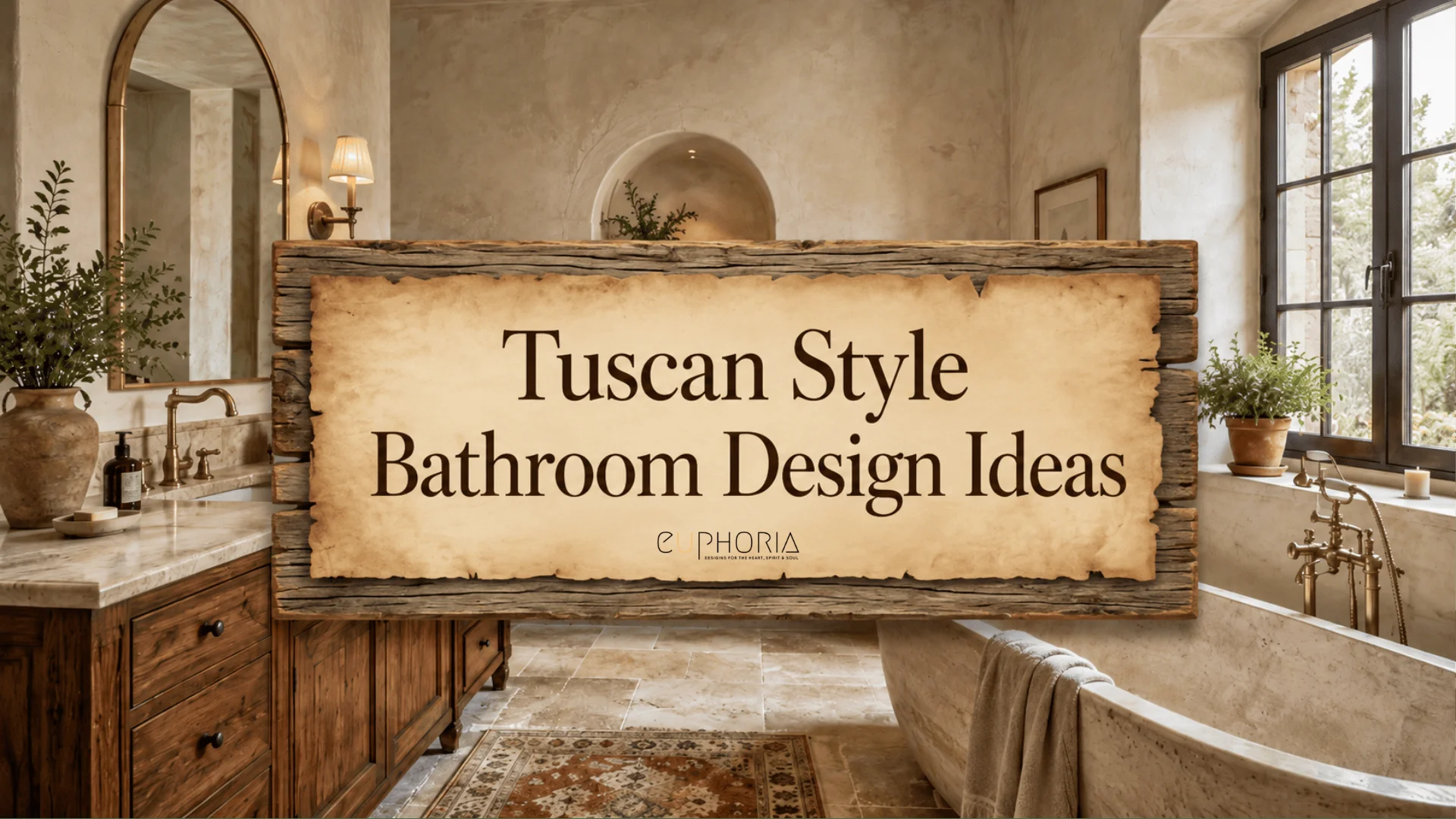
Tuscan style bathroom design ideas can go wrong quickly when every material tries to become the main feature. The stone basin, textured plaster, patterned tiles, arched mirror, and iron lighting may all look beautiful on their own, but together they can make the bathroom feel crowded instead of calm. Getting that balance right is what separates the best interior design companies in Dubai from the rest.
While discussing material choices with our euphoria interior design team, I kept noticing one rule: the best rooms let one material lead while everything else supports it. That is what stops the bathroom from looking like a themed restaurant or a showroom corner.
The goal is not to copy an old villa exactly. A modern Tuscan-style bathroom should feel warm, grounded, aged, and easy to live with. If I had to plan one from scratch, I would choose the main surface first, then build the basin, lighting, iron, wood, and tiles around it. Keep reading if you want the Tuscan look without making the bathroom feel heavy.
Key Takeaways Before Designing
- Small Bathrooms: Skip heavy stone bases and rely on limewash to let one strong element carry the room.
- Premium Tuscan Look: Pair one dominant material with quiet surfaces and built-in elements rather than standard add-ons.
- Rustic Italian Feel: Embrace plaster, wood, and terracotta while leaving natural imperfections completely visible under warm lighting.
- Mediterranean Touches: Restrict bold patterns to a single feature zone to create beautiful contrast without overwhelming the space.
- Low Maintenance: Limit unsealed stone and keep heavy, rough textures far away from wet areas.
- Low Natural Light: Use lighter plaster to reflect brightness while keeping dark, heavy materials close to the floor.
- Feeling Stuck: Pick a base material, define a clear focal point, and remove anything competing for attention.
1. Italian Farmhouse Basin Anchored in Marble and Warm Wood
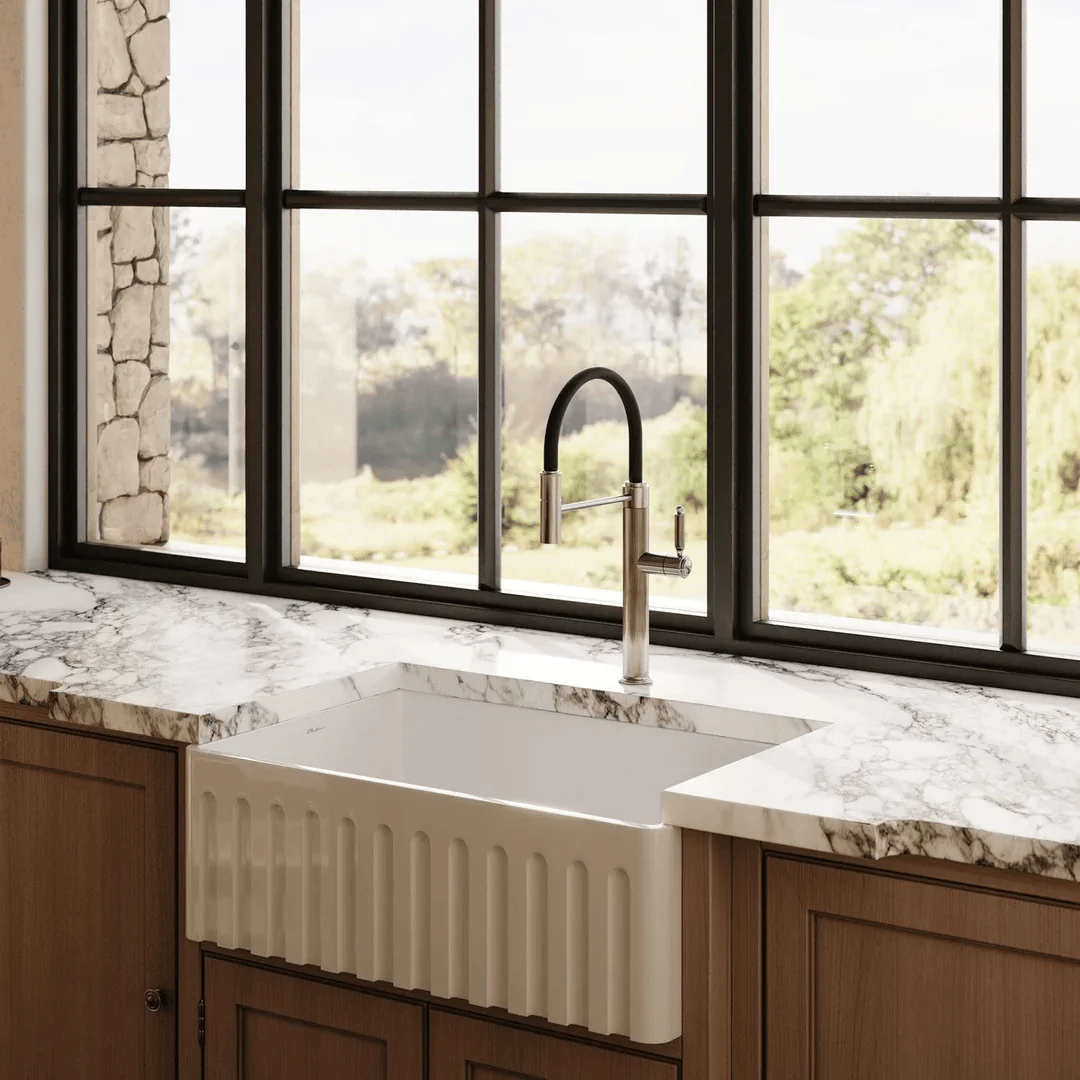
A deep apron basin gives a Tuscan style bathroom a practical farmhouse feel, especially when it sits between warm wood and veined marble. The look works because the basin feels simple, the marble adds richness, and the wood keeps everything warm. Many thoughtful bathroom design ideas work in the same way, where comfort and finish support each other.
Start Here: Choose the basin size first, then match the counter depth and faucet height around it.2. Limewashed Tuscan Walls Let the Marble Do the Talking
2. Limewashed Tuscan Walls Let the Marble Do the Talking
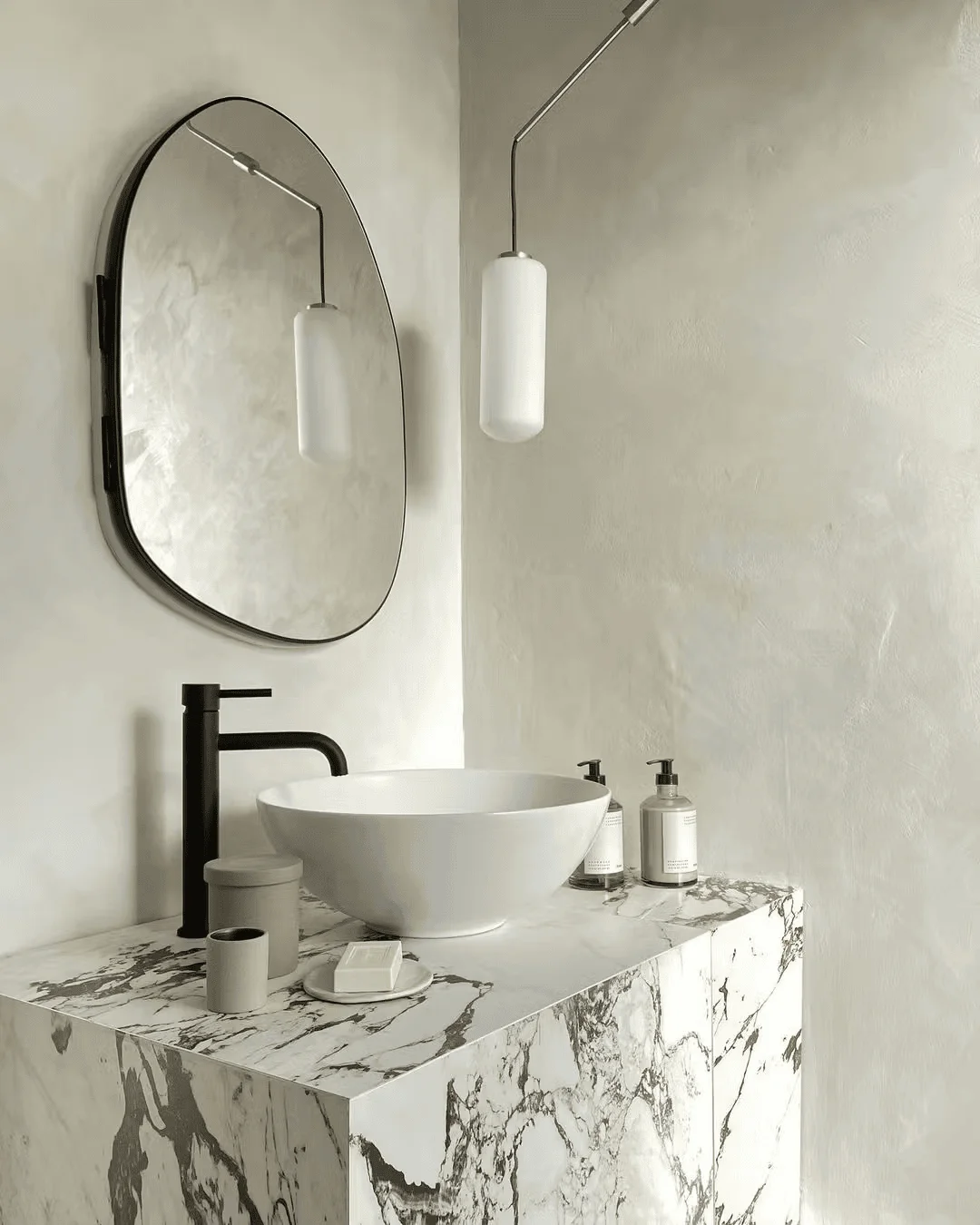
By jamesstreethouse
Limewashed walls are perfect when the bathroom already has a bold marble vanity or a strong stone basin. The cloudy finish adds movement without making the wall compete for attention. It keeps the room warm, aged, and calm instead of flat or overly polished.
Keep It Simple: Use limewash on the supporting walls and let one marble or stone feature lead the room.
3. A Stone Plinth Vanity That Feels Part of the Architecture
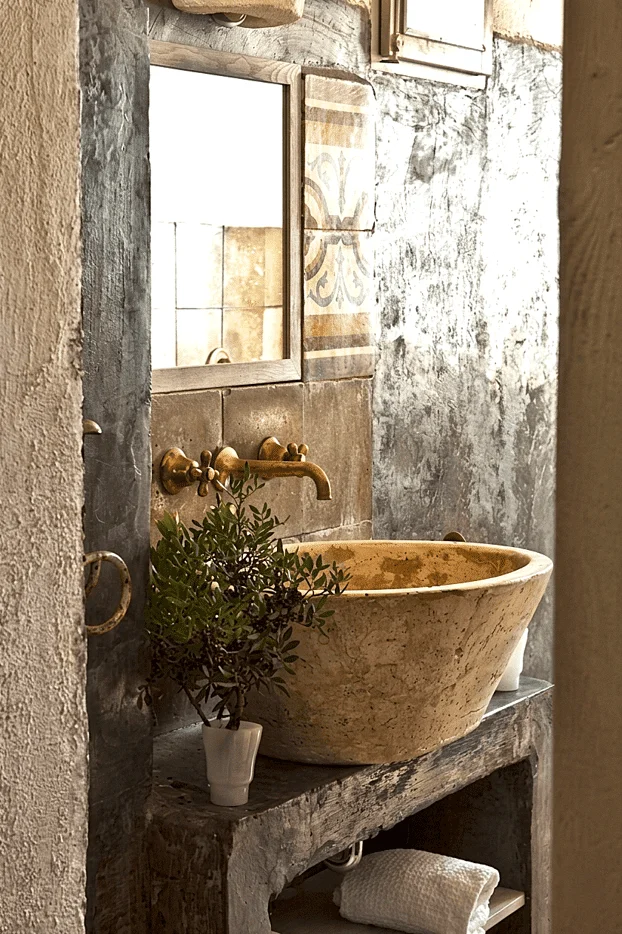
A stone plinth vanity makes the bathroom feel like it belongs in the home, not like a piece added later. Keep the base thick, simple, and low on decoration so it feels grounded. Wall-mounted faucets also help because the counter stays clean and open.
Plan This: Check floor support before choosing heavy stone, especially for upper-floor bathrooms.
4. Warm Italian Wood Countertops That Bring a Lived-In Feel
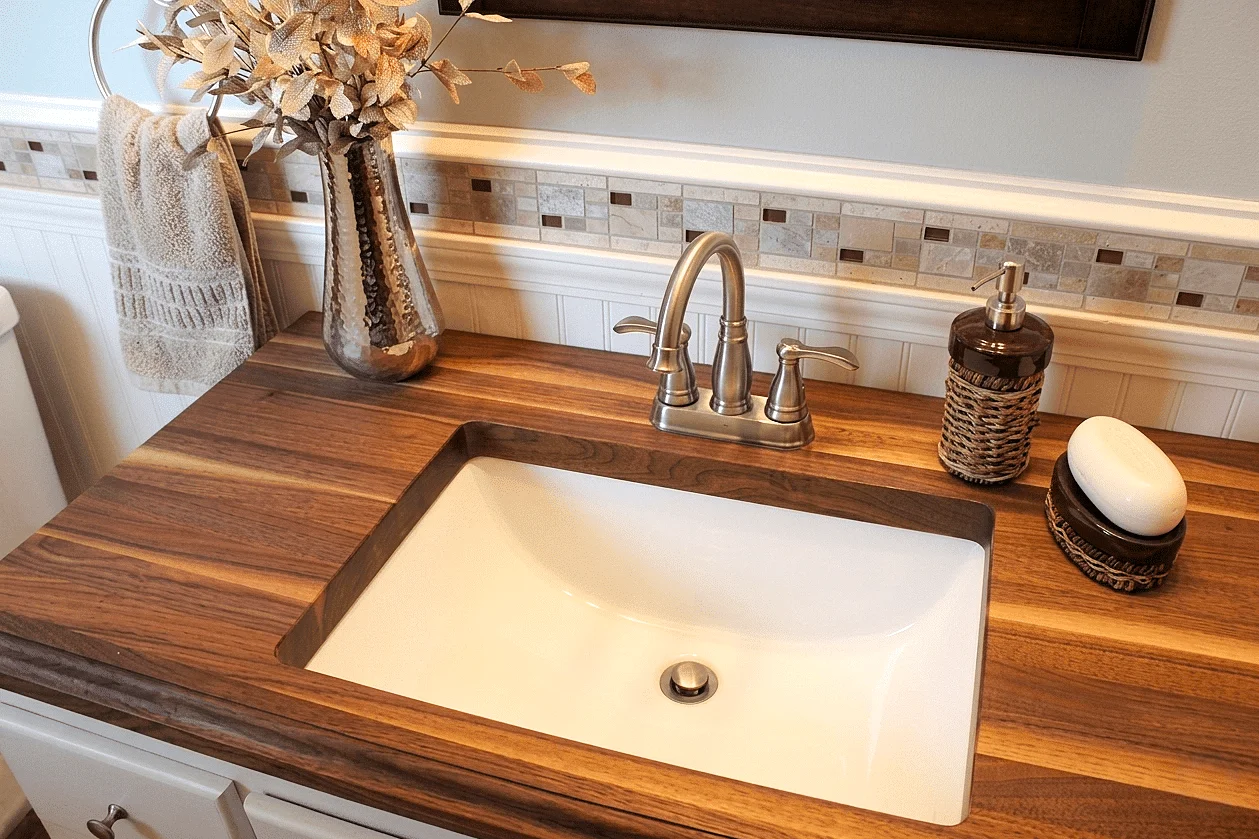
Wood softens a Tuscan Style Bathroom Design when stone, tile, or ceramic starts feeling too cold. While looking through material boards with designers, I often notice wood being used as the balancing surface, not the loudest one. Walnut or oak can warm up a white basin beautifully.
Use It Well: Seal the wood properly before placing it near water.
5. Imperfect Tuscan Arch Niches That Quietly Shape the Space
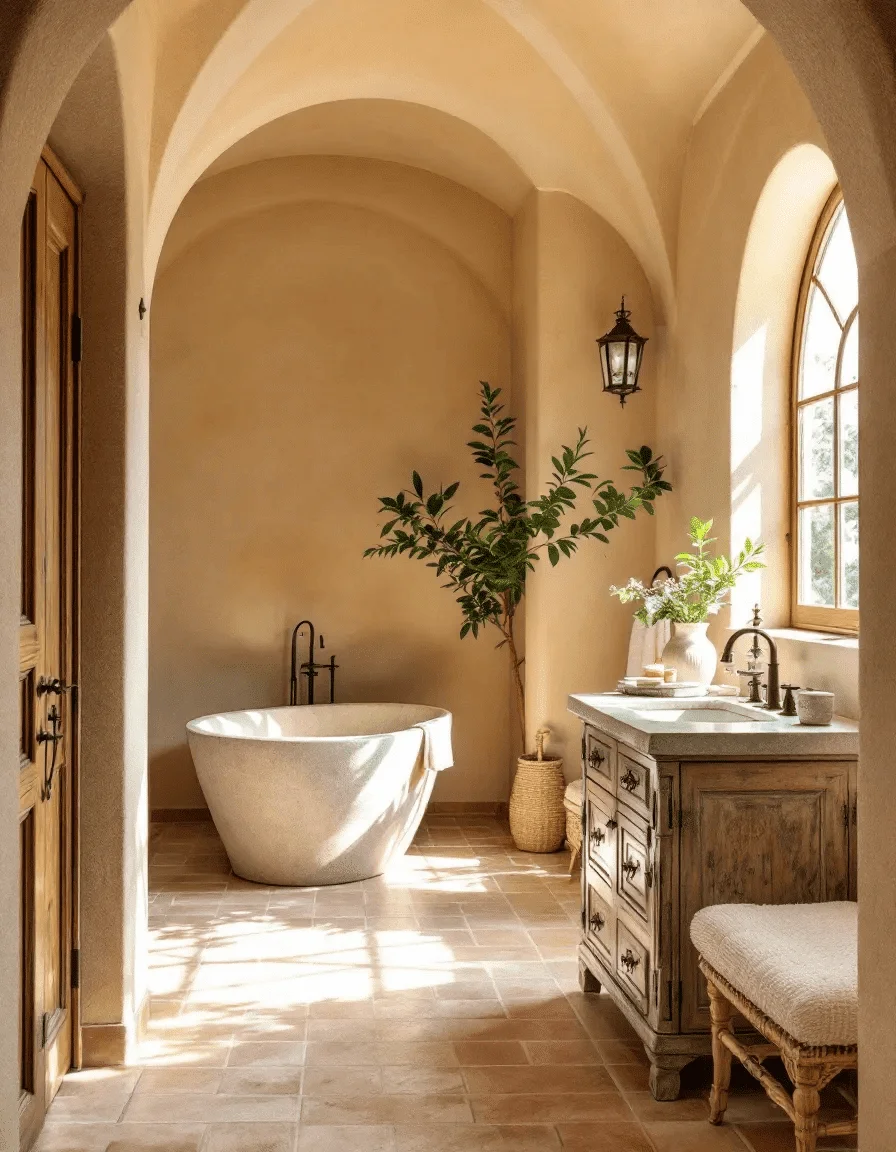
A soft arch can shape the bathroom better than another decorative tile. Use it around a mirror, tub alcove, shower entry, or recessed niche. The curve should feel slightly imperfect and relaxed, not too polished or staged.
Best Move: Choose one strong arch and keep the surrounding plaster plain so the shape can breathe.
6. Tuscan Earth Tones Pulled Straight from the Landscape
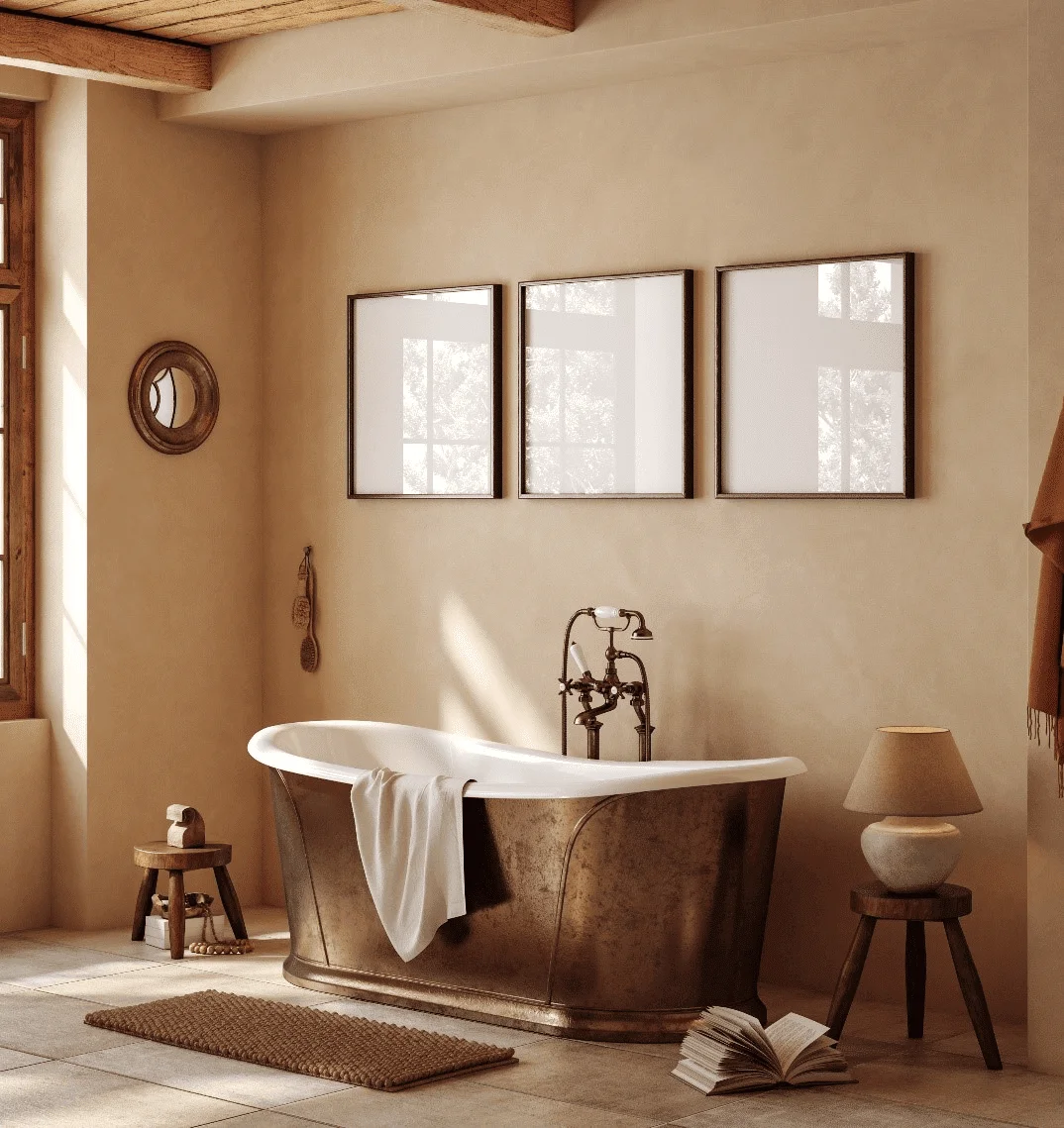
Tuscan colors should feel taken from stone, clay, soil, and sun. Warm beige, ochre, dusty sienna, terracotta, olive, cream, and muted brown can make the bathroom feel rich without turning it into a theme.
Balance It: Keep deeper shades near the floor or tub, then use lighter plaster above.
7. Warm Italian Marble That Carries the Entire Bathroom
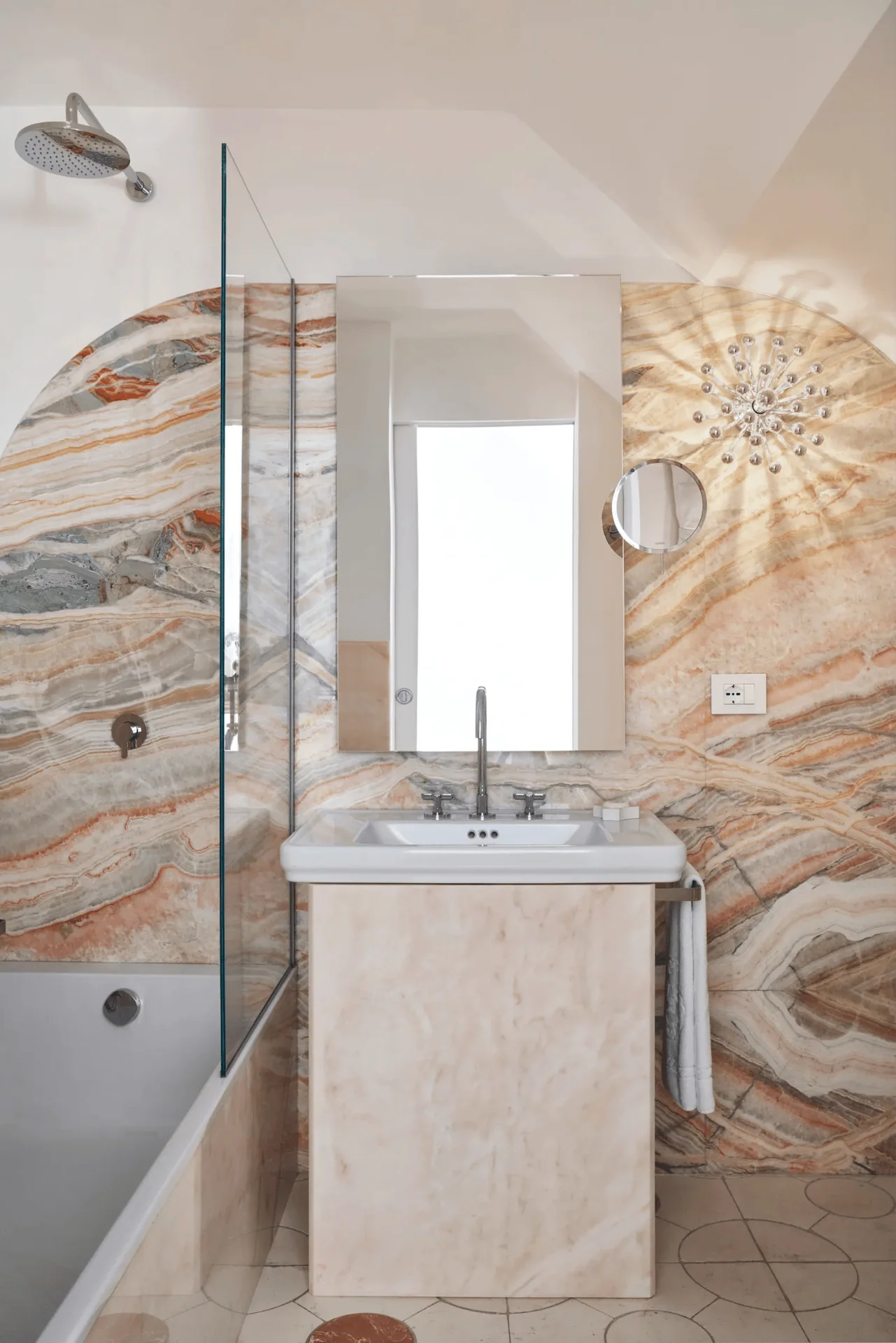
Warm Italian marble works best when it becomes the lead material. If the veining is strong, keep the mirror, lighting, floor, and accessories quieter. For a real luxury bathroom experience, our Escape to Tulum Phase 1 project shows how one strong surface can guide the full mood.
Design Rule: Use one marble feature instead of spreading statement stone everywhere.
8. A Built-In Wash Ledge That Flows Directly Into the Tub
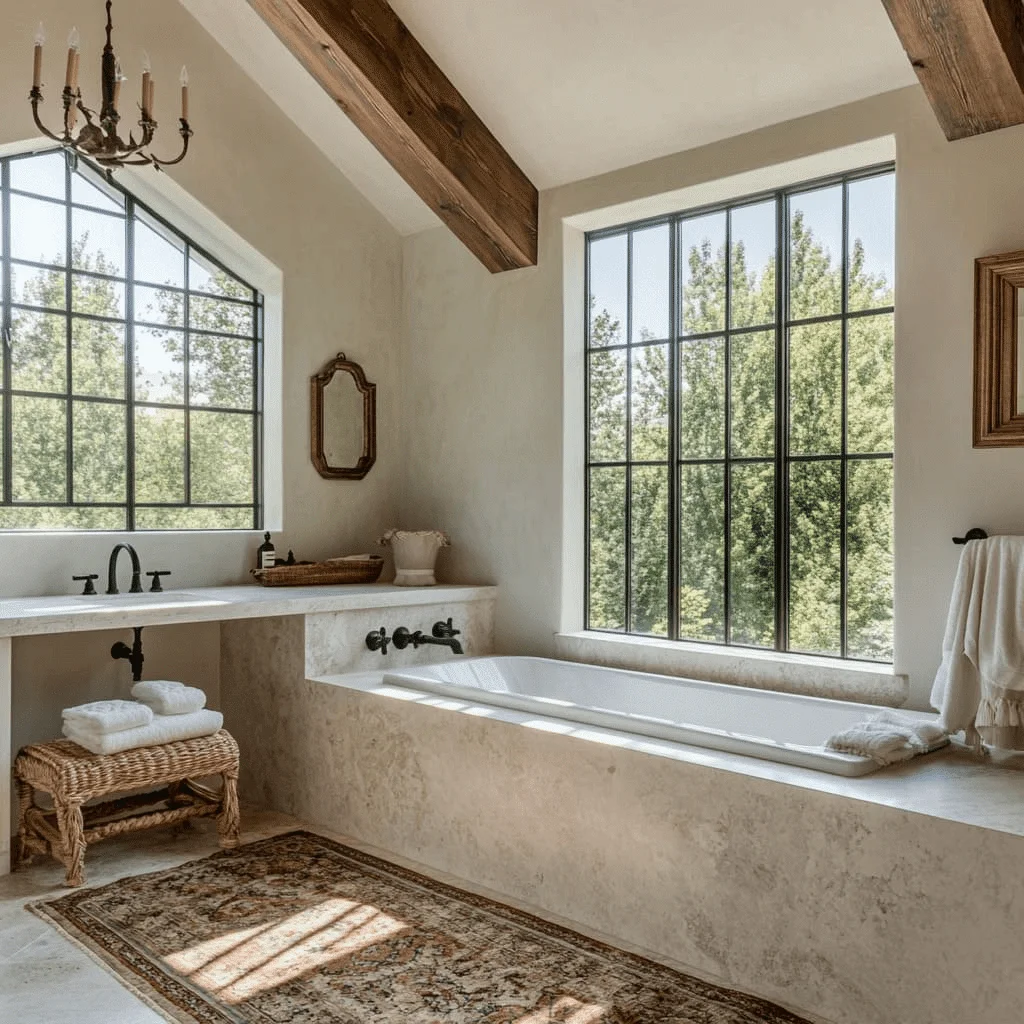
A built-in wash ledge makes the bathroom feel planned from the beginning. Instead of placing a separate counter near the tub, let the ledge run into the bath area as one continuous line. This works well in narrow layouts because it reduces visual breaks.
Make It Work: Use the same stone or plaster finish across the ledge and tub surround.
9. Spanish Zellige Used as a Feature, Not the Entire Surface
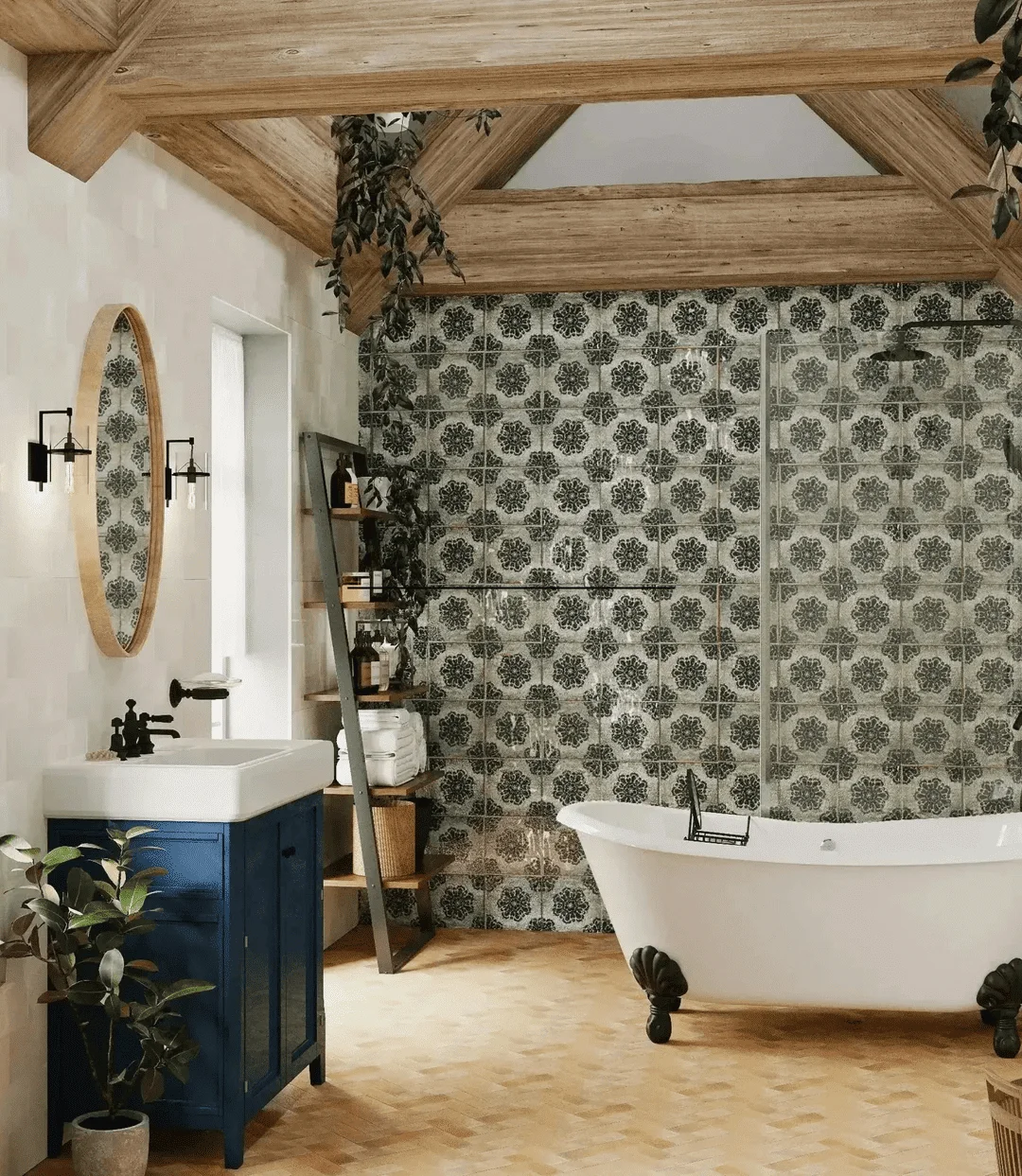
Spanish zellige and patterned ceramic tiles can add Mediterranean character, but they look better when used with restraint. Their handmade shine and uneven edges feel special when they appear in one focused zone.
Use Restraint: Try zellige behind the tub, inside the shower, or as a vanity backsplash, then keep nearby walls plain.
10. Iron Grilles That Turn Sunlight Into Moving Patterns
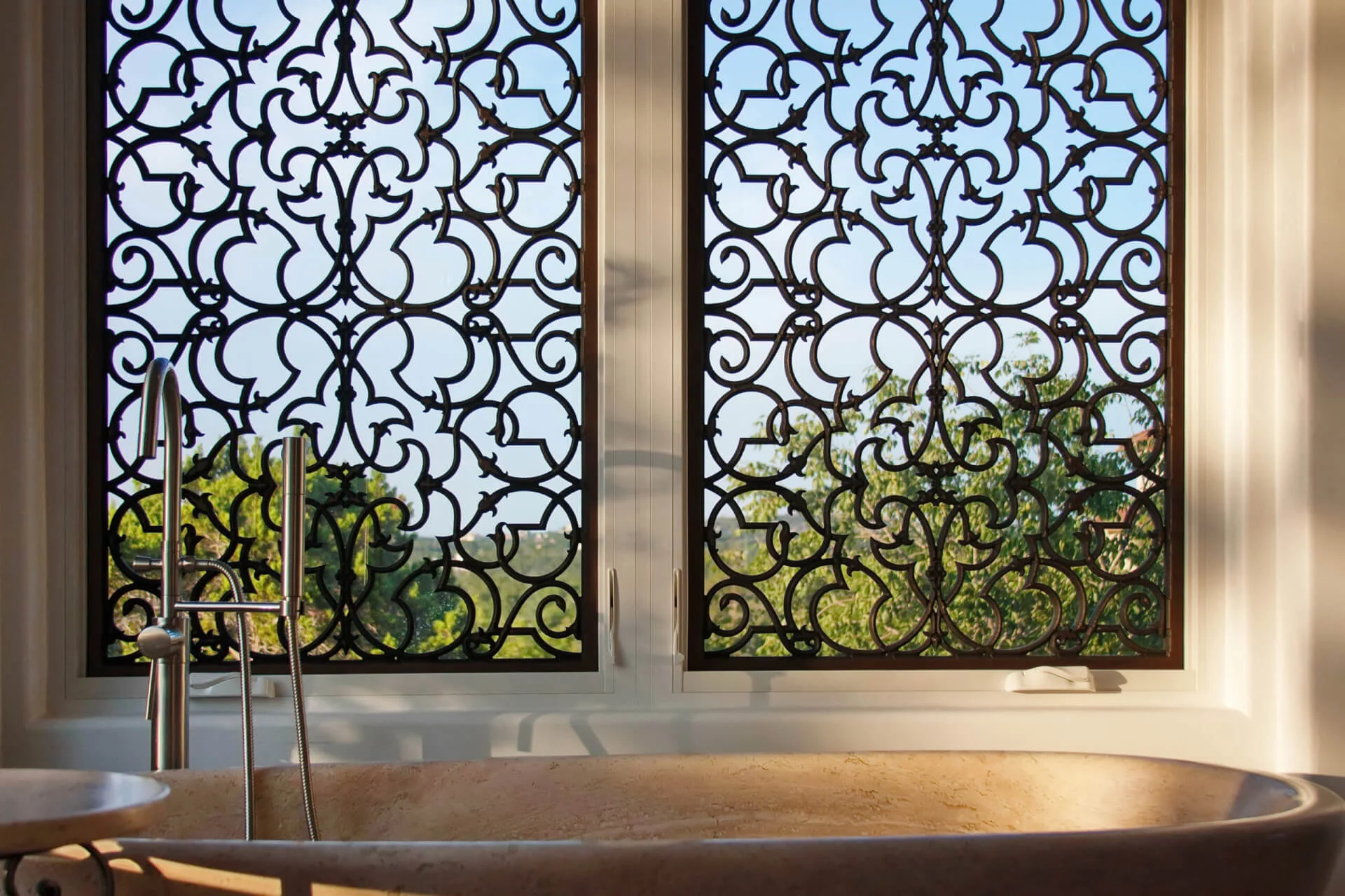
Iron grilles can make a Tuscan style bathroom feel more architectural without adding extra decor. Their dark pattern works beautifully against plain plaster, warm stone, or terracotta because the shadow becomes part of the room.
Light Tip: Use matte black or dark bronze iron and avoid busy wall finishes around the window.
11. Moorish Arches That Add a Subtle Spanish Identity
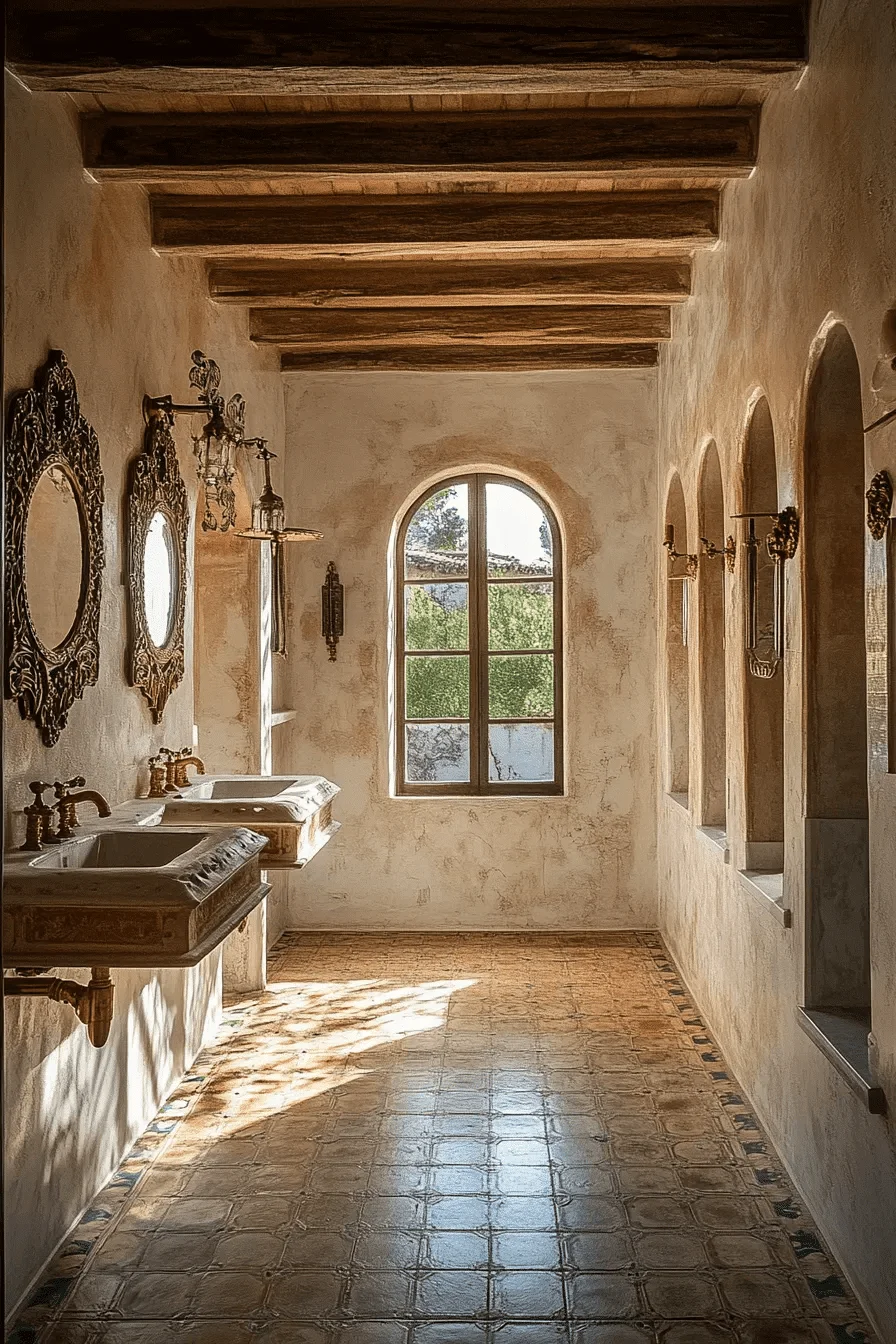
Moorish arches bring a Spanish Mediterranean feel into a Tuscan bathroom without taking over the room. Use them for one shower entry, one wall niche, or one mirror frame. The curve should feel architectural and calm, not decorative for the sake of it.
Safety Tip: Before cutting, check wiring and plumbing inside the wall first.
12. Glazed Ceramics That Cut Through Warm Tuscan Tones
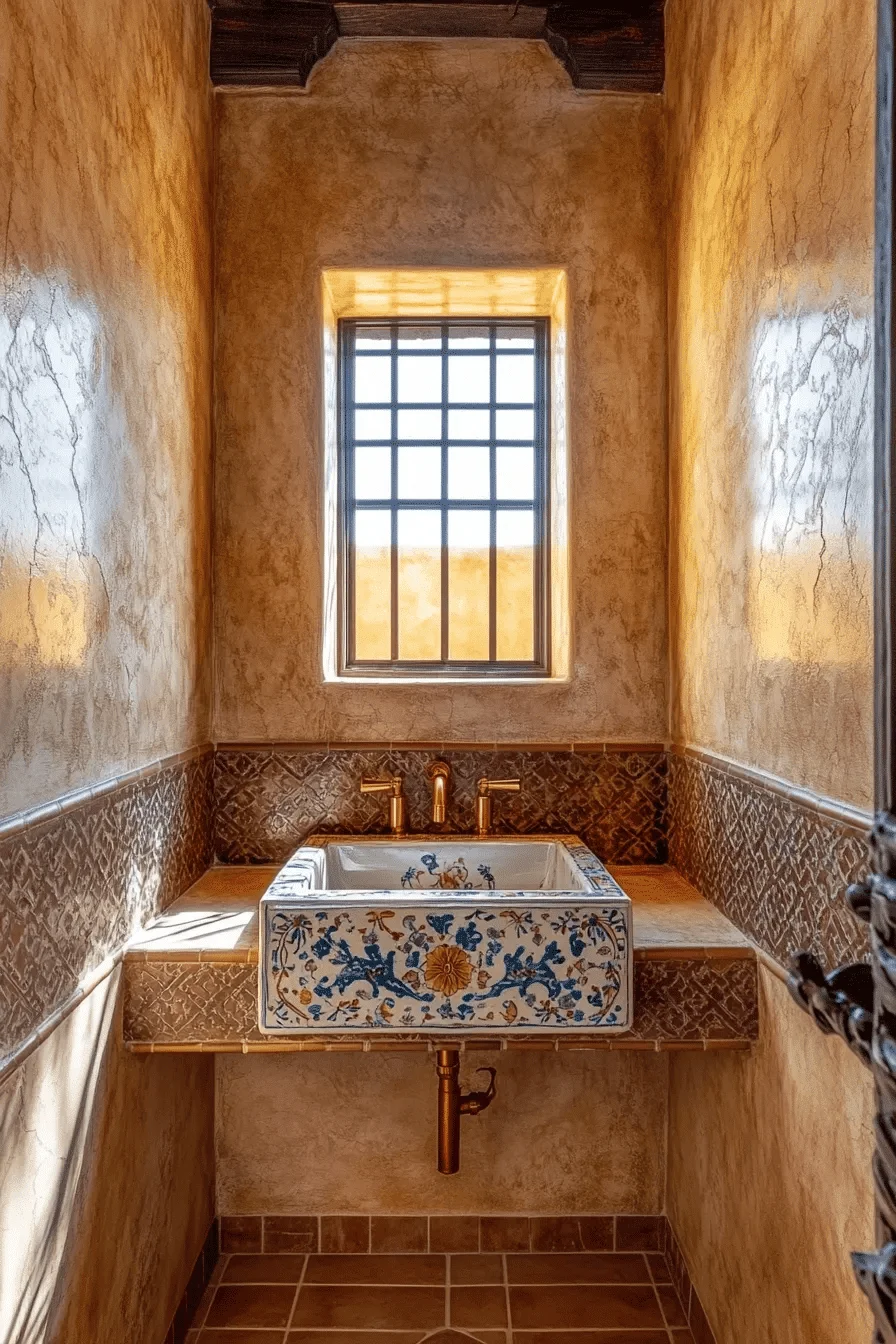
Glazed ceramics add life when a Tuscan Style bathroom has too much beige, stone, or plaster. A painted basin, ceramic border, or handmade tile detail can bring blue, ochre, cream, or rust into the room. In compact spaces, ideas like this pair well with smart small bathroom design ideas because one clear feature can carry the charm.
Style It: Repeat one ceramic color softly in a towel, tray, or vase.
13. Raw Stucco Walls That Feel Textured and Grounded
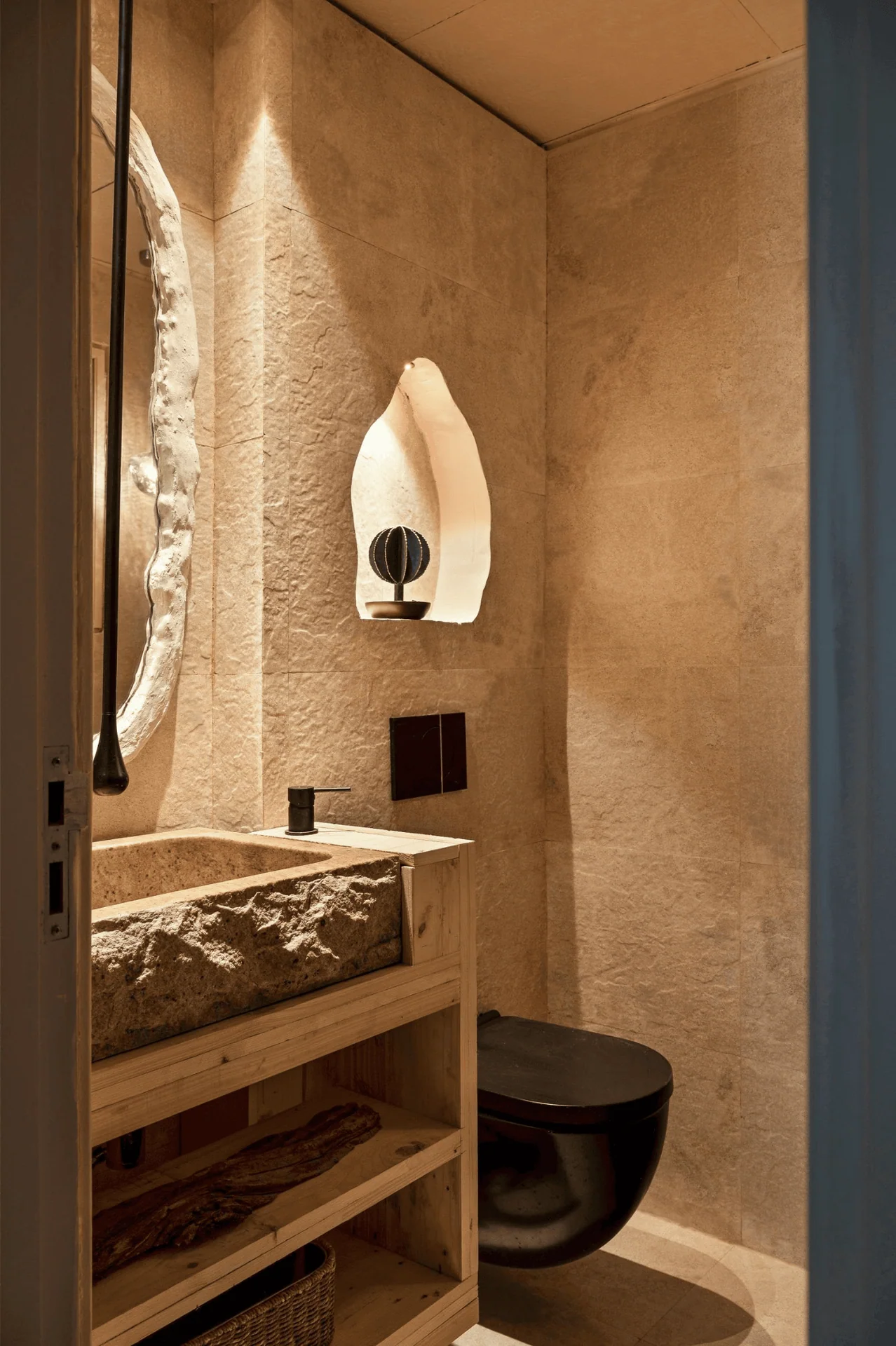
Raw stucco gives a Tuscan Style bathroom more depth than flat paint. It catches warm light, softens small imperfections, and gives the walls a handmade feel. Use it in dry zones, alcoves, or around a rustic Spanish-style shower entrance.
Avoid Trouble: Keep raw stucco away from walls that get direct water every day.
14. Recessed Alcoves That Open Up the Walls
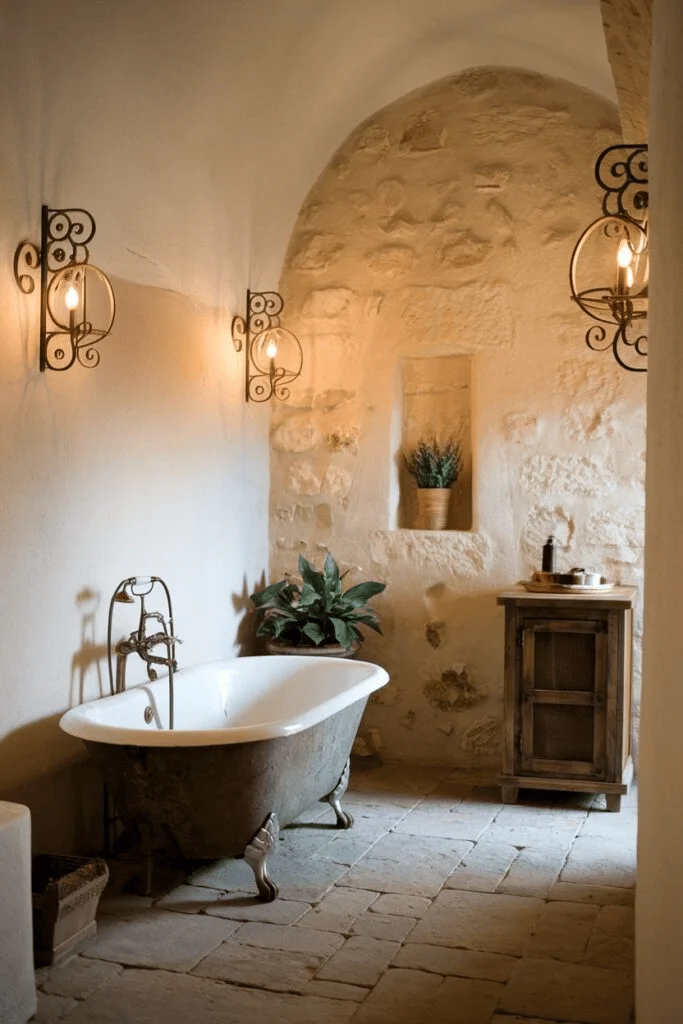
Recessed alcoves make storage feel carved into the bathroom instead of added later. They work well beside the tub, inside the shower, near the vanity, or within a thick plaster wall. This helps small Tuscan bathrooms avoid bulky shelves.
Style Quietly: Keep one vessel, folded towel, or plant inside the alcove.
15. Terracotta and Limestone in a Balanced Material Contrast
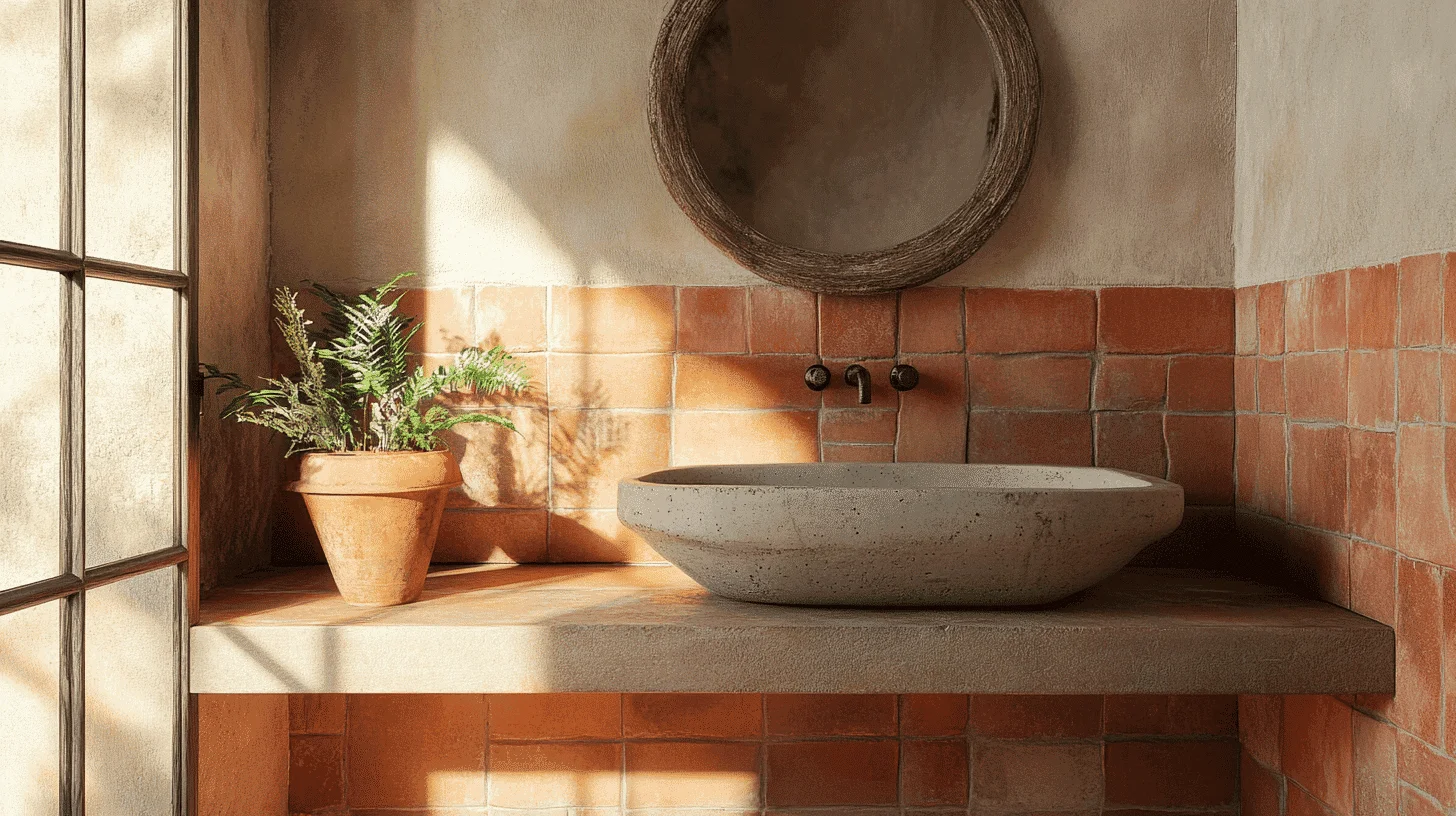
Terracotta and limestone give the bathroom warmth and calm at the same time. The Natural Stone Institute lists natural stone countertops at 46.8 kg CO₂ eq per m² compared with 102.6 kg CO₂ eq per m² for engineered quartz. This makes real limestone feel more connected to the natural, long-lasting character of a Tuscan bathroom.
Finish Carefully: Seal limestone properly and keep the rest of the palette simple.
16. Travertine Shower Bench That Feels Like An Old Bathhouse
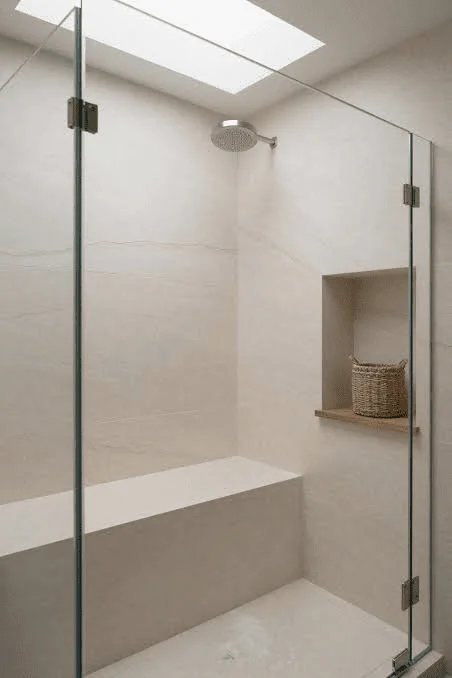
Image Source: Journee Mondiale
A built-in travertine shower bench can make the wet zone feel permanent, not newly assembled. Keep it thick, simple, and slightly softened at the edges so it feels carved from the shower itself.
Best Pairing: Use it with plaster-look walls, limestone tiles, or warm neutral stone, then match the bench with the shower curb.
17. Aged Brass Fixtures That Look Warm Instead Of Shiny
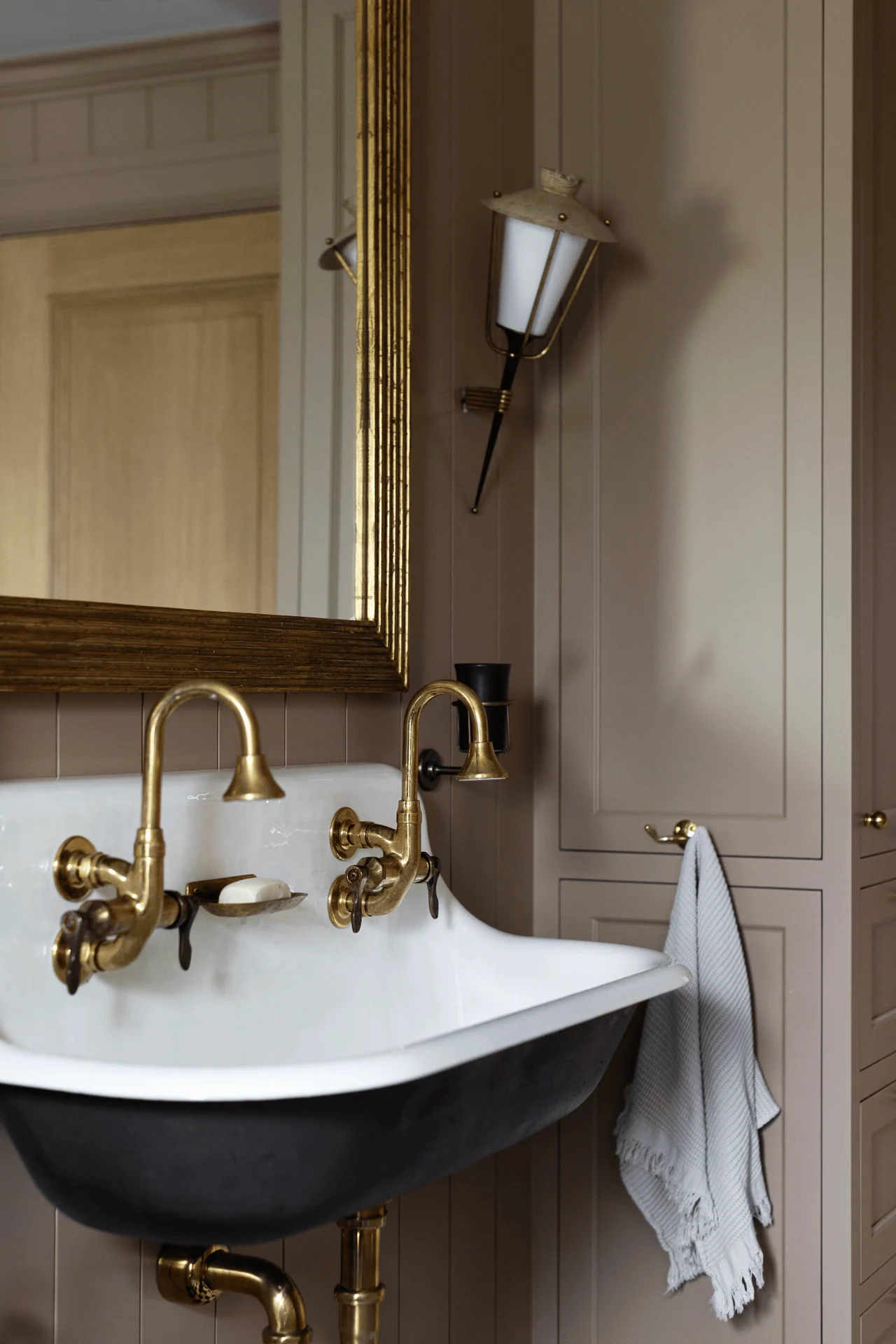
Image Credit: Aimée Mazzenga
Aged brass suits Tuscan Style bathrooms better than bright gold because it feels softer beside limewash, terracotta, limestone, marble, and dark wood. Use it for faucets, shower fittings, towel bars, mirror frames, or cabinet knobs.
Keep Control: Repeat the same brass finish across the room instead of mixing too many metals.
18. Hand-Scraped Ceiling Beams That Lower A Tall Bathroom
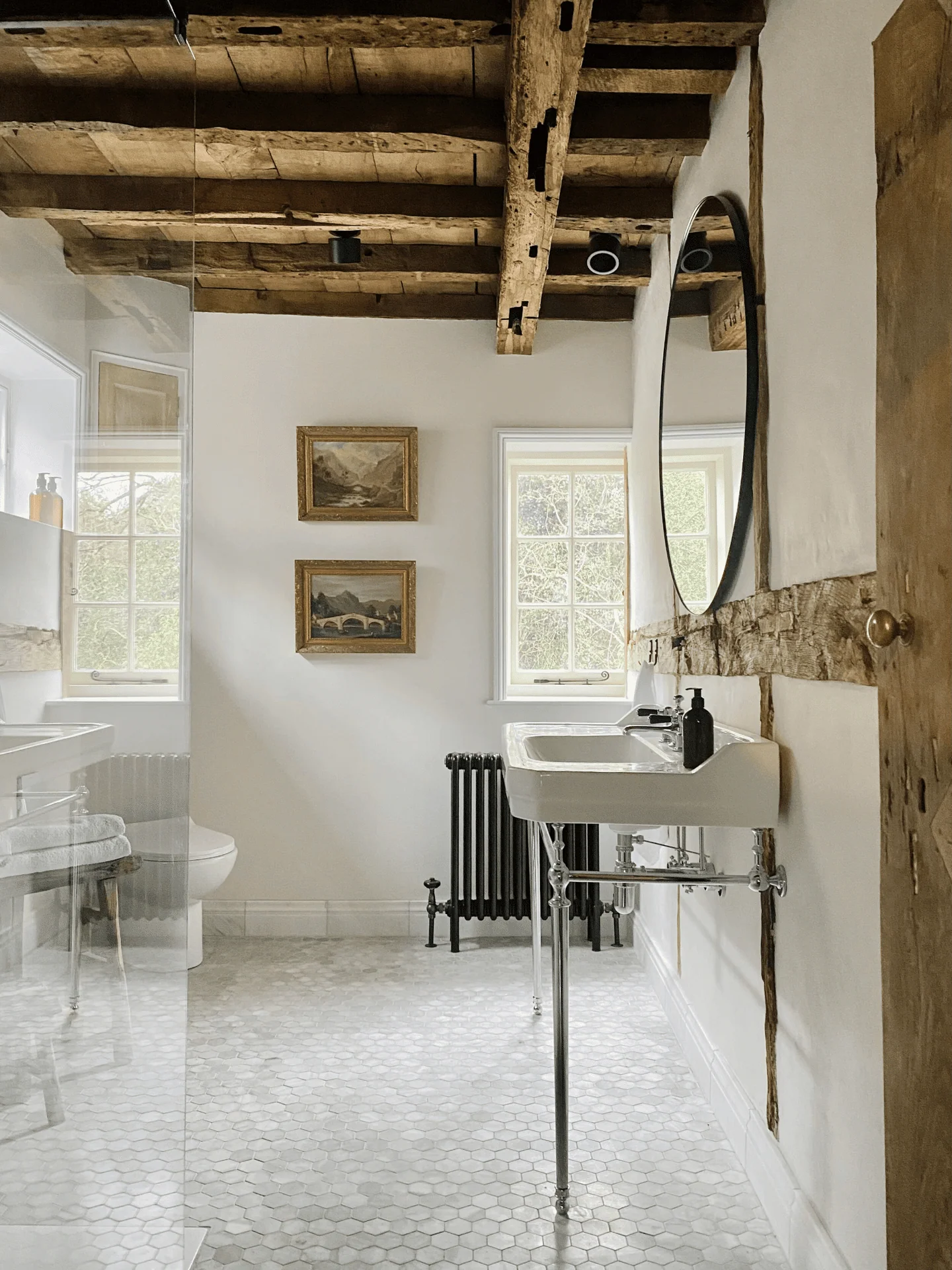
Image Source: My Tiny Estate
Ceiling beams can make a tall Tuscan Style bathroom feel warmer and more grounded. Choose wood that looks aged, hand-scraped, or slightly imperfect instead of glossy and new. This works well with high ceilings, plain walls, or large windows.
Scale It: Use fewer, thicker beams and match the wood tone with the vanity or door.
19. Tumbled Stone Floor Borders That Frame The Room Quietly
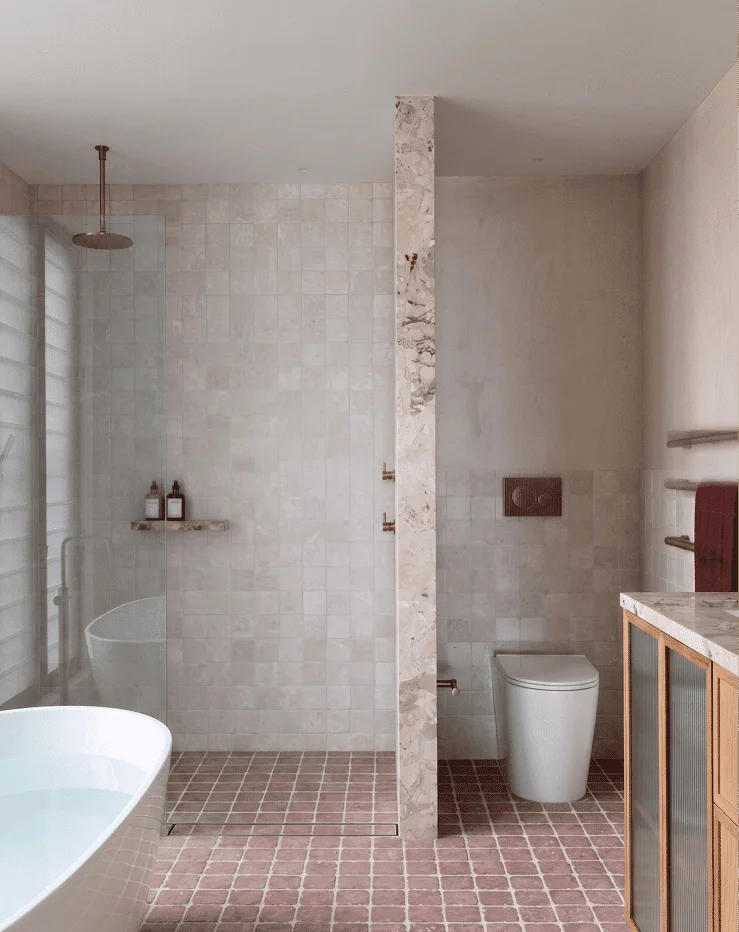
Image Credit: @aeria.country.floors
A tumbled stone border can make the floor feel designed without using a loud pattern. In a CDC/MMWR bathroom injury report, Judy A. Stevens and colleagues estimated that 234,094 nonfatal bathroom injuries among people aged 15 and older were treated in U.S. emergency departments in 2008, so beauty still needs practical grip in wet zones.
Choose Wisely: Use slip-resistant stone finishes near tubs, showers, and vanity zones.
20. A Curbless Tuscan Shower With A Plaster-Look Finish
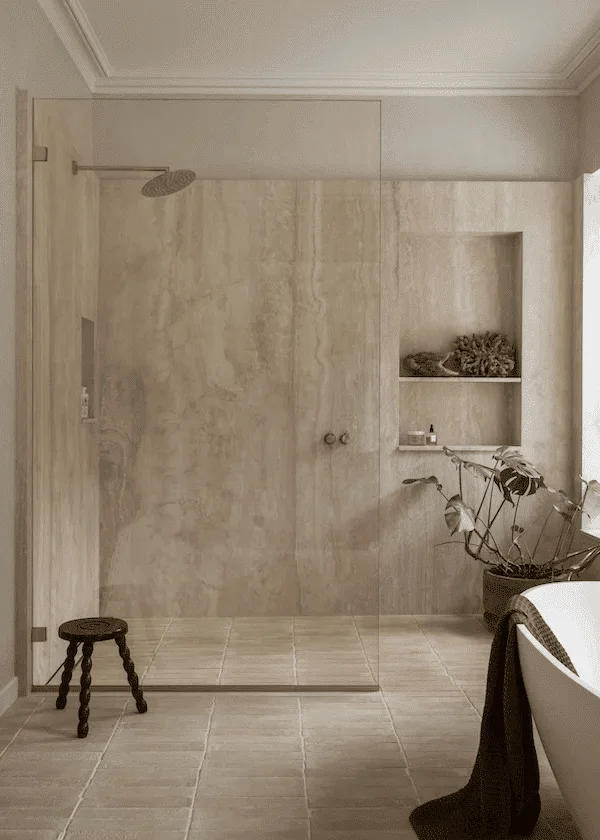
Image Source: Cle Tile
A curbless shower can make a Tuscan Style bathroom feel updated without losing warmth. The key is to avoid a cold hotel look. Plaster-look walls, warm stone flooring, and aged metal fixtures keep the room open but still earthy, which connects naturally with cleaner modern bathroom design ideas.
Plan Early: Finalize the floor slope before choosing tiles.
21. Linen Sink Skirt Under A Stone Vanity
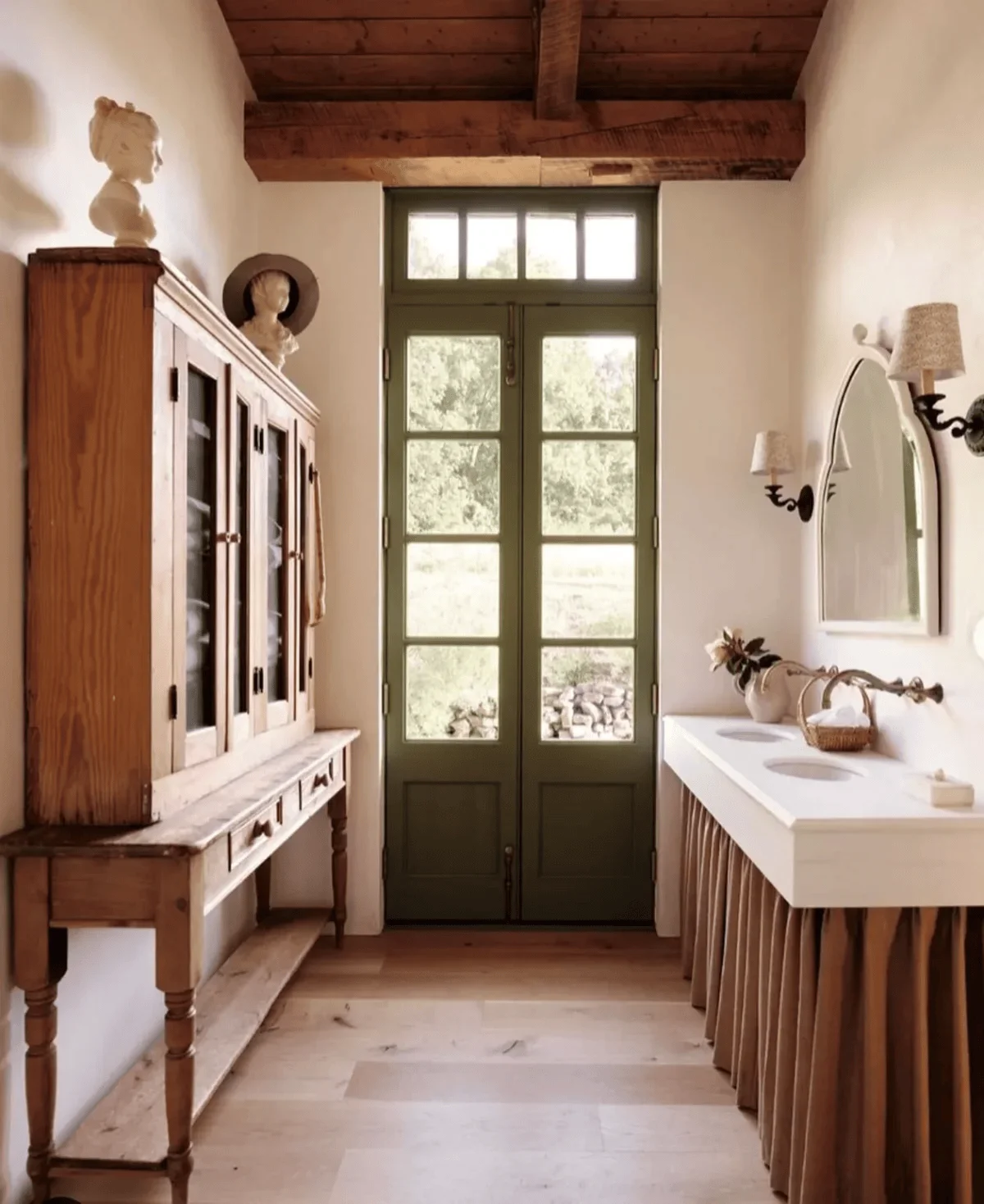
Image Source: Boxwood Ave
A linen sink skirt can soften a stone vanity without adding bulky cabinetry. It gives the bathroom a relaxed, farmhouse-Tuscan feel, especially with a carved basin, brass faucet, or terracotta floor.
Keep It Practical: Choose cream, oatmeal, or warm beige linen and make the skirt removable for cleaning.
22. Wall Sconces Mounted Beside The Mirror, Not Above It
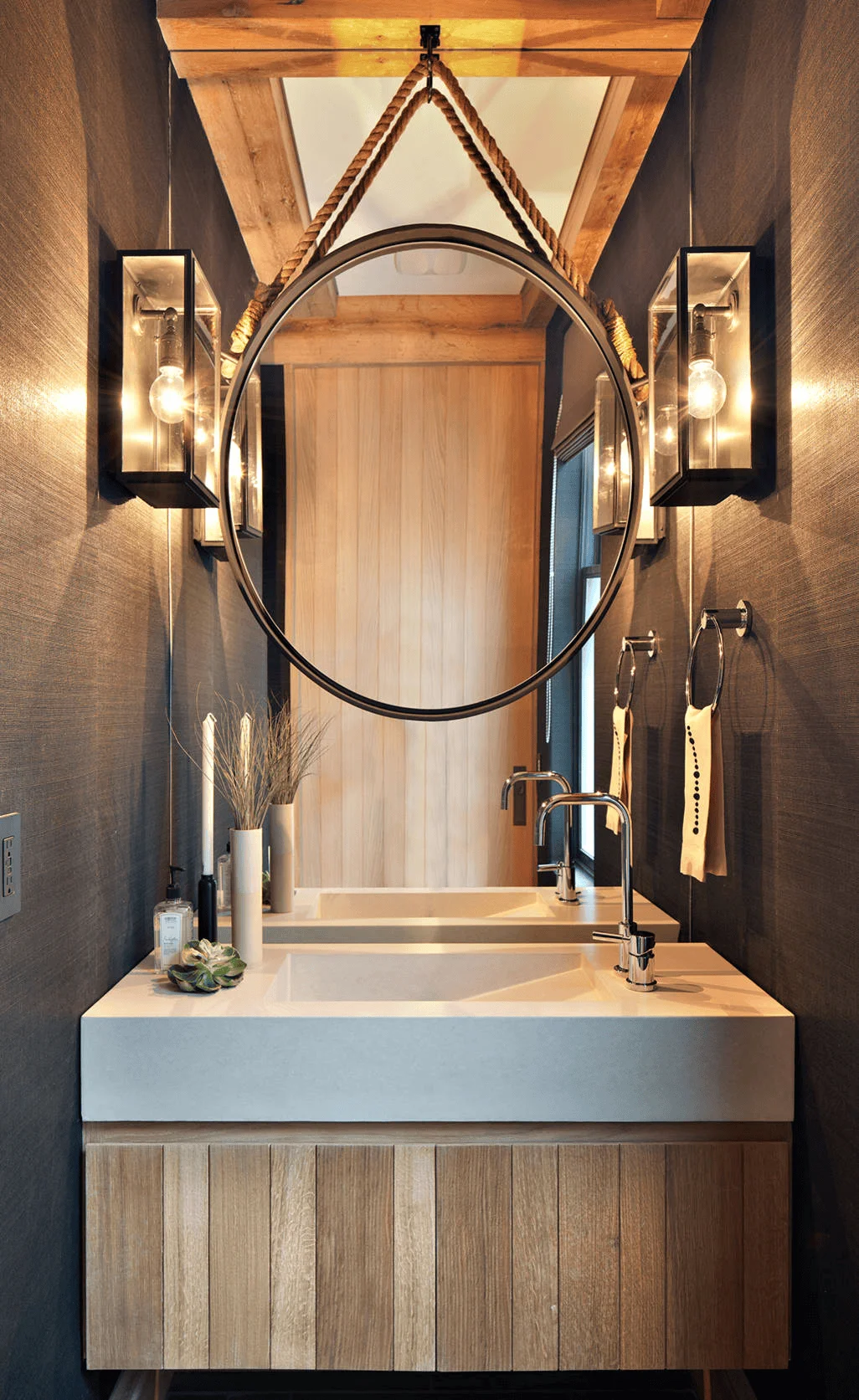
Image Source: Houzz
Tuscan Style bathrooms feel warmer when light comes from the sides rather than from a single harsh fixture above the mirror. Sconces beside an arched mirror create softer shadows and make the vanity feel more old-world.
Place Them Well: Mount sconces around face level and use warm bulbs with iron, brass, ceramic, or frosted glass shades.
23. Antique Pottery Used As One Strong Decor Moment
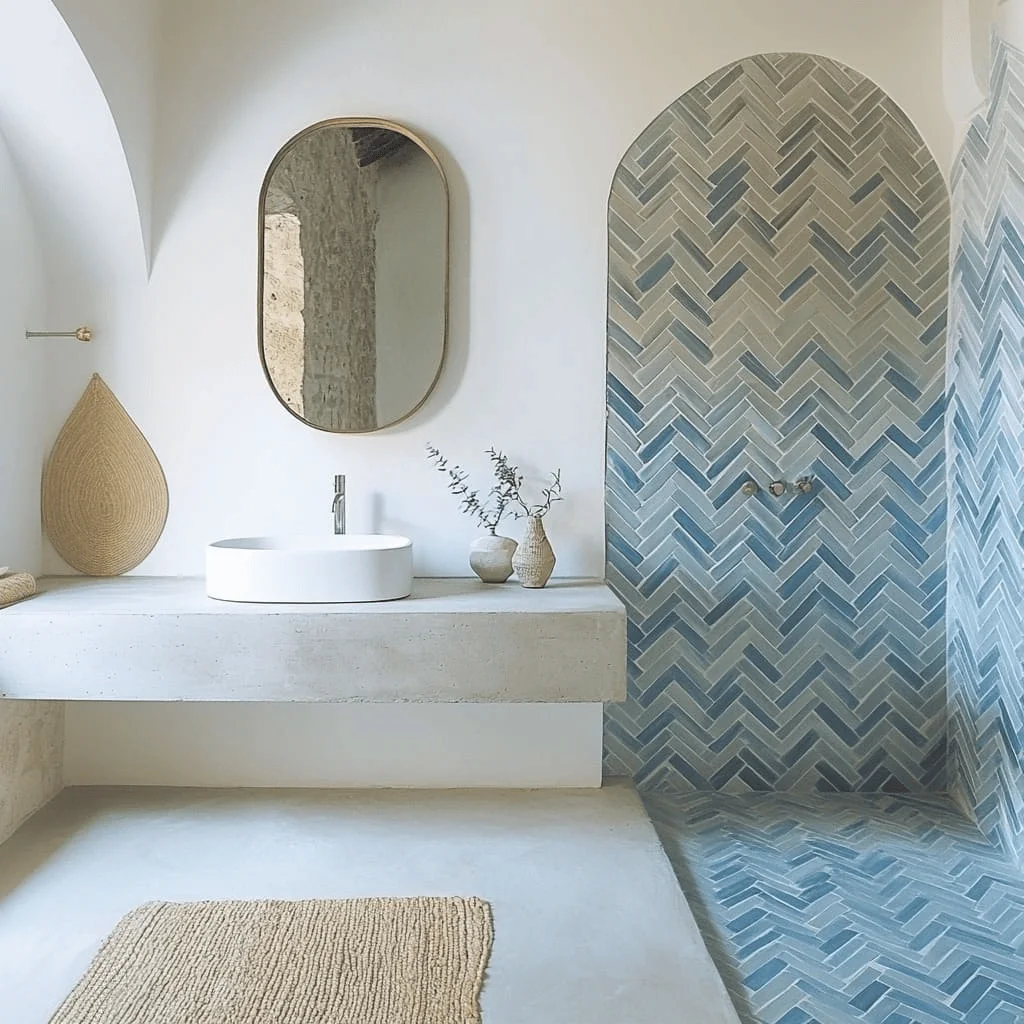
Image Source: Fancy House Design
Tuscan bathroom decor should feel collected, not crowded. One antique-style olive jar, ceramic vessel, or terracotta pot can add more character than several small accessories.
Style With Focus: Place one large piece on a deep windowsill, inside an alcove, beside the tub, or on a stone ledge.
24. Herringbone Terracotta Tiles For Long Narrow Bathrooms
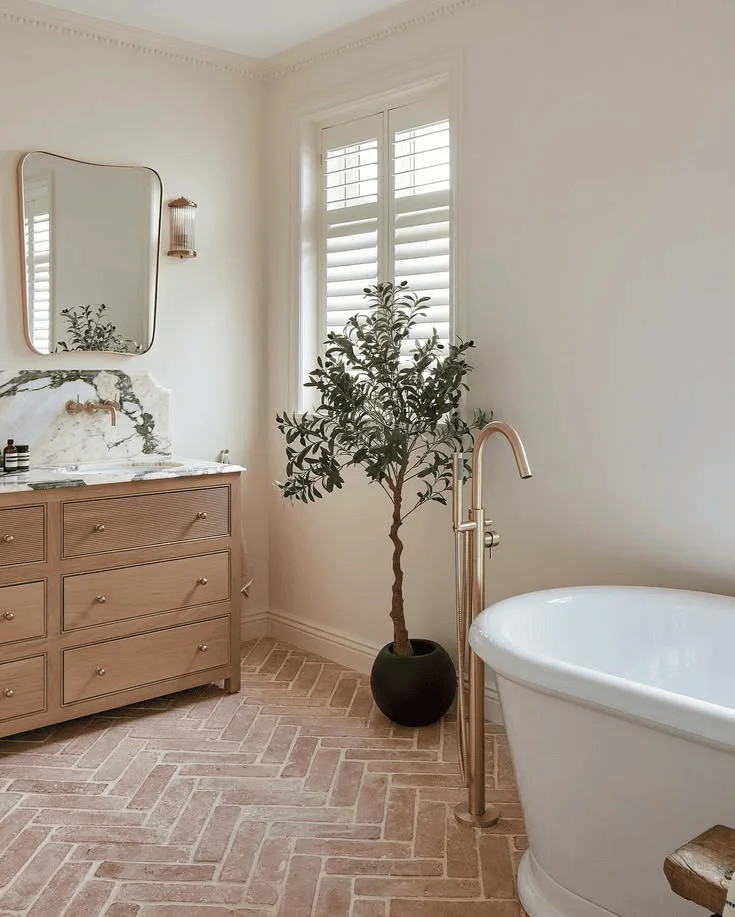
Image Source: Pinterest @Michelle Keehn
Terracotta does not always need to be laid in basic squares. In a long, narrow bathroom, a herringbone pattern can guide the eye forward and make the layout feel more designed.
Lay It Right: Run the pattern lengthwise, seal the terracotta properly, and keep the walls plain.
25. Stone Thresholds That Separate Wet And Dry Zones
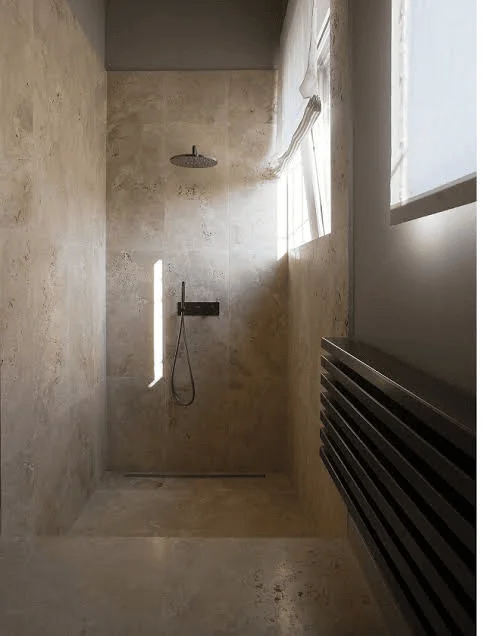
Image Credit: Pietre di Rapolano
A stone threshold can make the bathroom feel more architectural than a basic metal strip. Use limestone, travertine, or marble between the shower and vanity area to create a clean transition.
Connect Materials: Match the threshold with the vanity top, shower bench, or floor border so wet and dry zones feel intentional.
What Actually Defines Tuscan Bathroom Design
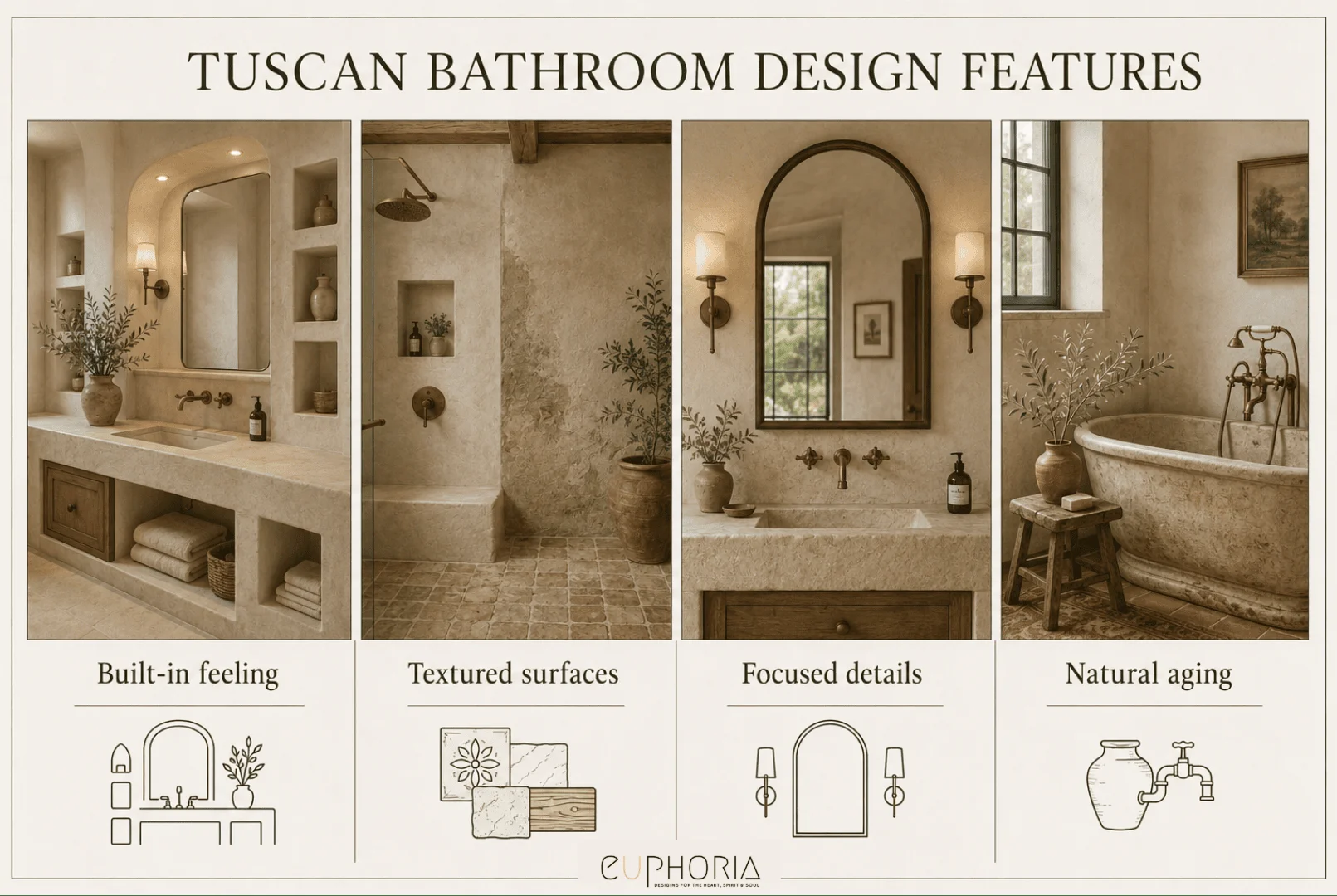
A Tuscan bathroom is not defined by one arch, one terracotta tile, or one rustic mirror. It works when the room feels grounded, warm, and naturally aged. The strongest Tuscan bathrooms usually share four simple qualities.
- Built-in feeling: Vanities, ledges, niches, and shelves should look like they belong to the room, not like pieces added later.
- Textured surfaces: Limewash, stucco, stone, wood, and handmade tile add depth without needing loud color.
- Focused details: One arched mirror, one patterned tile wall, or one iron window grille can shape the mood better than many small accents.
- Natural aging: Stone, brass, terracotta, wood, and plaster should soften beautifully over time instead of needing to look perfect forever.
Before choosing decor, decide which part of the bathroom should feel most permanent. That one decision will make the vanity, wall finish, lighting, and storage easier to plan.
How To Choose The Right Tuscan Direction
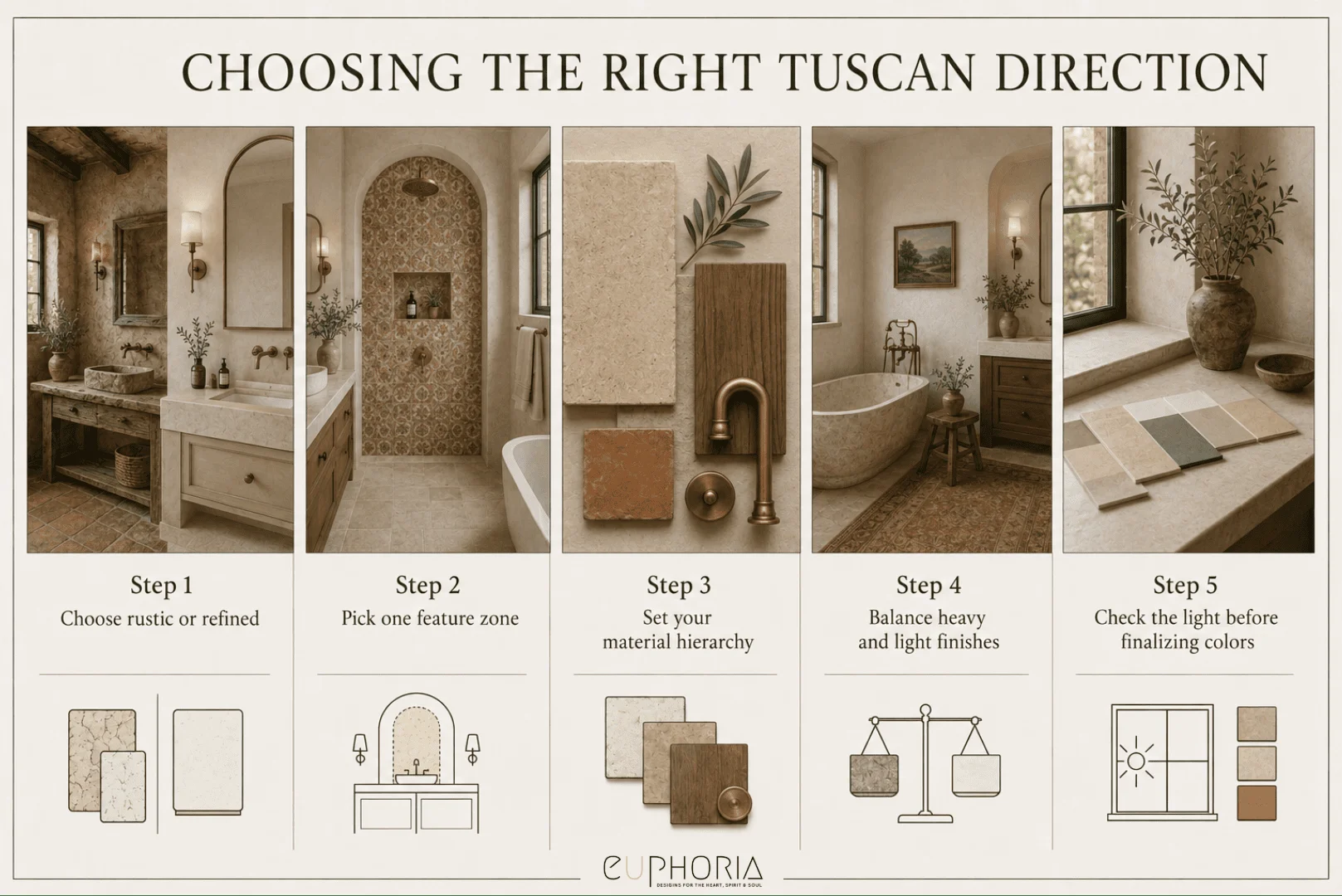
Tuscan-style bathroom design ideas work best when you set a few rules before shopping for tiles, mirrors, or fixtures. Otherwise, the bathroom can quickly become a mix of beautiful things that do not belong together.
Step 1: Choose rustic or refined: Rustic Tuscan bathrooms lean into rough plaster, aged wood, terracotta, and irregular stone. Refined Tuscan bathrooms feel smoother, with marble, cleaner lines, and softer finishes. Terracotta and stone are classic tile pairing ideas that never date.
Step 2: Pick one feature zone: Let one area carry the room. This could be the shower wall, vanity, tub alcove, arched mirror, or window grille.
Step 3: Set your material hierarchy: Decide which material leads and which ones support it. If marble leads, keep the walls quieter. If terracotta leads, keep the vanity calmer.
Step 4: Balance heavy and light finishes: Darker tones and rough textures usually work better near the floor, while lighter plaster or stone keeps the upper walls open. The Tuscan kitchen carries the same material story into the busiest room.
Step 5: Check the light before finalizing colors: Tuscan colors change a lot under natural and warm artificial light, so test samples in the actual bathroom before confirming the palette. Unsure which warmth you are actually drawn to? This Tuscan vs Mediterranean design guide draws the line clearly.
Before buying anything, check if the bathroom has one base style, one focal zone, and one clear lead material. For a simpler brief, guest bathroom design follows the same material logic in a smaller footprint.
Mistakes That Instantly Break The Tuscan Look
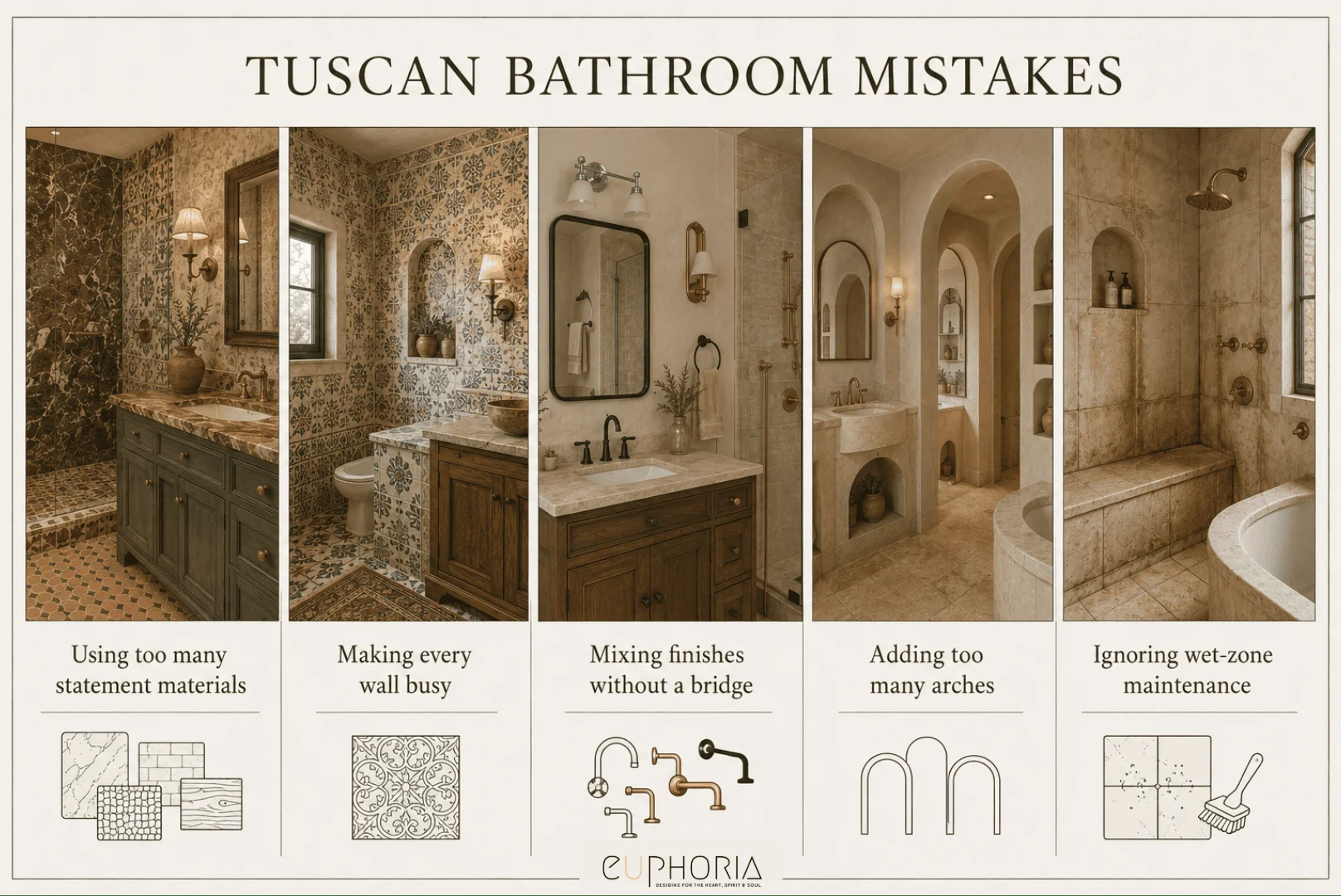
Tuscan bathrooms can look beautiful with very few elements, but they also become heavy quickly when the choices are not controlled.
- Using too many statement materials: Marble, terracotta, stucco, iron, wood, and patterned tile all need space to breathe.
- Making every wall busy: A patterned wall works better when the other walls stay quiet.
- Mixing finishes without a bridge: Very shiny surfaces beside rough stone can feel disconnected unless the color or shape ties them together.
- Adding too many arches: One strong arch feels architectural. Too many can make the room look staged.
- Ignoring wet-zone maintenance: Unsealed limestone, raw plaster, and rough stucco need careful placement around water.
- Using flat white lighting: Tuscan bathrooms need soft shadows to bring out the stone, plaster, and wood.
- Overdecorating the vanity: A carved basin, aged faucet, or stone counter often needs fewer accessories, not more.
If the room already feels busy, remove one competing material before adding another detail.
Key Decisions That Shape The Outcome
Use this table before finalizing materials. It will help the bathroom feel planned instead of looking like a collection of separate Tuscan-style pieces.
| Decision | Lock This Early | Why It Matters |
| Base direction | Rustic or refined | Sets the full mood |
| Main material | Marble, terracotta, stone, wood, or plaster | Keeps the room focused |
| Wall finish | Limewash, stucco, plaster, tile, or stone | Controls texture and depth |
| Feature zone | Vanity, tub, shower, arch, or window | Gives the eye one place to rest |
| Metal finish | Iron, aged brass, copper, or bronze | Keeps fixtures consistent |
| Lighting style | Soft, layered, and warm | Brings out natural texture |
| Maintenance level | Sealed, washable, or raw finishes | Makes the bathroom easier to live with |
If two finishes are competing, keep the one that supports the main material and remove the one that only adds noise.
Bringing Your Tuscan Bathroom Vision to Life
Tuscan bathroom design works best when it feels built, not decorated. Start with one clear material, such as limewash, terracotta, marble, travertine, limestone, or warm wood, then let every other detail support it.
If you want the bathroom to feel warm, grounded, and easy to live with, bring in lighting, fixtures, storage, and decor slowly. Through our tailored Residential Interior Design Service in Dubai, the team at Euphoria Interiors shapes the materials, layout, and mood together so your Tuscan-style bathroom feels authentic from the beginning
Read more about Tuscan style bedroom ideas for added inspiration.