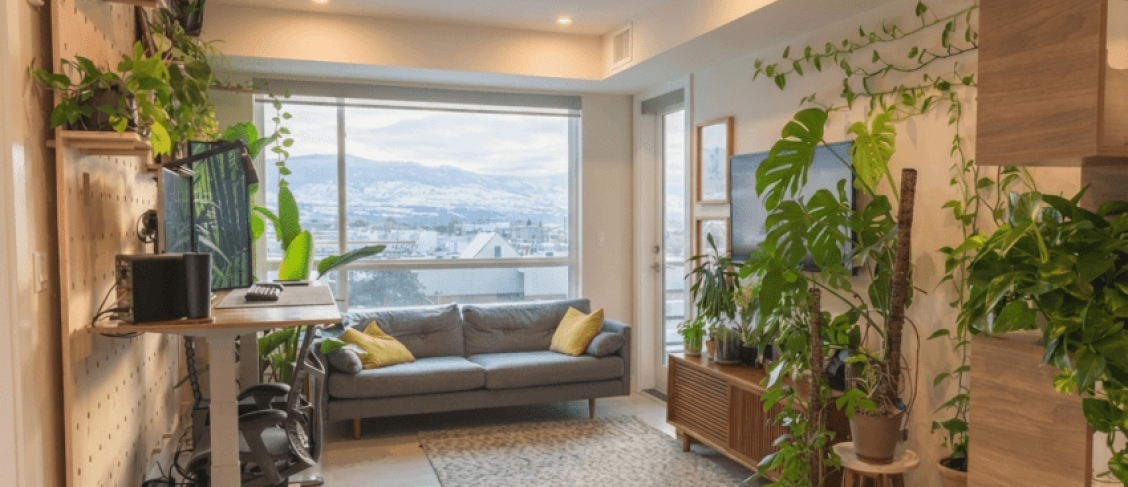
You scroll through your phone on a Tuesday night. You stop at a photo of a living room that looks amazing. A large Fiddle Leaf Fig sits in the corner. Pothos vines hang perfectly from a shelf. The room looks clean. It looks effortless. The whole space feels put together. It makes you want to step into the screen and live there.
Then you look up at your own corner. A sad succulent sits in a cheap orange plastic pot. A dusty fern is shoved next to the TV. The floor looks messy. You see cords, dirt, and mismatched saucers. You wonder why your room looks like a garden center storage closet instead of a nice living space.
We have all been there. You buy a plant because it looks cool in the shop. You bring it home. You put it in the only empty spot left. You repeat this five times. Suddenly, your room feels cluttered. It feels stressful instead of peaceful.
This ends now.
We are not here to talk about feelings or vague concepts. We are here to talk about steps. There is a simple logic to aesthetic plant setup. It relies on geometry, shapes, height, and texture. It is a formula. If you follow the formula, you get the result.
By the end of this post, you will know exactly what to fix. You will know what to buy. You will know what to move and what to throw away to fix your indoor jungle aesthetic.
What is Aesthetic Plant Styling? (And Why You Should Care)
Aesthetic plant decor is the act of arranging plants to match your room design. It is not just about keeping them alive. It is about making them look like they belong there. It is not hoarding. It is choosing carefully.
1. Mental Clarity and Focus Clutter causes stress. Your brain constantly processes everything in your visual field. If your plant corner is messy, your brain works harder. A designed space feels calm. It allows your eyes to rest. When you remove the visual noise of plastic pots and tangled vines, you create a space where you can actually think.
2. The Biophilic Effect “Biophilia” is the human need to connect with nature. Studies show that seeing nature helps you focus and lowers your heart rate. But this only works if the view is pleasing. A dead plant or a messy pile of plastic pots does not help. It actually increases anxiety. A structured green space restores your attention span.
3. Real Estate Value A styled room looks expensive. Large, healthy plants in nice pots act like high-end furniture. They upgrade your rental or your home without a renovation. They make the ceilings look higher, and the room look wider. It is the cheapest way to make a home look luxurious.
The Execution Framework: How to Fix Your Setup
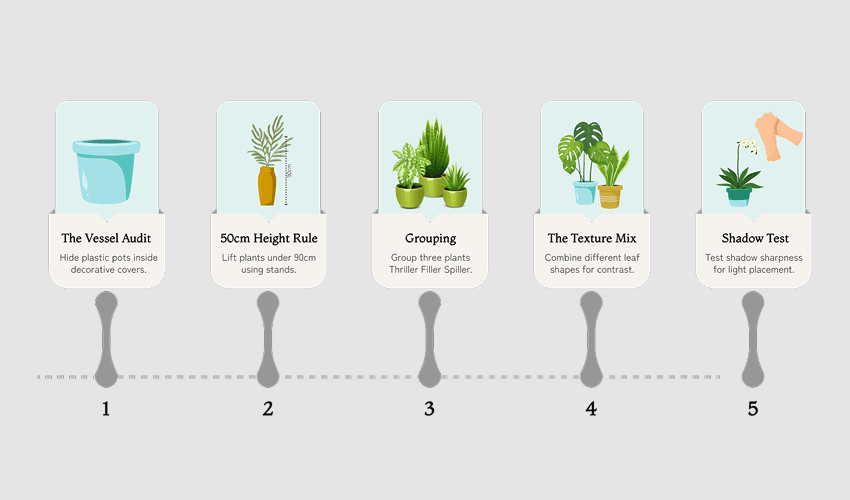
Step 1: The Vessel Audit
Stop using the orange or brown plastic nursery pots. The plastic pot is for the grower. It is for the truck that transported the plant. It is not for your living room. It looks temporary. It looks cheap. The color is usually a rusty orange or black, which rarely matches interior decor.
The “Saucer Problem” Many people buy a nice pot but leave the clear plastic saucer underneath it to catch water. This looks terrible. It attracts dirt and algae. It ruins the clean lines of the pot. It breaks the visual flow from the pot to the floor.
The Action Plan:
-
Measure: Take a tape measure. Check the width of the top of your plastic pot.
-
Buy: Get a “cover pot” (a cachepot). This is a decorative pot with no hole in the bottom. It must be 2 to 3 cm wider than your plastic pot.
-
Hide: Put a felt pad inside the cover pot. Drop the plastic pot inside. The water drains into the cover pot, not onto your floor. You do not see the plastic saucer anymore.
The Design Rule:
Follow the Rule of Two. Use a maximum of two materials for your pots in one room. If you use five different colors, it looks like a garage sale.
-
Good Combination: Matte White Ceramic and Terracotta.
-
Good Combination: Grey Concrete and Woven Basket.
-
Bad Combination: Plastic plus Glass plus Blue Ceramic plus shiny Metal plus Wood.
Pro Tip: Uniformity fixes clutter. If you buy three pots for a shelf, make sure they are the same color. This tricks the eye. The plants look different, but the pots look the same. This creates calm.
Step 2: The 50cm Height Rule
Plants on the floor look short. They look sad. They make your ceilings look lower because your eyes look down.
Unless a plant is at least 90cm (3 feet) tall, do not put it directly on the floor. It is too small. It will look like a mistake. It gets lost next to sofas and chairs.
The Fix:
-
Plants under 30cm: Put them on shelves, windowsills, or coffee tables. They need to be at eye level.
-
Plants between 30cm and 90cm: Put them on a plant stand. The stand adds height. It turns a medium plant into a tall statement piece.
-
Plants over 90cm: These are your “floor plants.” They can sit on the ground.
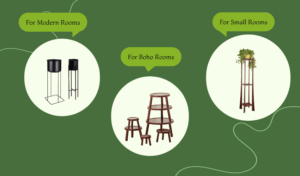
Choosing the Right Stand: The stand is furniture. It must match your room.
-
For Modern Rooms: Use thin black metal stands. They disappear and let the plant float.
-
For Boho Rooms: Use wooden stools or rattan stands.
-
For Small Spaces: Use a tall, skinny stand. It lifts the plant without taking up floor space.
This technique draws the eye up. It uses the “vertical air space.” It makes the room feel bigger. This is the secret to small space plant decor ideas.
Step 3: Grouping (The Triangle Method)
Never place one small plant alone on a long shelf. It looks lonely. It lacks impact.
Never place two small plants in a straight line, side-by-side. It looks stiff. It looks like a soldier lineup.
Use the Triangle Method to group your plants. This relies on the “Rule of Three.” Odd numbers are pleasing to the human brain. Even numbers create symmetry, which can feel boring. Odd numbers create balance.
Build Your Triangle:
-
Back Left (The Thriller): Place your tallest plant here. Example: A Snake Plant or a tall Orchid. This sets the height limit.
-
Front Right (The Filler): Place your bushy, medium-height plant here. Example: A Calathea or a Peace Lily. This adds weight to the group.
-
Front Center (The Spiller): Place your trailing plant here. Example: A Pothos or String of Pearls. This connects the shelf to the space below.
Measurement Check: Leave 10cm to 15cm of space between the pots.
-
Too Close: If the leaves are tangled, it looks messy. It also invites bugs to jump from one plant to another.
-
Too Far: If the gaps are huge, they look like separate plants, not a group.
-
Just Right: The leaves should gently touch or almost touch.
Step 4: The Texture Mix
Green is a color. Texture is the design.
If you have five plants and they all have small, dark green leaves, your setup is boring. It blends into a green blob. You need contrast to make the eye stop and look.
The Formula: Combine at least two different leaf types in every group. Use this “Menu” to pick your mix.
The Leaf Menu:
-
The Architect: Tall, stiff, sword-like leaves. (Snake Plant, Yucca).
-
The Plate: Big, round, flat leaves. (Rubber Plant, Fiddle Leaf Fig, Monstera).
-
The Lace: Tiny, soft, detailed leaves. (Ferns, Asparagus Fern).
-
The Rope: Long vines. (Pothos, Philodendron).
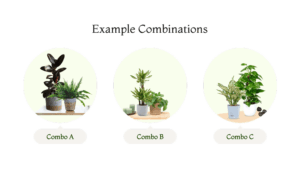
Example Combinations:
-
Combo A: Big Leaf (Rubber Plant) plus Soft Leaf (Fern). The hard shiny leaf looks good next to the soft matte leaf.
-
Combo B: Spiky Leaf (Dracaena) plus Round Leaf (Pilea). The sharp lines contrast with the circles.
-
Combo C: Solid Green plus Spotted (Variegated). If you have a dark green plant, put a white-and-green plant next to it.
Go to your plant corner. Look at your plants. If three plants next to each other look the same, move one to a different room.
Step 5: Lighting (The Shadow Test)
Lighting makes the room look good. It also keeps the plant alive. A dead plant is never aesthetic. But lighting is also about drama. The way light hits a leaf changes the mood of the room.
The Shadow Test: Hold your hand 30cm above the spot where you want the plant.
-
Sharp Shadow: Put a cactus, Fiddle Leaf Fig, or Bird of Paradise here.
-
Fuzzy Shadow: Put a Monstera, Pothos, or Philodendron here.
-
No Shadow: Put a Snake Plant or ZZ Plant here.
Styling Moves:
-
Place a floor lamp behind a large plant. Turn it on in the evening. The light will shine through the leaves. It shows the veins and the green color. It casts large, dramatic shadows on the ceiling. This creates a cozy plant corner idea instantly.
-
If your room is dark, do not buy those purple industrial grow lights. They look terrible. Buy a “full spectrum” white grow bulb. Screw it into a normal, stylish lamp. Now you have a nice lamp that also feeds your plants.
The Style Guide: Matching Plants to Your Vibe
Different homes have different styles. Your plants should match the furniture. Here is a quick cheat sheet.
1. The Minimalist Home
-
If your home is: Clean, white, and spacious.
-
Use these plants: Architectural varieties like Snake Plants, ZZ Plants, or Rubber Trees.
-
Use this arrangement: One large plant in a corner and one small plant on a desk. No clusters.
-
Use these pots: Matte white or concrete cylinders only.
2. The Boho / Cozy Home
-
If your space is: Warm, soft, full of rugs and pillows.
-
Use these plants: Wild, trailing plants like Pothos, Ferns, and Monstera.
-
Use this arrangement: Use the Triangle Method everywhere and hang plants from the ceiling.
-
Use these pots: Terracotta, baskets, or stone.
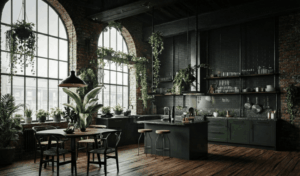
3. The Modern Industrial Home
-
If your space has: Brick, metal, and black leather.
-
Use these plants: Tall, dark green trees like Ficus Audrey or Dracaena.
-
Use this arrangement: Use tall metal stands.
-
Use these pots: Black ceramic or grey metal.
Important Tips and Warnings
Warning: We understand you love plants, but please try to choose one that fits your lifestyle. A struggling plant can actually take away from the vibe you are trying to create. It is always best to check your light first. If you have a dark corner, a Snake Plant or a realistic faux plant is a much happier choice than a Fiddle Leaf Fig.
Cleaning: Dust your leaves. A dusty leaf looks grey and neglected. A clean leaf reflects light. It looks shiny and rich. Use a damp microfiber cloth. Support the leaf with your hand. Wipe it gently. Do this every Saturday morning. It takes ten minutes.
Budget: Budget-friendly indoor plant decor is about uniformity, not price. Standard terracotta pots are very cheap. If you put every plant in a terracotta pot, it looks like a deliberate design choice. It looks rustic and warm. It looks better than expensive mismatched pots.
Safety: If you have a dog or a baby, the aesthetic must be safe.
-
Move toxic plants (like Lilies or Sago Palms) out of the house.
-
Put heavy pots on the floor so they cannot be knocked over.
-
Put delicate plants on high shelves.
Bringing It All Together
You now have a formula. The trick to making your plant setup more aesthetic is not a secret talent. It is just geometry.
-
Hide the plastic in matching pots.
-
Lift the short plants off the floor.
-
Group them in triangles of three.
-
Mix the textures so they pop.
Look at your space right now. Pick one corner. Follow these rules today. You will see the
difference instantly. The room will feel larger. It will feel cleaner. It will feel like home.
We apply this same level of detail to every aspect of your home at Euphoria Interiors. From the layout of the sofa to the lighting in the hall, we help you choose the right furniture and decorto make your greenery shine. A great home is a series of smart choices.