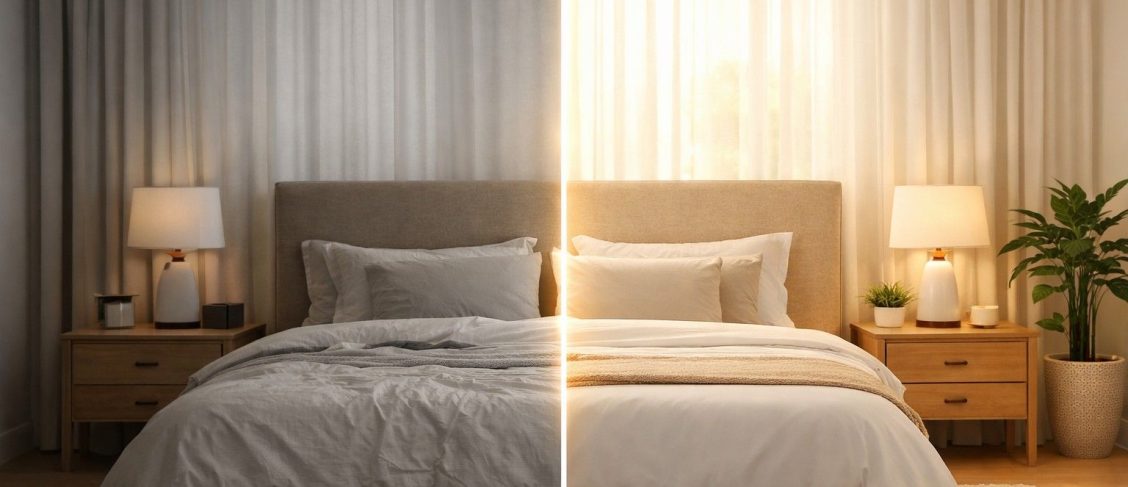
I rearranged my bedroom three times in one year before I finally stopped waking up feeling like I hadn’t slept at all.
I’d done everything I thought I was supposed to do. Blackout curtains. A white noise machine. No caffeine after 2 pm. And still, every morning I’d drag myself out of bed feeling vaguely unsettled like I’d spent the night bracing for something that never came.
A friend casually mentioned feng shui. I rolled my eyes a little (okay, a lot). But I was tired enough to try anything. So I started reading. Then I started moving furniture. And something genuinely shifted not just in how the room felt, but in how I slept.
This isn’t a mystical guide. I’m not going to ask you to burn incense or talk about your birth element (unless you want to there’s a section for that). This is a practical breakdown of feng shui bedroom layout principles, what they actually mean for a homeowner who just wants to design a bedroom that works, and the specific changes that made the biggest difference for me.
What “Feng Shui Bedroom Layout” Actually Means
Feng shui (pronounced “fung shway”) is a Chinese system of spatial arrangement that dates back over 3,000 years. The core idea is that the way energy called qi (pronounced “chee”) flows through a space affects the people living in it. A bedroom with good feng shui is one where qi moves gently and freely, supporting rest, connection, and calm, says The Qi Flow, one of the most widely referenced practical feng shui resources online.
That might sound abstract. But when you translate it into practical terms, it maps surprisingly well onto what modern sleep researchers like Dr. Matthew Walker (neuroscientist at UC Berkeley and author of Why We Sleep) and Dr. Charles Czeisler (sleep researcher at Harvard Medical School) already know that your physical environment is one of the most powerful levers you have over the quality of your rest.
A 2024 ScienceDirect study found that bedroom environment including layout, light, temperature, and air quality directly affects sleep structure and the amount of time spent awake during the night. Feng shui, in many ways, is a centuriesold framework for optimizing exactly that environment.
For a homeowner designing or redesigning a bedroom, the feng shui approach gives you a useful lens: not just “does this look nice?” but “does this support rest?” Those aren’t always the same question.
The Feng Shui Bedroom That Changed Everything for Me: The Commanding Position
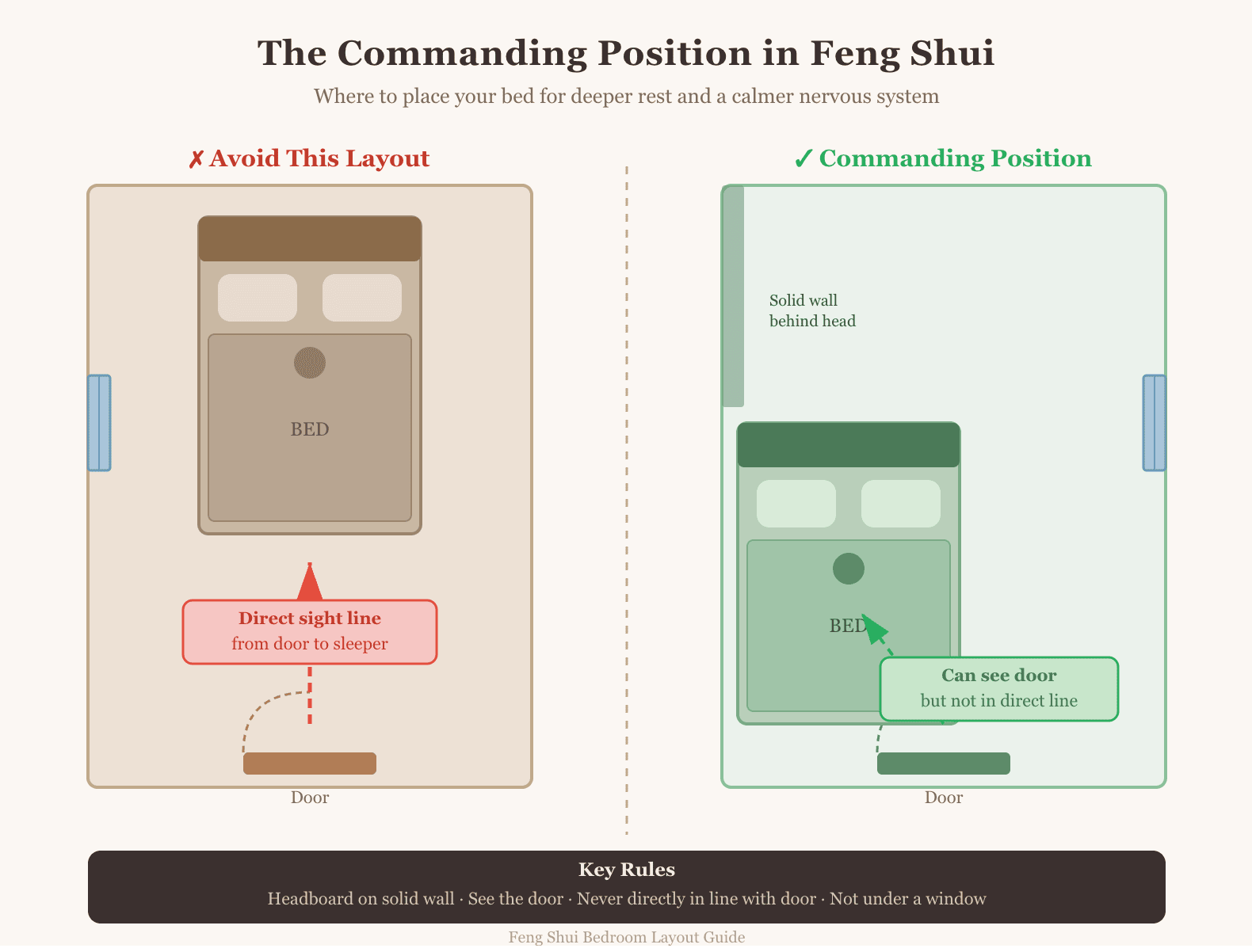
If there’s one concept in feng shui bedroom design ideas layout that matters more than anything else, it’s this: the commanding position.
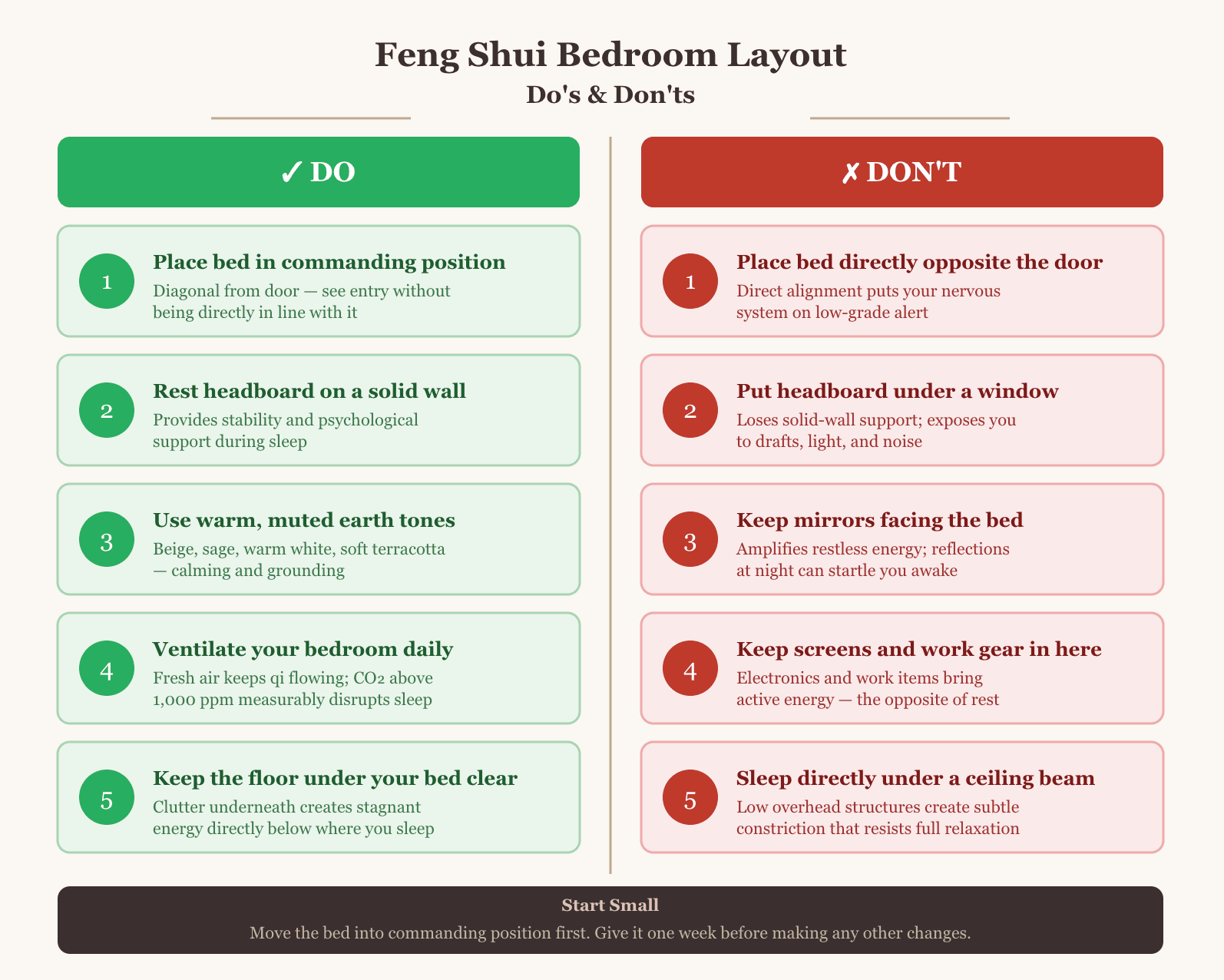
The commanding position means placing your bed so that when you’re lying in it, you can see the door to your room but you’re not directly in line with it. Ideally, your bed is diagonal from the door, with a solid wall behind the headboard and clear sightlines to the entrance.
I used to have my bed pushed against the wall directly opposite my bedroom door which meant anyone walking in would see me immediately, and I could see the doorway deadon from my pillow. Classic, right?
Except feng shui practitioners (and a lot of therapists who work with sleep anxiety) would call this a problem. When your bed is in direct alignment with the door, your nervous system registers it as a kind of exposure a lowgrade, subconscious sense that you can’t fully relax because you’re “in the line of fire.”
The fix was moving my bed to the diagonal corner. Suddenly the room felt more grounded. I had a view of the door but wasn’t staring straight at it. It sounds almost too simple but the Sleep Foundation found that 37% of Americans slept worse in 2023, and a significant portion attributed it to not feeling safe or settled in their sleep environment. Spatial psychology matters more than we give it credit for.
What to do:
-
Position your bed so you can see the door while lying down, but aren’t directly across from it.
-
Keep the headboard firmly against a solid wall not floating in the room, not under a window.
-
If the layout of your room makes the ideal commanding position impossible, place a mirror that reflects the doorway so you can see it from bed. It’s a practical workaround that feng shui actually endorses.
The Specific Spots to Avoid During Feng Shui Bed Placement
Beyond the commanding position, feng shui bedroom layout has several specific rules about where not to put your bed. I’ve tested most of them accidentally.
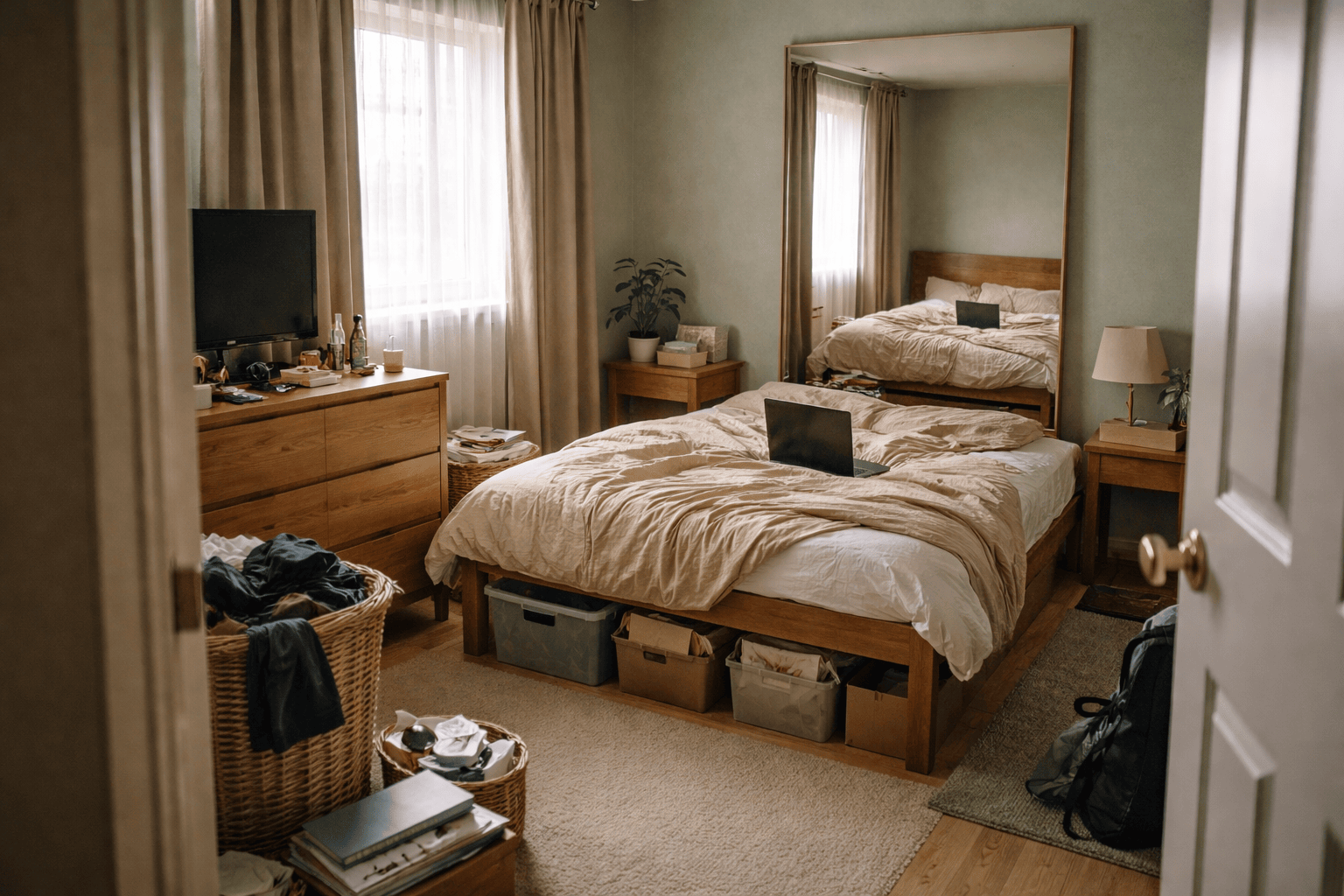
Under a window
I did this for two years in my last apartment. The logic against it is twofold: practically, you lose the solid wall support behind your head (which feng shui says affects how secure and supported you feel psychologically during sleep); and environmentally, windows let in drafts, noise, and light fluctuations.
Research backs this up bedroom temperature swings during the night are one of the leading causes of sleep disruption, and a bed under a window is directly in the path of those fluctuations.
Directly beneath a beam or sloped ceiling
If you have exposed ceiling beams or a sloped attic ceiling, avoid sleeping directly beneath the lowest point. Feng shui describes this as “cutting energy” pressing down on the sleeper.
Whether or not you buy that framing, there’s a real psychological principle here: low overhead structures in a sleep space create subtle feelings of constriction that can interfere with relaxation. If you can’t avoid the beam, a canopy bed effectively creates a visual buffer between you and the ceiling.
Sharing a wall with the bathroom
This one surprises people. Feng shui considers the bathroom a space of draining energy water flowing away. Having your headboard on the same wall as a toilet or drain means your sleep space is adjacent to that outward pull.
On a purely practical level, bathroom plumbing also creates noise (flushing, pipes settling) that can disrupt light sleep cycles without you being fully aware of it. If this is your only option, a solid headboard helps create a physical and psychological barrier.
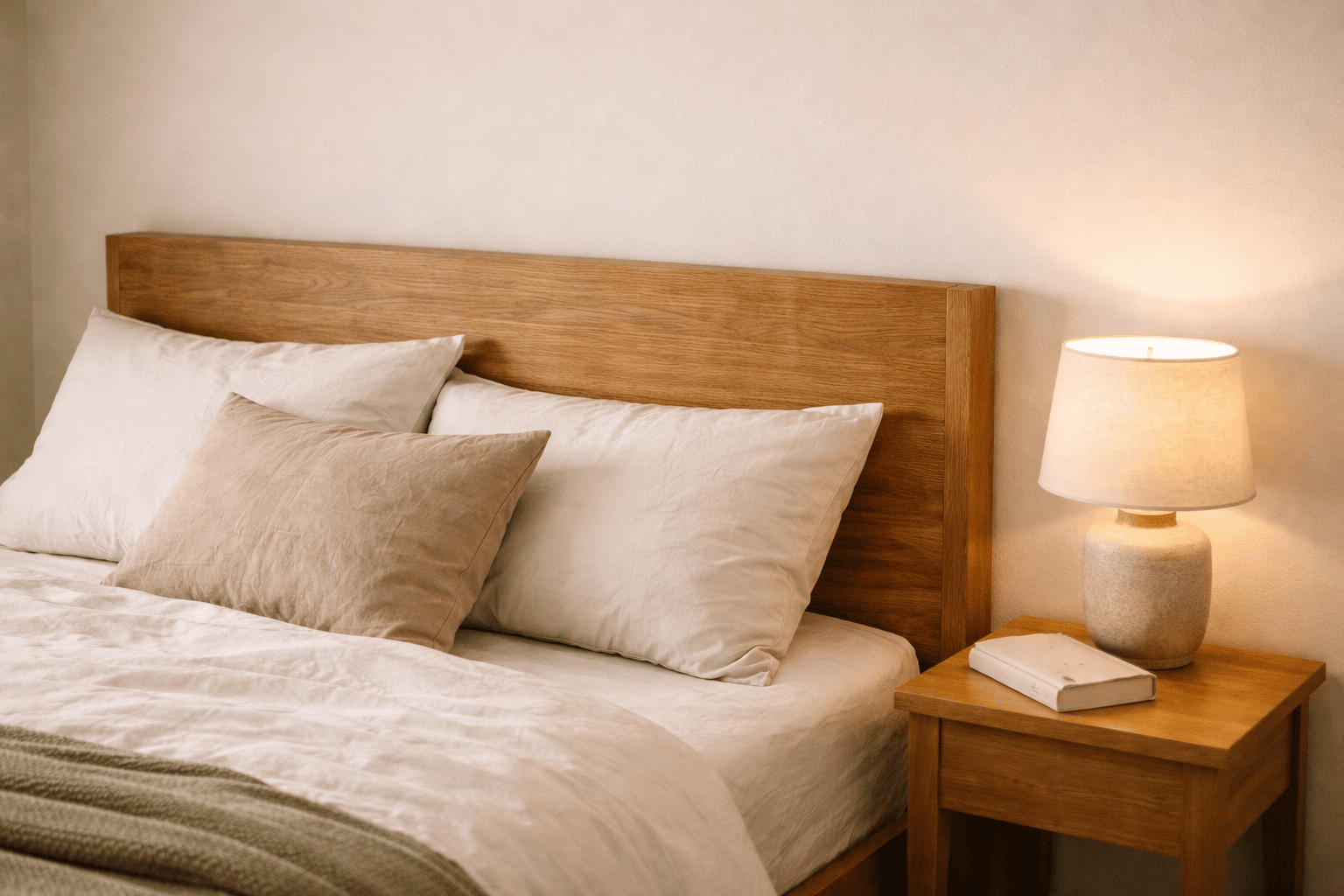
Against the same wall as the door
Your headboard shouldn’t share the wall where the door is located. This puts you physically close to the entry point of the room again, a subtle nervous system trigger that can keep your body from fully downregulating into deep rest.
What Needs to Leave Your Bedroom for Feng Shui Layout (Yes, Including That)
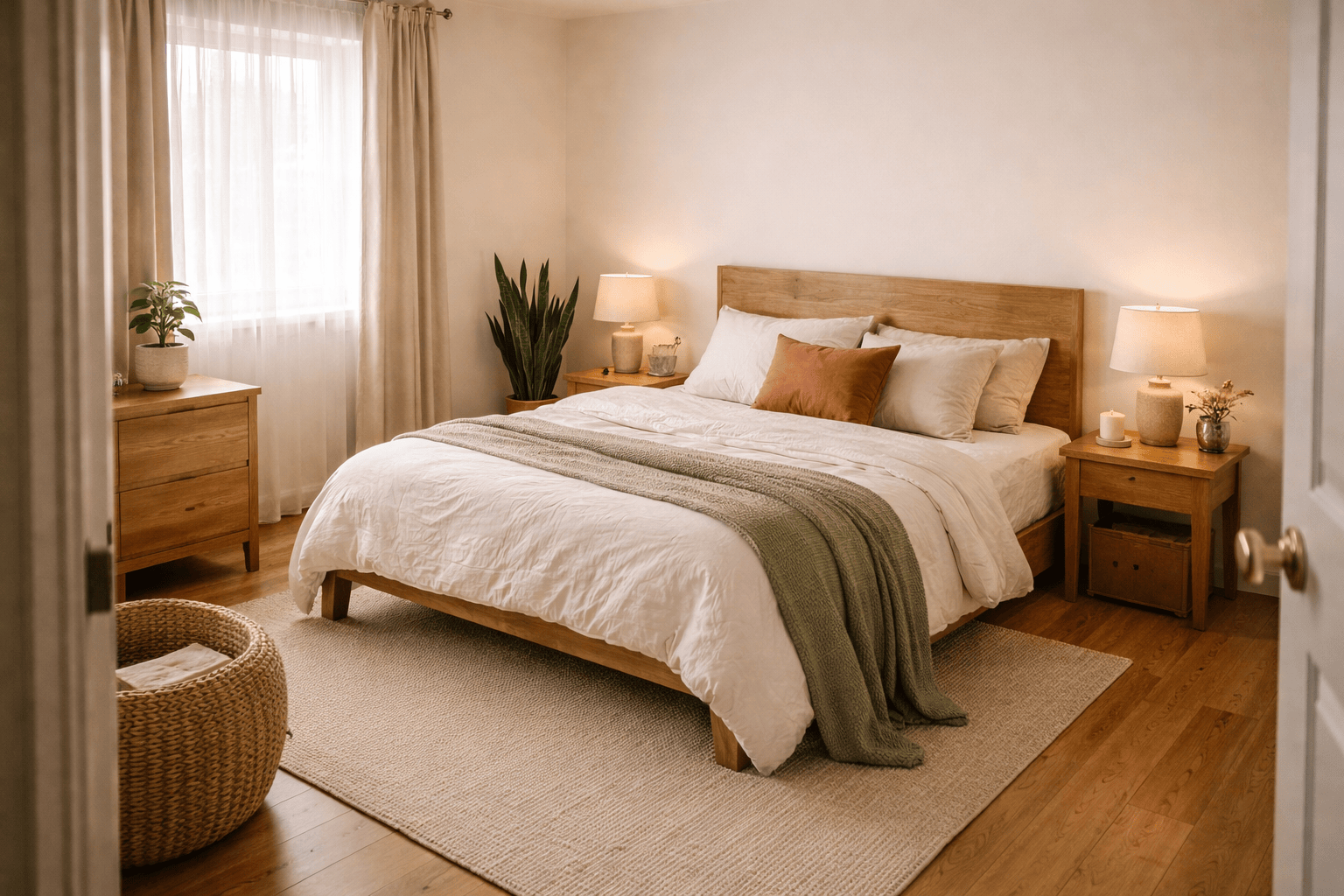
Here’s where a lot of people get stuck, because the feng shui answer to “what shouldn’t be in my bedroom?” is a fairly long list.
Electronics. TVs, laptops, work equipment feng shui considers these sources of active, stimulating energy that are incompatible with the restful qi a bedroom needs.
The science supports this: devices emit blue light that suppresses melatonin production, and the psychological association of screens with activity makes it harder to mentally unwind.
I moved my laptop out of my bedroom completely about two years ago. It felt dramatic at the time. I don’t miss it.
Mirrors facing the bed. This is one of feng shui’s more wellknown rules, and it’s one I was skeptical of until I thought about it carefully. The concern is that mirrors amplify energy they reflect and multiply what’s in the room.
A mirror facing your sleeping body is said to disturb rest by bouncing energy back at you during sleep.
The practical version of this? Waking up disoriented and seeing your own reflection in the dark is genuinely startling, and startling your nervous system at 3am is not great for sleep quality. If you have a mirror in your bedroom, angle it so it doesn’t directly face the bed.
Clutter, especially under the bed. Feng shui is fairly firm here: storage under the bed creates stagnant energy directly beneath where you sleep. I used to keep boxes of old papers, seasonal clothes, and a collection of things I didn’t know where else to put under my bed.
Clearing it out felt lighter in a way I didn’t expect. If you need the underbed storage, feng shui recommends keeping only sleeprelated items there extra linens, blankets. Nothing with emotional weight.
Work materials. A desk and work setup in the bedroom blurs the psychological boundary between work and rest something a lot of us learned the hard way during the pandemic years. If your space requires it, use a room divider or curtain to visually separate the work zone from the sleep zone.
The Five Feng Shui Elements
Feng shui organizes the world into five elements: wood, fire, earth, metal, and water. For bedrooms, the goal is generally a balance that leans toward grounding and calm less fire, more earth and wood.
In practical terms for a homeowner:
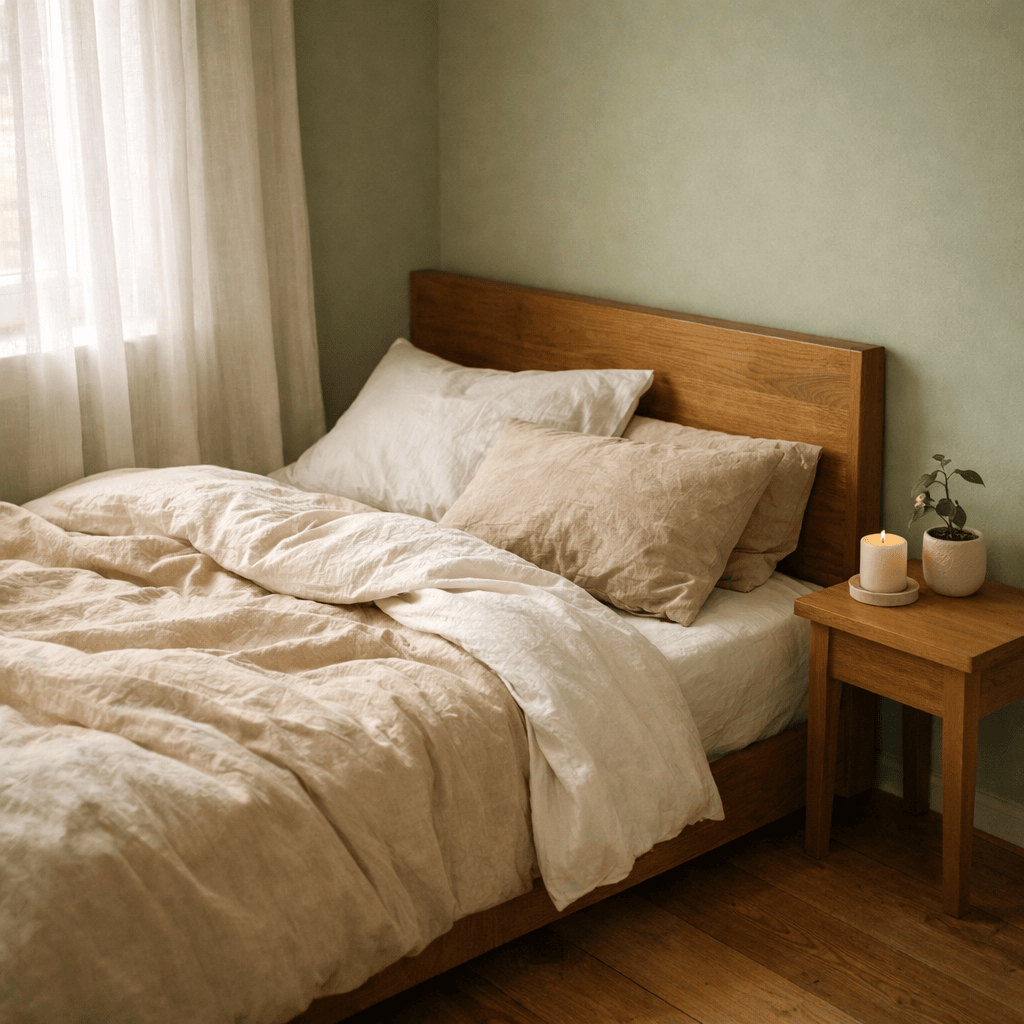
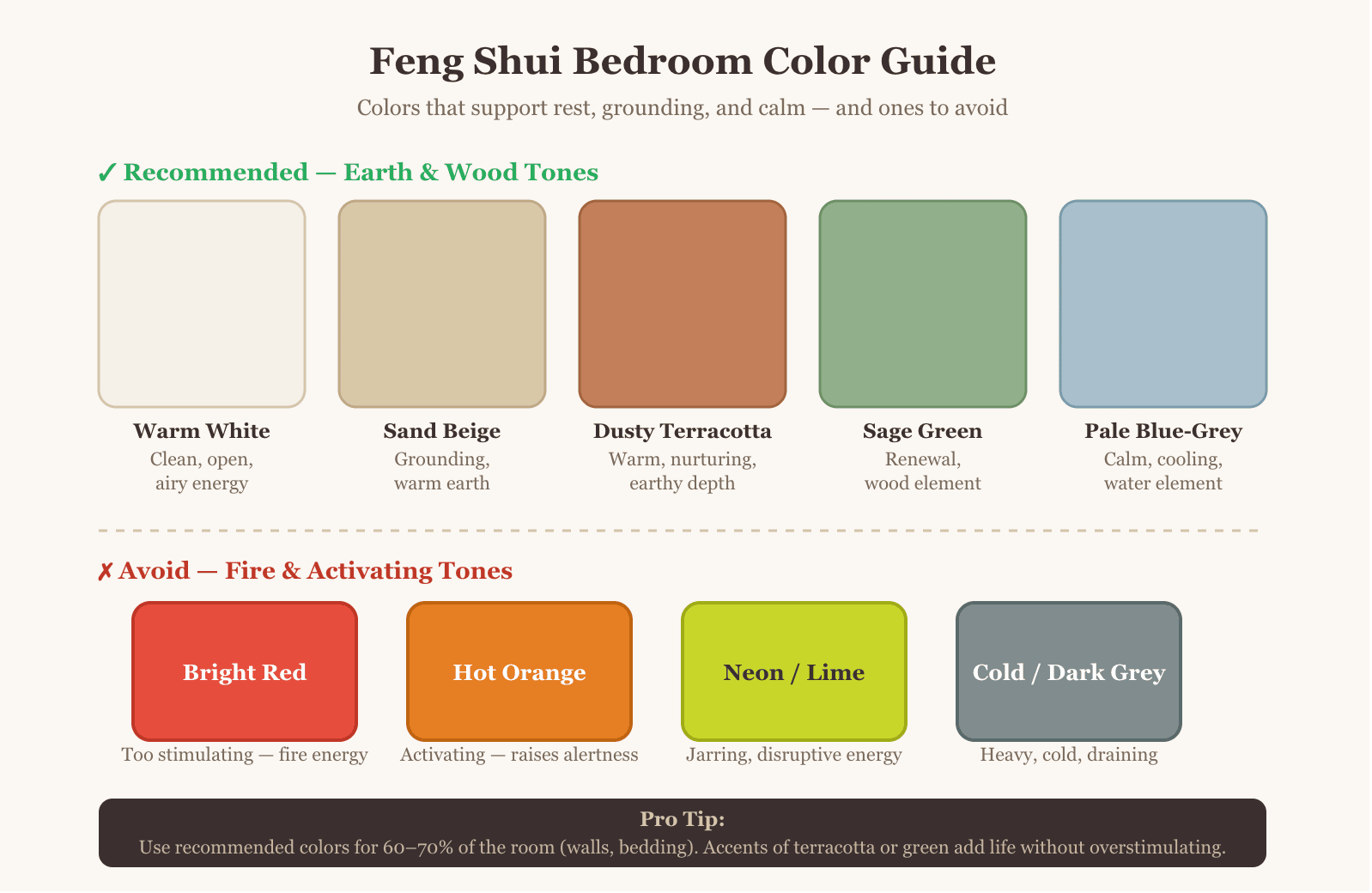
Colors: Warm, muted tones work best think soft whites, warm beiges, dusty terracotta, sage green, and gentle blues. These correspond to earth and wood elements. Deep reds and bright oranges are fire colors; they’re energizing, which is great for a living room but counterproductive in a sleep space. I repainted my bedroom from a medium grey (which felt cold and activating) to a warm sand tone, and the room immediately felt more inviting.
Textiles: Natural materials cotton, linen, wool, wood are preferred over synthetic ones, which feng shui considers energetically inert. Whether or not you subscribe to the energetic theory, natural bedding materials genuinely breathe better and regulate temperature more effectively. A 2023 Sleep Foundation survey found that 40% of Americans purchased new pillows and 24% bought quality sheets to improve their sleep bedding comfort consistently ranks among the top factors people associate with better rest.
Plants: Feng shui has mixed views on plants in the bedroom some traditions welcome them as living wood energy, others avoid them because they’re actively growing (i.e., active energy). Here’s how it plays out in practice: I keep a single mediumsized snake plant in the far corner of my bedroom, near the window and well away from the bed. It’s been there for eight months. The room feels calmer and the air noticeably cleaner. I tried a large monstera once too visually active, too busily growing and moved it to the living room within a week. The difference was immediate. If you want plants in your bedroom, place them in a corner away from the bed and choose lowerenergy, airpurifying varieties like snake plants or peace lilies rather than fastgrowing, highmaintenance ones.

Light and Air: The Overlooked Feng Shui Factors
Feng shui has always emphasized the importance of natural light and fresh air what it calls the “breath” of the home. Modern research is increasingly validating this.
A 2024 ScienceDirect study found that bedroom CO₂ levels above 1,000 ppm were associated with measurably worse sleep quality, more time awake during the night, and reduced slowwave sleep. Poor ventilation in a sealed bedroom isn’t just uncomfortable it’s actively degrading the quality of your rest. Opening a window, even slightly, makes a measurable difference.
On light: feng shui recommends bright natural light during the day (to energize the space and support your circadian rhythm) and complete darkness at night. This maps exactly onto what chronobiology research shows about melatonin production darkness is the prerequisite for your brain to release melatonin and signal the onset of sleep. Dr. Matthew Walker puts it plainly: we are a darkdeprived society, and the absence of true darkness at night is quietly undermining our rest. Your bedroom should have layers of lighting natural during the day, dim warm artificial light in the evening, and neartotal darkness while you sleep.
I added blackout curtains layered over sheer curtains: the sheers stay closed during the day for privacy but let diffused natural light in, and the blackout layer goes closed at bedtime. It sounds fussy, but it’s one of the highestimpact changes I’ve made.
The Feng Shui Mistakes I Made (And Would Tell You to Avoid)
Looking back, the things that were silently undermining my bedroom weren’t dramatic. They were small, accumulated decisions that I’d never questioned.
The TV at the foot of my bed was probably the biggest one. I genuinely believed it helped me fall asleep. It didn’t it just gave me something to lose consciousness to while keeping my nervous system mildly activated. The week I moved it out, I started falling asleep faster and waking up less.
I also had a photo wall directly facing my bed lots of family photos, art, memories. I loved it visually. But feng shui would say that a visually busy wall facing your sleeping face keeps your mind engaged rather than settling. I moved most of it to another wall. The one piece I kept opposite the bed is a single, simple print. The room got quieter.
And I ignored the clutter. For years. I thought if it wasn’t visible clutter if it was in drawers or under the bed it didn’t count. Feng shui would disagree, and so, honestly, would my mood every morning when I’d open a drawer and feel a lowgrade dread at the disorganization inside.
The One Thing I’d Tell You Before You Start
You don’t have to overhaul everything at once. When I started, I made the single biggest change moving my bed into the commanding position and sat with it for a week before doing anything else. That one shift was enough to notice a difference.
Feng shui modern luxury bedroom layout is less about following a rigid set of rules and more about asking a different question when you look at your space: Does this support rest? Not just “is it aesthetically pleasing?” or “does it fit?” but does the way this room is arranged make it easier or harder for me to fully let go at the end of the day?
Most of us have never asked that question seriously. When you start asking it, you’ll be surprised how quickly the answers become obvious.
Start with your bed position. Clear the clutter from one surface. Let some fresh air in. See how you feel after a week.
That’s all feng shui really is, at its core: paying attention to how your space feels, and making deliberate choices rather than just letting things accumulate.