
Your kitchen is likely the loudest room in your home, and I don’t mean the sound of the dishwasher. I am talking about the visual noise that comes from a space that hasn’t embraced a Japandi kitchen design. It is one of the looks interior companies in Dubai now get asked for by name.
You know that feeling when you walk into your kitchen to make a coffee and instantly feel a wave of stress because of the cluttered counters and “cold” clinical lighting? I have been there, and I can tell you that the “all-white” minimalist trend failed us because it forgot to add the soul.
Through my design work at euphoria interior, I have spent years researching the balance between Japanese intentionality and Scandinavian comfort. You don’t need a massive budget to fix this. You need a strategy that accounts for how your brain responds to textures and light.
To understand why this works, I look to the experts at Norm Architects. In their “soft minimal” philosophy, they argue that spaces should be “refined but not cold”. They prove that by using tactile materials like the natural wood veneer found in a modern Japandi kitchen, we create a “sensorial experience” that satisfies our human need for warmth and shelter.
Stick with me, and I’ll show you the exact “Desert Zen” framework I researched to turn cramped Dubai kitchens into breathing spaces.
Key Takeaways: The Desert Zen Framework
- Prioritise “Visual Silence”: A true Japandi kitchen isn’t just about aesthetics; it’s about reducing cognitive load. Conceal small appliances behind handleless oak Japandi cabinets to eliminate clutter.
- Balance Through Materiality: Use the “60-30-10” rule for textures. Aim for 60% natural wood veneer (warmth), 30% matte quartz or stone (grounding), and 10% brushed steel or matte black accents (modernity).
- Architectural Continuity: Follow Keiji Ashizawa’s lead by extending kitchen materials into the dining area. This “Integrated Continuity” makes your space feel like one unified, expansive landscape.
- Light as a Texture: Avoid harsh, clinical overhead lights. Use warm-toned LEDs and minimalist pendant lights to highlight the natural grain of your wood and create a “soft landing” for the eyes.
- Local Sourcing Matters: In Dubai, skip the high retail markups by visiting the industrial hubs. Sourcing raw timber and stone from Al Quoz or JAFZA ensures higher quality and more authentic Wabi-sabi textures.
Key principles for creating a Japandi Kitchen Design
Japandi kitchen design is more than just an aesthetic choice. It is a physiological necessity for the modern home. Most of us spend our days staring at blue-lit screens and hard plastic surfaces. When you come home, your brain needs a “soft landing”.
According to Dr Roger Ulrich’s theory of supportive design, environments that incorporate biophilic elements such as natural wood veneer and balanced lighting found in Japandi spaces can significantly reduce heart rates and speed up recovery from daily stress.
If your current kitchen feels “loud” or clinical, it is likely because it lacks the layers needed to ground your senses.
If you are still exploring different aesthetics before committing to a Japandi kitchen design, this guide to Japanese-Scandinavian fusion style can help you compare it with other popular interior themes used in modern homes.
“Design is about telling a story through layers. In a Japandi kitchen, those layers are texture and light, not ‘stuff’. Kelly Wearstler
If Wearstler’s idea of “layers” sounds abstract, don’t worry. To step into The Next Chapter of your home’s design evolution, keep reading my Japandi layout guide, where I break down the exact palettes and textures you need to make this a reality.
The Japandi Layout Guide
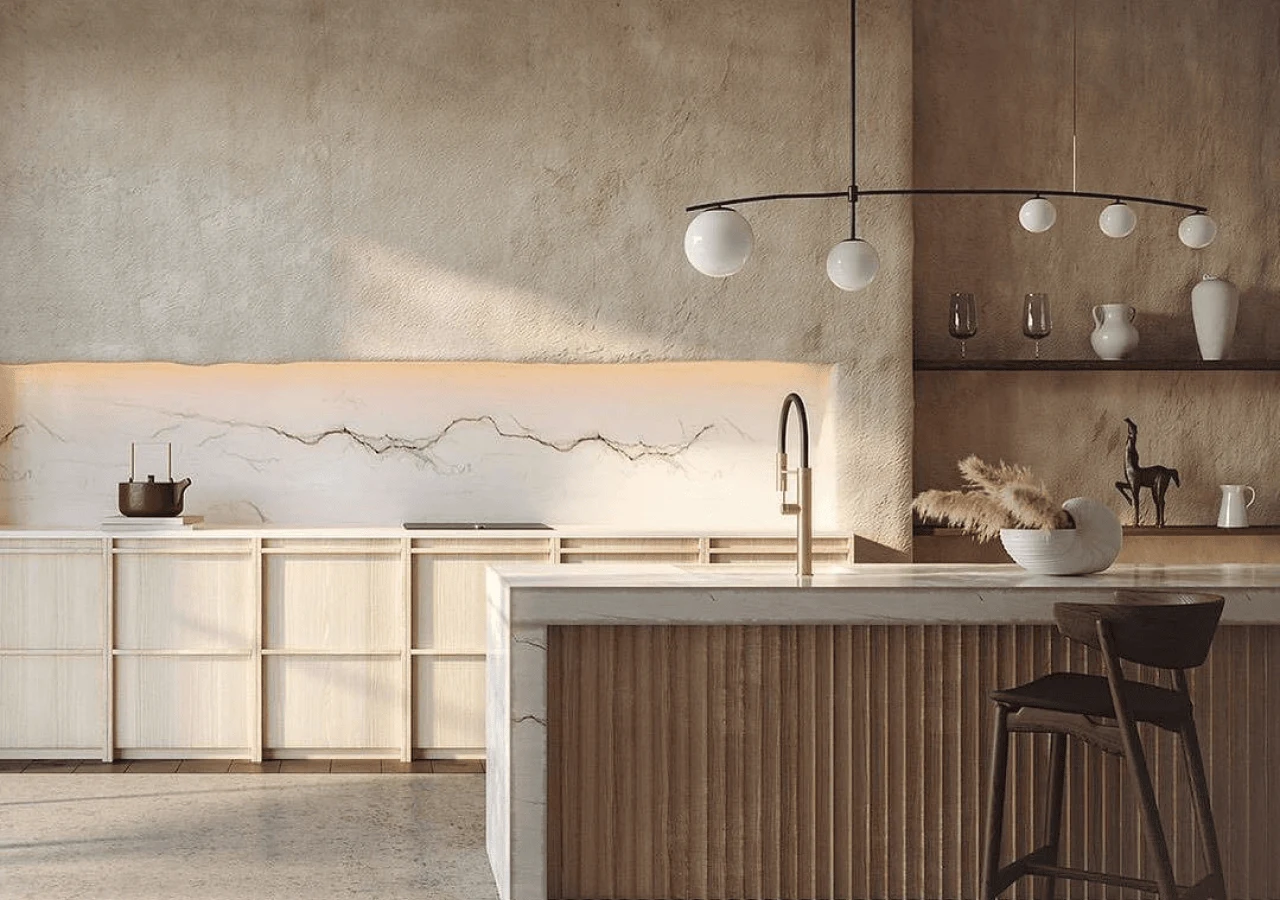
- The Palette: Use Japandi neutral colours like warm oatmeal, sand, and muted clay. I always advise you to avoid “stark hospital white”, as it reflects light too harshly and creates a cold, uninviting atmosphere. Avoiding that trap is easier with kitchen lighting tips built around warmth.
- The Texture: Pair light oak cabinets with matte quartz countertops. This combination provides a tactile “softness” that absorbs light rather than bouncing it back at you.
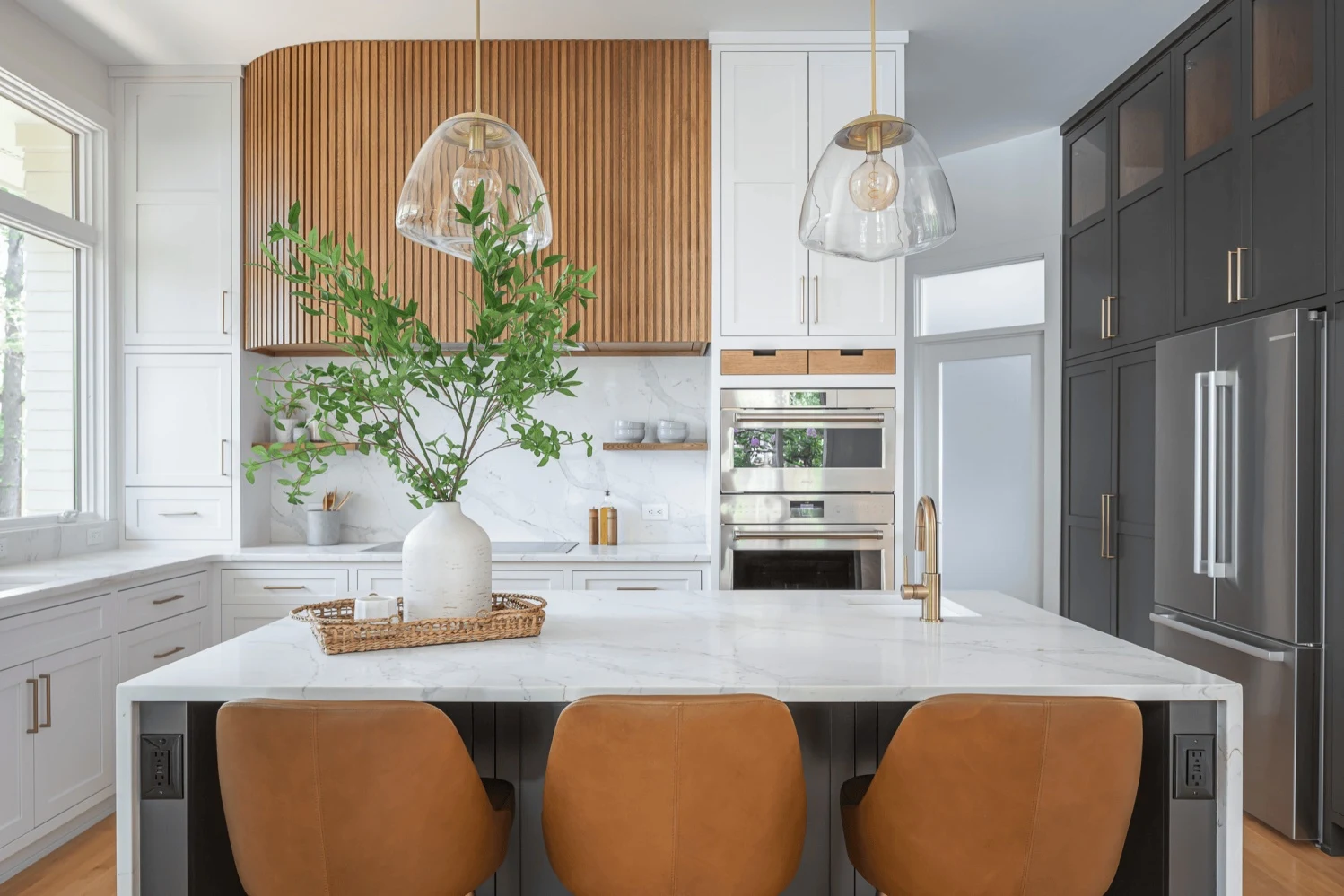
- The Flow: Prioritise an open kitchen layout featuring hidden hood vents. Visual silence is just as important as physical space.
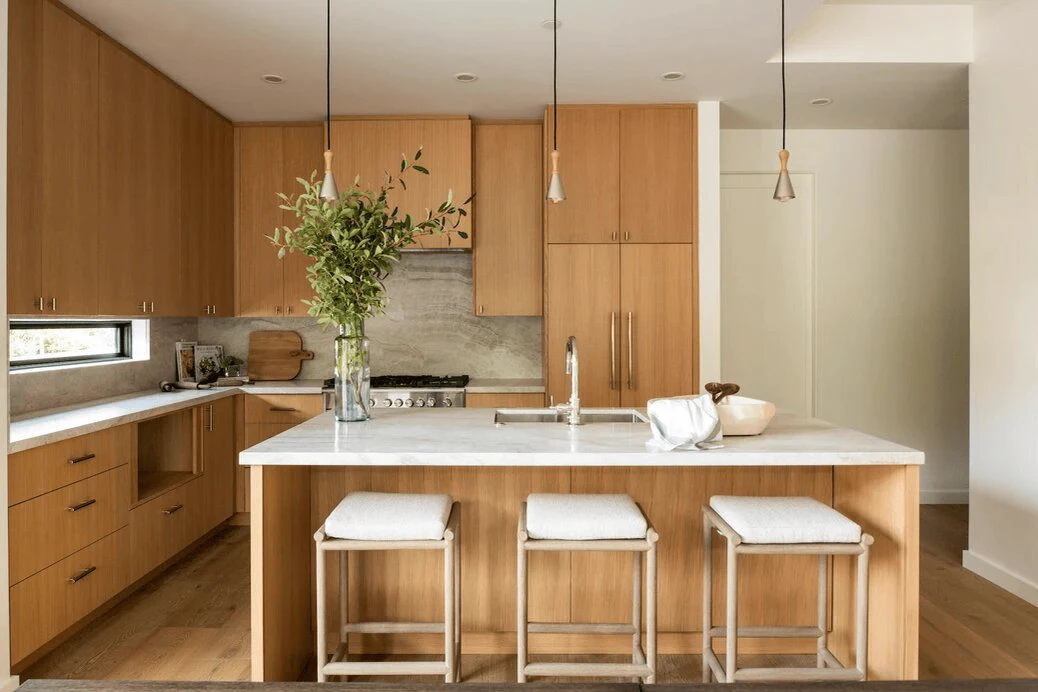
Mastering the Layout: The Blueprint for Flow and Balance
I believe that a successful Japandi kitchen design is not defined by its square footage but by how it manages the flow of your daily life. Whether you are designing a sprawling open-plan space or a compact city kitchen, the goal is the same: “functional silence”.
If you feel like your kitchen is closing in on you, it is usually because the layout is too “loud” and lacks a clear focal point. To understand how to fix this, I look to the work of Keiji Ashizawa Design, specifically their Et Nunc Daikanyama project. Their approach is a masterclass in creating landscapes that feel calm, grounded, and structurally honest.
“I aim for a design that is honest and simple, where the beauty of the material speaks for itself.” – Keiji Ashizawa.
The Keiji Ashizawa “Et Nunc” Formula
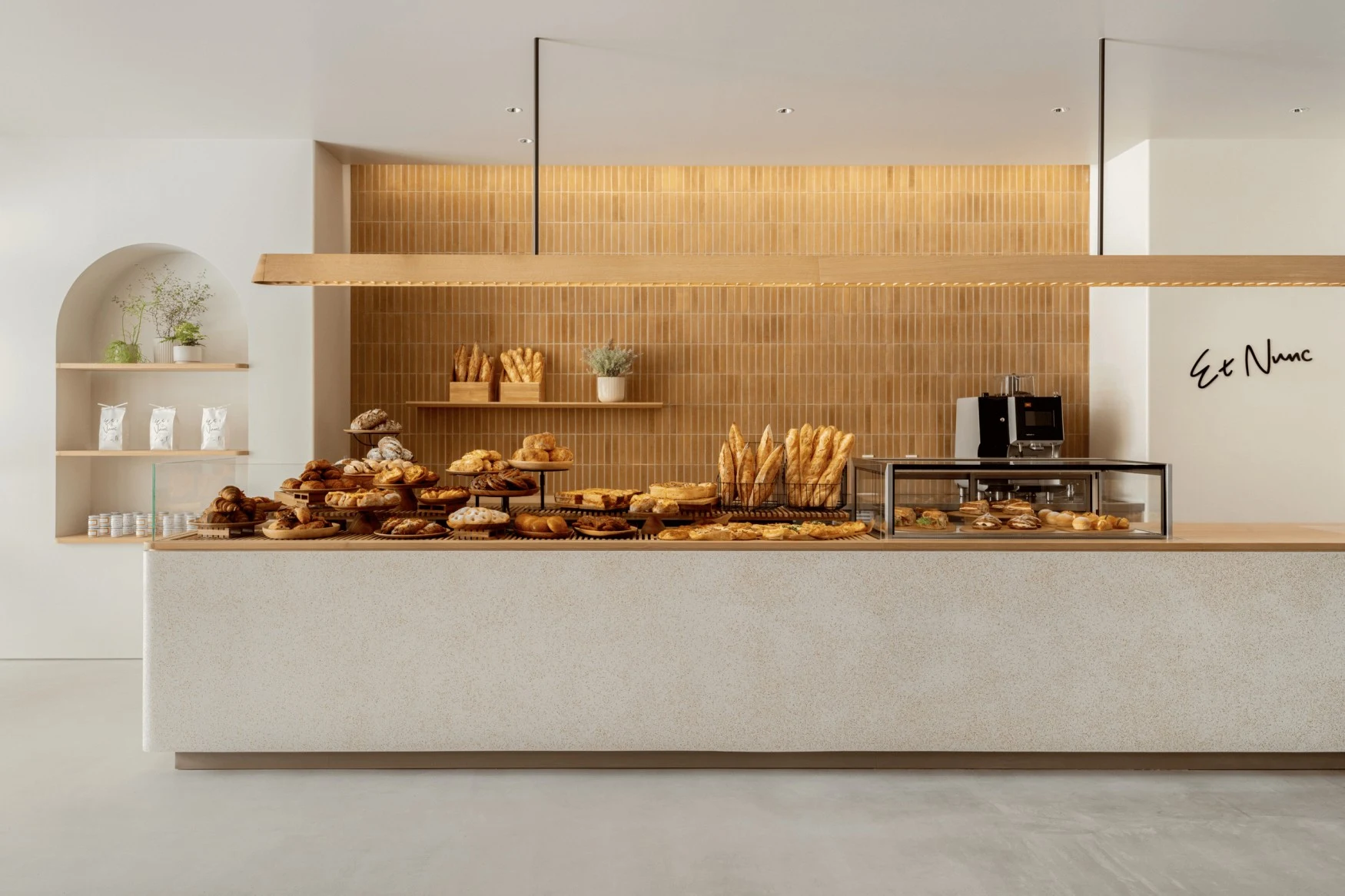
- Material Honesty: Use natural wood veneer to wrap surfaces, creating a seamless look that makes cabinetry feel like a single, architectural element.
- Integrated Continuity: Instead of stopping your cabinets at the kitchen’s edge, extend your light oak cabinets or shelving into the dining area. This tricks the eye into seeing one unified, expansive space. These continuity techniques are especially effective in compact apartments where the goal is to visually make open-plan spaces feel larger without major structural changes.
- Tactile Contrast: Pair rough, artisanal stone or stone backsplashes with the smooth, clean lines of handleless oak cabinetry.
How Can Dubai Homeowners Master the Japandi Layout?
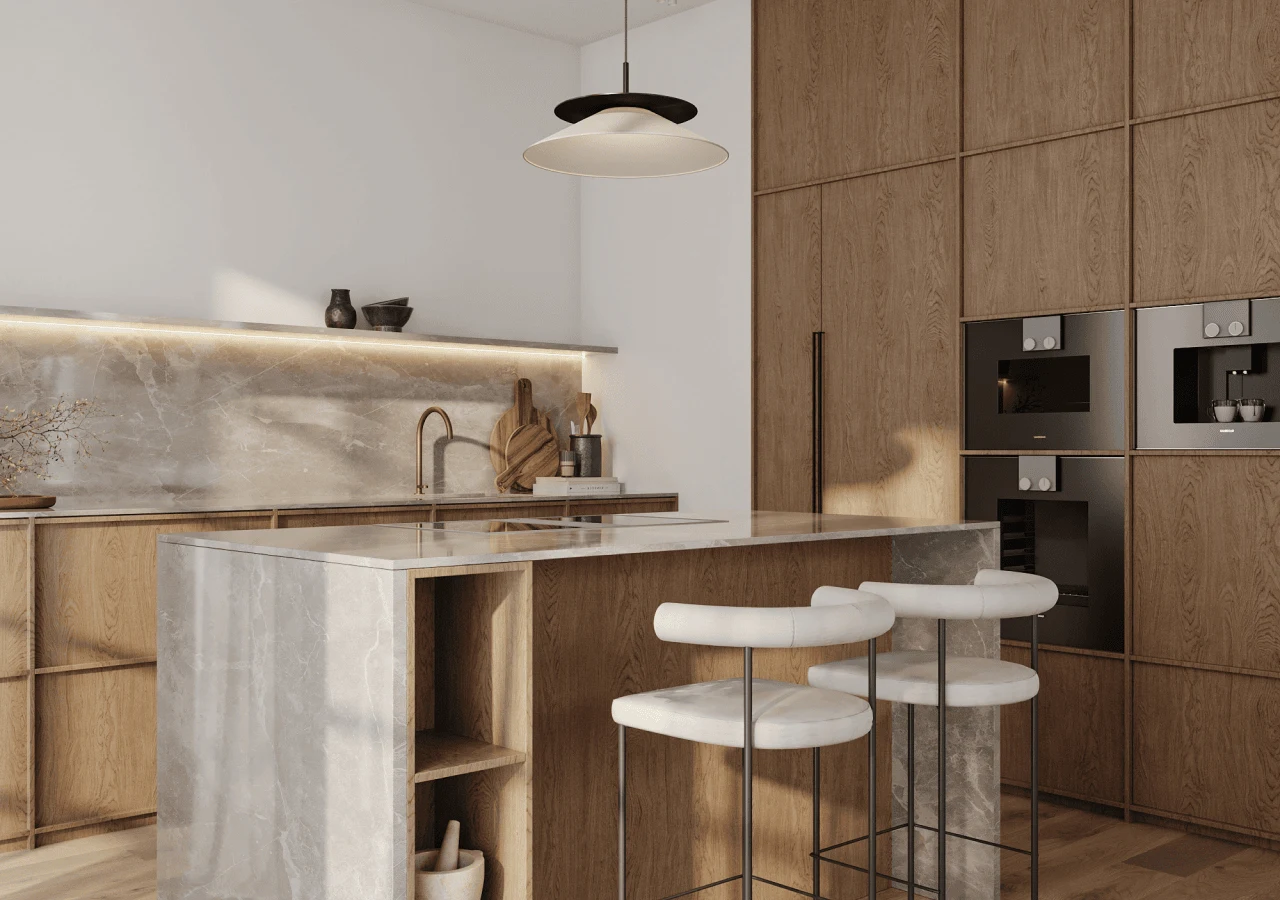
- The Island Monolith: Instead of a busy island with hanging pots, use a central kitchen island with a waterfall edge in stone or natural wood veneer. This creates a single, grounding focal point.
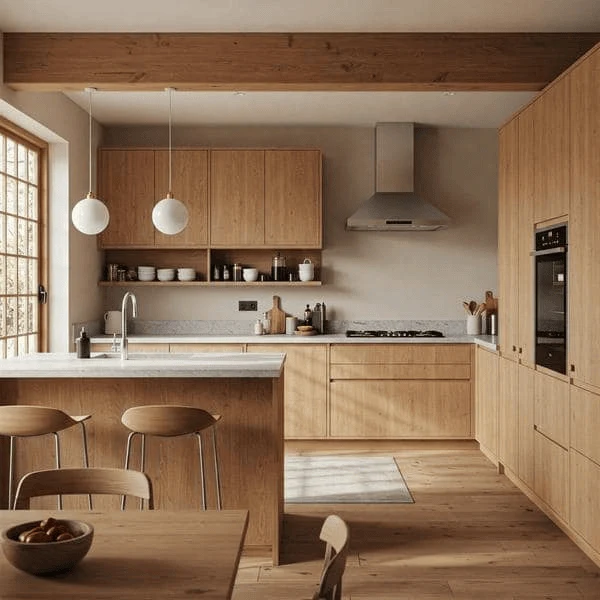
- Concealed Functionality: Dubai kitchens often feature heavy appliances. Use integrated storage solutions and hidden hood vents to maintain “visual silence”.
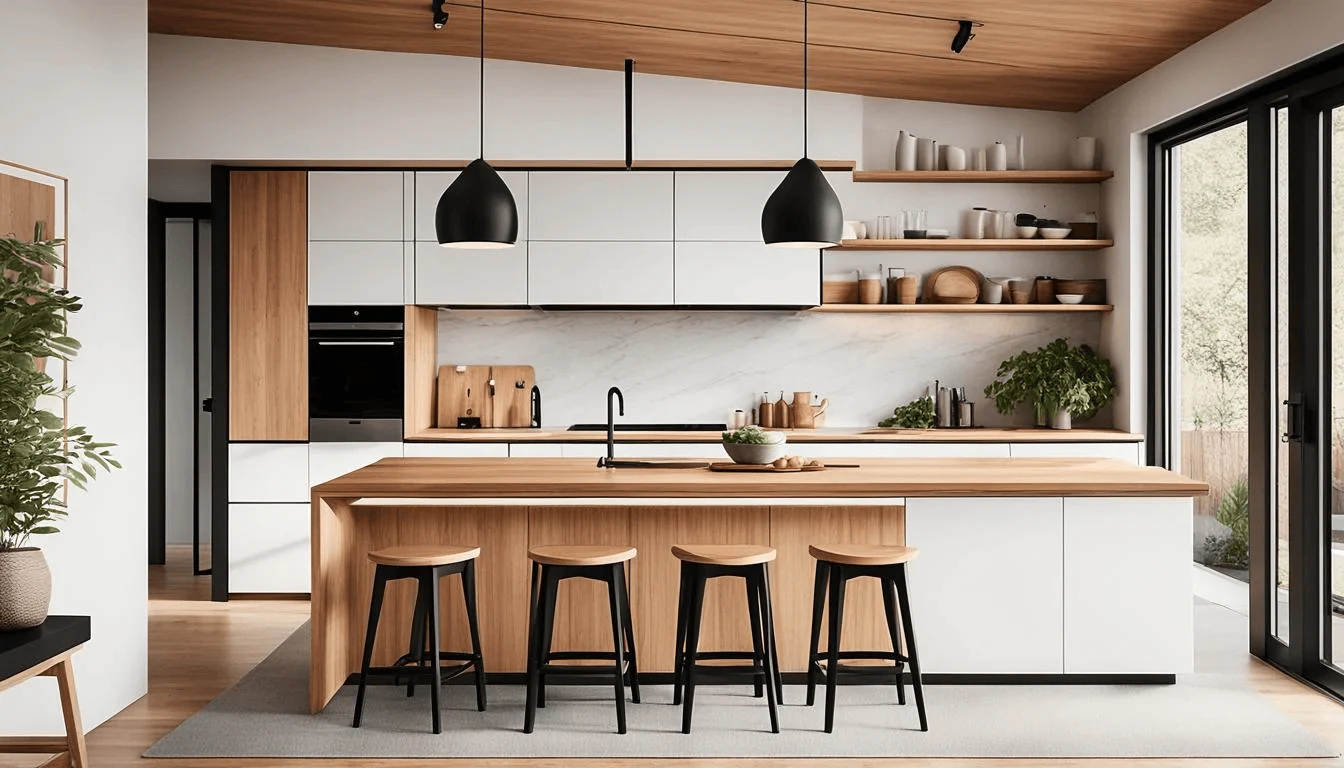
- Zoning for Light: Ensure your layout follows natural light maximisation. Position your prep areas near windows to catch the morning sun, which highlights the grain in your light oak Japandi kitchen cabinets.
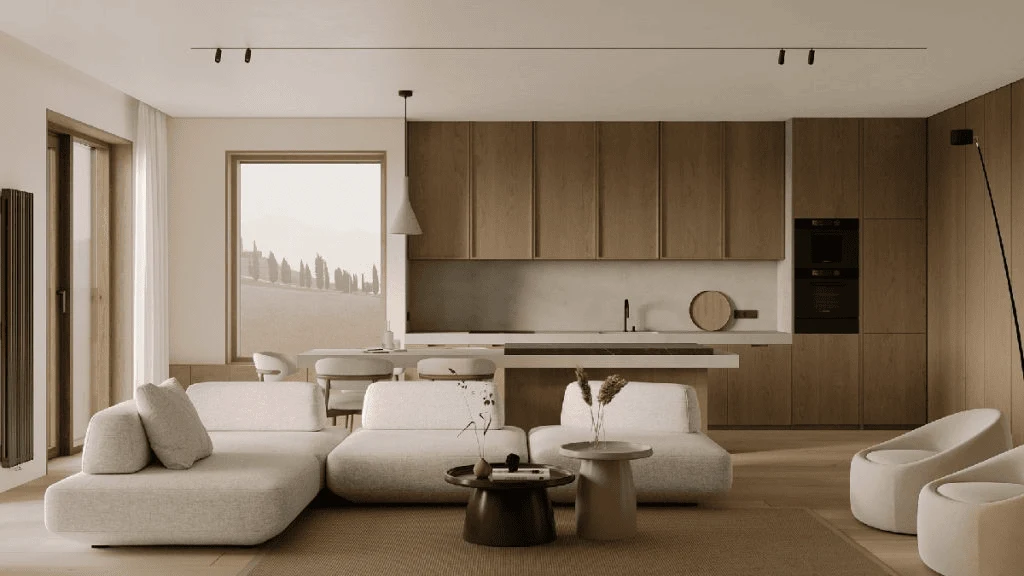
- Material Continuity: Carry your Japandi neutral colours from the kitchen flooring directly into the living area. This eliminates the “choppy” visual breaks common in local open-plan villas. For a fully cohesive home aesthetic, especially when executing a comprehensive four bedroom Interior Design service, many homeowners also extend these calming palettes into Japandi-inspired bedroom spaces using layered textures, soft lighting, and natural wood finishes.
Your Move: Evaluate your kitchen’s “visual weight”. Is one side of the room crammed with wall cabinets while the other is empty? Balance it out. Swap one set of heavy upper cabinets for open shelving to showcase a few pieces of sustainable decor. This small shift toward a minimalist Japandi interior will make your kitchen feel significantly more breathable today. Beyond Japandi, contemporary kitchen style keeps the calm while widening the palette.
Japandi Kitchen Materials: How to Choose the Right Textures
The soul of a Japandi kitchen design lives in the materials you touch every day. If your kitchen feels cold or “flat”, it is because you have relied too much on synthetic surfaces. In a true Japanese-Scandinavian fusion, the goal is to create a tactile experience. You want materials that don’t just look good in a brochure but actually feel better as they age.
When I select materials, I look for “honesty”. This means choosing natural wood over plastic laminates and stone over high-gloss acrylics.
“Materiality is a language. When we use materials that have a connection to nature, we feel more human in our spaces.” – Ilse Crawford. Bedrooms take to this style just as well; these Japandi bedroom design ideas show how.
The Japandi Material Guide
| Feature | Best Material Choice | Why It Works |
| Cabinetry | Light oak cabinets | Provides a bright, Scandi warmth that hides fingerprints. |
| Accents | American walnut finishes | Adds the dark, grounding contrast typical of Japanese design. |
| Worktops | Matte quartz countertops | Offers the look of stone without the maintenance of marble. |
| Splashbacks | Stone backsplashes | Adds a raw, “Wabi-sabi” texture to a sleek kitchen. |
| Textiles | Linen kitchen textiles | Softens the hard edges of the cabinetry and absorbs sound. |
How to Blend Japandi Materials in a Kitchen
- Balance the Grain: If you use light oak cabinets for the main run, use a darker American walnut for the island to anchor the room.
- Embrace Matte Finishes: Avoid anything shiny. Matte quartz countertops reflect light softly, which is essential in the bright, harsh sun of the UAE.
- Integrate Nature: Use bamboo kitchen accents or natural wood veneer for open shelving to bring an organic element to your modern Japandi kitchen.
- Hardware Choice: Stick to brushed steel hardware or matte black faucets. They provide a modern edge without the distracting “bling” of polished chrome.
Knowing you need American walnut is one thing; finding it in a raw, sustainable form is another. Read along to discover the hidden industrial hubs in Dubai where you can source these materials directly.
Where to buy sustainable decor items for Japanese-Scandinavian homes in Dubai
In Dubai, mastering this look often requires visiting traditional trade hubs where natural wood, stone backsplashes, and natural fibre textiles are sold in their purest forms.
- Al Quoz Industrial Areas (1, 2, and 3): This is the heart of Dubai’s bespoke craft scene. It is the primary location for high-end timber joinery shops and stone yards. If you are looking for natural wood veneer or large slabs of matte quartz countertops, the warehouses here allow you to select the raw materials directly before they are fabricated into Japandi kitchen cabinets.
- The Dubai Design District (d3): While known for showrooms, the district itself serves as the regional hub for architectural materials. It is the best place to research the latest in ergonomic kitchen zoning and find high-end brushed steel hardware samples that aren’t available in standard retail markets.
- Naif and Deira Souks: For the “soft” side of Japandi, these traditional markets are unbeatable. I recommend the Textile Souk in Bur Dubai for heavy linen kitchen textiles and the Old Souk in Deira for raw bamboo kitchen accents and hand-woven baskets that provide that essential Wabi-sabi texture.
- Jebel Ali Free Zone (JAFZA) Surroundings: This area is the gateway for international imports. Many of the most sustainable, FSC-certified light oak cabinets and American walnut finishes are stored in the massive timber yards located on the periphery of the free zone.
- Warsan (Plant & Stone Market): If your modern Japandi kitchen design ideas include integrated indoor greenery or specific stone pebble details for a “Zen” floor inlay, the plant and stone markets in Warsan offer raw, bulk materials at trade prices.
Conclusion
I believe that the true success of a Japandi kitchen design isn’t measured by how many likes it gets on social media but by how it changes your morning routine. When you stop fighting against visual clutter and start living in a space designed for “functional silence”, your kitchen ceases to be a chore and becomes a sanctuary.
By taking the architectural honesty of Keiji Ashizawa and grounding it with materials sourced from the heart of Dubai’s industrial hubs, you are doing more than just “decorating”. You are creating a home that supports your well-being. This is your invitation to slow down, breathe, and finally enjoy the “soul” of your home.
Ready to transform your kitchen? If you are ready to move from inspiration to installation, use these resources to start your Japandi journey:
- Download the “Desert Zen” Sourcing Map: Get my curated list of the exact warehouses in Al Quoz and Deira where you can find these materials.
- Book a Design Consultation Let’s look at your floor plan together to identify where we can add integrated continuity and “visual silence”.
- Explore the Portfolio: See more real-world examples of how we apply Japandi principles to modern townhouses.
Your Move: Which part of your kitchen is the “loudest” right now? Leave a comment below, and I’ll give you a specific material tip to help quieten the space.