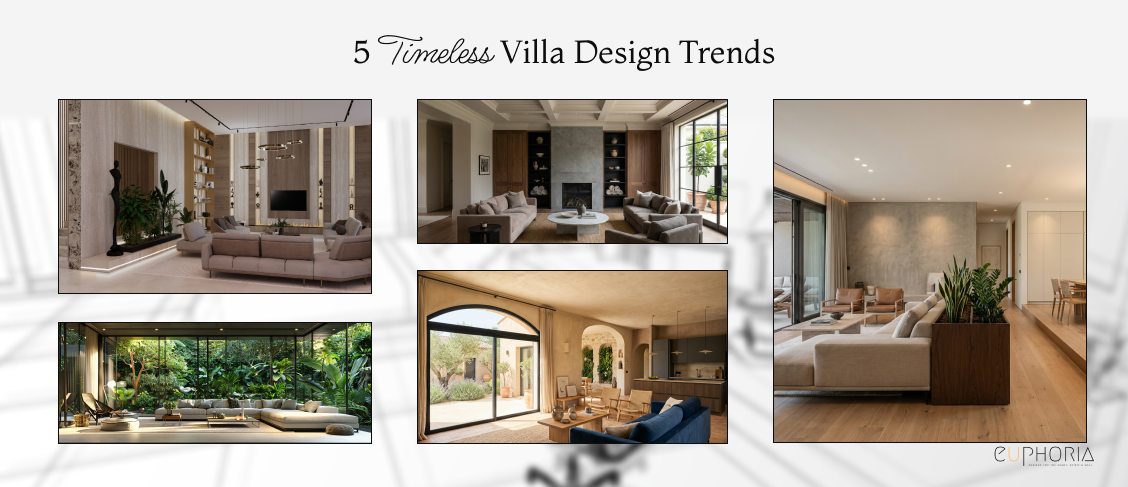
We get it, you scrolled through countless images of villa design trends on Pinterest and even saved some that caught your eye. But in the end, you feel more confused than confident about choosing what you actually like. You’re investing millions, and one wrong decision can turn into daily discomfort, higher bills, and continuous maintenance that could have been avoided.
You need a reliable way to strengthen your choices because everyone talks about villa interior design ideas, but none of them explain which will be the best for you or what it will look like over 10 years.
So, how do you decide? You not only collect ideas but also have a way to filter out those that feel comfortable, and not only showy. That’s why we will first show you some of the top villa design trends popular right now and help you choose through a 6-step decision framework. It only takes under an hour to apply, but it can save you from the pain of second-guessing and doing corrective work later.
Read this once before you approve another design or save another image, it might save you from fixing a mistake twice.
5 Best Villa Design Trends for Comfort, Quality of Life and Aesthetics
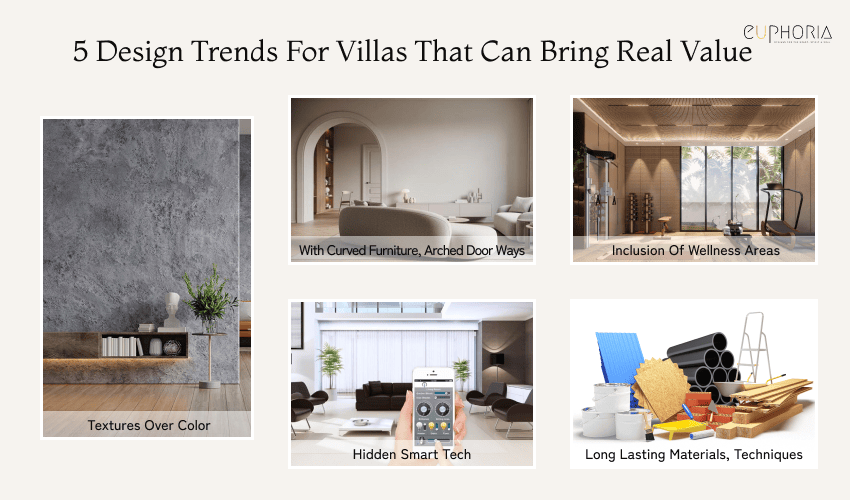
Before we head on to the framework let’s look at 5 trending villa design trends that can bring real value:
1. Focusing on Textures Over Color: Materials like rough stone, smooth wood and woven fabric are gaining more popularity over simple paint due to their depth and how they cast intricate shadows under light. They enable the room to look nice while being subtle. Layering multiple textures in a room, for example placing a linen sofa in front of a textured stone wall or a rattan pendant light over a terrazzo floor can make your room look visually appealing without relying on only paint.
2. Rounded Edges and Natural Shapes: These days curved furniture, arched doorways, round tables and soft corners are making a come back. Straight edges and sharp corners cannot be seen much as they used to. This shift is closely related to the biophilic design philosophy, organic shapes found in nature, oval mirrors, kidney shaped pools and curved kitchen islands are some of the elements that belong to this design trend.
3. Inclusion of Wellness Areas: We have seen features such as private health club, big soaking tubs, steam showers, and calming lights to be included in modern villas. These are just the basics some options like infrared saunas, cold bath pools, and meditation zones are all effective to make you feel calm and peaceful. Lights that change its color temperature throughout the day can also provide comfort for your eyes.
4. Hidden Smart Tech: Technology that remains hidden while providing a great value by improving your day to day life is a boon. Lights and temperature controlled automatically, being notified of open doors and windows, and information about the status of all appliances everything from one place sounds attractive. Other discreet features such as voice controlled systems, automatic blinds and smart mirrors showing your basic health metrics can all increase your ease of accessibility.
5. High Quality with Low Carbon Footprint: Opting for luxury that saves energy means choosing long lasting materials such as reclaimed timber and recycled stone, using techniques that provide passive air conditioning in your villa, and installing appliances that require less electricity and water. Solar panels, battery storage systems and rain water harvesting systems can all make you self sufficient to some extent, giving you the feel of luxury while being on a lower carbon footprint overall.
How aesthetic villa design trends become uncomfortable to live in
Our Design team consulted 100+ luxury villa owners, there was one important aspect that was impossible to ignore. The design of a villa should prioritize comfort over trying to look exactly like what you found on social media. This does not mean that we will avoid unique ideas altogether and always play it safe, but remind ourselves that luxury was never meant to be hard to live with.
Take marble exteriors, for example.
They will make your villa look good in photographs, but not in real life, because in places with hot climates like Dubai, materials can expand due to heat, then slowly crack and weaken over time. Double kitchen island ideas are trending too, and look luxurious, but talking about functionality, they can become oversized surfaces that you barely use.
A design choice should never create inconvenience through cleaning, leakage, temperature, noise, or continuous maintenance. If it does, it fails its purpose.
Wanna know how a few adjustments can help you get around some of these issues? Read our blog on 12 Modern Minimalist Villa Design Ideas That Prevent Expensive Regrets.
A trendy villa design choice that became an AED 120,000 mistake
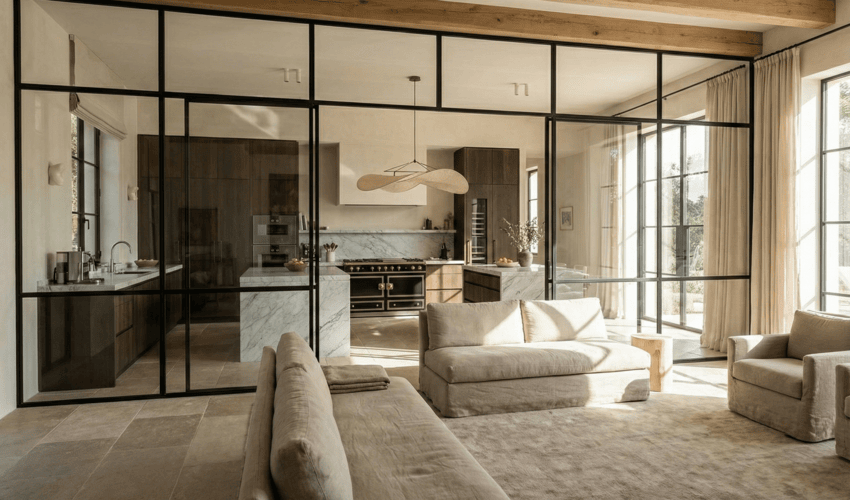
So we once consulted a villa owner who had an open-plan ground floor; there were no walls or partitions, and everything just flowed endlessly. Honestly, it looked very good in real life, but the reason we got the call in the first place was that they were not finding it comfortable. The issues you ask? Well, first, the lingering smell of the cooking spreads all over. People cannot watch television without disturbing dining conversations. The AC bills have spiked because it has to work on a really huge area.
Our solution was to install glass partitions, partial walls, and separate the AC zones. This came at a cost of over AED 120,000, all of which could have been avoided if there were better design decisions upfront.
When trends align with your lifestyle, every decision will feel effortless and there will be fewer mistakes to deal with later. And how do you achieve that? Let’s check the next section.
How to find which villa design trend will work for your villa in 4 easy steps?
It is implied that not every villa design trends will work for everyone. You need to know your constraints and limits and plan accordingly, as this will be rewarding in the long term. Below, we have discussed some factors that can help you identify what 2026 interior design trend you should follow.
What is Your Plot Size?
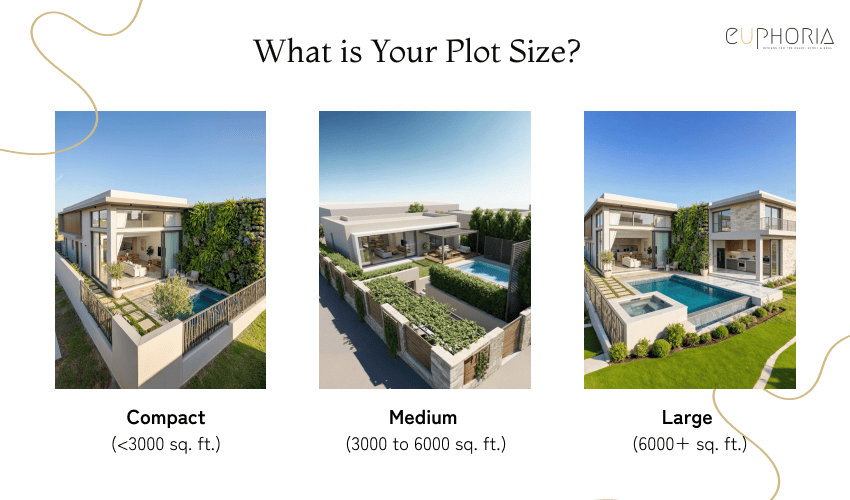
Compact (<3000 sq. ft.): The best choice would be to prioritize maximizing your space with open plan styles and vertical gardens.
Medium (3000 to 6000 sq. ft.): You need to isolate the spaces very smartly. Indoor and outdoor integration is feasible, but make sure the boundaries are intentional with good shading.
Large (6000+ sq. ft.): Now this is luxury at first glance, but maintenance can be a bit hard. Considering Dubai’s climate, expect a scaled-up version of bills for cooling, dusting, and landscaping.
How Big is Your Family?
-
Couple or Small Family: A fairly low-maintenance villa that is compatible with minimalist open plans and smart tech adoption.
-
A Family with Kids: The space needs to be adaptable and made for a noise free environment. Storage spaces should be integrated smartly and are a must.
-
A Big Family with Kids and Elders: Ensure there are privacy zones and everything is easily accessible. Having multiple living rooms will be a smart choice.
-
Social Hosts: Focus on having separate guest zones, outdoor kitchens, and flexible spaces.
-
People Who Work From Home: Always keep your work zone separate with noise-proofing and good natural light.
Size of Your Investment
You’re Conscious About the Value: The best strategy would be to focus on the structure, light, and layout. Smart tech should be minimal and only the necessary ones.
Mid-Range Villas: Quality materials with some custom features are an option, but it is best if they can justify their usage and not just look pretty.
High-End Luxury: You need more clarity in decisions; mistakes are okay, but why would we let it happen in the first place, right?
How Much Maintenance Can You Handle?
-
Low: It’s best avoid high gloss finishes, glass features, white, and textured exteriors. Instead, you can go for greige, sand, or taupe colours; they will blend in easily and require less cleaning.
-
Mid: You can keep 2 or 3 elements that need constant care, but the rest need to be low maintenance.
-
High: As the name suggests, it is high maintenance, but certain choices, like natural stones and complex water features, can feel burdensome over time, even if you have extensive help.
Once you know what you need, the choices start to become less confusing. But the confusions remains and the question arises that how to make it crystal clear? The exact solution starts with mapping out your daily routine.
How Do I Know Which Design Will Complement my Lifestyle?
Now that’s where the main agenda arises. To help you with this question, we have provided a step-by-step framework that will guide you through the entire process.
Step 1: Define how you live before choosing how to live
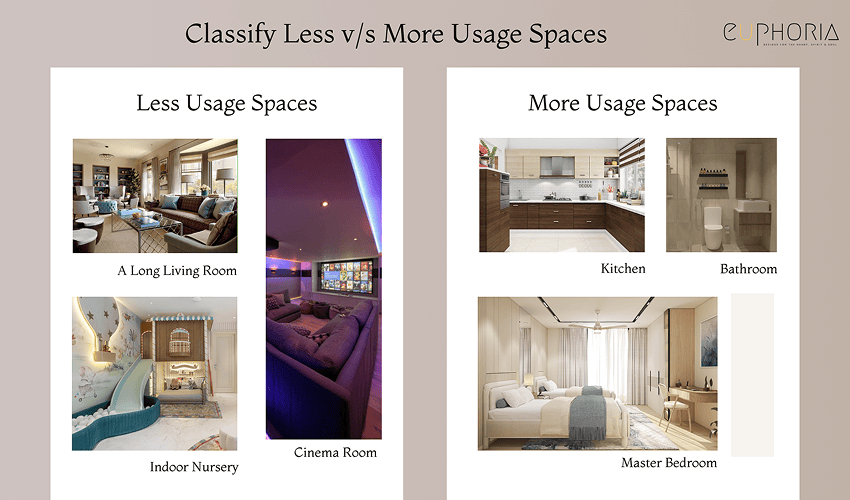
This starts with how your daily life looks, which includes where you cook, eat, work, relax, and sleep. The areas that you use frequently, such as your master bedroom and kitchen, should be spacious and accessible. Other rarely used spaces, such as the cinema and playroom, can be adaptable or multi-purpose with limited attention.
The most common mistake is investing permanently in features that will be beneficial temporarily or provide less value. Why build a 500 sq. ft. formal living room that will mostly remain unused? Or why design a dedicated nursery for a kid that will grow in the blink of an eye? Movable partitions and convertible furniture become a smart choice here for the long run.
Step 2: Where spending more makes your experience luxurious
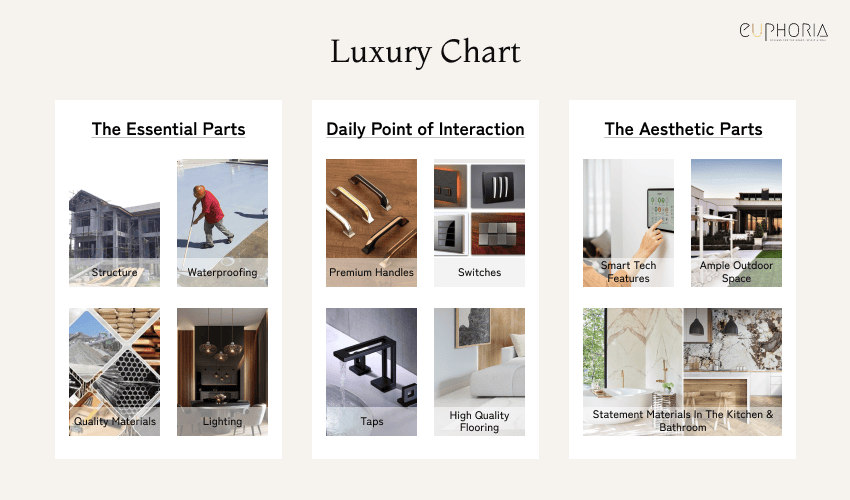
Investment should be planned strategically and should be allocated to places that have the most impact. Let’s look at the following hierarchy:
1. The Essential Parts: Structure, waterproofing, quality materials, lighting, climate control, and storage are the invisible elements that will have the most impact in your luxury villa. Treat these as non-negotiables when planning your build.
2. Daily Point of Interaction: Once the foundation is strong, we can move on to the materials that make a villa feel high end, such as premium handles, switches, taps, solid core doors, high quality flooring, etc. These are the parts that you touch and experience daily, and if a door handle rattles or a floor squeaks no matter how expensive the chandelier you have installed, they can ruin your luxury experience.
3. The Aesthetic Parts: Options such as statement materials in the kitchen and bathroom, ample outdoor space, and smart tech features can make your experience much better. But before finalizing on any expense, ask yourself if you will use it every day or if it is something that will only look good for the guests. Or will you be able to install it later without tearing down your walls?
It is smart to always set aside some funds for safety, so that in case of price fluctuations and last-minute changes, it gives you a headroom to work with.
Step 3: Choose your villa Design Style
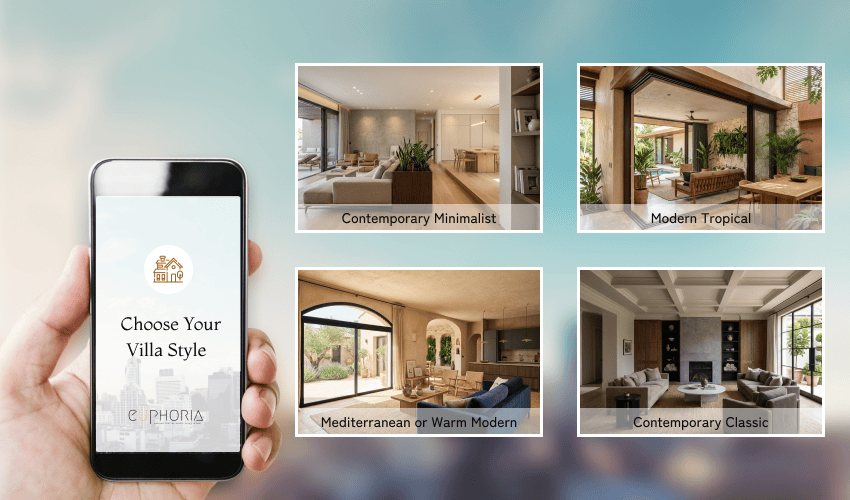
Now we can move forward in the aesthetic direction. Let’s look at some of the design styles for your villa, we will share their maintenance level and how they will fare in day-to-day life.
Contemporary Minimalist
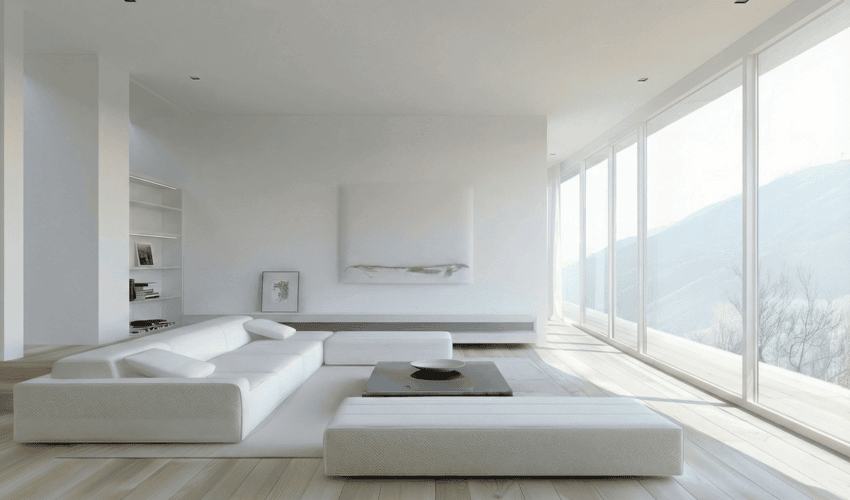
It is just as you imagined, with clean lines, a neutral palette, hidden storage, and minimal decoration with focus on space and light. Professional execution and high-quality materials are very important. It has a moderate level of maintenance with a good resale value, but not that kid-friendly. If you’re naturally organised and find minimalism calming, this style can make your villa look modern without overdoing it.
Modern Tropical
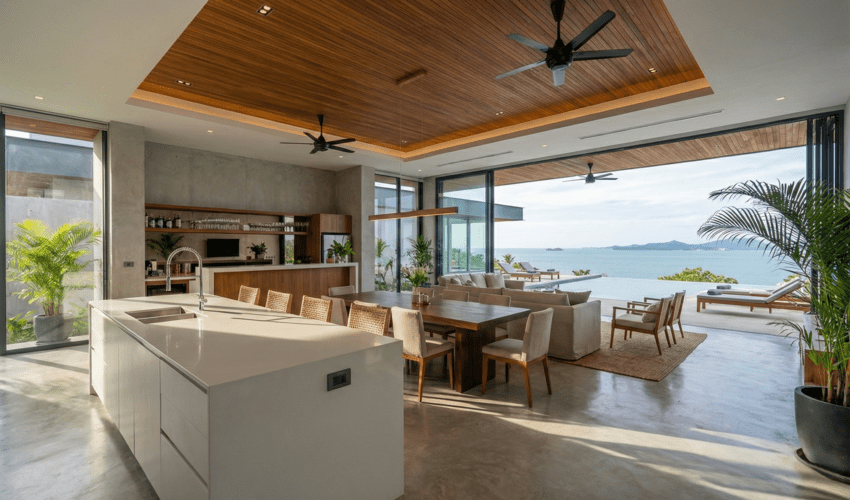
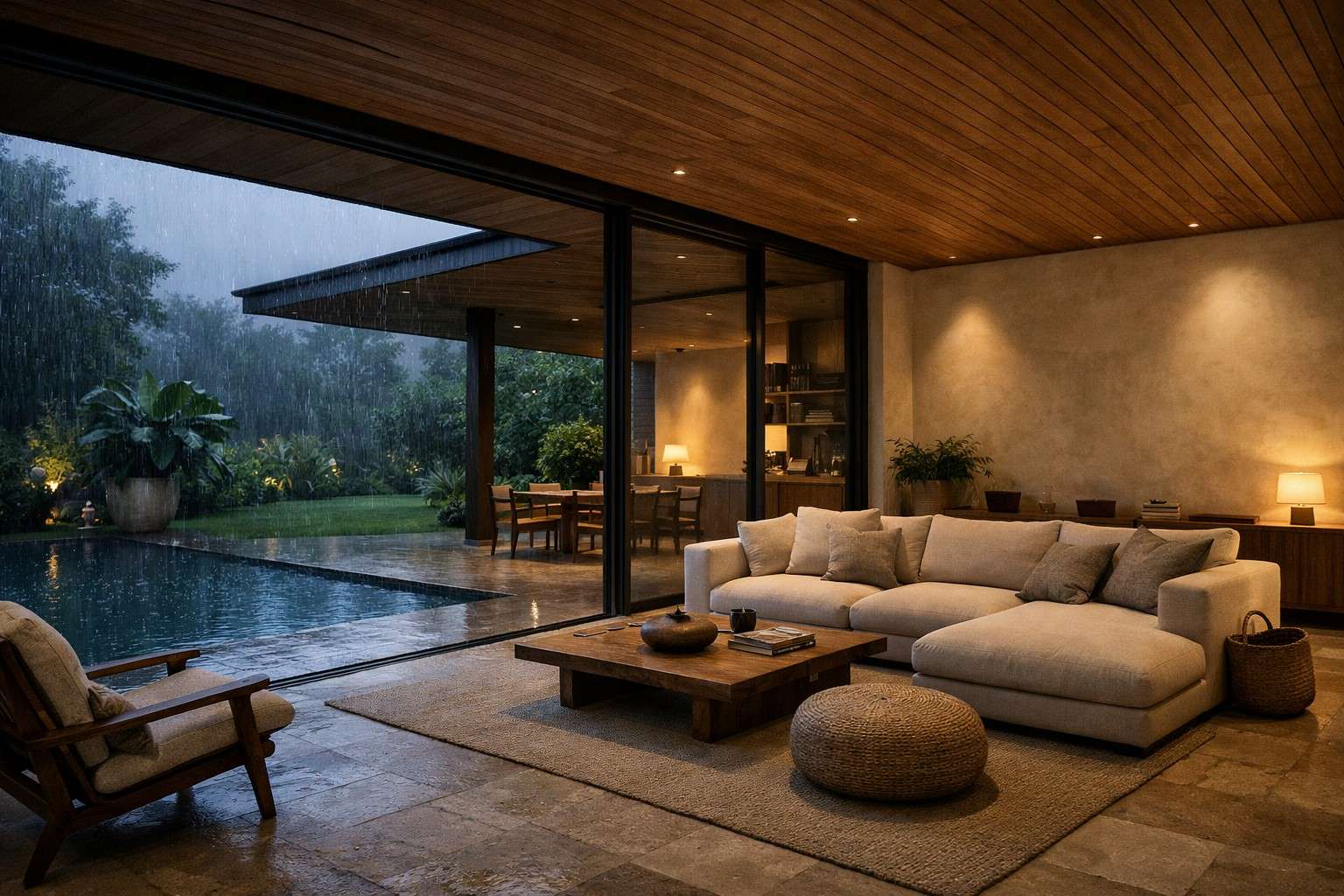
This style incorporates natural elements such as wood and stone. You will find lots of greenery, good indoor-outdoor flow, and a texturised earthy palette. It requires waterproofing, thermal insulation, plants that are compatible with the climate, and good irrigation. The maintenance is high as you need to water and dust your plants daily, but it is kid-friendly and has a fair resale value. This can be your choice if you have house help and are okay with the high water bills.
Mediterranean or Warm Modern
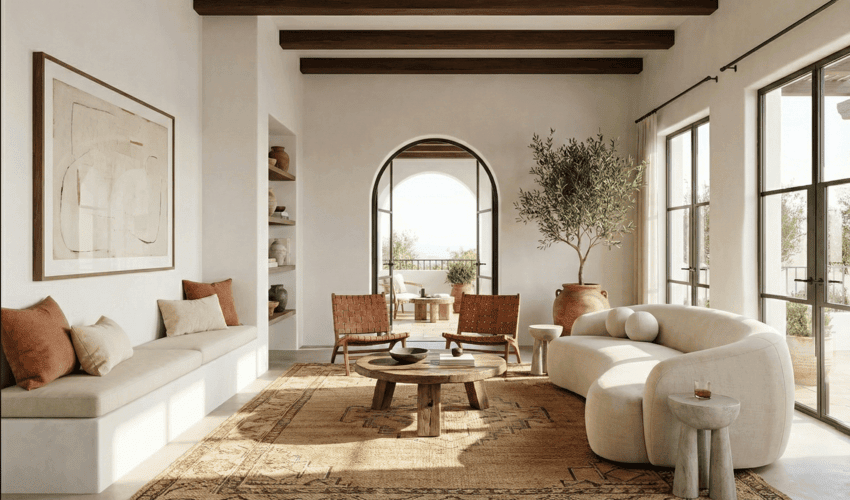
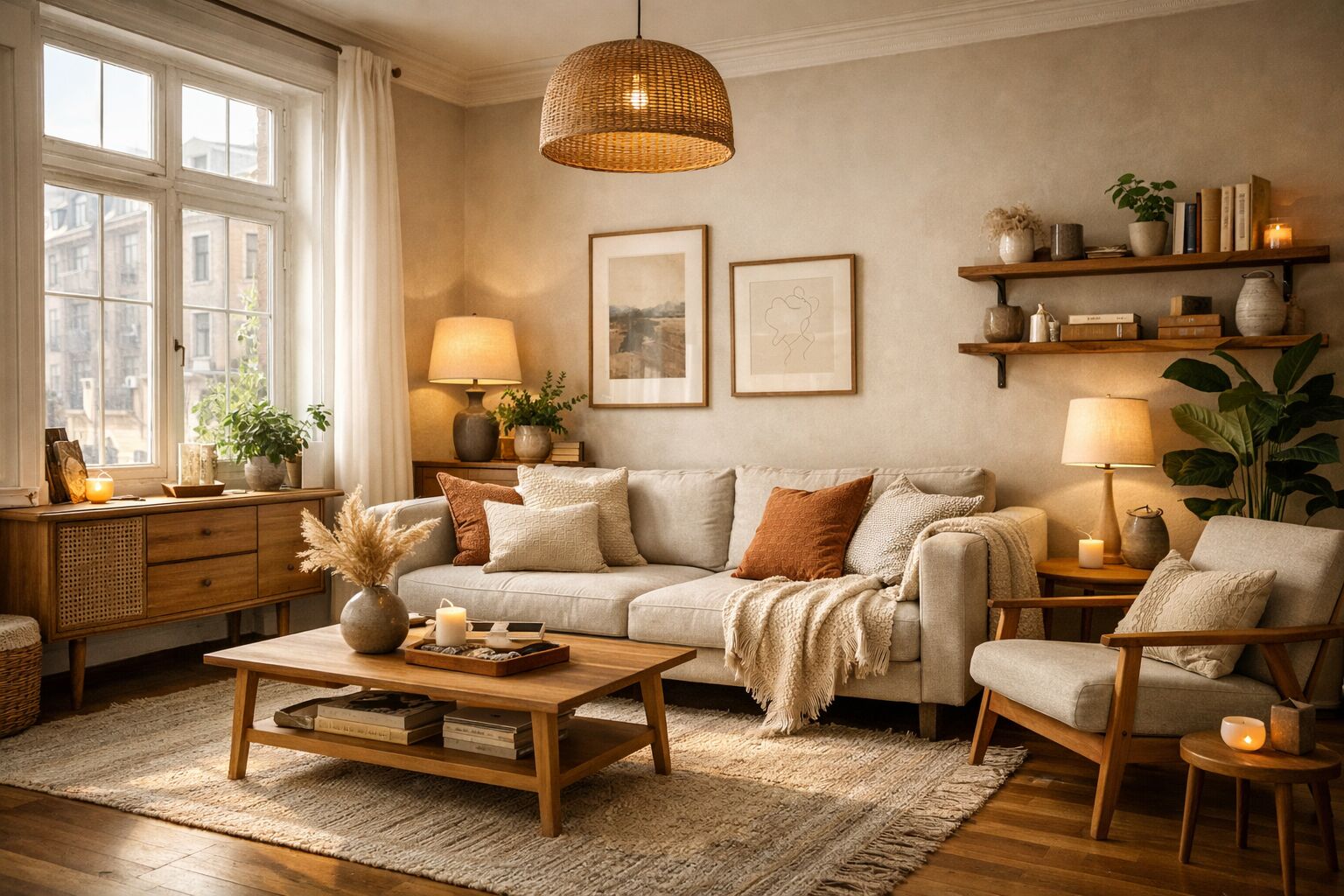
Imagine textured walls in a warm neutral tone with terracotta or blue accents, and arched details. Plaster work and finish quality have to be top-notch, proportions need extra attention as arches can look asymmetrical if not done properly, and the integration of modern elements into a classic style should be subtle. It has low maintenance, is kid-friendly, and has high resale value. If you’re looking for something cozy and comfortable, this is a good option.
Quiet Luxury or Contemporary Classic
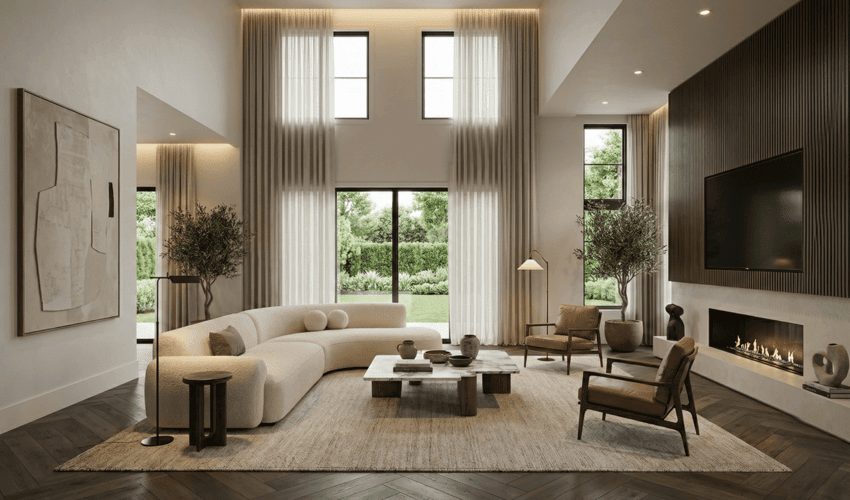
As the name suggests, this is about quality and craftsmanship over being flashy. It uses premium materials and a sophisticated neutral palette. Good investment in quality materials and attention to detail is compulsory. Livability is easy with low maintenance, kid- friendly and has a very high resale value. This is a good option for those who prefer to invest in quality and longevity.
If you want to know more about villa design styles you can refer to our blog on: Find Out Your Villa Style
Step 4: Prioritize Features Based on Risk and Value
Features are not equal; some can make your daily life easy, some are there for pure aesthetics, and some can create problems down the road. Having ample amount of daylight and storage, layouts with separate zones, and flexibility will always be useful and provide value.
Open plan style and glass work can be valuable if done in a planned and strategic manner. Trendy materials, excessive custom work, and high-maintenance finishes can be risky. Designers like to focus on features that are useful in the long run and prioritise low-risk comfort because it reduces callbacks for post-handover changes.
Step 5: Size and Scale Your Room by Comfort
The size of your room, the height of the ceiling, and the storage space you have everything correlates to how comfortable you will feel in your villa. For example, if you go for tall ceilings over 4.2 meters, they will only increase your cooling costs without actually providing any value or comfort. Low storage spaces will eventually lead to a messy environment. Open plan designs that are oversized will echo and be uncomfortable, as we saw in the example at the beginning.
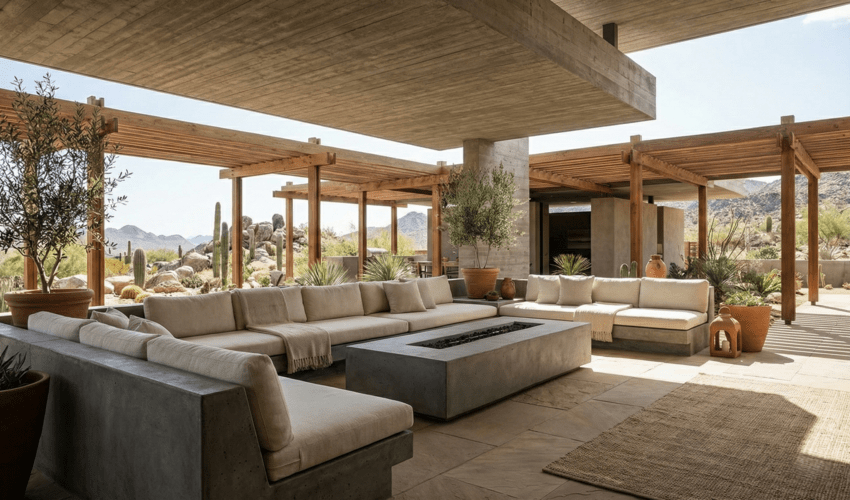
We have provided some optimal measurements to ensure your villa stays comfortable.
-
To have a good amount of daylight pouring in, keep your window area at least 15 to 20% of the room’s floor area.
-
Your master bedroom, living room, kitchen, and bathrooms should have a minimum of 250 sq. ft., 300 sq. ft., 150 sq. ft., and 80 sq. ft. of space, respectively.
-
Keep the ceiling height of the living and dining area at 11 to 12 ft. to keep it cool, and the bedroom at 10 ft. to keep it cozy.
-
Always keep 8 to 10% of your total area for storage spaces such as wardrobes, utility room, and pantries.
-
It is best not to exceed 600 sq. ft. of space for a combined kitchen, dining and living room without properly isolating the spaces.
Step 6: Keep Sustainability Focused on ROI
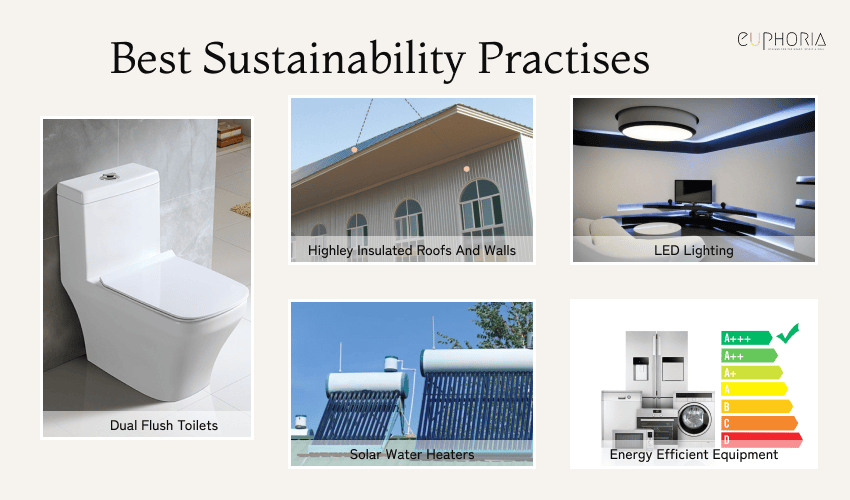
Sustainable choices should include the financial factor along with the moral one. Having properly insulated roofs and walls, LED lighting, and energy efficient equipment can help you get back the benefits within 3 to 5 years. Additionally, solar water heaters and dual flush toilets can also help lower utility bills. Some choices, such as solar panels and rainwater harvesting systems, can take more than 8 to 12 years to recover costs.
Green roofs, living walls and complex water recycling systems are beneficial for the environment, but they are high maintenance and expensive, and are best treated as hobbies, not investment-returning features. The choice will ultimately depend on how long you spend in your villa before moving to a new one.
Before you finalise your decisions, take a step back and ask yourself these questions:
-
Will the layout support how my family lives before and after?
-
Does my investment reflect livability and not aesthetics alone?
-
Am I keeping my lighting, storage, and space near the comfortable numbers?
-
Does my design acknowledge the climate and maintenance reality?
-
Am I following any risky trend that will make my space less habitable?
When you run your decisions through this framework, there will be no more uncertainty and second-guessing because you will know why every choice exists, what the risks are, and whether it can be fixed later.
The right design style for your villa will work without adjustments. It will support your lifestyle and will feel natural every day. This becomes the main differentiating factor between a villa that impresses temporarily and something that stays comfortable for years to come, not get outdated with villa design trends.
If you are still facing confusion, then you can consult Euphoria Interiors, and we will ensure your villa design trends decision won’t be a second guess ever.