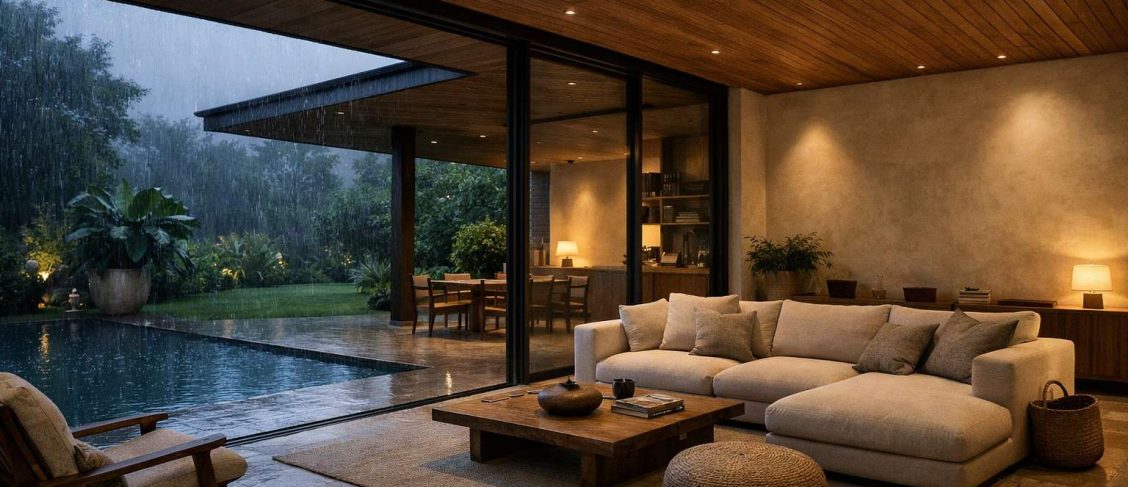
We understand the feeling. You want to have a modern and minimalist design in your villa, but you are also worried if that simplicity will be comfortable as well. We have seen several issues, such as leakage in flat roofs, echoing in halls, heat traps, functionality, etc.
This is exactly where an experienced interior design consultant helps you avoid these hidden design and planning mistakes early on.
No matter whether you are renovating an old property or building something from the ground up. You need a villa that will support your daily activities. While most advises focus only on the aesthetic aspect, we will also dive deep into the practicality.
You can also explore how global experts approach design by checking the top interior design companies in Dubai.
So how do you turn a minimalist villa into a cozy and functional family space? The answer lies in warm minimalism. Imagine it’s noon in July and you can see the sun hitting the pavement outside. But your living room feels cool because it’s shaded and you don’t need to pull the curtains or use the AC to live comfortably, and the best part? You can still enjoy the outside view without the heat and glare.
This will only take a few minutes to read, but it can save you from the expensive mistakes that are also time-consuming to fix. You will learn how to get that modern and minimalist look without sacrificing the livability that most builds suffer from.
True luxury is that level of calmness that you should feel before you even turn the key. It should begin the moment you pull into the driveway. If you want to see how to carry this energy right into your home, take a look at our guide on the latest entryway for villas to make that first impression count.
Building a Weather-Proof Shell That Handles Rain and Sun
We have to start with the physical container. Before we look at furniture, we need to make sure the structure itself can handle the elements. These are the decisions that prevent water damage, overheating, and clunky transitions that ruin your indoor-outdoor flow.
1. The Visible Water Path and the End of Hidden Rot

Hidden roof drains have a silent enemy called reverse lapping. This is an issue where rainwater flows back under the roofing material instead of draining away, leaking inside your walls. Often, you won’t notice the moisture until the paint begins to bubble.
The smart fix? Stop hiding the plumbing. We are switching to exaggerated drainage. Instead of burying pipes inside sensitive walls, modern designers use architectural scuppers. These are drainage extensions that stick out from the wall, turning the water flow into a visible feature.
This serves a beautiful double purpose. First, it adds a touch of industrial elegance to flat exterior walls. Second, it gives you peace of mind. If it rains and the scupper isn’t flowing, you know immediately there’s a blockage. It turns a hidden risk into a visible, manageable feature.
Your home is now safe from the rain. But without this next move, that stunning glass wall you paid for can turn your living room into a greenhouse you can’t even sit in.
2. The Deep Cantilever for Solar Control
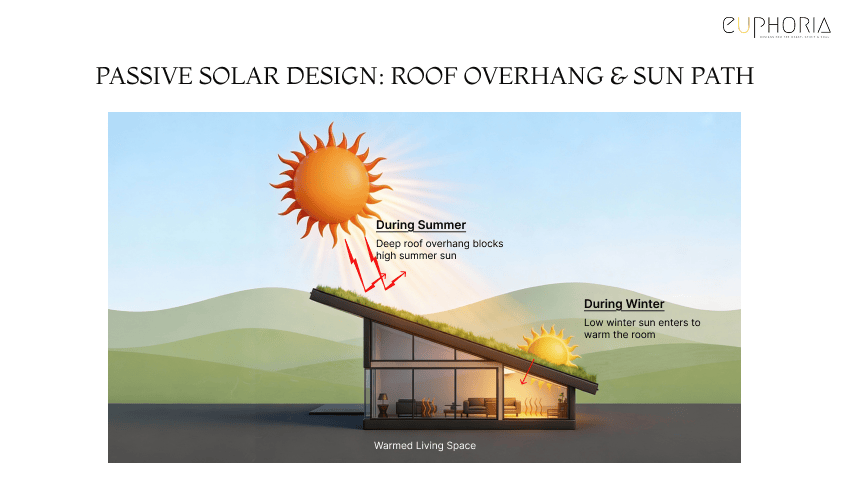
We all love natural light. But have you ever walked into a modern glass home in the middle of July? It feels less like a sanctuary and more like a greenhouse. Vast glass walls turn into ovens during the day. You end up living in the dark with the blackout curtains closed just to keep the AC bill from bankrupting you. That defeats the whole purpose of having a view.
The solution we are using more often is Structural Shading. We are moving away from the flat glass box look toward designs with deep cantilevers. These are roof overhangs that extend outward without needing any column underneath for support.
In the summer, the sun is high in the sky, so the roof blocks the hot rays before they hit your window. But in the winter, the sun sits much lower. This allows the warm light to shine under the roof and heat the room naturally. You get to keep the view without the heat stroke.
The temperature is perfect, so you slide open the doors for a party. But nothing kills the vibe faster than watching a guest stumble over a clunky door frame with a wine glass in their hand.
3. The Flush Threshold and Seamless Living
One of the biggest friction points in a home is the transition to the outdoors. Have you noticed that standard sliding doors usually have a raised track that you have to step over? It breaks the line of sight and acts as a constant reminder that the outside is separate from the inside. Plus, it is a tripping hazard for kids and guests.
The dream scenario is the Zero-Level Transition. This is where your interior tile meets your exterior deck at the same height. When deciding what flooring options suit a modern minimalist villa design, prioritize materials that can run seamlessly from inside to outside. The glass slides open, and the floor just continues. It makes the room feel twice as big.
To do this safely, we install a slim linear drain integrated flush with the track. It catches the rain before it can enter the room. This allows you to have that seamless, hotel-style look without the risk of flooding.
The connection to the outdoors is now seamless. But the moment you sit down to read, someone drops a spoon in the kitchen, and the clatter echoes through the whole house. We have to fix the noise before it drives you crazy.
Engineering Silence and Flow for a Stress-Free Life
The structure is secure. Now we need to focus on the comfort inside. This stage is about scrubbing away the daily frustrations, from the acoustics to the muddy boots, that usually go unnoticed until you move in.
4. The 30% Ratio to End the Echo Chamber
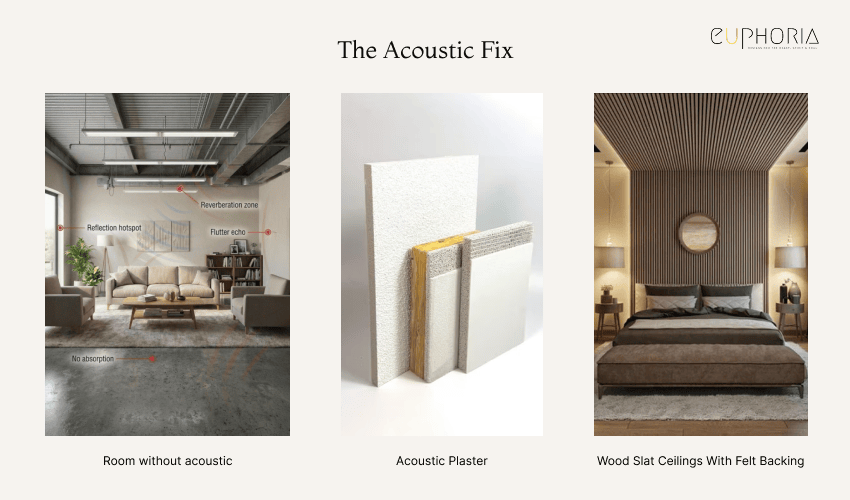
Materials like concrete and glass look beautiful, but they reflect sound and make a room echo. You might notice a subtle stress that makes you feel tired after just an hour inside. We need to build silence into the walls using a 30% ratio. To stop the echo, you simply need to cover about one-third of the hard surfaces with sound-absorbing material. So, now you don’t need to hang foam panels everywhere.
Many major museums and art galleries use acoustic plaster this is why their spaces feel hushed and calm even though they have hundreds of visitors.
A normal drywall is like a mirror because it reflects most the sound that hits it. Acoustic plaster acts more like a sponge. It has millions of tiny pores that soak up sound waves instead of bouncing them back. It absorbs most of the noise while looking just like a smooth wall.
The house is finally quiet, but then the kids burst in from school, dropping bags and muddy shoes everywhere. Suddenly, your zen paradise looks like a locker room.
5. The Hidden Drop Zone for Daily Clutter
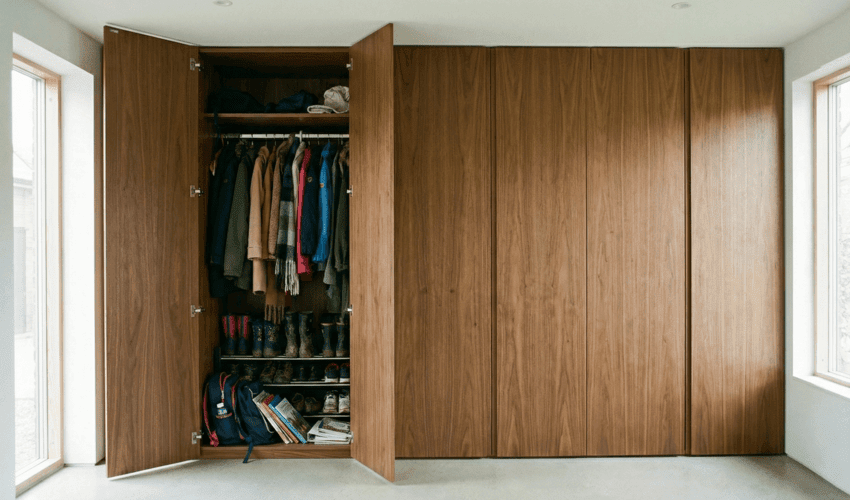
The problem isn’t you; it’s that your home isn’t built for the way you actually live. Modern villas often open directly into the living room. This means one pair of muddy boots, a school bag, or an Amazon box ruins the entire look. You end up feeling guilty just for living in your own house.
The solution is the return of the mudroom, but hidden. We call it a Decompression Vestibule. It is a dedicated drop zone hidden behind a pivot door or a seamless jib door near the entrance.
This room acts as a filter by absorbing the ugly inventory of life, like coats, shoes, packages, and dog leashes. When you walk into the main living area, the minimalism is actually sustainable. You can be messy in the vestibule, so you can be peaceful in the lounge.
The entry is clean, but life still happens. You need a place for the gym weights, the printer, and the toys, or your coffee table will eventually disappear under a mountain of daily clutter.
6. The 80/20 Formula for Hidden Storage
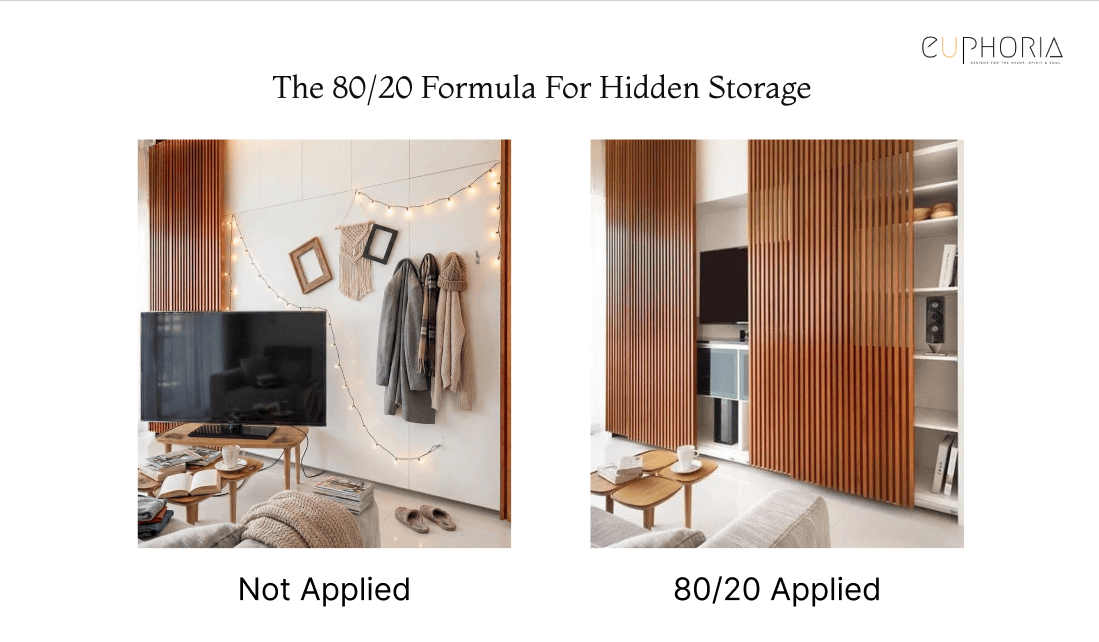
We understand, and it is okay to feel a bit discouraged when you see those pristine, empty counters in magazines and worry that you aren’t tidy enough to live in a home like that. But here is the secret. Nobody lives like the photos.
Minimalism is not about owning nothing. It is about seeing nothing. That is why we recommend the 80/20 storage solution. The house should be designed in a way so that 80% of the storage is concealed behind opaque doors. Only 20% is open shelving for the pretty things you want to display.
The shift is away from standalone cabinets toward floor-to-ceiling Wall Systems. These look like beautiful wood paneling, but they pop open to reveal toy bins, workspaces, and even gym equipment. If you can’t style it, hide it.
The clutter is gone, and the house is quiet. But when you turn on the lights, the walls look flat and harsh. It feels less like a home and more like an empty office hallway.
Replacing the Showroom Vibe with Ancient Warmth
This is where we turn a house into a home. We need to banish that cold, bare feeling that comes from smooth white surfaces. If your goal is to transform cold minimalism into a cozy space, the secret lies in replacing plain finishes with textures that feel expensive, grounded, and ancient.
7. The No-Paint Protocol and Earthy Skins
Standard white paint is often the culprit behind that generic feeling. Have you ever turned on bright LED lights in a white room and felt like you were in a fridge? Paint sits on top of the drywall. It looks flat, plasticky, and highlights every single dent and imperfection.
We recommend homeowners to abandon standard paint for Clay Plaster or Limewash finishes. They have depth, movement, and a suede-like texture. They absorb light rather than reflecting it harshly. It turns plain white into a warm cloud. It makes the room feel soft and wrapped rather than stark and bare.
The walls have color now, but they still look paper-thin. If you don’t add physical texture next, the house is going to look like a cheap flip rather than a luxury villa.
8. The Flashlight Test for Real Luxury
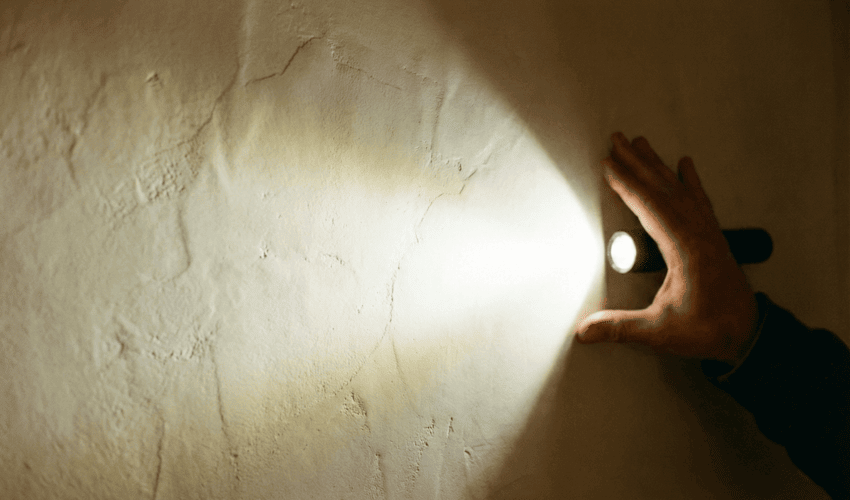
Minimalism without texture looks cheap. It risks looking like a generic apartment where everything is white simply because it was the most affordable option. If everything is smooth and white, the room feels unfinished, like it is waiting for furniture that never arrives.
To avoid this, we suggest the Flashlight Test. Take a flashlight and shine it sideways across a material sample. If it casts no shadow, it is best to reject it. We want materials with micro-shadows, so look for things like raked plaster, fluted stone, or raw travertine.
These physical grooves catch the light and change throughout the day. It creates a sense of luxury that doesn’t come from buying more stuff, but from the quality of the surfaces themselves.
The finishes look incredible, yet something feels off. The room is beautiful, but you don’t feel the urge to curl up on the sofa. We need to fix the subconscious chill in the room.
9. The Three-Texture Trick
Sometimes a room feels empty even when it is fully furnished. You can’t put your finger on it, but it feels cold. It feels soulless. Usually, the materials are unbalanced. You have too much stone and glass, and not enough life.
To fix this, make sure every room has a mix of three ingredients. We can start with the Cold base. This is your structure, like stone floors or glass walls. Then, you warm it up with a Bridge material, like oak wood, leather, or terracotta. Finally, you add the Soft layer, such as the wool rugs and linen sofas that actually invite you to sit down. This tactile balance is the secret ingredient behind some of the best minimalist living room ideas.
If a room doesn’t feel alive, it is likely missing that Soft or Warm leg of the triangle. It is a simple recipe, but it works every time.
The vibe is perfect. But then the Wi-Fi cuts out, and suddenly you can’t even turn on the lights. Let’s make sure your smart home doesn’t make you feel locked out.
Future-Proofing Your Daily Rituals Against Failure
Finally, we need to talk about reliability. A smart home is only smart if it works when you are tired, stressed, or when the power goes out. We need to make the home serve you, not the other way around.
10. The Manual Override for Smart Home Reliability
Invisible Tech is trending right now. These are smart devices hidden inside the walls or furniture, where you cannot see any wires or screens. We see biometric locks, motorized blinds, and lights controlled by your phone. It is magical for the first month. But what happens when the power goes out? Or the server goes down? Suddenly, you are trapped in a dark house that you can’t operate. You feel helpless in your own living room.
The safe bet is Analog Backup. A good rule is to never install a smart device that doesn’t have a physical handle, key, or switch. We see a rise in high-end tactile switches. These are beautiful, heavy toggles that control smart systems but feel mechanical and satisfying to click. It gives you the reliability of the past with the convenience of the future.
The house works perfectly now. But you look in the corner and see a brown, shriveled tree. Nothing ruins a luxury aesthetic faster than a dead plant.
11. Structural Greenery with Hardy Plants
We have all tried to keep a Fiddle Leaf Fig alive. It is stressful. You watch it slowly turn brown and drop leaves all over the pristine floor. Instead of looking like a sanctuary, your corner looks like a graveyard. Dead plants are the quickest way to make a luxury home look sad and neglected.
Stop buying plants that require a degree in botany. The smart move is Structural Greenery. Choose plants that act like sculptures. Sansevieria (Snake Plants), ZZ Plants, and Olive Trees are the furniture of the plant world.
They are sturdy, sculptural, and incredibly tolerant of neglect. They add life without adding a chore list. If you want a detailed breakdown on arranging them, read our guide on How to Style Your Indoor Aesthetic Plant Setup
You have the greenery, but the room feels busy. It looks like a collection of small trinkets rather than a curated space. We need to fix the one mistake that makes big rooms look cheap.
12. Monumental Scale to Cure Clutter
There is a trap called the Knick-Knack effect. People get scared of space, so they try to fill it with small things. They buy small rugs, small lamps, and small frames. The result isn’t minimalism. It is clutter. It makes a grand room feel small and messy.
The secret to calm luxury is Monumental Scale. The rule is simple. Replace 5 small things with 1 giant thing. Instead of a gallery wall of small photos, hang one massive canvas. Instead of a few small rugs, get one giant 9×12 rug that swallows all the furniture. Big items make a room feel grander, calmer, and more intentional. If you are wondering how to make a minimalist villa feel lived in, the answer is scale, not clutter.
You have a home that looks grand and feels calm. But before you sign off on the blueprints, you need to be certain it works for your specific life. Let’s run your design through the final pass-fail exam.
The Livability Stress Test
Before signing off on any floor plan or buying a single piece of furniture, run the home through this emotional check. If you can’t say yes to these, it might be time to go back to the drawing board.
-
The Heat Check: Can I leave my curtains open during the day without the house turning into an oven?
-
The Rain Check: Do I know exactly where the water goes when it storms, or is it hidden inside my walls?
-
The Echo Check: If I drop a spoon in the kitchen, will it wake the baby in the bedroom?
-
The Mess Check: If I leave a pile of laundry on the floor, does the house look ruined, or does it have a place to hide it?
-
The Warmth Check: Does the room feel like a white box, or does it have a skin that demands to be touched?
Ready to build a sanctuary, not just a showroom?
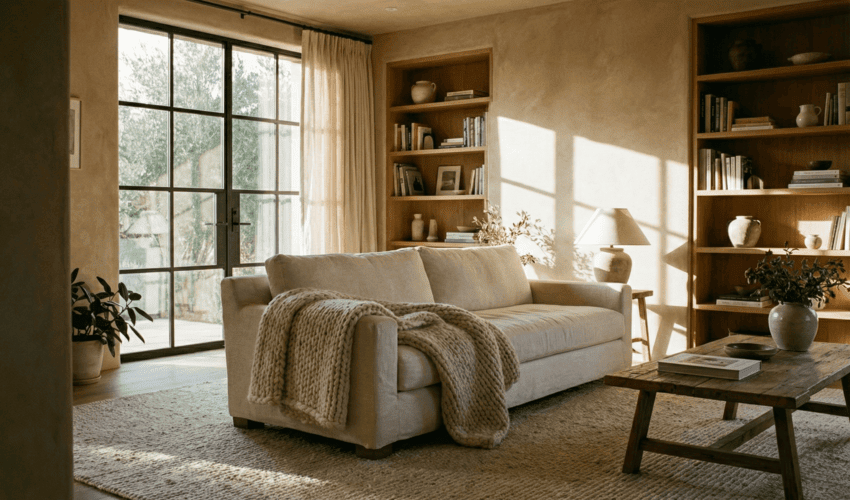
Passing these checks ensures you are building something that lasts. It shifts the focus from how the house looks to how it feels.
After all, you deserve a home that supports your real life, not just your Instagram feed.
You do not need more inspiration photos. You need a plan that survives reality. If you are currently planning a build or a renovation, let us help you. At Villa Interior Design Company, we can review your plans to spot the invisible risks before you pour the concrete.