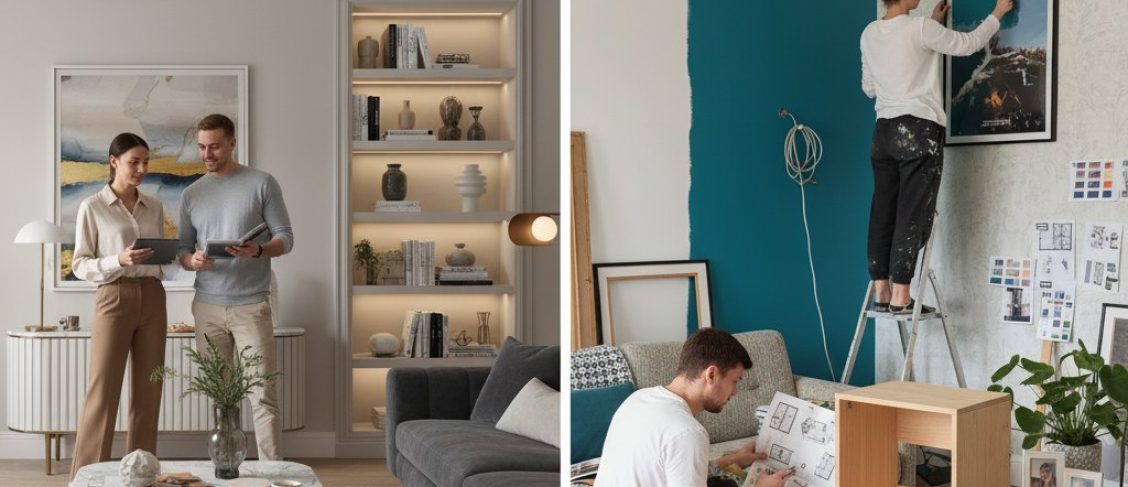
So, you’re thinking about decorating your place, right? Big decision, hire an interior designer or do it yourself? Professionals know their stuff and save you time, but it can be expensive.
Doing it yourself gives you full control, but it’s a lot of work and mistakes happen. By the time you’re done reading this, you’ll know if you want to call in the experts or dive in yourself. We made it simplified for you. It’s all about what you want.
What Interior Designers Do
It’s not just about picking out some pretty colours. Designers plan entire spaces, like seriously, they think about every little thing. They know how rooms should flow, so nothing feels cramped or weird.
They’ve got all the insider knowledge on construction rules and legal stuff too, which, let’s be real, you probably won’t have the energy to dive into. And don’t forget, they’ve got connections with suppliers and contractors. They can literally get you things you wouldn’t even know existed.
Designers make elaborate plans. They are precise space experts. Their selection of materials are durable. They operate on a budget and a schedule. They have solutions to a problem that you would not possibly have imagined.
Whether you choose an interior designer or an interior decorator, they’re skilled in transforming spaces efficiently and beautifully. If you opt for fit-out (turnkey) services, they’ll handle everything from concept to installation, ensuring smooth execution of your vision.
An interior design firm involves having professional services. Hundreds of projects have been done by them. They understand what is, and what is not. They can see the end product before they start working.
The DIY Approach Benefits
There are obvious benefits of doing it yourself. The biggest is saving money. You don’t pay designer fees. You can shop for bargains. You can do some work yourself.
DIY offers you the full control. Every decision is yours. You work at your own pace. And with a flick of the eyelid you can change your mind. Next to being your own space is satisfaction.
Through DIY you learn a very useful thing. you know the house you belong to. You become a self-assured decision maker. The creative process is very popular among many people.
When it comes to the small projects, DIY works well. Working with a room is not hard. Hanging curtains is simple. Restructuring the furniture is free. Even these little deviations can renew an area.
Cost Comparison
Money matters when decorating. Let’s compare costs honestly. Hiring an interior design firm costs upfront. Designer fees vary widely. Some charge hourly rates.
Others charge a percentage of project costs. Some offer flat fees per room. Expect to pay anywhere from a few thousand to tens of thousands.
But designers can save you money long-term. They avoid expensive mistakes. They get trade discounts on furniture and materials. They prevent costly do-overs. They complete projects faster.
DIY appears cheaper initially. You skip designer fees. But mistakes cost money. Buying wrong materials wastes cash. Redoing work takes time and money. Without experience, you might overspend.
Consider hidden DIY costs. Tools add up. Transportation for materials costs money. Your time has value too. Projects often take longer than expected.
Time Investment
Interior design services from professionals save you time. They work efficiently. They have systems and experience. They manage multiple tasks simultaneously.
They coordinate contractors smoothly. A professional can complete in weeks what takes you months.
Designers handle the stressful parts. They deal with contractors. They track deliveries. They solve problems quickly. This saves you countless hours.
DIY projects take significant time. Research alone requires hours. Shopping takes multiple trips. Installation takes longer without experience. You also have your regular job and life responsibilities.
Be realistic about DIY timelines. What seems like a weekend project might take weeks. Delays are common. Mistakes require extra time to fix.
Skill and Knowledge Requirements
Interior design requires various skills. Professional designers understand spatial planning. They know colour theory. They understand lighting design. They recognize quality materials. They read architectural drawings. These skills take years to develop.
An interior design firm brings technical knowledge. They understand structural requirements. They know electrical and plumbing limitations. They follow building codes. This prevents dangerous or illegal installations.
Designers stay current with trends. They know what’s available. They understand which styles age well. They create timeless designs that don’t feel dated quickly.
DIY requires learning these skills yourself. Online resources help. But mistakes are part of learning. Some mistakes are expensive. Others are difficult to fix.
Assess your skills honestly. Are you good with measurements? Can you visualize the finished results? Do you understand colour coordination? Can you use tools safely?
Quality of Results
Result quality differs between professional and DIY work. An interior design company delivers polished results. Every detail is considered. The space looks cohesive. Professional installation shows. The result photographs beautifully.
Designers create balanced rooms. Furniture proportions work together. Colours complement each other. Lighting enhances the space. Everything serves a purpose.
DIY results vary greatly. Some people have natural talent. They create beautiful spaces. Others struggle with cohesive design. The result might look amateur.
Common DIY mistakes include poor colour choices, wrong furniture scale, inadequate lighting, and cluttered spaces. These issues reduce your home’s value and comfort.
Complexity of Your Project
Project complexity should guide your decision. Simple projects suit DIY. Painting walls is straightforward. Hanging artwork works well. Buying new pillows and throws refreshes a room. These changes have low risk.
Complex projects need professionals. Kitchen renovations are complicated. Bathroom remodels involve plumbing and electrical. Adding built-ins requires carpentry skills. Open floor plan changes need structural knowledge. For commercial spaces, hiring experts for office renovation services ensures proper planning, compliance, and efficient execution.
An interior design firm handles complexity smoothly. They coordinate multiple contractors. They ensure everything arrives on time. They manage unexpected problems. This reduces your stress significantly.
Consider your project scope. Are you changing one room or the whole house? Does it involve construction? Will you need permits? Do contractors need coordination? Complex projects justify hiring professionals.
Budget Flexibility
Your budget affects this decision significantly. Tight budgets often mean DIY. You can spread purchases over time. You do labor yourself. You hunt for bargains. This stretches your money further.
But remember that mistakes cost money. Buying wrong items means buying twice. Poor planning leads to waste. Sometimes cheap becomes expensive.
An interior design company requires a budget upfront but they maximize every dollar. They prevent overspending. They know where to splurge and save. They create detailed budgets with contingencies.
Some interior design firms offer consultations only. This middle option provides professional guidance. You implement the plan yourself.
This reduces costs while getting expert advice. Also, keep in mind that an interior designer cost in Dubai can vary depending on your project scope and requirements.
Personal Style and Vision
Consider how confident you feel about your style. If you have a clear vision, DIY might work. You know what you want. You can execute your ideas. You trust your taste. This confidence leads to better results.
If you’re uncertain, professionals help. An interior design firm translates vague ideas into concrete plans. They show you options you hadn’t considered. They refine your vision into something beautiful.
Designers ask the right questions. They understand your lifestyle needs. They create spaces that function well. They balance aesthetics with practicality.
Some people enjoy the design process. Others find it stressful. Know yourself. If decorating excites you, DIY might be fun. If it causes anxiety, hire help.
Resale Value Considerations
Think about your home’s future value. Professional design often increases resale value. Beautiful spaces attract buyers. Quality work shows. Good design makes homes memorable. This can mean higher offers.
An interior design company creates marketable spaces. They understand what buyers want. They avoid overly personal choices. They create broad appeal.
DIY can hurt resale value if done poorly. Bad colour choices turn off buyers. Amateur work shows. Strange layouts confuse people. This can reduce offers or extend selling time.
If you plan to sell soon, consider professional help. The investment might return at sale time.
Finding Middle Ground
You don’t have to choose all or nothing. Many people use a hybrid approach. They hire an interior design firm for planning. They implement some parts themselves. This balances cost and expertise.
Some designers offer hourly consultations. You get professional advice. You make purchases independently. You install yourself. This saves money while avoiding major mistakes.
Another option is hiring for complex parts only. A designer handles the kitchen. You decorate bedrooms yourself. This prioritizes professional help where it matters most.
Online design services offer affordable middle ground. You submit photos and measurements. Designers create plans remotely. You purchase and install yourself. This costs less than full-service design.
Making Your Decision
In the end, factors affecting the cost of interior design in Dubai such as your project’s complexity, your timeline, and your budget will guide your decision. Hire an interior design company if you want professional results, have a complex project, lack design confidence, have adequate budget, or want to save time.
Choose DIY if you have a tight budget, enjoy the creative process, have a simple project, possess relevant skills, or have plenty of time.
Be honest about your situation. Don’t let pride prevent hiring help. Don’t let fear stop you from trying DIY.
Remember that you can start small. Try DIY on a simple room. If it goes well, continue. If you struggle, call professionals.
Conclusion
There’s no universally right answer. The best choice depends on your specific situation. Consider your budget, time, skills, and project complexity.
Think about your stress tolerance and confidence level. Evaluate the importance of professional results. Whether you hire an interior design firm or tackle projects yourself, the goal is creating spaces you love.
Both approaches can succeed. Choose the path that fits your needs, abilities, and resources. Your home should reflect you and bring joy. That’s what matters most, regardless of how you achieve it.