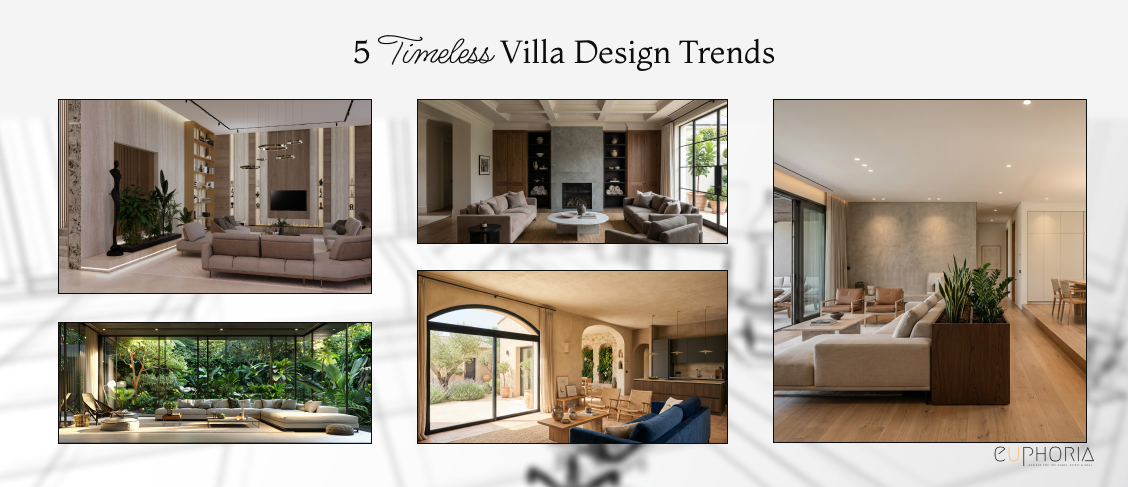
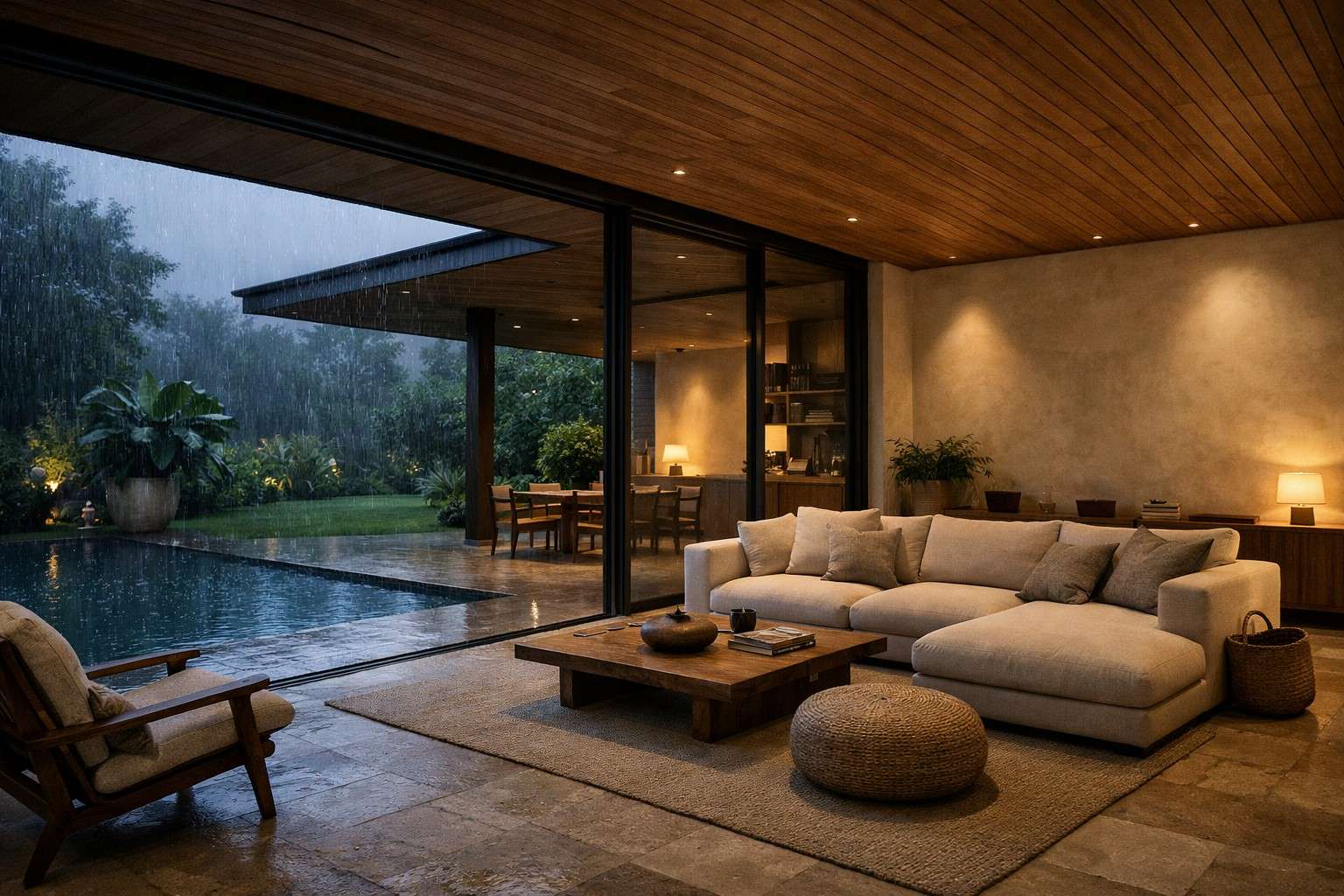
Your floor and furniture are the biggest elements in any room. Their relationship sets the tone for your entire home. When they work together, the space feels welcoming and intentional, not just for you, but for every guest who walks through your door.
However, buying furniture without considering your flooring often creates a clash. This makes the room feel chaotic or “off,” even if the individual pieces are beautiful. It is like forcing together pieces from two different puzzles. But do not panic. Choosing the right furniture colour for your flooring becomes easier when you understand the core elements of interior design, which help create balance, harmony, and visual flow in any space.
Maybe you’re a new homeowner starting fresh, a renter dealing with permanent flooring, or someone trying to fix a mismatch with furniture you already own; we have a solution. In the next section, this guide will walk you through how to make your furniture and floors look perfect together, no guessing or expensive mistakes, just simple steps that work. For those who love structure and artistic form, exploring cubist interior design elements can inspire not only bedroom aesthetics but also innovative ways to match furniture colours with flooring in modern homes.
The One Secret You Need to Know Before You Start
Before you buy anything, you need to learn the hidden language of wood. Most people just see brown, but interior designers look deeper to find the subtle color hiding inside. We call this an undertone. You either have warm undertones that glow with yellow and red or cool undertones with hints of grey.
Your eyes like it when colors belong to the same team. If you put a cool grey sofa on a warm orange floor, your brain gets confused. Knowing this is the key to making your room feel right.
How to Find Your Undertone (The White Paper Test)
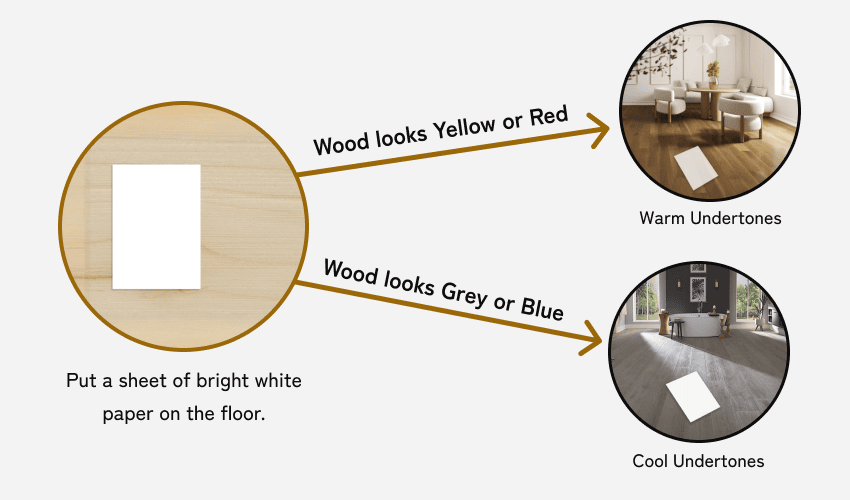
If you can’t see the color clearly, use this visual hack. Put a sheet of bright white paper on the floor. If the wood looks yellow or red next to the white paper, you have Warm Undertones. If it looks grey or blue, you have Cool Undertones.
The smart move is to turn off the lights. Regular light bulbs can trick you. For the real answer, you must do this test near a window using natural sunlight.
Now that you know your floor’s personality, you can skip the guessing game. Check the sections below to find the specific fix that saves your specific floor.
The 2-Step Master Plan for New Home Owners
If you are moving into a new house, you have a blank canvas. This is exciting, but we know it can feel scary. You have the power to make all the decisions, so you need a master plan to get it right.
Follow this 2-step designer process to guarantee a perfect match.
Step 1: Apply the Top 3 Designer Rules
Before you worry about specific colors, you need to understand the layout rules. Use these three principles to build a solid foundation for your room.
-
The 2-Tone Wood Limit: First, be careful with wood furniture. If you have wood floors, try to stick to just two different wood colors in the room. You also want the furniture to look different from the floor. Pick wood that is clearly lighter or darker than the ground. If they match perfectly, it can look a bit flat.
-
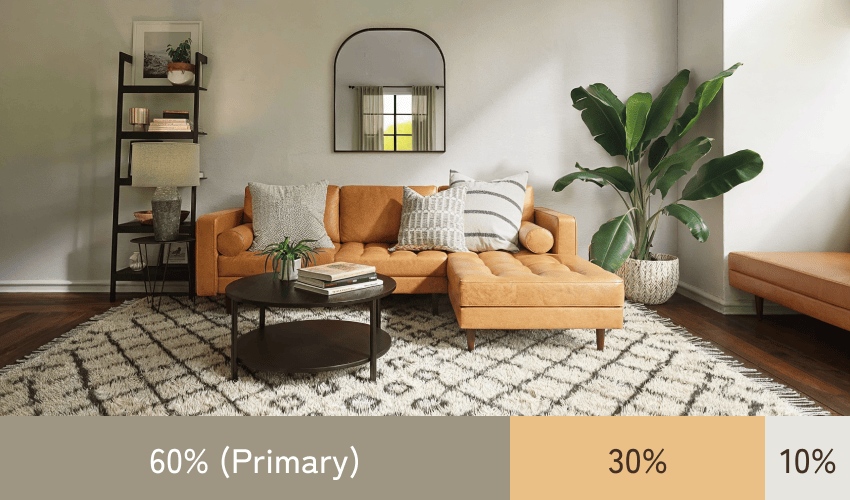
The 60-30-10 Ratio: Next, think about how much color you use. Imagine your room is a recipe. The biggest part (60%) is your floor and walls. The middle part (30%) is your furniture. The smallest part (10%) is for fun things like colorful pillows or art. This helps you make sure your furniture fits in without taking over.
-
The Space Rule: Finally, give your furniture some breathing room. If a sofa sits flat on the floor, it can look heavy. Try to pick one with legs that lift it a few inches. Also, if you use a rug, make sure you can still see some of the beautiful floor around the edges. This creates an excellent frame for your room.
Step 2: Pick Your Perfect Combination
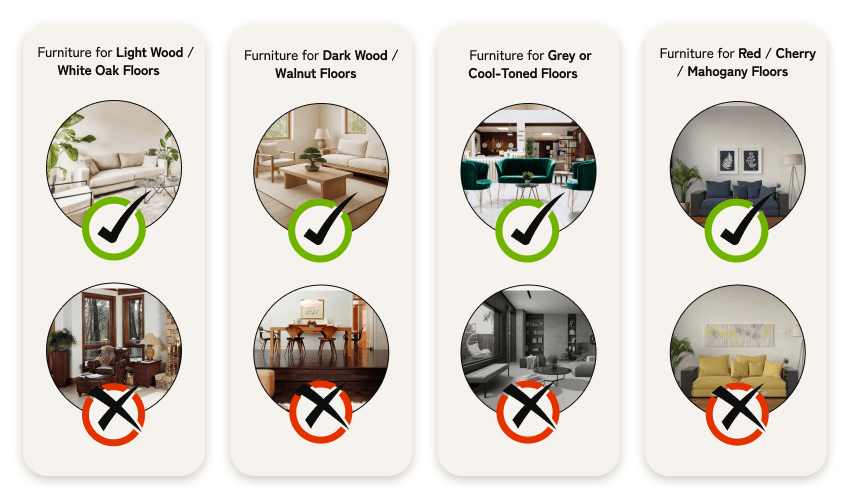
Find your floor type below to see exactly what to buy.
-
Light Wood / White Oak: Use “Honeyed Neutrals” like cream or beige to keep it airy. Avoid red woods like Cherry.
-
Dark Wood / Walnut: Use light fabrics like Oatmeal or Light Grey to stop the room from looking like a cave. Strictly avoid black sofas.
-
Grey / Cool Floors: Add warmth with Camel or Cognac leather. Avoid adding more grey, or it will look like a concrete box.
-
Red / Cherry Floors: Use “quiet” colors like Greens or Blues to cool down the heat. Avoid Red or Orange furniture.
Even if you own your home, you might want furniture that is “future-proof” in case you move or renovate. In the next section, we reveal the expert-approved pieces that look good on literally any floor.
The Designer’s Choice: 4 Universal Hacks for Renters
If you rent or move often, you might be stuck with a floor you did not choose. You need furniture that is like a chameleon and fits anywhere. Here are 4 universal options that experts recommend since they look good in any home.
-
Tan Leather: Think of this like blue jeans. It matches everything. It warms up cold, grey floors in modern apartments and blends beautifully with old wood floors in historic houses.
-
Matte Black: Black is the ultimate modern neutral. A black metal chair or coffee table gives a cool, designed look on both light and dark floors.
-
White and Cream: These make any small apartment feel bigger and brighter. They pop against dark floors and blend with light ones. Just be sure to pick a fabric that is easy to wash so it stays clean!
-
Clear Glass: This is the best trick for small spaces. Since these pieces are clear, they disappear visually. This lets the floor show through and keeps your room from feeling crowded.
Buying adaptable furniture is smart, but what if you already have a sofa you love, and it clashes with your new floor? You don’t have to sell it. We show you exactly how to make it work in the next section.
Many of today’s furniture and flooring combinations are inspired by evolving interior design trends in 2024, where natural tones, warm neutrals, and textured finishes dominate modern homes.
3 Simple Tricks for People Who Already Have Furniture
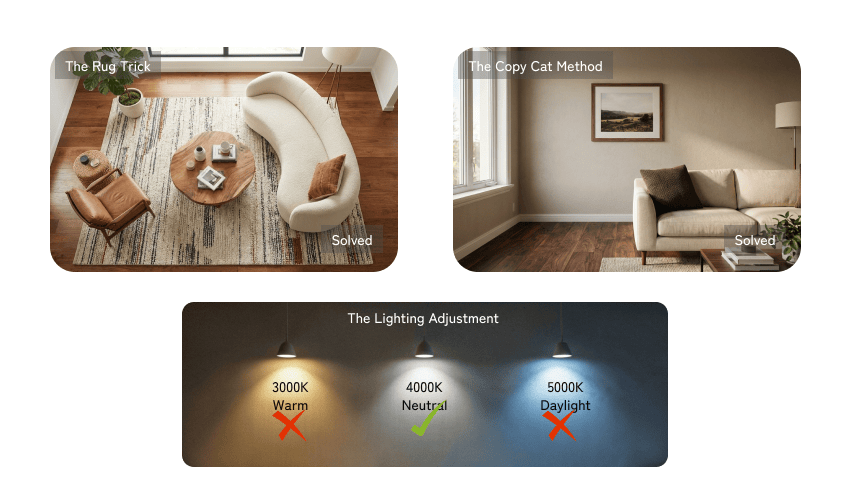
Did you bring a sofa home only to realize it looks wrong? Instead of starting over, use these 3 expert tricks to bridge the gap visually.
-
The Rug Trick: If your sofa and floor colour clash, the best solution is to keep them apart. Put a large, neutral rug under your furniture. This creates a “safe zone” so the sofa touches the rug instead of the floor. It breaks up the colors and makes everything look calm again.
-
The Lighting Adjustment: Your light bulbs might be the problem. 3000K Warm bulbs make white oak look yellow. 5000K Daylight bulbs make grey floors look blue. To fix it, switch all bulbs to 4000K Neutral White. This is the kind of light museums use because it shows the true colors of your room.
Where to look: You can find this number printed on the base of the bulb or on the packaging box, look for the letter ‘K’ (e.g., 2700K, 4000K).
-
The Copycat Method: If your floor looks lonely or out of place, help it fit in. Try to repeat the floor color somewhere else in the room. For example, if you have dark wood floors, add a dark wood picture frame on the wall or a brown pillow on the sofa. This connects the floor to the rest of the room, so it feels like it belongs.
Choosing furniture colors that complement your flooring is essential – and when paired with creative hallway decor ideas, it creates a sense of flow and brightness throughout your home.
Final Checklist for Furniture and Floor Matching
Let’s pause for a second before you buy. If you’re looking for pinnacle style interior design ideas that influence how furniture and flooring pair together in 2025 trends, a list of furniture for new apartment can help you visualize these combinations. across the UAE, this curated collection of the top 23 fit out companies in Dubai, UAE offers excellent inspiration. To make sure your room is going to look amazing (and you won’t have any regrets), we want to see a solid “Yes” for these five questions.
-
Undertone Match: Did I confirm that my furniture and floor share the same temperature? (Yes/No)
-
Contrast Check: Is my furniture at least two shades lighter or darker than the floor? (Yes/No)
-
Legibility: Can I clearly see where the sofa ends, and the floor begins? (Yes/No)
-
Buffer Zone: If there is a clash, did I place a rug between the furniture and the floor? (Yes/No)
-
Sample Test: Did I look at the fabric swatch on the floor in my home lighting? (Yes/No)
From Concept to Reality
Design is not luck. It is a series of decisions based on rules.
Your flooring is the anchor. If you fight it, the room will always feel unsettled. If you work with it by respecting the undertones and measuring the contrast, you build a foundation of visual balance.
Reading the rules is one thing, but executing them in a complex space is another. Design is risky because one wrong swatch can throw off the entire budget.
At Euphoria Interiors, we remove that risk. We don’t just guess because we plan everything. You might need a second opinion on a mood board, or you might need a comprehensive interior design master plan for your entire home. We are here to make sure every element talks to each other. When designing a welcoming space, selecting furniture colours that complement the flooring is especially important in guest room interior design, ensuring comfort and visual appeal for visitors.
Don’t leave your investment to chance.