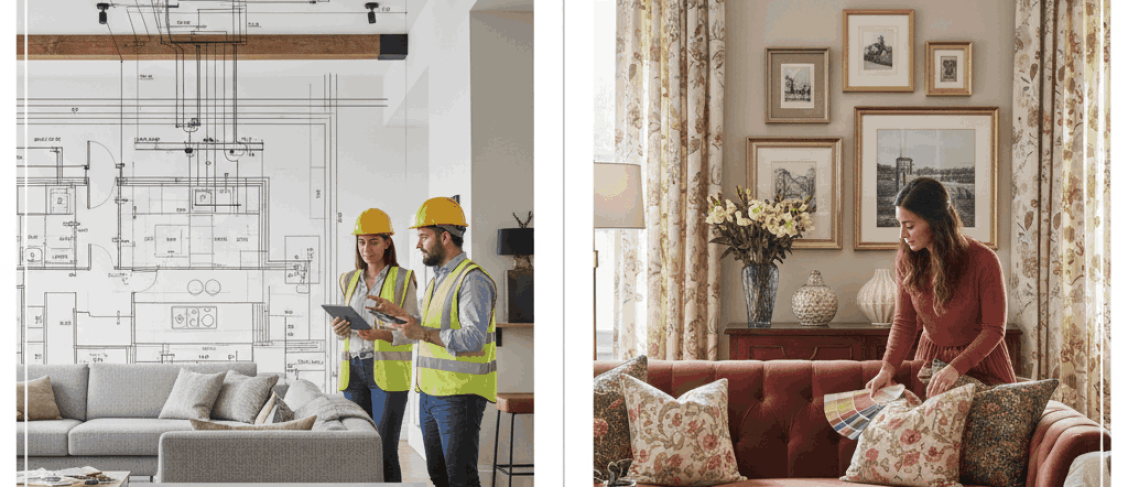
Do you ever wonder if there is a real difference between Interior Designer and Interior Decorator? Well, you’re not alone! A lot of people think these terms are interchangeable, but they’re actually quite different in skill sets and expertise.
In this blog, we’ll take a deep look into both fields, and we will examine what makes each of them unique. At the end, you will know what each position entails, creatively as well as in terms of technical know-how, and why it matters.
A brief history of the interior designer
The ancient Egyptians, Greeks, and Romans were like the original interior designers. They knew how to make things comfy and beautiful with fabrics and mosaics. Fast forward to the 17th century during the Renaissance, and interior design became everything. It was all about showing off wealth with luxurious materials and fancy furniture.
Then, in the 19th and 20th centuries, things changed. With industrialization, design had to be functional, not just pretty. It wasn’t just about looking good; it had to work. Minimalism became a thing after World War II and really took over in the 60s and 70s. Suddenly, it was all about clean lines and simplicity. Interior designers handle both indoor and outdoor spaces — from living rooms to terrace design ideas that expand your home’s usable area with style and comfort.
Today, sustainability is totally taking over the interior design world. Everyone’s concerned about the climate crisis. Interior design firm are getting real picky about how materials are sourced and used. It’s not just about what looks good anymore; it’s about doing better for the planet.
A brief history of the interior decorator
Interior decoration has literally been around forever. A long time ago, cavemen used animal skins, stones, and plants to make their homes feel cozy. In ancient Egypt, rich people used shiny metals and stones to make their homes look fancy and show off how rich they were.
Later, in the Middle Ages, people started decorating churches with big wooden furniture and fancy stone designs.
When the Renaissance came, decorating homes became an art. Famous artists like Leonardo da Vinci used materials like ivory and wood to make rooms look amazing. An interior designer’s work also includes functional planning and décor balance for spaces like bedrooms — check out our bedroom design tricks for practical inspiration.
In the 18th and 19th centuries, the middle class started getting into decorating, due to the Arts and Crafts movement and cheaper, quality furniture. Minimalism ruled the early 1900s, and by the 50s and 60s, mid-century modern was everywhere, with its clean lines and sleek style. In the 20th century, things just went wild. Design was all over the place, like a big party with different trends fighting for attention.
What does an interior designer do?
An interior designer is like your personal space magician. They take a boring room and make it pop. From picking the right colours to choosing furniture that fits, they make everything look amazing and work for you.
It’s not just about looking pretty. Everything has to flow, feel comfortable, and be useful. Like making sure your couch is cozy but not in the way of your favourite spot to walk.
It all starts with an initial consultation where they sit down with you, figure out your style, and get a sense of what you want. Then, they pull everything together, sometimes even creating custom designs that scream “this is you.” They also figure out where to put the furniture so you’re not tripping over it. They work with builders and architects to make sure everything fits perfectly.
They turn your space into a place you actually want to live in.
What does an interior decorator do?
So, interior decorators are all about the finishing touches. They’re like the final coat of paint that makes everything feel polished. They work with the structure of your space and just make it look good. Want a cozy vibe in your living room? They will choose the perfect sofa, throw pillows, and those little accessories that pull the look together.
It’s all about adding those personal touches like candles, plants, and artwork that reflect your personality and make the space feel like it’s truly yours, not just some random collection of stuff thrown together. They are not making big changes.
They’re enhancing what’s already there. They’ll even help with things like arranging furniture to make sure the space flows, but it’s all about adding style without the hassle of construction.
It’s their job to make sure every little detail, down to the last vase, looks perfect and helps tell the story of who you are in that space.
Educational requirements of interior designers
To become an interior designer, most people get a bachelor’s degree in interior design from a university. Others may decide to study in a similar field, such as architecture, graphic design, or fine art, and then acquire skills related to interior design afterwards through courses or on-the-job training. Some opt for short courses or diplomas that teach the needed skills.
At the end, a portfolio is often created to showcase work to clients.
Educational requirements of interior decorators
Becoming an interior decorator doesn’t require a fancy degree. However, having a certificate from a recognized school can help stand out and open doors for better jobs.
Many decorators still choose to take classes for certification, such as from the Certified Interior Decorators International (CID) or the Interior Design Society (IDS). This can show knowledge and help gain credibility in the field.
What skills should an interior designer have?
Creativity and Function
Designers need to mix and match colours, patterns, and textures easily. It’s not just about looking good. The space has to work well too. They create layouts that make sense and arrange furniture in ways that are both practical and stylish.
Problem-Solving Skills
No project goes perfectly, and designers need to think quickly. They deal with things like budget problems, tricky layouts, and last-minute changes. They find solutions to keep everything moving smoothly.
Attention to Detail
Designers have to pay close attention to every detail. From lighting to furniture placement, it’s the little things that make a big difference. Every choice must add to the overall vision of the space.
What skills should an Interior Decorator have?
Style Experts
Decorators are all about making things look great. They don’t change the structure, but they know how to make a space feel amazing. They choose colours, patterns, and textures that bring the room to life.
Managing Time and Budgets
Decorators handle a lot of things, like time and budgets. They stay organized to make sure everything is done on time and without stress.
Client Understanding and Adaptability
Decorators must be able to understand what their client really wants. They adapt quickly to different styles, personalities, and needs to create a space that feels just right.
How much do interior designers and interior decorators get paid?
Interior Designers
Average Monthly Salary: Around AED 25,952, which is approximately $7,067.
Entry-Level (0–2 years): Between AED 8,000 and AED 15,000 per month.
Mid-Level (3–5 years): Ranges from AED 15,000 to AED 25,000 monthly.
Senior-Level (6–10 years): Can earn between AED 25,000 and AED 45,000 monthly.
Interior Decorators
Average Monthly Salary: Approximately AED 4,987, or about $1,358.
Typical Range: Between AED 4,800 and AED 12,000 per month.
Roles Related to Interior Designers
Architects: Designers and architects are a team. Architects handle the structure and design of the building, while designers focus on making it look stylish. They work together to make sure the space is both beautiful and safe.
Lighting Designers: Lighting can totally change a room’s vibe, right? Lighting designers figure out how to get the lighting just right, so the space feels perfect, day or night.
Furniture Designers: Sometimes the furniture in a design needs to be special. Designers work with furniture to create custom pieces that fit exactly into the room.
Landscape Designers: Outdoor spaces need to flow with the inside. Landscape designers make sure the outdoor area blends smoothly with the interior, creating a seamless transition.
Roles Related to Interior Decorators
Stylists: Stylists are the ones who add the finishing touches that make a room pop. They choose things like art, pillows, and lamps that take the look from good to amazing.
Home Stagers: When a house is for sale, home stagers make it look irresistible to buyers. They arrange furniture and decor in a way that makes the space look its best.
Set Designers: Set designers create the environments for TV shows, movies, and plays. They decorate the sets to fit the scene and storyline, adding a whole new level to decorating.
Visual Merchandisers: Ever walked into a store and felt instantly drawn to the displays? That’s the work of a visual merchandiser. They create eye-catching store setups, just like decorators create beautiful rooms.
What are the services offered by Interior Designers
Interior Designers make sure your space is functional, stylish, and everything fits perfectly. Interior design services include the following:
Space Planning: Designers are like the masterminds of a room. They figure out the layout, making sure there’s flow and everything fits perfectly. Do you ever walk into a room and think, “Wow, this just feels right”? That’s them at work, making sure your space feels balanced and functional.
Colour Schemes & Materials: Designers pick colours and materials that work well in a space. They think about how things will look over time, mixing textures and shades that last. You don’t want a colour that fades or fabric that wears out too fast. Designers make sure everything stays nice and looks good for years.
Lighting Design: Lighting is everything. Designers totally get how to work the lights to highlight the best parts of the space. They’ll make sure the lighting matches the whole feel of the room, whether you’re trying to relax or pump up the energy. Trust me, the right lighting can make or break your entire vibe.
What are the services offered by Interior Decorators:
Space Styling: It’s like giving a room its own personality! You want your space to feel like you, right? So decorators pick out the perfect furniture, colours, and accessories that bring it all together. It’s like dressing up a room so everything feels right where it’s supposed to be.
Furniture Selection & Arrangement: It’s not just about throwing some pretty pieces in there. They pick the right furniture that fits the space, making sure it’s comfy and looks amazing. Everything has to feel like it’s meant to be there, working together in perfect harmony.
Decorative Accessories: These little details make a room pop! Think art, lights, and cute decor that pulls the whole space together. They turn a good room into something wow, making it feel cozy, unique, and totally finished. When comparing roles, it’s useful to see how professional services differ in real projects, such as our interior design services in Silicon Oasis Dubai, where tailored planning goes beyond décor.
Whom should you hire: a Designer or a Decorator?
If you’re doing a big renovation or starting from scratch, you need an interior designer. They’re not just about making things look pretty; they make sure everything works. They handle the layout, flow, and all the behind-the-scenes stuff like safety, so your space actually works. They’ll pick materials and colours that will still look great a year later.
But if you just want to update your space with new furniture, art, or accessories, an interior decorator is who you need. They’ll come in, work their magic, and make everything look amazing without changing anything big. No walls being torn down, no heavy lifting, just styling magic. A clear example of comprehensive design work is shown by our interior design expertise in Palm Jumeirah Dubai, demonstrating how professional designers elevate spaces beyond simple decoration.
So, what’s it going to be? A full makeover or a quick update? Time to decide, my friend.
Final Thoughts
Now you see why people mix up designers and decorators. If your walls need to move or your room is all messy, you call a designer or an interior design company. But if you just want your room to look pretty without big work, you call a decorator. Both can help, but you get to pick who makes your place feel like home.