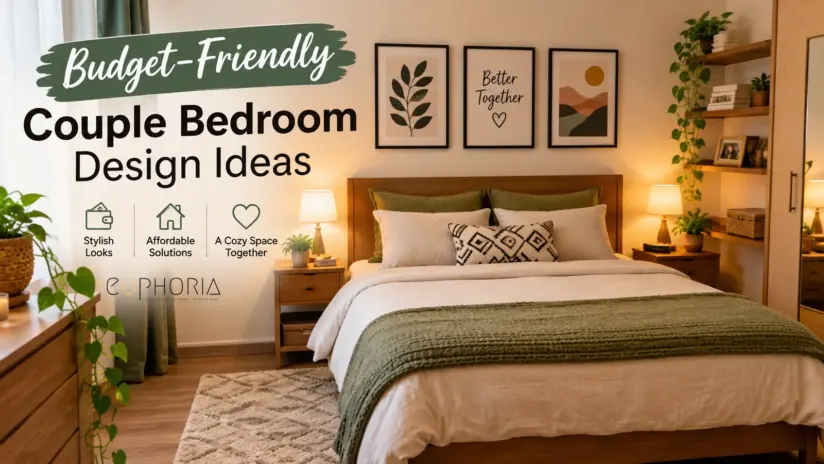



2 door wardrobe designs can be a practical choice when you need more storage in a small bedroom but do not want the wardrobe to take over the room. You still need space for clothes, bags, shoes, and bedding, while leaving enough room to walk beside the bed and open drawers comfortably.
Two doors also give you several options. You can use hinged shutters where there is enough space in front, or sliding panels when the bed sits close to the wardrobe. The inside can then be divided between hanging space, shelves, drawers, and higher storage according to what you own.
The size is only one part of the decision, though. A compact wardrobe can still waste space if the shelves and rails do not match your clothes. If you are planning the whole bedroom at once, our residential interior design service in Dubai looks at storage together with the bed, furniture, lighting, and the space needed to move around.
Before comparing the different 2 door wardrobe designs below, it helps to understand why two doors can be enough in the first place. These checks will also make it easier to rule out an attractive design that may become annoying once you start using it.
10 Wardrobe Designs for Different Bedroom Problems
The ten ideas below do different jobs. Some save space in front of the wardrobe, some replace another piece of furniture, and others suit bedrooms where you want the storage wall to become part of the design.
Look at the problem each one solves before looking at the colour. That usually makes the shortlist much easier.
1. Mirrored Sliding Doors When the Bed Is Close
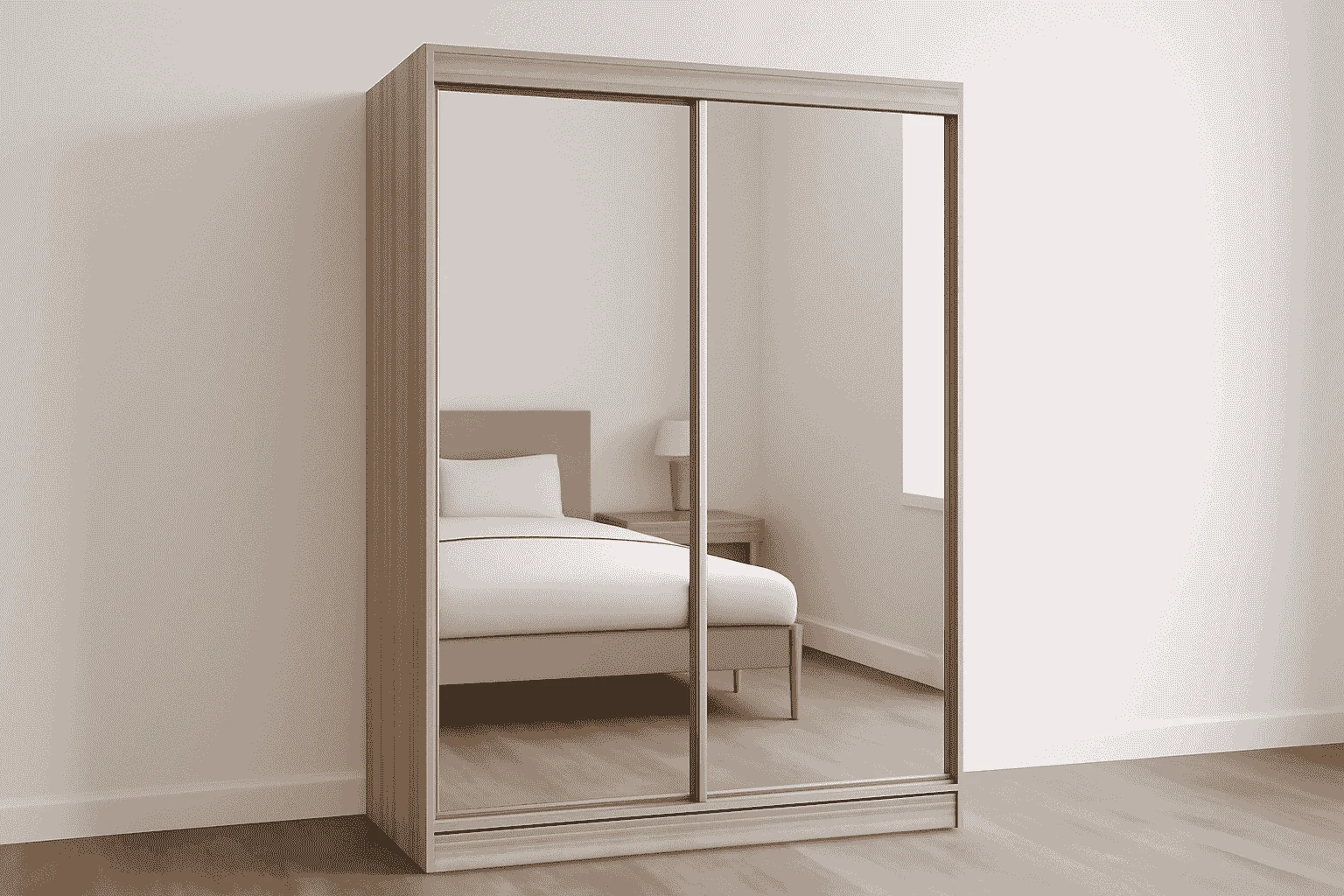
A bedroom with only a small gap between the bed and wardrobe is a good place for sliding doors because nothing swings into the walkway. Add a full-length mirror, and you may also be able to remove a separate dressing mirror from the room.
Among these 2 door wardrobe designs, this is one of the more useful options when both door clearance and dressing space are limited. Where you place the reflective panel matters too, because a mirror facing a window or open area will give you a very different view from one facing cluttered shelves.
You can see other ways to use full and partial mirrors in our mirrored wardrobe ideas. Before ordering, move both sliding panels and check that an important drawer or hanging section does not become difficult to reach.
2. A Compact Wardrobe for Guest Rooms and Rentals
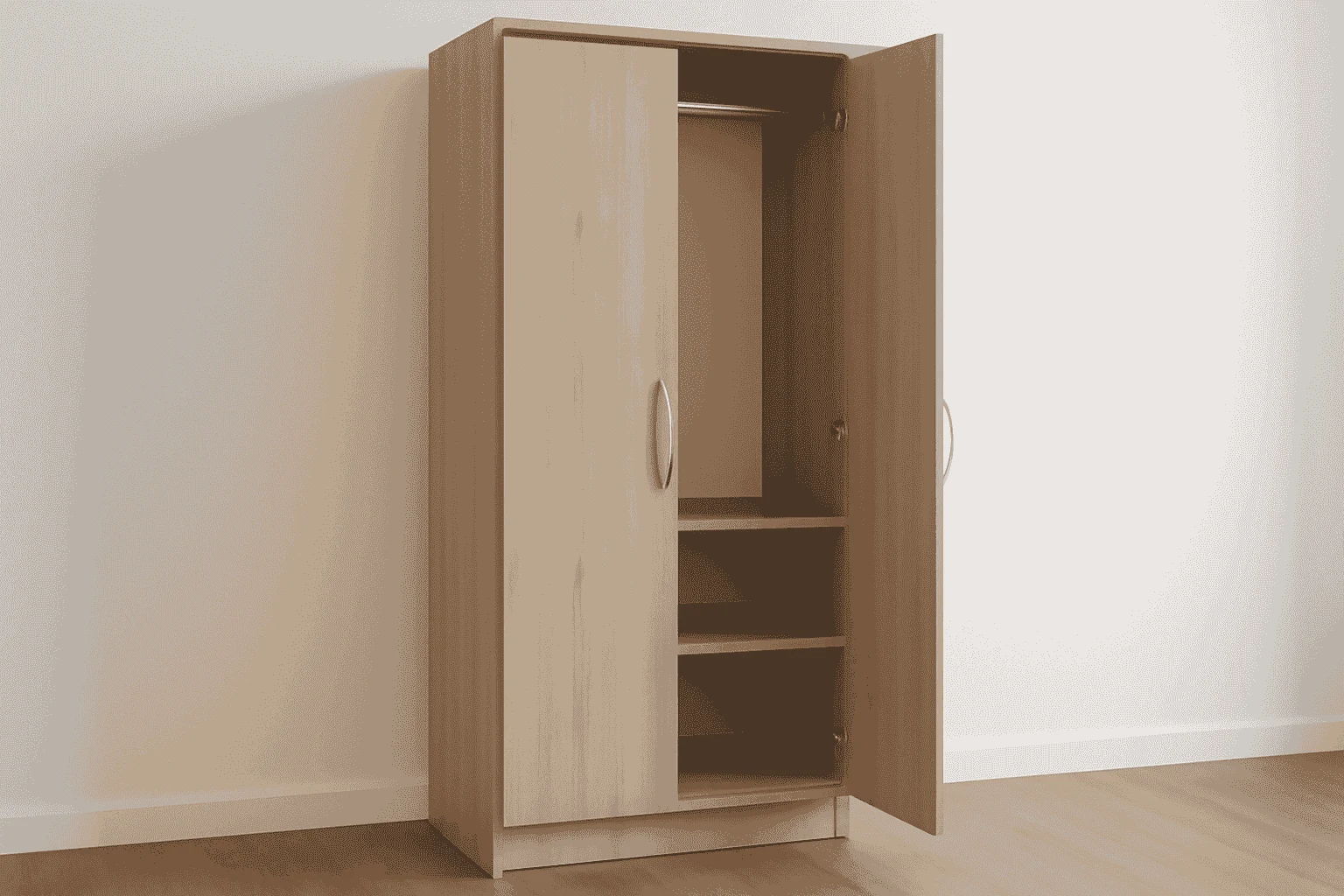
A guest room does not always need a full wall of clothes storage. One hanging section, a few shelves, and perhaps a drawer may be enough for someone staying for a few days.
That changes if the same room is rented to someone who lives there every day. In that case, a very small wardrobe may quickly fill up, even if it looked fine when the room was empty.
Decide who will use the room before reducing the wardrobe size. A light wood finish can keep a small cupboard from looking heavy, but the amount of useful storage inside matters more.
3. Emerald Green as the Main Colour in the Bedroom
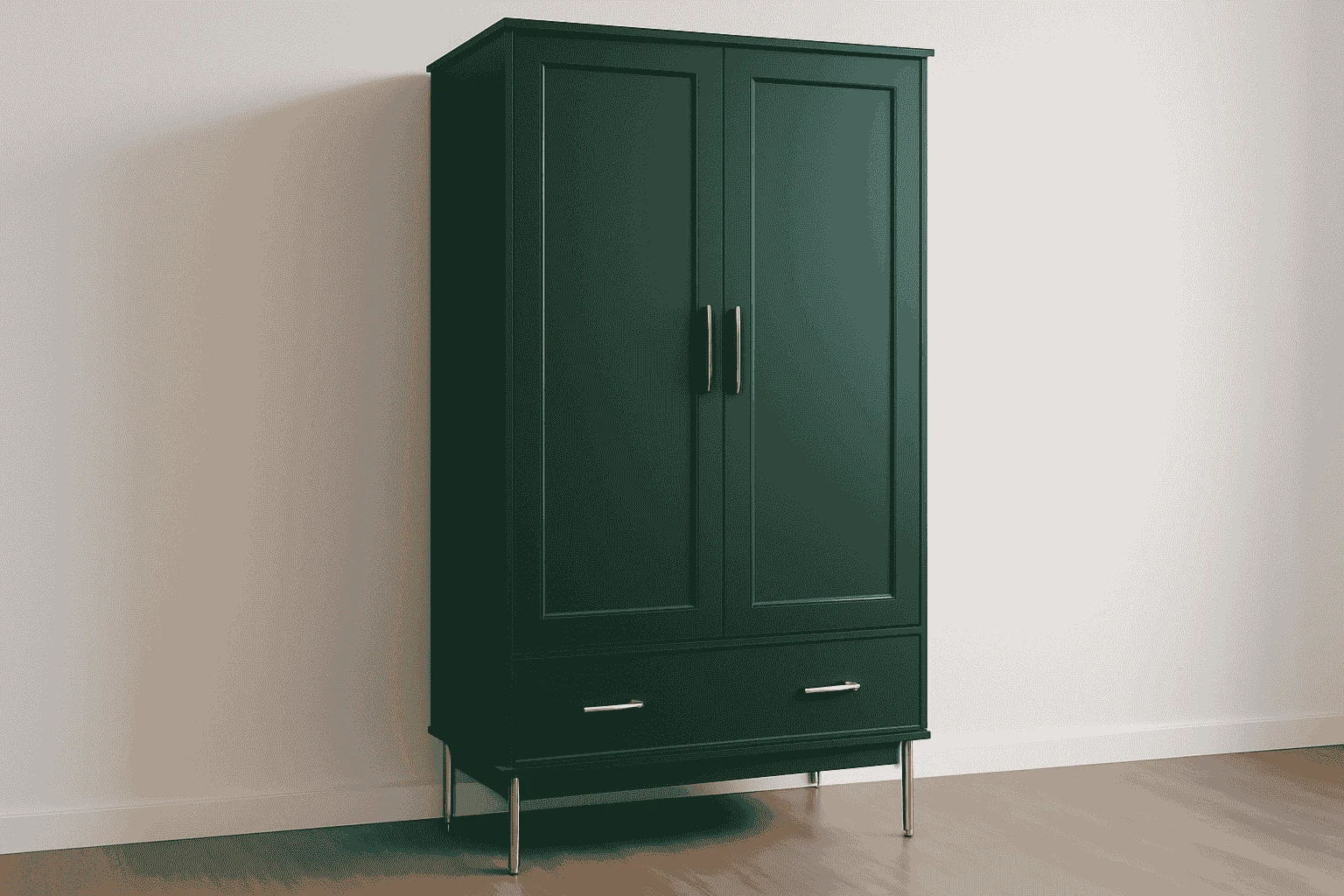
Deep green works differently from a pale or plain wardrobe because two large doors cover a lot of wall. If you choose emerald, it can become the main colour in the room without needing the same green on every cushion, curtain, and accessory.
Simple walls, plain bedding, and wood can give the colour enough space. Gold or brass handles can work with it too, but they do not need to be large or highly decorative.
Take a real sample into the bedroom before saying yes. Emerald can look darker under warm lamps and brighter in daylight, and that change becomes much more obvious across two full-height doors.
4. Pink Kids Storage With Drawers They Can Reach
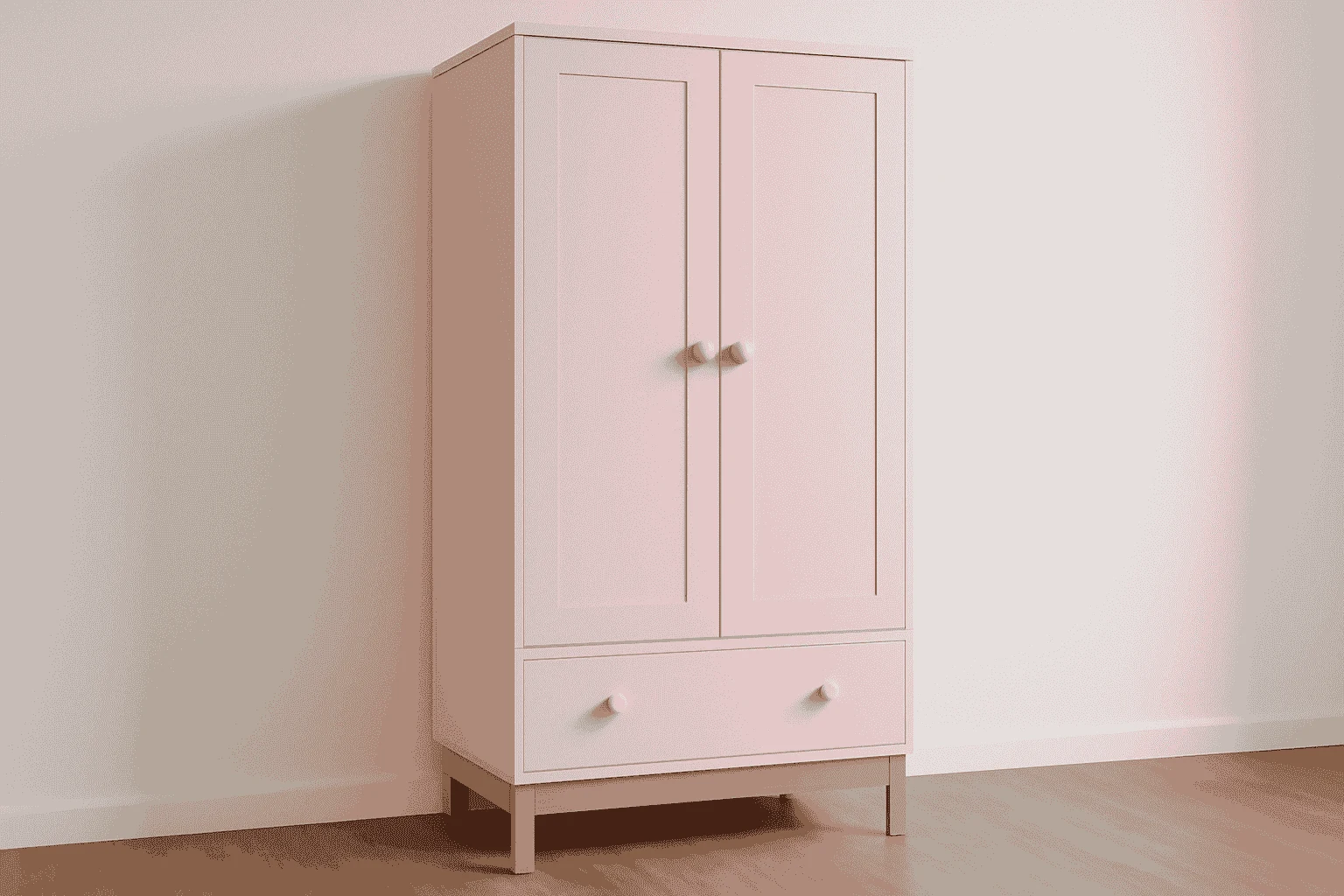
A kids wardrobe needs to work at a different height. Lower drawers can hold clothes, toys, or accessories that a child uses often, while higher shelves can store things handled by an adult.
The pink finish can always change as the room changes, so spend more time checking the drawer movement, handles, and fixing. Our nursery and children’s room ideas can also help when you are planning the wardrobe with the rest of the room.
Tall furniture needs proper fixing in a child’s bedroom. The U.S. Consumer Product Safety Commission’s Anchor It guidance recommends securing top-heavy furniture and following the manufacturer’s instructions because unsecured furniture can tip if children climb on it. Use the fixing system recommended for the wardrobe and make sure it suits the wall behind it.
5. Wooden Sliding Panels When the Room Already Has Timber
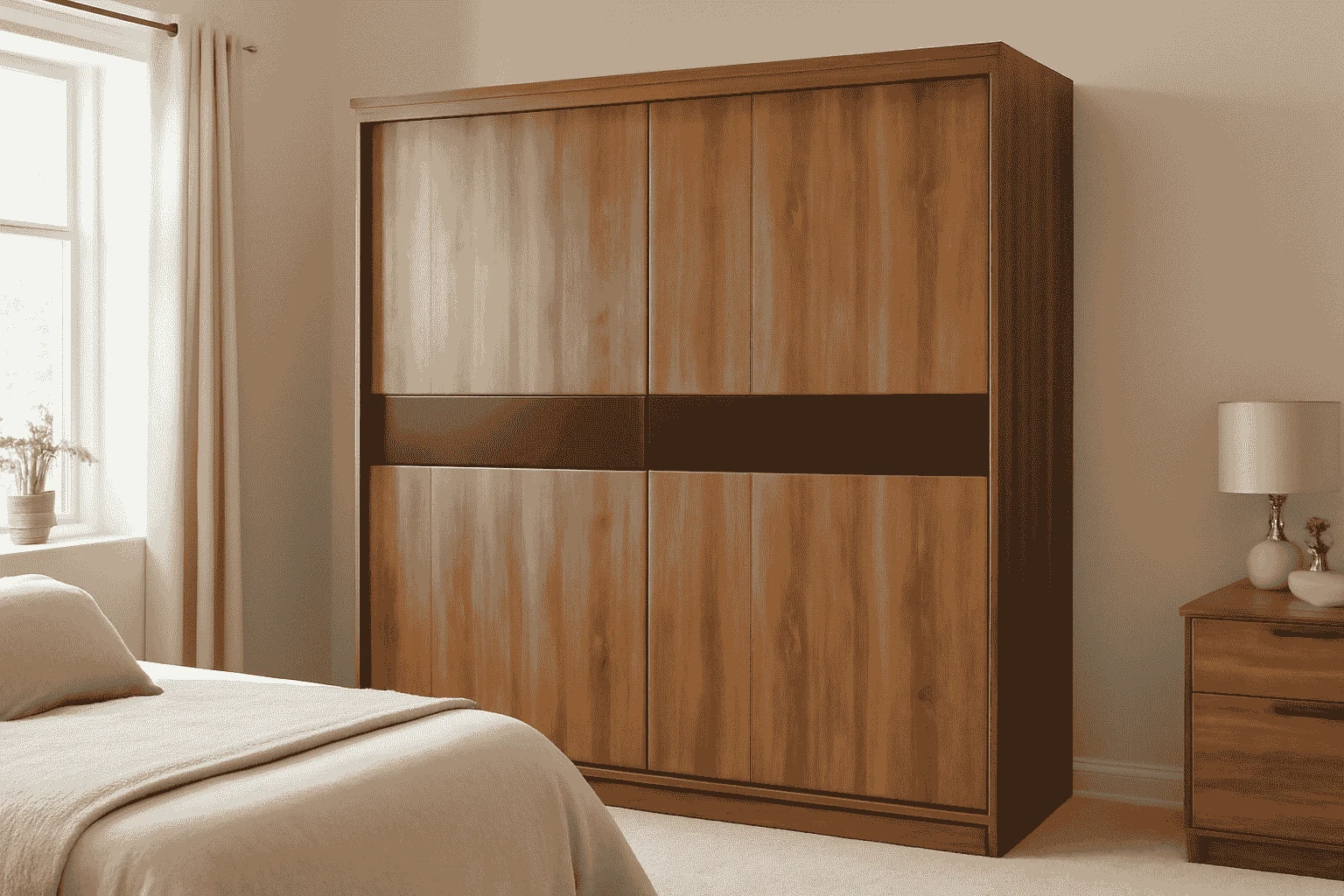
Look at the flooring, bedside tables, headboard, and dressing unit before choosing another wood. The wardrobe does not need to match them exactly, but very different timber tones can make the room feel disconnected.
A related wood tone usually sits more naturally with what is already there. Sliding panels also help when the walkway is narrow because the doors stay inside the wardrobe line instead of opening towards the bed.
The mechanism deserves just as much attention as the grain. Run the doors several times and listen for rough movement because a poor track becomes irritating very quickly when you use it every day. Our sliding door wardrobe guide goes deeper into these layouts.
6. Dark Panels With One Full-Length Mirror
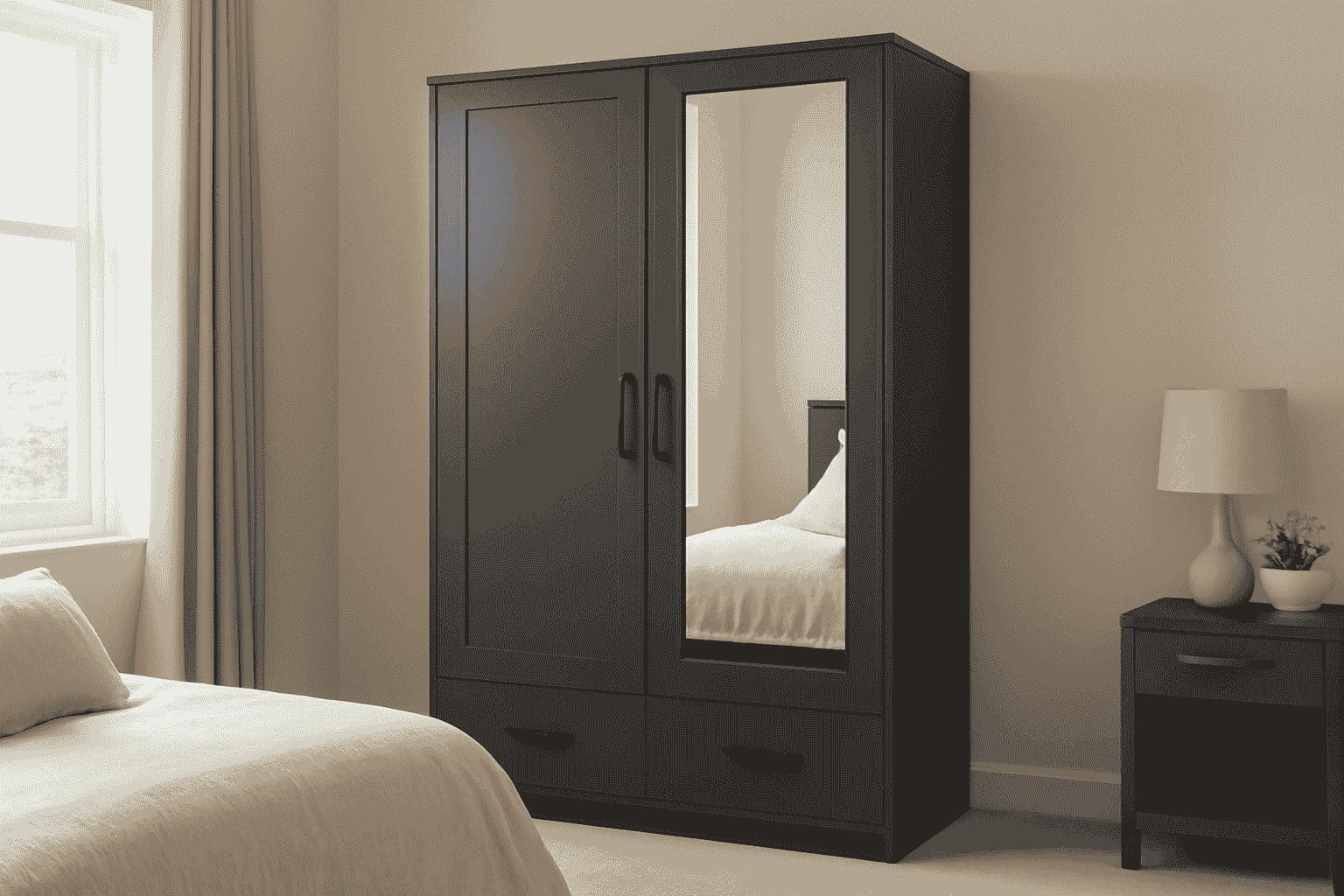
Two solid black or charcoal doors can look quite heavy in a small bedroom. Using a mirror on part of the front breaks up the dark area and gives you somewhere to check an outfit at the same time.
You only need a few smaller dark details elsewhere to make the room feel connected. A bedside lamp, handle, or slim furniture frame may be enough, so there is no need to fill the room with black.
Look at the wardrobe after sunset as well. Dark finishes can feel much stronger under bedroom lighting than they do beside a bright showroom window.
7. Ivory Sliding Doors for Beige and Cream Bedrooms
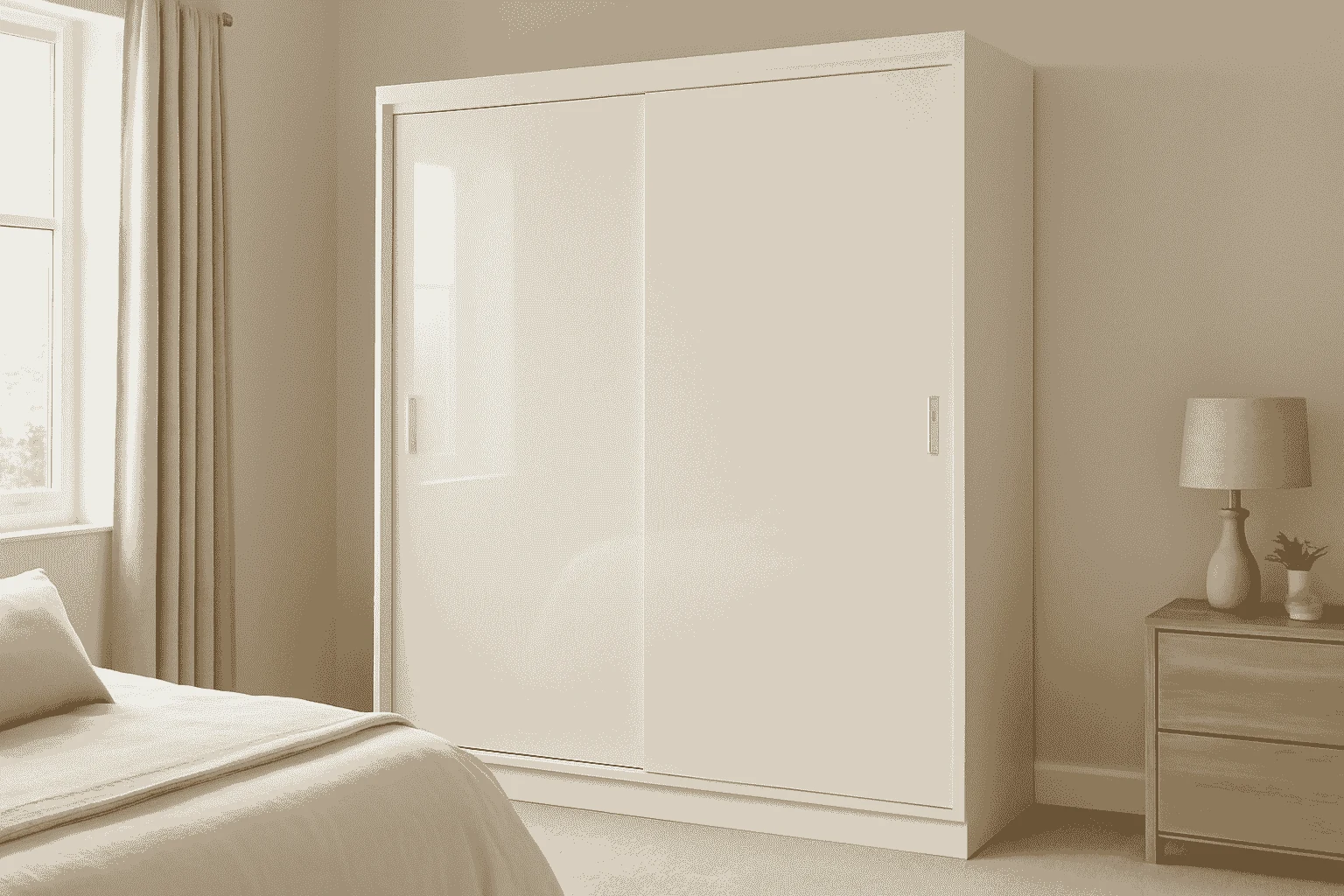
Pure white can look very sharp beside beige, cream, warm grey, and pale wood. Ivory is softer and can sit more easily with warm neutral colours already used in the bedroom.
Then comes the choice between gloss and matte. A glossy door reflects more of the room, but fingerprints tend to show more easily, while a matte finish gives you a flatter surface with less reflection.
Try the sample in the actual bedroom and touch it before deciding. You will handle the doors every day, so cleaning and marks deserve some thought along with the colour.
8. Geometric Panels for a Bedroom With Plain Walls
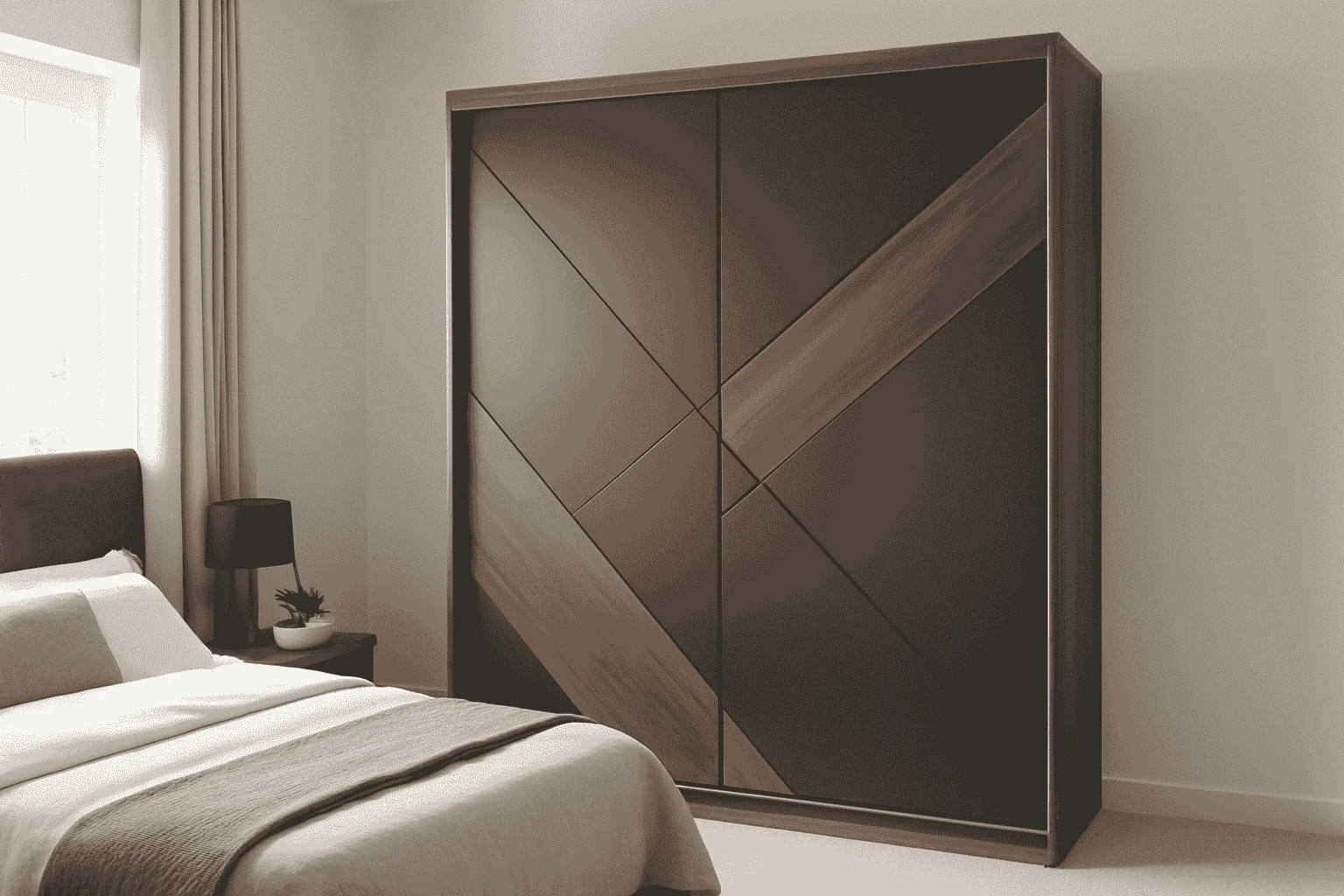
A simple bedroom can handle more detail on the wardrobe because the rest of the room is not already full of patterns. Grey and wood shapes can add interest across the doors without needing another feature wall beside them.
If the headboard, rug, curtains, and bedding already have strong patterns, the same wardrobe may feel too busy. In that room, one of the plainer designs could be easier to live with.
Ask for a large sample or full wardrobe drawing before fabrication. A pattern that looks small and neat on a sample board can feel very different once it covers most of a wall.
9. Classic Wood When You May Redecorate Later
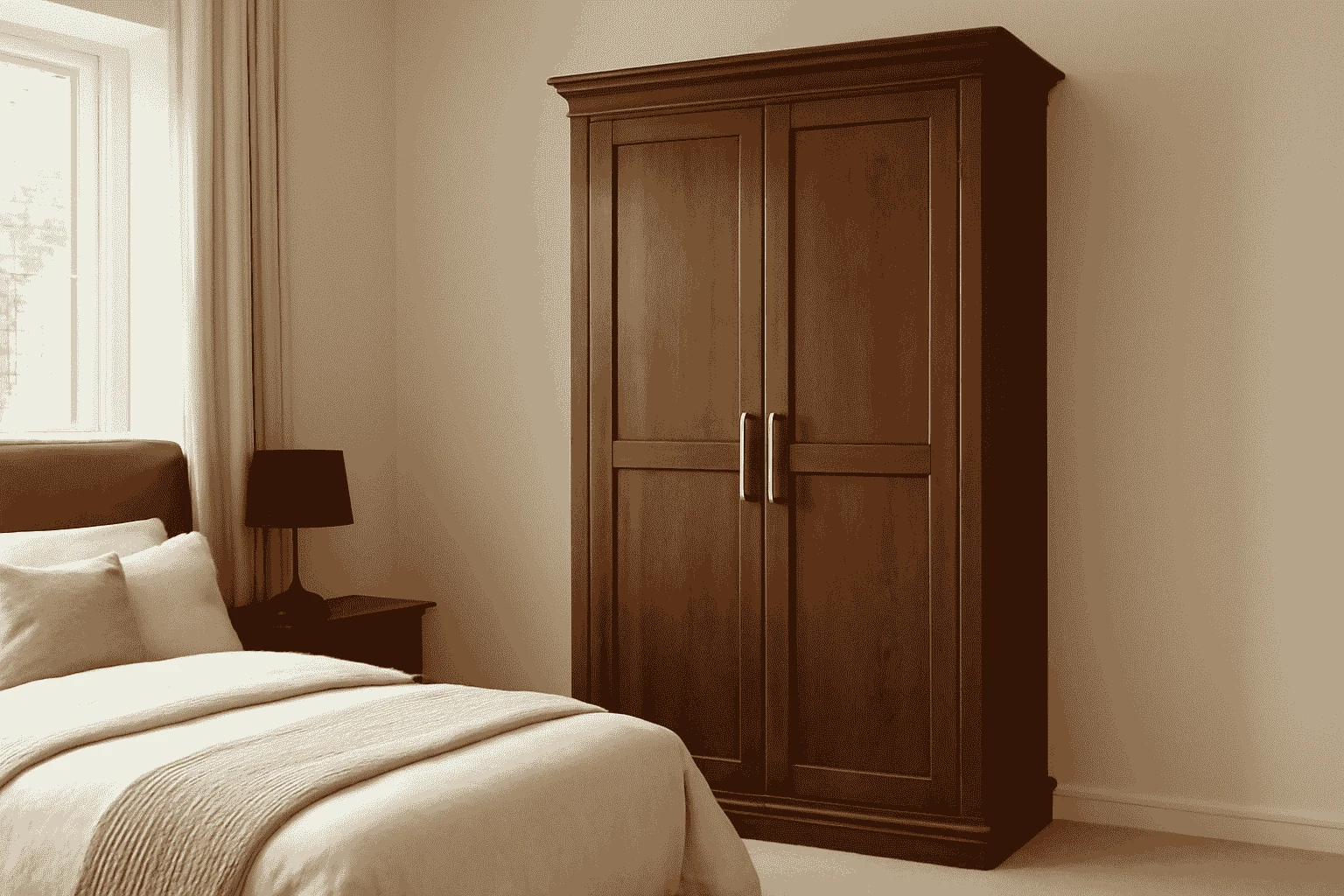
Bedrooms change over time. You may repaint the walls, buy different bedding, or replace a bedside table, and a simple wood wardrobe can usually move through those changes without forcing you to redesign everything around it.
The wood effect on the front does not tell you the full story, so check what the wardrobe is actually made from. Veneer, solid wood, plywood, and MDF come with different prices and construction methods. Our guide to wood used in home interiors can help you compare the common options before speaking with a supplier.
Adjustable shelves are useful here because your storage can change along with the room. Moving one shelf later is much easier than finding out that a fixed section no longer fits what you own.
10. Black and White Panels for a Simple Modern Bedroom
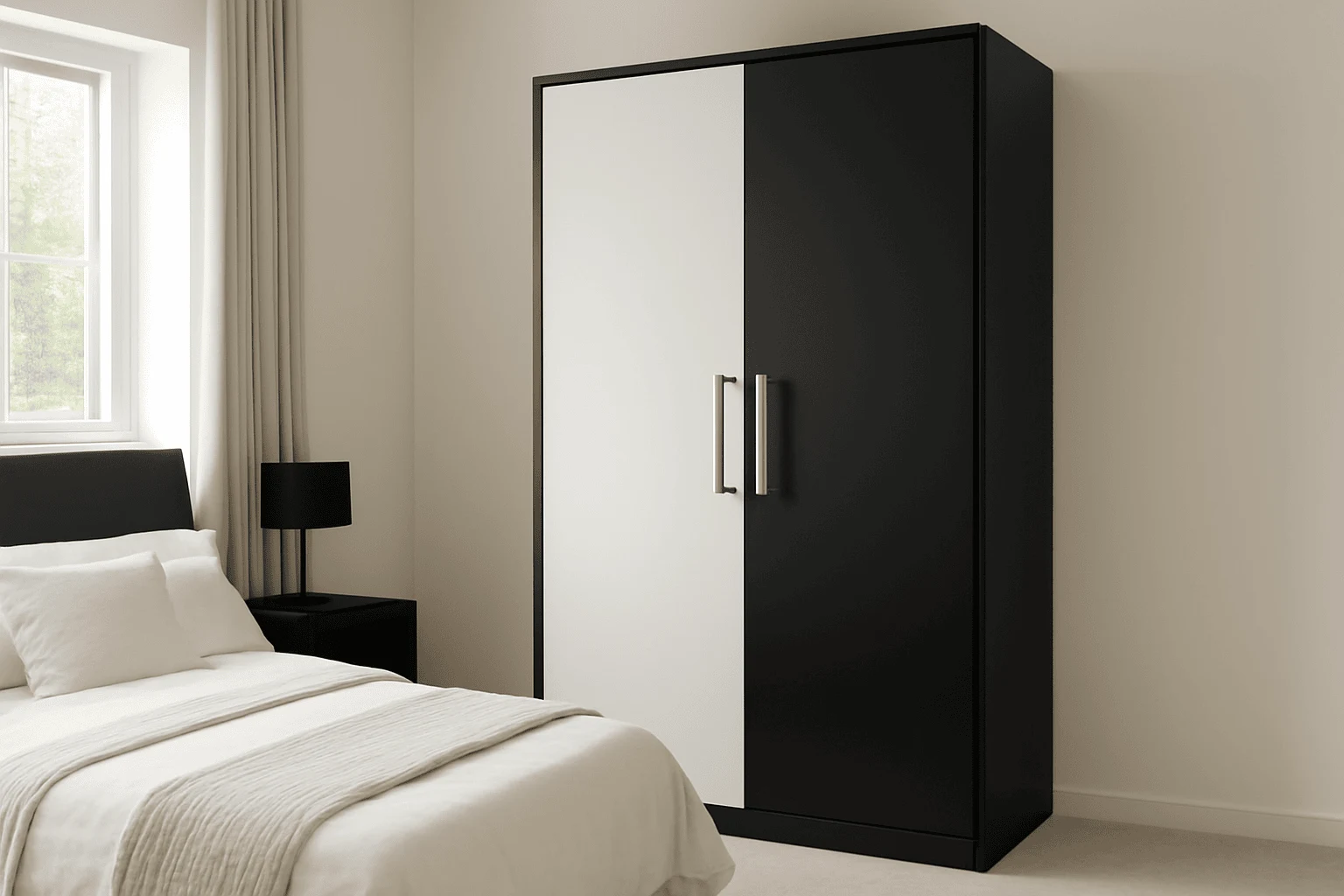
Black and white doors already give you plenty of contrast. Keeping the nearby walls and furniture simple can stop the bedroom from becoming too busy.
The front may be what catches your eye first, but the shelves and hanging space will matter more once the wardrobe is full. Count how many clothes you normally fold and how many you hang, then give the larger section to the category you use more.
That small change can make the same two-door wardrobe much easier to live with. The outside stays simple, while the inside is planned around your routine.
7 Reasons Why Two-Door Wardrobes Make Sense
A two-door wardrobe may look limited beside a full wall of storage, but the number of doors tells you very little about how useful it will be. In a small bedroom, the width, height, door type, and layout inside usually matter more.
If you plan those parts properly, two doors can cover everyday storage without taking more space from the bed, walkway, or other furniture.
1. It Fits More Easily on a Shorter Wall
Small bedrooms rarely give you one long empty wall. The bed, window, bedroom door, sockets, and bedside tables can quickly reduce the space available for storage.
A two-door wardrobe needs less wall width than a larger four-door unit, so it can be easier to place without forcing other furniture into awkward positions. This is especially useful when the wardrobe has to sit beside the bed instead of across a completely free wall.
Our guide to wardrobes for small bedrooms covers other ways to use limited wall space without filling the room with storage.
2. Sliding Doors Can Save Space in Front
The wardrobe width is only half the problem. You also need enough space to use the doors comfortably.
Hinged shutters open into the bedroom, which can be difficult when the bed sits close. A two-door sliding wardrobe avoids that swing space because both panels stay within the wardrobe line.
You still need enough room to stand in front and get dressed, but you do not have to keep extra floor space clear simply for the doors to open.
3. Two Sections Can Still Hold Different Types of Clothes
Two doors do not mean you need two identical storage sections. One side can hold hanging clothes, while the other uses shelves, drawers, or a shorter rail.
The best split depends on what you own. Someone with dresses and jackets may need more hanging height, while another person may get much more use from shelves for folded clothes, bags, and smaller items.
There is useful research behind paying attention to clutter at home. In a 2025 study published in the Journal of Environmental Psychology, Dr Francis Quinn of Robert Gordon University surveyed 501 adults aged 16 to 92 and found that higher levels of home clutter were linked with more negative feelings, lower mental well-being, and lower life satisfaction. The study does not show that clutter caused those outcomes, but it gives another reason to plan storage around the things you actually own.
Before choosing the internal layout, open your current wardrobe and see what is taking up the most space. That gives you a much better starting point than copying a standard shelf-and-rail arrangement.
4. The Height Can Make Up for Limited Width
A small bedroom may not give you more wall width, but there is often unused space above the main wardrobe section.
A higher two-door wardrobe can use that area for suitcases, spare bedding, winter clothes, or boxes. Below, you can combine short hanging rails with drawers or adjustable shelves.
This can also reduce the need for another cabinet elsewhere in the room. Keep everyday clothes lower down and use the top for things you only need occasionally.
5. Two Broad Doors Can Make the Storage Wall Look Simpler
A wardrobe takes up a large part of the bedroom wall, so the number of lines and panels across the front can affect how busy the room looks.
Two broad doors create fewer breaks than several narrow shutters. This can help when the bedroom already has a detailed headboard, patterned bedding, wall panels, or other strong features.
Plain wood, ivory, grey, or another simple finish can keep the wardrobe front easy on the eye. If you prefer emerald, geometric panels, or another bold finish, two larger doors also give that design more room without adding several separate patterns.
6. Everyday Clothes Can Stay Within Easy Reach
A well-planned two-door wardrobe can keep most daily clothes in one easy-to-reach area. Shirts, trousers, dresses, and regular folded clothes can sit around the middle, while seasonal items move higher. Two doors is the starting point; these modern wardrobe ideas show where the format goes next.
This is often more useful than having a larger wardrobe filled with shelves that are difficult to reach or sections you hardly use.
Sliding doors need a little extra thought because one panel covers part of the wardrobe when opened. Put the clothes and drawers you use most where the door movement does not make them awkward to reach.
If you are comparing door types and internal layouts, our modern wardrobe design guide shows several other options.
7. You Can Spend More of the Budget on the Parts That Matter
A larger wardrobe means more board, more doors, and usually more hardware. If two doors already give you enough storage, part of that budget can go towards better hinges, tracks, drawer runners, and board quality instead.
Those details matter because you use them every day. A wardrobe with a simple finish and smooth doors is usually easier to live with than one that looks expensive but has drawers that catch or sliding panels that become rough.
Material quality deserves a check too. The US Environmental Protection Agency’s guidance on composite wood products lists formaldehyde emission standards for hardwood plywood, MDF, and particleboard sold in the United States.
Standards differ between countries, but the practical step is simple. Ask what board has been used, check the hardware, and find out what product information or certification the supplier can provide before choosing the decorative finish.
Measure the Room Before You Choose the Finish
Before choosing between these 2 door wardrobe designs, mark the wardrobe depth on the floor and put the bed where it will really sit. Check the walking space, bedside table, sockets, switches, and bedroom door, and mark the swing of hinged doors if you are considering them.
Then open your current wardrobe and see what causes the biggest problem now. You may need more hanging space, deeper shelves, another drawer, or a proper place for bags and luggage. That information is more useful than copying an internal layout from a showroom photo.
Once you know the available space and what needs to go inside, most of the design decision becomes easier. A mirror can help when you do not have room for a separate dressing mirror, sliding doors can solve a tight walkway, and a compact wardrobe may be enough for a guest room.
The 2 door wardrobe designs that make the most sense are the ones that give you enough storage while leaving the bedroom comfortable to use. If you are planning a custom wardrobe or redesigning the bedroom around better storage, speak with our interior design team about the room, your storage needs, and the space you have available.