
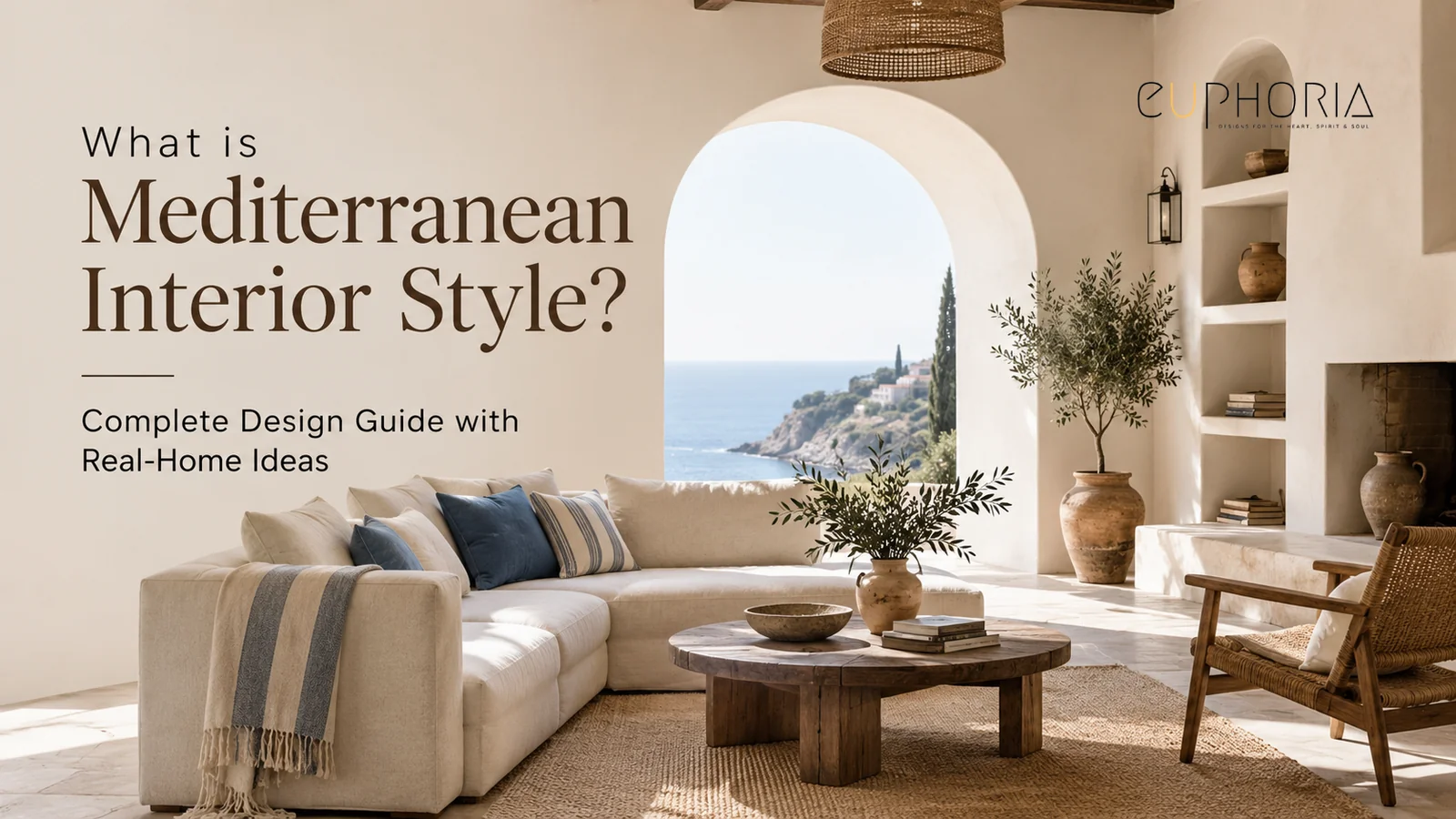
Mediterranean interior style looks amazing in a sunny Greek villa, but it needs careful planning to fit a modern Dubai home. The salt-washed walls, the terracotta floors, and the way light moves through an archway all seem to belong exactly where they sit. But if you transport that exact look to an apartment or villa in Arabian Ranches without considering the climate, the result can feel heavy and hot.
Recent architectural research from Erbil, Iraq, a city with a punishing dry heat very similar to the UAE, proved exactly why blind copying fails. The study found that traditional courtyard homes naturally stayed cool while modern builds constantly overheated. The secret was not the visual decor, but the physical mass of the traditional materials blocking the harsh sun, and the layout naturally moving the air. Modern homes that replicate the visual elements without these structural considerations tend to retain heat.
That is the gap most guides do not bridge. They explain what this design looks like and then leave you to figure out the rest. Getting it right here is a matter of smart adaptation.
Read on to see how Mediterranean interior style actually works across different home types in Dubai.
What is Mediterranean Interior Style?
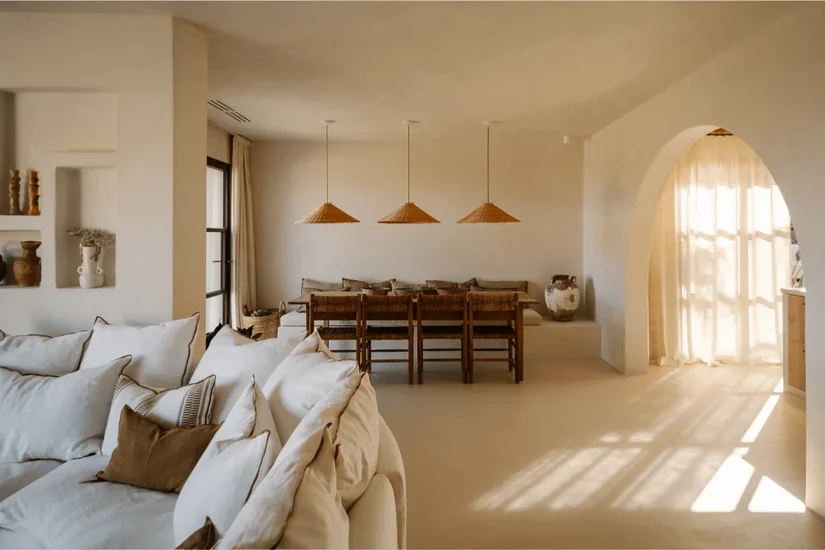
At its simplest, Mediterranean interior style is built around the shared culture, climate, and craftsmanship of the countries bordering the Mediterranean Sea, like Spain, Italy, Greece, Morocco, and the South of France. Among these, Italian Mediterranean interior design is often the reference point for warmer material palettes, stone-heavy surfaces, and a more structured architectural language.
Thick walls keep the heat out. Light colors reflect the harsh sun. Natural materials like stone, terracotta, plaster, and timber were locally available and performed well in the heat.
This set of overlapping principles express themselves differently depending on if you are in a Sicilian farmhouse, a Moroccan riad, or a Catalan townhouse. What they share is an honest relationship with natural materials, a preference for indoor-outdoor connection, and a palette that draws from the landscape. The colors rely on sandy whites, terracotta, dusty blues, olive greens, and warm stone tones.
While the design originates from Southern Europe and North Africa, its underlying logic translates remarkably well to the UAE. Strong sunlight, a love of outdoor living, and a climate where natural materials make practical sense mean the parallel is genuine. The keyword is adapt, not copy.
If you are weighing this against other looks, our A to Z guide to popular interior design styles shows where Mediterranean sits among the rest.
Why Mediterranean Interior Design Works Well in Dubai
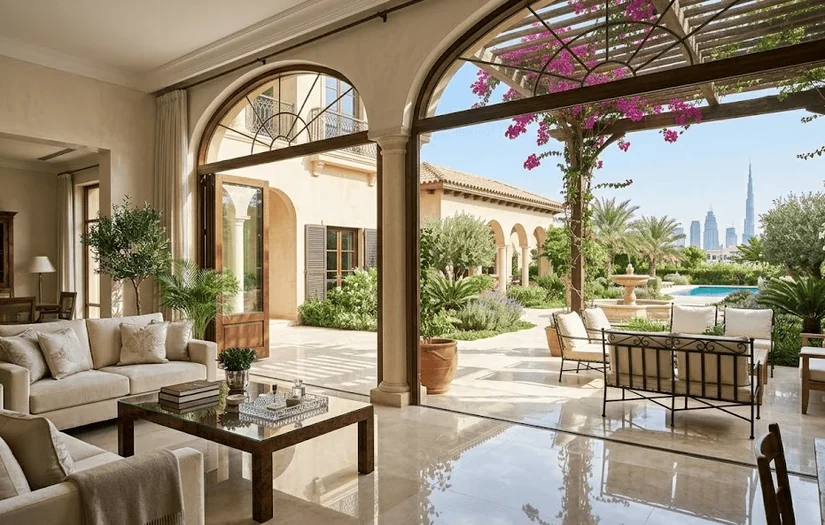
It is no surprise that Mediterranean interior style is so popular in local high-end homes. Just like the coastal towns in Europe, Dubai relies heavily on outdoor living during the cooler months. Both regions build houses with courtyards, shaded patios, and spaces that blend the indoors with the outside.
Homeowners here also prefer real, natural materials over synthetic ones. The core ideas of this design match perfectly with how people actually live in the city today. You can see this clearly in places like Arabian Ranches and Jumeirah Golf Estates. The garden-facing layouts and covered terraces in those neighborhoods are practically made for this exact setup.
Why it works:
- White walls reflect the intense sun effectively.
- Indoor-outdoor living aligns with local villa culture.
- Natural materials manage heat well.
- Earthy palettes feel at home in desert surroundings.
- Courtyard logic mirrors Arabic architectural tradition.
Where it needs adapting:
- Unfiltered sunlight creates glare without a shading strategy.
- Warm or yellow tones can make rooms feel heavier in bright light.
- Rustic textures look out of place in sleek modern layouts.
- The Coastal European scale does not map to city apartments.
- Materials need UV and humidity performance testing.
Traditional vs Modern Mediterranean Interior Design
This distinction matters more in the UAE than anywhere else because of the architecture itself. In Europe, traditional rustic decor naturally belongs inside centuries-old stone farmhouses. In contrast, almost every Dubai villa or apartment is a contemporary new-build with sleek lines, open floor plans, and large glass facades. Forcing heavy, historical ornamentation into these modern spaces creates a jarring clash. It ends up looking like a theme park set rather than a real home.
For another style built on heritage detail, see these Qajar style interior design ideas.
Traditional Mediterranean Interiors
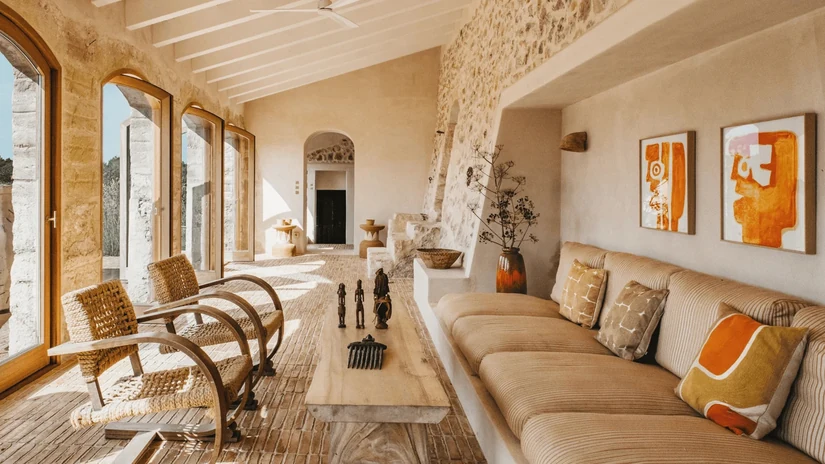
Traditional Mediterranean interiors are rich with historical detail. You will see hand-painted tilework, heavy carved wooden doors, exposed stone walls, intricate wrought-iron fixtures, and terracotta floor tiles laid in complex patterns. In their original context, these features evolved over generations. They belong in old farmhouses and historic villas with thick stone walls and high ceilings.
Modern Mediterranean Interiors
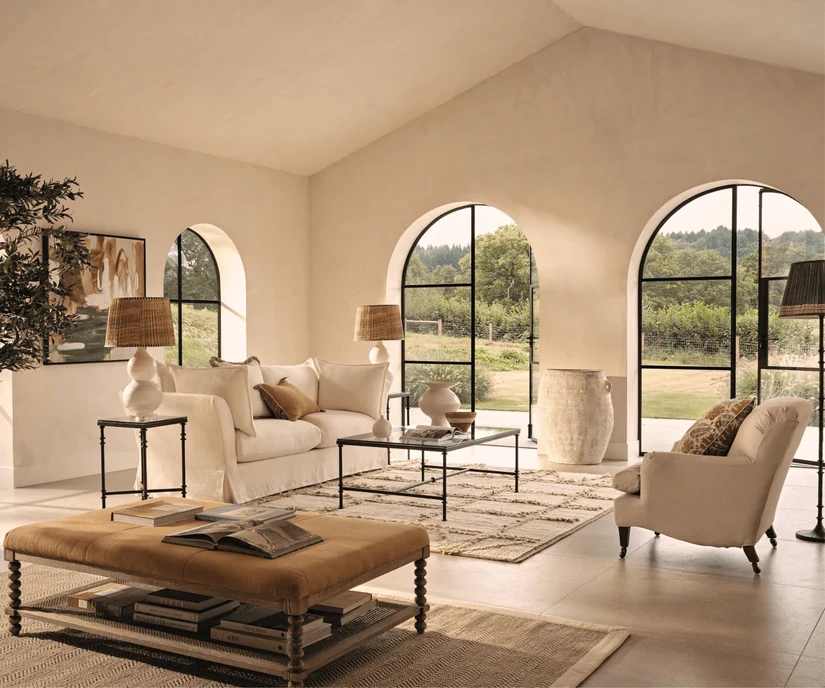
Modern Mediterranean interior style takes those same principles and strips them back. You see fewer patterns and cleaner surfaces. The same natural materials are used with restraint. The palette is still earthy and warm, but applied with a lighter touch. It is the difference between a loaded farmhouse and a contemporary penthouse that happens to feel warm, natural, and sun-drenched.
When to Choose the Modern Approach?
In modern homes with open plan layouts and large glass windows, the modern interpretation is the one that actually works. Trying to apply a full traditional expression to a recently built villa tends to produce a clash between the architectural bones and the decor. The result reads as costume rather than character.
The Core Principles of Modern Mediterranean Decor:
- Simplify the material palette by choosing two or three natural materials and committing to them.
- Use texture sparingly by letting one or two surfaces carry the tactile weight.
- Keep the color scheme cooler and more neutral than the traditional version.
- Replace heavy ornament with refined artisan detail where one handmade element is worth ten decorative ones.
- Prioritize light management over surface decoration.
Core Elements of Mediterranean Interiors Adapted for Dubai Homes
Getting Mediterranean interior style right means focusing on the basic building blocks of the room. You have to choose colors, materials, and light setups that actually work with the local heat instead of fighting it.
Homes in hot regions have solved this before, as these Chettinad home design ideas show.
Colour System for Bright Climates
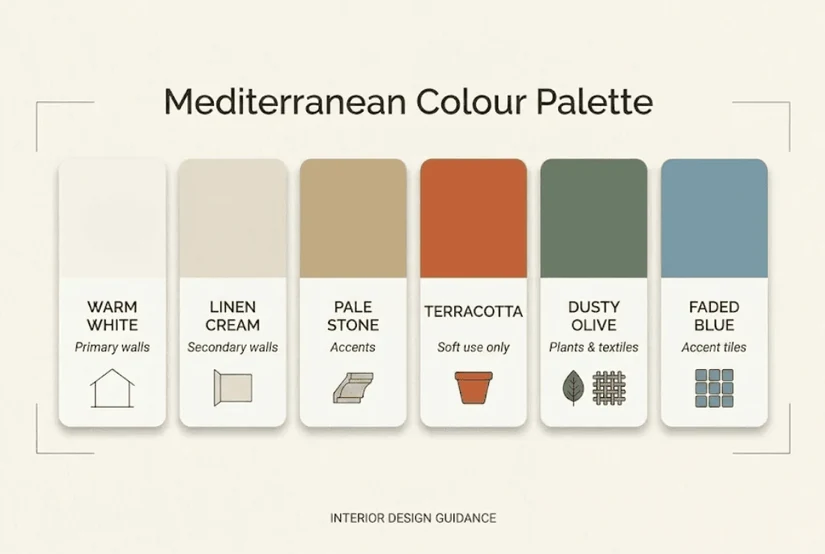
Picking your colors is usually the exact point where a room either succeeds or completely falls apart. The classic palette pulls straight from nature and builds a base with chalky white, cream, sand, warm stone, and terracotta. From there, you just bring in small touches of dusty olive, faded blue, deep green, and iron-black to finish the space.
The Local Challenge: The warmer end of the palette, like ochre yellows and deep terracotta, can feel a bit too much on large surfaces. A color that looks sun-warmed in a European stone cottage reads as heavy and hot here in Dubai.
The Rule for Dubai:
- Primary Surfaces: Keep walls in the white-to-warm-cream range.
- Accent Touches: Reserve deeper terracotta and earthy tones for soft furnishings, small tile accents, and decorative elements.
- The Result: The palette provides a cozy rustic touch without making the space feel smaller.
Materials That Work
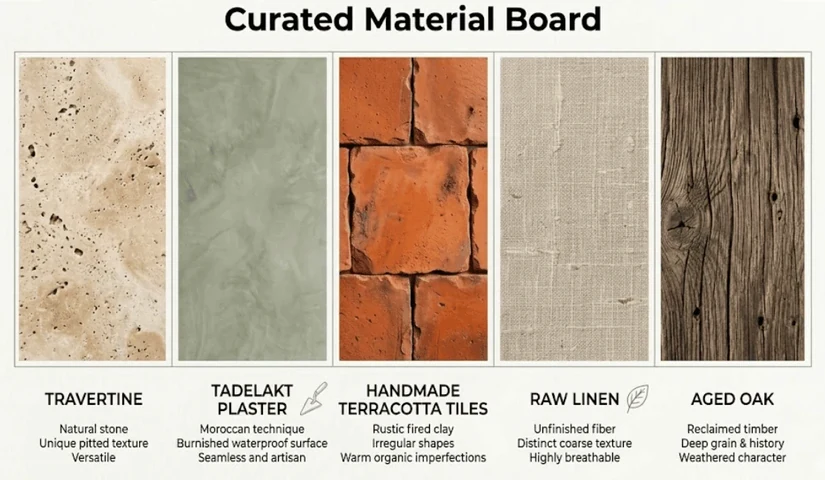
Natural materials are the backbone of any authentic interior. Local homes actually have an advantage here because the market for quality natural stone, plaster finishes, and solid timber is well-developed. Materials with high thermal mass, like stone, can slow down heat transfer, which helps stabilize indoor temperatures during peak afternoon hours.
Materials to Prioritize:
- Limestone and Travertine: These stay cool underfoot, fit the local climate perfectly, and age gracefully.
- Tadelakt and Lime Plaster: This smooth plaster finish is durable and naturally moisture-resistant.
- Solid Oak and Walnut: Use these for furniture and shelving. Make sure to choose UV-stable finishes for sun-exposed areas.
- Handmade Ceramic Tiles: Apply these in small doses in kitchens and bathrooms. Their imperfections read as true craftsmanship.
- Natural Textiles: Linen, cotton, and wool breathe better than synthetics, making them perfect for curtains and upholstery.
Not all natural materials perform equally in Dubai’s climate. This breakdown helps you choose what actually works long term.
| Material | Why It Works in Dubai | What to Watch |
|---|---|---|
| Travertine | Stays cool underfoot, handles heat well | Requires sealing to prevent staining |
| Limestone | Light-reflective, suits bright interiors | Can scratch if not finished properly |
| Lime Plaster (Tadelakt) | Breathable, handles humidity shifts | Needs skilled application |
| Solid Wood (Oak/Walnut) | Stable indoors, adds depth | UV fading near large windows |
| Ceramic Tiles | Heat-resistant, low maintenance | Overuse can feel visually cold |
You must be careful about anything that fades with UV exposure. Avoid anything with a porous surface that does not have a good sealing solution for occasional humidity spikes. Also, avoid anything that traps heat, like dark stone or black metalwork on west-facing surfaces.
Light Control and Layout
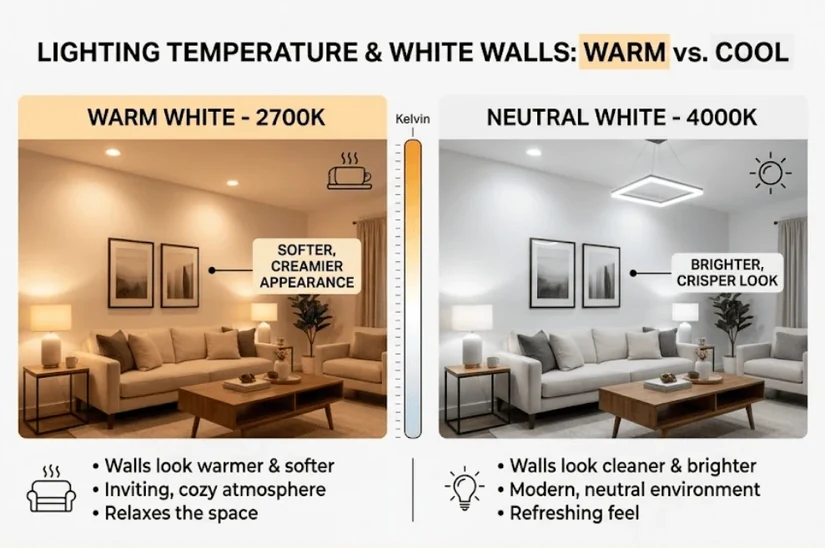
Light is both the greatest asset and the biggest challenge. This design celebrates the sun, but the sunlight here is much more intense and arrives from a higher angle.
The Heat Factor: Large windows and open plan layouts are standard in modern homes, but they need a shading strategy first. According to the U.S. Department of Energy, up to 30% of a home’s cooling load in hot climates comes straight through the windows, making window treatment a functional as well as aesthetic decision. This is particularly true in newer villas with west-facing glazing, where unmanaged afternoon light can make spaces uncomfortable within hours.
The Solution:
- Primary Filter: Use sheer linen drapes. They soften the intense sun, distribute light evenly across the room, and stay true to the natural vibe.
- Secondary Layer: Install roller blinds in a warm linen tone underneath the drapes for full coverage when needed.
- The Benefit: This dual approach manages your cooling load without breaking the aesthetic.
In one recent villa layout with full-height west-facing glazing, switching from darker stone flooring to light travertine and layering sheer linen drapes significantly reduced glare without changing the overall design direction. The space felt cooler and more balanced throughout the day.
Mediterranean Interior Ideas by Property Type
The size and shape of your building decide what you can actually do with the inside. A sprawling floor plan allows for heavy stone and large courtyards. A smaller unit requires a very light touch. You have to work with the architectural bones you already own instead of fighting against them.
Mediterranean Style Villa
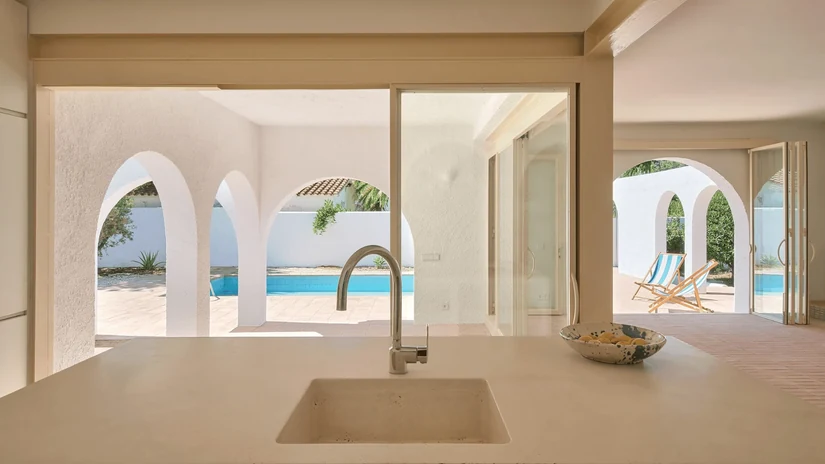
If you have a villa, you have the best possible setup for this look. The large floor plates, multiple levels, access to gardens, and high ceilings allow for proper light work.
- The Design Strategy: You can pursue a near-full expression of Mediterranean interior style. Use limestone or travertine flooring throughout the home. Apply tadelakt plaster on your feature walls. Build a courtyard or covered terrace that links the inside and outside exactly as it was intended to function. An open plan kitchen and dining area with natural stone surfaces works perfectly here.
- The Main Risk: Do not over-modernize to the point where the warmth disappears. You also need to avoid over-decorating to the point where the calm disappears.
- The Golden Rule: The best villas have restraint built into every decision. Keep more space and fewer things.
Mediterranean Style Apartments
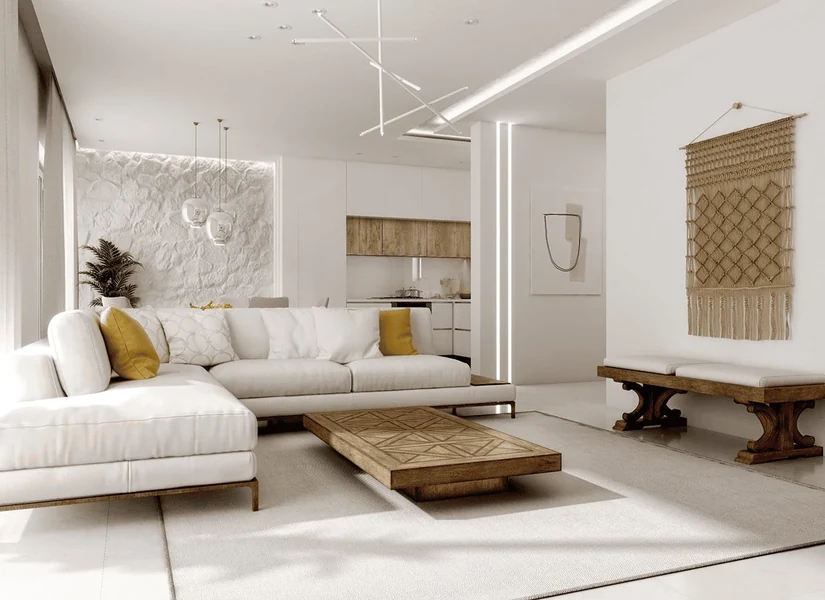
The approach in an apartment is fundamentally different. Scale, ceiling heights, and floor area constraints mean that a full expression with highly textured walls and heavy stone floors will quickly make the space feel crowded and dark.
- The Design Strategy: The simplified version works best here. Use light walls in the warm-white to linen-cream range. Pick one natural material and use it consistently across key surfaces instead of competing textures.
- The Furniture: Choose furniture that is natural and slightly organic in form without looking overtly rustic.
- The Finishing Touches: Bring in a few handmade ceramic pieces or a quality woven textile to carry the character. This gives you the right feel without requiring any structural architectural changes.
Mediterranean Style Townhouses
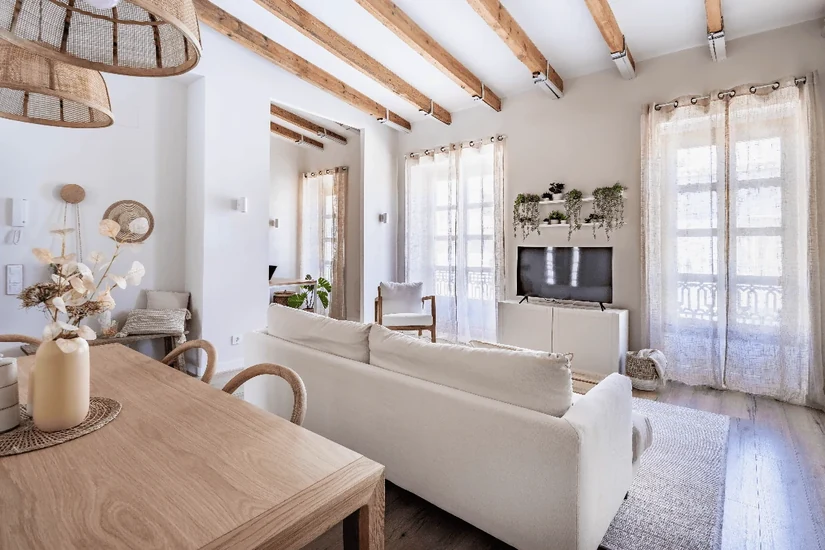
Townhouses sit right between villas and apartments when it comes to floor area, ceiling heights, and outdoor access. The vertical nature of most townhouse layouts actually works in your favor because you can zone each floor differently.
- The Ground Floor: Use this level for the most material-rich expression. Apply natural stone on the entrance and living area floors.
- The Mid-Level: Keep warm plaster walls on this floor to transition the eye upward.
- The Upper Bedrooms: Transition to clean, light, and linen-toned surfaces in your private spaces.
- The Outdoor Connection: Your outdoor terrace becomes the vital outdoor extension that this design depends on.
- The Golden Rule: Controlled layering is your main guide. Start heavy on the bottom floor and lighten the materials as you move upward toward the bedrooms.
Mediterranean Interior Ideas by Room
Every space in your house serves a different purpose and requires a different touch. You do not want the heavy textures of a kitchen spilling over into a quiet living area. The goal is to keep the warm home feel consistent while changing the specific materials to suit the daily activities of each space.
The same old and new mix runs through Dravidian architecture with modern interiors.
Warm White Walls and Sheer Linen for the Living Room
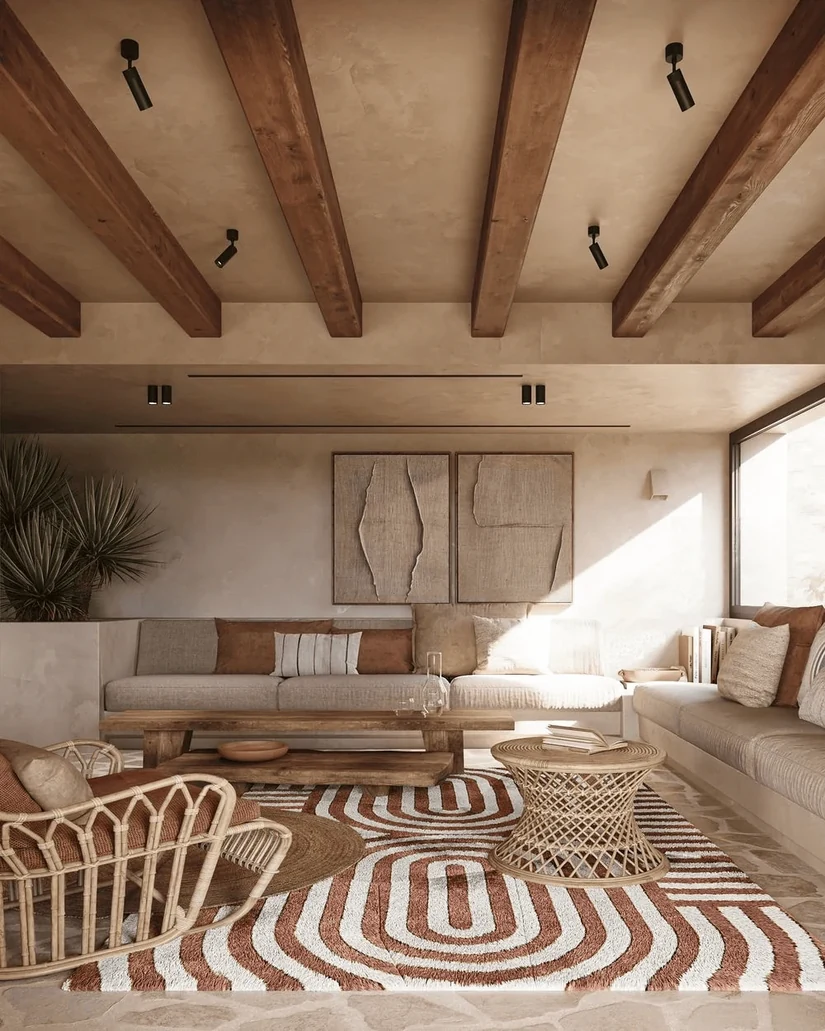
The living room is where Mediterranean interior style is most visible, and glare management should come first. Position the main seating away from direct afternoon sun. Use sheer linen curtains on large windows to distribute light without shutting it out entirely.
A natural-fiber rug in sand or warm grey anchors the space. Furniture should feature solid natural wood with linen or cotton upholstery. A single generous sofa works better than multiple pieces competing for space.
Warm Wood Shelves and Matte Countertops in the Kitchen
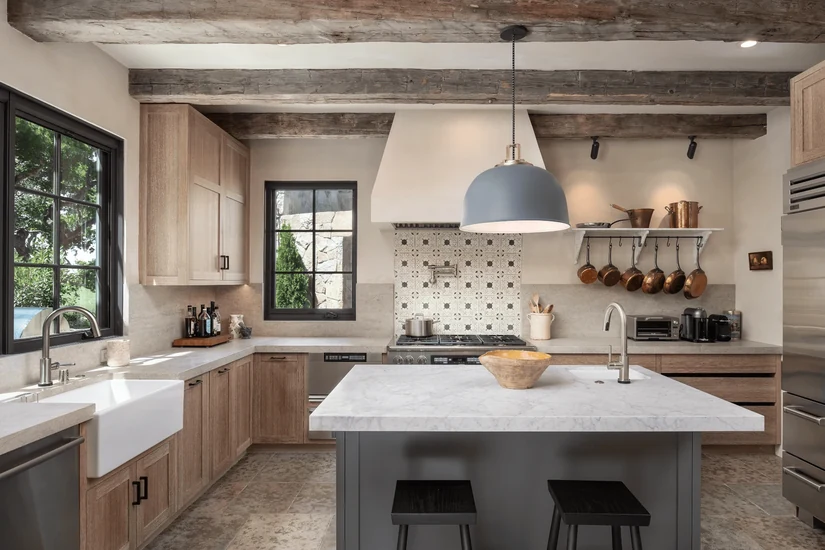
The kitchen is functional and characterful without being decorative for its own sake. This means durable natural stone or sealed marble countertops with a honed finish to avoid glare. Use simple flat-front cabinetry in a warm white or soft sage.
Add a handmade ceramic tile on a single splashback surface. Open shelving in aged oak or walnut works great for everyday pottery and glassware. Good overhead lighting must supplement the natural light.
Natural Timber and Pendants for the Dining Room
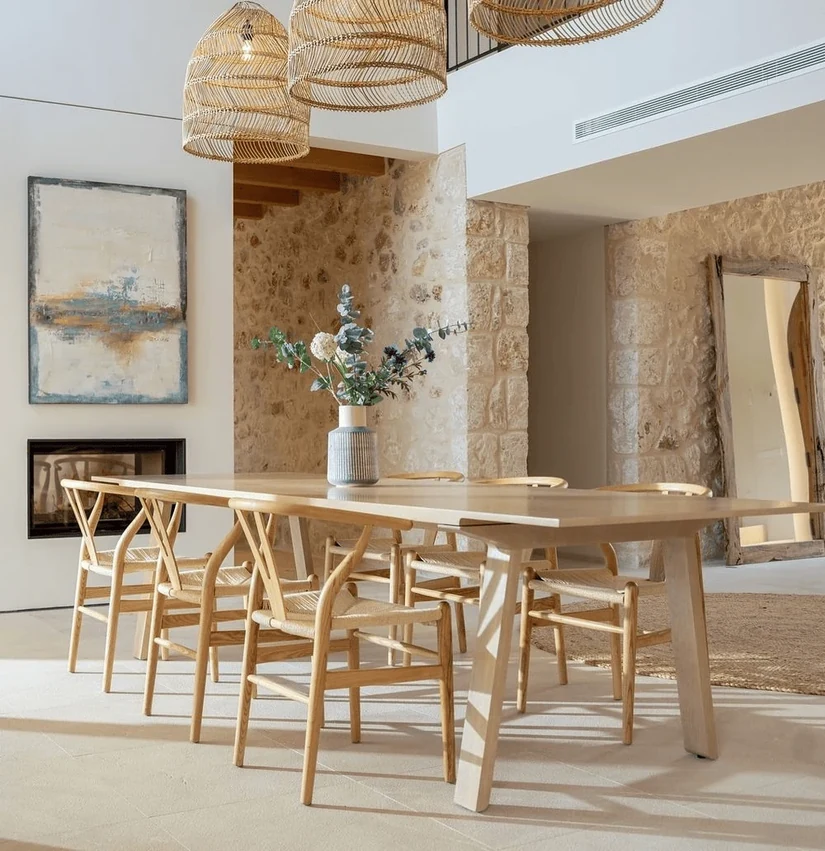
The dining room is a social space that is generous in scale and warm in light. It is built around a table that can accommodate guests. Choose a solid timber dining table with a lightly sanded texture instead of a mirrored lacquer finish.
Chairs in natural cane, rattan, or solid wood fit perfectly. Lighting at the right height is non-negotiable here. A pendant hung low over the table in aged brass, hand-blown glass, or woven rattan creates the warmth the space needs after dark.
Warm Bulbs for Soft Lighting
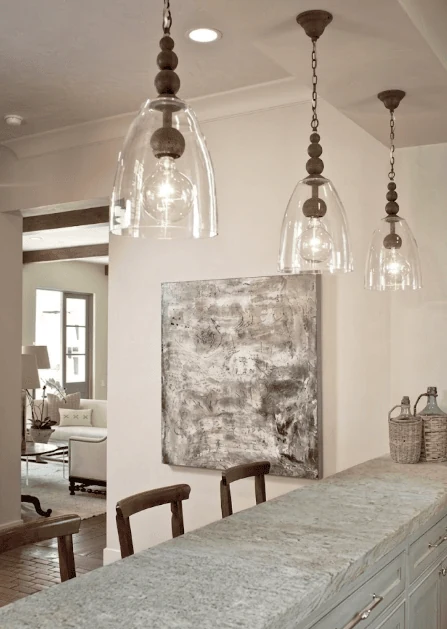
Lighting is where many interiors pull together or fall apart. This design favors warm, directional, lower-level light rather than bright overhead illumination. Use pendant lights over tables and kitchen islands. Add wall sconces in living areas and table lamps in bedrooms. Warm-white bulbs at 2700K are the right call. They reinforce the earthy palette and counter the clinical quality of all-white interiors.
Rough Textures and Shaded Pergolas for the Outdoors
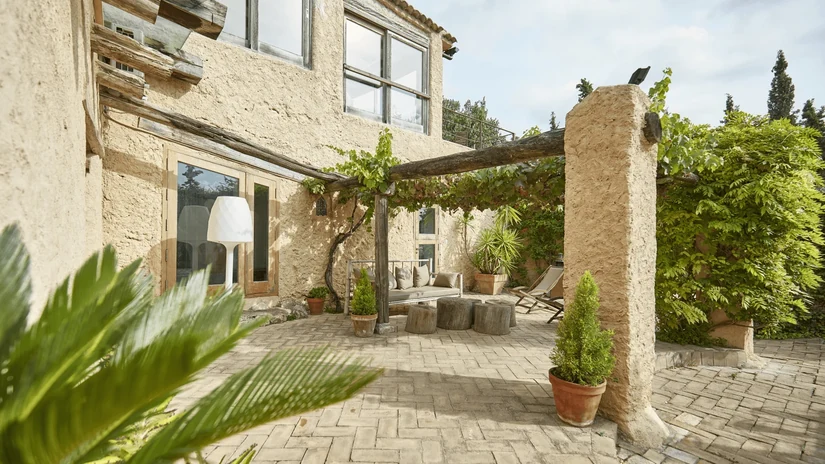
Outdoor spaces are usable for a good part of the year. A well-designed terrace or courtyard is central to the idea. The outdoor living area should feel like an extension of the interior with the same materials and color logic.
Use stone or terracotta tile underfoot. Shade structures like a pergola draped with climbing plants or a quality sail shade are non-negotiable for comfort. Pick outdoor furniture in teak or powder-coated aluminum with sunlight-resistant linen or performance cushions in neutral tones.
How to Design a Mediterranean Interior: Step by Step
A room makeover can easily feel overwhelming if you try to tackle everything at once. Buying furniture before you plan your lighting is a guaranteed way to waste money. You need a clear and logical order to follow so the project stays on track. This sequence shows you exactly what to do first, second, and third to build a cohesive space.
Step 1: Start with climate-friendly base colors.
Select your wall color first. Keep warm white to linen cream for primary surfaces and reserve a slightly deeper tone for a single feature wall. Commit before buying furniture.
Step 2: Choose materials that handle heat and UV.
Identify two or three natural materials for your property and use them consistently. Avoid material combinations that fight each other visually.
Step 3: Build your light control strategy before adding decor.
Install window treatments like sheer drapes or external shutters first. This shapes how every other element reads in the space.
Step 4: Layer textures carefully and sparingly.
Texture comes from the materials themselves, like the grain of stone or the weave of a linen textile. Add soft furnishing textures after hard finishes are in place and stop before the space feels busy.
Step 5: Furnish based on the space’s actual scale.
Choose fewer, larger pieces rather than more, smaller ones. A single generous sofa and one substantial coffee table read better than a crowded room.
Step 6: Finalize lighting and shading as a system.
Layer artificial lighting alongside your window treatments so the lighting scheme works at every hour of the day and every season.
How to Choose the Right Style for Your Home
This question has a practical answer, and it depends on four factors specific to your situation.
If relaxed warmth is what you are after, Mekong Delta style interior design reaches it another way.
1. Property type is the starting point.
A villa can carry the full expression, while an apartment requires a stripped-back version. Do not decide on an aesthetic before you assess what your architecture can actually support.
2. Sunlight exposure shapes the palette and material choices.
South-facing rooms with full afternoon sun need a cooler, lighter interpretation. North-facing rooms or shaded spaces can handle deeper tones and more textural richness without feeling overwhelming.
3. Your lifestyle determines the functional requirements.
Families with young children need surfaces that can be cleaned easily, like sealed stone, wipe-clean plaster finishes, and performance upholstery. Single occupants or couples might be able to use more delicate materials.
4. Maintenance tolerance is an honest conversation worth having before any decisions are made.
Natural materials age, lime plaster develops a patina, handmade tile chip, and real travertine needs sealing. If you want the look without the upkeep, there are excellent stone-effect ceramics and plaster-look paints that perform reliably and carry the visual tone without the maintenance complexity.
Common Mistakes in Mediterranean Interiors
Even with a good plan, people often ruin Mediterranean interior style by making a few predictable errors. It is very easy to get carried away at the store and buy pieces that clash with the local climate or the modern layout of your house. Fixing these errors after the fact costs serious money. Review these frequent blunders so you can avoid them entirely.
1. Overusing warm and yellow tones on large surfaces.
What looks sun-kissed in European light can feel oppressive in intense ambient light. Warm yellows and deep ochres work as accent tones, not as the dominant wall color in a bright south-facing room.
2. Ignoring harsh sunlight entirely.
Going white on all surfaces without a shading strategy creates glare, not serenity. This design, in its original context, always included shade. The light was always managed, never just let in unchecked.
3. Using materials that fade or crack in UV and heat.
Untreated wood on south-facing terraces, unsealed stone outdoors, and synthetic textiles will degrade visibly within a few summers. Specify materials with appropriate performance ratings for the climate.
4. Copying a European villa without adapting for the architecture.
A Tuscan farmhouse developed its character over decades. A villa built in 2019 has different bones and different lighting. The look should be drawn from its core principles, not just surface details.
5. Overcrowding smaller homes with rustic detail.
In a large Andalusian farmhouse, heavy tilework creates richness. In a 1,400 sq ft apartment, the same approach creates noise. Scale the detail to the space and err toward restraint.
Mediterranean interior style is a set of principles about how people live in warm, sunny environments. It’s about using materials that come straight from the ground, managing the natural light, and blending the indoors with the outdoors.
In Dubai, those principles are more relevant than almost anywhere else. The climate asks the same questions that Mediterranean architecture answered centuries ago. The answers just need to be translated for a different context, a different scale, and a different pace of life. The homes that pull this are designed with discipline and use core elements with a clear intent.
Planning a Mediterranean-style home in Dubai?
Getting the balance of materials, light, and scale right from the start makes all the difference. Euphoria Interiors specializes in bringing these exact interior concepts to life across local villas, apartments, and townhouses.