

The design landscape in the Middle East is changing. For years, Dubai was known for gold and intricate pattern. Today, luxury means something quieter. Minimalist interior design has become the leading choice for high-end homes in Emirates Hills and Jumeirah, and it rests on peace and purpose rather than display. It is a shift the team at Euphoria Interiors has watched play out across villa and apartment projects over the past few years.

What Is Minimalist Interior Design?
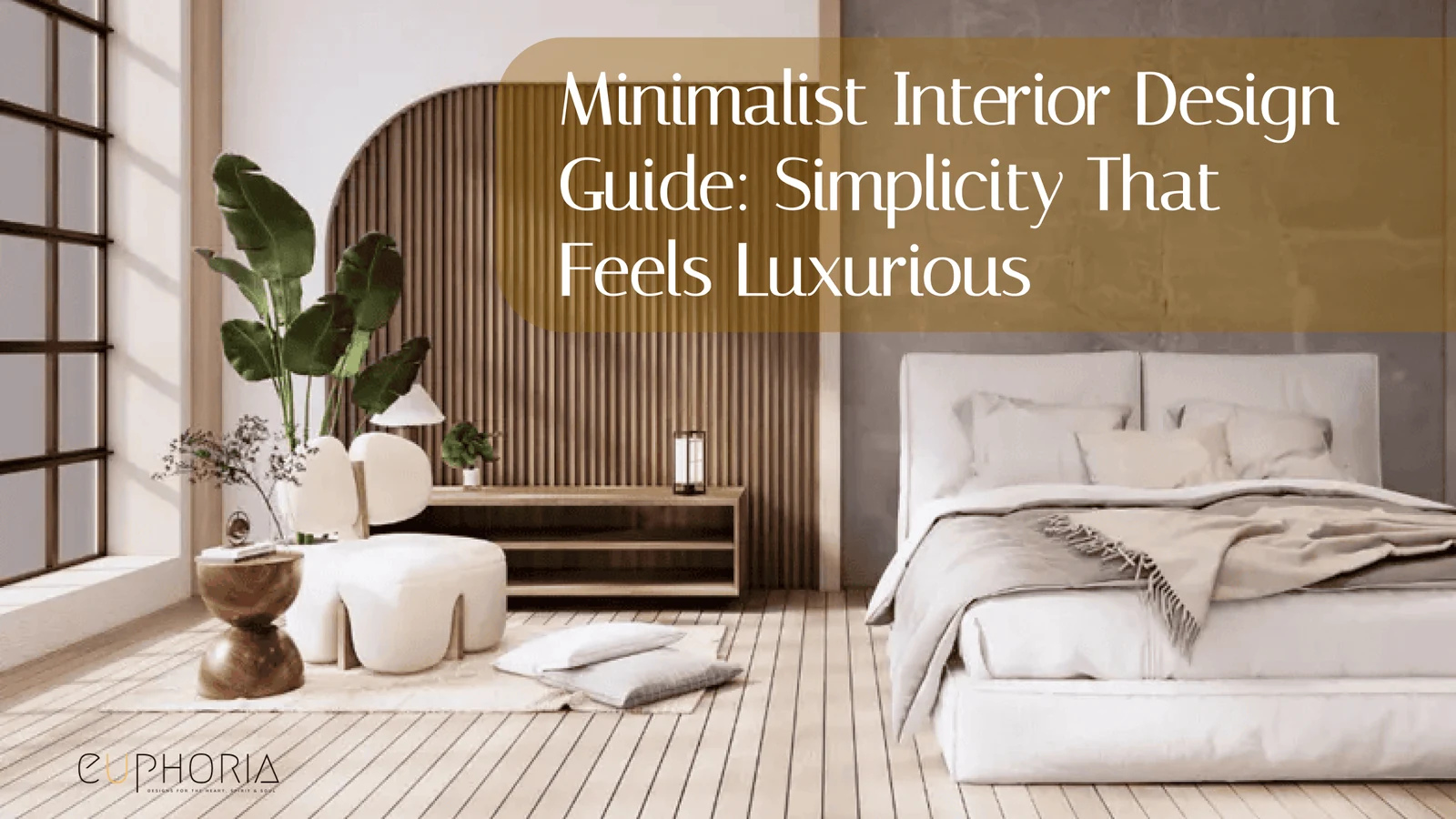
Minimalist interior design is defined by simplicity and clean lines, working from the principle that less is more. It prioritises the quality of a room over the number of things in it, and every object earns its place. The result should feel calm, open and timeless.
If you are still deciding which direction suits your home, our guide to the most popular interior design styles from A to Z sets minimalism alongside the alternatives.
What This Guide Covers
- The philosophy: why the edited look reads as luxury in the UAE.
- The aesthetics: how to use neutral colour, texture and light.
- The living room: layout ideas that stop a minimal room feeling empty.
- The curation: how to choose furniture that lasts.
- The expert view: why this style is harder to execute than it looks.
The Philosophy of Minimalist Design in the UAE
Modern luxury in Dubai is no longer about how much fits into a room. It is about how much can be taken away. For homeowners here, a minimalist scheme is a quiet retreat from a fast city, and a deliberate choice to live with only what is necessary and beautiful.
Why It Has Become Popular
The style provides a sense of order in a world that offers very little of it. A home with minimal decor works as a personal haven. In the UAE it also suits the climate, since large open spaces allow better airflow and a cooler atmosphere.
The Expert View
Leading designers in the region tend to agree that a minimal interior signals confidence. You do not need gold or busy pattern to demonstrate success. High quality materials such as natural stone and solid timber do it instead. The principle is investing in one perfect item rather than ten average ones, which is what keeps the result elegant for decades.
Key Principles
- Remove clutter: keep only what serves a function or genuinely inspires.
- Focus on light: let daylight be the main feature of the room.
- Quality materials: linen, marble and timber add the depth that pattern would otherwise provide.
- Intentional space: leave areas of floor and wall empty so the room can breathe.
Minimalism is not the only style built on restraint. Japandi reaches a similar calm by combining Japanese simplicity with Scandinavian warmth, and is worth comparing if you want the same discipline with more softness.
The Essential Elements of Minimalist Style
Creating a minimal home comes down to three things working together: colour, light and texture. In the UAE they also have to manage intense outdoor brightness while keeping the interior composed.
The Dubai Neutral Palette

The most successful schemes in this region move away from cold, stark whites and use warm neutrals that echo the landscape.
- Sand and bone: a soft foundation for walls and large furniture.
- Stone greys: these balance the warmth of sun coming through large windows.
- Earth tones: muted terracotta or soft clay give a subtle connection to the desert.
Why Texture Is the Secret

In a minimal room you do not create interest with pattern. You create it with texture, an approach often called tactile minimalism. Because the palette is simple, how materials feel matters more.
For a high-end result, consider honed travertine floors, raw silk cushions and matte timber joinery. These add depth and character without crowding the room.
How to Use Light as Decor

Light is treated as a physical material here. Instead of heavy curtains, use sheer fabrics or architectural louvres so daylight washes over surfaces and highlights the clean lines of the architecture. At night, recessed lighting maintains the same restraint with a soft glow.
Some styles take that idea considerably further. Bioluminescent interior design makes light the subject rather than the tool, which is an instructive contrast to minimalism’s quieter approach.
Practical Tips
- Hidden storage: bespoke cabinetry keeps daily items off the surfaces.
- Art as a focal point: one large piece rather than a gallery wall.
- Natural transitions: consistent flooring across rooms makes the home read as one continuous space.
Designing the Minimalist Living Room
The living room has to balance comfort with a clear sense of order. Getting there depends on the layout and on a few hero pieces, so the room feels inviting rather than bare.
How to Lay Out a Minimal Living Room

Open floor plans work best here. Arrange furniture for easy movement and clear sightlines.
- Create a focal point: position the main seating around a single feature, such as a large window or fireplace.
- Use negative space: do not fill every corner. Empty space is part of the design, not a gap in it.
- Scale matters: in large Dubai homes, use fewer but larger pieces.
Furniture Ideas for the Modern Home

Look for clean silhouettes without unnecessary carving or busy detail. A low-profile sofa in a neutral fabric paired with a sculptural coffee table in a single material, marble or solid oak, will carry a room on its own. Quality is what makes very few items look curated rather than sparse.
The Art of the Edit and Professional Execution
The final stage is the most disciplined. The edit means looking at a space and removing anything that does not contribute to its harmony. In a city where luxury options are endless, the ability to say no is what defines the result. If you are still unsure which side you fall on, this minimalism vs maximalism test settles it honestly.
How to Master the Edit
- Audit your surfaces: keep kitchen counters and coffee tables almost entirely clear.
- Evaluate function: remove furniture that is neither comfortable nor useful.
- Check visual weight: make sure no single corner feels heavy.
- Simplify the senses: reduce the number of competing patterns and colours.
Why Hire a Professional?
Many homeowners assume a simple look is easy to achieve. In practice it is one of the hardest styles to execute, because when there is very little in a room, every detail is visible.
- Flawless craftsmanship: there is no clutter to hide poor finishes or cheap materials.
- Invisible details: seamless joinery and hidden lighting tracks take planning.
- Material sourcing: high-grade and rare materials deliver luxury without excess.
- Technical precision: aligned floor transitions and architectural symmetry are unforgiving.
Creating a Bespoke Minimalist Home
The principles should be tailored to how you actually live, whether that is a high-rise in Downtown or a villa in Al Barari.
- Tailored planning: the scheme should reflect your daily habits.
- Architectural focus: minimalism lets the structure of the home take centre stage.
- Long-term value: quality over quantity keeps the home timeless.
- Sophisticated simplicity: an edited home is the clearest expression of modern luxury.
Restraint is not the only route to a considered interior. Heritage styles reach it through craft instead. Qajar-style interiors and Chettinad home design both show how ornament can be disciplined rather than excessive.
Conclusion
The shift towards an edited home is more than a change in decor. It is a move towards a more intentional way of living in the UAE, prioritising space, light and high-quality materials over temporary trends.
Why Minimalism Is the Ultimate Choice
- Timeless elegance: it does not age the way more decorative styles do.
- Mental clarity: less visual noise leads to a calmer mind.
- Environmental value: fewer, better-made items make for a more sustainable home.
- True luxury: curating this well shows a deep understanding of craft.
If you would rather blend restraint with regional character than commit to pure minimalism, Dravidian architecture with modern interiors and Mekong Delta style both show how a spare modern base can carry traditional detail without tipping into clutter.
Achieving this properly takes more than removing furniture. It takes an expert eye for scale, light and materiality. That is the work Euphoria Interiors does across Dubai, and if you are ready to turn a villa or apartment into something genuinely curated, talk to our team about the process.