
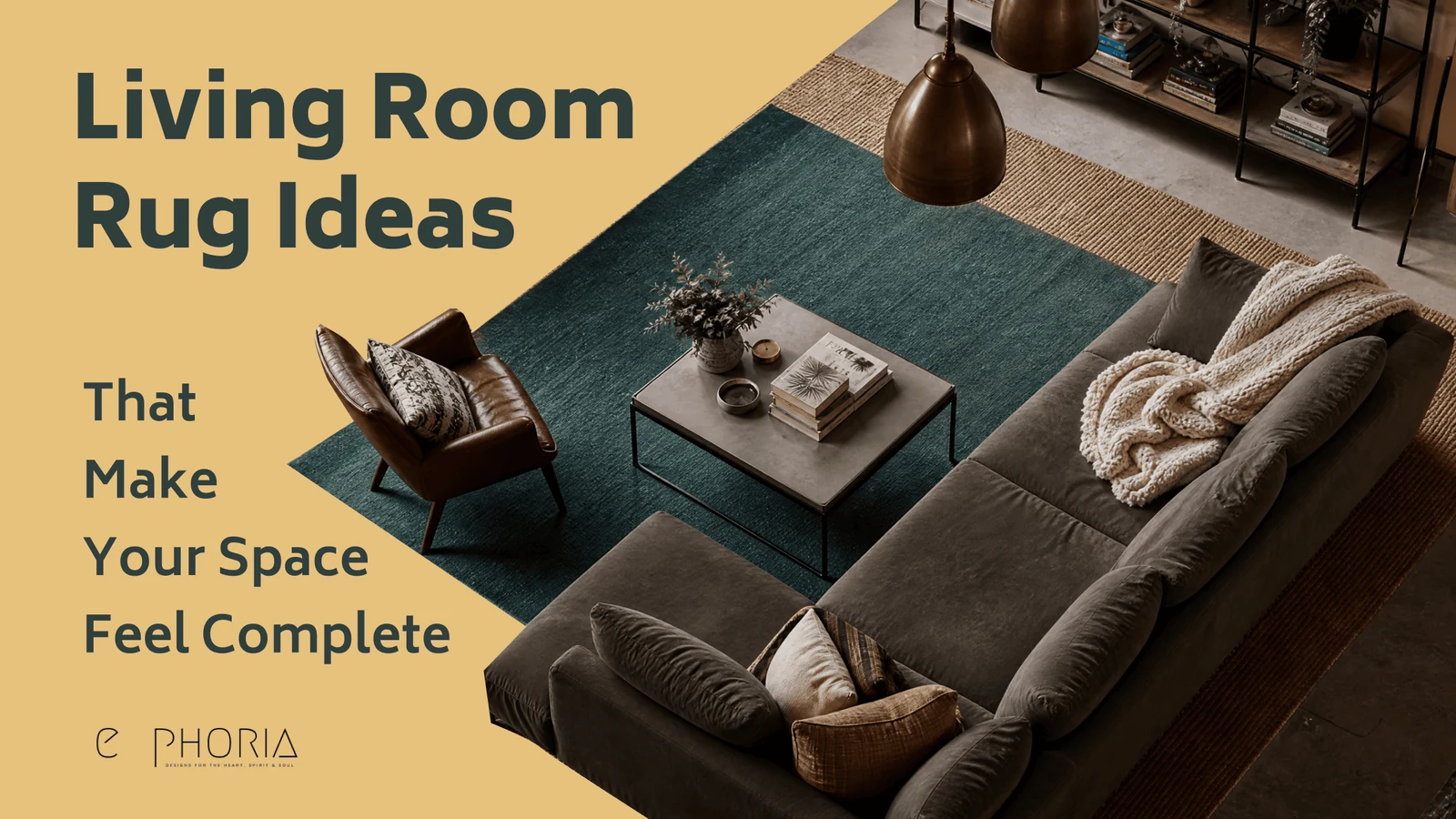
Walking into a lounge where the furniture feels scattered makes the room feel cold. A well-chosen living room rug fixes that immediately. It bridges the gaps between pieces, adds warmth, and creates a defined zone for relaxing. It is usually the first thing the team at Euphoria Interiors reaches for when a living room refuses to settle.
King Living put it well: a well-placed rug creates cohesion, softens acoustics and visually anchors furniture in open-plan rooms. When the floor layout feels fragmented, it affects how you use the whole space.
The best rugs do more than look good. They fit the room’s proportions, suit your daily life, and feel right underfoot. Too small and the furniture looks stranded. Get it right and the room comes together. If the arrangement itself is the problem, our living room interior design ideas cover that first.
Large Rugs for a Properly Anchored Seating Area
Large rugs work when your sofa, chairs and coffee table feel disconnected. They make the seating area read as planned rather than scattered.

Use big living room rugs in open-plan spaces where the furniture needs a clear visual connection.

Go for the largest sizes only when the room has enough floor left around the edges.

Large rugs usually look best when at least the front legs of the sofa sit on them. That single placement decision binds the furniture together and stops it floating.
Quick tip: when unsure, size up. A generous boundary always looks more intentional than a rug that stops short.
Carpet Rugs for Comfort and Warmth
These suit rooms used for lounging and family time, adding softness underfoot on quiet evenings.

Choose soft rugs for living room spaces where people sit on the floor or walk barefoot.

Save fluffy rugs for low-traffic areas where cleaning will not become a chore.

Pick low pile if you have pets, children or heavy daily use.

Quick tip: in a busy home, a low-pile rug traps less dirt and vacuums far better than a thick shag.
Round Rugs for Corners and Compact Zones
Round rugs help when a rectangle feels too heavy or too predictable. They break rigid lines and soften sharp furniture edges.

Use one where a circular coffee table or curved armchair is already in play, so the shapes agree with each other.

They also soften a square, boxy layout, breaking the harsh parallel lines of the walls.

A smaller round rug offset under a single chair and floor lamp creates a framed reading zone in an otherwise empty corner.

Quick tip: a round rug works best when it touches at least one piece of furniture, so it reads as integrated rather than dropped in. The same logic applies to the seating itself, which is what our curved furniture ideas for modern living rooms get into.
Small Rugs That Still Feel Intentional
Small rugs work in compact rooms, but placement has to be deliberate or they look lost.

In a corner, a compact rug under an armchair and side table creates a reading nook separate from the main traffic route.

Let the sofa or chair touch the rug edge. When furniture meets the fabric, the arrangement stops looking like it is floating.

Aligning a compact rug to the width of a two-seater keeps the proportions balanced and leaves visible floor around it.

Quick tip: in a small room the rug should connect the furniture. It should never sit alone like an island. Seating shape matters here too, which our L-shaped sofa designs for small living rooms get into.
Rug Measurements That Help You Choose the Right Size
Size is the single biggest reason a room looks styled or out of proportion. Check your dimensions before you fall in love with a colour.
| Living room type | Suggested size | Best placement |
|---|---|---|
| Small | 5×7 ft or 6×9 ft | Coffee table and front sofa legs on the rug |
| Medium | 8×10 ft | Front legs of sofa and accent chairs on the rug |
| Large | 9×12 ft or bigger | All main pieces fully or mostly on the rug |
| Open-plan | 9×12 ft or larger | Rug encloses and defines the seating zone |
- Mark the dimensions on your floor with masking tape before buying, so you can see how the boundary meets your walkways.
- A rug that is too small makes furniture look disconnected and the room feel cramped.
- A larger rug creates a unified boundary that reads more polished and expansive.
- Leave roughly 10 to 18 inches of bare floor between the rug edge and the walls.
Sizing tip: measure the sofa arrangement, not the room. The rug scales to the seating zone it anchors.
Colour Ideas for Different Moods
Colour underfoot changes a room without a paintbrush.

A white scheme suits low-traffic homes where calm is the priority. Grey is the more forgiving choice for a balanced, timeless base.

Black adds contrast and architectural definition, and works especially well under light-coloured furniture.

Green brings a natural, restorative feel and bridges to the outdoors, pairing well with plants, oak and cream upholstery.

Red works when the rest of the room stays simple, injecting warmth into traditional or bohemian schemes.

A multi-toned rug is useful when the furniture is plain, since you can pull accent shades from it for cushions and artwork. A shared rug is the classic fix for odd pairs; this mismatched sofas guide covers the rest.

Palette tip: choose the rug colour after checking sofa fabric, flooring undertones, curtains and wall paint together in daylight. Colour underfoot carries more personality than most people expect, which is the subject of what your living room says about you. The floor occupies a large visual footprint and its colour reflects upward. For a scheme built around this, see our Scandinavian style living room ideas.
Abstract Rugs for a Modern Statement
Abstract designs help when a room feels static, adding movement and texture without more decor.

Muted patterns give a contemporary edge without competing with existing artwork.

They also define a seating zone while adding personality, so the room reads curated rather than generic.

Pattern tip: if the room already has bold curtains or busy artwork, choose a low-contrast abstract so the eye has somewhere to rest. The same balance applies overhead, which our luxury false ceiling ideas cover, and behind the sofa, where our TV unit design ideas keep the media wall from competing.
Budget Options That Still Look Good
You do not need to spend heavily to get a curated result.

Synthetic fibres such as polypropylene and polyester give durability and stain resistance at a fraction of wool prices.

Flat-weave cotton and printed jute suit a natural, laid-back scheme, and both are light and easy to clean.

Shopping seasonal sales lets you buy a larger, better-made piece for the price of a standard one.
Budget tip: if a cheaper rug feels thin, pair it with a thick non-slip pad underneath. The cushioning makes it feel considerably more expensive and extends its life. For pieces with real longevity, our timeless decor ideas inspired by vintage style are worth a look.
Conclusion
The right rug is the quiet fix for a room that feels cold or unresolved. Whether you are anchoring a large sectional, adding plush texture, or making a statement with an abstract design, it bridges the gaps between furniture and settles the layout.
Get the size, placement and material right and you have a room that handles daily use and still looks considered.
Want help choosing? Euphoria Interiors plans living rooms around how a home is actually used, so talk to our design team about your space.