

If you’ve started looking for a mandir and found yourself stuck between a heavy wooden temple that feels too traditional and a marble unit that feels a bit too minimal for daily prayer, you’re not alone. Most homeowners in Dubai want a space that holds real devotion and still fits the rest of the house.
Planning the mandir with an interior designer in Dubai gives you room to consider both your prayer routine and your home’s style. You can choose the materials and details you love while allowing space for idols, prayer items, and a comfortable place to sit or stand.
At Euphoria Interiors, this comes up on almost every villa and apartment project we handle. Sitting in on these conversations, I’ve noticed people want the mandir to feel personal, tied closely to how the rest of their home looks.
Read on as this article walks through five popular mandir styles, what each one costs in Dubai right now, and how to align your choice with Vastu principles so the space works as intended. Cost is often the first worry, so real price ranges sit further down, along with a few details that trip people up.
1. Traditional Wooden Mandir Designs

Image Source: wsj.com
A wooden mandir gives a home warmth and a sense of history that newer materials can’t quite match. The heavy carving work takes time to make, and that time shows.
- Material and Durability: Most wooden mandirs use teak, rosewood, or sheesham, chosen for how well they hold up over decades. Teak in particular sits near the top of the durability charts among furniture woods. The Wood Database rates its heartwood as very durable and calls it the gold standard for decay resistance among hardwoods, which explains why it shows up in almost every serious mandir build. The warm, earthy grain also gives the corner a grounded, calming feel.
- Artistic Detailing: Traditional wooden mandirs lean on carving work, floral patterns, temple arches, and small deity motifs worked into the panels. These details give each piece its own character and keep the craftsmanship visible up close.
- Functional Features: Most designs build in drawers or small cabinets for incense, diyas, and prayer books, so nothing sits out on open shelves. Larger units add a raised platform for idols and enough room to perform daily rituals comfortably.
- Sizing for Any Home: Apartments usually do better with a compact, wall-mounted wooden mandir, while villas have the room for a free-standing piece that becomes a real focal point. A coat of varnish or polish brings out the natural grain either way.
If you’re furnishing a smaller home first, our 1 BHK apartment design guide has more ideas on fitting spiritual corners into compact layouts without losing warmth.
2. Contemporary Marble Mandir Designs
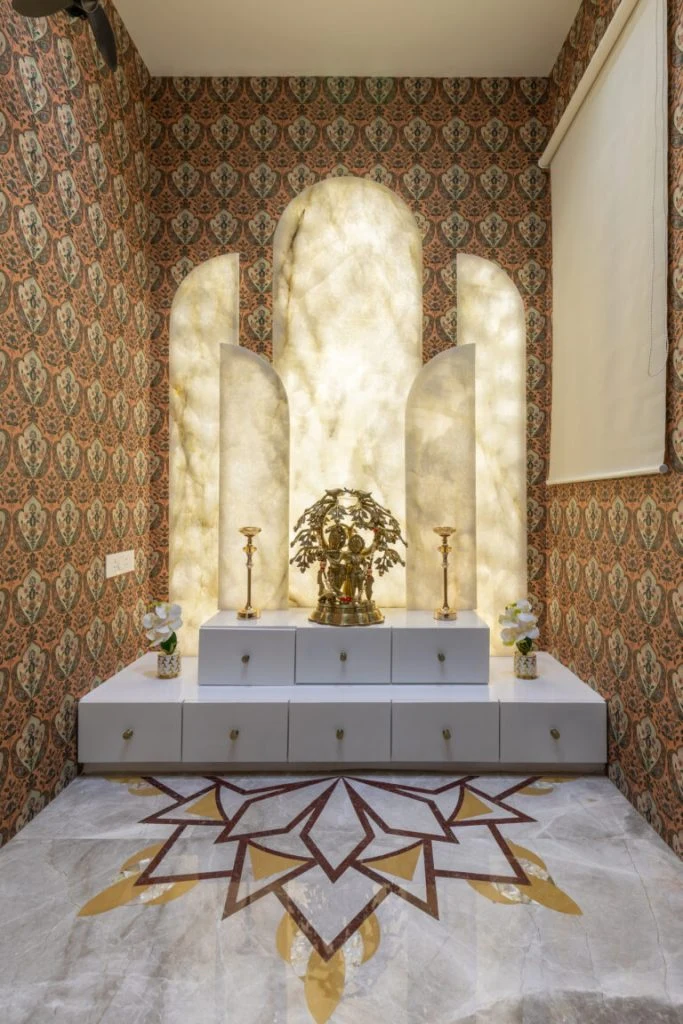
Image Source: The Architects Diary
If the wooden style above feels too heavy for your space, marble is usually where people land next. It reads clean and minimal, which fits most of the villas and apartments we work on in Dubai, and it brings a sense of calm without leaning on heavy ornamentation.
- Aesthetic Appeal: White marble is the most requested shade because it reflects light well and gives the space a bright, almost glowing feel. The simplicity keeps the design sitting comfortably next to modern furniture.
- Custom Fit for Any Space: A wall-mounted marble shelf suits a smaller apartment, while a free-standing unit with pillars and arches works better in a larger home. Some homeowners add carved inlays for extra detail without losing the clean look.
- Longevity and Upkeep: Marble holds up well over time and needs only regular wiping with a soft cloth to stay fresh. The Natural Stone Institute notes that natural stone surfaces need little beyond routine cleaning to keep their finish for decades, which means a marble mandir tends to outlast most of the furniture around it.
- A Modern Sanctuary: A marble mandir gives you a spot to actually slow down and pray, carrying the same spiritual weight as a traditional design while sitting comfortably inside a contemporary interior.
A marble mandir earns its place as a genuine spot for worship, and it holds up as everyday furniture too, which is part of why it’s become one of the more requested styles in newer builds.
3. Space-Saving Wall-Mounted Mandirs

Image Source: urbancompany
- Space-Efficient and Functional: Wall-mounted mandirs are built for homes with limited floor space, and most include a drawer underneath for pooja essentials, so nothing feels cluttered.
- A Look That Stays Calm: The usual finish leans minimal: soft white tones, an “Om” symbol on top, and gentle backlighting. It reads calm, and works well in a living room, hallway, or bedroom corner.
- Illuminated Elegance: Built-in lighting turns the mandir into a small evening ritual on its own, a soft glow you switch on for morning or evening prayer without needing a separate lamp nearby.
- Perfect for Urban Living: This size fits apartments and newer villas equally well, giving you a dedicated pooja corner without giving up floor space elsewhere in the room. If you’re furnishing a new place from scratch, our apartment essentials checklist is worth a look before you settle on where the mandir goes.
A wall-mounted mandir is usually the easiest style to fit into a home that’s still being planned around.
4. Luxurious Custom-Built Mandirs
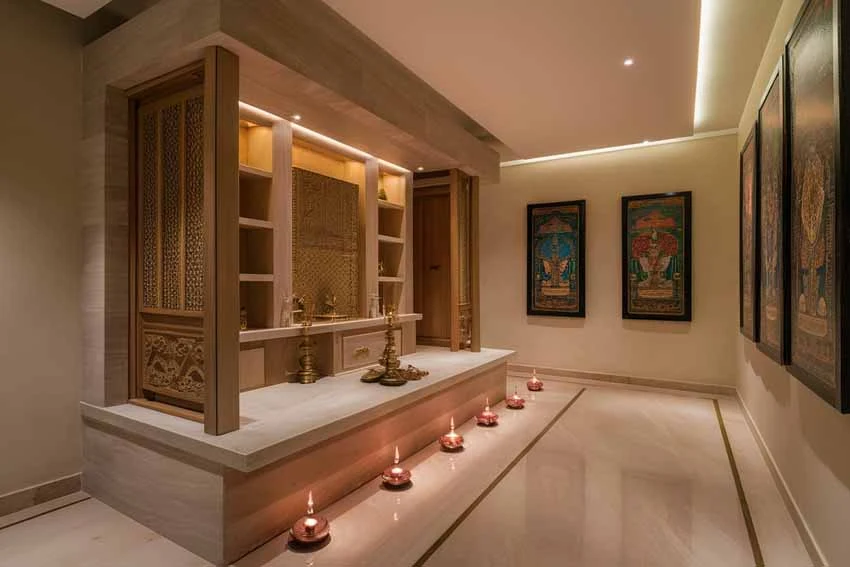
Image Source: Decorpot
A custom-built mandir gives you the most control over the final look, down to the type of stone, the carving pattern, and the finish on every column.
- Tailored to Perfection: Every detail here is up to you, from elaborate arches and grand columns to gold leaf accents. Materials typically include marble, gold leaf detailing, and fine wood, layered together for a look that feels genuinely custom.
- Aesthetic Harmony: A well-planned custom mandir picks up cues from the rest of the room, matching drapery, lighting fixtures, or gold accents nearby so the whole space feels considered.
- Spiritual Presence: Built-in lighting, detailed carving, and a larger footprint give the space real presence, built from choices made deliberately at every step.
- Best Suited for Larger Homes: This style needs room to breathe, so it fits villas and larger living areas better than compact apartments. A dedicated prayer room or an alcove off a large living space both work.
When our design team walks a client through a custom mandir brief, the conversation usually starts with the one material they won’t compromise on, gold leaf, a specific marble, or a particular wood grain, and everything else gets built around that choice.
5. Incorporating Vastu Principles

Image Source: jugyah
Once you’ve picked a style, the next question we usually get is about placement. Vastu Shastra gives clear guidance on where and how a mandir should sit, and getting this right matters to most families here as much as any material choice.
- Placement: The northeast corner of the home, known as Ishan Kon in Vastu, is considered the most favorable spot for a mandir. It’s believed to draw the most positive energy into the space, which is why most Vastu consultants in Dubai start every mandir brief with this corner first.
- Materials and Tone: Natural materials such as marble and wood are preferred under Vastu, and white marble in particular reads as clean and auspicious. Sticking to light, neutral tones around the mandir keeps the whole corner calm.
- Lighting: Soft, warm lighting matters as much for how the space feels day to day as it does for the ritual itself. Around 3000K is the tone lighting designers reach for again and again in temple and church interiors specifically, since warm light in that range is widely treated as the one that invites a relaxed, meditative mood. That’s why most mandirs lean on warm backlighting.
- Idol Placement: Idols are usually positioned to face east or west, so a person praying faces east toward the rising sun. Framing the deity with an “Om” symbol is a common way to keep the focus spiritual rather than decorative. For the wall around it, a soft palette such as this purple and pink combination for bedroom walls can carry the same calm tone into the rest of the room.
One thing that catches people out: plenty of buyers pick the mandir first and only check the direction of their prayer room afterward. Confirming the northeast corner before you order anything saves a repositioning headache later, something our design team ends up fixing more often than you’d expect.
6. Cost for Different Home Temple Designs
Traditional Wooden Mandir Designs
Wooden mandirs in Dubai, made from teak or rosewood, typically run from AED 1,000 to AED 2,500, depending on size and how detailed the carving is. This range suits anyone who wants a traditional look built to last.
Contemporary Marble Mandir Designs
A standard marble mandir starts around AED 2,000, with custom high-end designs going above AED 5,000. The extra cost buys a longer-lasting piece and a more polished finish for the pooja corner. Ideas like these are what the interior decoration companies Dubai residents rate most highly deliver week after week.
Space-Saving Wall-Mounted Mandirs
Basic wall-mounted designs start at AED 500 and go up to AED 1,000, while premium versions with built-in storage and lighting reach around AED 2,000. This is usually the easiest route into a proper mandir setup without spending much.
Luxurious Custom-Built Mandirs
Custom-built mandirs start at AED 10,000 and can go past AED 50,000 depending on materials and the level of detail. These tend to work best as the centrepiece of a larger home, with enough room to give the piece its full presence.
Incorporating Vastu Principles
A Vastu consultation typically costs between AED 500 and AED 1,500, with extra charges if the layout needs adjusting afterward. Getting this right before construction or installation is usually cheaper than fixing it later.
7. Best Interior Design Companies for Home Temple Design
Euphoria Interiors: Our own team focuses on exactly this kind of balance, keeping the mandir traditional at its core while making sure it sits naturally inside a modern Dubai home.
Muse Interior Design: Working in residential interiors since 2007, Muse brings strong space planning and 3D rendering to the table, useful if you want to see the mandir in context before committing.
Luxury Antonovich Design: Known for high-end villa and apartment interiors, this firm is a solid pick if you’re leaning toward a larger, more opulent mandir.
4Space Design: This studio brings a contemporary edge to religious spaces, blending a modern feel with the spiritual weight the mandir needs.
Zen Interiors: With more than 900 completed luxury projects, Zen Interiors has a track record of building calm, upscale spaces, mandirs included.
Belhasa Interiors: A sustainability-focused studio experienced with complex residential projects, worth considering if eco-friendly materials matter to your build.
Getting Your Prayer Space Right
Building a mandir at home says something about how you want to live day to day. Whether you land on a traditional wooden piece or a sleek marble design, the goal stays the same: a space that reflects the energy of your home.
A well-placed mandir does more than complete the room. It gives your daily prayer routine somewhere calm to happen. If you’d rather have someone walk through the options with you, our residential interior design team can help pick a layout that fits both your space and your Vastu requirements.
And if you’re still deciding between a standalone room and a corner inside a larger space, our guide to designing a pooja room covers both directions in more detail.