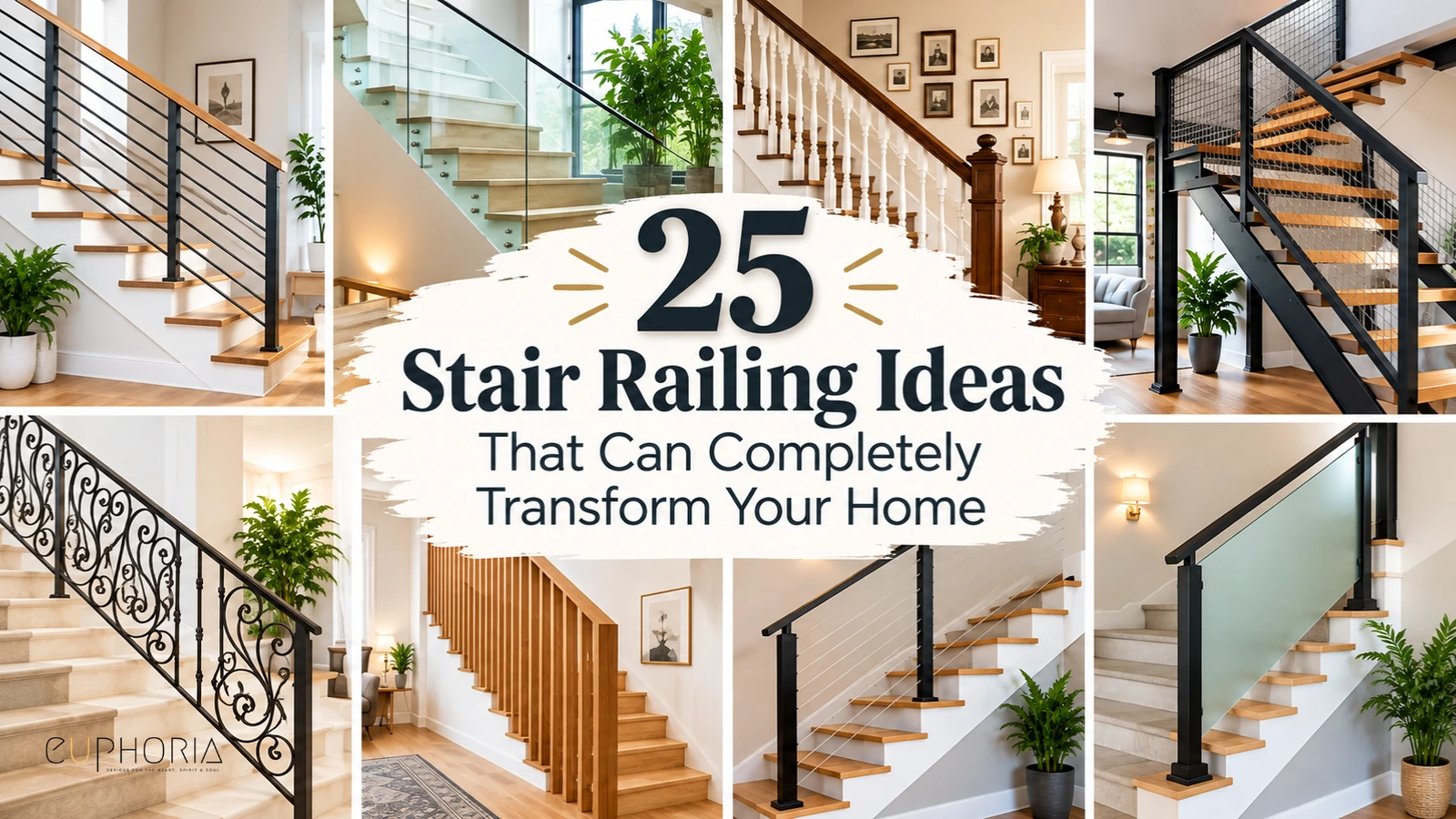
Looking for stair railing ideas that can refresh your home without rebuilding the whole staircase? Many homeowners assume the stairs need a full renovation when changing the railing alone makes the biggest visual difference.
Two worries usually come first: that a new railing will not match the existing steps, and that it will cost a fortune. Neither has to be true. Most railings attach to the existing structure, and a wall-mounted handrail or a set of replacement balusters sits at the cheap end of any renovation.
Old indoor stair railings make a staircase feel heavy, dated or disconnected from the rest of the home. The right railing does the opposite. It opens the space, improves light flow, adds safety and makes even a simple staircase look considered.
Railing upgrades work like a shortcut in home makeovers. You keep the structure and change the part people notice first, which is the same logic behind our guide to the importance of interior design in your home.
What follows is 25 ideas for modern homes, small homes, classic interiors and luxury renovations, with what works, where, and what to avoid.
Modern Stair Railing Ideas for Contemporary Homes
A modern stair railing works best when it feels clean, light and intentional. The aim is not to make the staircase louder. It is to make it sharper, brighter and more connected to the rest of the home.
Frameless glass railings that make stairs feel open
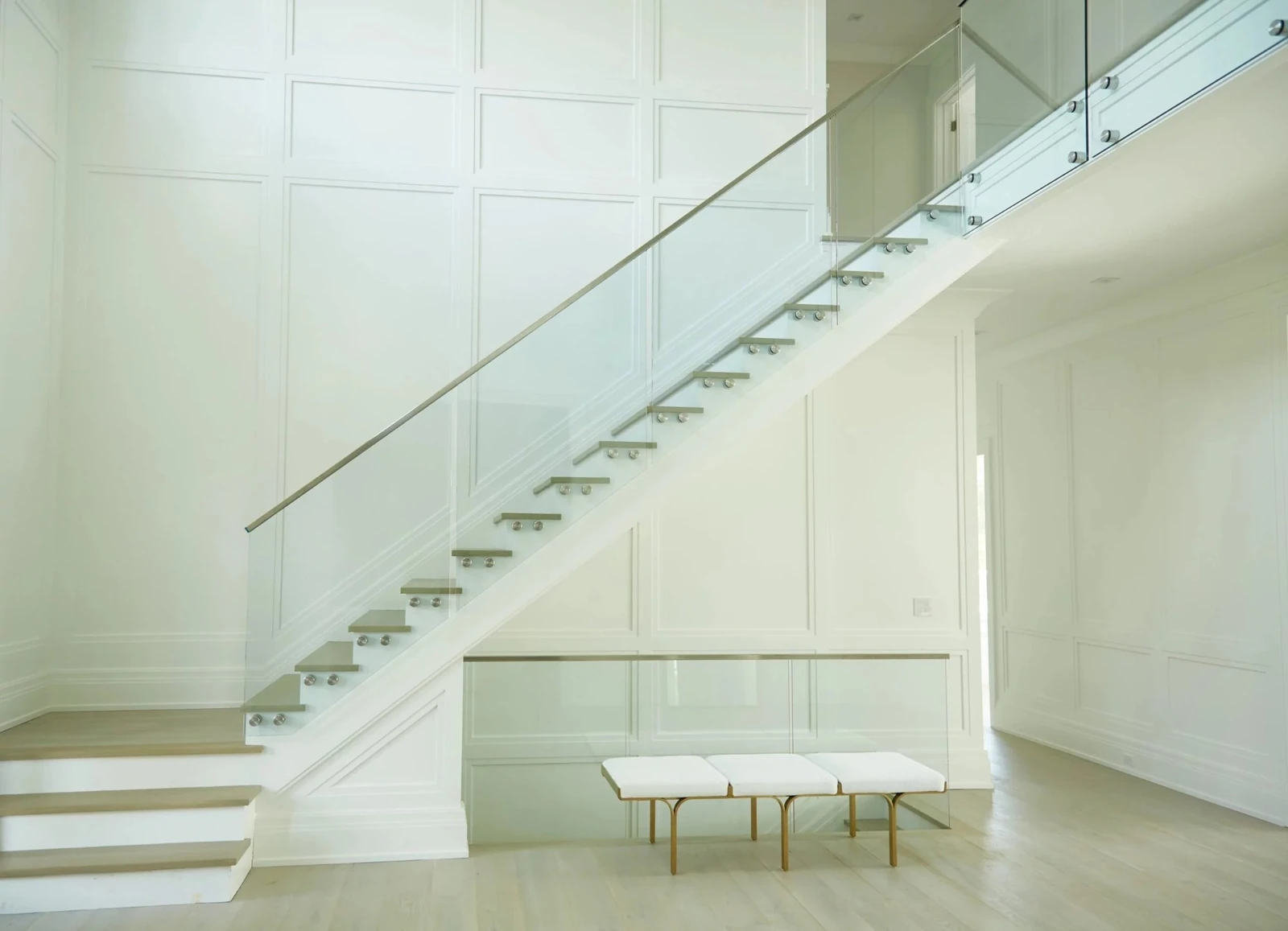
Frameless glass is one of the best options when your staircase feels narrow or dark. It lets natural light pass through, removes visual heaviness, makes small homes feel more open, and suits modern apartments, villas and open layouts.
This is a strong choice if you want a modern indoor stair railing without making the space feel busy.
Black metal and glass for a sharp modern look
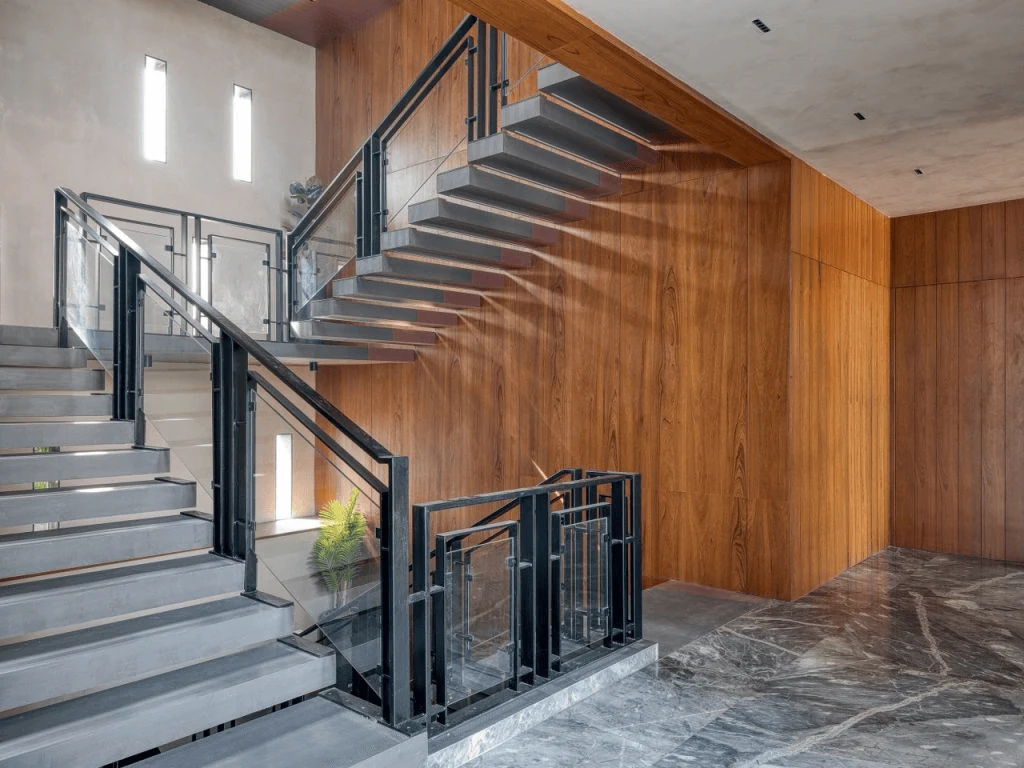
Black metal with glass gives the staircase a clean industrial edge. The glass keeps the look open while the black frame adds definition.
Best for renovated homes, duplex apartments, contemporary villas, and homes that already have black lighting, doors or window frames. It is also easier to style, because black metal stair rails pair well with wood, marble, concrete and neutral walls.
Floating staircases with barely-there railings
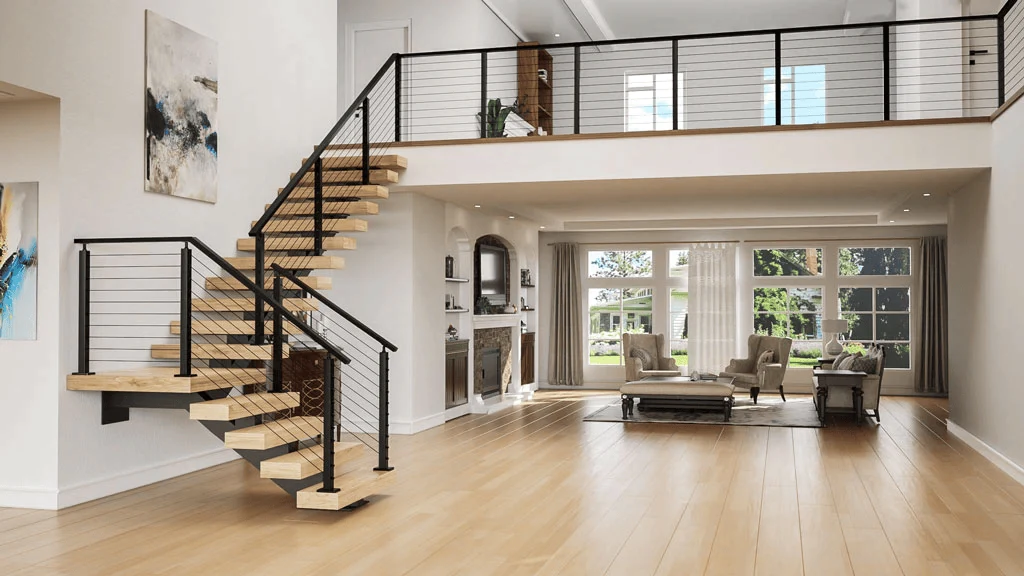
A floating staircase already feels architectural, and a slim railing keeps that clean look intact. Choose it if your home has an open plan layout, you like minimal interiors, and you want the stairs to read as a design feature rather than a passage between floors.
The key is balance. The railing should support safety without stealing attention from the floating steps.
Slim horizontal metal bars for wider looking stairs
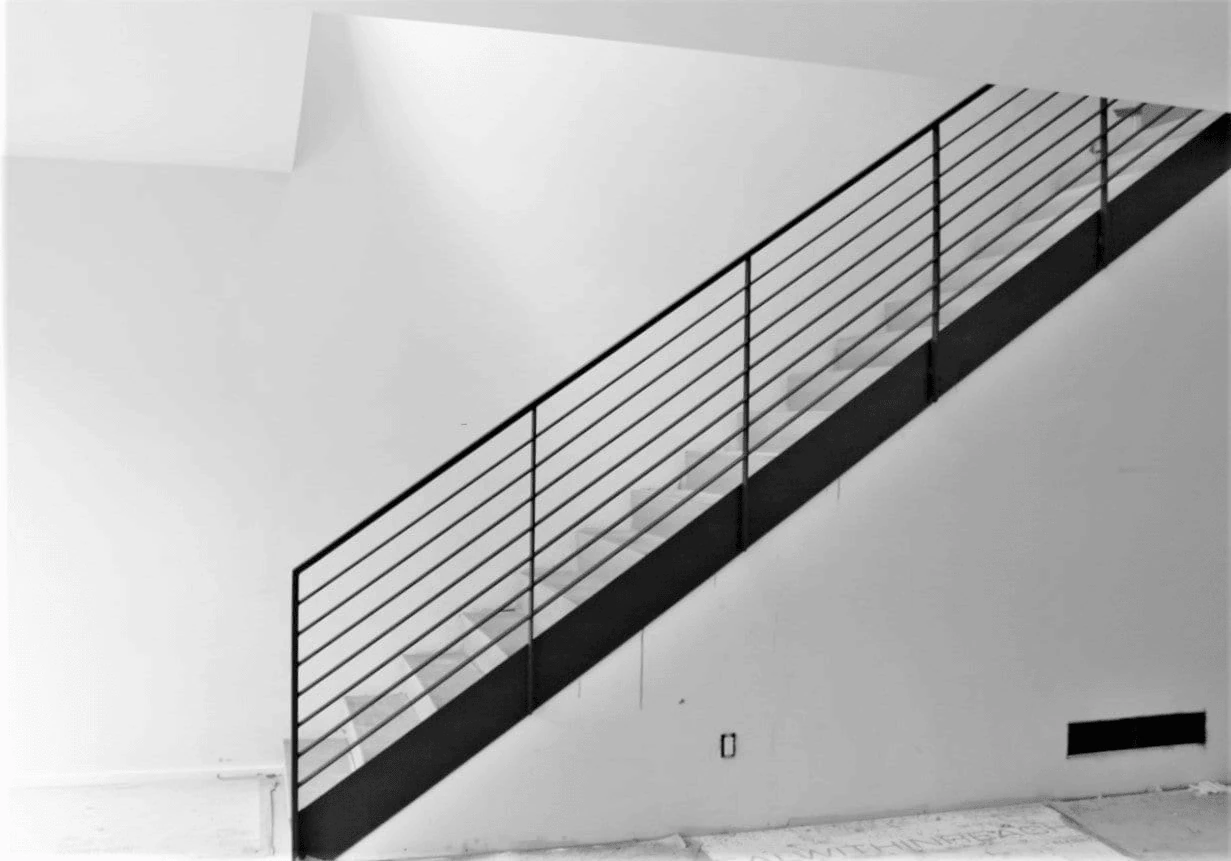
Horizontal bars make a staircase appear wider, because the eye follows the lines across the space. It works where vertical railings feel too formal, creating a clean contemporary shape that feels lighter than thick railings.
For a softer look, pair slim metal stair rails with a timber handrail.
Cable rail systems for a nearly invisible finish
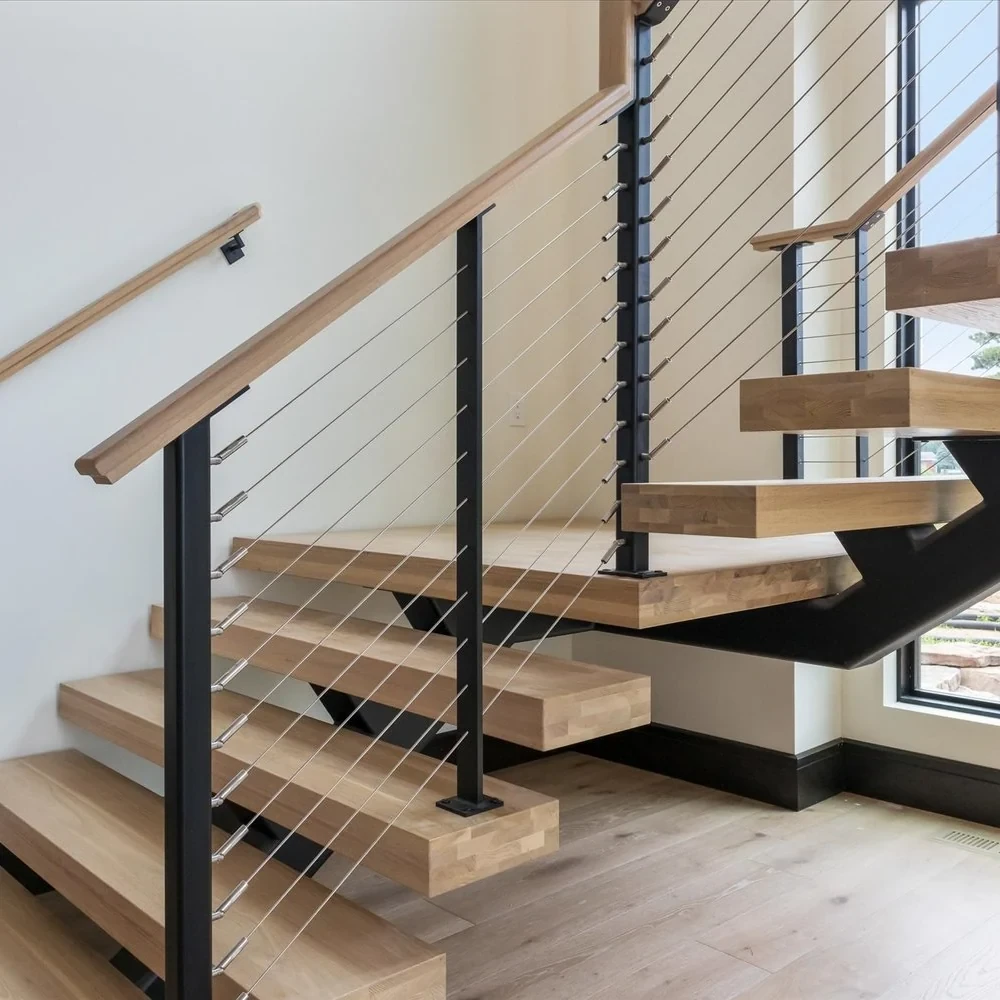
Cable railings are simple, thin and modern, and a good fit when you want safety without the railing dominating the staircase. Best suited to compact homes, loft-style interiors, open staircases and homes with simple flooring.
Looking for something warmer? Wooden styles may suit better, and the same warmth principle runs through our guide to turning cold minimalism into a cosy space.
Wooden Stair Railing Ideas That Never Go Out of Style
Wood has a softer feel than glass or metal. It brings warmth, texture and comfort, which is why wooden banisters still work in both classic and modern homes.
Classic oak banisters for a warm family home
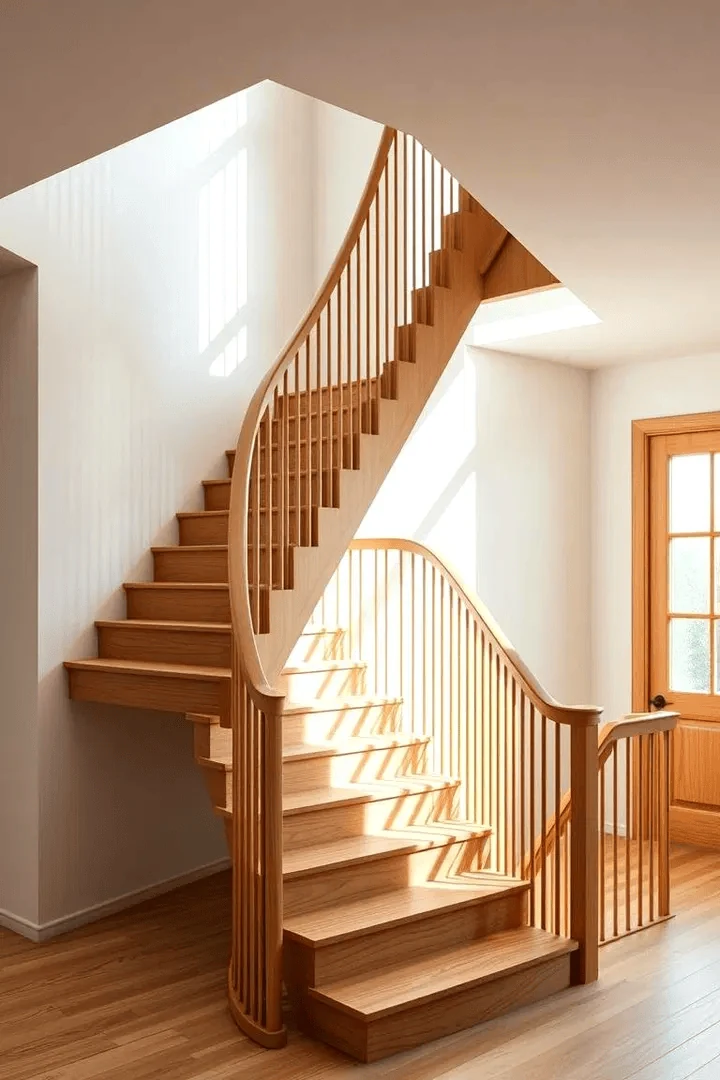
Oak works when you want the staircase to feel natural and welcoming. Best for family homes, traditional interiors, neutral schemes and homes with wooden flooring. A classic oak handrail makes stairs feel solid without looking heavy.
Dark walnut handrails for richer interiors
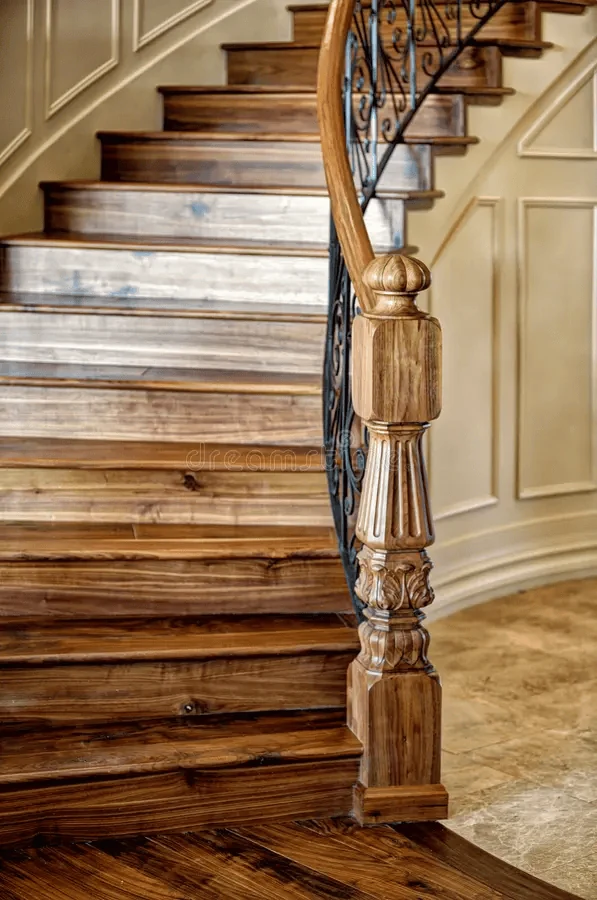
Walnut adds depth. It feels more refined than pale wood and works with cream walls, marble floors and warm lighting. Choose this handrail design if your home already has dark wood furniture, brass details or luxury classic styling.
White spindles with a timber handrail
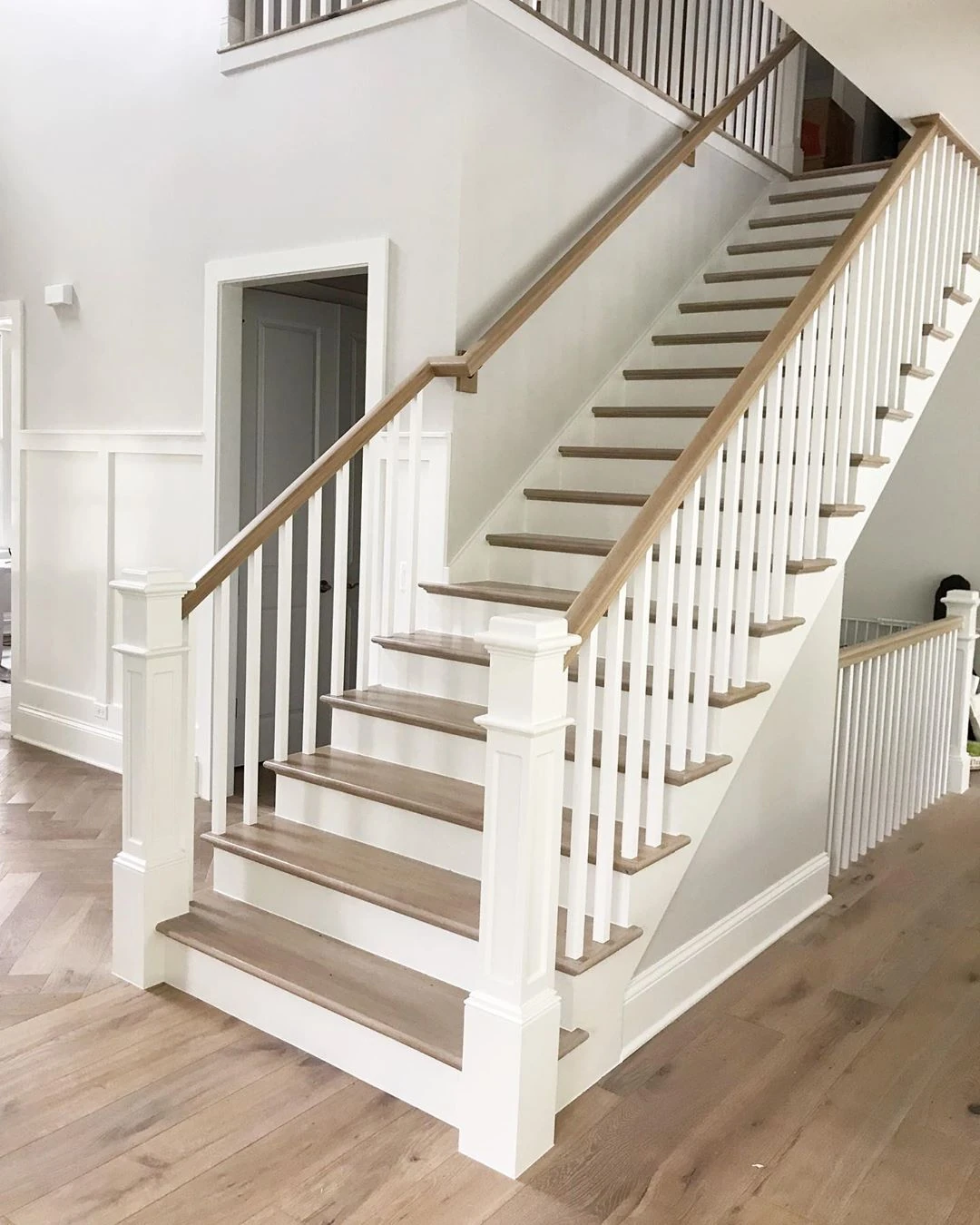
A safe choice when you want a staircase that feels bright but not plain. The white spindles keep the space light and the timber handrail adds warmth. It is also a good renovation option if the old railing frame is still sound.
Rustic farmhouse railings for a relaxed feel
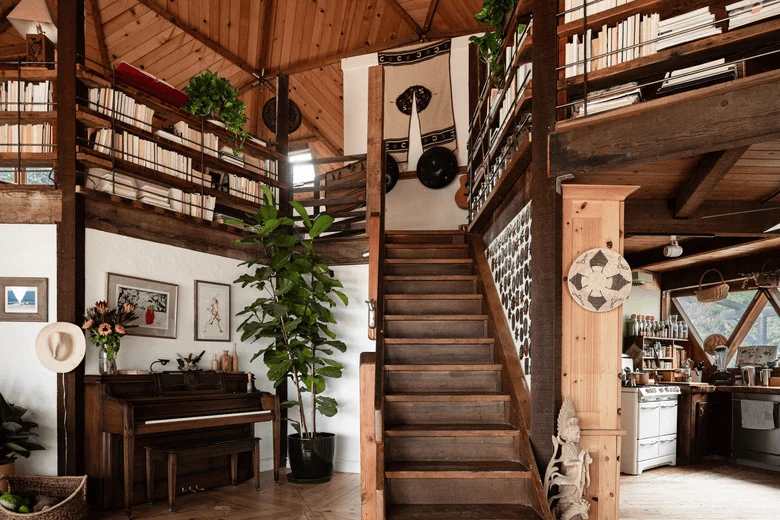
Rustic wood works best where the home has natural textures and softer finishes: exposed timber, stone walls, woven rugs, warm white paint. The style should feel aged rather than messy, so keep the lines simple.
That balance between raw material and restraint is what our piece on artisanal elements in Dubai interiors is about.
Scandinavian light wood for calm interiors
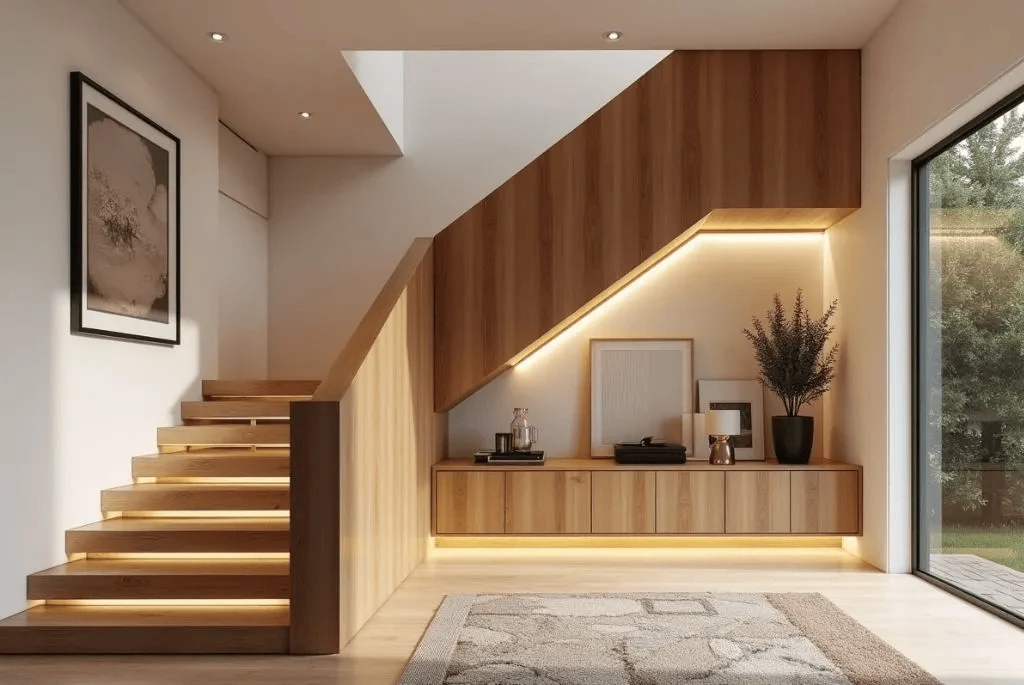
Light wood suits small homes, minimal interiors, soft white walls and pale timber flooring. It adds warmth without making the staircase look bulky.
Curved timber handrails for a softer shape
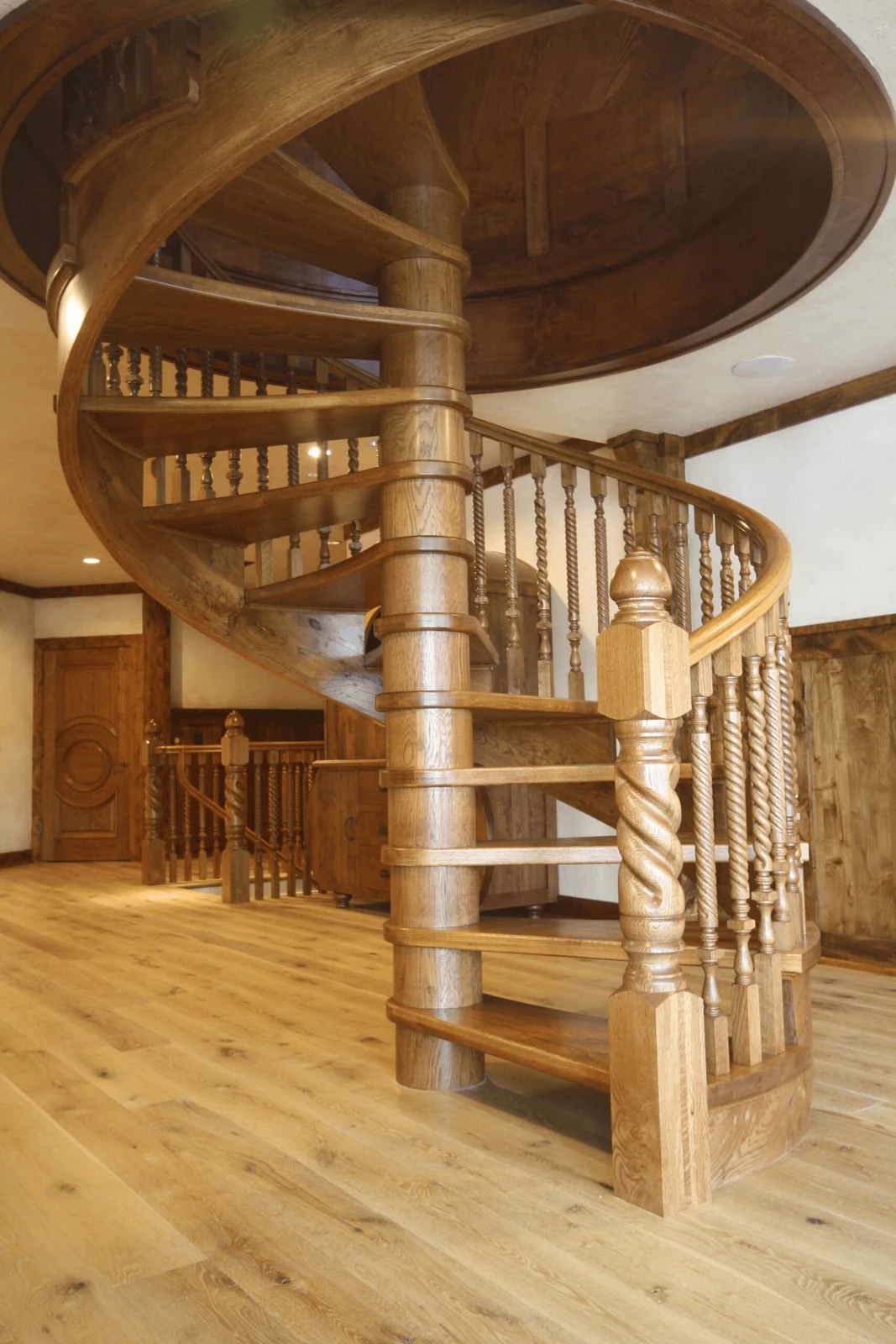
A curved rail feels more custom than a straight one. Best for curved staircases, classic villas and interiors that need softer lines. A curved stair handrail is also more comfortable to hold, since it follows the natural movement of the stairs.
Metal Stair Railing Ideas for a Strong Architectural Look
Metal works when you want the staircase to look sharp, structured and long lasting. It can read modern, classic or industrial depending on the finish and shape.
Matte black vertical rails
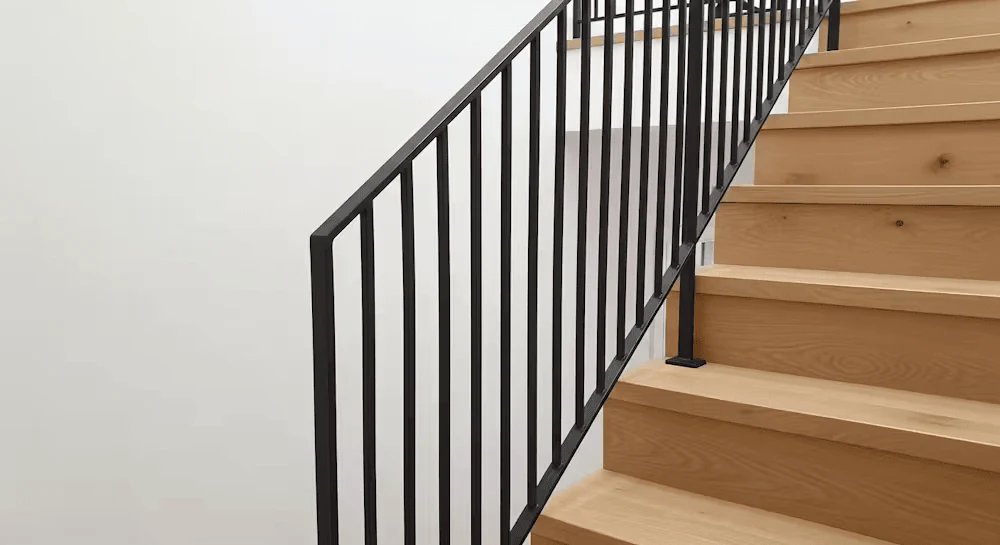
Simple, but they create a strong outline. Best for modern homes, duplex apartments, white or beige walls, and homes with black door frames or lighting. It adds contrast without looking decorative.
Wrought iron for classic character
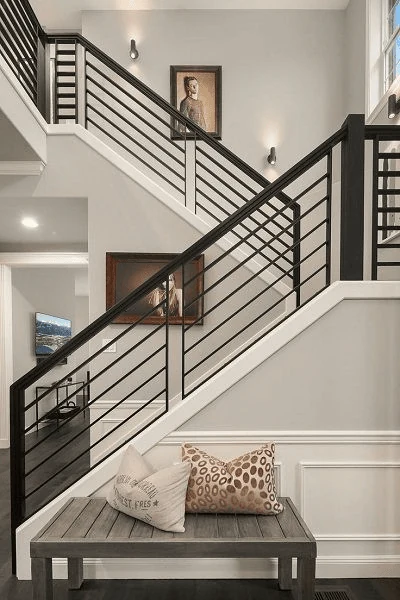
Wrought iron works best where the home already has a traditional feel: classic villas, grand staircases, arched interiors, detailed flooring. Avoid too many curls or heavy patterns, since a cleaner wrought iron style feels more updated.
Geometric metal patterns
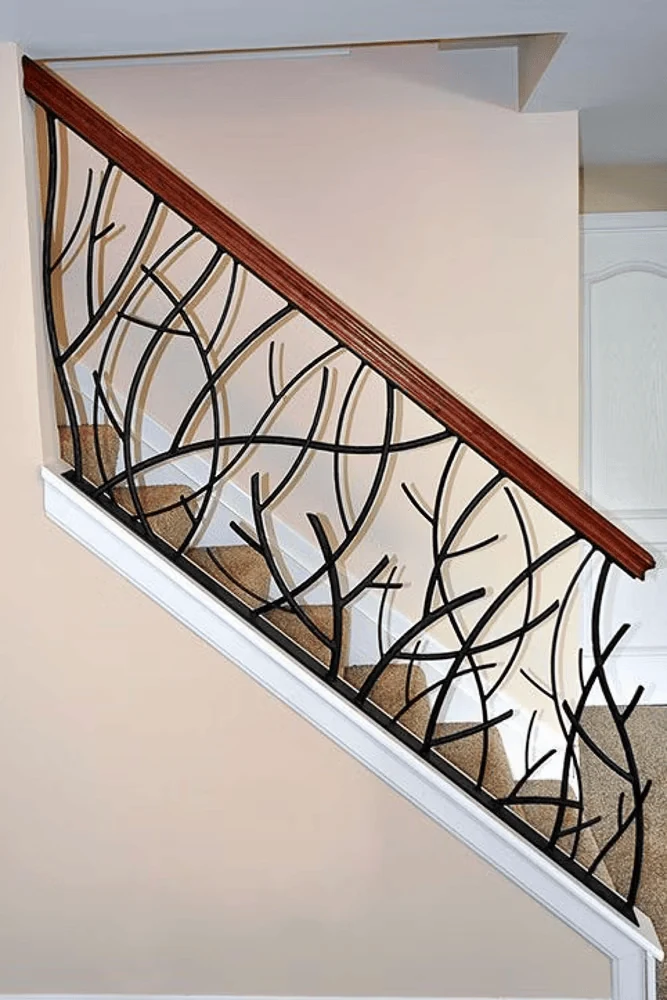
Geometric railings turn a plain staircase into a feature. Use it when you want a custom look or a railing that feels different from standard stair rails. Simple squares, rectangles or diagonals usually look more elegant than busy patterns.
Industrial steel for loft style homes
Industrial steel suits homes with raw textures: concrete stairs, exposed brick, grey flooring, track lighting, dark wood accents. These metal stair rails feel strong and practical, and suit homes where the design language is bold rather than soft.
Mixed wood and metal for balance
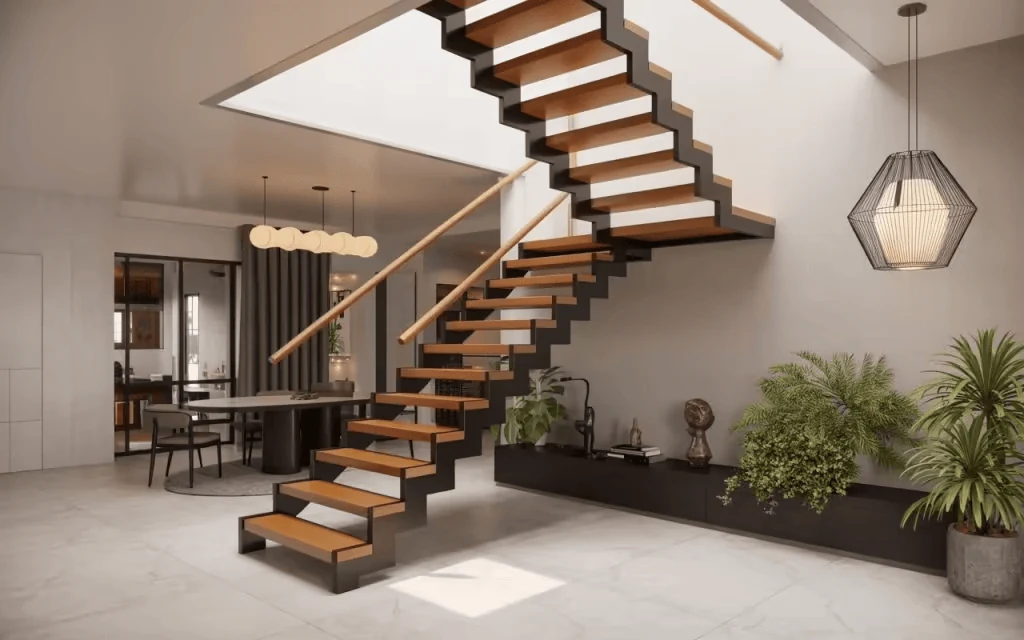
Metal adds structure, wood adds warmth. Good combinations: black metal with an oak handrail, steel posts with a walnut rail, slim bars with light timber, iron balusters with a polished wood top rail. A smart choice if pure metal feels cold but full wood feels too traditional.
Decorative Stair Baluster and Balustrade Ideas
Sometimes you do not need to replace the whole railing. Changing the stair balusters or updating the stair balustrade refreshes the staircase without a heavy renovation.
Traditional turned balusters
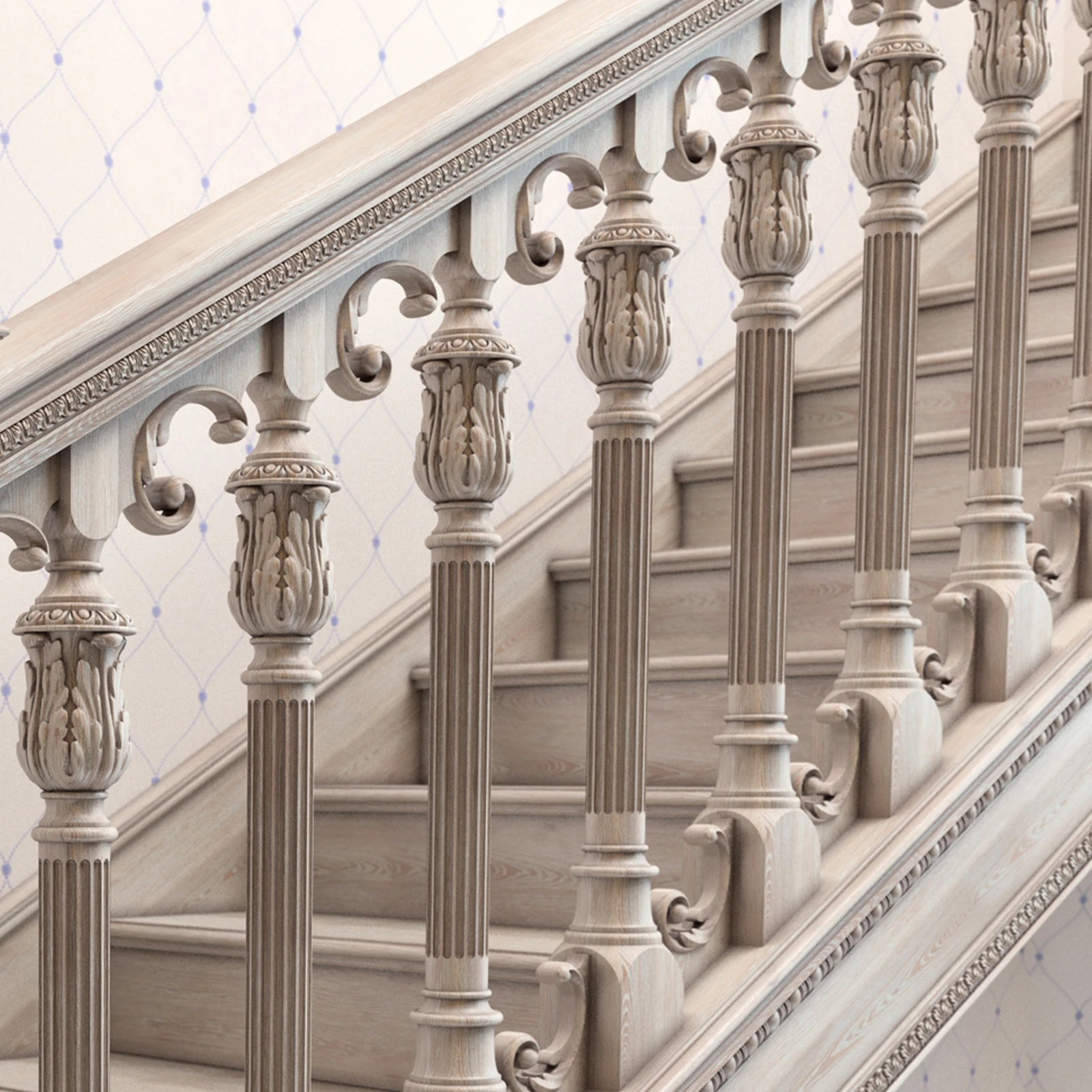
Turned balusters bring detail and charm. Best for classic villas, traditional homes, wooden flooring and interiors with detailed moulding. They make a staircase feel established rather than plain.
Contemporary square balusters
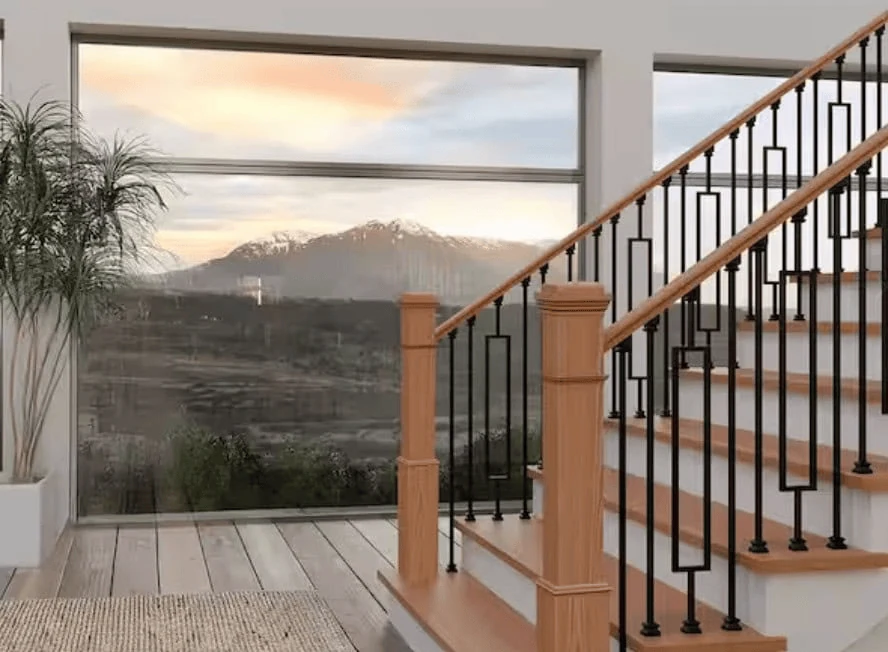
Square balusters feel neater than rounded ones and suit homes where the old staircase feels too decorative. They look simple, are easy to repaint, and make the railing feel more structured. A good middle choice if you want something cleaner but not minimal.
Decorative iron balusters
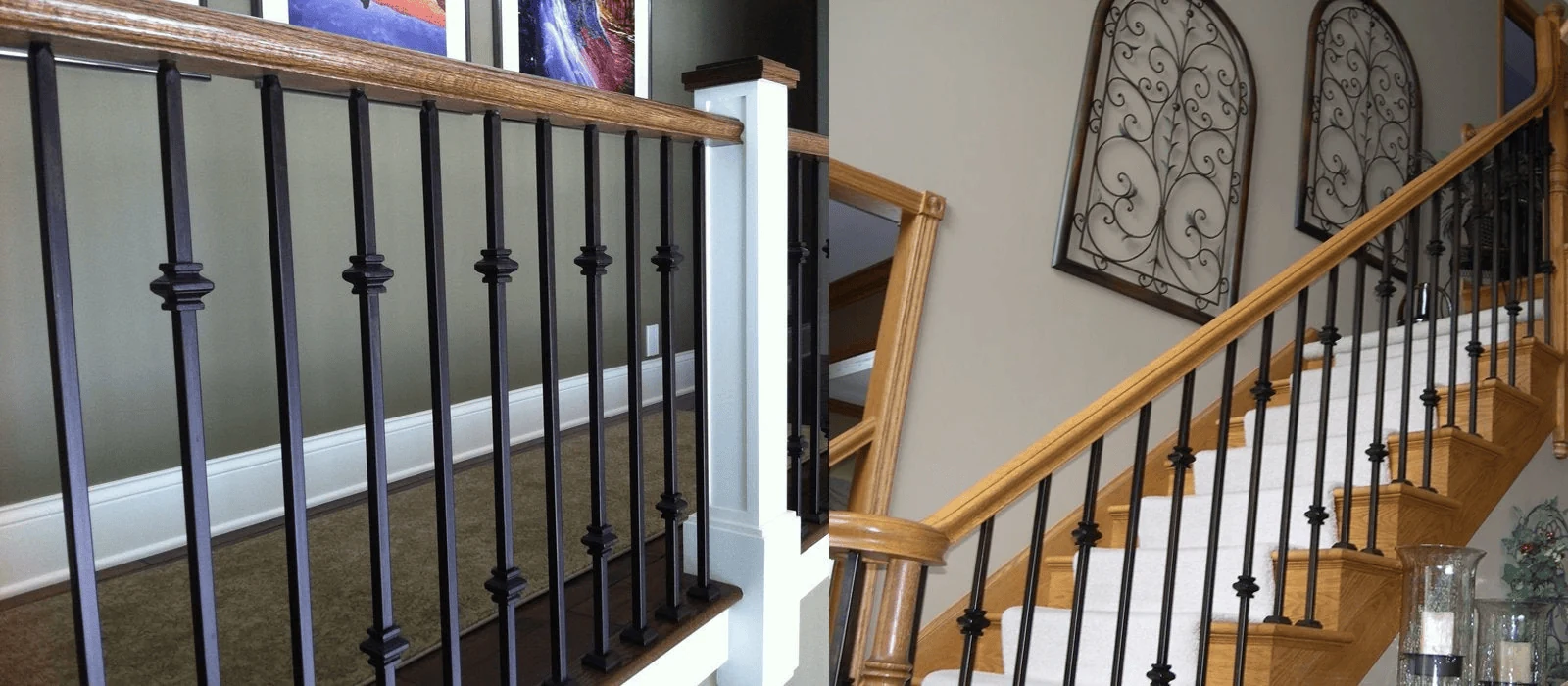
These add character without replacing the full railing. Use them for a stronger focal point or contrast against timber stairs. Avoid loud patterns, since a few decorative pieces between simple balusters is usually enough.
Mixed material balustrades
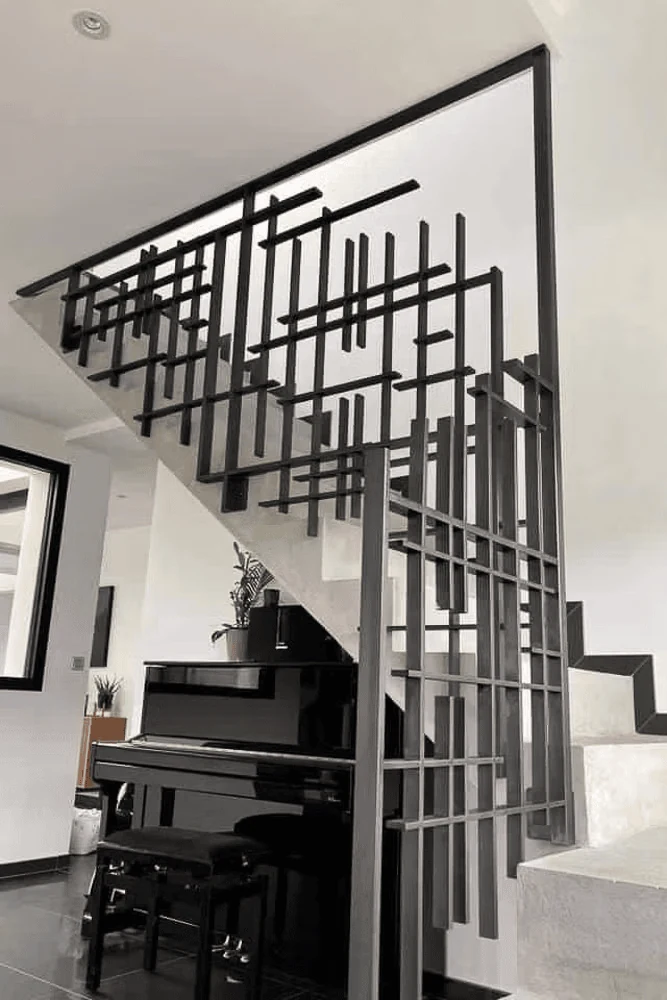
A mixed stair balustrade can combine wood, glass, iron or metal in one design: timber rail with black balusters, glass panels with a wooden top rail, metal frame with timber steps. This works best when the materials already appear elsewhere in the home.
Floor to ceiling balustrades
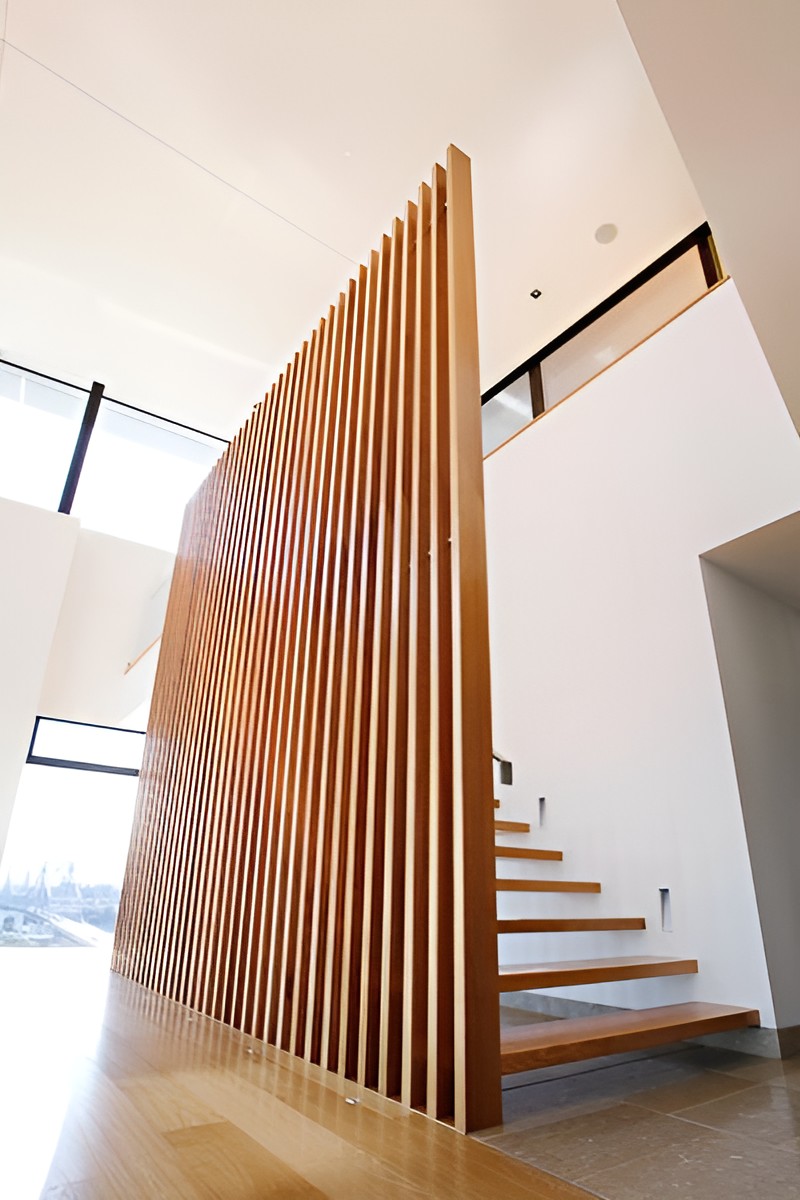
These make a staircase feel more dramatic and taller. Best for double height spaces, open living areas, modern villas and high ceilings. The thing to watch is visual weight, since thin vertical lines feel lighter than thick panels.
Stair Railing Ideas for Small Homes
Small homes need railings that feel light and open. The wrong railing makes a staircase look cramped. The right indoor stair railings improve light flow and make the area feel bigger.
Glass panels that open the space
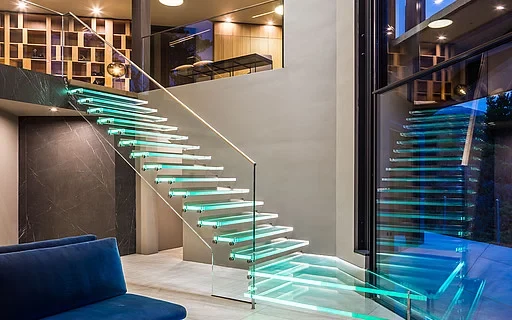
Glass panels are one of the best choices for narrow staircases. They do not block light, keep the staircase visually open, and make small landings feel less tight.
Thin black railings for definition without bulk
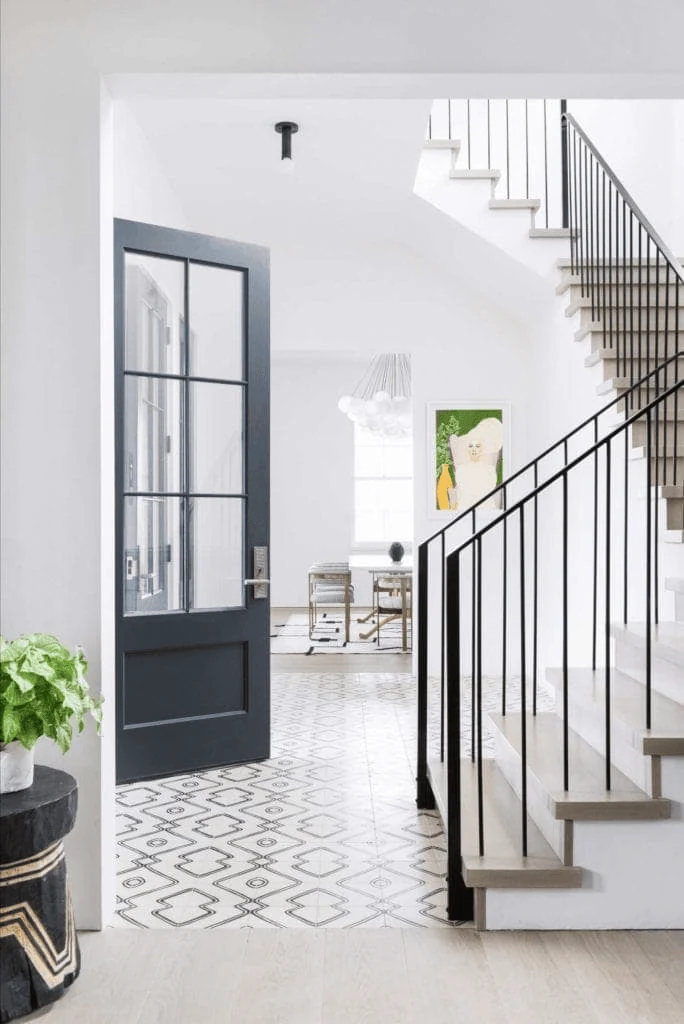
Thin black railings give shape without heaviness. Best for small duplex homes, compact apartments, white or neutral walls, and homes with black door handles or lighting. The black outline adds contrast while the slim profile keeps the space clean.
Wall mounted handrails for narrow staircases
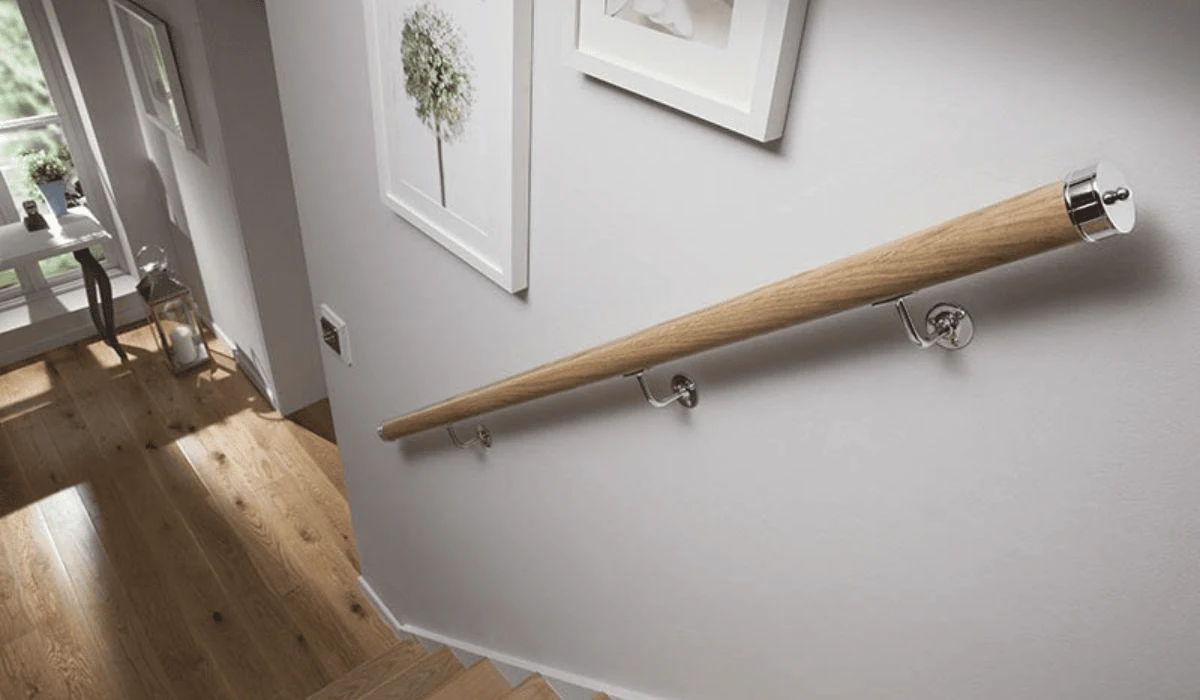
Simple, practical and space saving. It works when the staircase is very narrow, you do not want bulky posts, or you need a safer grip without changing the full railing. This is also the most budget-friendly option on the list, which is worth weighing against our rundown of things people regret paying for in interior design.
Open vertical slats for height and lightness
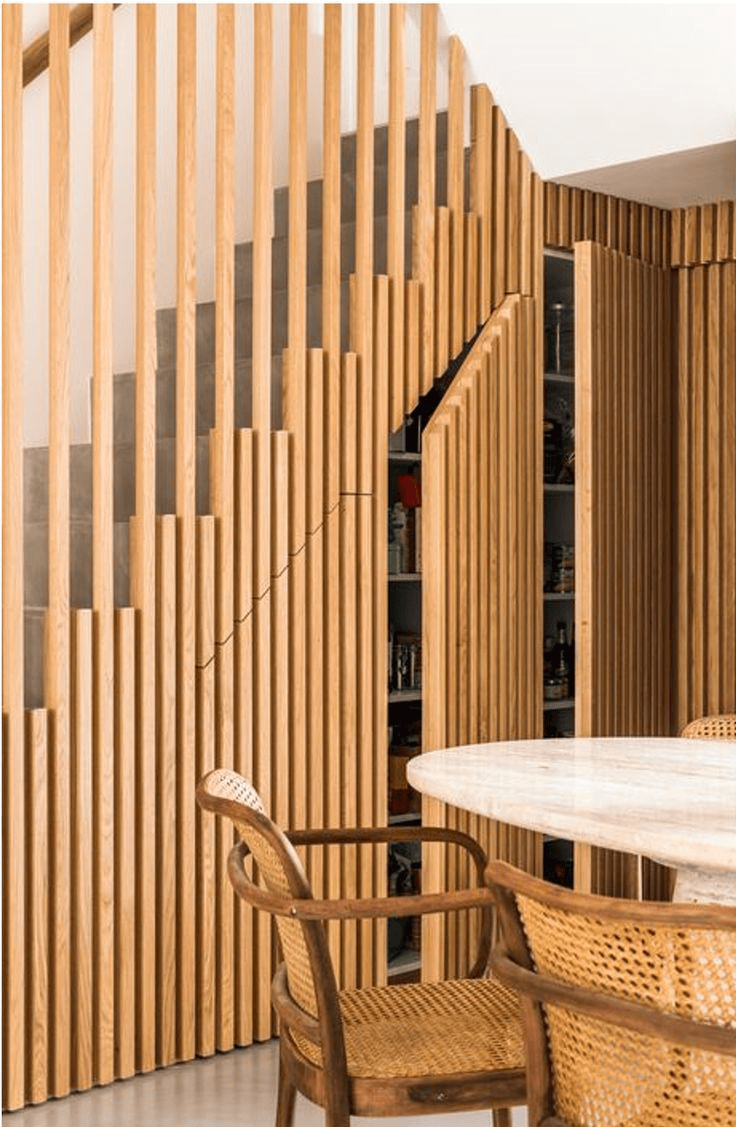
Open slats make a staircase feel taller, guiding the eye upwards while keeping the design airy. Useful when glass feels too exposed but solid panels feel too closed.
Light wood railings for a softer small home look
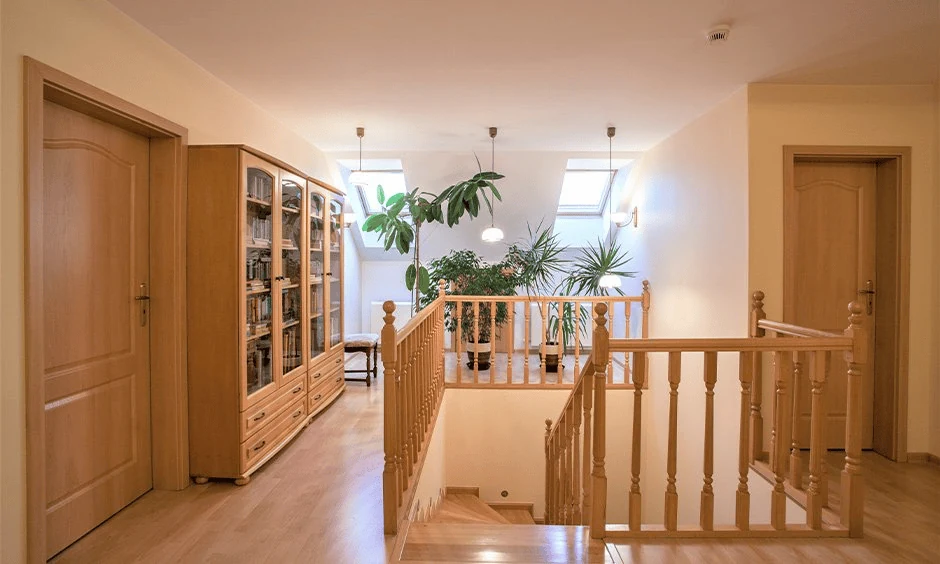
Light wood adds warmth without making the staircase feel dark. Best for small family homes, Scandinavian-inspired interiors, white walls and pale flooring. If you are renting and cannot alter the structure, our affordable rental home design tips cover reversible options.
Luxury Staircase Railing Designs Worth Considering
Luxury railing does not always mean heavy decoration. The most premium staircase railing designs are usually the ones that feel clean, well matched and made for the space.
Curved glass staircases
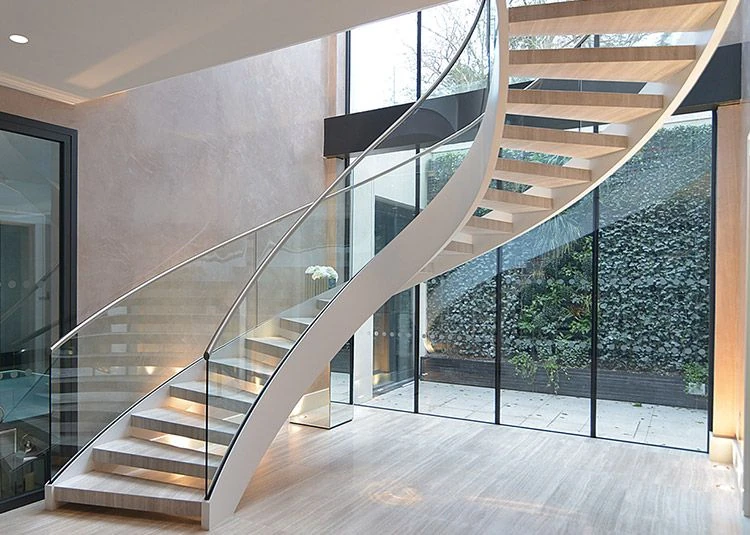
Curved glass works beautifully when the staircase already has a sweeping shape. Best for luxury villas, double height foyers, open entrances and homes with marble or stone flooring.
Brass and glass for warm luxury
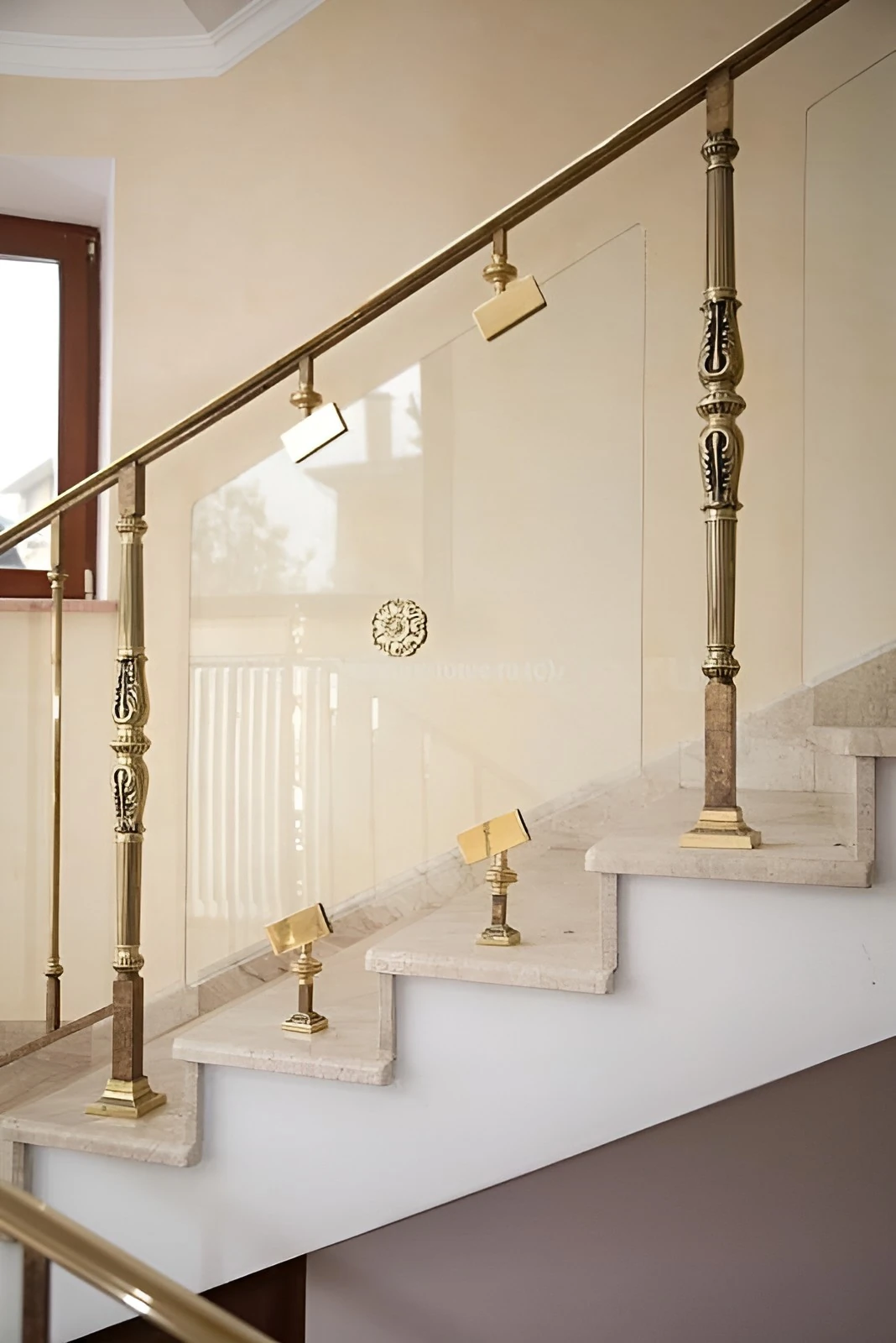
The glass keeps the design light while the brass adds warmth and richness. Suits homes with warm lighting, cream or beige walls, marble flooring and gold hardware. A strong choice when you want luxury without overdecorating.
Marble and metal combinations
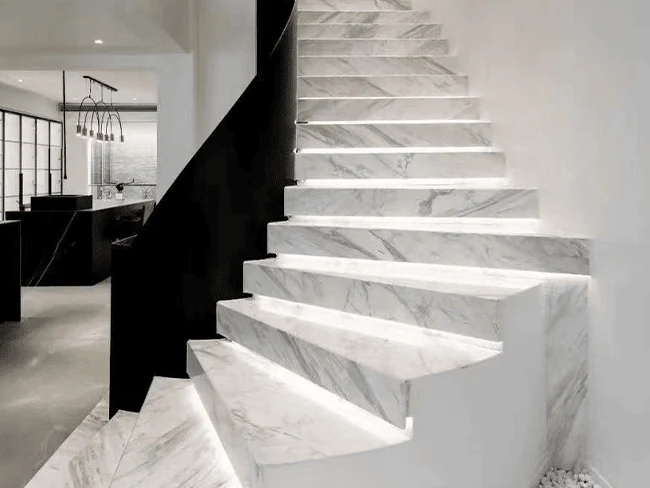
These work when the staircase is meant to feel like a main feature. Good pairings: white marble with black metal, beige marble with brass, grey stone with brushed steel. If the marble is bold, keep the railing simple.
Sculptural custom railings
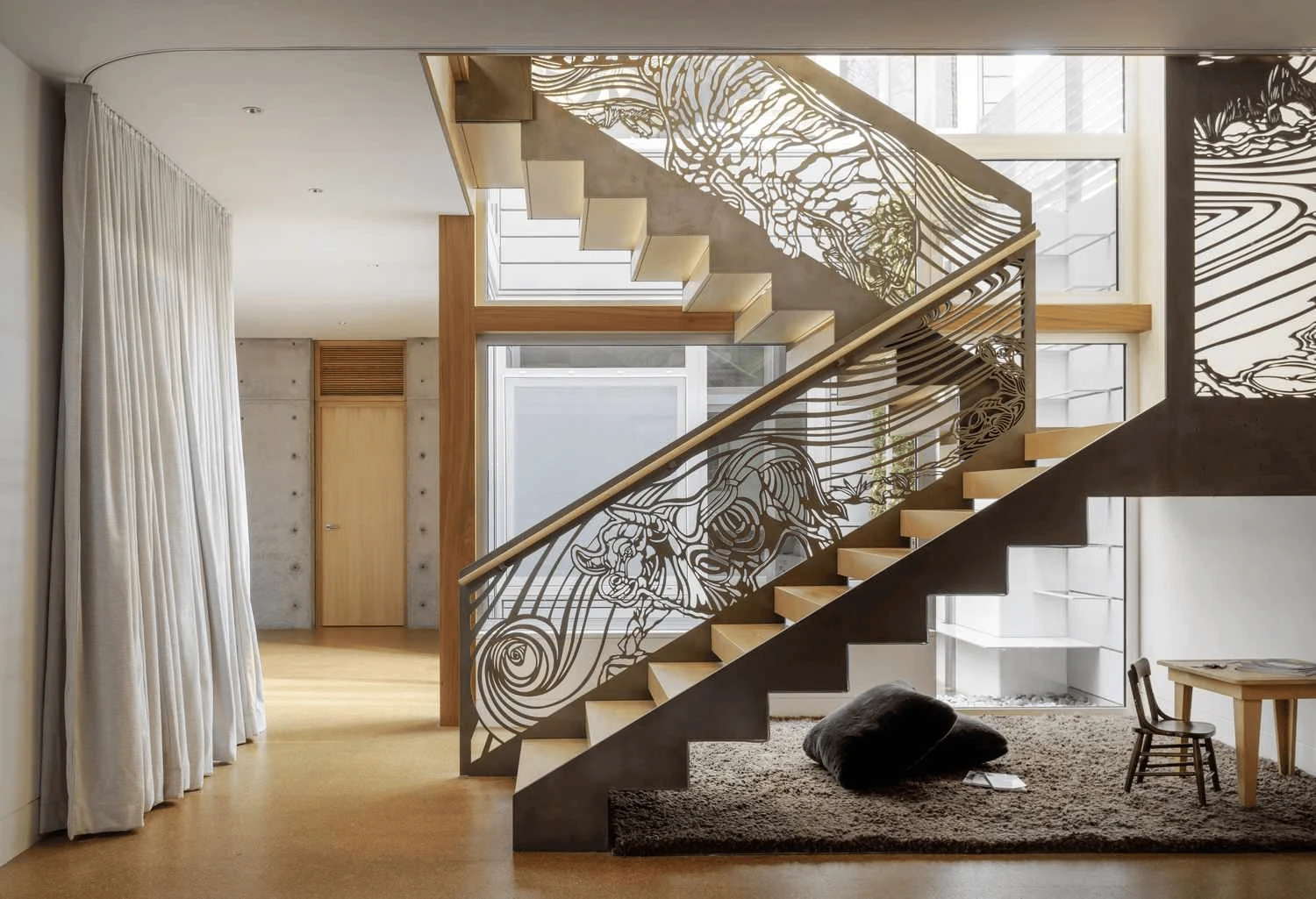
A sculptural railing turns the staircase into the centrepiece of the home. Best for large villas, custom builds and double height interiors. It works only when the rest of the interior has enough breathing room.
Double height balustrades for dramatic entrances
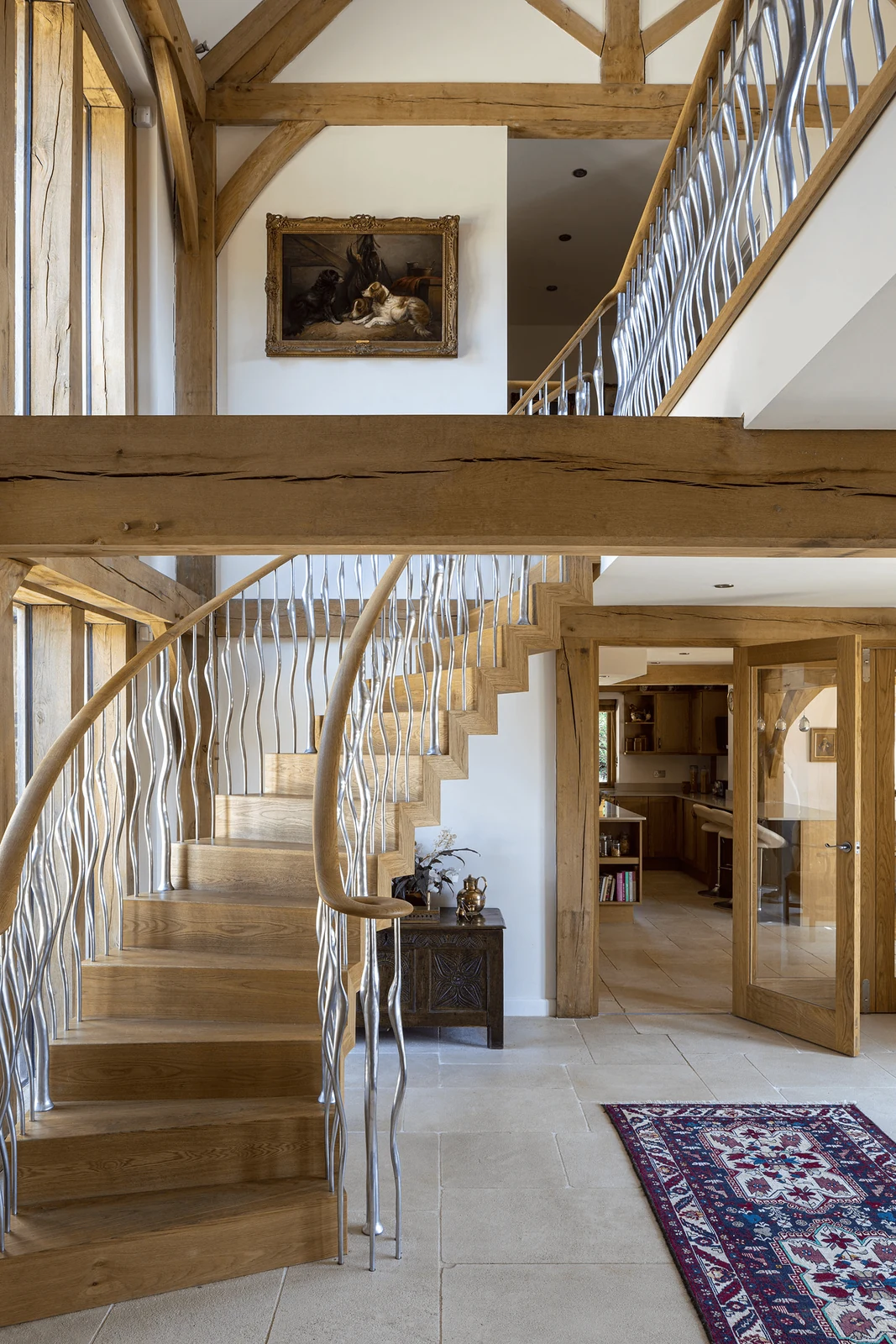
These make an entrance feel taller and more impressive, working well with tall windows, large chandeliers, open foyers and wide staircases. For a refined look, choose slim lines and lighting that highlights the railing shape.
How to Choose the Right Stair Handrail Design
Choosing a stair handrail design gets easier when you start with the problem you want to solve. Should the staircase feel modern, warmer, safer, lighter or more luxurious?
| If you want | Choose | Why it works | Price marker |
|---|---|---|---|
| A modern look | Glass and metal | Clean, and suits contemporary homes | Premium |
| A warmer appearance | Timber handrail | Adds softness and natural texture | Mid range |
| Low maintenance | Powder coated metal | Easy to clean and long lasting | Mid range |
| A luxury finish | Brass and glass | Polished without looking heavy | High end |
| A bigger looking staircase | Frameless glass | Passes light and reduces visual clutter | Premium |
| A budget friendly update | Wall mounted handrail | Improves safety without a full replacement | Budget friendly |
| A classic look | Wooden banisters | Adds character, suits family homes | Mid range |
| A bold feature | Sculptural metal railing | Creates a strong design statement | Luxury investment |
Before you decide, ask whether the railing will make the staircase feel lighter or heavier, whether it is easy to clean, whether it suits the rest of the home, whether it is comfortable to hold, and whether you will still like it in a few years. These are the same proportion and material questions covered in the seven elements of interior design.
Common Stair Railing Mistakes During Renovation
Choosing style before safety
Check railing height, grip comfort, the gap between bars or balusters, the strength of the fixing, and suitability for children or elderly family members. A beautiful railing is not worth it if people feel unsure on the stairs.
Ignoring maintenance
Glass shows fingerprints, brass needs polishing, dark metal shows dust, detailed balusters take longer to clean, and wood may need refinishing. Choose a railing that matches your lifestyle rather than your mood board.
Using too many materials
Glass, wood, metal, brass, marble and patterned flooring all look good, but not all together. Use one main railing material, add one supporting material, and match the finish to something already used in the home.
Oversizing the railing
Thick posts, dark bulky frames, heavy wooden panels and solid side panels make a staircase feel smaller. For narrow stairs, slim lines, glass panels or open slats work better.
Forgetting about lighting
Even the best railing looks flat under poor staircase lighting. Wall lights, pendants, under-step lighting or soft LED strips make the railing feel intentional. These errors appear again in our guides to common interior design mistakes and the top ten mistakes to avoid.
Conclusion
The right railing changes how a staircase feels without rebuilding the structure. For a modern look, glass and slim metal make stairs feel open and sharp. For warmth, timber handrails and wooden banisters soften the space. For a stronger feature, brass, marble or sculptural staircase railing designs create a premium finish.
The best choice is rarely the most expensive one. It is the one that matches your staircase width, home style, safety needs, cleaning routine and long-term taste.
If you want to see a railing in place before committing, our guide to 3D virtual home staging covers how to visualise it first.
Planning a staircase renovation? Talk to our design team about your space.