

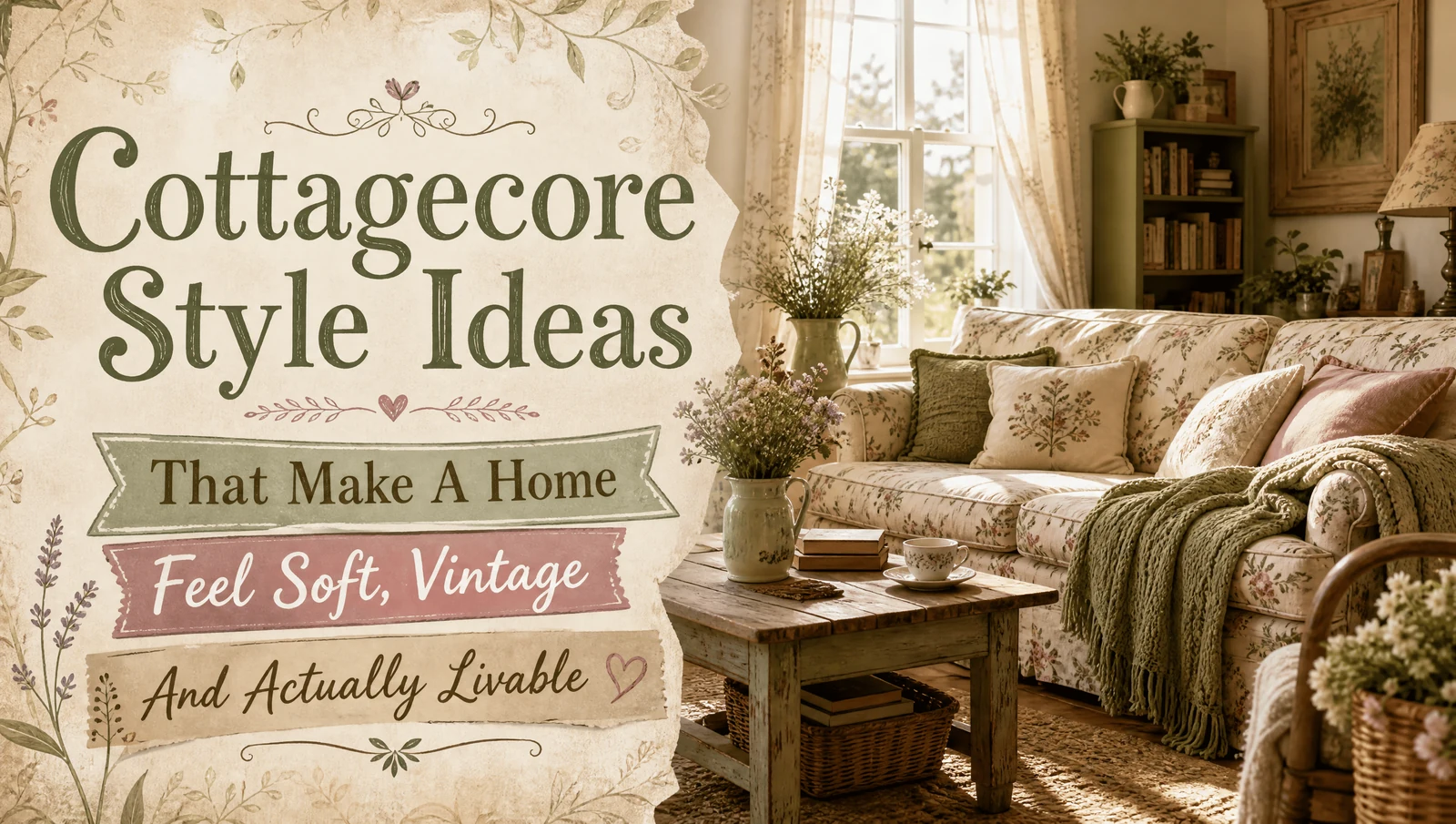
Cottagecore style looks effortless on Pinterest. Soft florals, warm wood, linen curtains draped in afternoon light, a wooden shelf lined with ceramic jars and trailing herbs. The images feel quiet and familiar, like a home that has been lived in slowly over many years. The worry most people carry into these searches is a real one: will it look that way in my actual home, or will it end up looking cluttered, childish, and theme-based?
The difference between a cottagecore home and a cottagecore Pinterest board is editing. The style works not because of quantity but restraint. It works through soft colors, natural materials, one or two pieces of vintage furniture, warm light, and rooms that feel collected rather than dressed. Cottagecore decor ideas are most useful when treated as a direction, not a checklist.
Continue reading to see how cottagecore style works through colors, furniture, wall decor, kitchen details, living room ideas, modern updates, dark cottagecore touches, shopping choices, and the mistakes that make it feel forced.
What Is Cottagecore Style?
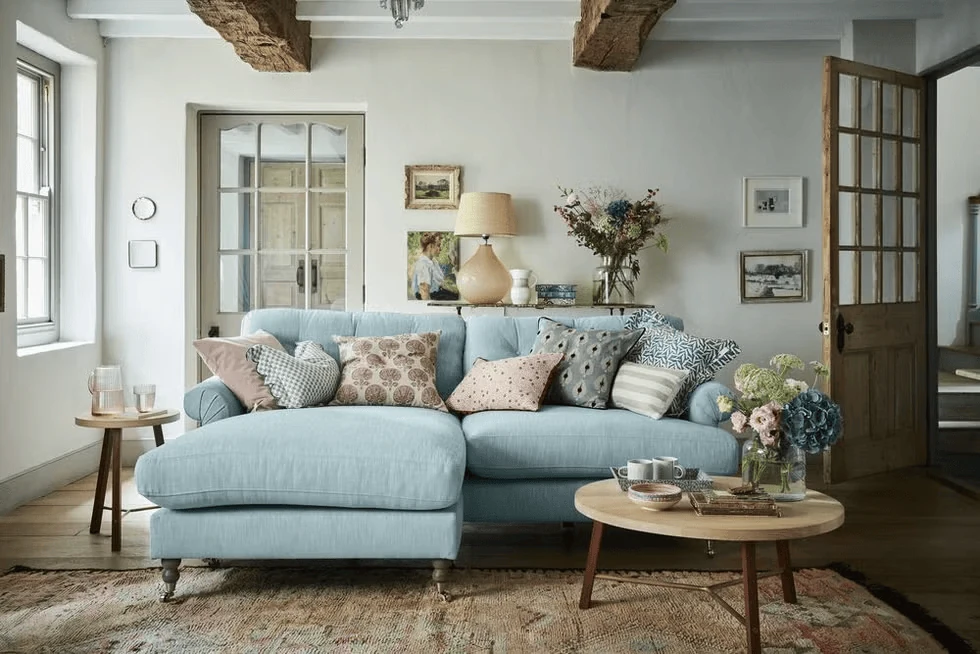
Cottagecore style is a cozy interior aesthetic inspired by countryside homes, vintage furniture, handmade decor, floral patterns, natural materials, and slow living. In interiors, it shows up through warm wood, linen, lace, botanical prints, open shelves, candles, books, plants, antique pieces, and rooms that feel collected rather than showroom-perfect. Read this first, then use the ideas below to decide which cottagecore details fit your room.
To see where it sits next to everything else, start with our A to Z guide to popular interior design styles.
Cottagecore Style At A Glance
Recognising the style is the first step. These are the markers that define cottagecore design style in interiors, so use them as a starting reference before moving into the ideas.
- Soft, nature-led colors
- Vintage or painted furniture
- Floral, botanical, gingham, and stripe patterns
- Linen, cotton, lace, quilts, and woven textures
- Warm lamps and candlelight
- Open shelving
- Handmade and imperfect objects
- Plants, herbs, and dried flowers
- Books, ceramics, baskets, and framed art
- Rooms that feel lived in, not staged
Choose 4 to 5 markers from this list instead of trying to use all of them in one room. If you are still comparing cottagecore with other looks, our guide to recognising interior design styles can help you see where it fits.
For a softer look built on the same warmth and natural materials, see Mekong Delta style interior design.
Cottagecore Interior Ideas For A Soft And Collected Home
Start with the details that shape the mood first, then bring in furniture, lighting, wall decor, storage, and room-specific cottagecore touches.
1. Start With A Garden-Inspired Color Palette
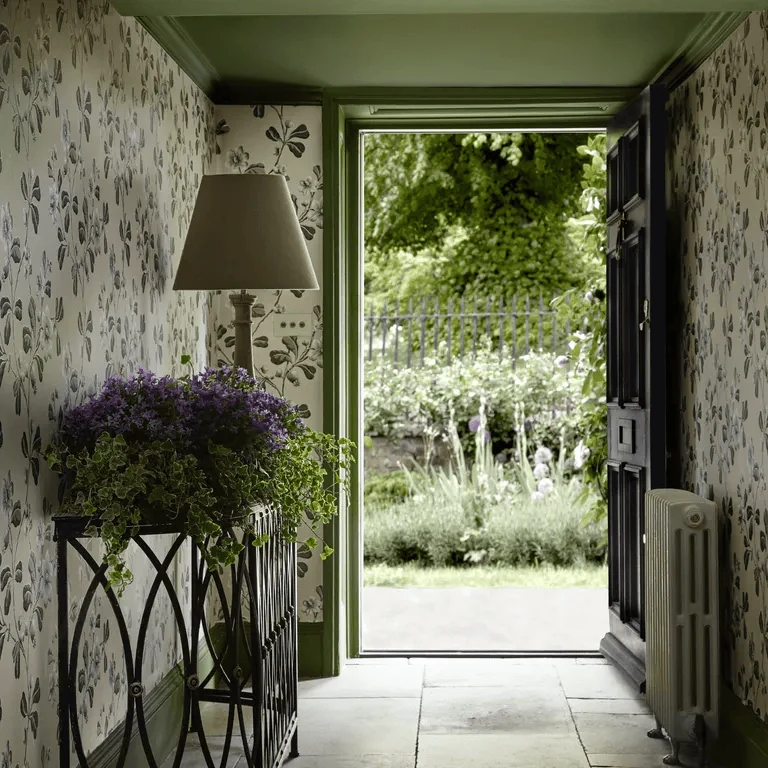
The colors in a cottagecore interior should feel sun-faded rather than saturated. Cream, warm white, sage, faded rose, dusty blue, butter yellow, terracotta, olive, and soft brown keep the style grounded. Designers working in cottagecore style interior spaces usually control the palette first, so florals and vintage pieces do not compete visually.
Palette Rule: Pick one base neutral, two soft garden colors, and one deeper accent.
Pro Constraint: Sage, not lime. Dusty rose, not coral pink.
2. Use Floral Wallpaper Where It Feels Intentional
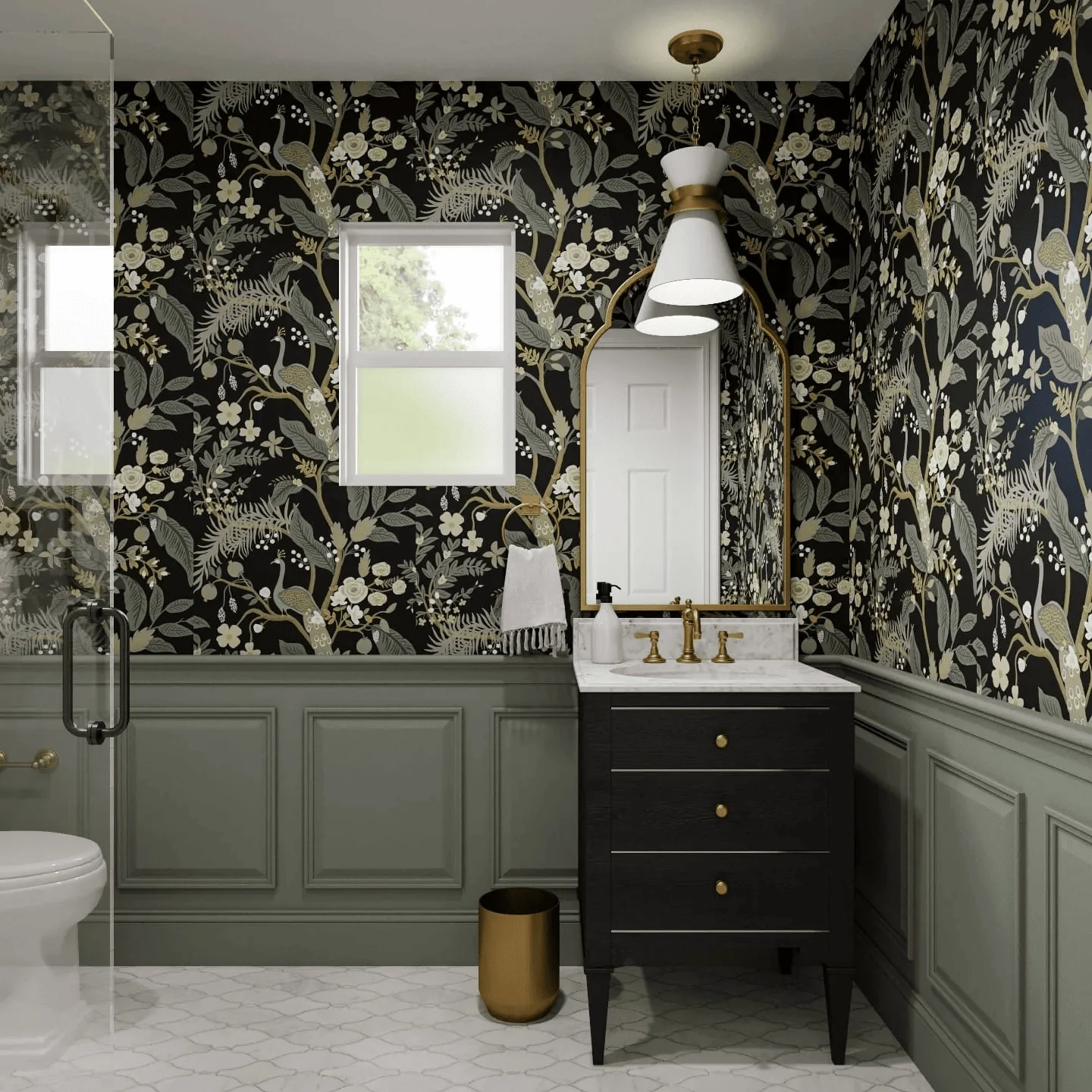
Floral wallpaper works best when it has a clear destination: behind a bed, inside a cabinet, across a powder room wall, around a reading nook, or on one dining wall. William Morris remains a strong reference for nature-led pattern, scale, and rhythm.
Design Cue: Use one floral wall first before taking the print around the whole room.
Pro Constraint: In a small room, choose a lighter, more breathable print.
3. Choose Vintage Furniture That Looks Used, Not Abused
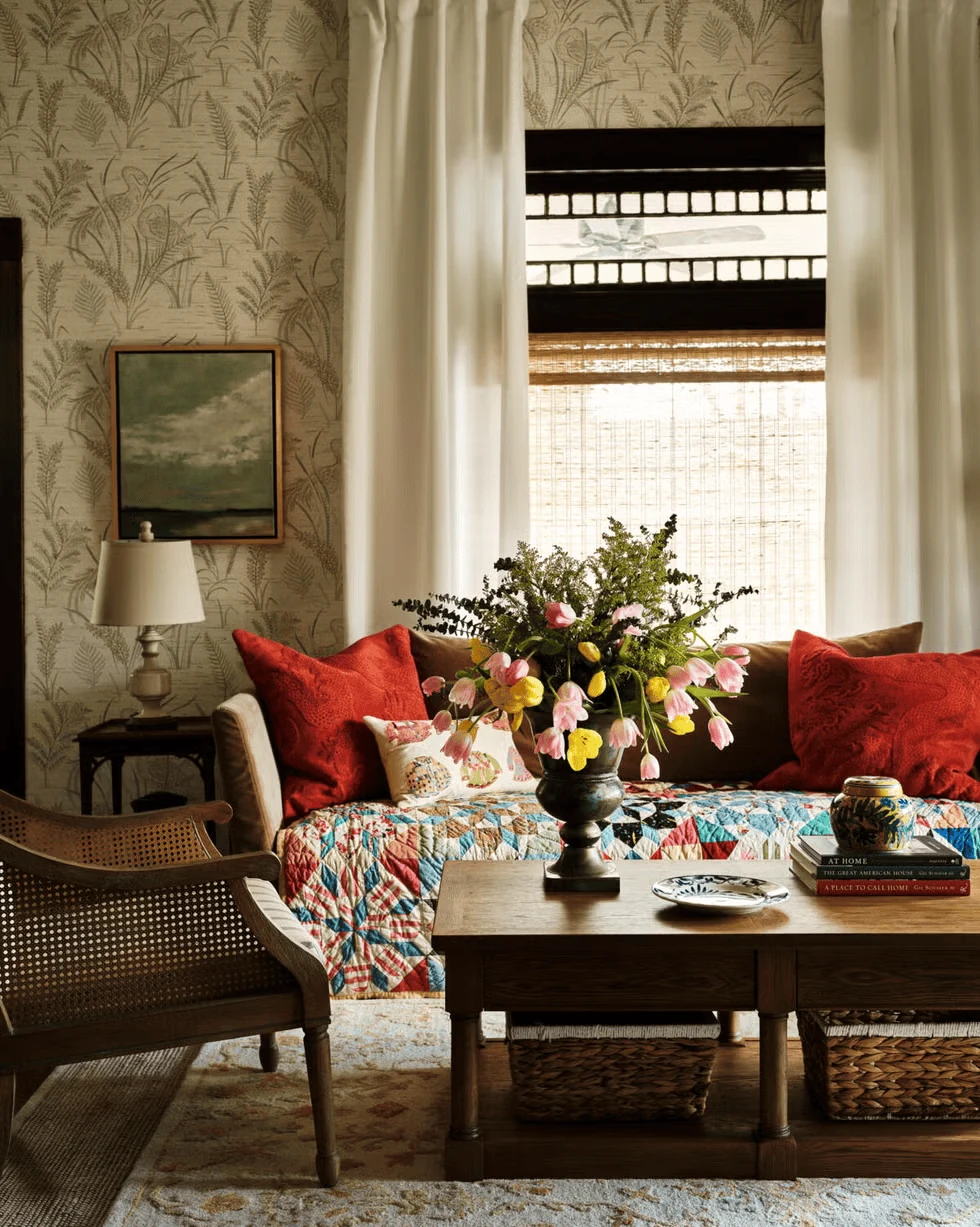
Old dressers, farmhouse tables, carved chairs, painted cabinets, and antique mirrors carry age that new pieces cannot replicate. The goal is soul, not damage. In country chic decor and cottagecore alike, one strong furniture piece with real history does more for a room than many small themed objects.
Furniture Rule: Start with one strong piece: a table, dresser, cabinet, or mirror.
Pro Constraint: Avoid pieces with damage that suggests weakness rather than age.
4. Make The Living Room Feel Like People Actually Sit There
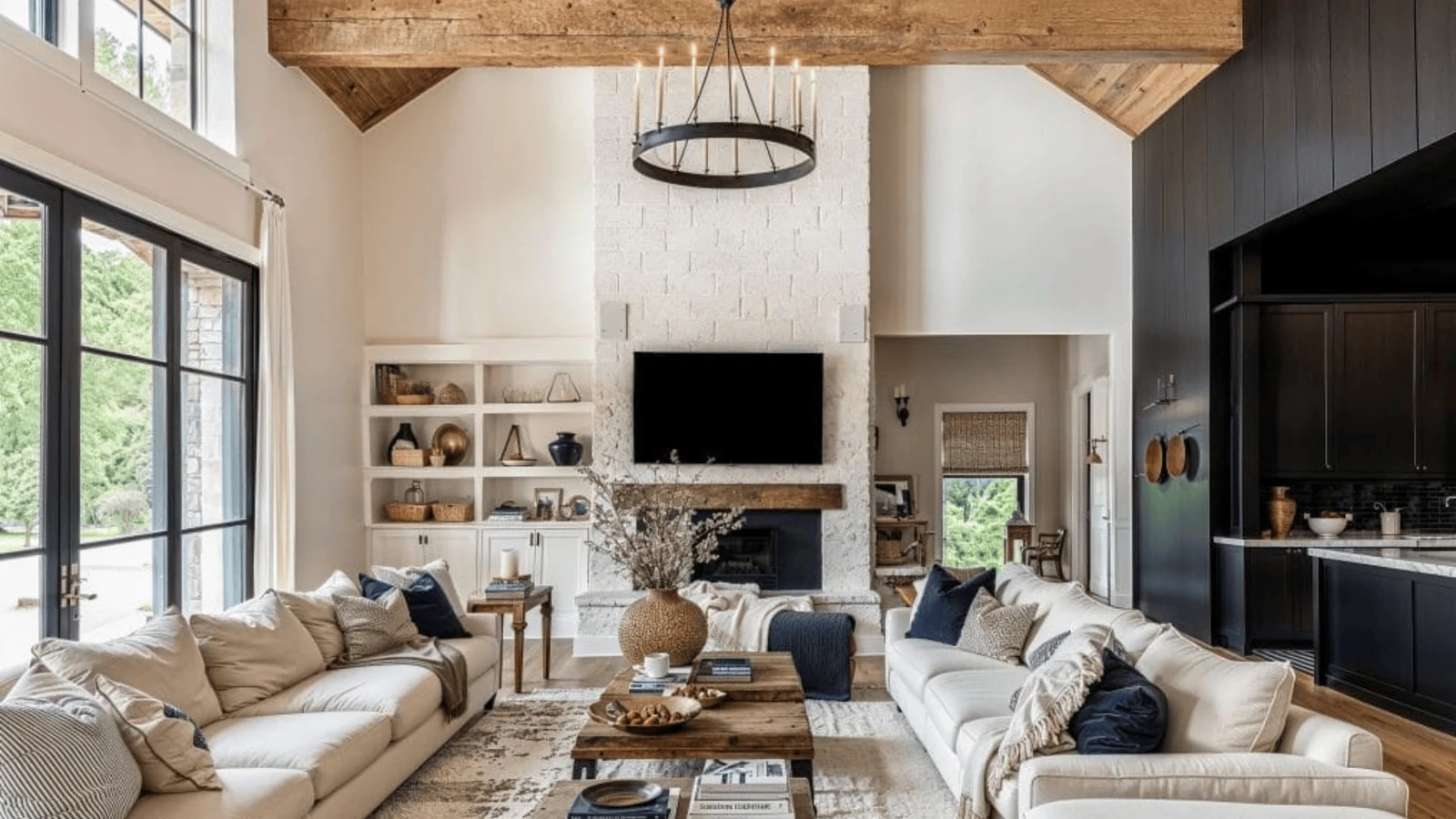
The cottagecore decor living room should never look like it is waiting to be photographed. Bunny Williams is often associated with comfortable, collected rooms where objects feel used, not staged. A slipcovered sofa, washed cushions, books under a wooden coffee table, a warm lamp, and a slightly relaxed rug give the room life.
Comfort Cue: Style the room around seating comfort first, then add decorative layers.
Practical Limit: Cushion covers should be washable.
5. Add Open Shelving Without Turning It Into Clutter
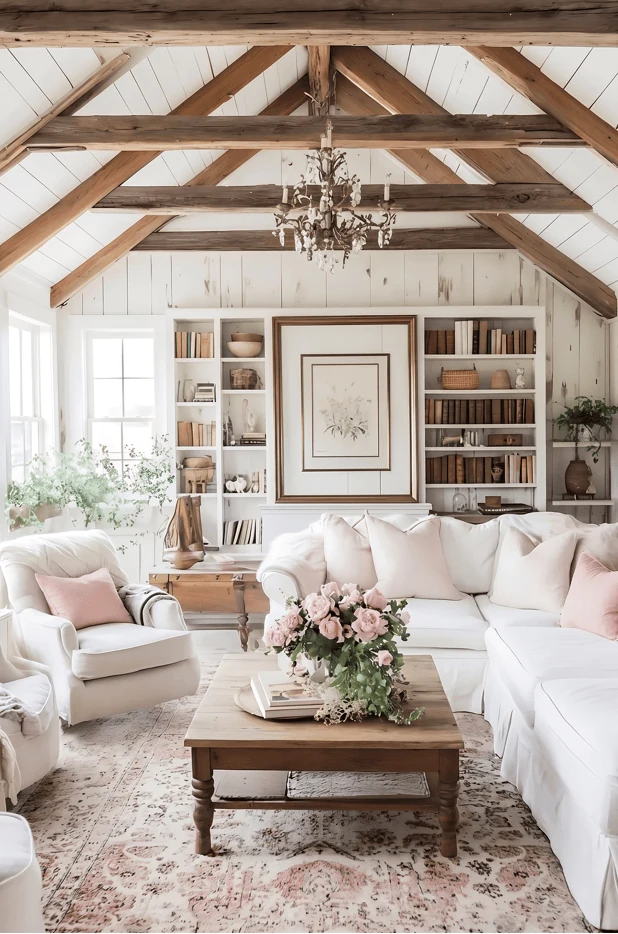
Open shelves in a cottage kitchen can show ceramics, glass jars, cookbooks, tea cups, dried herbs, and framed art without looking chaotic. The difference is repetition: repeated shapes, a shared color family, and enough breathing room. Good cottage kitchens keep daily-use items visible and hide messy extras behind closed doors.
Shelf Rule: Display only what you use often or what clearly adds beauty.
Storage Check: Open shelves fail when the rest of the kitchen storage is weak.
6. Layer Linen, Cotton And Lace In A Quiet Way
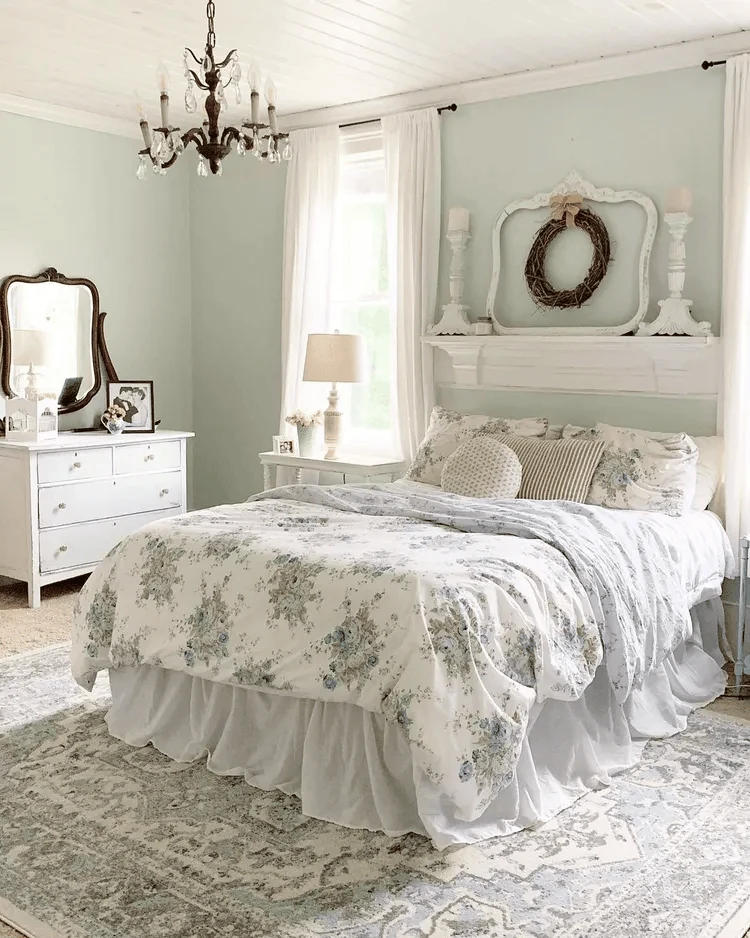
Fabric carries cottagecore style interior design better than almost any decorative object. Linen curtains, cotton bedding, lace trims, embroidered cushions, and quilts create warmth through texture. The key is to let every fabric serve the room first, then decorate it. A curtain should soften light, bedding should feel comfortable, and lace should appear as a small detail instead of taking over the whole room.
Texture Cue: Use one plain fabric, one patterned fabric, and one textured fabric.
Pro Constraint: Avoid synthetic blends that do not drape naturally.
7. Create A Cottagecore Reading Corner
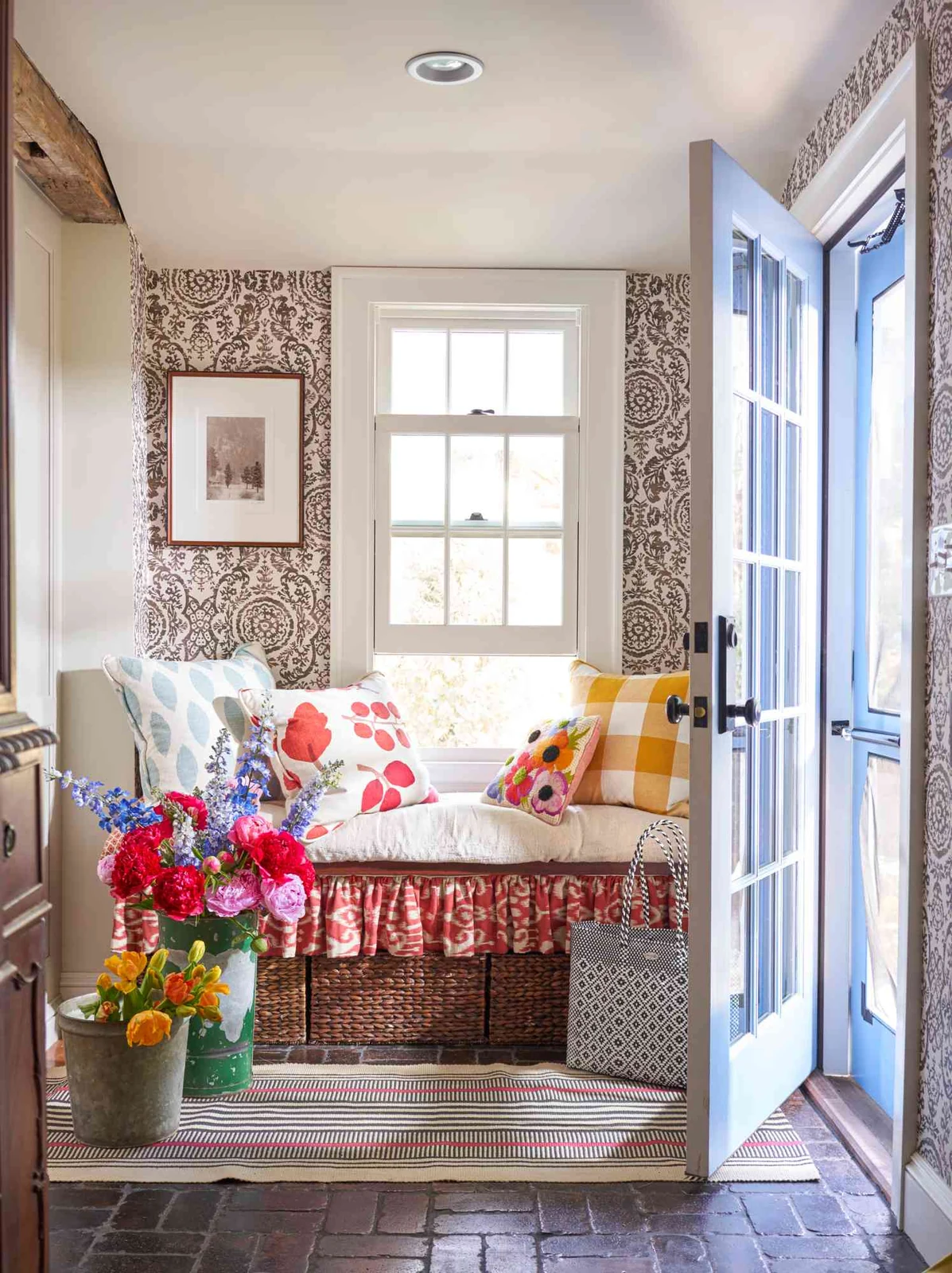
A reading corner works inside an apartment, unused alcove, or beside a living room window. Use a comfortable armchair, a small wooden side table, a wall lamp, old books, a folded throw, and one framed botanical print. A single corner is a controlled way to test cottagecore design before changing a full room.
Small Space Rule: Build one corner first before changing the whole room.
8. Use Botanical Prints Instead Of Generic Wall Art
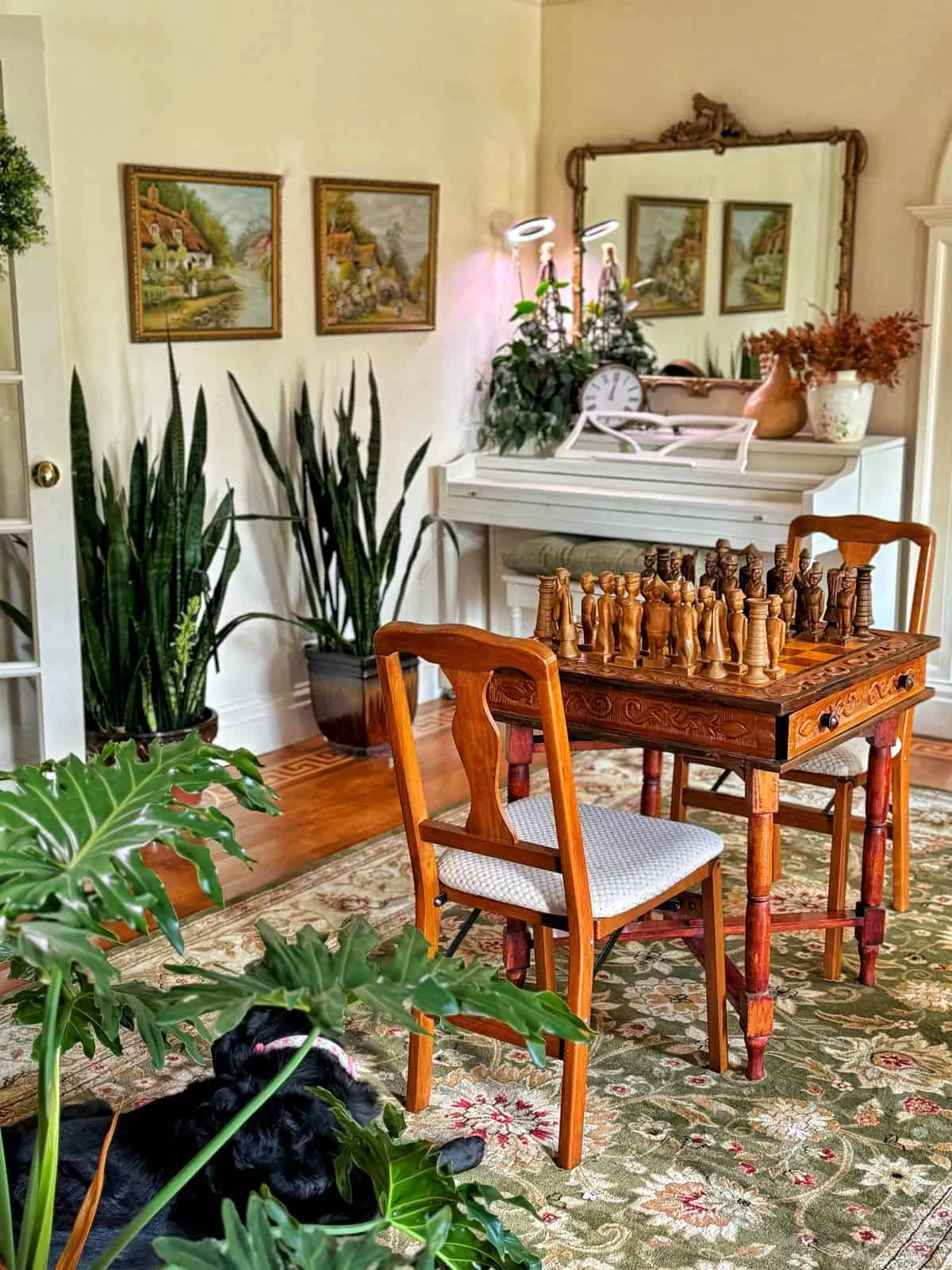
For cottagecore decor wall ideas, watercolour landscape art often feels softer than quote posters, flat abstract prints, or overly polished framed pieces. Look for misty fields, quiet rivers, garden paths, old cottages, cloudy skies, or small countryside studies. Tate’s large collection of J.M.W. Turner’s sketchbooks, drawings, and watercolours shows how much mood a simple landscape can carry through light, weather, and soft colour.
Wall Rule: Group small landscapes in odd numbers and repeat one frame finish.
Pro Constraint: Choose soft watercolours over glossy landscape prints, and avoid frames that feel too modern or sharp.
9. Mix Florals With Checks, Stripes And Gingham
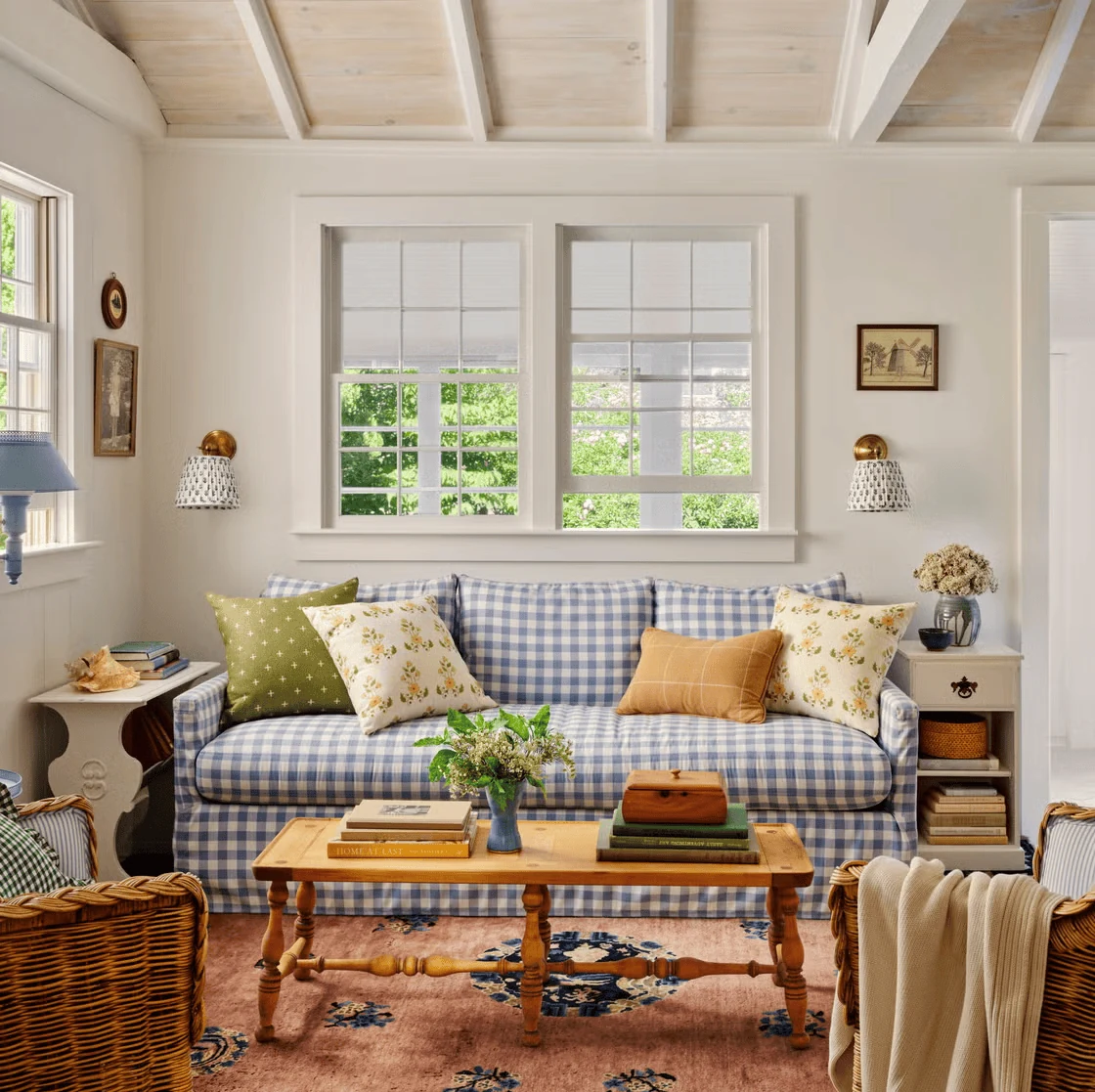
Pattern mixing is where many cottagecore style interior rooms go wrong. The rule is simple: control the color before adding print. Choose one large floral, one small check or gingham, and one thin stripe, all sharing at least one color. If the floral has sage and cream, let the other patterns repeat those tones.
Pattern Rule: Repeat one color across every pattern in the room.
Pro Constraint: Use different pattern scales.
10. Make The Kitchen Feel Warm Before You Add Decor
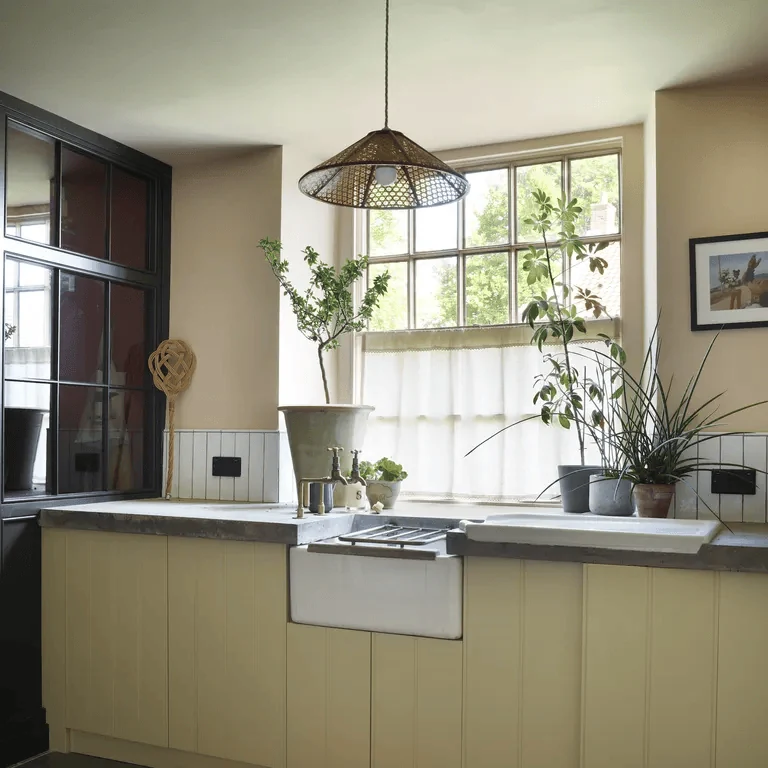
Cottagecore decor kitchen ideas usually fail when storage is unsolved underneath the styling. Wooden boards, ceramic jars, soft curtains, herbs, aged brass fittings, and warm lighting create the right feeling only when the counters are clear and organised. If the base layout needs work first, our modern kitchen design ideas cover the practical groundwork.
Kitchen Rule: Clear counter storage before adding jars, trays, plants, or boards.
Pro Constraint: Avoid materials near the stove that absorb grease or warp.
11. Use Painted Furniture For A Softer Collected Look
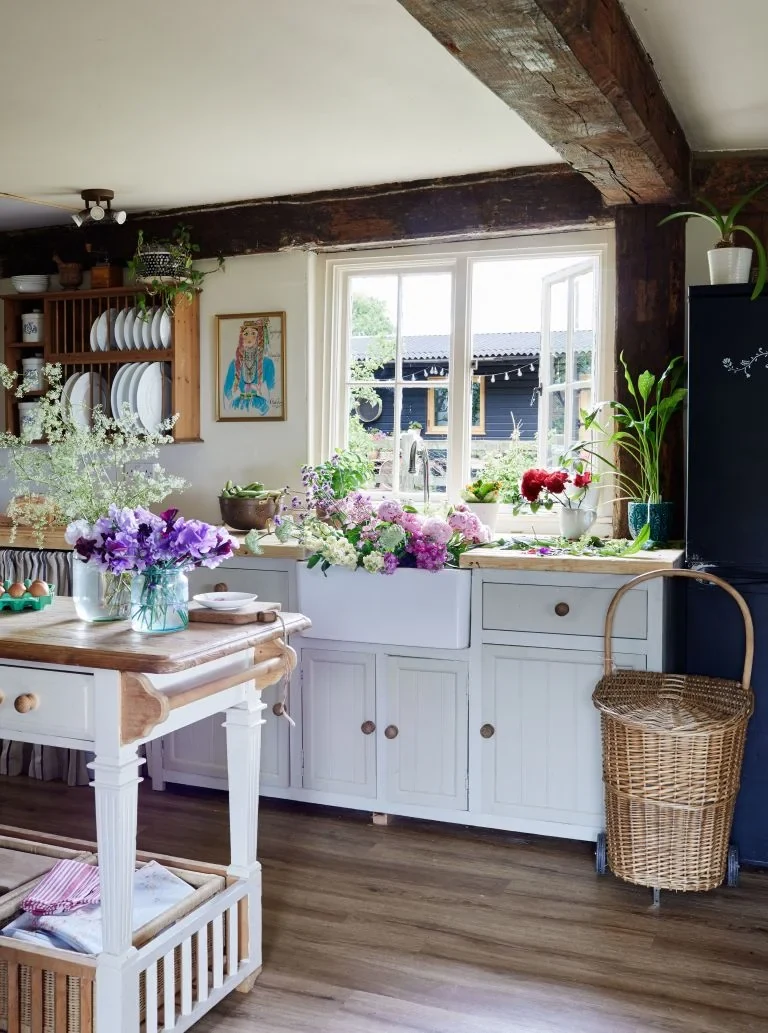
Painted furniture in white, sage, cream, dusty blue, or muted green softens a room without requiring antique hunting. A painted sideboard or cabinet with aged brass hardware gives the room colour through furniture rather than walls. This works best when the paint feels calm and the rest of the space has enough plain texture to support it.
Paint Rule: Paint one piece only and let the rest of the room stay calmer.
12. Add Baskets For Storage That Still Looks Pretty
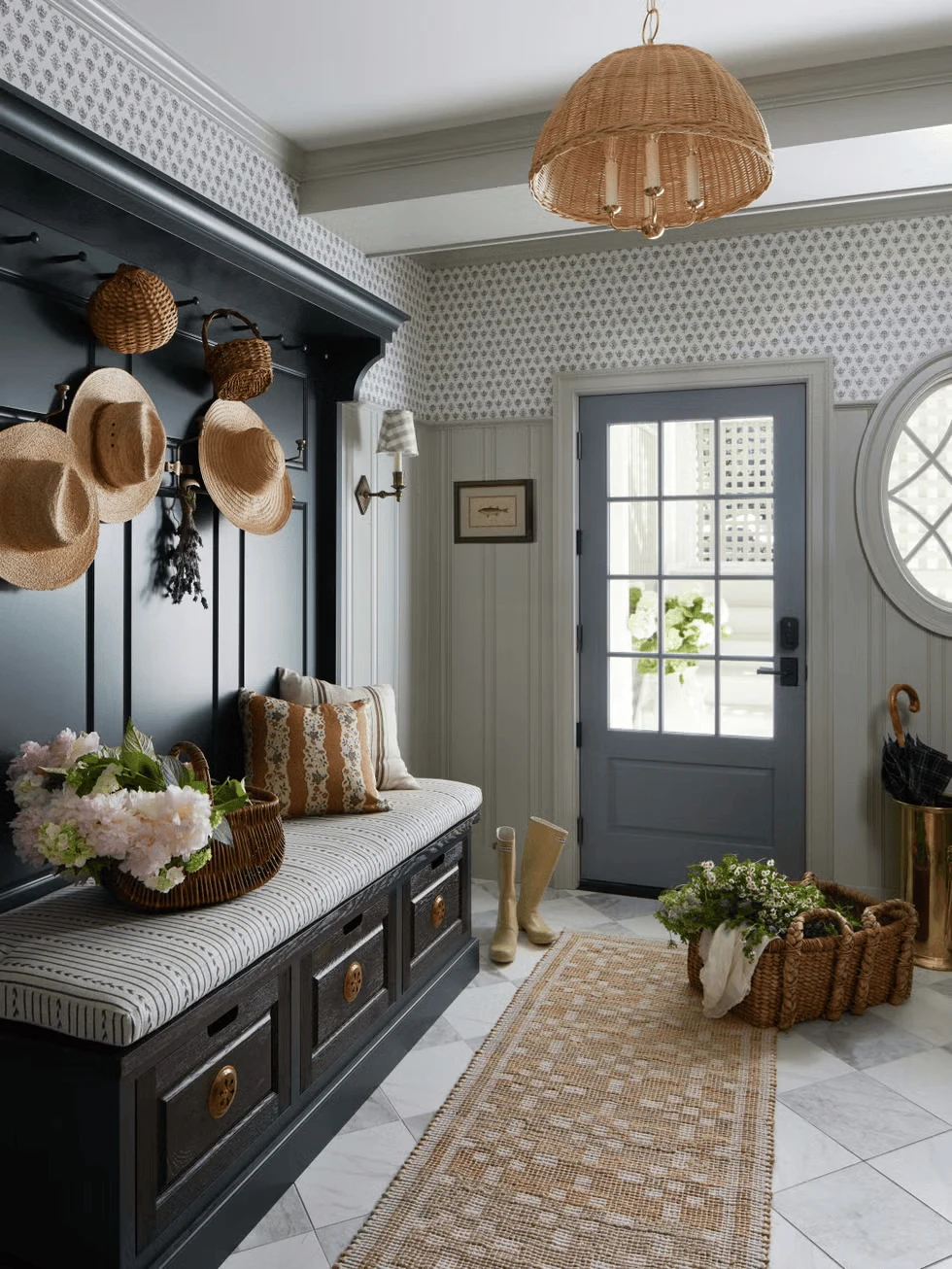
Wicker baskets serve cottagecore style through practical purpose and texture at the same time. Use them for throws, pantry items, shoes, bathroom towels, or toys. The style looks weak in real homes when storage is ignored and every decorative piece sits exposed.
Storage Check: Use baskets for real items, not only as empty props.
13. Use Warm Lamps Instead Of One Flat Ceiling Light
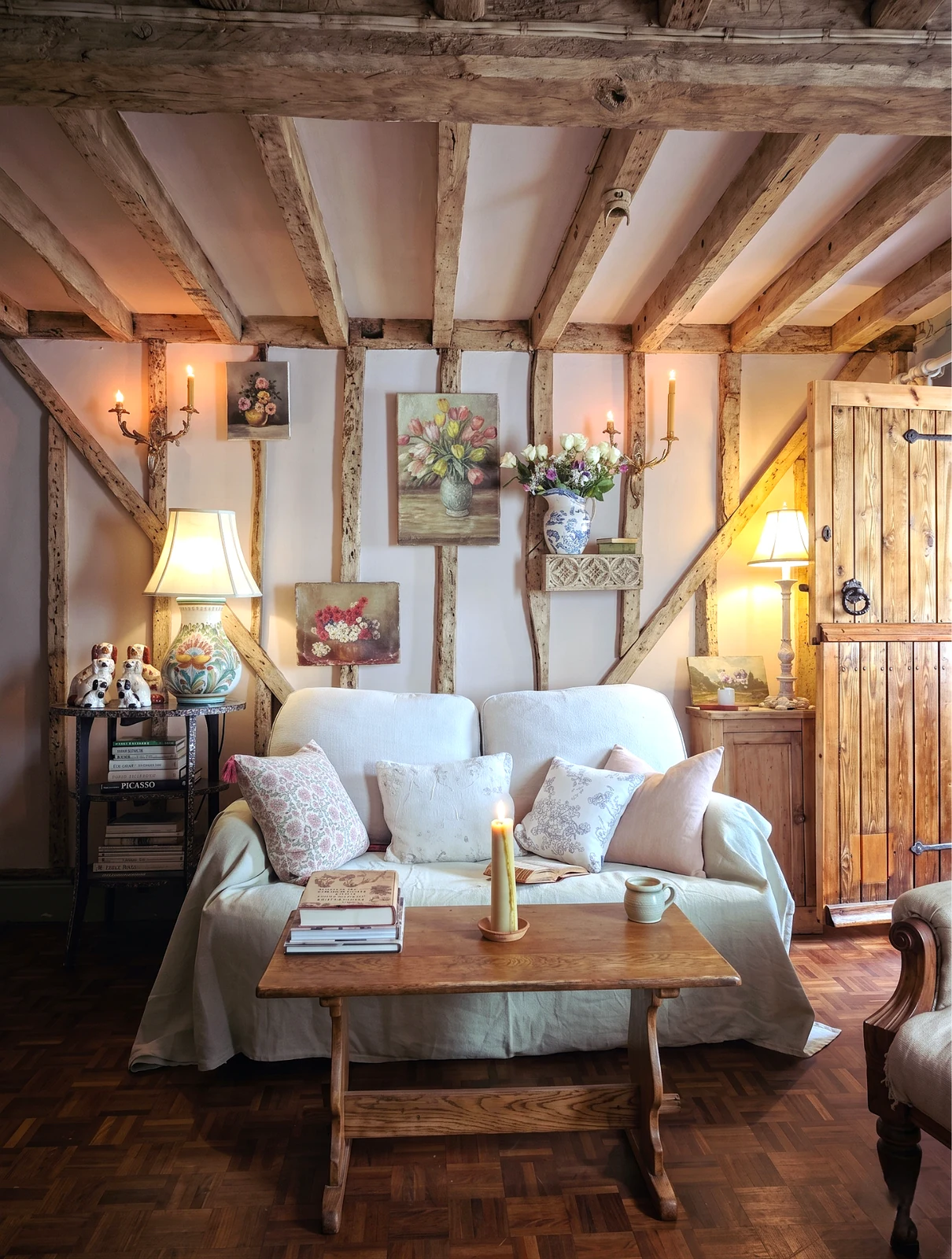
Rita Konig’s interiors often show how much lamps shape the mood of a room. In a cottagecore interior, flat white light empties the space of warmth. Table lamps with fabric shades, wall sconces, candle-style pendants, and low accent lighting near shelves build the layered glow the style depends on.
Lighting Rule: Add light at three heights: ceiling, table, and low accent.
14. Bring In Handmade Details That Feel Personal
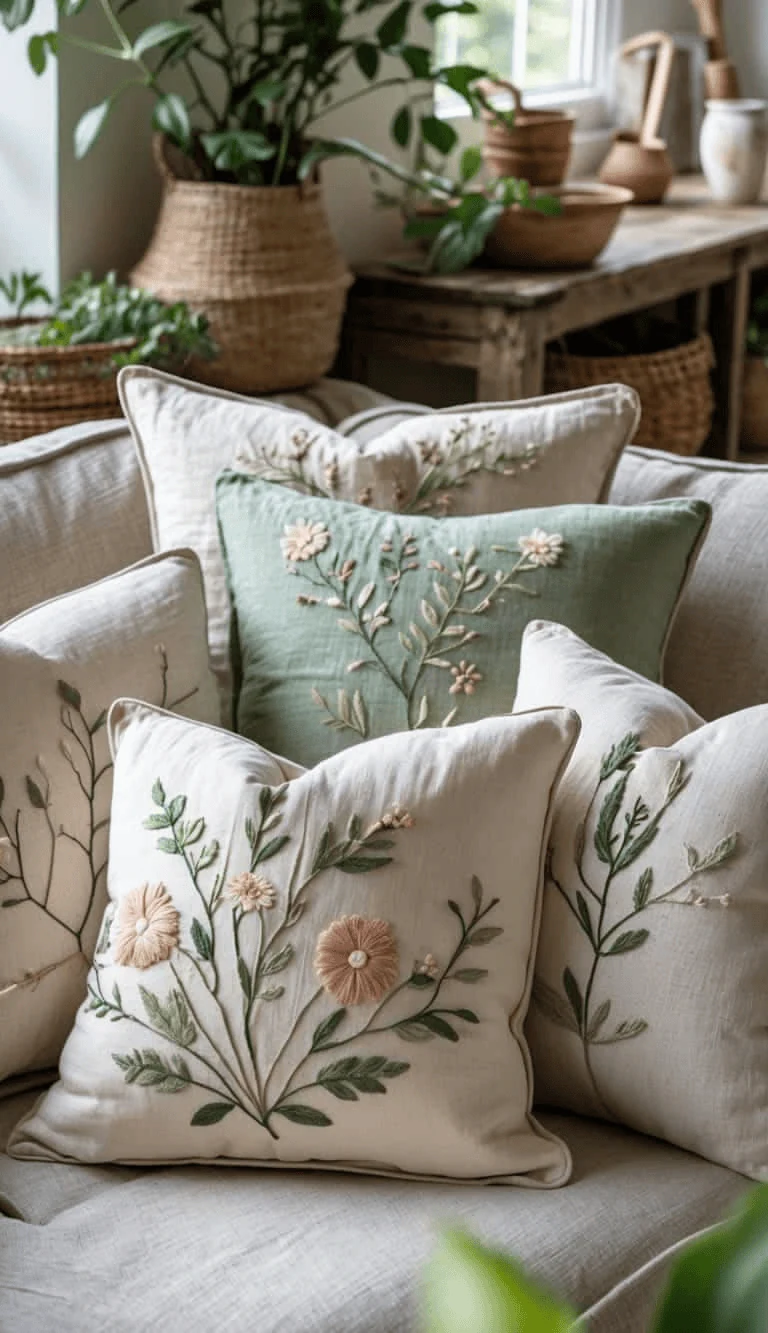
Cottagecore design draws from the Arts and Crafts love for objects that show the human hand. A wheel-thrown mug, embroidered cushion, mismatched quilt, or small piece of pottery from a local maker carries more feeling than a shelf of curated props.
Craft Cue: Add one handmade item in a place you use every day.
15. Keep One Surface Calm So The Room Can Breathe
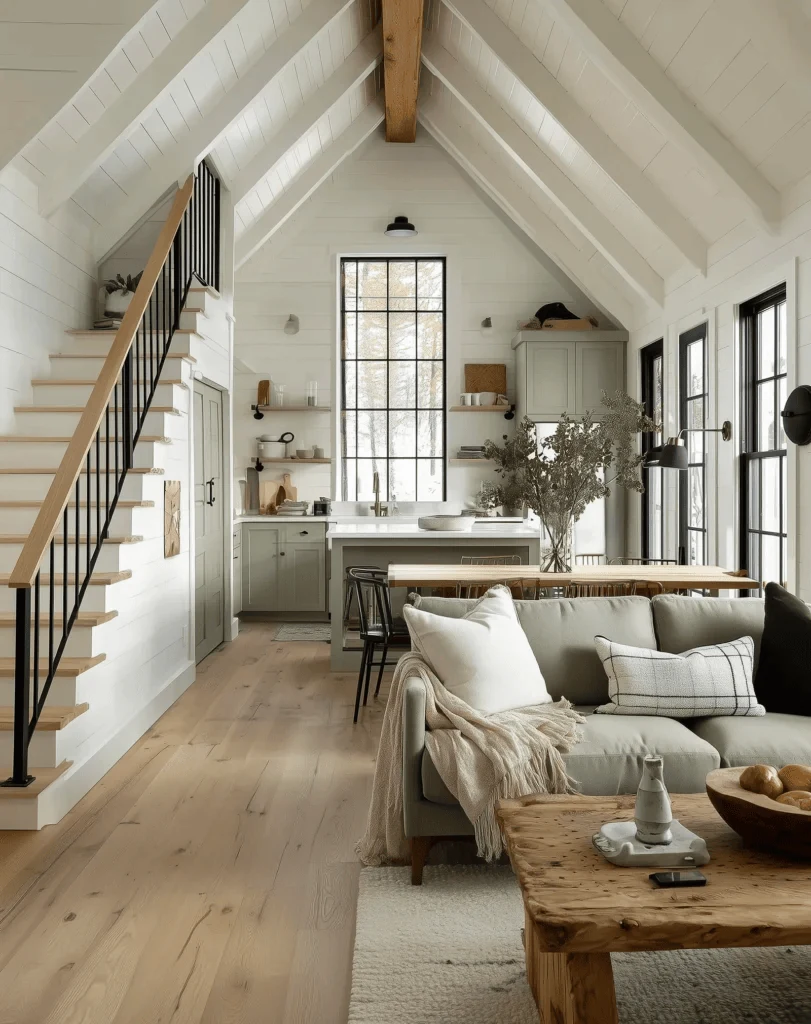
The biggest cottagecore style interior mistake is treating every surface as display space. A room layered from floor to ceiling becomes visually tiring. Rose Uniacke’s interiors are often admired for restraint and textural quietness, which is useful here. One calm wall, shelf, or tabletop helps the layered areas feel intentional.
Editing Rule: Before adding more decor, remove one item from the busiest surface.
Pro Constraint: A plain windowsill, cleared shelf top, or quiet wall is enough.
16. Style A Cottagecore Bedroom Around The Bed First
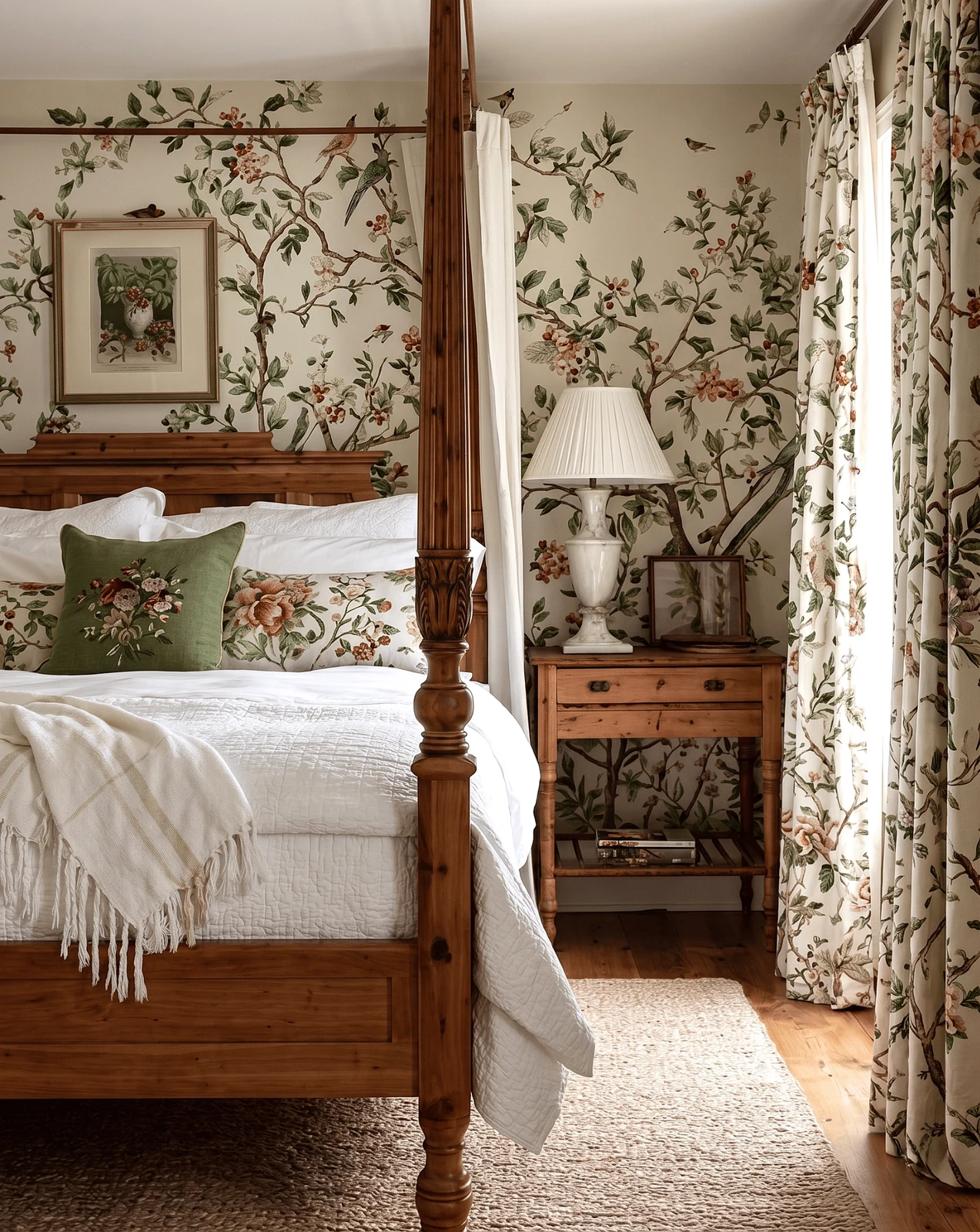
The bed is the largest object in a bedroom, so let it set the palette and softness. A wooden or upholstered bed with floral or striped bedding, a quilt, linen pillowcases, warm lamps, and long curtains gives the room its direction. For the structural base, our modern bedroom design ideas are a practical starting point.
Bedroom Rule: Choose bedding first, then match lamps, curtains, and wall art around it.
17. To Soften The Architecture
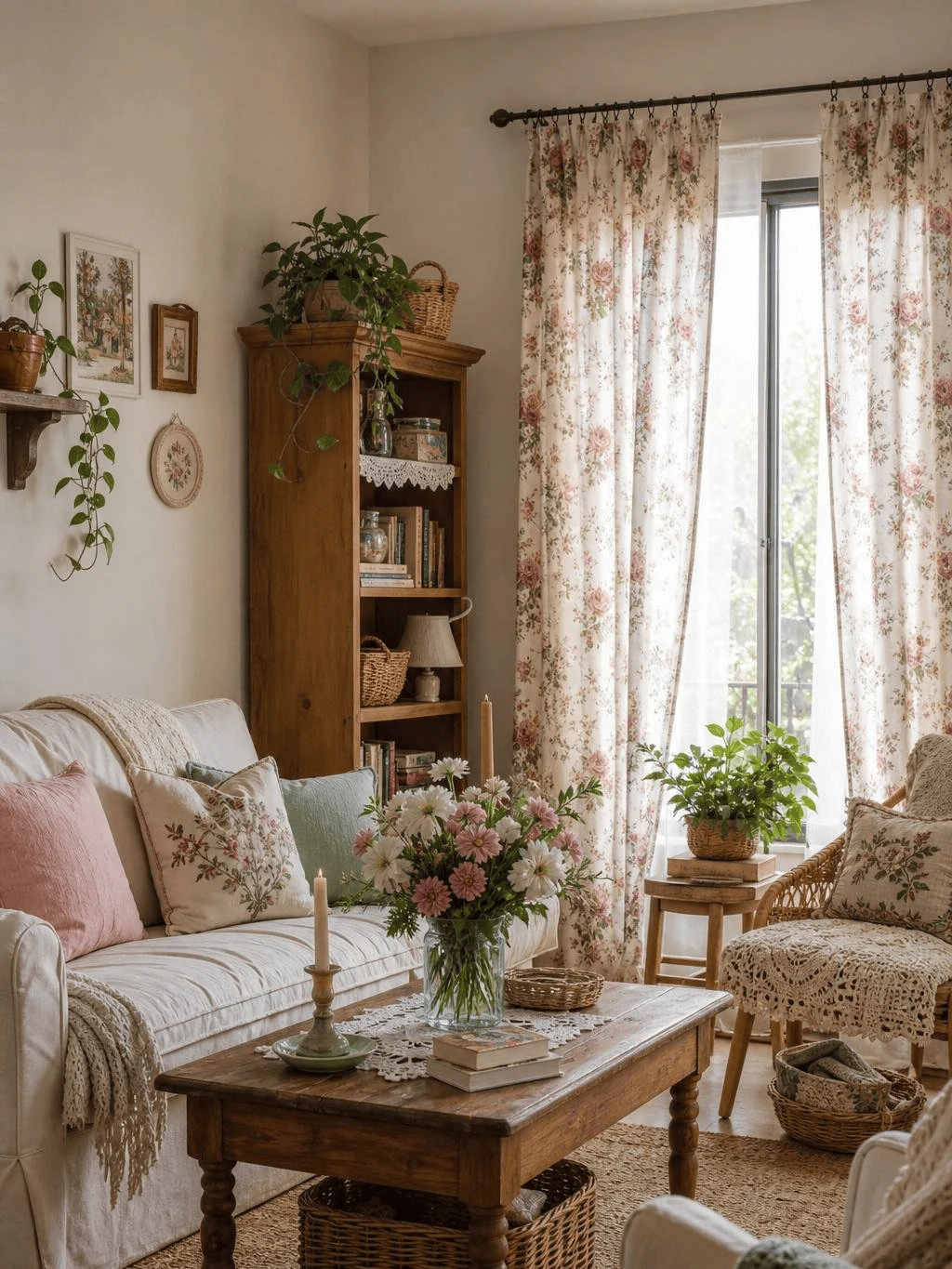
Curtains in linen, cotton, gingham, soft floral, or plain cream change a room faster than most small decor pieces. Hang them higher than the window frame and wider than the window opening so the space feels taller, fuller, and softer. Shiny synthetic fabric weakens the natural feel of cottagecore design.
Fabric Rule: Hang curtains wider than the window so the room feels softer and fuller.
18. Make A Bathroom Feel Like A Small Cottage Room
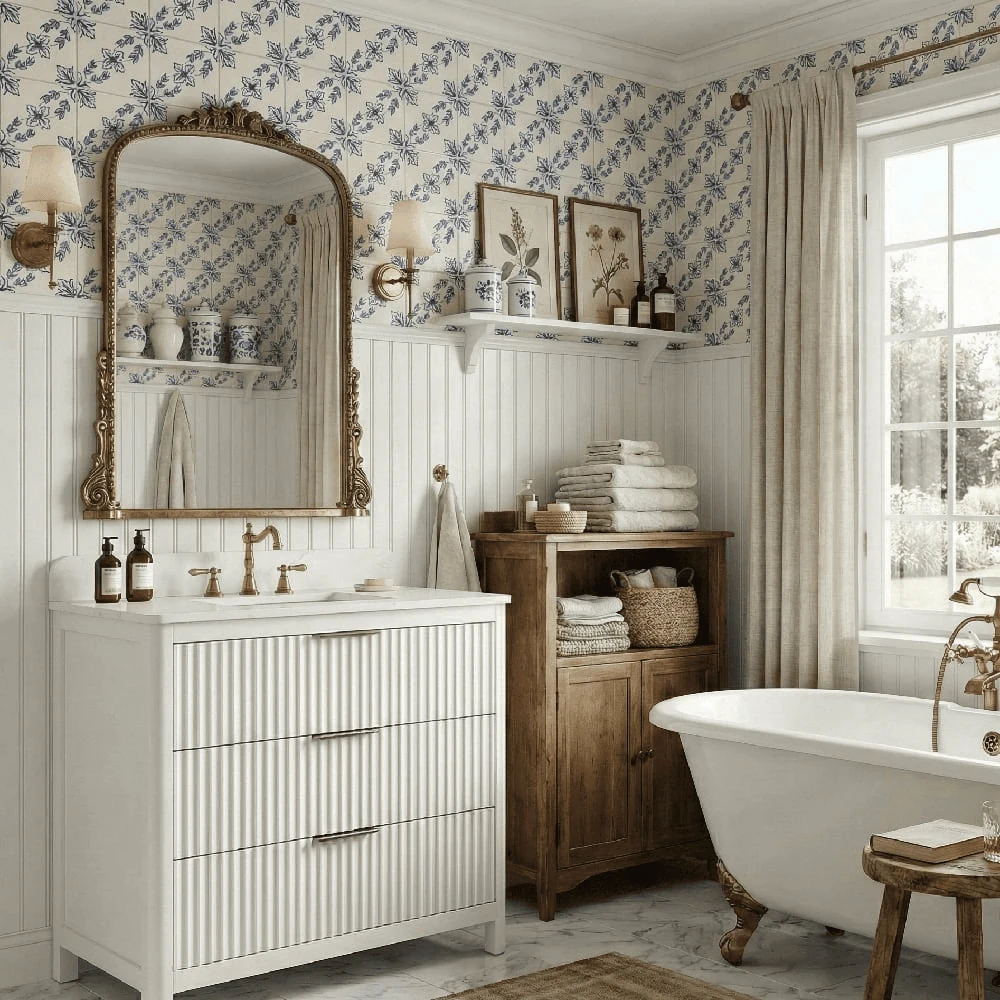
Small bathrooms carry cottagecore details well because one or two good choices can shape the full mood. Try a framed mirror, a small floral wall detail, a wall sconce, wooden stool, wicker basket, and ceramic tray. Our small bathroom design ideas cover the layout and fitting decisions beneath the styling.
Bathroom Check: Use one wall detail, one warm light, and one storage basket.
19. Use Pinterest As A Filter, Not A Copybook
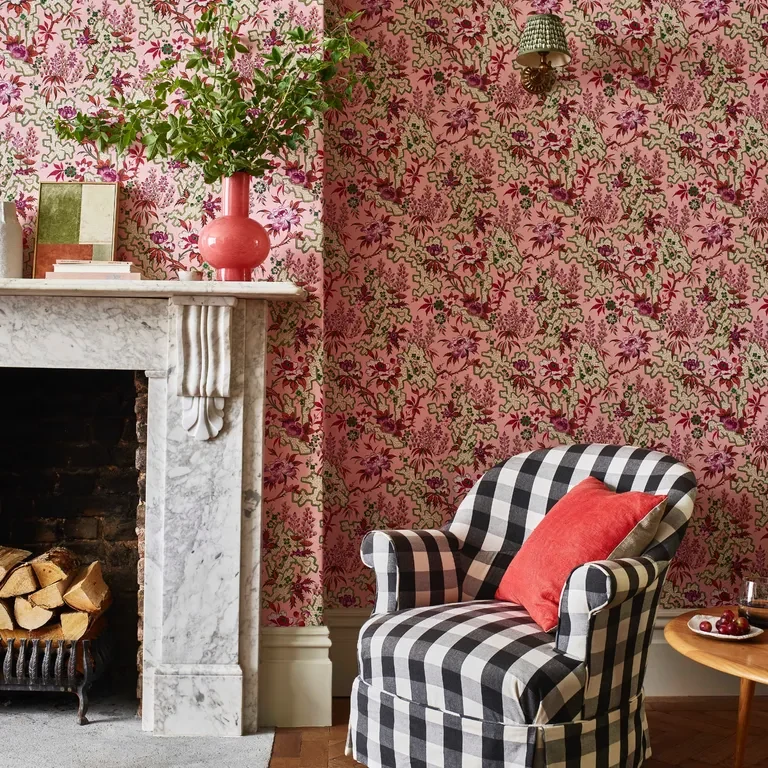
Cottagecore decor Pinterest searches produce endless images that look like the same imagined countryside home. The useful part is not copying the room. Save ten images and look for repeated clues: color family, wood tone, wall treatment, lighting quality, pattern density, and furniture shape.
Pinterest Filter: Save 10 images and circle only the repeated elements.
20. Add Country Chic Decor Without Making It Too Polished
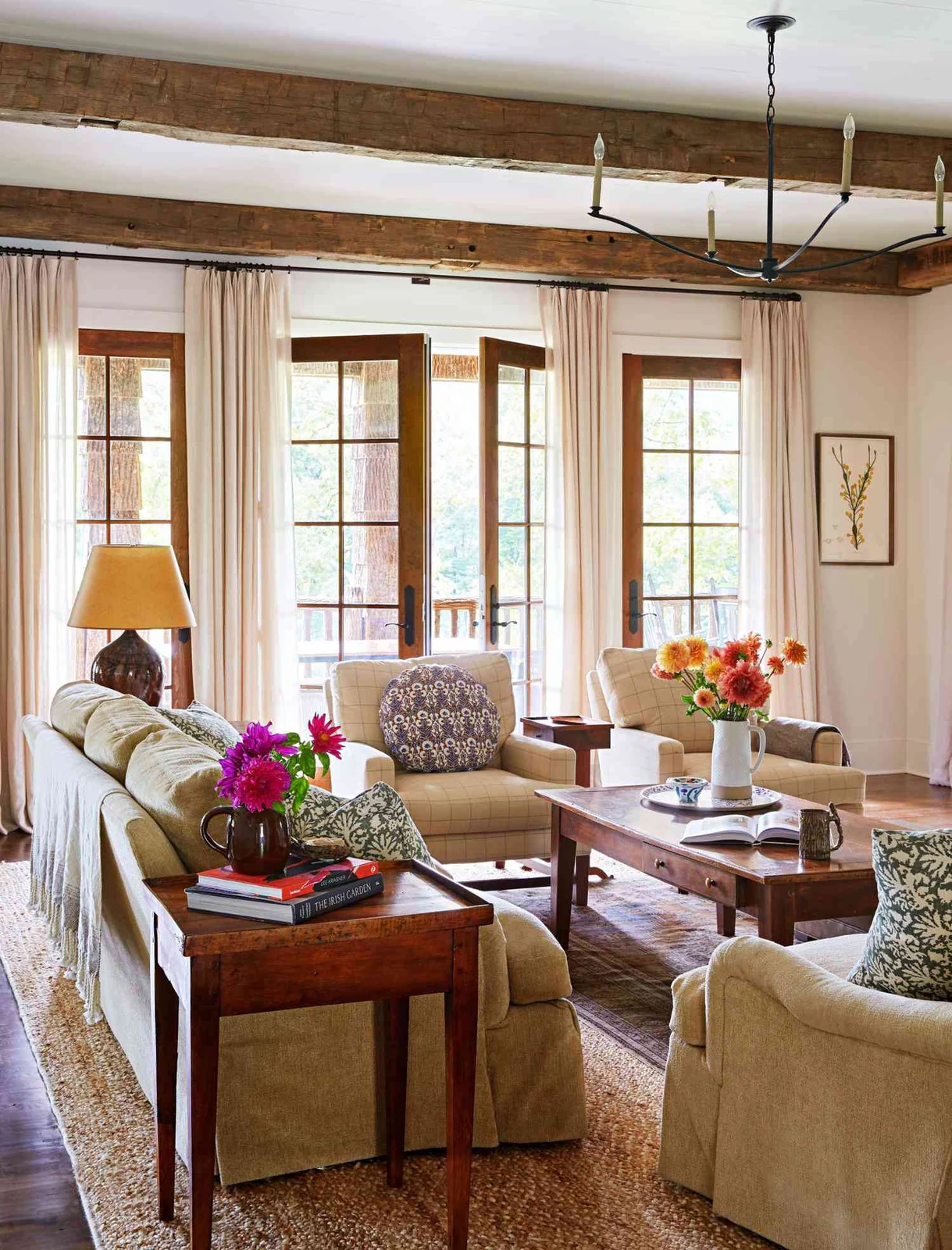
Country chic decor sits close to cottagecore but leans cleaner and more formal. Painted furniture, slipcovers, aged brass, flowers, and warm wood work in both. Cottagecore softens those details with handmade objects, washed linen, and vintage pieces that carry real wear.
Balance Rule: Use country chic elements for structure, then soften them with handmade or vintage details.
21. Shop Slowly Instead Of Buying A Full Theme
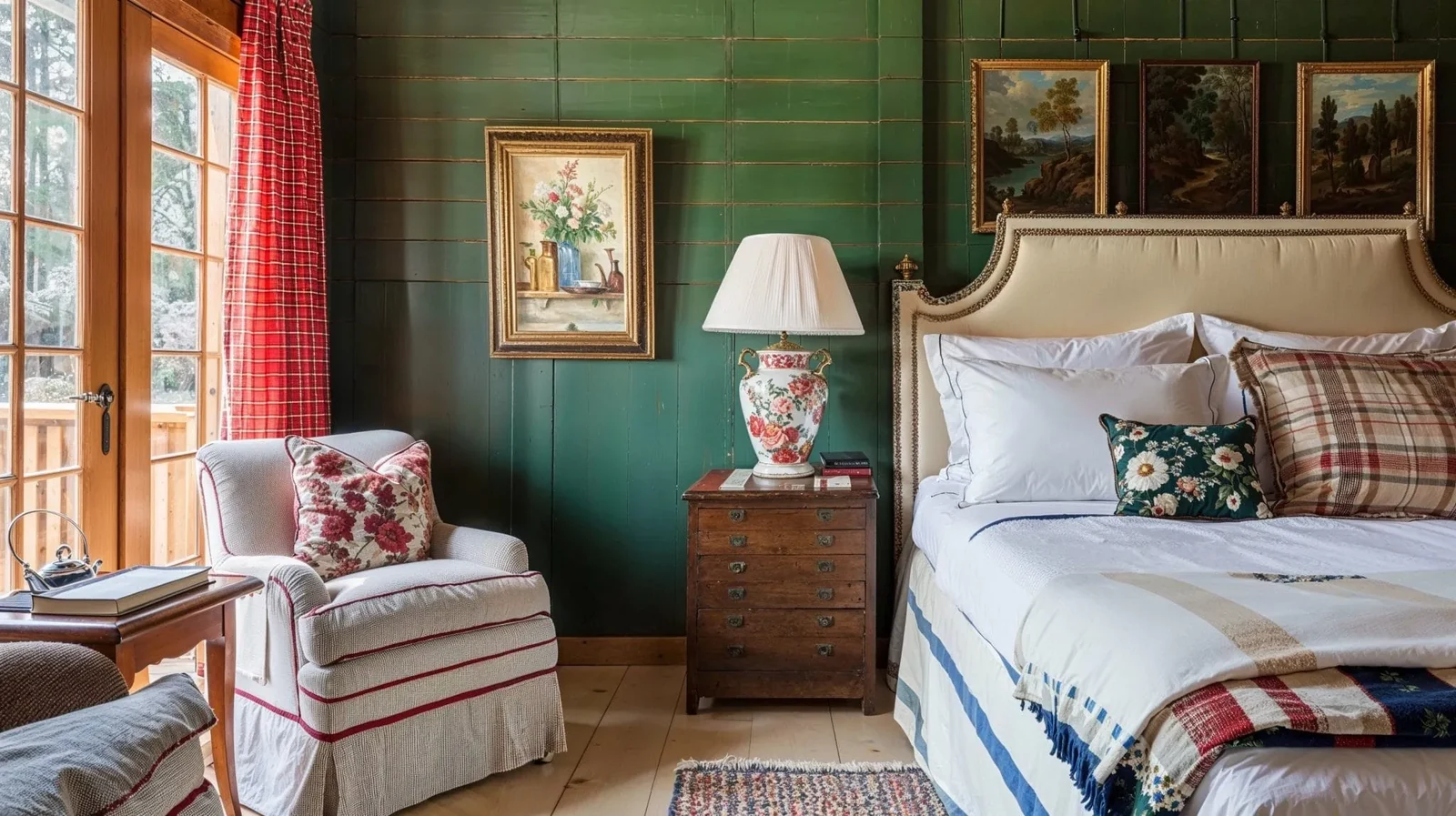
Buying a full themed range from one cottagecore decor shop can make a room look artificial. One vintage piece, one textile, one wall piece, and one storage basket collected over time will feel more personal than a complete set bought in one afternoon.
Shopping Check: Buy one useful item first, then layer decorative pieces over time.
22. Use Modern Cottagecore Decor For Cleaner Homes
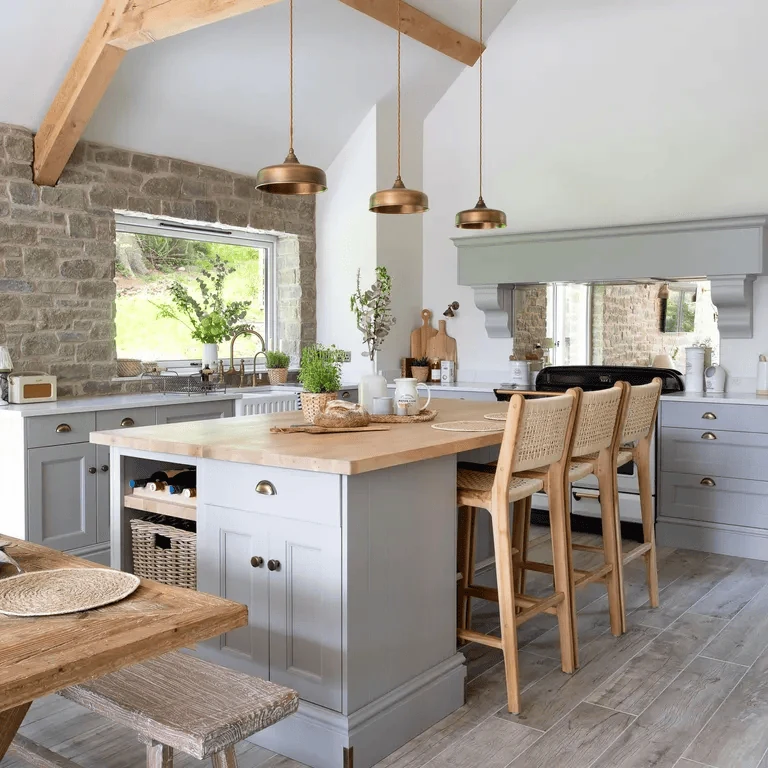
Modern cottagecore decor keeps the warmth and handmade quality but edits the excess. Use cleaner walls, hidden storage, durable materials, one selected vintage piece, botanical art, warm lamps, and softer textiles. The base layout stays modern and functional, while the cottagecore quality comes through texture and restraint.
Modern Rule: Keep the room layout modern and add cottagecore through textiles, art, lighting, and one vintage piece.
23. Try Dark Cottagecore Decor For A Moodier Room
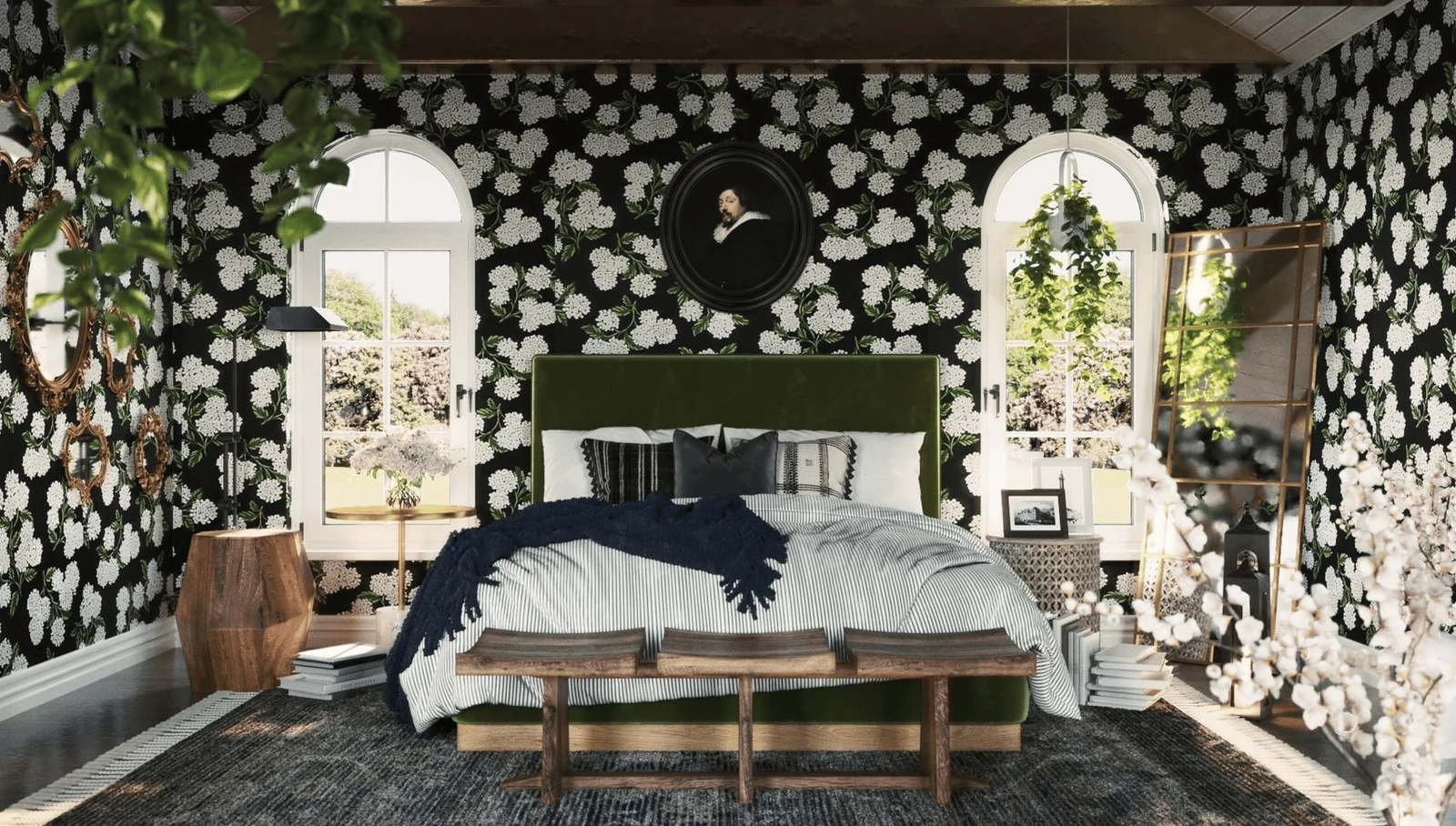
Dark cottagecore decor uses deeper color to make the style quieter and more atmospheric. Olive, forest green, burgundy, chocolate brown, charcoal, aged brass, dark stained wood, and heavier botanical prints work well with warm contrast. This approach shares some layering logic with dark academia room ideas.
Mood Rule: Pair dark colors with cream, linen, parchment, or warm lighting.
24. Repeat Materials From Room To Room
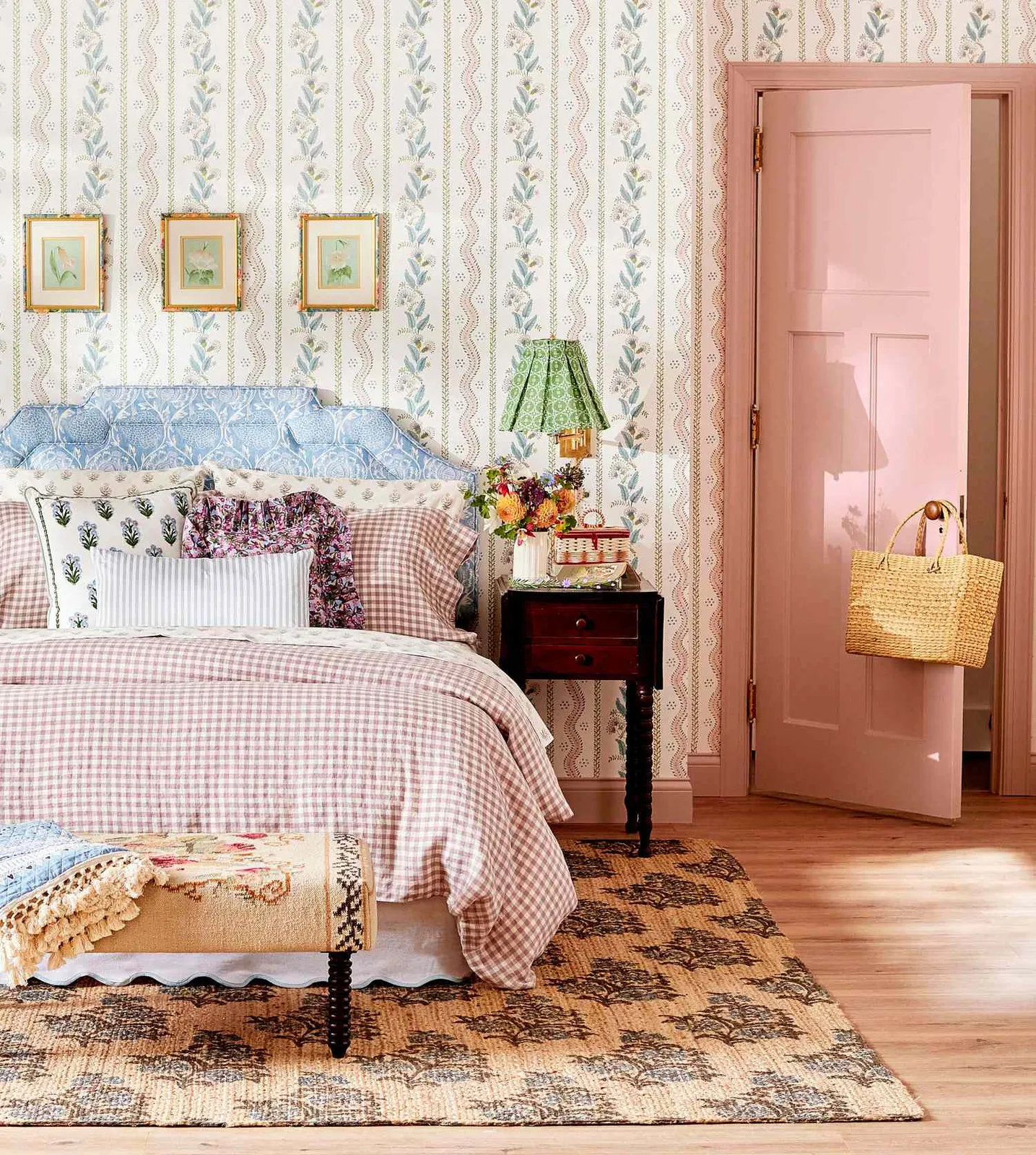
A cottagecore interior feels stronger when rooms are connected through repeated materials instead of repeated decor. Use one wood tone, one aged brass finish, and one fabric family such as linen across curtains, cushions, and bedding. Rooms do not need to look identical. They need to feel related, as if they belong to the same home and the same person.
Whole Home Rule: Repeat three materials across the home: one wood tone, one metal finish, and one fabric family.
25. Keep The Home Useful Before It Becomes Pretty
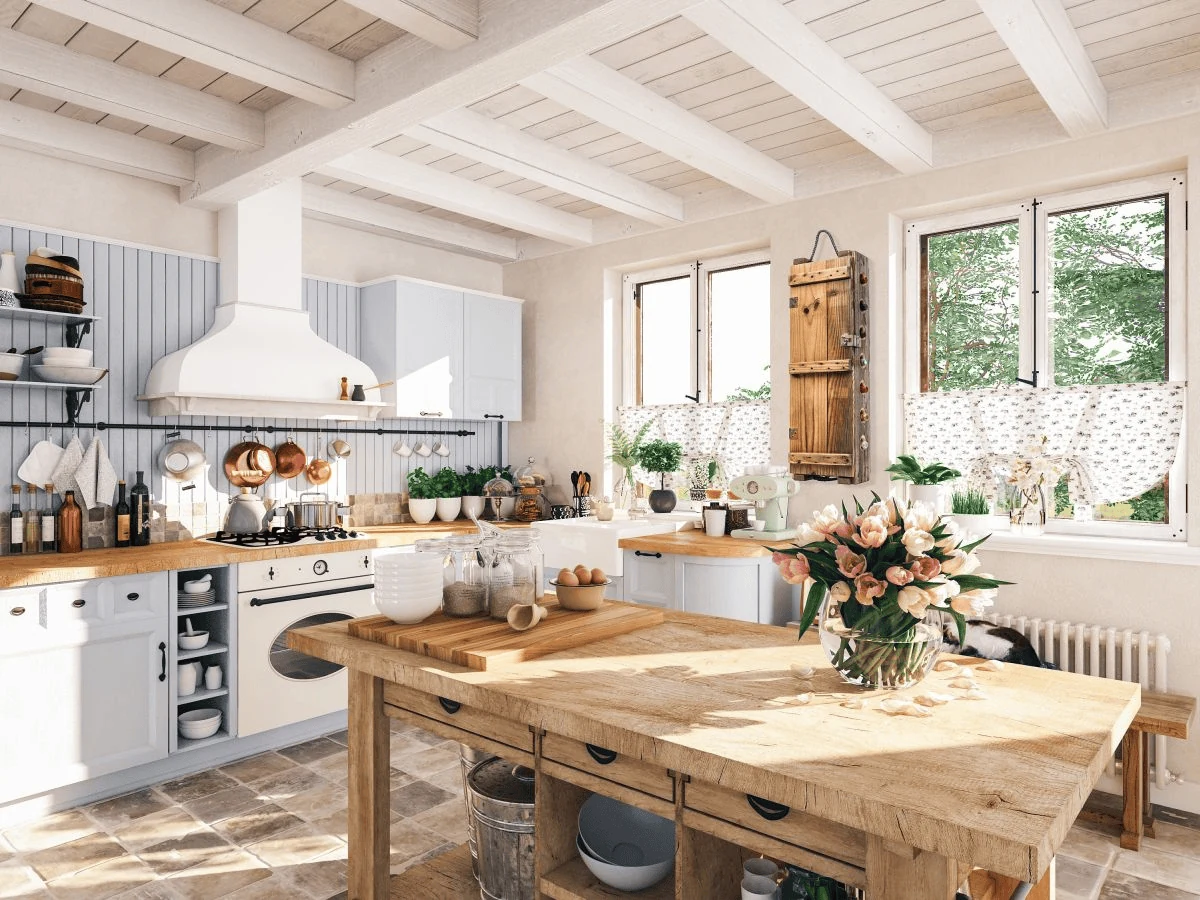
William Morris’s principle, “Have nothing in your house that you do not know to be useful, or believe to be beautiful,” is still a clear guide for cottagecore style interior design. Every choice should begin with function: cooking, hosting, sleeping, reading, storing, or resting. The style only works when daily life is supported.
Final Design Check: Before buying decor, ask what the room needs to do every day.
Cottagecore Style Interior Guide By Room
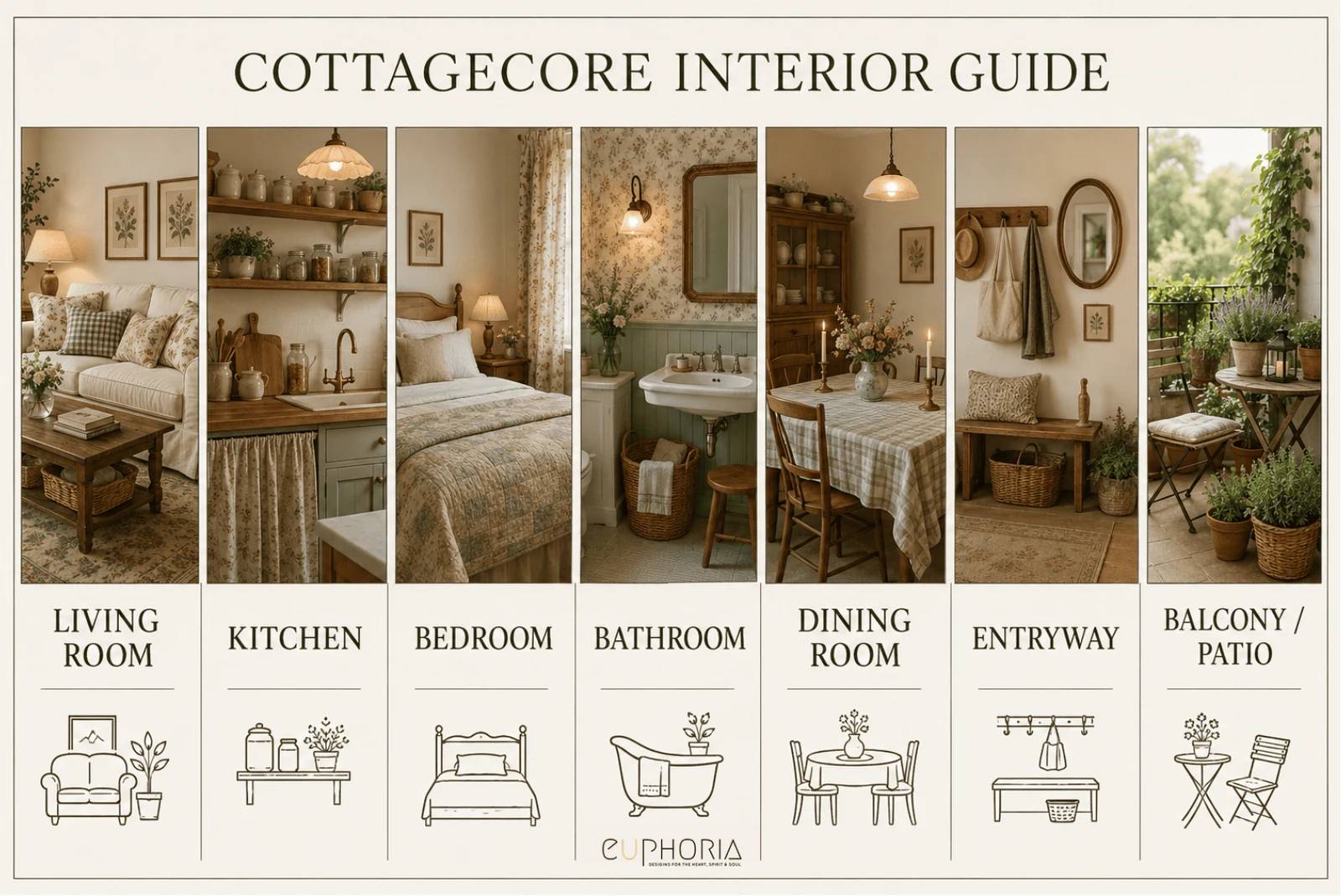
The same design sensibility changes depending on the room’s function. This table shows which cottagecore details fit which spaces, so the style supports the room rather than covering it.
| Room | Cottagecore Details |
|---|---|
| Living Room | Slipcovered sofa, warm lamps, vintage coffee table, botanical prints, wicker baskets, patterned cushions, soft-toned rug |
| Kitchen | Open shelves, ceramic jars, herbs, wooden boards, aged brass fittings, soft curtains, warm overhead light |
| Bedroom | Linen bedding, quilt, floral or stripe curtains, old bedside table, warm lamp, small rug |
| Bathroom | Floral wall detail, framed mirror, basket storage, ceramic tray, wall sconce, wooden stool |
| Dining Room | Wooden table, checked or linen cloth, candlelight, antique cabinet, fresh flowers in ceramic |
| Entryway | Peg rail, wooden bench, wicker basket, framed mirror, small botanical print |
| Balcony / Patio | Potted herbs, lanterns, bistro chair, woven planters, terracotta pots, small wooden table |
Choose the room first, then choose only the cottagecore details that support that room’s use.
Cottagecore Color And Material Palette
The color and material choices that hold cottagecore style together work as a system. A room built on this palette will feel unified even as new pieces are added over time.
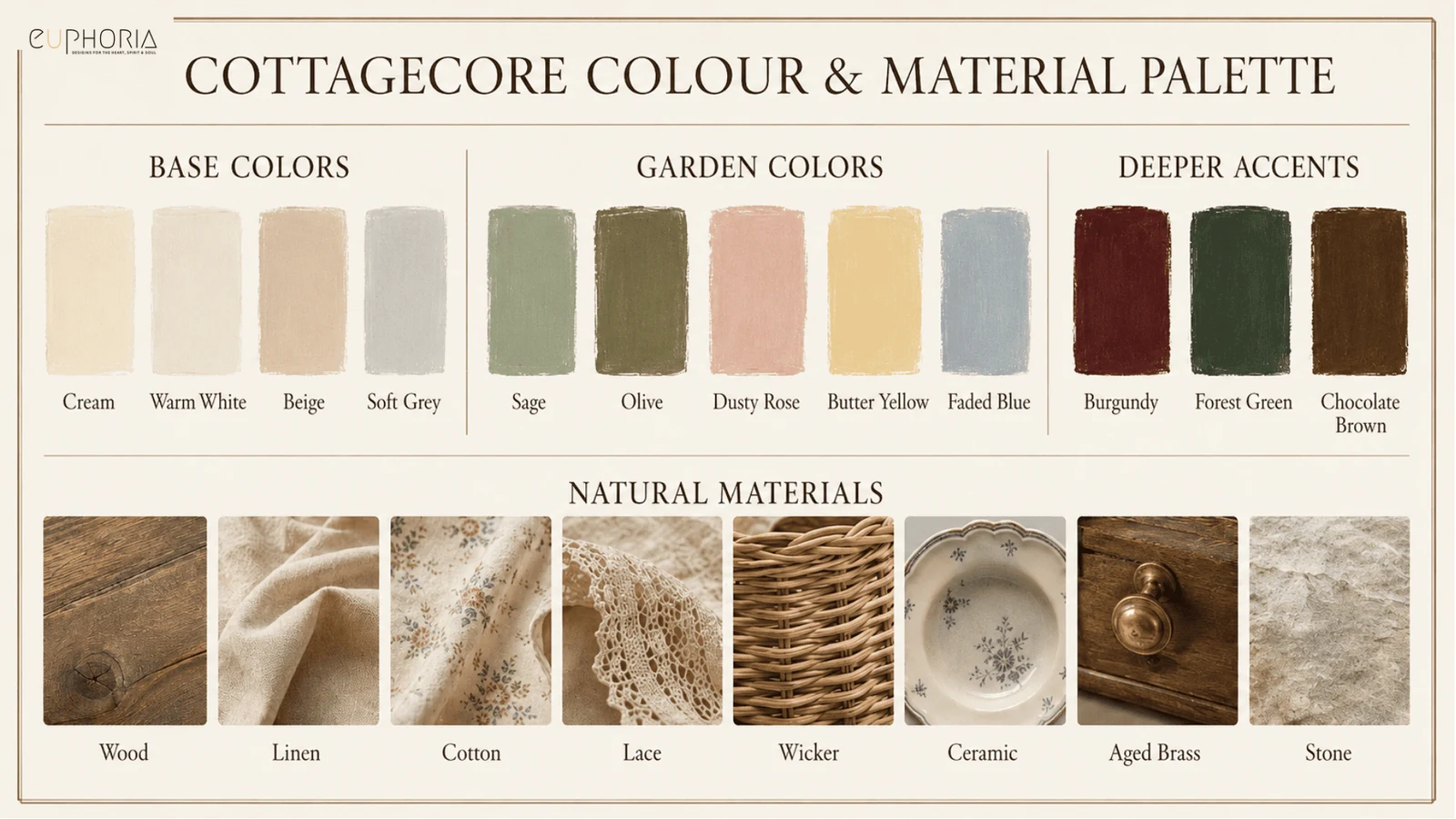
Build the room with 60% base color, 30% garden tones, and 10% deeper accents.
Our guidebook to Arabian style interiors shows how a different palette is built from the same idea of local materials.
Modern Cottagecore Decor Vs Traditional Cottagecore
Both versions share the same values: warmth, vintage pieces, handmade detail, and rooms that feel lived in. The difference is in how much is visible at once.
| Element | Traditional Cottagecore | Modern Cottagecore Decor |
|---|---|---|
| Patterns | Many florals, checks, stripes layered together | Fewer patterns, softer and more controlled |
| Display | More open shelving with generous collections | Edited display with fewer, stronger objects |
| Storage | Visible storage as part of the aesthetic | Hidden or closed storage for cleaner lines |
| Vintage Pieces | Many vintage objects throughout | One or two selected vintage pieces |
| Lighting | Candles, lamps, and fabric shades throughout | Warm layered lighting with cleaner fittings |
| Overall Feel | Layered, nostalgic, maximally warm | Warm and personal, but easier to maintain |
Use traditional cottagecore for charm and modern cottagecore for control.
These Qajar style interior design ideas are worth a look if you lean towards the older, more decorative version.
Dark Cottagecore Decor And When It Works
Dark cottagecore decor is the moodier version of the style. It uses the same vintage furniture, handmade detail, and botanical art, but shifts the palette into olive, forest green, burgundy, chocolate brown, charcoal, aged brass, candlelight, velvet cushions, and heavier botanical prints.
Dark cottagecore works best in:
- Bedrooms where low, warm lighting suits the atmosphere
- Studies and reading corners where a settled mood supports focus
- Dining rooms where candlelight makes deeper colors feel rich
- Rooms that receive less natural light and need deeper warmth
The risk is gloominess. Keep at least one surface in cream, linen, or parchment and use warm lamps so the palette does not close in.
Where To Shop For Cottagecore Decor Without Buying A Theme
The best cottagecore pieces usually come from antique shops, vintage markets, secondhand dealers, handmade ceramic sellers, local fabric stores, independent furniture restorers, and thrift shops with a reliable rotation. Searching for cheap farmhouse decor online can surface affordable finds, but buying a full themed set from one source often makes the room feel mass-produced.
Buy these categories first, in this order:
- One vintage furniture piece to anchor the room
- One textile layer: a quilt, curtain fabric, or cushion cover
- One piece of wall decor: a print, frame, or mirror
- One useful storage item: a basket, ceramic jar, or wooden tray
- One warm lamp with a fabric shade
Buy slowly and check each item against function, material, and how it fits the mood already in the room.
What I Would Not Do With Cottagecore Style Again
The mistake in cottagecore style interior design is not the style itself. The mistake is using every cottagecore cue at once. It is easy to treat every surface as an invitation: a floral here, a botanical print there, a basket in that corner, a dried flower wreath above the shelf, and a vintage mirror beside the window. The room fills faster than expected and stops feeling collected. It starts feeling like a costume.
The things that make rooms worse, not better:
- Too many florals in one room
- Too much open shelving
- Buying everything new but making it look old
- Ignoring storage
- Fake rustic finishes
- Copying a Pinterest board without checking room size or light quality
- Choosing cool white lighting
- Forgetting that the room still needs to function
Remove one decorative layer before adding another.
Common Cottagecore Style Mistakes To Avoid
| Mistake | Fix |
|---|---|
| Too many florals in one room | Use one main floral and support it with plain textures and solids |
| Fake rustic finishes | Choose real wood, ceramic, linen, wicker, or aged metal instead |
| No storage plan | Use baskets, cabinets, and closed storage before styling open shelves |
| Cool or harsh lighting | Replace with warm, layered lamps: table, sconce, and low accent |
| Buying a full themed set | Collect slowly across different sources so the room feels personal |
| Too many small objects | Use fewer but stronger pieces with more breathing room between them |
| Wrong pattern scale for room size | Adjust pattern scale and furniture weight to the room’s proportions |
| No modern balance | Keep some clean lines in the layout so the room feels fresh, not heavy |
Check the room for one color mistake, one storage mistake, and one lighting mistake before buying more pieces.
Designer Checklist Before You Finalise The Room
Before adding any more pieces to the room, run through this checklist. If the room fails more than two of these checks, edit what is already there before buying more.
- Does the room have one soft base color?
- Is there one vintage or aged anchor piece?
- Are there natural textures: wood, linen, wicker, ceramic?
- Is there warm lighting at more than one height?
- Is storage planned and working?
- Is one surface noticeably calmer than the rest?
- Does the wall decor feel connected to the room’s color and mood?
- Does each decorative item feel useful, meaningful, or beautiful?
- Does the room still work for daily life?
Design Note From Euphoria Interiors
In real homes, cottagecore style works best when vintage charm is balanced with comfort, storage, lighting, and durable materials. The Royal Horticultural Society notes that houseplants are most strongly linked with wellbeing and productivity benefits, which fits the larger idea behind cottagecore: nature should support how a room feels, not only how it looks. We have seen rooms where the surface aesthetic is beautiful, but the lighting is too flat, the storage has not been considered, or the furniture does not hold up to daily use. Use the style as a design direction, not as a fixed theme.
We look at buildings the same way we look at rooms, as our breakdown of the architecture of Zayed Sports City Stadium shows.
Bringing It Together
Cottagecore style works in real homes when the approach is honest about what the home needs to do every day. The style is not about creating a perfect countryside image. It is about rooms that feel warm, natural, personal, and genuinely comfortable: rooms where vintage furniture sits alongside daily-use objects, where fabrics have been washed many times, where the shelf holds things that are actually used, and where the light is always warm enough to make the whole thing feel right.
Getting from saved inspiration to a practical home plan often needs a clear head and an eye for what to leave out as much as what to add. If that gap between the saved board and the finished room feels wide, the interior design services by Euphoria Interiors can help shape the right direction for your space.
For another look at how a structure carries a style, read our piece on the architecture of DY Patil Stadium.