
Kitchen flooring options can look nearly identical in photos, but they behave very differently once a real kitchen starts running. Some floors handle spills, oil splashes, and dropped pans without complaint. Others look stunning in a showroom and start showing damage within a year of cooking, cleaning, and daily foot traffic.
The difference usually comes down to material, finish, and how well the floor actually matches the way a home is used. As the celebrated designer Kelly Wearstler puts it, “Design is about the relationship between objects and the life lived among them”, and nowhere is that truer than the floor you stand on for every meal you cook.
Choosing between kitchen flooring options is less about picking the most attractive material and more about your cooking habits, cleaning routine, family setup, kitchen size, and how the floor will connect with the rest of the home.
For a busy family space in a Dubai villa or a compact apartment kitchen used lightly, the right choice among durable kitchen flooring options starts with the right questions, not the right Pinterest board. Read on to find out exactly how to think through it.
How to Choose Kitchen Flooring Before Looking At Designs
Most people start with colour. They see a floor they like, try to match it with their cabinets, and then discover three months later that the material was never right for the way they actually cook. A better approach is to understand the kitchen as a working space first, and let the design follow from that.
Before browsing kitchen flooring options and ideas, it helps to work through a few honest questions:
- How many people use the kitchen daily? A household of five with young children puts far more pressure on a floor than a couple who cook occasionally.
- Is the cooking heavy or light? Daily frying, boiling, and high-volume cooking mean more spills, steam, and staining than occasional use.
- Are there pets or small children? Scratch resistance, stain resistance, and slip resistance all matter more in these kitchens.
- Does the kitchen open into the living or dining area? An open-plan kitchen needs a floor that either continues through the space or transitions cleanly without looking disconnected.
- How much cleaning is realistic? Some materials need sealing, resealing, and careful product use. Others can be wiped down in seconds.
- What is the actual spend available, including installation? Material price and total project cost are rarely the same number.
- Is durability more important now, or upfront savings? A cheaper floor replaced in five years often costs more than a mid-range floor that lasts fifteen.
Once those answers are clear, the best of the kitchen flooring options usually becomes obvious on its own. The design decisions, colour palette, and finish get much easier to make when the material has already been narrowed down by practical need.
Before finalising your kitchen flooring options, it helps to plan the full kitchen layout first, from cooking flow to storage and appliance placement. You can check out our Kitchen Design Guide to get a clearer picture of how cooking flow, storage, and appliance placement all feed into the flooring decision.
For the wider picture, start with our kitchen design ideas.
Kitchen Flooring Options Comparison Chart
Each of these kitchen flooring options offers a different balance of durability, water resistance, comfort underfoot, and maintenance. This table gives a fast overview of how the main kitchen flooring options compare before going into the details of each one.
| Flooring Material | Best For | Water Resistance | Cleaning | Comfort | Watch Out For |
|---|---|---|---|---|---|
| Porcelain tile | Busy kitchens | Excellent | Easy | Hard underfoot | Can feel cold |
| Ceramic tile | Affordable kitchens | Good | Easy | Hard underfoot | Grout needs cleaning |
| Luxury vinyl plank | Families and pets | Excellent | Very easy | Softer than tile | Low-quality options may dent |
| Engineered wood | Open-plan kitchens | Moderate | Moderate | Warm and natural | Standing water |
| Natural stone | Luxury kitchens | Good if sealed | Moderate | Hard underfoot | Sealing and slip resistance |
| Laminate | Cost-effective updates | Moderate | Easy | Moderate | Water can damage seams |
| Concrete | Modern kitchens | Good if sealed | Easy | Hard underfoot | Cracks and coldness |
| Terracotta | Warm rustic kitchens | Moderate if sealed | Moderate | Hard underfoot | Porosity and sealing |
So, Which Kitchen Flooring Option Is Actually Right for You?
Finding the perfect match depends entirely on how much activity your kitchen sees every day.
The Most Reliable Flooring Option for the Majority of Kitchens
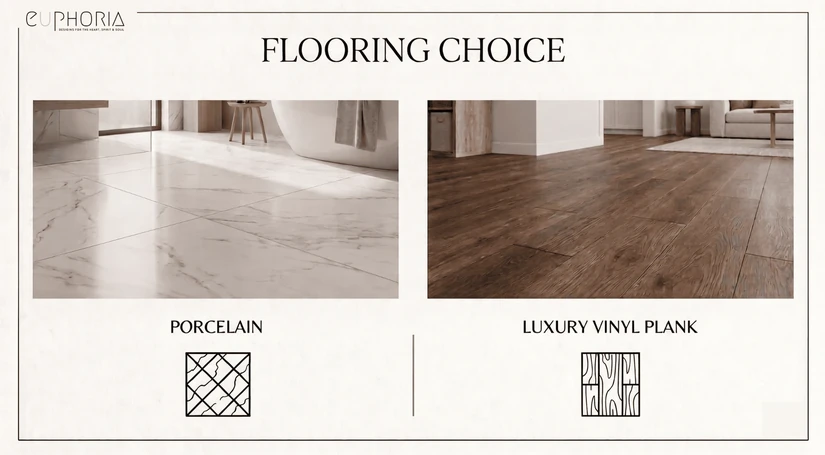
Porcelain tile and luxury vinyl plank cover the ground for the vast majority of kitchens, and between them, they handle almost every realistic use case. Porcelain is the stronger long-term choice if you want a premium hard-surface finish that holds up to heavy daily use without asking much of you.
LVP is the smarter pick if comfort underfoot, strong waterproofing, and a lower upfront spend are higher on your list, particularly in family homes or rentals. You rarely go wrong starting from one of these two and working outward from there.
Materials That Hold Up When Your Kitchen Gets Genuinely Wet
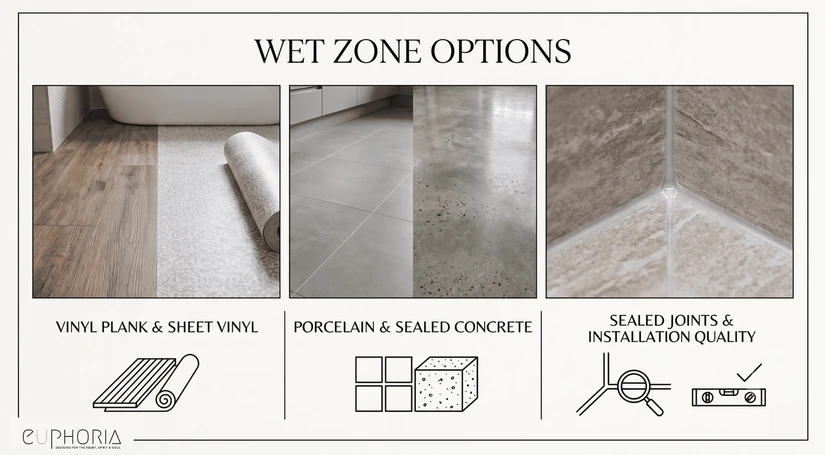
Waterproof kitchen flooring options do not absorb water on the surface, and the strongest performers in this category are luxury vinyl plank, sheet vinyl, porcelain tile, and sealed concrete. The thing worth knowing is that a waterproof material rating does not guarantee the floor as a whole is waterproof.
If water gets into grout lines, seams, or edges and reaches the subfloor underneath, the damage can be significant regardless of how the surface tile is rated. Installation quality and sealed joints matter just as much as the material you choose.
The Best Floors for Families, Pets, and High Daily Traffic
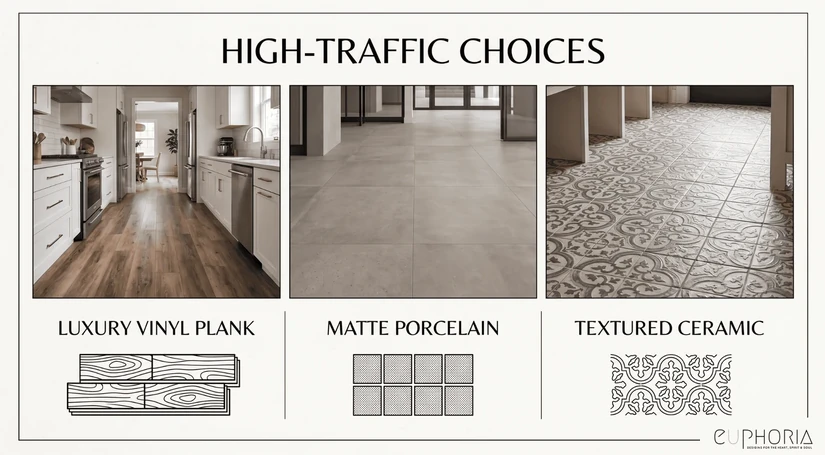
LVP, matte porcelain, and textured ceramic are all genuinely built for this. Kids, pets, dropped utensils, and daily cleaning all push floors harder than most people account for in the showroom, and the materials that survive this best are the ones with good scratch resistance, stain resistance, and a matte or textured finish that hides the evidence of real life.
LVP in particular gives a softer landing underfoot for anyone standing at the counter through long cooking sessions, which is a detail that gets overlooked until it is not.
Smart Flooring Strategies to Make a Small Kitchen Feel Bigger
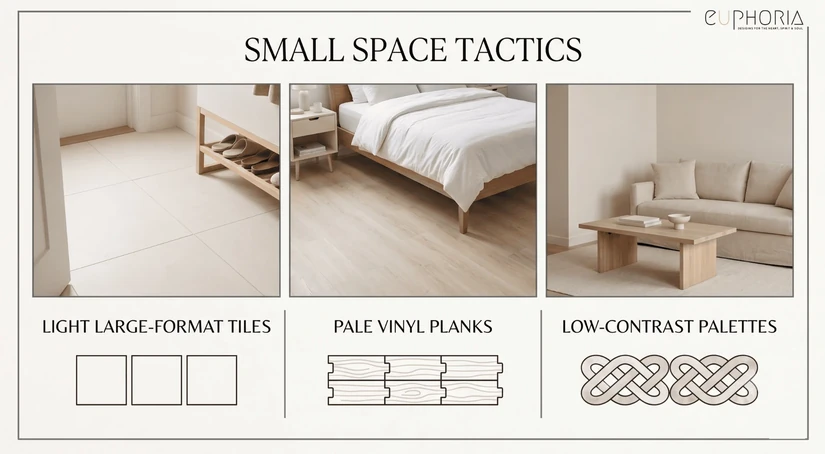
Light large-format tiles, pale vinyl planks, subtle checkerboard, and wood-look porcelain all open a compact kitchen up in a way that busy patterns and dark tones simply cannot.
The fewer visual breaks across the floor, the more the eye reads the space as continuous rather than fragmented. A low-contrast palette and a floor that moves in one clean direction through the room do more for a small kitchen than almost any other single design decision.
Luxury Kitchen Floors That Actually Earn Their Keep
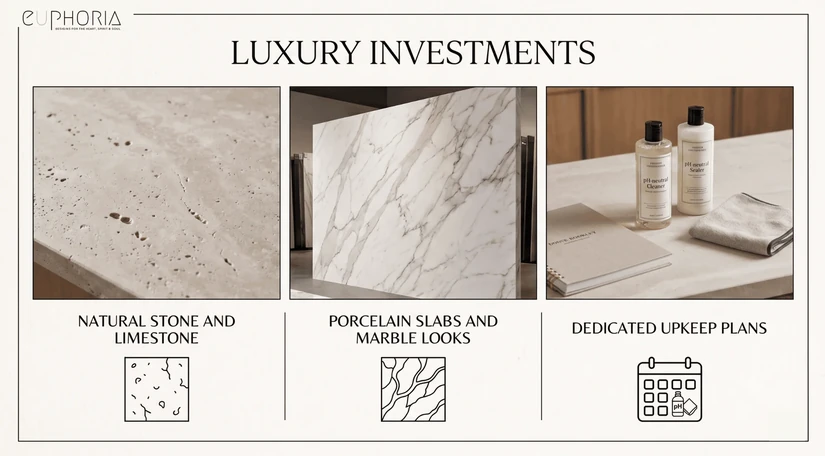
Natural stone, marble-look porcelain, limestone, travertine, and large-format porcelain slabs are all strong choices, but the most common mistake with luxury kitchen flooring options is treating beauty as the only brief.
A polished marble floor with no maintenance plan, or a high-gloss surface that shows every scuff by the end of the first week, undercuts the investment quickly. The luxury floor that works best is the one that still looks considered and well-kept three years in, not just on the day of installation.
Continuous Flooring Ideas for Open-Plan Homes
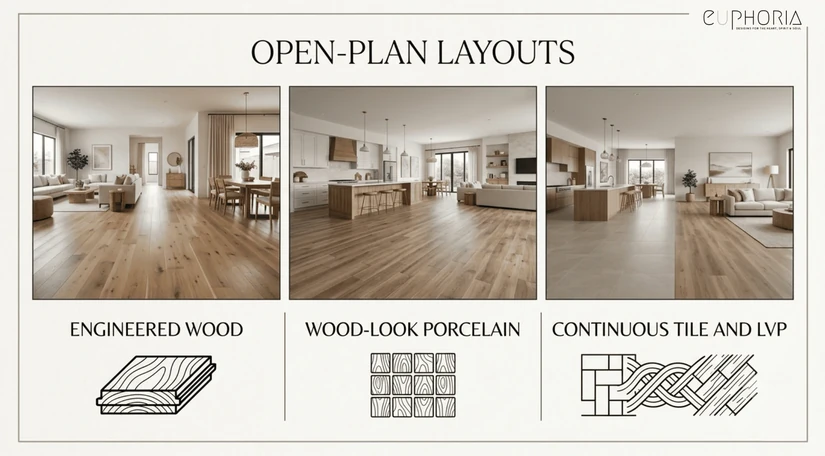
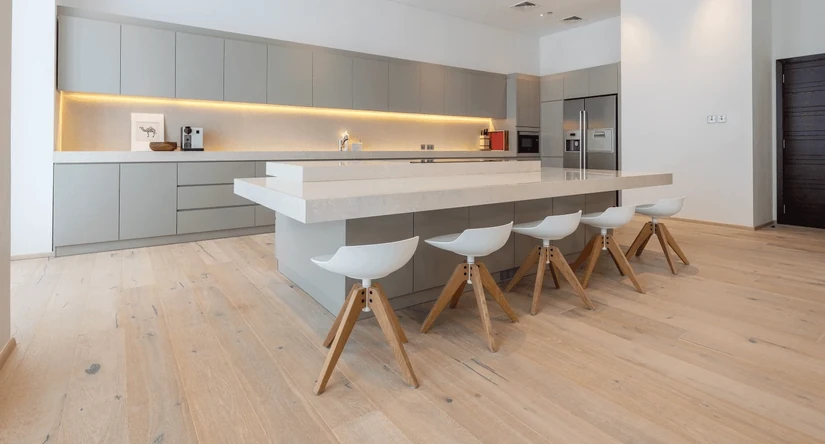
Engineered wood, wood-look porcelain, LVP, and continuous tile flooring all handle the transition from kitchen to dining to living area well, and in open-plan homes, this continuity is one of the most important flooring decisions you will make.
A floor that changes abruptly between zones makes even expensive materials look like an afterthought. Carrying one floor through the full open-plan space is almost always the calmer, more resolved result, and it tends to make individual rooms feel larger in the process.
12 Kitchen Flooring Ideas That Balance Style and Daily Use
Not a product list, but a practical rundown of what each material actually does once a real kitchen starts using it.
1. Choose Porcelain Tile for a Floor That Handles Daily Kitchen Traffic
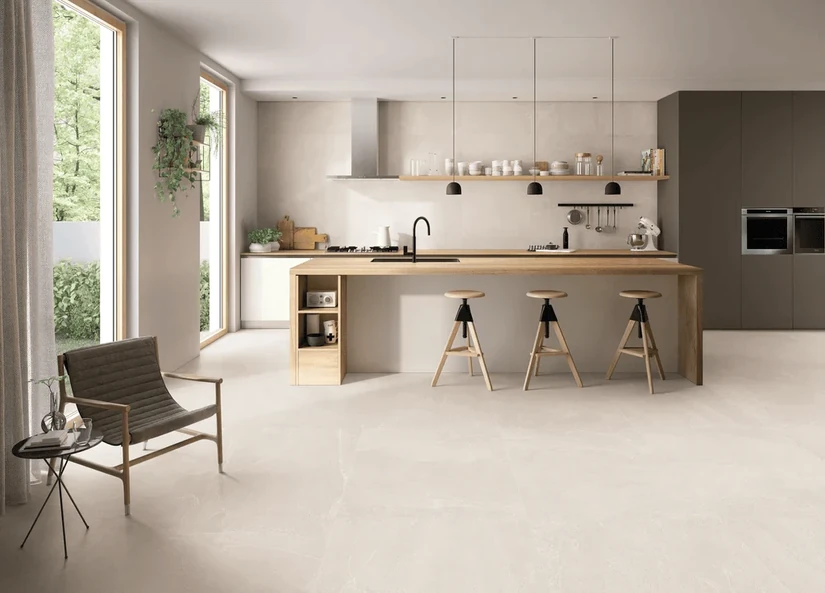
Porcelain tile is one of the most dependable kitchen flooring options for high-traffic kitchens, family homes, and spaces where cooking happens every day. It handles spills, stains, and splashed water well, and it does not absorb moisture the way softer materials can.
Under the ANSI A137.1 tile standard, a tile only counts as porcelain if it absorbs 0.5% of water or less. Matte or textured porcelain is usually the better call for kitchens over high-gloss options as it hides smudges more easily, shows fewer scuff marks, and gives better grip underfoot even when wet.
- Best for: Family kitchens, Dubai villas, high-traffic spaces, and any kitchen where durable kitchen flooring options are the priority.
- Design tip: Large-format matte porcelain in warm grey, stone, or off-white tones pairs well with both dark and light cabinetry without dating quickly.
2. Use Vinyl Kitchen Flooring When Comfort and Easy Cleaning Matter
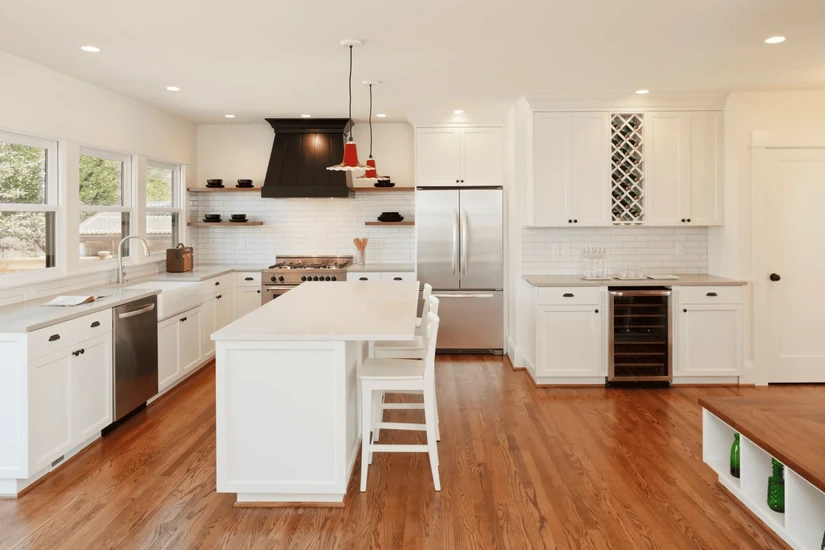
Vinyl kitchen flooring, particularly luxury vinyl plank (LVP) and luxury vinyl tile (LVT), has improved significantly, and it now sits comfortably as one of the best kitchen flooring options for families, rental properties, and anyone who wants a low-maintenance floor without sacrificing style.
It can convincingly mimic wood or stone, and it is softer underfoot than ceramic or porcelain, which matters a lot in kitchens where someone stands at the counter for long stretches of cooking. It resists stains, scratches, and pet wear, and it cleans up fast.
Choose this if you want wood-look warmth and strong water resistance without the upkeep that comes with real wood.
3. Pick Ceramic Tile for a Classic Kitchen Floor on a Practical Price Point
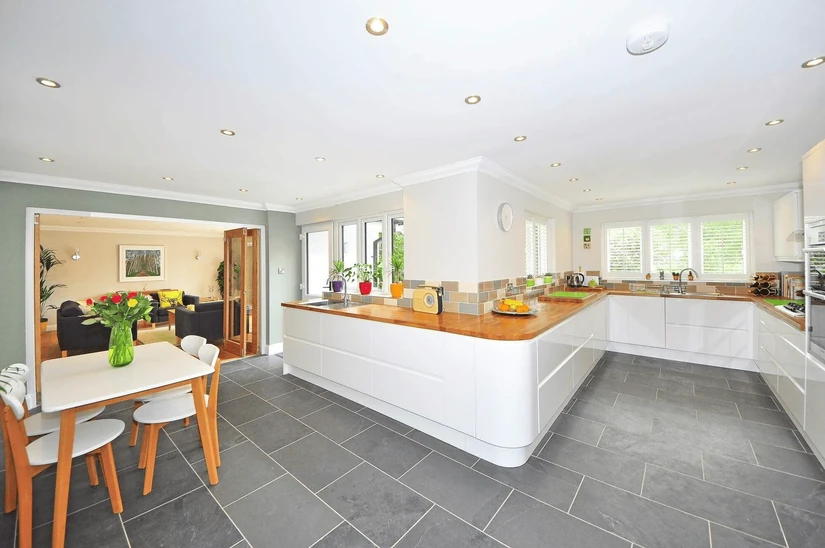
Ceramic tile gives a wide range of colours, patterns, and finishes that suit everything from traditional kitchens to updated transitional spaces. It is one of the more reliable kitchen flooring options for homeowners who want durability and style without moving into a premium material bracket.
The main area to watch is the grout, which needs regular cleaning to stay looking sharp, and slip resistance on glazed finishes should always be checked before buying.
- Works best with: Mid-sized kitchens, classic cabinetry, and spaces where pattern variety matters.
- Avoid: Very high-gloss ceramic in busy kitchens where marks will show constantly.
- Maintenance note: Seal grout lines at installation and reseal annually for best results.
4. Go With Engineered Wood for Warm Open-Plan Kitchens
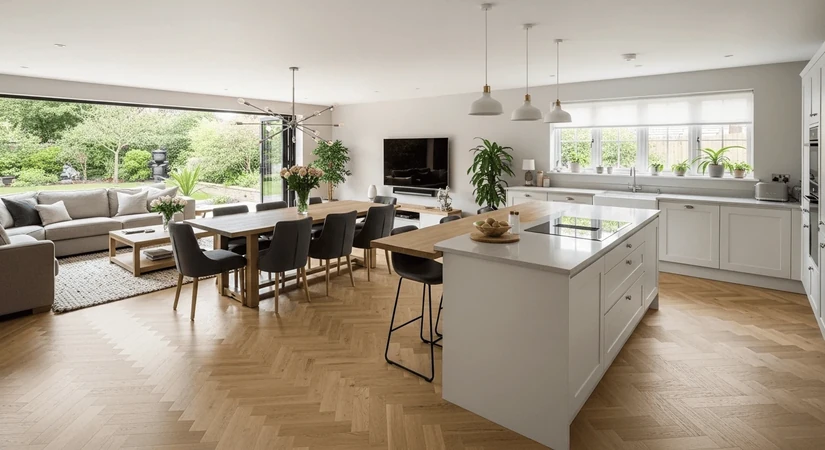
Engineered wood gives a warm and continuous look when the kitchen connects directly with the living or dining area, and it handles the slight humidity of a kitchen better than solid hardwood, given its layered construction that limits expansion and contraction.
The visual flow it creates across an open-plan home is one of its biggest strengths, but it still needs fast spill cleanup and should not sit in standing water for any length of time. For homes where material continuity matters more than extreme waterproofing, engineered wood earns its place.
If the kitchen floor is expected to carry through into the living space, keep the finish consistent across both zones rather than using different woods with slightly different undertones.
5. Use Natural Stone for a Luxury Kitchen With Character
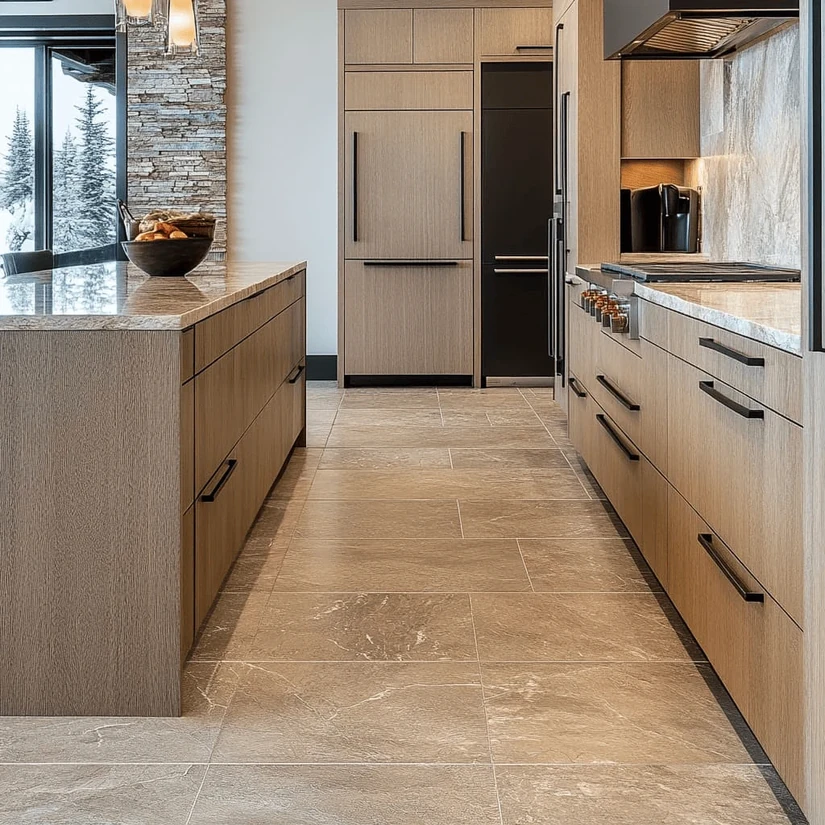
Marble, limestone, slate, travertine, and granite all bring something that manufactured flooring cannot replicate: variation. No two stone slabs are the same, and that natural difference in veining, tone, and texture is exactly what makes stone floors feel so considered in a premium kitchen.
The trade-off is maintenance. Stone needs sealing at installation, resealing on a schedule, and careful cleaning products. Polished marble in particular can feel slippery when wet, so slip resistance is worth discussing with any stone supplier before committing.
- Best for: Luxury kitchens, premium Dubai villas, spaces where long-term value and a premium look are priorities.
- Maintenance watch: Seal before use and reseal every one to two years, depending on traffic and the stone type.
6. Try Marble-Look Porcelain for Luxury Without the Stress of Real Marble
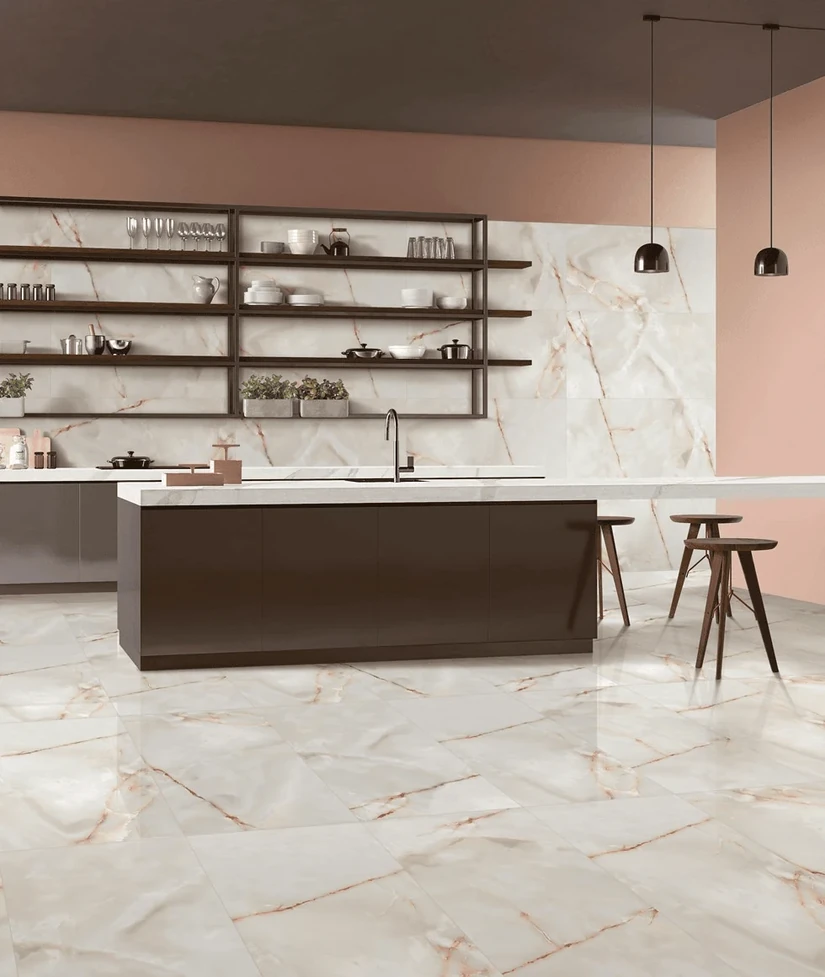
Marble-look porcelain has become one of the most popular kitchen flooring options in modern and luxury kitchens across the UAE, as it gives the veined, refined aesthetic of real marble, and it is far more forgiving day to day.
It does not need sealing, handles cooking stains better, and is less likely to stain or etch from spills. Large-format slabs with minimal grout lines strengthen the effect even further, making the kitchen feel cleaner and more considered without the commitment of natural stone maintenance.
7. Choose Large-Format Tiles for a Cleaner and More Spacious Look
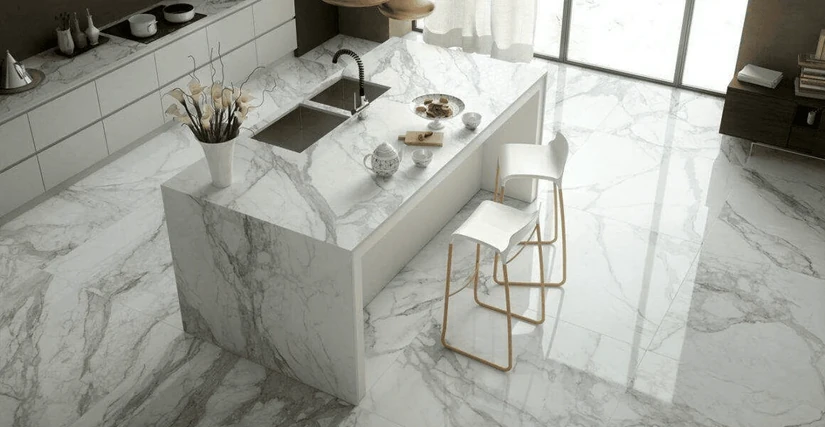
Large-format tiles reduce grout lines significantly, and fewer grout lines mean less visual interruption across the floor, which directly helps compact kitchens feel more open. Of all the modern kitchen flooring options, this clean, unbroken surface feels sharper and less busy.
One practical note: Subfloor preparation matters more with large tiles than with smaller ones, since any unevenness underneath will show in the finished floor. Good installation quality is not optional with large-format tile.
Best for small kitchens and modern open-plan kitchens where a clean, spacious finish is the goal.
8. Use Wood-Look Porcelain for Warmth With Better Kitchen Performance
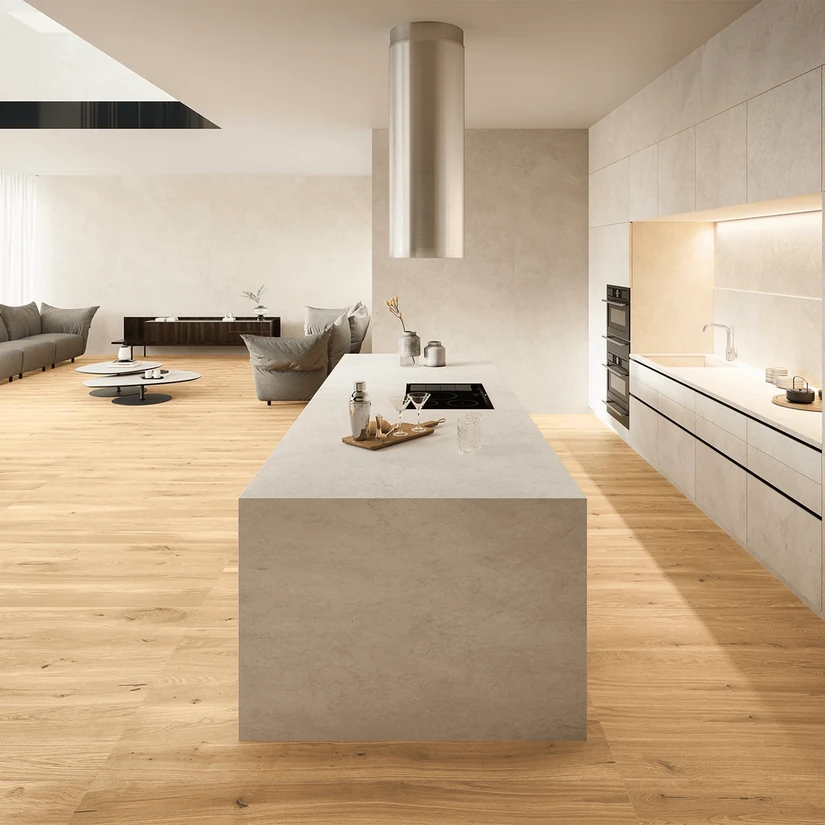
Wood-look porcelain is the middle path that many homeowners land on when they want the warm, natural texture of wood but need the water resistance and durability that porcelain offers in a kitchen. It reads as warm and organic in the space, suits modern, Japandi, rustic, and transitional kitchens equally well, and does not require any of the maintenance that real or engineered wood demands.
The quality of the print has improved considerably, and better-grade wood-look porcelain planks can be genuinely difficult to distinguish from the real thing.
Design pairing: Pair with white, beige, oak, walnut, or matte black cabinetry, depending on the warmth or contrast the kitchen needs.
9. Add Checkerboard Flooring for a Timeless Kitchen Statement
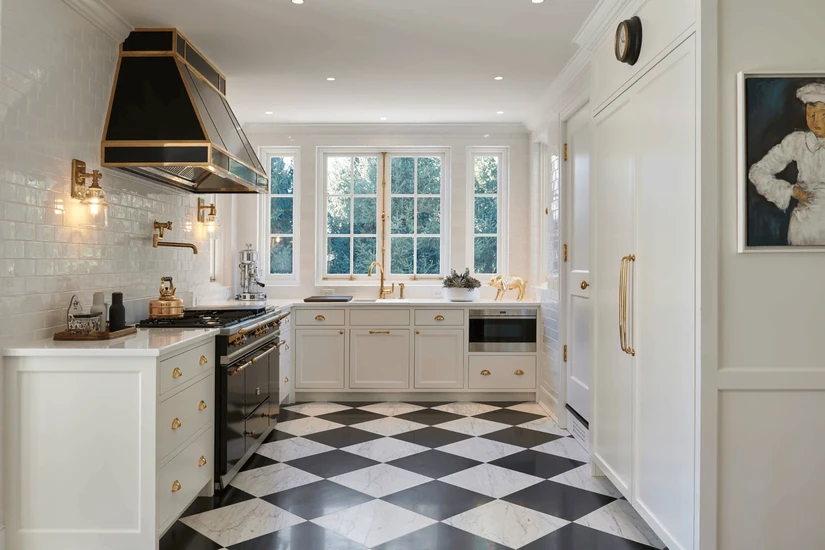
Checkerboard flooring has been used in kitchens for long enough that it has moved well past trend and into the category of design classics. The key is scale and colour.
A bold black-and-white checkerboard in large tiles makes a confident statement in a spacious kitchen, beige and ivory, or cream and soft green, creates something much quieter and more versatile in smaller spaces. The tile size should always be proportional to the kitchen, and oversized tiles in a small room make the pattern feel overwhelming.
- Bold version: Black and white, large format, in a generous open kitchen with minimal cabinetry.
- Soft version: Beige and ivory or sage and cream, smaller format, in a traditional or transitional kitchen.
10. Pick Terracotta Tiles for Warmth and an Earthy Kitchen Feel
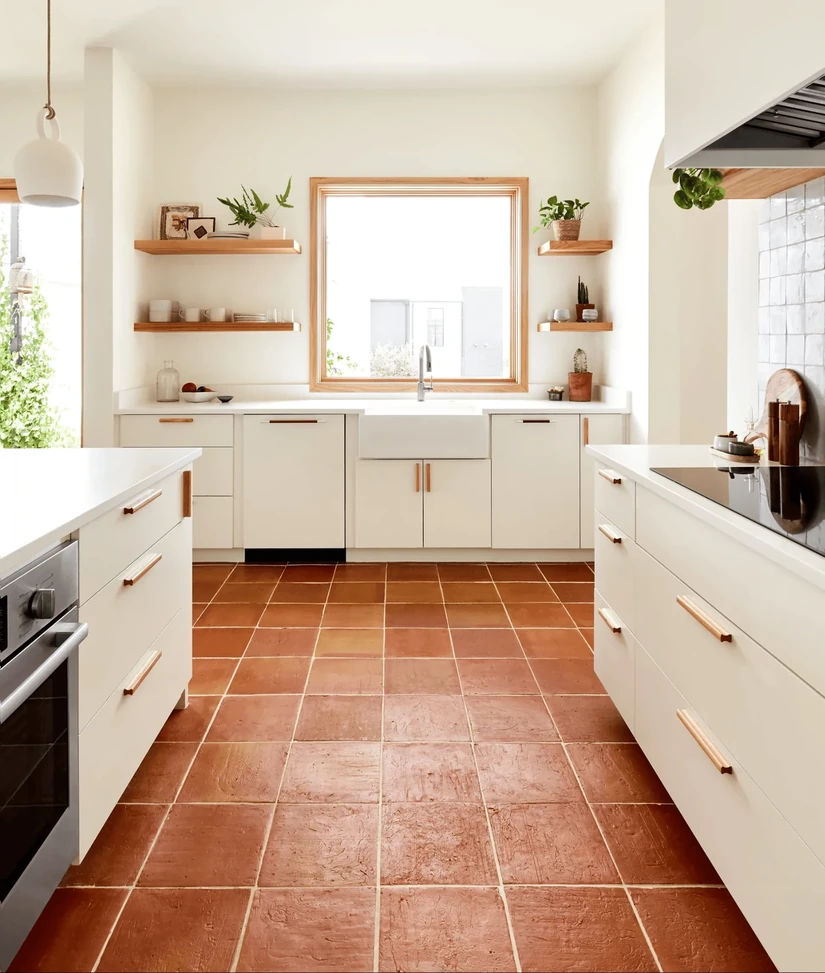
Terracotta brings warmth and texture in a way that manufactured tiles struggle to replicate. It works beautifully with cream or off-white cabinets, olive and warm green tones, natural wood shelving, brass or aged bronze hardware, and Mediterranean or rustic-inspired interiors. The colour variation within a terracotta floor gives it a handmade quality that feels intentional rather than accidental.
The key maintenance point is sealing since terracotta is porous, and without proper sealing at installation and regularly after that, cooking stains will absorb into the surface fairly quickly.
11. Use Sealed Concrete for a Clean Modern Kitchen
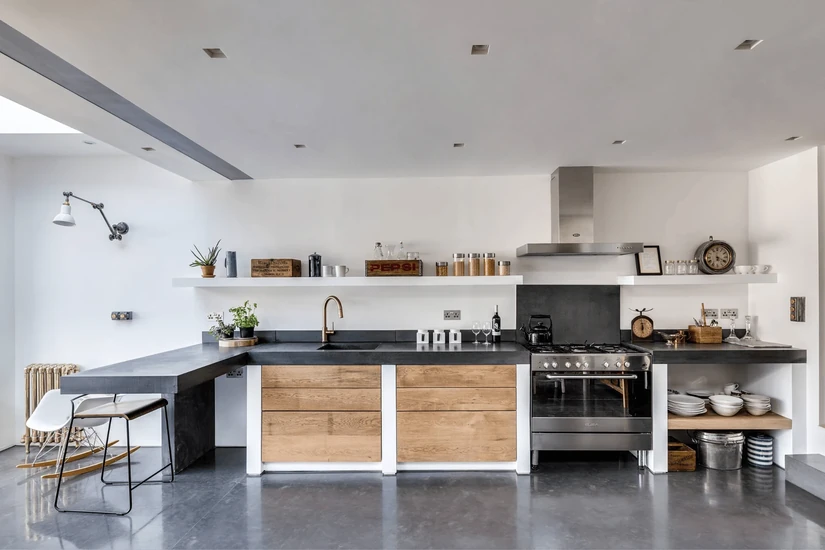
Concrete flooring suits industrial, minimal, and modern kitchens where a smooth, uninterrupted surface is part of the design logic. Sealed correctly, it is durable and easy to clean, and it pairs well with handleless cabinetry, stone countertops, and matte black or brushed metal fixtures.
The practical trade-offs are worth knowing, as it can feel cold underfoot in air-conditioned homes, it can crack over time, and the sealing needs to be maintained to keep stains from working into the surface. Underfloor heating solves the coldness issue well, and warm cabinetry tones balance what can otherwise be a stark finish.
Style tip: Lay a textured or woven kitchen rug in front of the cooking zone to add warmth and reduce the hardness underfoot.
12. Consider Laminate Flooring for a Cost-Effective Kitchen Update
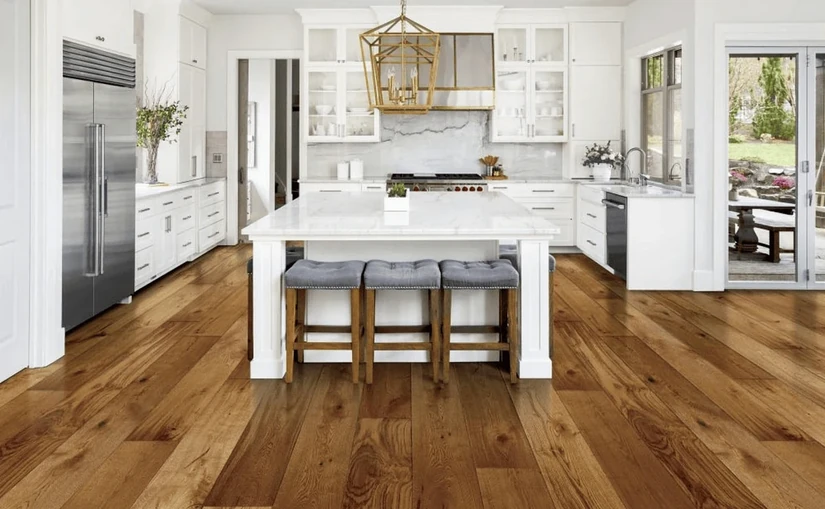
Laminate can be one of the practical kitchen flooring options when the product is rated as water-resistant or waterproof and is installed with care around seams and edges. The seams are the weak point in any laminate floor: if water sits on the surface and works its way into the joins, the boards can swell and lift over time.
For kitchens where water pooling is unlikely, where the floor is being refreshed on a limited budget, or in a rental where long-term permanence is not the goal, waterproof-rated laminate is a reasonable choice.
Caution: Avoid standard laminate in kitchens with dishwashers, sinks, or areas where standing water is likely. Always check the product’s waterproof rating before purchasing.
Waterproof or Water-Resistant? The Difference Matters More Than Most People Realise
These two terms appear on almost every product label in a flooring showroom, and they get treated as if they mean the same thing. They do not, and in a kitchen that distinction is worth understanding before you commit to anything.
Waterproof kitchen flooring options handle water on the surface without letting it penetrate the material itself. Among kitchen flooring options, vinyl, porcelain tile, sheet vinyl and well-sealed concrete all fall into this category. Water-resistant flooring can manage minor spills for a short period but will absorb or be damaged by water if it sits for a long time or gets into seams and edges. Laminate, engineered wood, and sealed stone all sit in this group.
The additional point that is often missed is that even the best waterproof surface can fail if water finds a way through grout lines, seams, or edges into the subfloor underneath. Porcelain tile is waterproof as a material, but grout lines are not waterproof without proper sealing.
LVP is waterproof on the plank surface, but water pooling at the edges or between boards can still reach the subfloor over time. Installation quality and proper sealing at joints matter as much as the material rating on the label.
| Type | What it means | Better options |
|---|---|---|
| Waterproof | Handles water well on the surface | LVP, sheet vinyl, porcelain tile, sealed concrete |
| Water-resistant | Handles small spills for a short time | Laminate, engineered wood, sealed stone |
| Needs extra care | Can stain or absorb water without sealing | Terracotta, natural stone, hardwood |
Kitchen Flooring Ideas That Match the Way Your Home Actually Looks
Material choice only makes sense when it connects with the design language already running through the rest of the home.
Clean and Composed Flooring Options for a Modern Kitchen
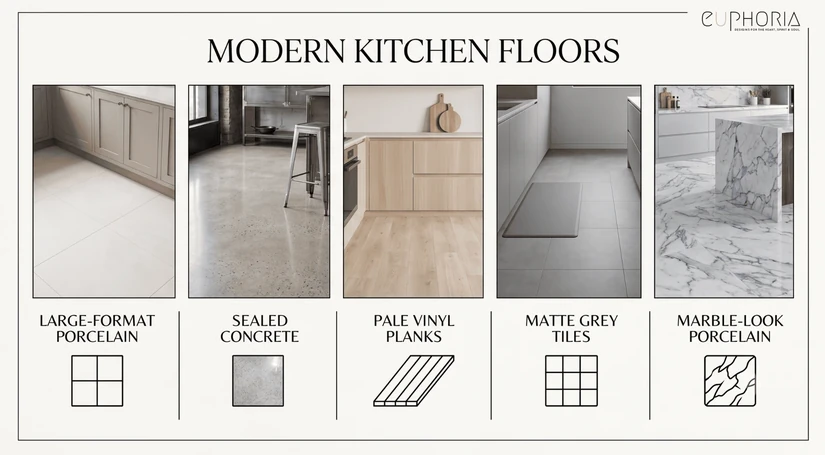
Large-format porcelain, sealed concrete, pale vinyl planks, matte grey tiles, and marble-look porcelain all sit naturally in a modern kitchen. The common thread is clean lines, minimal grout, and neutral or cool-toned palettes.
Textured matte finishes perform better than high-gloss in modern kitchens as they hold up under daily use without showing every mark. Visual continuity with the countertop and cabinetry is what makes a modern kitchen feel composed rather than just empty.
Premium Flooring Materials That Set the Tone in a Luxury Kitchen
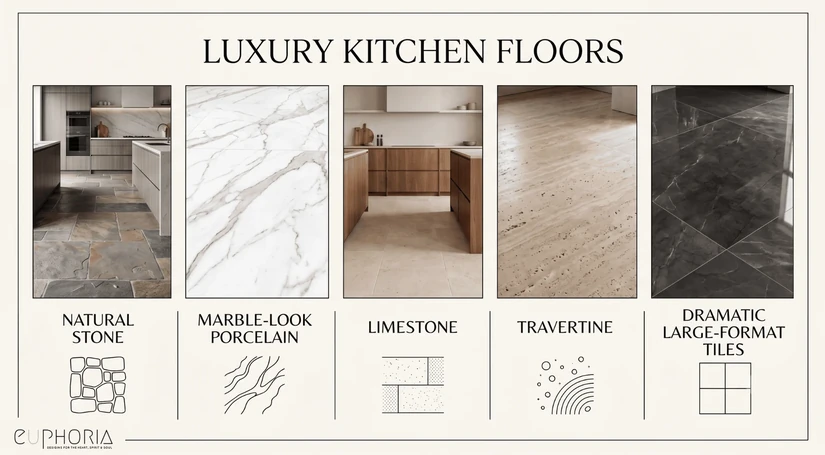
Natural stone, marble-look porcelain, limestone, travertine, and dramatic large-format tiles all deliver a luxury kitchen finish when specified well. The floor in a luxury kitchen is usually the largest single surface in the room, so material selection here has more visual impact than almost anything else.
If you are comparing kitchen flooring options with the rest of your home, we have put together a guide on luxury flooring ideas that can help you connect the kitchen floor with the wider interior style.
Smart Flooring Choices That Make a Small Kitchen Feel Larger
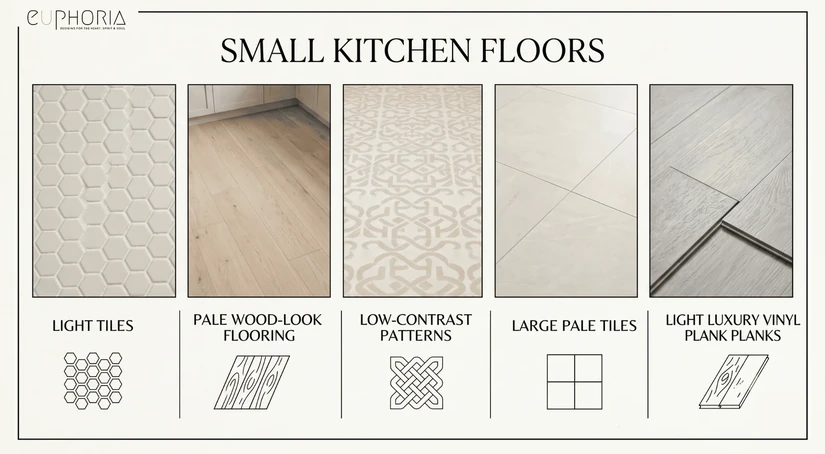
Light tiles, fewer grout lines, pale wood-look flooring, and low-contrast patterns all help compact kitchens feel more open and easy to move through. The logic is simple: the fewer visual breaks across the floor, the less the eye gets interrupted, and the more the space reads as a continuous surface.
Large pale tiles or light LVP planks running lengthways through the kitchen are two of the most effective approaches.
Earthy Flooring Materials to Create a Warm and Inviting Kitchen
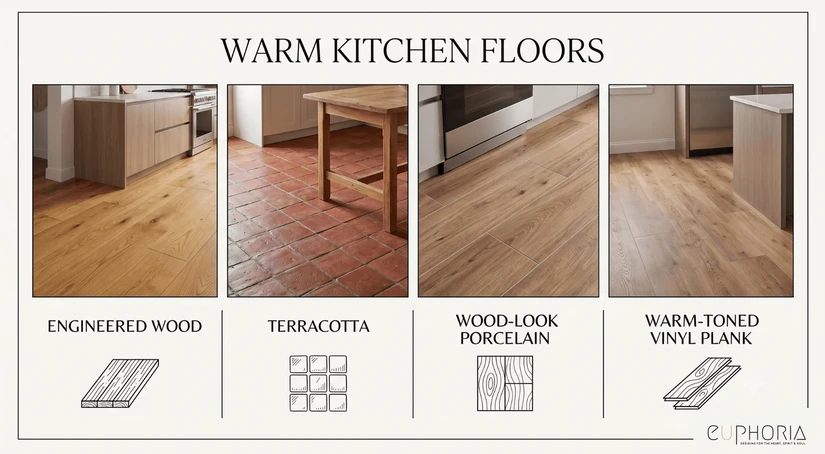
Engineered wood, terracotta, wood-look porcelain, and warm-toned vinyl plank all bring warmth into a kitchen that might otherwise feel too clinical. These materials pair naturally with cream, linen, and earthy cabinet colours, alongside brass and warm bronze hardware finishes.
In kitchens that receive strong natural light, warm floors keep the space from feeling washed out.
Smooth Flooring Options That Blend Into a Minimal Kitchen Design
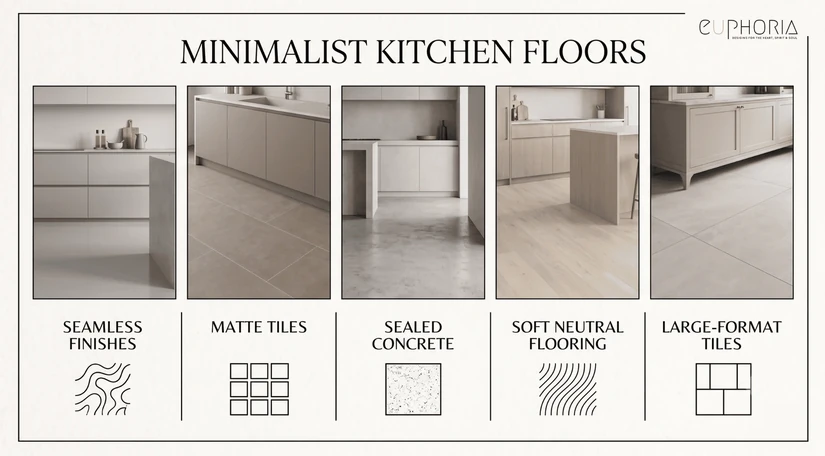
Jointless finishes, matte tiles, sealed concrete, and soft neutral flooring all suit kitchens where the design brief asks for restraint. The floor in a minimal kitchen should recede rather than demand attention.
Pale warm grey, off-white, sand, and soft stone tones all work within this logic, and large-format tiles with minimal grout are the most common way to get there.
Classic Flooring Choices With Pattern and Texture for a Traditional Kitchen
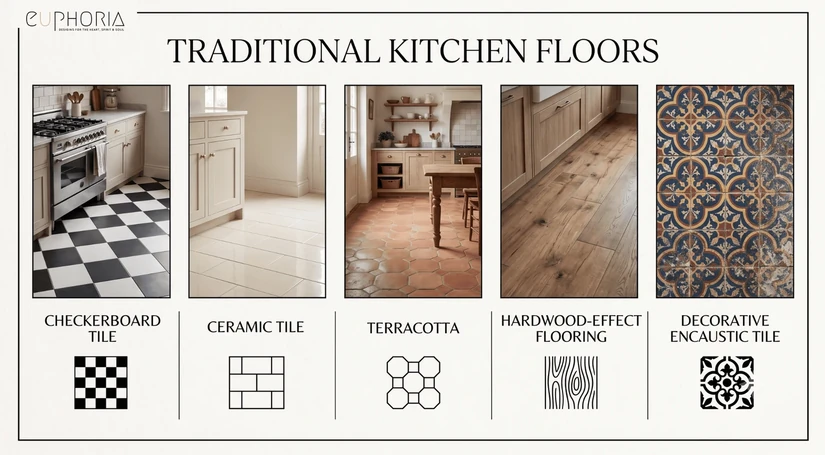
Checkerboard tile, ceramic tile in classic patterns, terracotta, hardwood-effect flooring, and decorative encaustic tile all suit traditional and heritage-style kitchens. Pattern scale matters here: smaller tiles and more intricate patterns work better in rooms with traditional proportions and detailed cabinetry, and oversized patterns in a small traditional kitchen tend to compete with everything else in the room.
Kitchen Flooring Trends That Still Feel Practical
Trends in kitchen flooring options shift slowly compared to other interior categories, which means the best kitchen flooring trends worth paying attention to are the ones that have already proved their staying power in real homes, not just in editorial photography.
- Large-format tiles: Fewer grout lines, a cleaner surface, and a modern feel that suits both compact apartments and spacious villas. The reduction in grout means less maintenance over time, which gives this trend real practical value beyond the visual appeal.
- Wood-look porcelain: Consistent demand across modern, Japandi, transitional, and contemporary kitchens as it delivers warmth without the vulnerability of real wood in a wet cooking environment. The quality of the print finishes continues to improve.
- Soft neutral flooring: Beige, greige, sand, ivory, warm grey, and clay tones are replacing cooler grey and stark white floors across many kitchen projects. These tones are more forgiving of everyday marks, and they coordinate more naturally with the warm wood and stone tones common in UAE villa interiors.
- Checkerboard with softer colours: The pattern is familiar, but the colour approach has shifted. Beige and cream, green and white, and brown and ivory now appear more often than the classic black and white in kitchens that want the pattern without the high contrast.
- Matte and textured finishes: High-gloss kitchen floors have been declining in design conversations for good reason. Matte and textured finishes hide smudges, cooking stains, and footprints better under daily use, and they feel safer underfoot when the floor is wet or splashed.
- Material continuity in open-plan kitchens: Running one floor from the kitchen into the dining and living areas is increasingly a deliberate choice rather than a cost decision. It creates visual flow and makes open-plan homes feel calmer and more resolved.
Kitchen Flooring Materials to Avoid or Use Carefully
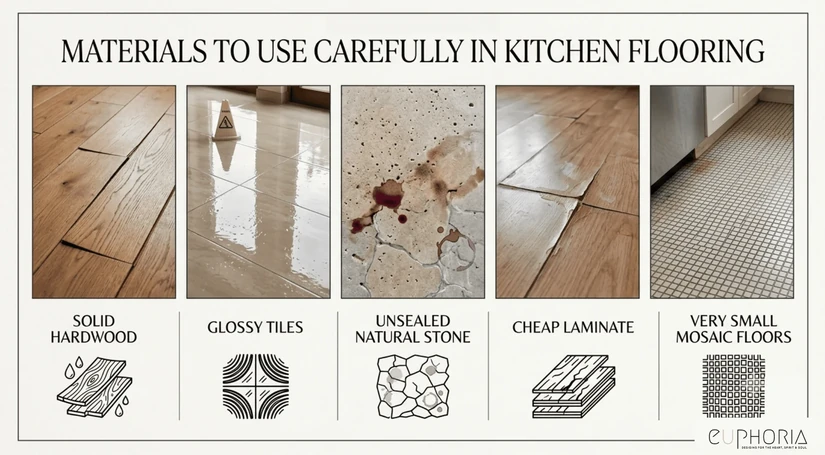
Some materials look stunning in photographs but create endless maintenance problems in a real working kitchen.
Solid Hardwood
Solid hardwood is beautiful and long-lasting in the right room, but a kitchen puts it under conditions it was not designed for. Standing water around the sink, steam from cooking, and regular wet mopping can all cause hardwood to warp, swell, and gap over time.
Use carefully if the kitchen has extremely controlled conditions, and spills will always be wiped up immediately.
Glossy Tiles
High-gloss tile looks striking in photos but shows every footprint, watermark, and cooking smudge in real life. It can feel slippery when wet, which in a kitchen where the floor regularly gets splashed is a genuine safety concern. Use carefully if the kitchen sees very light use and the finish is the priority over practicality.
Unsealed Natural Stone
Natural stone without sealing is porous, which means cooking stains, oil, and acidic liquids can absorb into the surface and cause permanent marks relatively quickly. The stone itself may be premium, but without a proper sealing routine, it will show the wear of daily kitchen use within a short time. Use carefully if a firm sealing schedule is in place before the kitchen opens.
Cheap Laminate
Entry-level laminate can look convincing in the store and feel adequate in a low-use kitchen, but the seams are vulnerable. When water gets into the joints between boards, the core swells, the surface lifts, and the damage is usually not repairable without replacing the boards. Use carefully if the kitchen is genuinely low-use and the product is waterproof-rated.
Very Small Mosaic Floors
Small mosaic floors introduce a significant volume of grout lines into the floor, and grout lines in a kitchen mean more surface area to trap cooking grease, stains, and dirt. They can look beautiful in the right space, but the cleaning effort is consistently higher than with larger tiles. Use carefully if the aesthetic value is worth the additional maintenance commitment.
Kitchen Flooring Cost and Long-Term Value
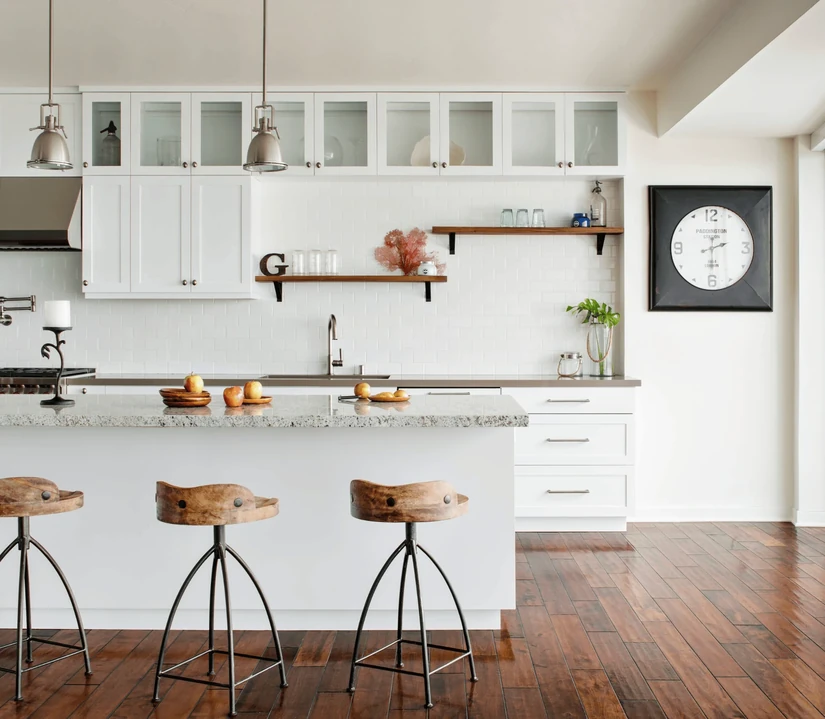
The material price is rarely the full cost of any of these kitchen flooring options. By the time installation is complete, the project typically includes removal of old flooring, subfloor preparation, underlayment, adhesives, grout, sealing compounds, skirting boards, labour, and material wastage from cuts and fitting.
A floor that appears affordable at the per-square-metre price can end up costing considerably more once the full scope is clear.
Long-term value is a more useful way to think about kitchen flooring options than upfront cost alone. A mid-range porcelain tile installed well and maintained correctly can last thirty or forty years without replacement. A cheap laminate in a busy kitchen might need replacing in five years.
The total cost over the lifetime of the floor, including maintenance and replacement, often tells a different story than the initial quote.
| Spend Level | Suitable Materials | Best For | Watch Out For |
|---|---|---|---|
| Entry-level | Ceramic tile, laminate, sheet vinyl | Rental updates, compact kitchens | Water damage over seams, grout care |
| Mid-range | LVP, porcelain tile, engineered wood | Family homes, daily-use kitchens | Quality variation between suppliers |
| Premium | Natural stone, marble-look porcelain, large-format tile | Luxury kitchens, villas | Installation complexity and sealing requirements |
If the kitchen is a compact or galley-style layout, our Parallel Kitchen guide gives more context on layout, storage, and planning before selecting finishes, which can help you prioritise where the flooring spend matters most.
Mistakes to Avoid When Choosing Kitchen Flooring
These are the ones that show up most often in projects, and they are almost always avoidable with a bit more thought before the order goes in.
- Choosing only by photo appeal: A floor that looks perfect in a styled shoot often behaves very differently in a working kitchen. Always evaluate materials by their practical properties alongside their appearance.
- Ignoring water resistance: In a kitchen, water resistance is a baseline requirement, not an upgrade. Any flooring that cannot handle regular splashes, spills, or mopping needs a strong justification for inclusion.
- Choosing glossy flooring without checking slip resistance: High-gloss finishes in kitchens are a safety concern when the floor gets wet. Always check the slip resistance rating before ordering, not after installation.
- Forgetting grout maintenance: Grout lines in a kitchen collect cooking grease and stain over time. Choosing a tight grout colour and sealing grout properly at installation reduces the maintenance burden considerably.
- Not testing samples with cabinet and countertop colours: Flooring samples look different under showroom lighting than under the actual kitchen lighting. Always test samples in the real space, alongside cabinetry and countertop materials, before deciding.
- Choosing too many patterns in a small kitchen: Busy patterns and high-contrast tiles in a compact kitchen make the space feel smaller and more visually cluttered. Restraint in pattern usually produces a better result in smaller rooms.
- Ignoring subfloor condition: An uneven or damaged subfloor will cause problems with almost every flooring type. Preparing the subfloor properly before installation is not optional, even when it adds time and cost.
- Forgetting to order extra material: Cuts, wastage, and future repair needs are all easier to manage if spare tiles or planks from the original batch are available. Order at least ten percent extra and store it.
- Not asking about sealing and cleaning rules: Some materials require specific cleaning products and cannot handle acids, bleach, or steam cleaners. Know the maintenance requirements before the floor is laid, not after the first cleaning session damages it.
- Choosing flooring that clashes with the living area in open-plan homes: In a home where the kitchen and living space share a visual boundary, the floor transition needs to feel intentional. A sharp colour or material clash between zones can make both rooms feel less resolved.
If the kitchen already feels busy underfoot and overhead, read how to add colour without clutter.
Designer Checklist Before Finalising Kitchen Flooring
Before placing any order, it is worth running through these questions the way a designer would before signing off on a specification. Most problems with kitchen flooring options come from skipping one or two of these early in the process.
- Does the material suit your cooking habits and kitchen usage?
- Will it handle water around the sink and dishwasher without damage?
- Does it feel safe and grippy when wet?
- Can it handle dropped utensils, heavy foot traffic, and daily cleaning?
- Does the colour and tone work with your cabinets and countertops in your actual lighting?
- Does the format and pattern suit the kitchen size, or will it make the space feel smaller?
- Are the grout lines manageable, or will they require frequent attention?
- Does the flooring transition well into nearby rooms, particularly in open-plan layouts?
- Is the finish matte, textured, or polished, and does that choice work for real daily use?
- Will the material still feel relevant and look good in five to ten years?
A floor that passes all of these checks is almost always a better long-term decision than one that looks spectacular on the mood board but struggles with two or three of them in practice.
Run the same check over the joinery with our kitchen cabinet designs.
Best Kitchen Flooring Options for Dubai Homes
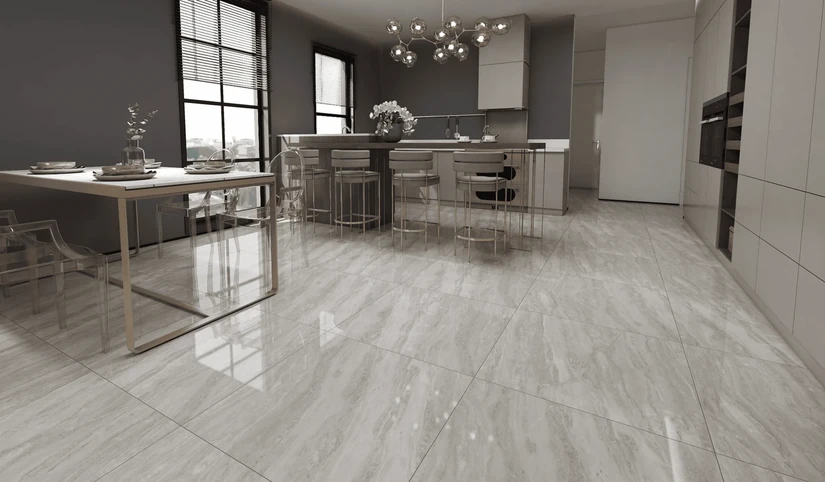
Kitchen flooring options in Dubai carry a few specific considerations that do not always apply in cooler climates. Dust accumulation, air conditioning that keeps floors cooler than ambient temperature, strong natural light that can amplify colour and gloss, and the mix of villa and apartment living all influence which materials perform best day to day.
Open-plan layouts are common across both property types, which means the floor usually needs to work across a larger continuous area rather than just within a dedicated kitchen zone.
Light-toned flooring is consistently popular in Dubai apartments and villas as it reflects rather than absorbs light, keeps the space feeling fresh in a warm climate, and tends to show less dust than very dark finishes. Low-maintenance materials are a strong priority for households with busy schedules and in homes managed by housekeeping staff who need surfaces that clean quickly and reliably.
- Porcelain tile suits Dubai villas, high-traffic family kitchens, and any space where long-term durability with minimal maintenance is the goal.
- LVP suits apartments, rentals, and family kitchens where comfort underfoot, waterproof performance, and a manageable installation are the priorities.
- Marble-look porcelain suits luxury apartments and villa kitchens where the marble aesthetic is desirable but the maintenance of real stone is not practical.
- Natural stone suits premium villas where a maintenance plan is already in place, and the investment in material and installation is part of a broader luxury brief.
- Light large-format tile or pale LVP planks suit compact apartment kitchens where opening up the visual space is the main design challenge.
- Wood-look porcelain or engineered wood suits open-plan Dubai homes where material continuity across the kitchen and living areas is part of the design direction.
For homeowners planning a full kitchen renovation, our kitchen interior design services in Dubai can help you align flooring, cabinetry, lighting, storage, and material selection from the start, so all of the decisions support each other rather than being made in isolation.
The best of all kitchen flooring options is not necessarily the most expensive or the most talked-about material this year. It is the one that suits the way a specific household actually lives, cooks, and cleans.
Porcelain tile and vinyl kitchen flooring options cover the practical needs of most busy homes well, and natural stone, engineered wood, and terracotta all bring something genuinely beautiful when chosen with care and maintained properly.
Kitchen flooring options are wide enough that there is a strong answer for every lifestyle, kitchen layout, and design direction, provided the decision starts with the right questions rather than the most appealing photo.
If a full kitchen renovation is on the plan, Euphoria Interiors can help make sure your kitchen flooring options connect with every other decision in the space.
Our kitchen design guide walks through the decisions that come before the floor.
Layout affects how those tiles read, which our L shaped kitchen design guide covers.
These modular kitchen design ideas show how the floor sits under a planned kitchen.