

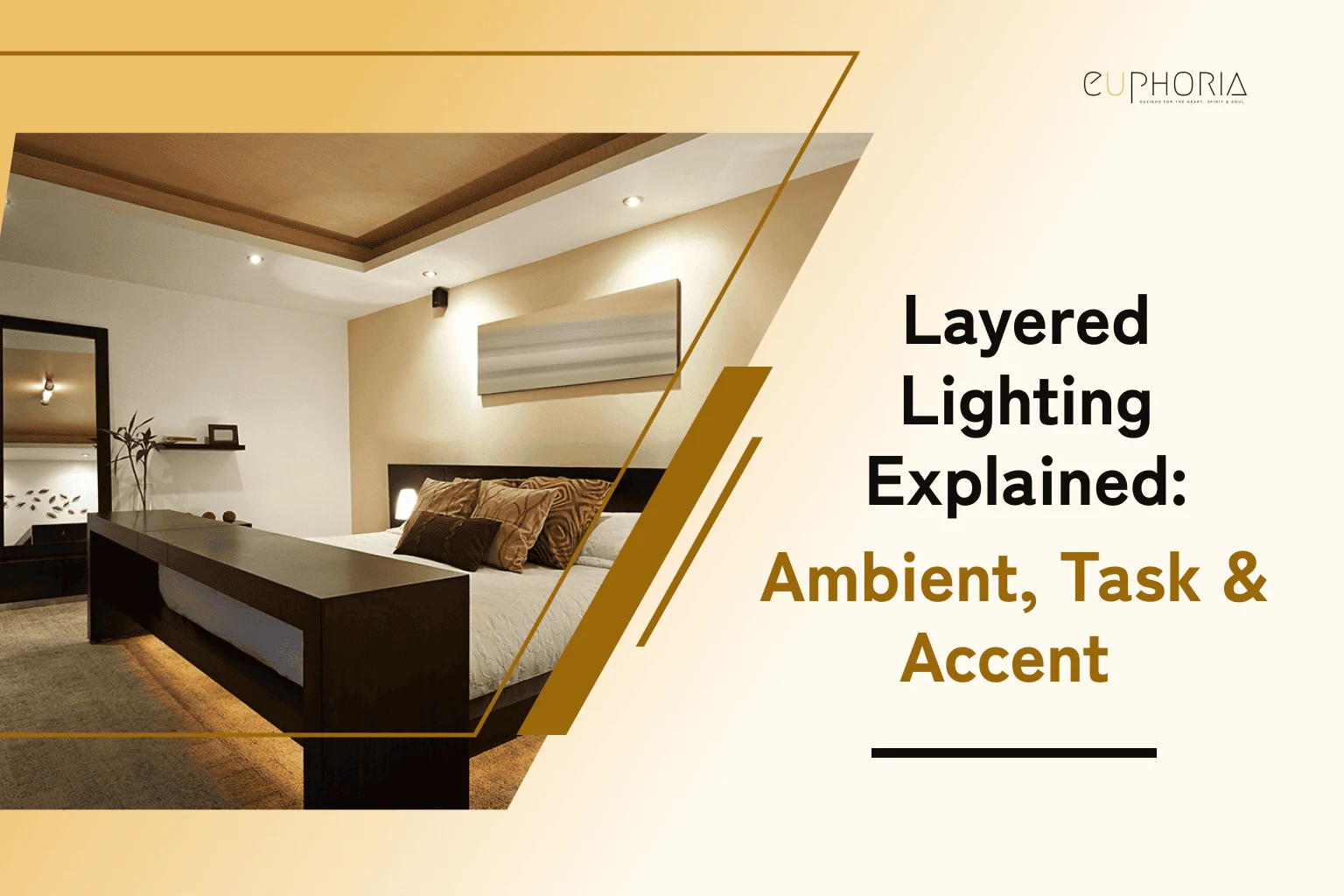
Lighting is far more than a way to see. It changes how a home feels, functions and flows. Many Dubai homeowners spend heavily on furniture and finishes and overlook layered lighting entirely, which is why so many houses look beautiful in daylight and feel flat after dark. It is the gap the team at Euphoria Interiors is called in to close most often.
Modern homes need more than one ceiling fixture. A good plan combines ambient lighting, task lighting and accent light, each doing a different job.
This matters more here than in most places. Strong daylight, reflective surfaces and open-plan layouts make lighting harder to get right. Some homeowners want warm, soft light for relaxing. Others want cooler light for a cleaner look. The challenge is balance without tipping into harsh or dim.
What Is Layered Lighting?
Layered lighting means combining different light sources in one space rather than depending on a single overhead fixture. Several layers work together to create a balanced environment, which makes a home feel more inviting and far more flexible.
Why it matters

One light source creates flat, uncomfortable rooms. Shadows get stronger, corners go dark, and the atmosphere lacks depth even when the furniture is expensive.
Combining layers improves functionality, mood, depth, flexibility and energy efficiency. Task lighting brightens a work area without flooding the whole room. Accent lighting highlights texture without overpowering anything. Our guide to the best lighting ideas for a cosy living room shows the combination in practice.
The Three Essential Layers
Ambient lighting: the foundation

Ambient lighting provides the overall brightness needed for everyday movement. Without it, spaces feel dark and impractical. Ceiling fixtures, recessed lights, chandeliers and cove lighting all deliver it.
| Factor | Benefit | Challenge |
|---|---|---|
| Brightness | Better visibility | Can feel harsh |
| Warm lighting | Softer atmosphere | Reduces sharp visibility |
| Cool lighting | Cleaner, brighter look | Can feel clinical |
| Uniform lighting | Even illumination | Makes rooms feel flat |
| Layered depth | More visual interest | Needs careful planning |
Warmer tones usually work better in living rooms and bedrooms. Cool light improves visibility in kitchens, bathrooms and workspaces, though too much removes warmth from a home.
Common problems: over-lighting small rooms, glare from badly positioned fixtures, uneven illumination, and high energy use from too many fittings.
Task lighting: designed for activities

Task lighting focuses light where precision matters: kitchens, reading corners, workstations, vanity areas and study desks. It reduces eye strain and matters most in homes where rooms serve several purposes.
| Factor | Benefit | Challenge |
|---|---|---|
| Focused brightness | Better visibility | Can create visual harshness |
| Adjustable fixtures | More flexibility | Higher cost |
| Fixed installations | Cleaner appearance | Less adaptable |
| Functional lighting | Improves usability | May reduce decorative appeal |
Common problems: shadows from incorrect placement, reflections on screens and glossy surfaces, insufficient brightness for detailed tasks.
Accent light: depth and interest

Accent light highlights specific features and creates depth. Wall sconces, picture lights, LED strips and spotlights all do it, and this layer is usually what gives luxury interiors their atmosphere.
It works particularly well against textured stone or wall panelling, and it stops rooms feeling visually flat by letting the eye move through areas of light and shadow. Used badly it makes interiors feel cluttered or theatrical.
How Layered Lighting Changes by Room
Every room has a different purpose, so lighting should never follow one formula throughout a home.
Living rooms

Living rooms are the most flexible spaces in a home, used for entertaining, television, reading and relaxing. Ambient ceiling lights, task lamps and accent lighting together handle all of it, and dimming lets one room support several moods.
Bedrooms

Bedrooms need a softer approach: warm bedside lighting, reading lamps and indirect ambient light. Cooler tones look brighter but feel stimulating late at night. In compact apartments, indirect lighting usually beats a large central fixture.
Window treatments affect this more than people expect, since heavy fabric changes how evening light behaves. Our roundup of the latest curtain designs is worth reading alongside the lighting plan.
Kitchens and dining

Kitchens need the most balanced plan in the house, supporting visibility and atmosphere at once. Pendants, under-cabinet task lights and dining accents cover it. Task lighting matters most here, because overhead lights alone throw shadows onto the prep area.
Glossy finishes and marble common in Dubai kitchens also create reflections, so fixture position needs as much thought as fixture choice.
Home offices

Home offices need ambient room lighting, focused task lighting and adjustable desk lamps. Glare control and screen reflection management matter more than appearance. Lights placed directly behind a screen cause eye strain over time.
Colour Temperature and Mood

Colour temperature changes how a room feels. Lower Kelvin numbers give warmer yellow light, higher numbers give brighter white or blue-toned light.
| Colour temperature | Appearance | Common use |
|---|---|---|
| Warm white | Soft yellow glow | Bedrooms, living rooms |
| Neutral white | Balanced white light | Dining spaces, hallways |
| Cool white | Bright crisp white | Kitchens, bathrooms, offices |
Warm supports rest, cool supports activity. The most common mistake is mixing incompatible tones in one space: warm pendants against harsh cool ceiling lights, or different whites across connected open-plan areas. That inconsistency is what makes even expensive interiors feel unbalanced.
Colour temperature also interacts with your wall finishes. Textured surfaces respond very differently under warm and cool light, which our royal texture paint ideas get into, and low-light rooms need particular care with paint choice, covered in our basement paint colour ideas.
Common Mistakes

Depending only on ceiling lights
A single fixture may give enough brightness but rarely creates warmth or depth. It produces harsh shadows, removes depth and darkens corners. Rooms feel more natural when light comes from different heights and directions.
Ignoring shadows and glare
| Problem | Result |
|---|---|
| Lights placed behind work areas | Shadows on surfaces |
| Exposed bulbs near eye level | Direct glare |
| Incorrect spotlight angles | Uneven illumination |
| Poor screen lighting | Reflections and eye strain |
Using the same intensity everywhere
Uniform lighting looks clean but removes atmosphere. Good design uses hierarchy: some areas brighter and more active, others softer. Kitchens need stronger task light, bedrooms need softer, living rooms need both.
Choosing style over function
Decorative pendants that give almost no light, oversized fixtures in compact rooms, stylish lamps with uncomfortable glare, weak task lighting in work areas. Appearance alone should never drive the decision. Timber and joinery choices interact with this too, and our guide to the best types of wood for home interior design covers how different finishes reflect light.
How to Choose Layered Lighting for Your Home

Start with function
Before choosing fixtures, work out how each room is used. Is it for work or relaxation? Does it need strong task visibility? Will the lighting need to change through the day? Function guides the plan before decoration does.
Consider room size and ceiling height
| Room condition | Lighting concern |
|---|---|
| Low ceilings | Excessive glare |
| Large open layouts | Uneven illumination |
| Compact rooms | Over-lighting |
| Double-height spaces | Loss of intimacy |
High-ceilinged homes benefit from lighting at multiple heights rather than overhead fixtures alone. If daylight is the missing ingredient rather than fittings, our skylight interior design ideas cover that side of it.
Plan for flexibility
Use dimmers, include adjustable fixtures, plan multiple circuits, and avoid relying on one central fitting. Storage and joinery lighting is worth planning at the same time, which our wardrobe design ideas for bedrooms address.
Conclusion
Good layered lighting is not about adding more fixtures. It is about balance between comfort, function and atmosphere. Ambient provides visibility, task supports activity, accent adds depth.
For Dubai homes this needs more attention than most. Open layouts, reflective materials and strong daylight can quickly make interiors feel harsh or uneven, which is why lighting deserves the same planning as furniture and finishes.
For the wider picture, our collection of home decor ideas puts lighting in sequence with everything else in the house.
Planning a home or an upgrade? Talk to our design team about a lighting plan.