

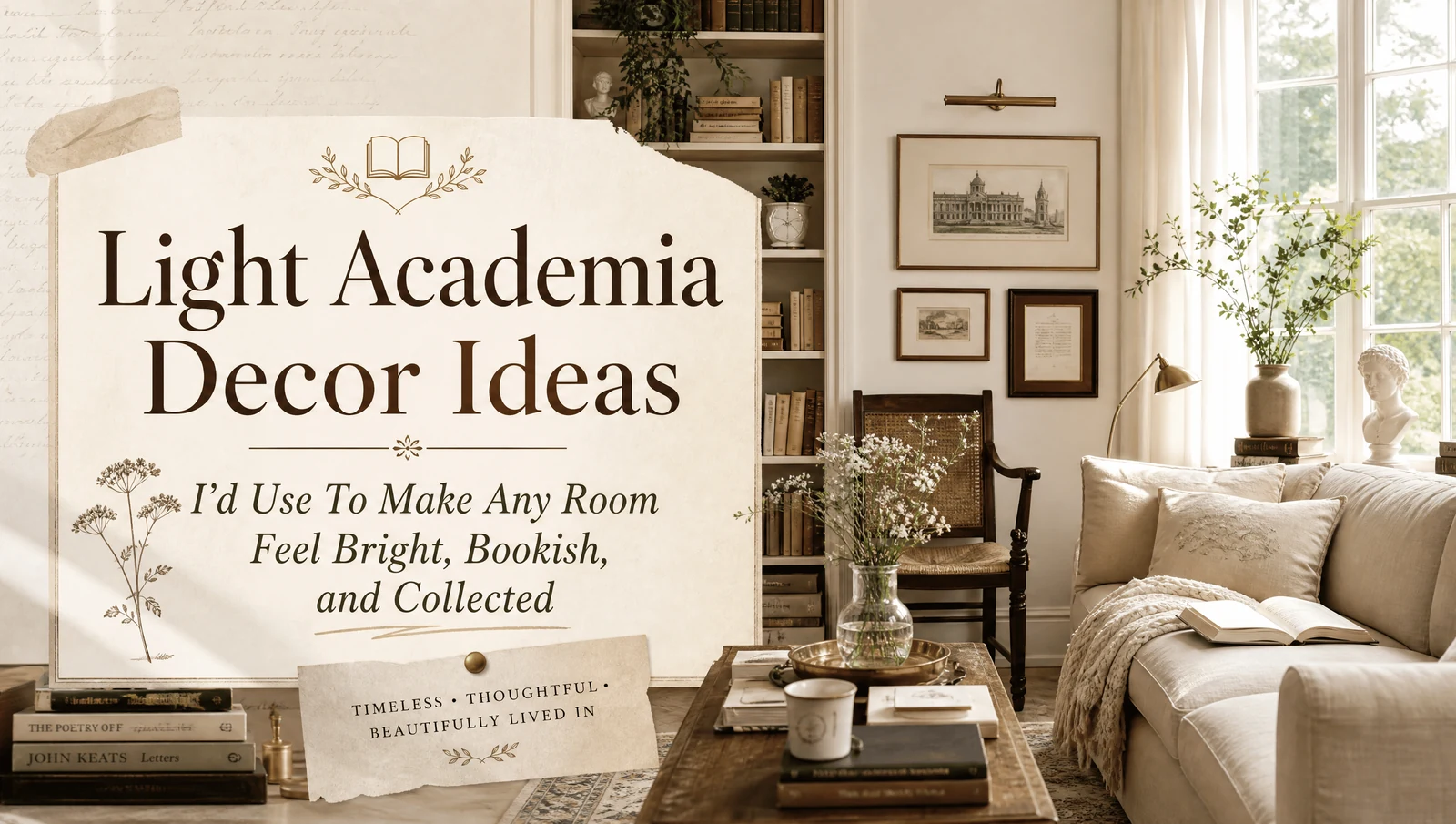
Light Academia Decor is for anyone who likes the bookish charm of an academic interior but wants a room that feels open and sunlit instead of dark and heavy. Picture cream walls, warm wood, linen bedding, a vintage desk, a few botanical prints, a brass lamp, a soft rug, and shelves that look collected over the years instead of staged for one afternoon.
The Victoria and Albert Museum holds over three million textiles, wallpapers, and pattern designs from the Arts and Crafts era, a movement built on honest materials and quiet, nature-led patterns over excess decoration. That same instinct, real material over costume, sits at the center of light academia.
The split between dark academia vs light academia comes down to mood more than anything. Dark academia reads like a library after closing time, lamp light pooling on leather spines. Light academia reads like the same room at nine in the morning, curtains pulled back, coffee cooling on the desk.
That softer mood is what makes the style work so well in bedrooms, home offices, reading corners, and apartments where a heavy palette would shrink the space. Here are the Light Academia Decor ideas I would reach for first.
Light Academia Decor Ideas That Feel Collected, Not Costume-Like
These are impactful moves that make a room feel lived in rather than staged for a single photo.
1. Warm Up The Room With Cream Or Soft Khaki Walls
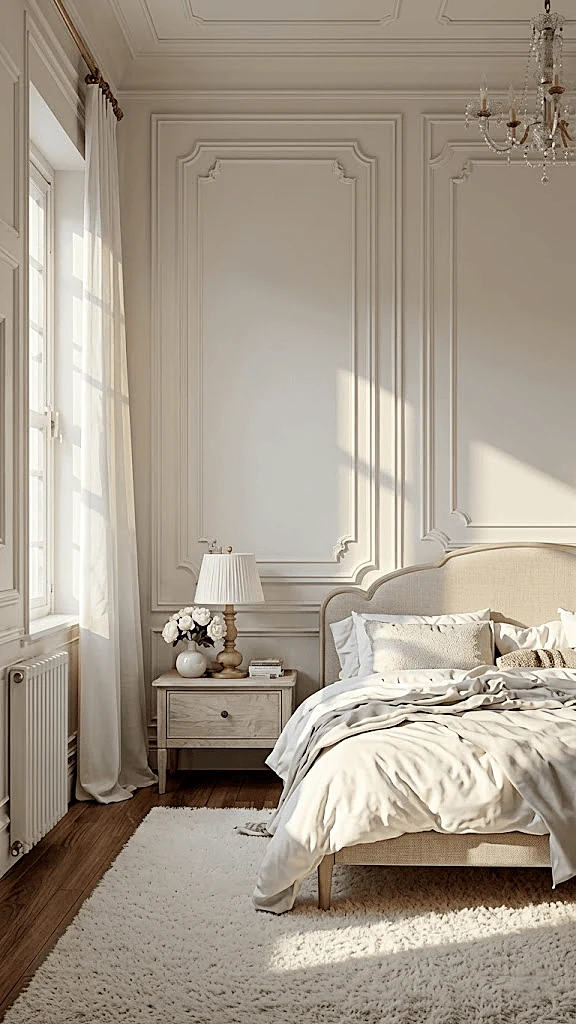
Cream, ivory, warm white, greige, and soft khaki keep a light academia room bright without making it feel empty. Sherwin-Williams has tracked a real shift toward warm beiges and creamy whites this year, a move away from the cooler grays that dominated for several seasons. Test a sample on the wall and watch it across a full day before you commit, and skip anything with a pink or yellow undertone in a north-facing room.
2. Anchor The Space With A Vintage Writing Desk
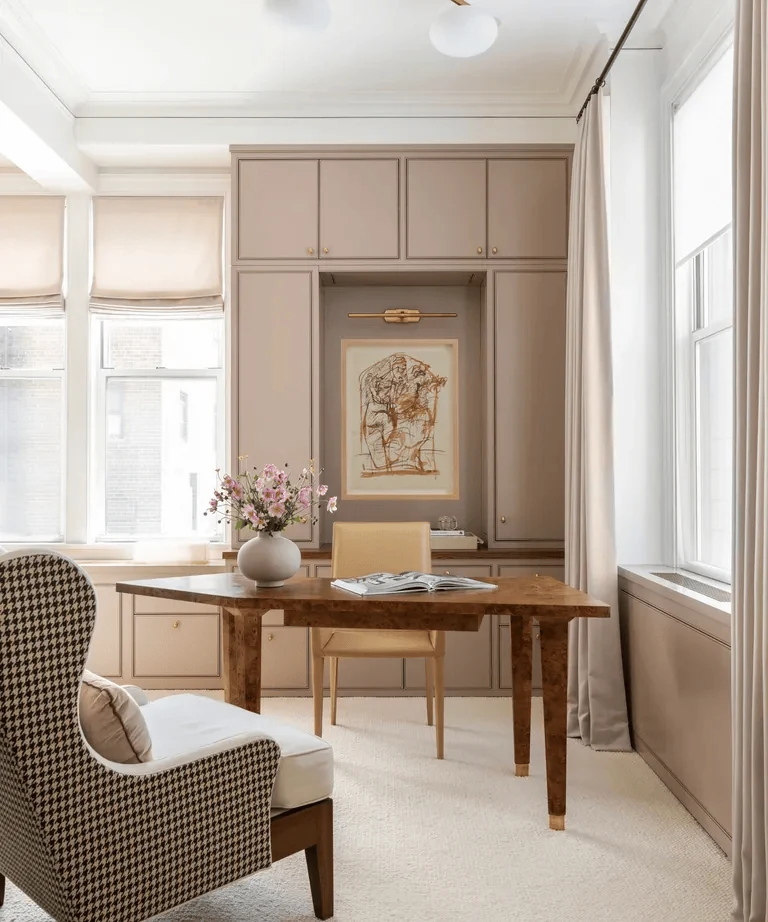
A vintage writing desk gives a room a clear academic purpose, and it works in bedrooms, home offices, and study corners alike. Pick one with some age in the wood grain rather than a flat, painted finish, and leave at least sixty centimeters of clearance behind the chair so it reads as usable furniture, not a prop.
3. Style Your Bookshelves Like A Personal Library
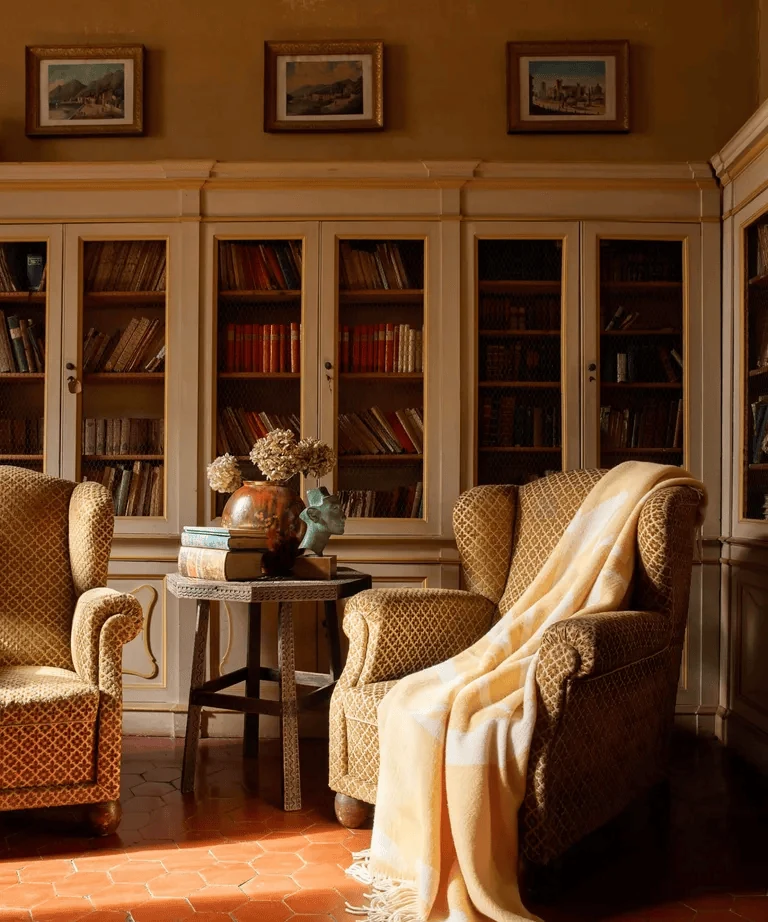
Style shelves with real books, a few framed pieces, ceramics, and open space between groupings so the wall reads as collected instead of copied from a showroom. Stack some books flat and stand others upright to break the rhythm, and leave the top and bottom shelves a little lighter than the middle so the eye has somewhere to land.
4. Swap Generic Posters For Botanical Prints And Old Maps
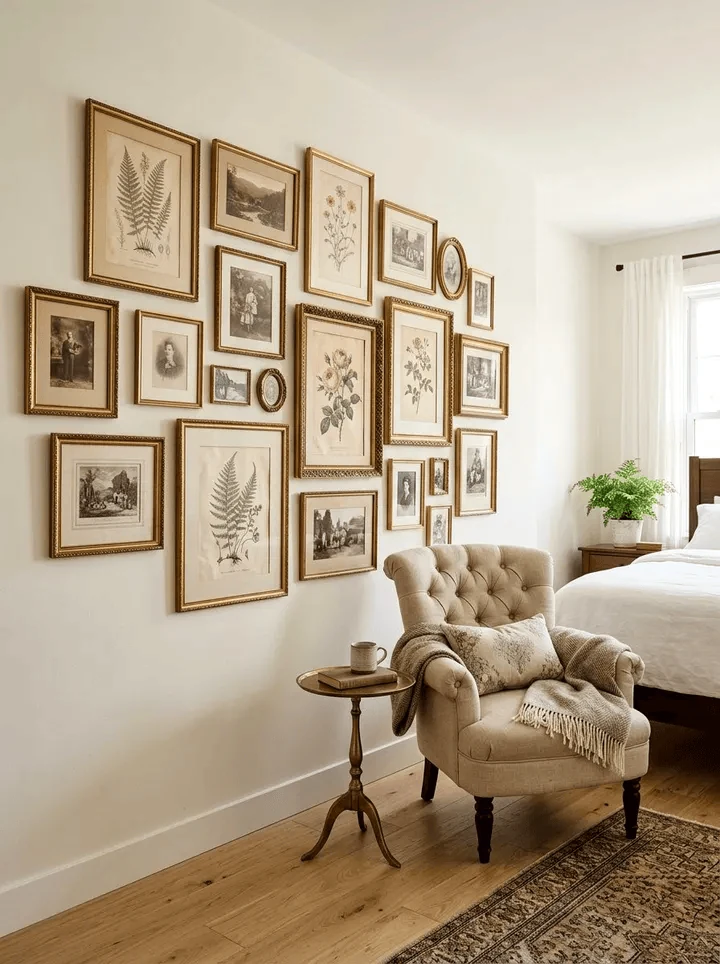
Botanical prints, pressed flowers, vintage maps, and old sketches read softer on a wall than a typical poster set. Smithsonian illustrator Alice Tangerini has spent over fifty years turning plant specimens into scientific art, work that shows how much character one careful botanical print can hold. Frame three or four prints in matching frames and leave the wall around them mostly bare.
5. Place A Reading Chair Where The Light Falls Best
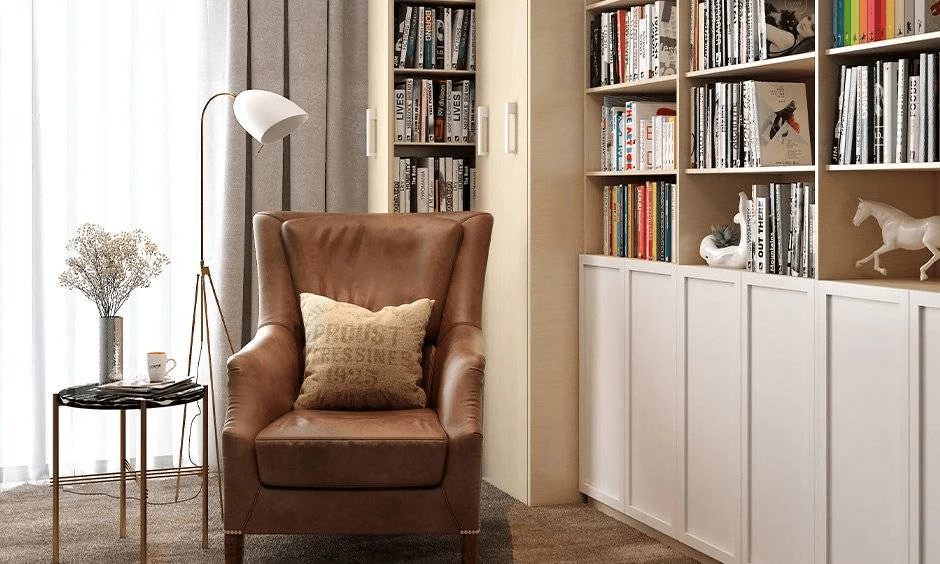
A reading chair set near a window turns the aesthetic into a corner you actually use rather than one you only photograph. This works best in bedrooms and home offices with a window seat or a quiet wall nearby. Pair the chair with a slim side table so a book and a cup of tea have somewhere to sit.
6. Use Warm Lamps To Create A Softer Evening Mood
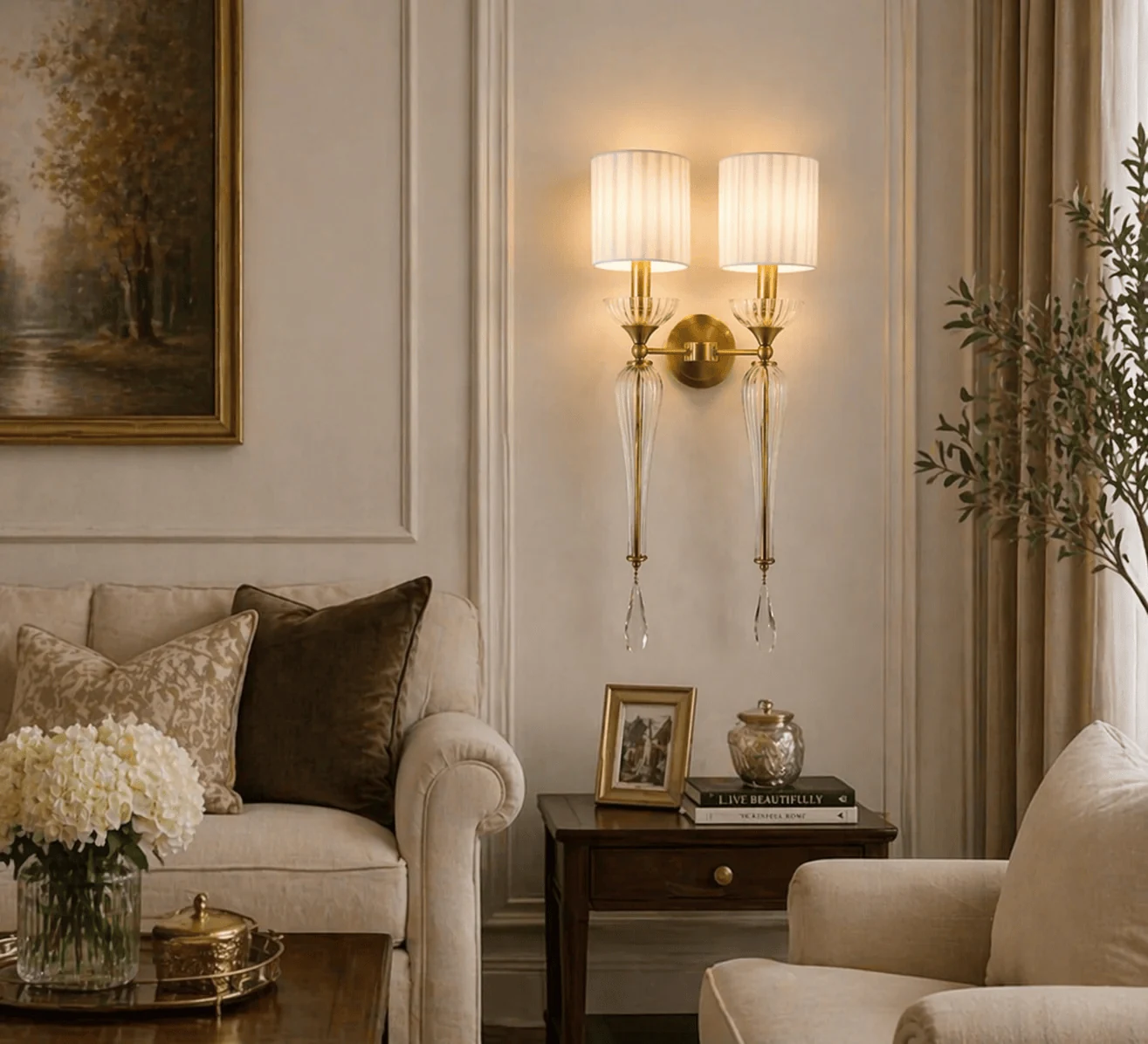
Table lamps, wall sconces, and a picture light over your shelves bring softness once the sun goes down, without turning the room gloomy. Stick to warm bulbs in the 2700K to 3000K range so the light matches the cream walls instead of fighting them, and avoid relying on a single overhead light as your only source.
7. Make The Bed Feel Relaxed With Linen Layers
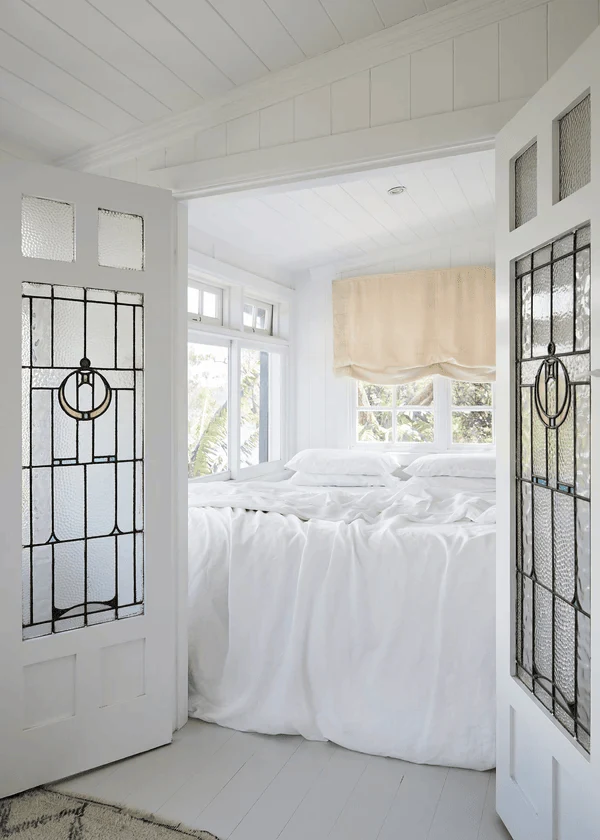
Linen bedding, a soft quilt, and a few muted cushions make a light academia bedroom feel restful rather than styled within an inch of its life. Layer two or three tones of the same neutral family instead of one flat color, and keep the pattern to one cushion or throw so the bed stays calm and doesn’t feel overdone.
8. Add Brass Marble Or Aged Wood For Quiet Character
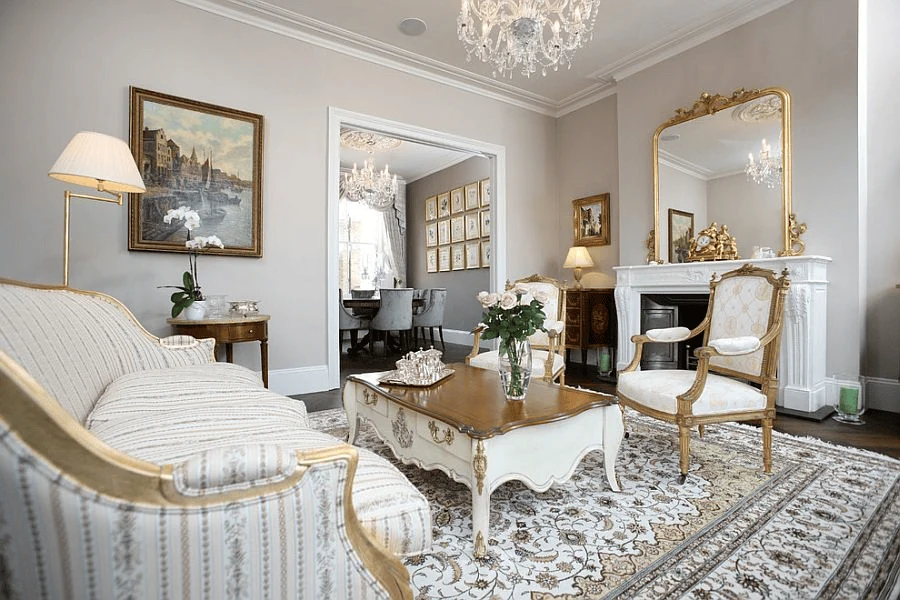
Brass lamps, a small marble tray, aged wood furniture, ceramic vases, and a few leather-bound books bring quiet depth without shouting for attention. Mix metals sparingly, since one brass piece and one aged finish is plenty for a small room, and skip anything glossy or chrome, as it pulls the eye toward a colder, more modern mood.
9. Bring In Floral Wallpaper Or Wall Molding For Old World Detail
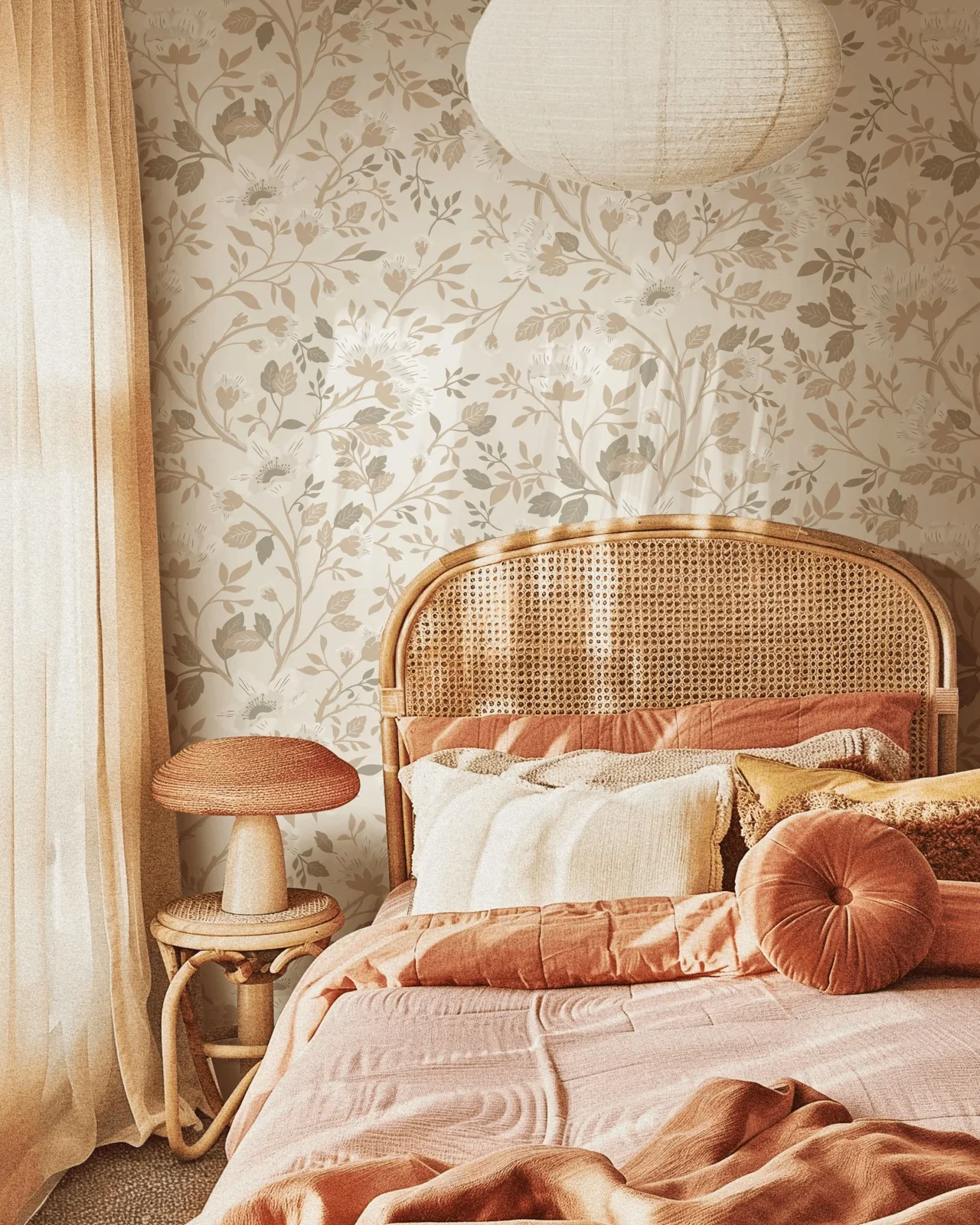
Floral wallpaper, picture molding, a chair rail, or simple trim work make a plain room feel older and more layered almost overnight. The Victorian Society notes that dado and picture rails in period homes started as protective features as well as decorative ones, which is part of why reproductions still read as authentic today rather than purely ornamental. Use molding on one wall only in a small bedroom so the room still feels open.
10. Turn Your Work Desk Into A Light Academia Home Office
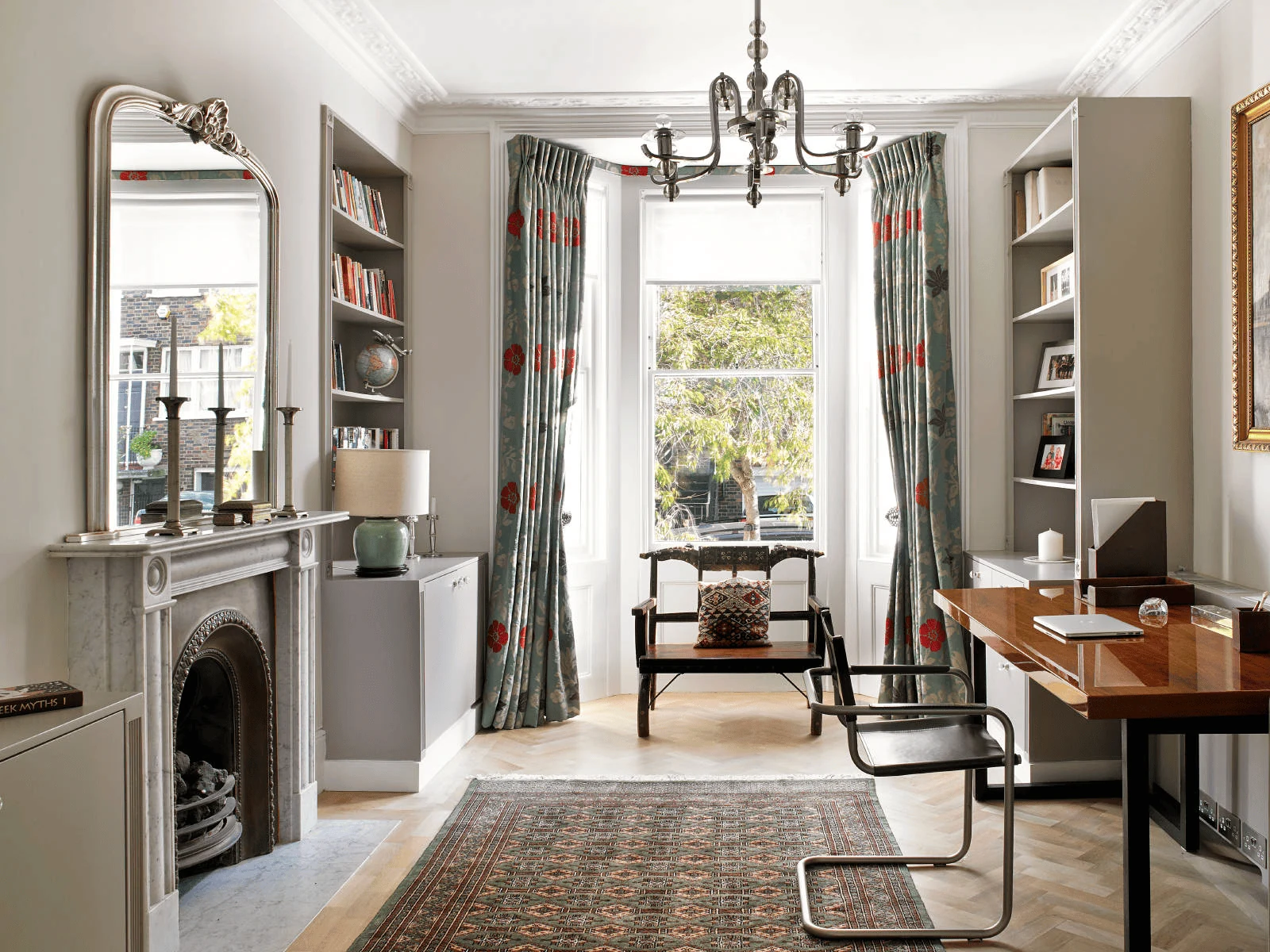
Build the work zone around a solid desk, a task lamp, low bookshelves, closed storage, a framed print, and a plan for hiding cords. Position the desk at an angle to the window so glare never lands on the screen, and keep cables tucked in a fabric sleeve, since loose wires break the mood fast. Check our home office guest room ideas guide for more layouts.
11. Ground The Room With A Soft Vintage-Inspired Rug
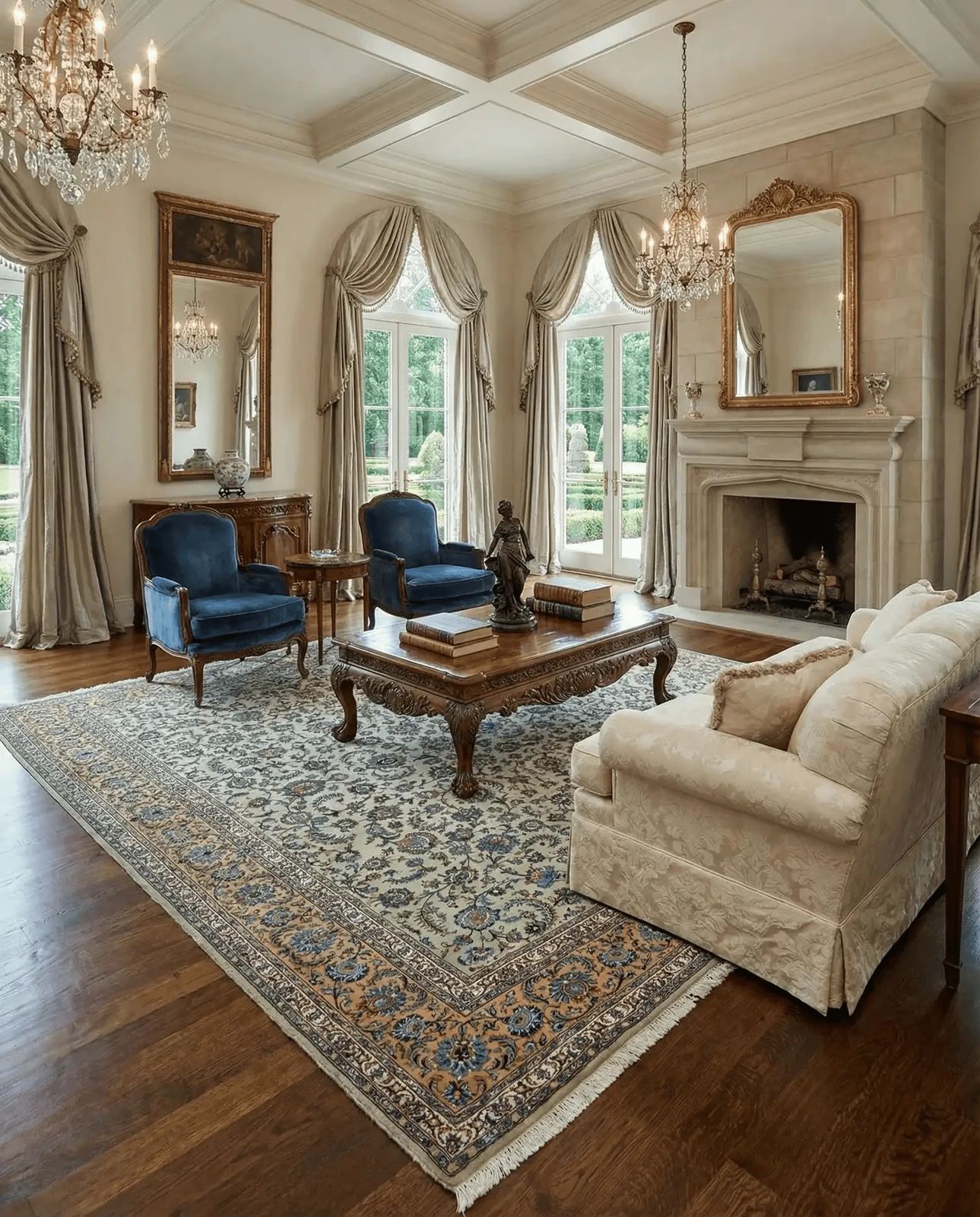
A faded, floral, wool, or vintage-style rug pulls furniture together and softens a room that might otherwise feel a little stiff. It works well in bedrooms and reading corners with hard flooring. Size the rug so the front legs of your bed or chairs sit on it, not just the corners, so the room feels grounded instead of floating.
12. Choose Pale Wood Furniture Over Heavy Dark Pieces
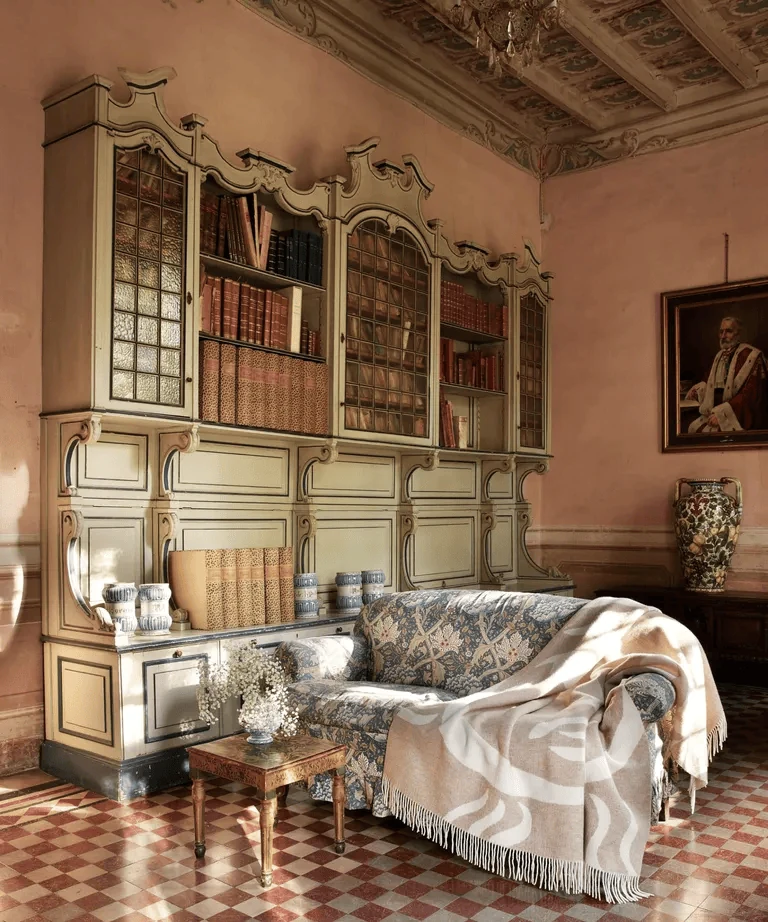
Pale oak, cane, antique pine, and light walnut keep a room airy and still carry a vintage feel that fits the light academia mood. This is one of the clearest places where dark academia vs light academia furniture choices split. If a piece you love comes in dark wood, look for a cane or rattan version instead of skipping it.
13. Build a Window-Side Reading Nook
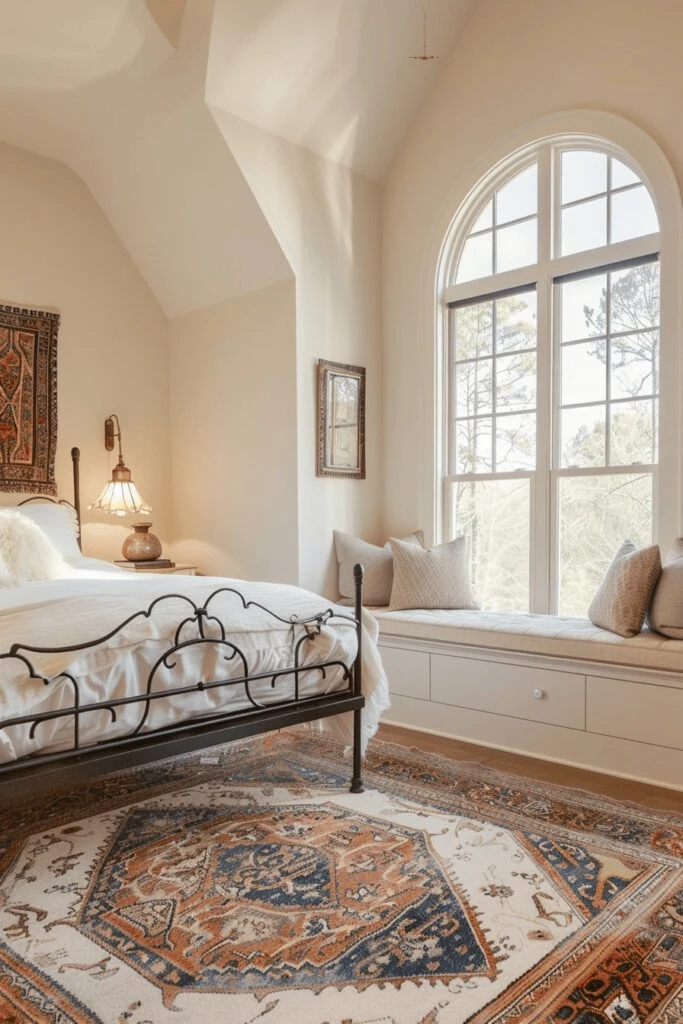
A window seat, a low bench, or even a daybed pushed under a window turns wasted space into the most used corner in the room. Layer it with a cushion, a folded throw, and one or two pillows in soft, mismatched neutrals so it looks settled in rather than just installed. Keep a small surface nearby, a windowsill shelf or a slim stool, for a book and a cup of tea.
14. Create A Sunlit Vanity Or Dressing Corner
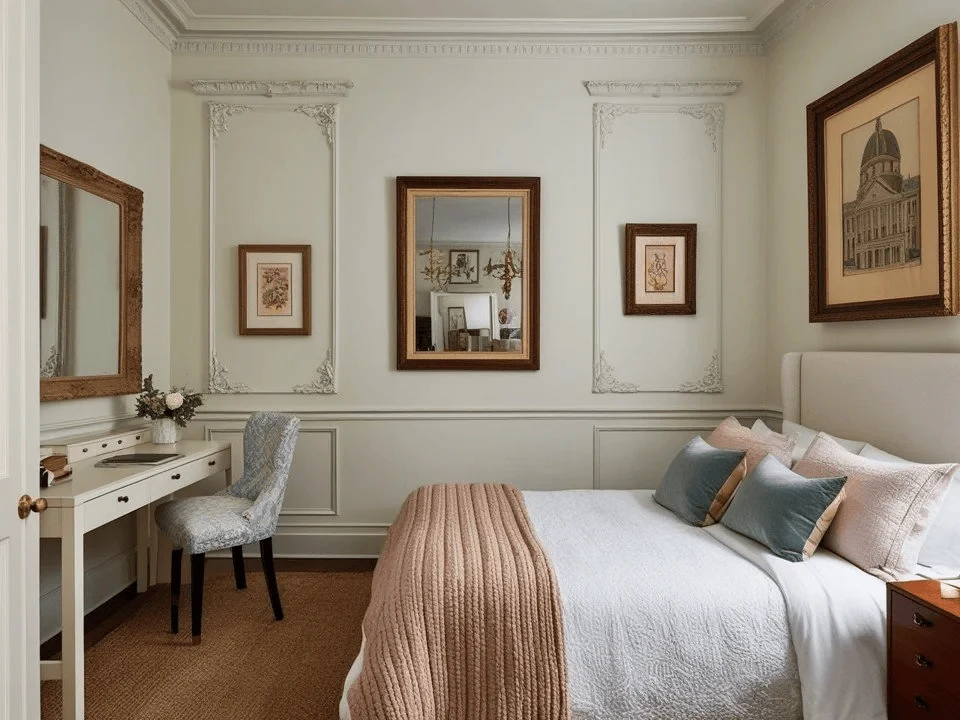
A vintage mirror, a small stool, a soft lamp, and a tray turn an unused bedroom corner into a daily ritual instead of dead space. Set it near natural light if you can, since morning light flatters most skin tones better than any bulb, and keep the tray edited to five pieces or fewer.
15. Add Flowers And Greenery Without Going Full Cottagecore
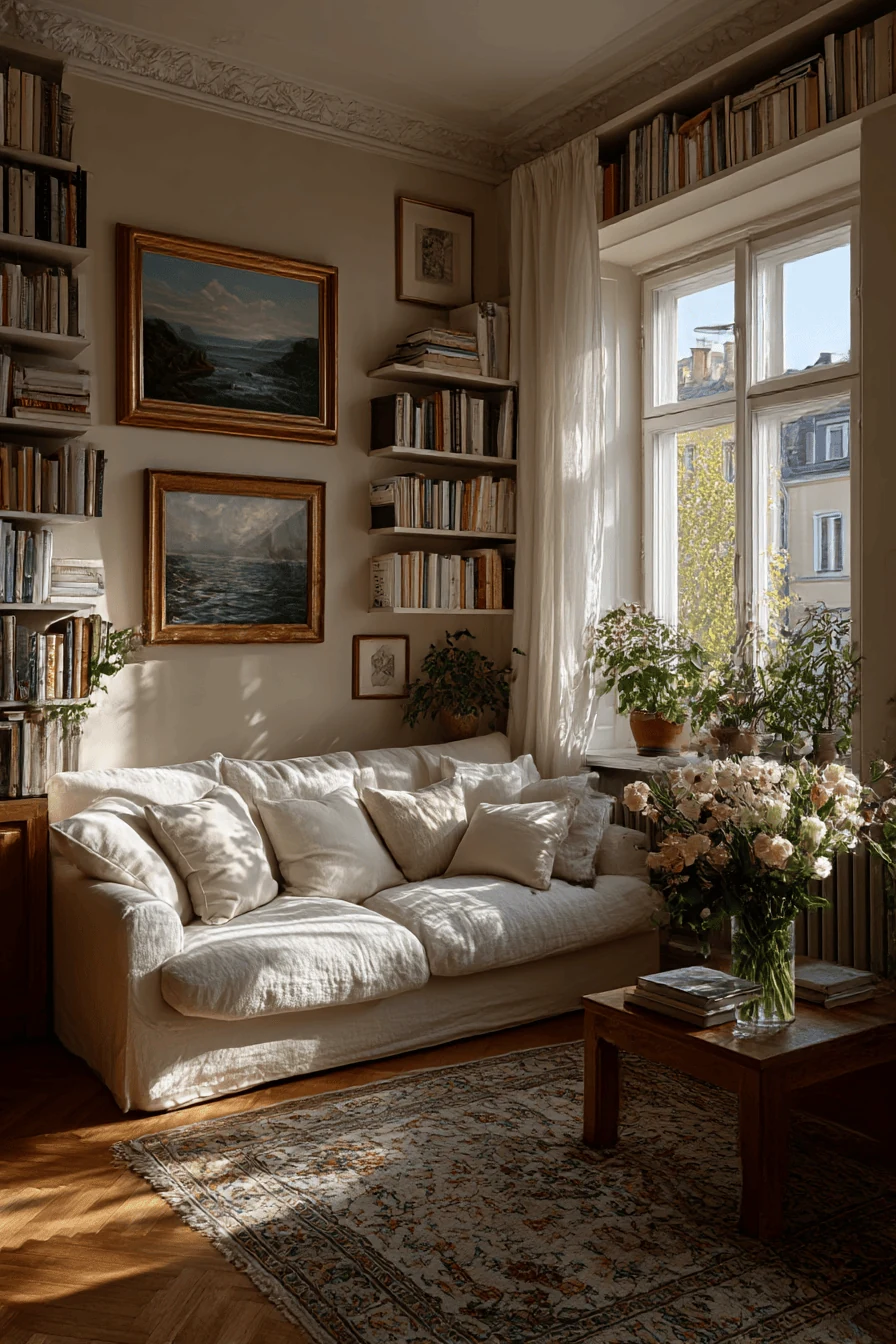
One vase of dried branches, eucalyptus, or fresh flowers softens a room without tipping it into a rustic cottage look. Choose one strong stem shape, like pampas grass or magnolia branches, rather than a busy mixed bouquet, and keep greenery to one or two spots in the room so it stays a small accent, not a theme.
16. Soften The Window With Linen Or Sheer Curtains
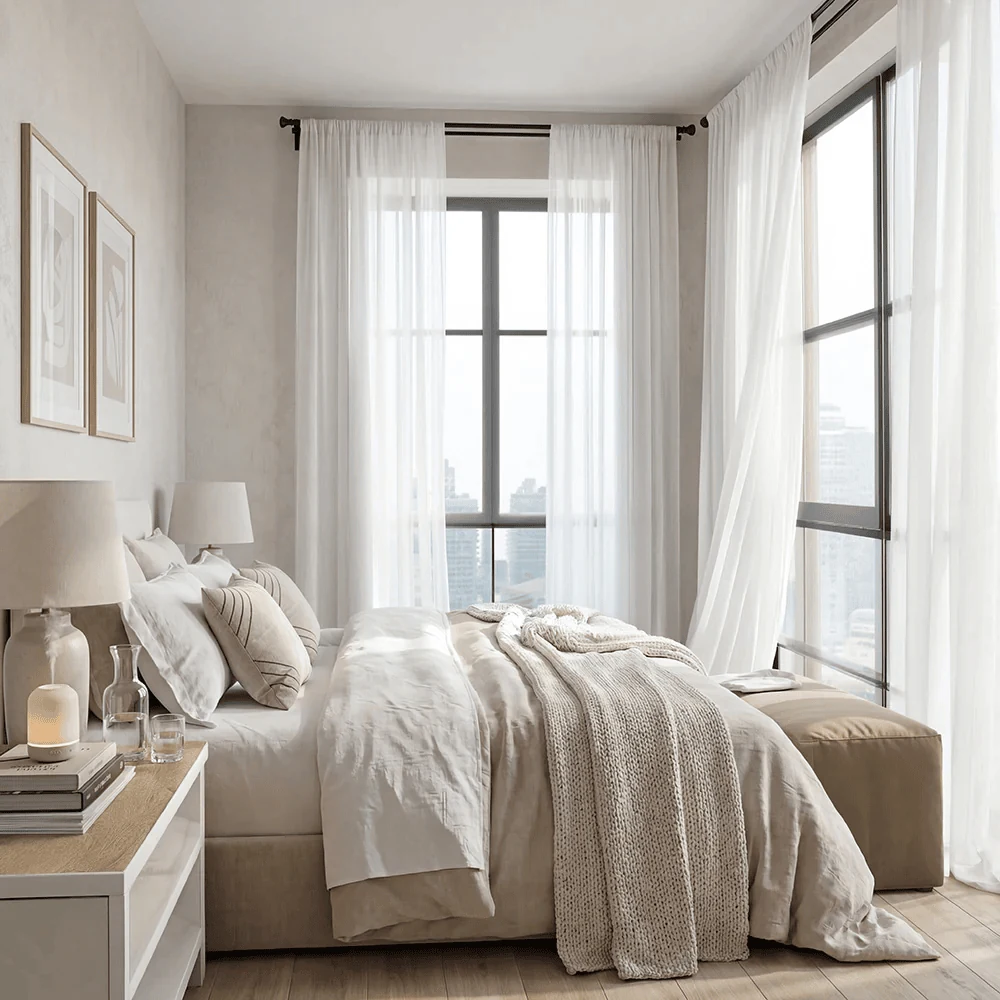
Linen or sheer curtains filter daylight, add a little movement, and soften a room across the day in a way blinds alone cannot. This suits bedrooms and home offices that get strong afternoon sun particularly well. Hang curtains close to the ceiling rather than the top of the window frame so the room reads taller.
17. Use One Antique Style Mirror To Bounce Light Around
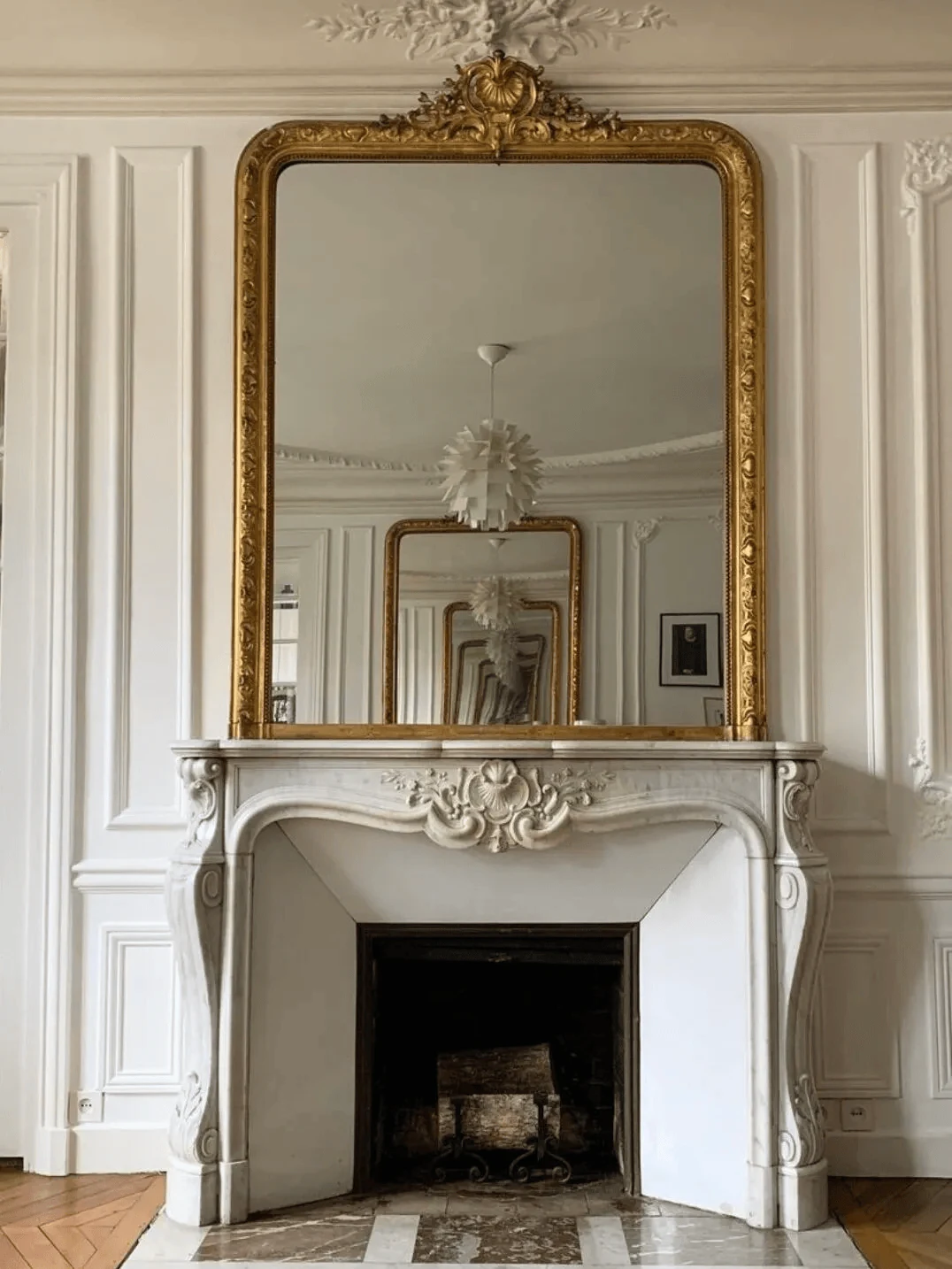
An antique-style mirror reflects daylight and makes a small, light academia room feel more open without adding a single extra piece of furniture. Hang it across from or beside a window, never directly opposite a wall, so it actually catches light.
If the mirror can do double duty, these mirror wardrobe ideas are worth seeing.
18. Add A Small Writing Or Journaling Corner
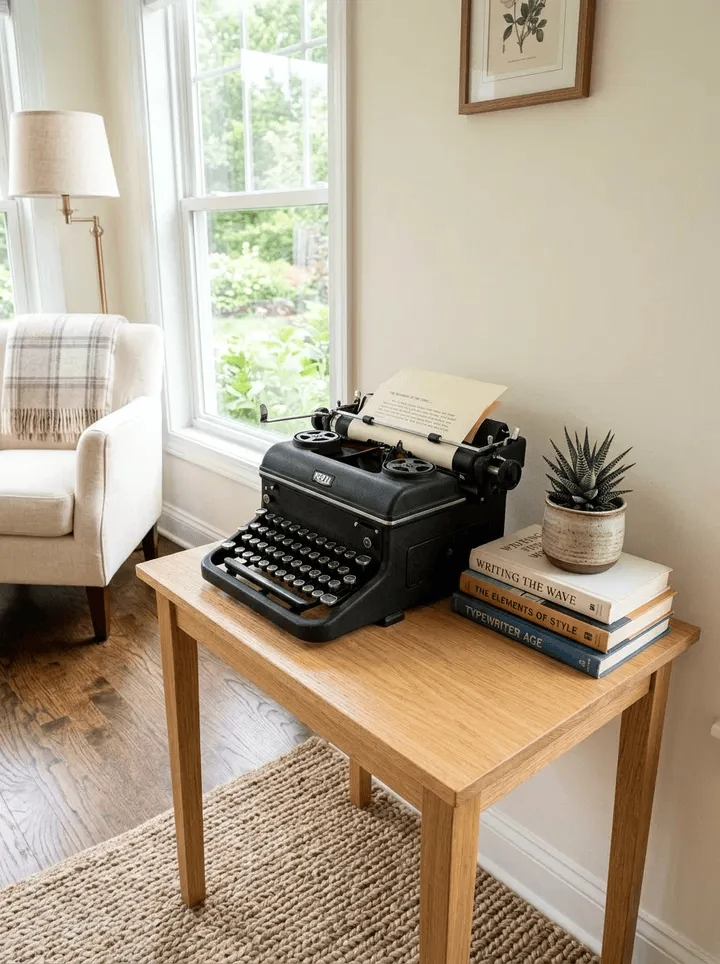
Image Lost At E Minor
A tiny table, a chair, a lamp, a notebook, and one framed print can turn even a leftover corner into a proper writing nook. Choose a chair you would actually sit in for twenty minutes, not just one that looks good empty, and keep the surface clear except for what you use that week.
19. Use Old Books As Decor, But Keep Them Useful
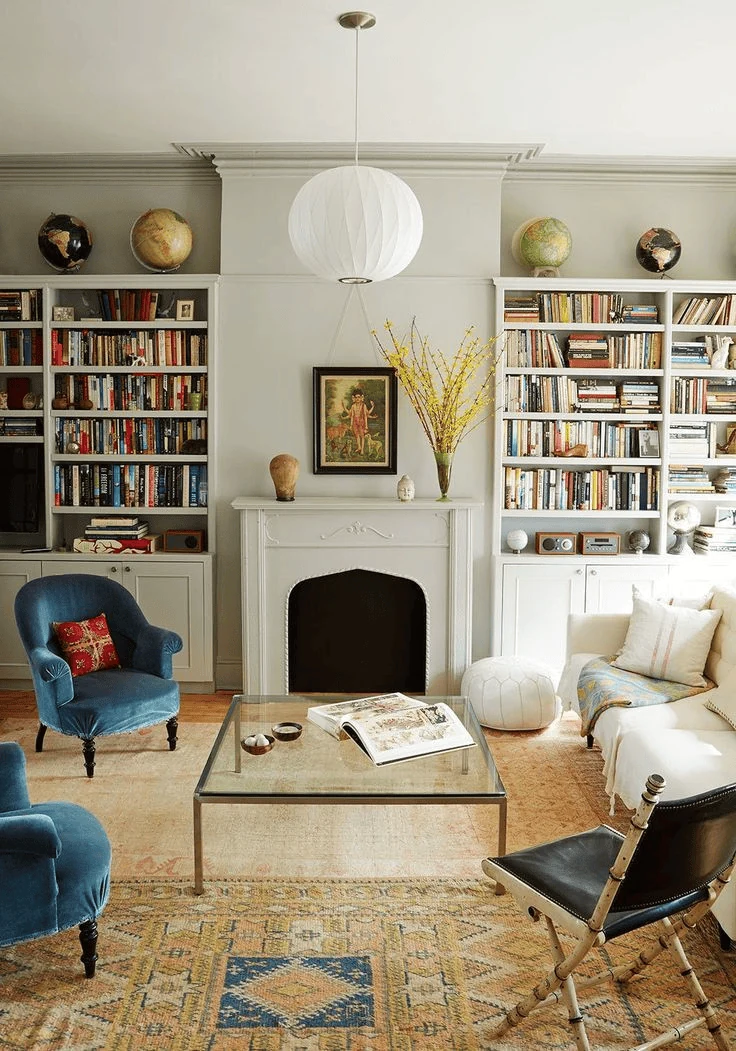
Books should add real character to a room, not sit there as fake clutter bought only for the color of the spines. Pull from your own shelves first, then fill gaps with secondhand finds in matching tones. If a stack of books is purely decorative, swap at least half for ones you would actually read.
20. Use A Trunk Or Woven Basket For Hidden Storage
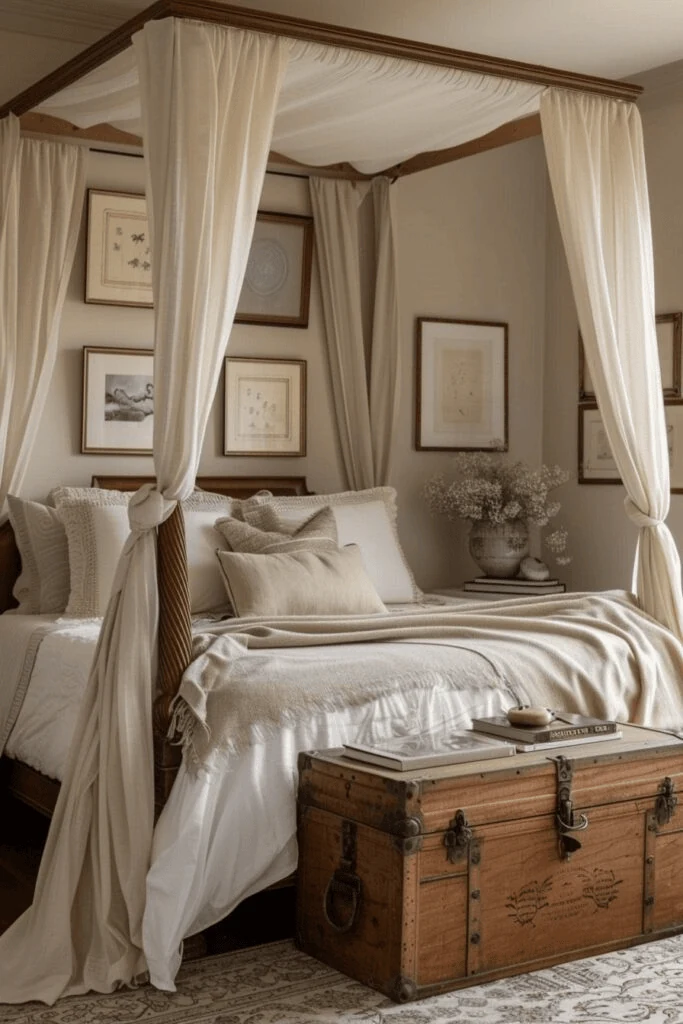
A trunk, a woven basket, or a closed box keeps blankets, books, chargers, and everyday clutter out of sight without breaking the look of the room. Choose one with some texture or age to it rather than a flat painted box, and keep it within reach of the bed or desk so it actually gets used.
For a larger version of the same idea, see our walk in wardrobe guide.
21. Add A Small Bust Sculpture Or Classical Object With Restraint
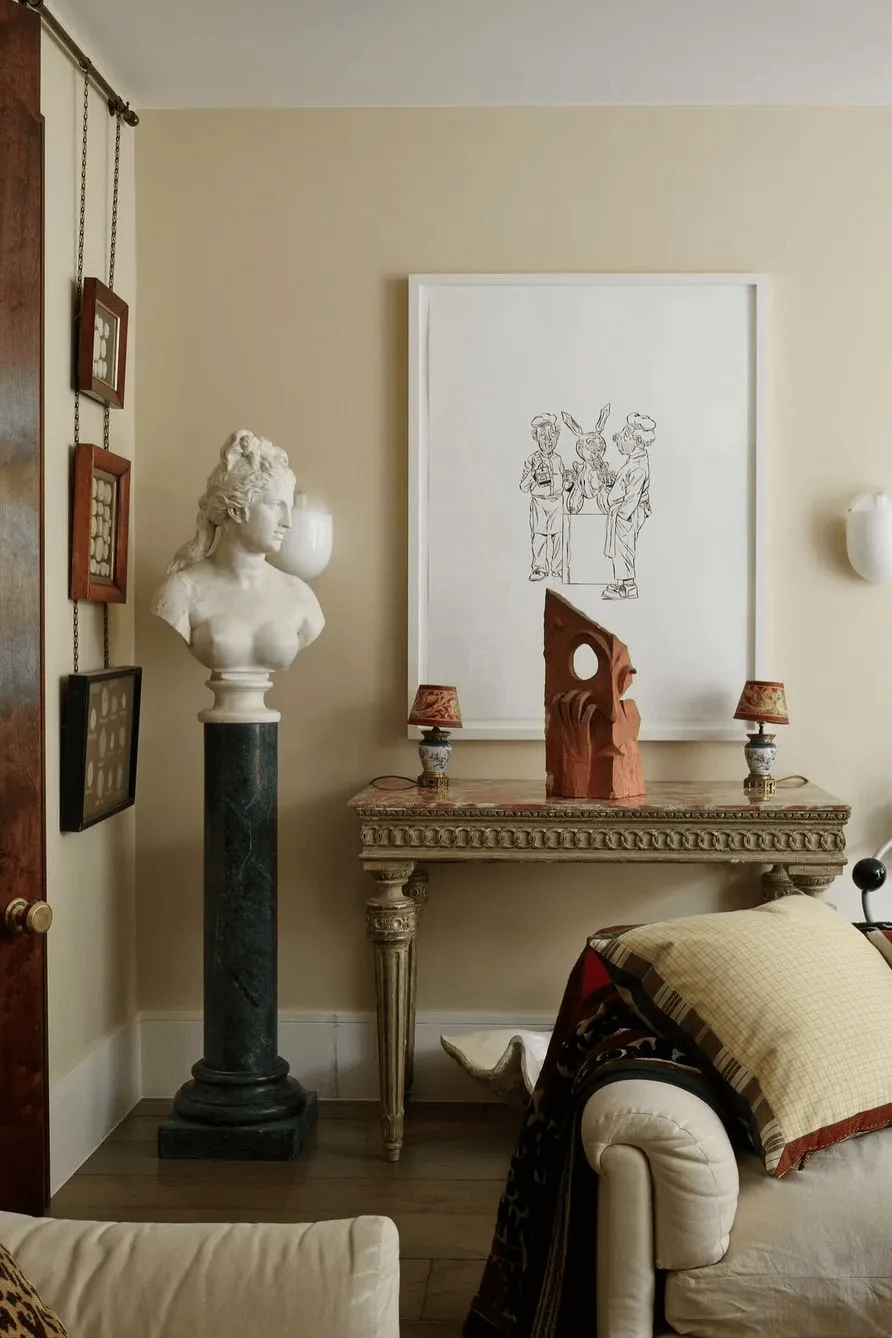
A small bust, a column-shaped vase, or another classical object can add academic character the moment it is used lightly, just one piece on a shelf or desk. Place it at eye level or slightly above so it reads as art rather than clutter. One classical object per room is usually enough.
22. Use Soft Stripes Checks Or Tiny Florals In Textiles
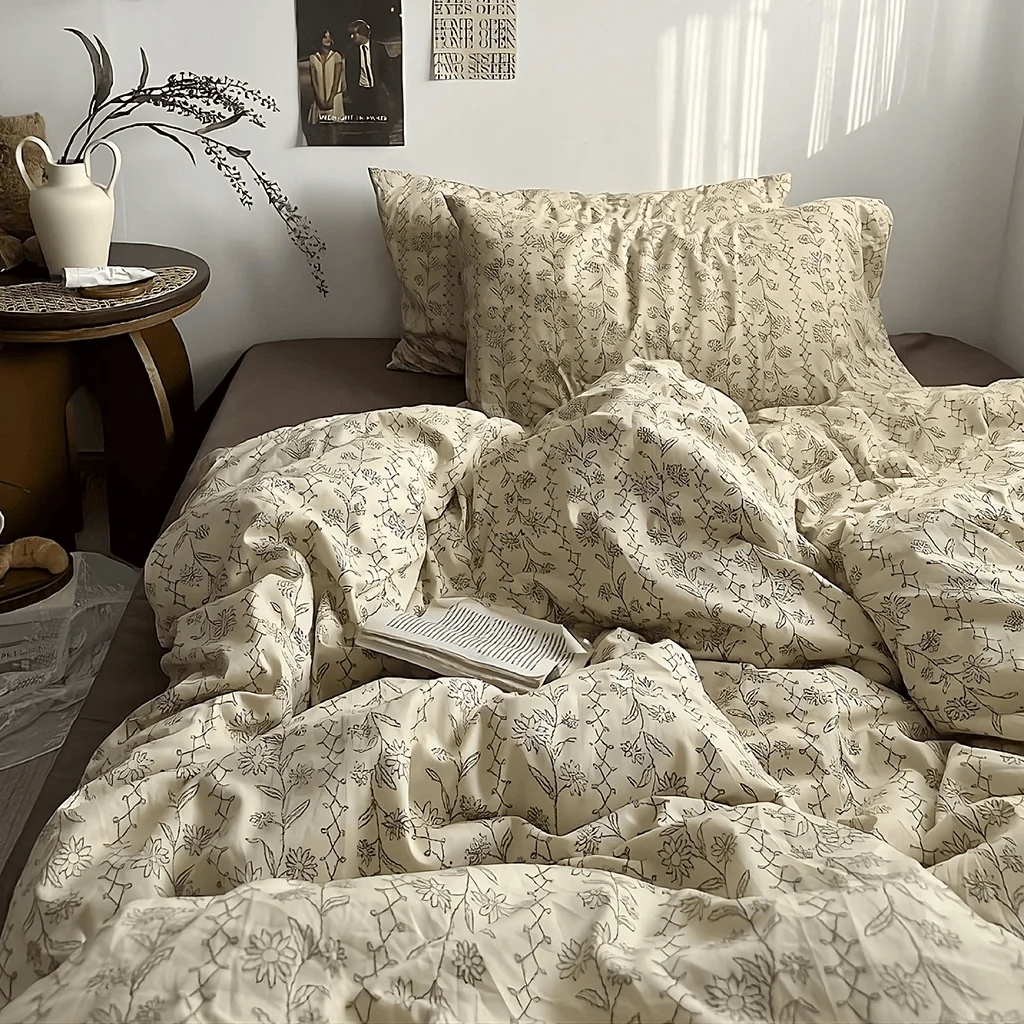
Small-scale stripes, gentle checks, and tiny florals add pattern to cushions, throws, and curtains without taking over the softer academic mood of the room. Cooper Hewitt, Smithsonian Design Museum, holds more than twenty-six thousand textile objects, many from the same Arts and Crafts tradition that favored restraint over crowding a pattern. Stick to one pattern family per room and let solids carry the rest.
23. Create A Bedside Table That Feels Like A Mini Study
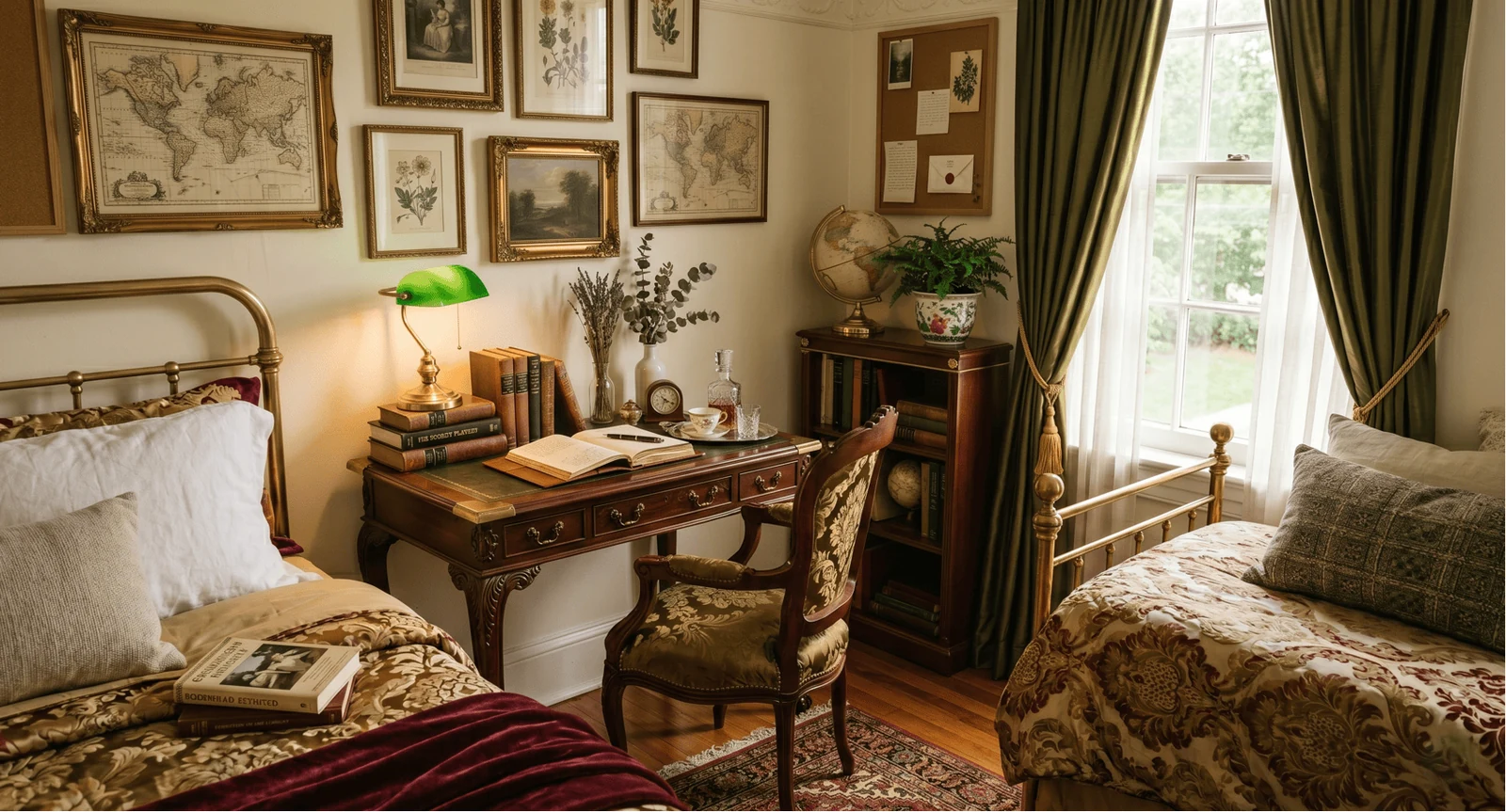
A lamp, a small stack of books, a ceramic tray, a tiny vase of flowers, and one framed piece of art can make a bedside table feel intentional rather than accidental. Leave a few inches of space so the table does not feel crowded. Our bedroom design ideas guide has more on bedside layouts that work in smaller rooms.
24. Use Vertical Shelves To Save Floor Space
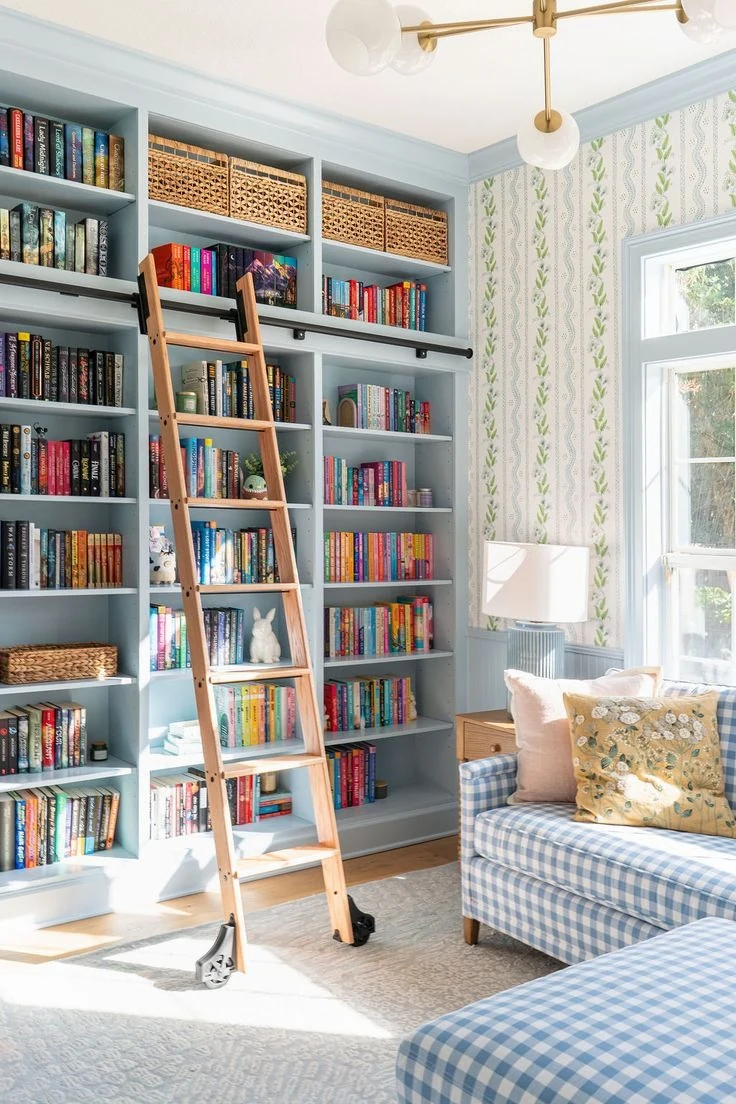
Tall, narrow shelves keep books and decor visible and save floor space in apartments, compact bedrooms, and tight study corners. They work especially well in rooms under twelve square meters, where a low bookcase would eat up walking room. Anchor tall shelves to the wall, since a loaded shelving unit can tip if it is not secured. More tips live in our small apartment decorating ideas guide.
In a shared room, these room divider design ideas free up wall space too.
25. Hide Modern Work Tools In Vintage-Looking Storage
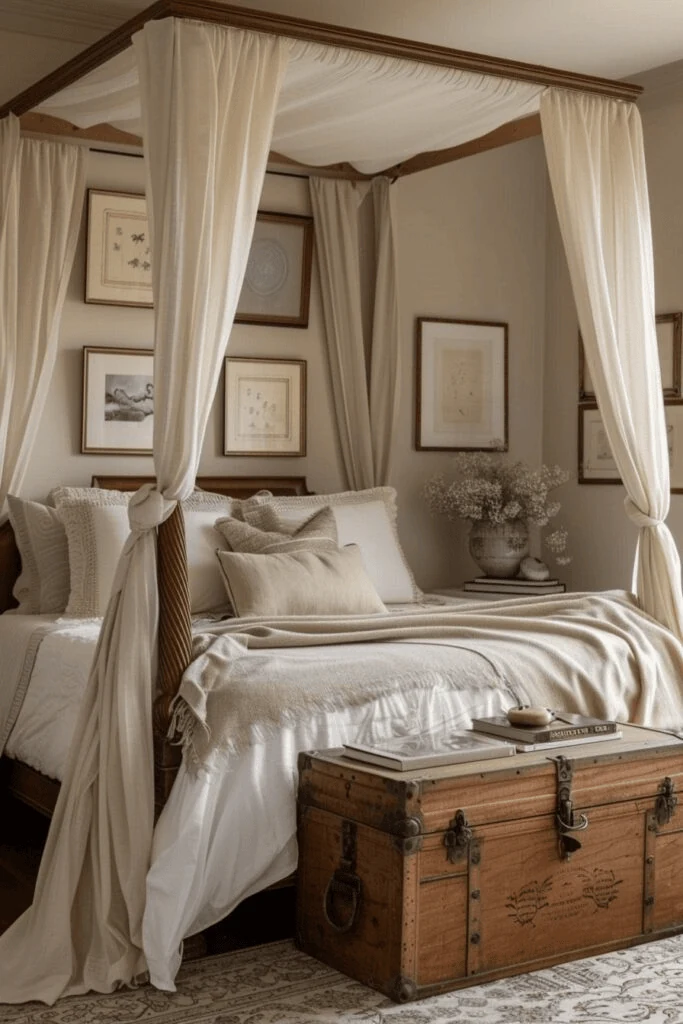
Boxes, drawers, trays, and woven baskets keep chargers, stationery, a laptop stand, and other modern office items out of view. Line the inside of open boxes with fabric or felt so loose cords stop rattling around, and label drawers if you share the desk, so the system still works on a busy week.
26. Use An Upholstered Chair Instead Of A Bulky Gaming Chair
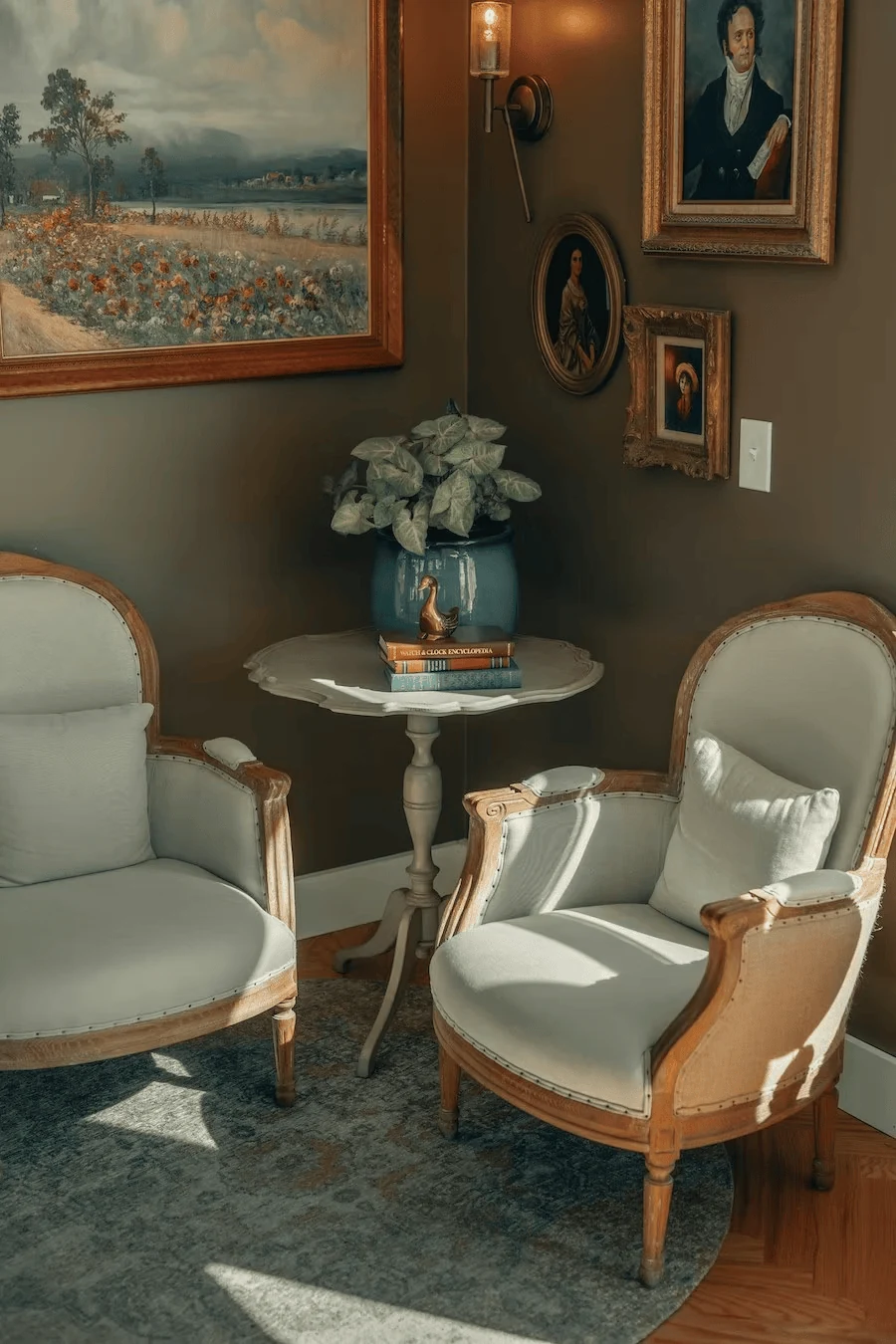
For a light academia home office, a cane, linen, leather, or upholstered chair still supports a full day of work without breaking the room’s mood. Look for adjustable height and decent lumbar support before you fall for a chair purely on looks, and test it for at least ten minutes seated, not just a quick sit and stand.
27. Choose A Slim Side Table For Small Reading Corners
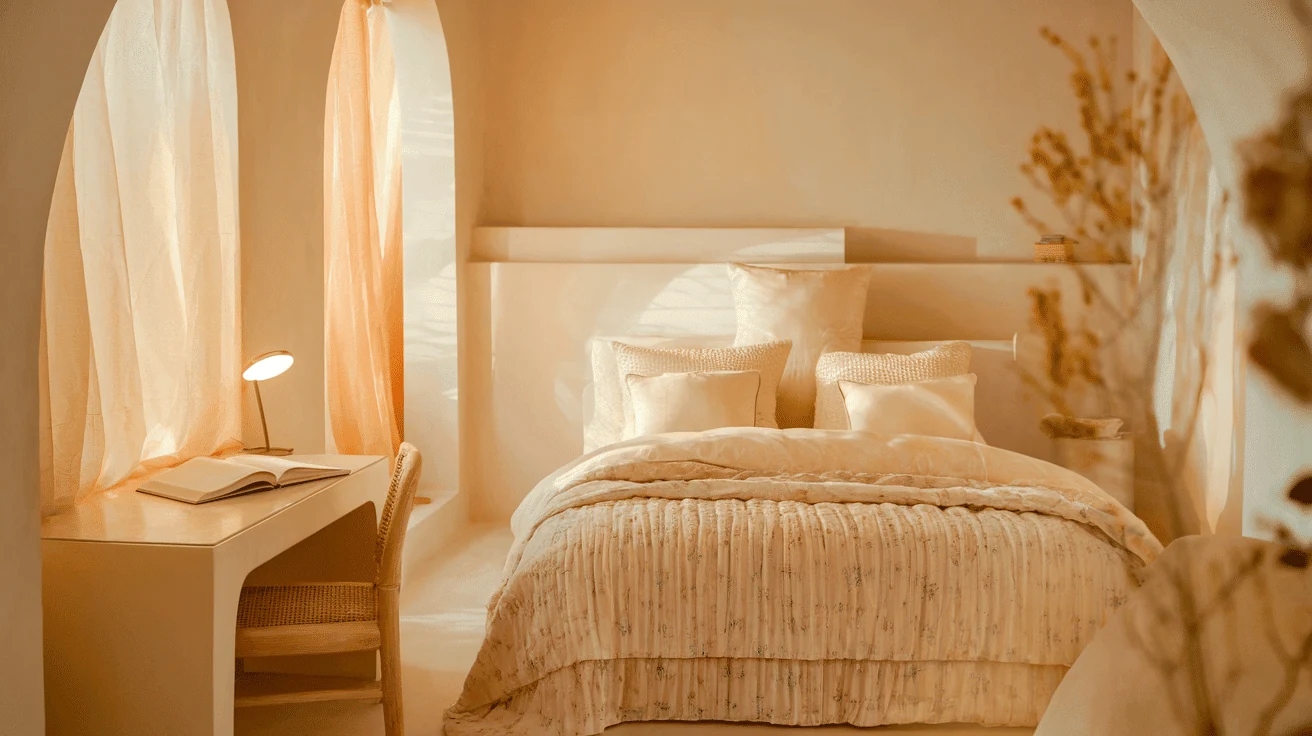
A slim side table gives a reading chair room for a book, a lamp, and a cup without crowding the corner around it. Pick a table with an open base, like thin metal legs, rather than a solid block, since it keeps the corner feeling light, and match the table height to the arm of the chair.
28. Edit The Decor So The Room Feels Grown Up
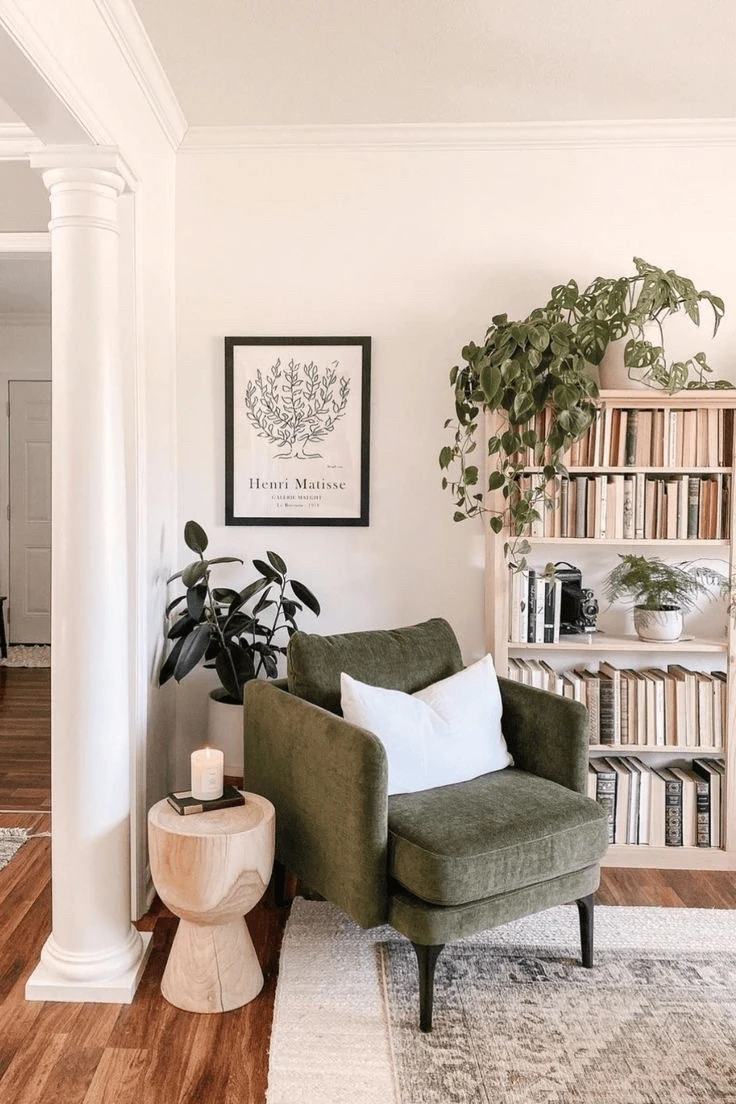
Light Academia Decor should feel collected, personal, and easy to breathe in, not crowded with props bought only for matching a trend. The Arts and Crafts principle behind so much of this style holds up well here: useful objects, chosen with care, outlast decoration added for its own sake. Before adding one more piece, try taking one away first.
What Light Academia Decor Actually Means In A Real Room
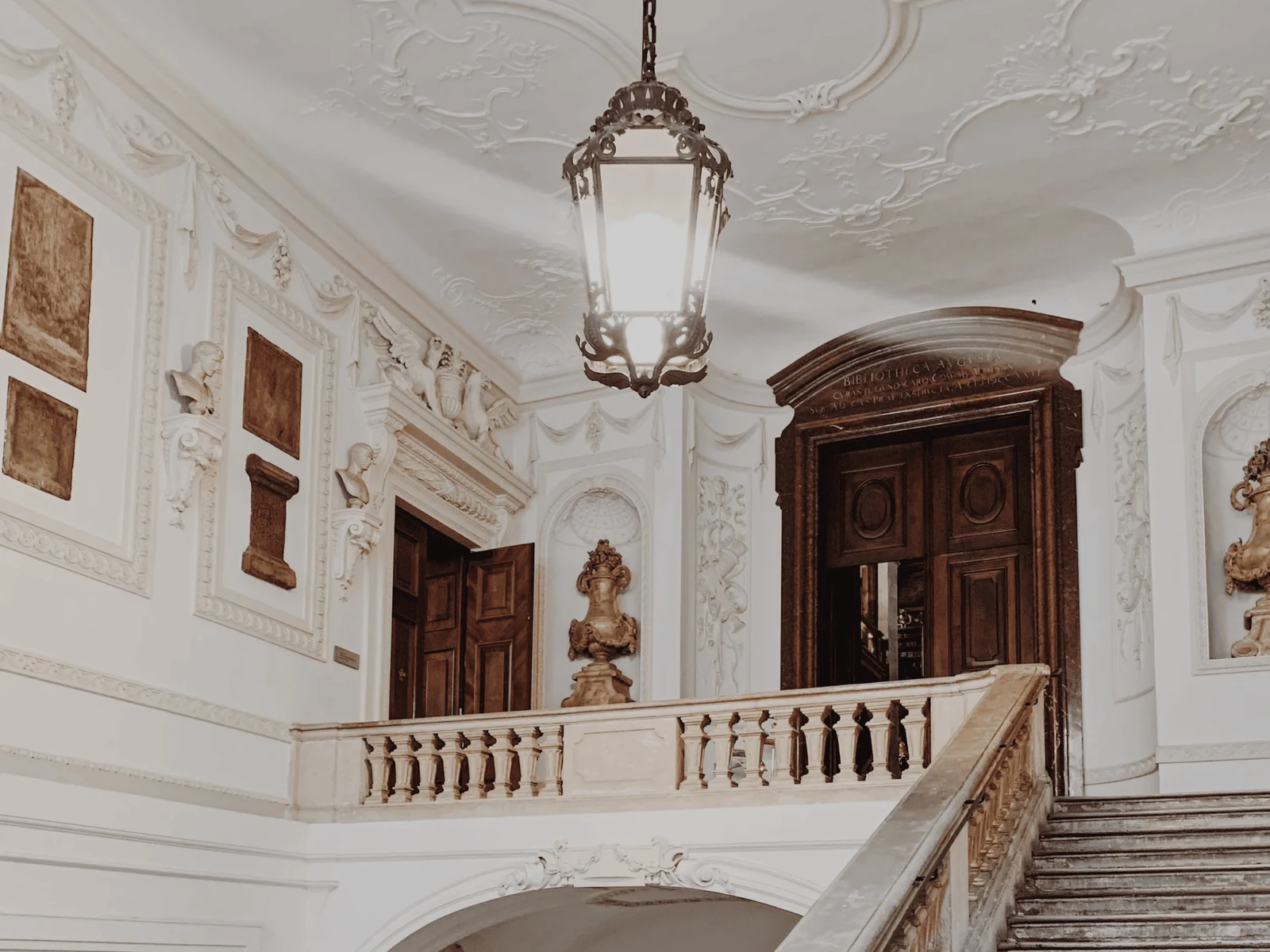
Light Academia Decor is a soft, bright, vintage-leaning academic style built around warm neutrals, books, classic furniture, botanical art, brass lighting, linen, wood, and plenty of natural light. It keeps the scholarly charm people like about academia and drops the visual weight that comes with dark walls, oversized furniture, and shadowed corners.
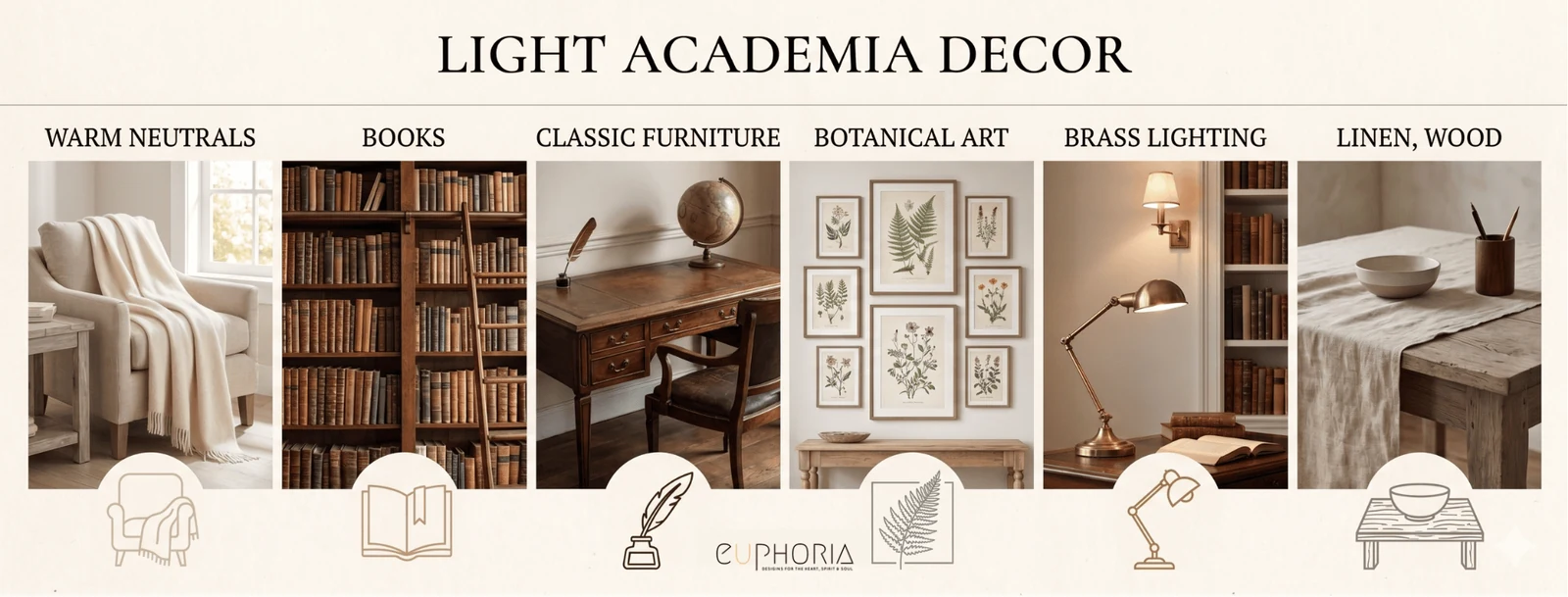
Think of it as the version of an academic room you would actually want to wake up in. The desk still has character, the shelves still hold real books, and the materials still carry some age and texture. What changes is the palette and the light, not the substance behind the look.
Dark Academia Vs Light Academia And What Really Changes
The split between dark academia vs light academia starts with mood and ends with color. Dark academia leans into drama: deep wood, low lamp light, and a room that feels like a library locked up for the night. Light academia keeps the same bones, books, wood, and a sense of study, and sets them against daylight and a warmer, paler palette instead.
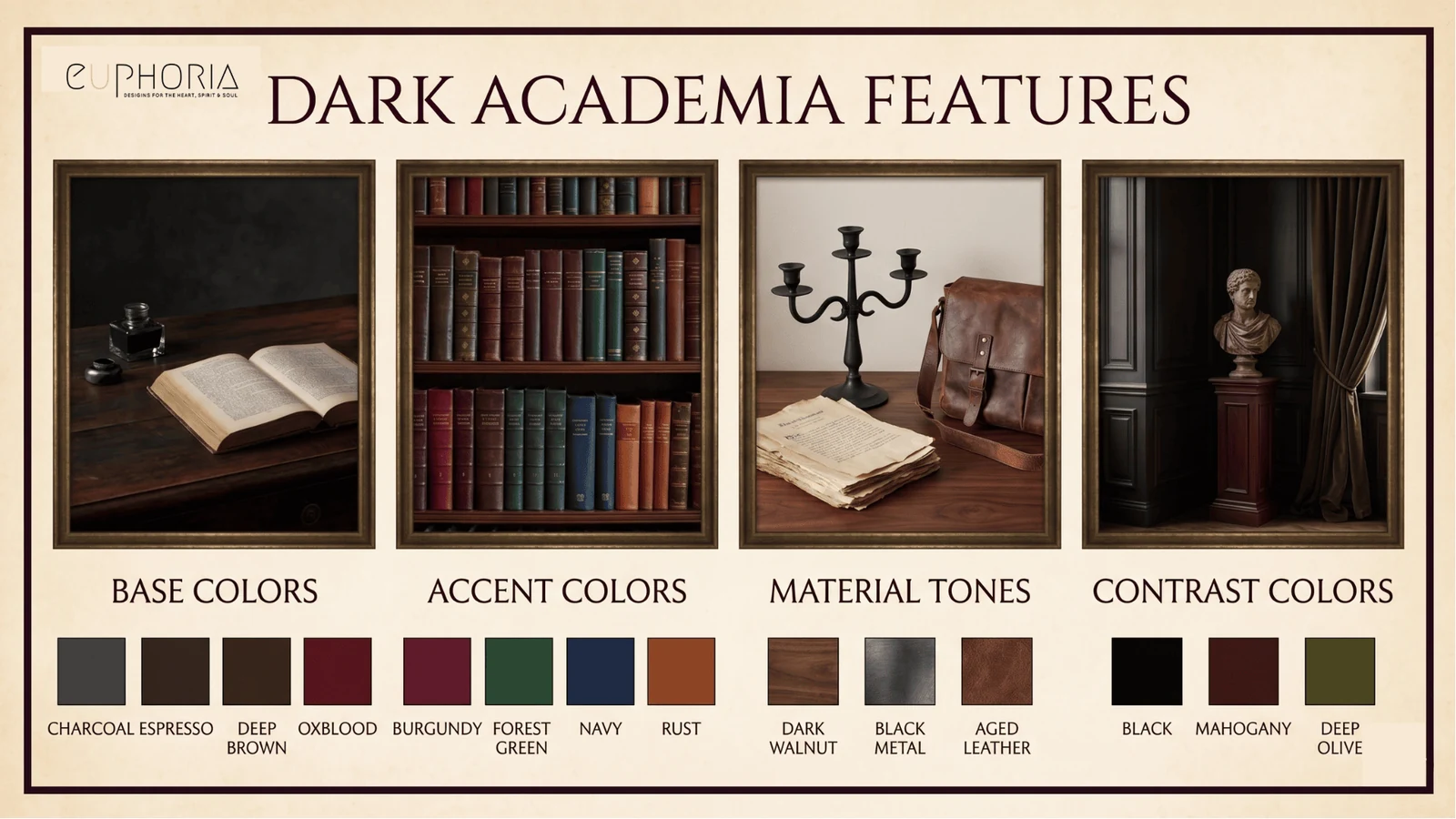
Furniture follows the same divide. Dark academia favors heavy wood, leather upholstery, and dark built-in shelving that anchors a room with weight. Light academia favors pale oak, cane, antique pine, and linen upholstery, pieces that still carry age and craft but sit lighter in a room with less square footage to work with.
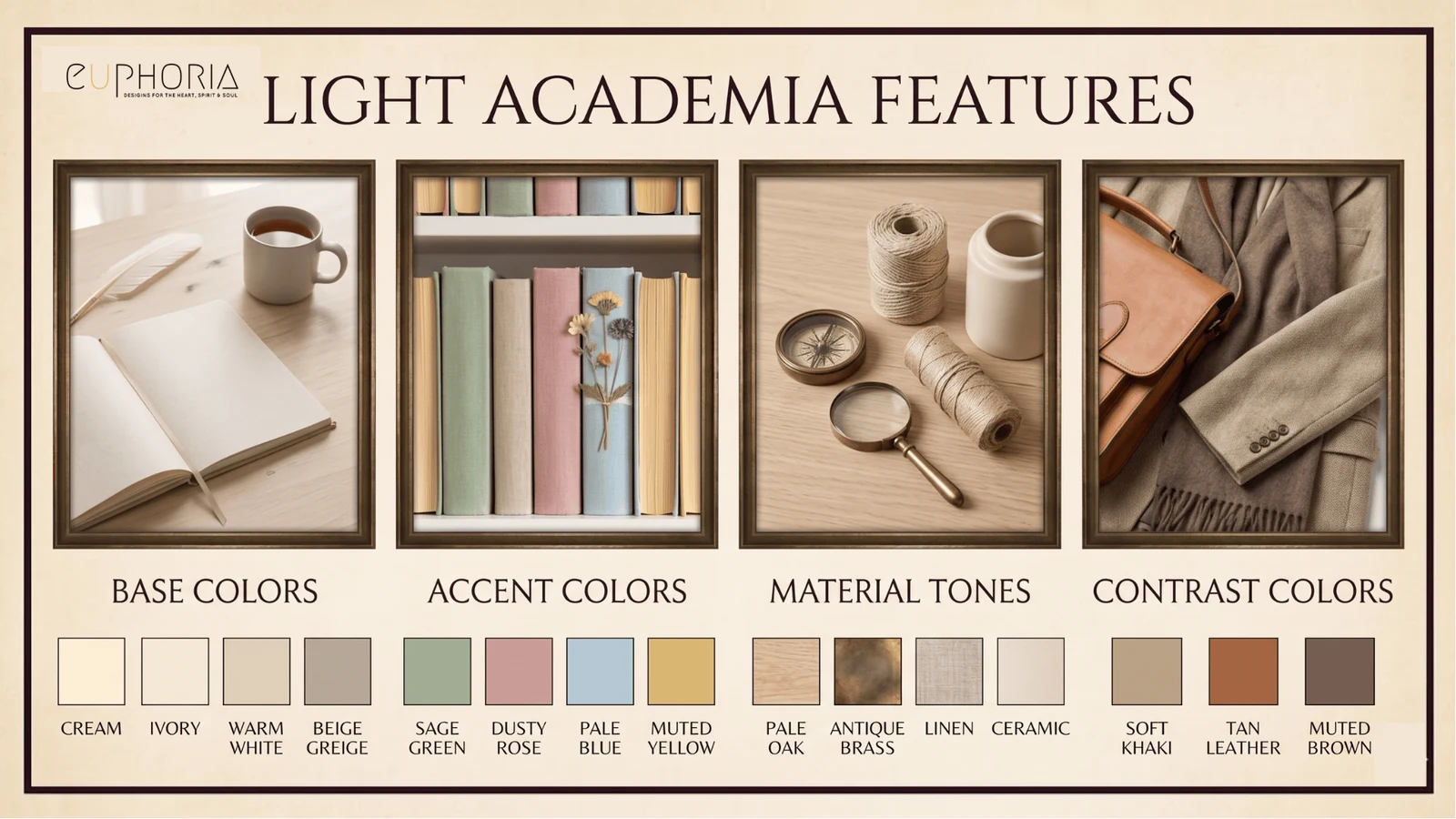
Room size plays a real part in which version suits a space. A large bedroom or a converted study can carry the weight of dark academia without feeling cramped. A small bedroom, a studio apartment, or a home office with limited daylight tends to read heavy and closed in under that same palette, which is exactly where light academia color palette choices earn their keep. For a wider look at how different styles compare, our interior design style guide covers this in more depth.
| Element | Dark Academia | Light Academia |
|---|---|---|
| Mood | Dramatic, moody, mysterious | Soft, bright, romantic |
| Room feeling | Old library at night | Sunlit study in the morning |
| Lighting | Dim lamps, shadows, low glow | Daylight, warm lamps, filtered light |
| Furniture | Heavy wood, leather, dark shelves | Pale wood, vintage desks, linen seating |
| Best rooms | Large bedrooms, libraries, and formal studies | Bedrooms, apartments, home offices, reading corners |
| Risk | Can feel heavy in small rooms | Can feel flat if everything is beige |
The color story follows the same logic. Dark academia leans on saturated, low-light colors that hold their depth under lamp light. Light academia leans on warmer neutrals and softer accents that hold up under daylight and still feel calm once the sun goes down.
Benjamin Moore’s color team has pointed to a similar move this year, with their color marketing director noting that warm browns and neutrals have become a real stand-in for the black and charcoal tones that used to dominate. Behr’s neutral collections follow a similar path, with warmer, softer base tones replacing the starker whites and grays that dominated a few years back.
Choosing between the two for a small UAE bedroom or apartment, light academia tends to be the safer call. Strong daylight through large windows in Dubai and Abu Dhabi apartments can make a dark academia palette feel even heavier during the day. A lighter palette uses that same sun to its advantage instead.
Mistakes That Make Light Academia Decor Look Flat Or Forced
The aesthetic falls apart fast when it is built from props instead of real material and real light. A few patterns show up again and again in rooms that miss the mark:
- Making everything beige. A room needs at least one or two broader accents, or it starts to feel flat under any light.
- Using too many book props. A shelf full of unread, color-coded spines reads as staged the moment a guest pulls one out.
- Ignoring natural light. The whole point of the style is daylight, so heavy curtains or a desk facing away from the window work against it.
- Choosing furniture that is too heavy. A dark academia scale desk or bed frame fights the lighter palette around it.
- Using harsh white lighting. Cool white bulbs strip the warmth out of cream walls and linen fast.
- Covering walls with fake vines. Artificial greenery reads cheap against the natural materials the style relies on.
- Mixing too many aesthetics. Boho fringe, industrial metal, and light academia rarely sit well together in one small room.
- Forgetting storage. Open shelving and a desk look good for a week and are cluttered by the second.
- Buying decor without function. A vase, tray, or trunk should earn its spot by doing something, not just sitting there.
- Using dark academia colors in a small, low-light room. Deep charcoal or oxblood in a room with one small window will close the space in, not open it up.
The objects that hold up over time in this style are the ones chosen for honest material and real use, not decoration added for its own sake.
If it is a child’s room taking this direction, our kids wardrobe design ideas keep the storage practical.
Bringing The Bright Bookish Room Together
Light Academia Decor earns its place since it gives a room real character without making it dark or heavy. Bring back natural light, lean into a warmer color palette, pick furniture that suits the scale of your room, build in proper storage, and let a handful of personal objects do the talking instead of a crowded shelf.
If you want this look planned around your actual room, lighting, and storage needs rather than pieced together on your own, our bedroom interior design team in Dubai at Euphoria Interiors can help you build it room by room, in Dubai or Abu Dhabi. Browse our portfolio for examples of how a soft, collected palette plays out in a real home before you start.
For the wider picture, browse our home decor ideas.
Our wall painting ideas cover the finishes that suit this look.