
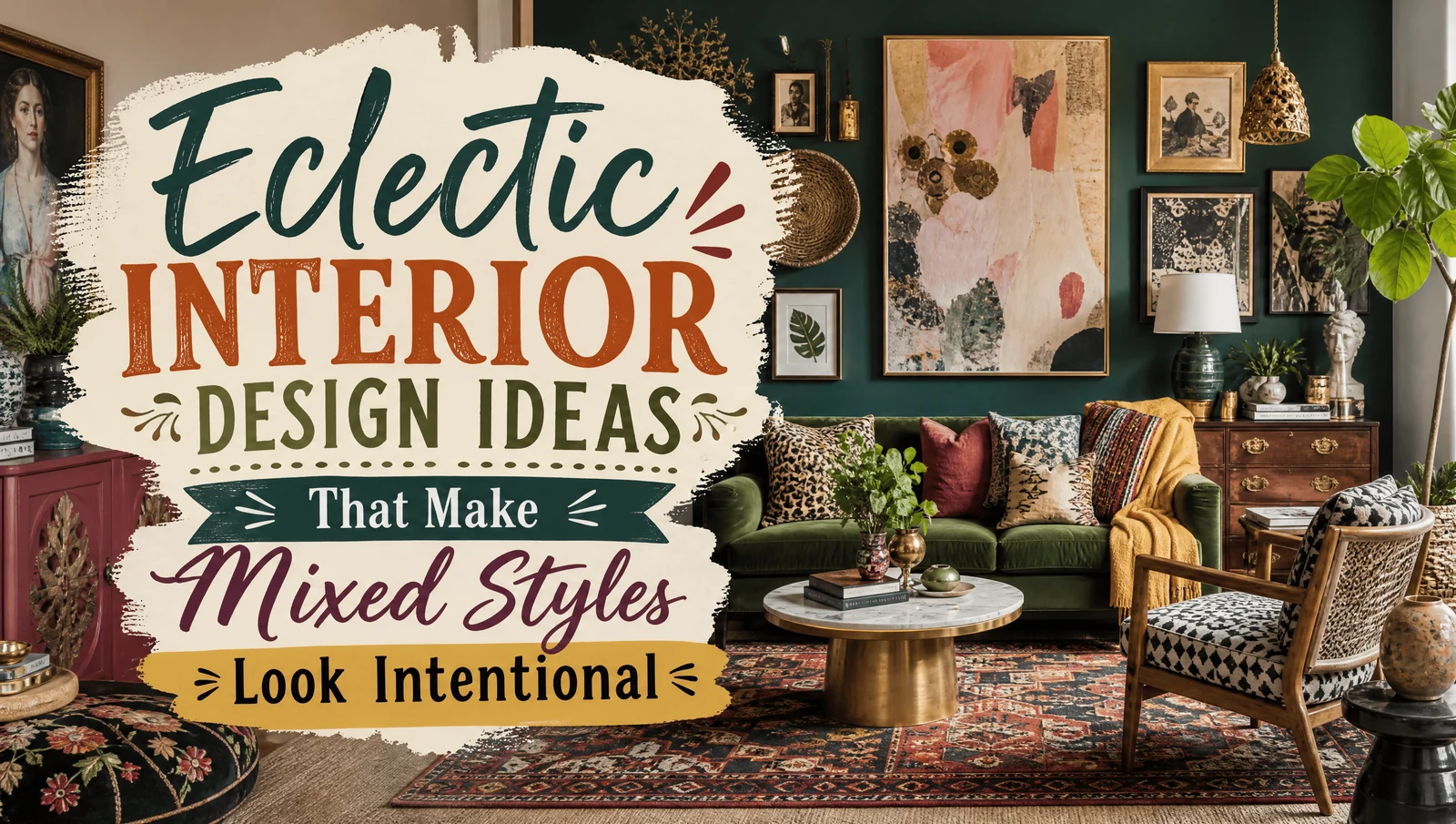
A home can hold a vintage chair, a modern sofa, a patterned rug, sculptural lighting, and a shelf full of travel finds without looking confused. The difference between a room that reads as collected and one that reads as cluttered has nothing to do with how many styles are in the space. It comes down to whether those styles have any thread connecting them. Eclectic interior design works because it gives a home personality, but personality without control tends to become noise.
A repeated color, a shared material tone, one strong anchor piece, or a balanced layout can make very different objects feel like they were always meant to share a room. That is the whole trick, and it is more learnable than most people think.
If you have been holding back because you worry your mix of old and new, your art collection, your grandmother’s cabinet, and your newly bought linen sofa will not belong together, keep reading. They probably can.
What Is Eclectic Interior Design?
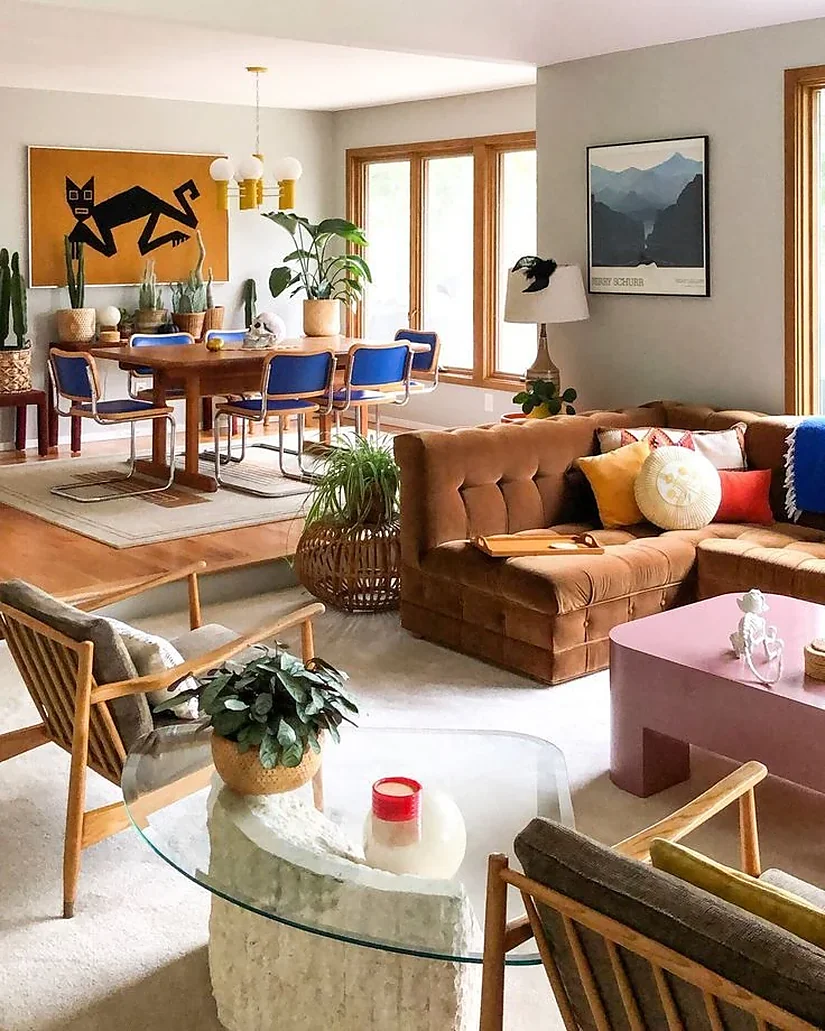
Eclectic interior design is a deliberate way of mixing furniture styles, colors, textures, time periods, and decor influences so a home feels personal but still cohesive. It works best when contrast is balanced through repeated colors, materials, shapes, patterns, or a clear focal point.
The word “eclectic” often gets used loosely to mean “a bit of everything,” but in eclectic interior design it carries a more specific meaning. It is a style built on deliberate contrast. You are choosing to place a carved wooden console next to a clean-lined marble table, not because you ran out of ideas, but because the combination does something neither piece could do alone. The contrast creates depth. The repetition, which might come through a shared warm wood tone or a color that appears in both the rug and a nearby cushion, creates cohesion.
Eclectic interior design usually includes:
- A mix of old and new furniture
- A repeated color palette
- Layered textures and patterns
- Statement lighting or art
- Personal objects, books, travel finds, or heirlooms
- A rug or anchor piece that connects the room
- Enough editing so the room does not feel crowded
To see where it sits next to other looks, use our A to Z guide to popular interior design styles.
20 Eclectic Interior Design Ideas For A Collected Home
Use these eclectic interior design methods to mix your contrasting furniture and decor so the final room feels completely intentional rather than random.
1. Start Eclectic Design With One Strong Anchor Piece
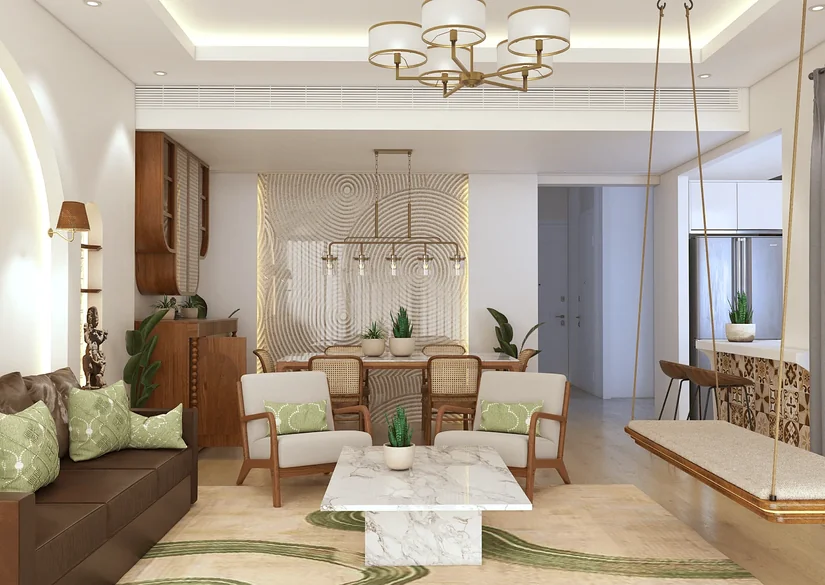
Every eclectic room needs a starting point, one piece that sets the tone and gives everything else something to respond to. This could be a vintage rug with deep jewel tones, a sculptural sofa with an unusual silhouette, an antique console, an oversized canvas, a bold cabinet, or a pendant light that doubles as art.
In our Cherrywoods Villa project, the design gets its strength from letting a few strong elements lead rather than filling every corner with competing pieces. Combining traditional cultural elements like a statement brass swing with modern minimalist features is exactly how eclectic interior design should begin. Choose one hero piece first, then let the rug, lighting, art, and surrounding furniture support it without competing with it.
- Visual impact: One anchor piece gives the eye a clear starting point and makes the rest of the room feel chosen.
- Best anchor options: Vintage rug, sculptural sofa, oversized artwork, statement cabinet, or an architectural light fitting.
- Design rule: Build outward from the anchor. Every subsequent piece should respond to it in color, scale, or material.
2. Repeat One Color Across The Room
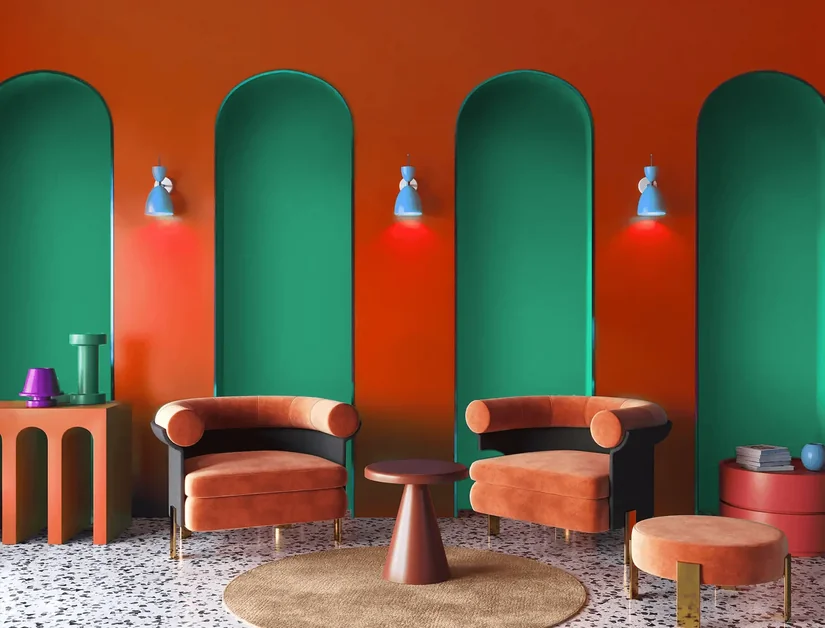
Color is the easiest and most effective thread you can run through eclectic interior design. It does not need to be a dominant color. A single shade appearing in the rug, a cushion, a piece of artwork, a ceramic vase, and a lampshade is enough to make very different furniture pieces feel like they were chosen together rather than collected at random.
Color-led designers like India Mahdavi show how one strong shade can change the feeling of an entire room, making it feel deliberate rather than accidental. Her interiors demonstrate that a repeated color does not decorate a room so much as it structures it. Pick your color, then let it travel quietly through the space in at least three places so the eye registers it as a decision rather than a coincidence.
- Visual impact: Repeated color pulls unrelated pieces into a single visual conversation.
- Where to repeat: Rug, cushion cover, artwork, vase, lampshade, or even a painted shelf interior.
- Design rule: Three appearances of the same color are the minimum for the eye to register it as intentional.
3. Mix Vintage And Modern Furniture In Eclectic Design
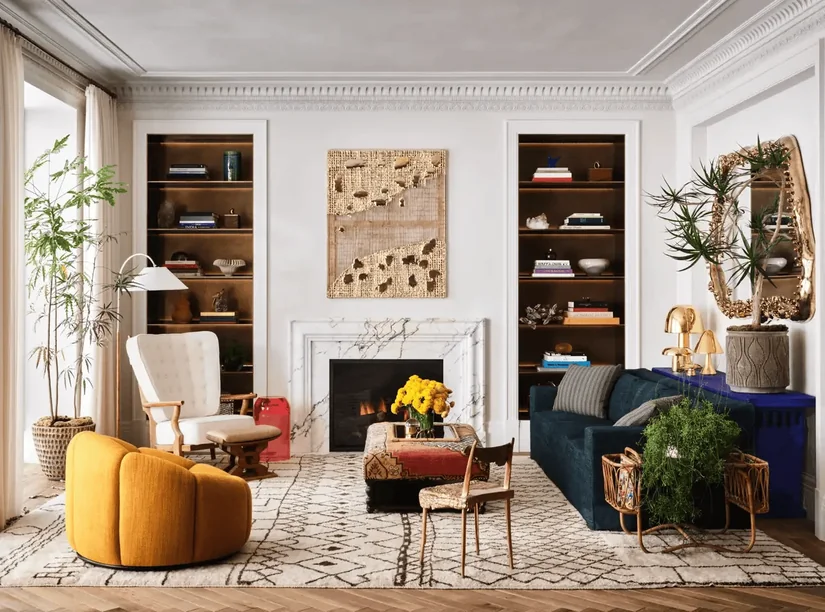
One of the most satisfying combinations in eclectic interior design is a clean-lined modern sofa sitting next to an antique side table, a carved wooden chair, or a vintage chest of drawers with a new lamp on top. The contrast between old and new creates energy. Each piece makes the other look more interesting, and together they suggest a home that has developed over time rather than been installed in a weekend.
Designer Beata Heuman often talks about mixing old styles with new so a home feels alive rather than frozen in one period. The key is connecting the pieces through scale, color, or material tone rather than matching them by era. A mid-century chair and a contemporary sofa can share a room comfortably if their proportions are similar or if a rug pulls both their tones together.
- Visual impact: The contrast between old and new adds depth and suggests a home with a personal history.
- Connection point: Shared scale, similar wood tone, or a rug that carries both tones keeps the mix coherent.
- Design rule: Connect pieces through material or color, not through period.
This guide to Memphis style shows how far the mix can be pushed before it stops working.
4. Use A Neutral Base To Control Bold Decor
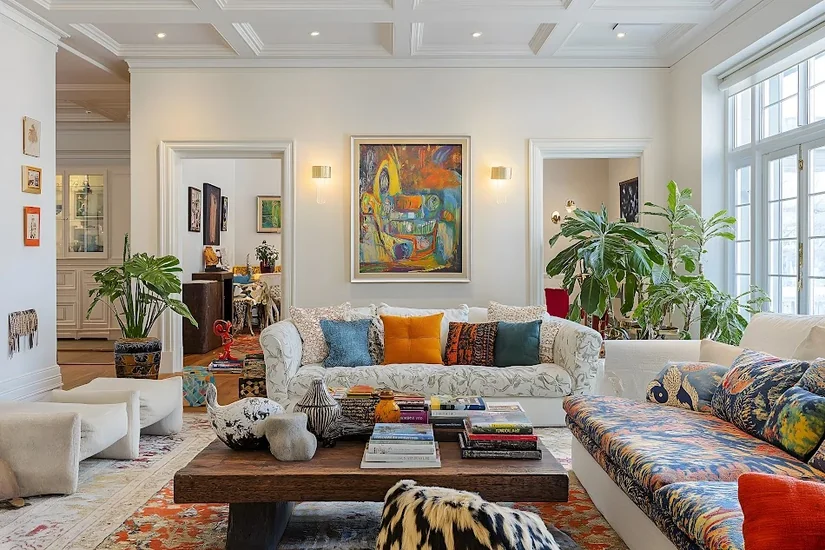
Neutral walls, simple flooring, plain linen curtains, or softly upholstered furniture are not boring choices in an eclectic room. They are the quiet background that makes bold art, patterned rugs, and expressive furniture readable. Without that quieter base, the room can start to feel like everything is competing at once, and no single piece gets to lead.
The trick is knowing where to be bold and where to hold back. If your rug is patterned, your art is colorful, and your side table is sculptural, your sofa probably does not need to be any of those things. The neutral base is not a failure of imagination. It is what makes the rest of the room possible.
- Visual impact: A quiet base gives bold pieces room to breathe and be properly seen.
- Best neutral surfaces: Walls, upholstered sofas, curtains, and flooring are the largest planes and the most useful to keep controlled.
- Design rule: If the decor is expressive, keep the largest surfaces more controlled.
5. Layer Rugs To Connect Different Styles
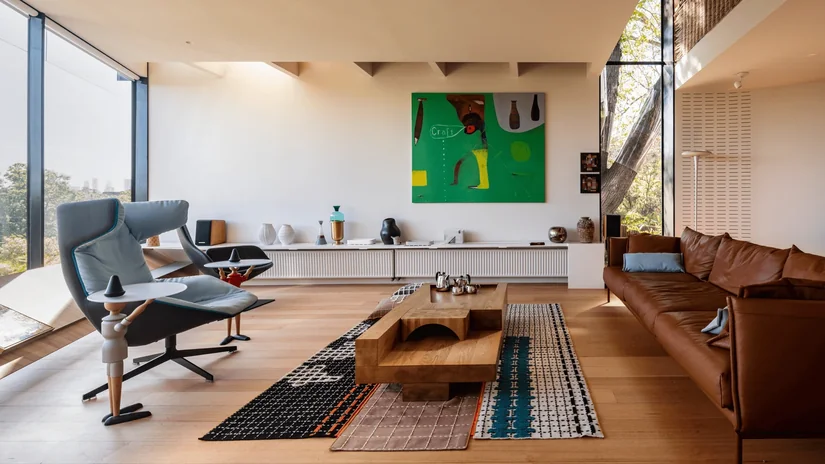
Rugs do a lot of work in eclectic interior design. They anchor furniture groupings, define zones in open-plan spaces, and add texture to what is otherwise the largest empty plane in the room. Layering two rugs, a flatweave jute underneath and a patterned Persian on top, works particularly well when the furniture feels like it comes from different places and periods. The rugs tie everything to the floor and, by extension, to each other.
A well-chosen rug introduces pattern, color, and texture in a single piece, which is why it is often the right place to start when the rest of the room feels disconnected. If you can identify a rug that carries two or three of the colors already present in the room, the mix will come together much faster.
- Visual impact: Layered rugs add depth and define the seating zone without requiring additional furniture.
- Best combinations: Jute or sisal as a base, with a patterned Persian, Moroccan, or flatweave on top.
- Design rule: Use rugs to connect the furniture legs and define the seating zone clearly.
6. Build A Gallery Wall With A Clear Color Story
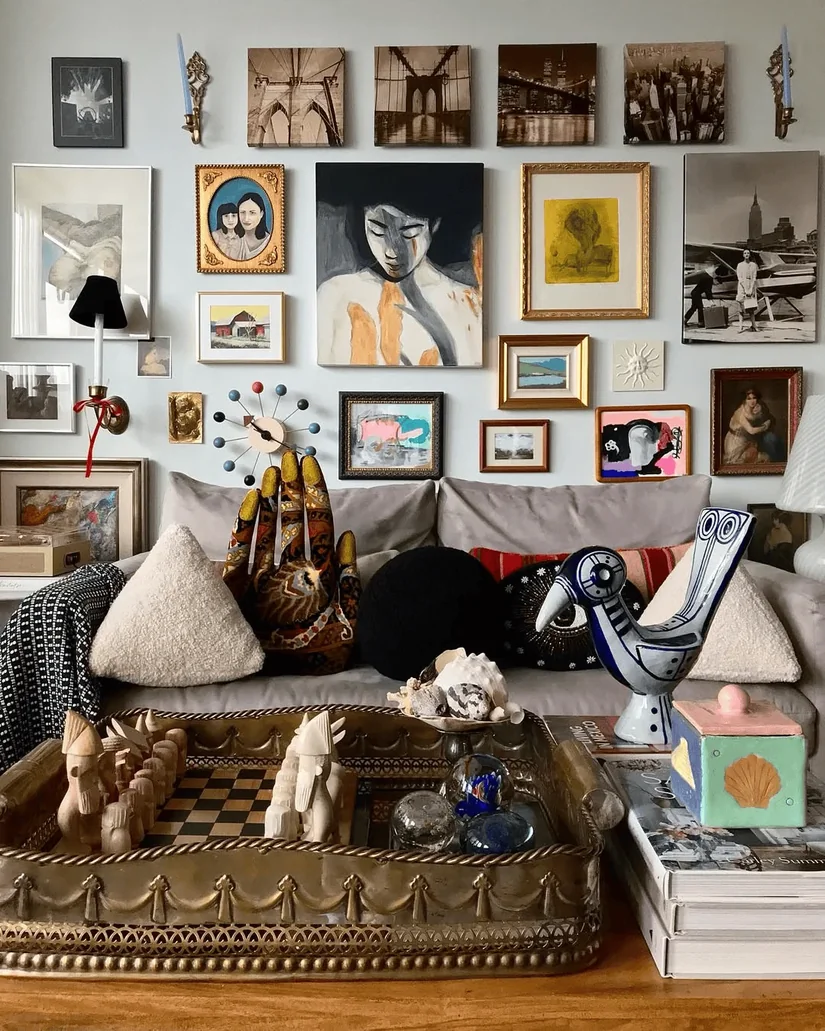
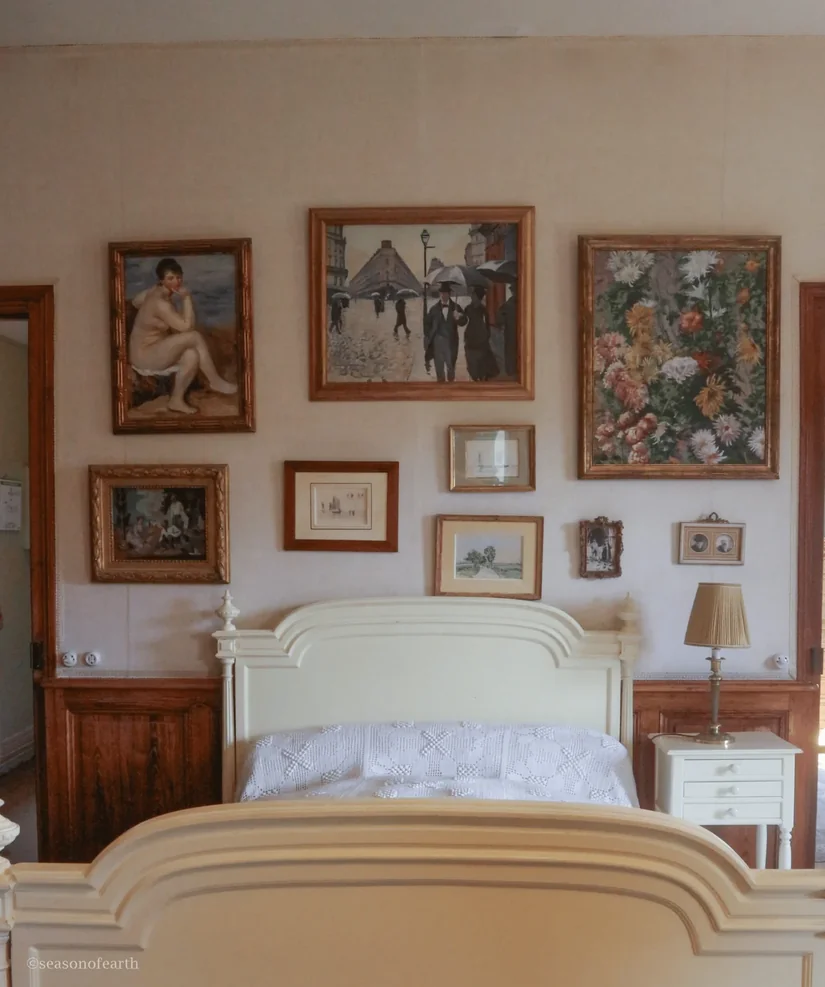
Gallery walls are one of the strongest visual moves in eclectic interior design, but they need at least one consistent element to feel composed rather than random. That element could be the frame color, the matting style, the artwork tone, consistent spacing, or one accent shade that appears across multiple pieces. You can mix photography with illustration, vintage prints with contemporary art, and large formats with small ones, as long as one thing ties them together.
For eclectic wall decor that holds together, mix the art, but control the framing or the spacing. A wall of varied artwork in black frames reads as a gallery. The same wall with mismatched frames in five different finishes reads as a collection of things left on a wall. See our gallery wall ideas for more on making this work at different room scales.
- Visual impact: A gallery wall adds personal storytelling and fills vertical space in a way that feels layered rather than decorated.
- Consistency element: Pick one: frame color, matting style, spacing width, or artwork tone.
- Design rule: Mix the art, but control the framing or spacing.
7. Mix Pattern Scales Instead Of Random Prints
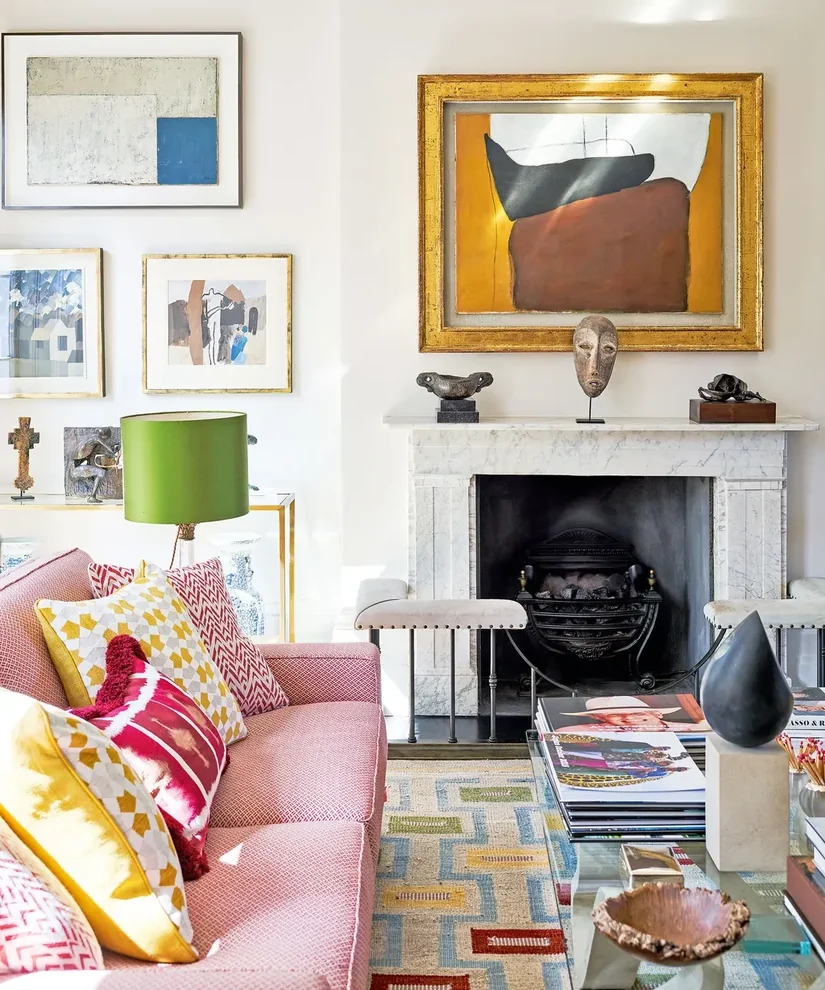
Patterns work in eclectic rooms when they vary in scale rather than in every direction at once. A large floral rug, a medium geometric cushion, and a thin ticking stripe on a chair can share the same room because they are not competing at the same visual volume. The large pattern takes the floor, the medium pattern sits at eye level, and the small pattern adds texture without drawing too much attention.
The mistake most people make is using several prints at a similar scale, which creates visual competition where no single pattern gets to register properly. Vary the size of the patterns first, and the mix will almost always work, regardless of how different the individual prints are.
- Visual impact: Varied pattern scales create visual rhythm rather than visual noise.
- Scale guide: One large pattern (rug or curtain), one medium pattern (cushion or chair), one small pattern (textile detail or trim).
- Design rule: Mix large, medium, and small patterns rather than using many prints at the same scale.
8. Use Sculptural Lighting As The Focal Point
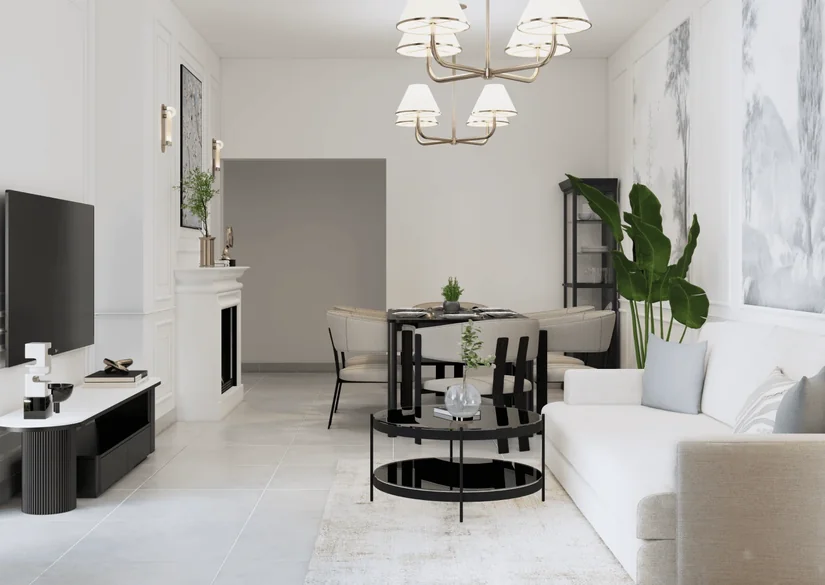
Lighting tends to be treated as a practical decision rather than a design one, which is a missed opportunity in eclectic interior design. A sculptural chandelier, curved floor lamp, bold pendant, or architectural wall sconce can become the room’s focal point, especially when the furniture and decor come from different directions and need something to converge around.
In our The Soft Canvas project, lighting was used to soften the room and give it character at the same time, showing that a well-chosen fitting does not need to shout to lead the composition. Sculptural lighting works as functional art, earning its place visually rather than just electrically, and it is one of the fastest ways to make a mixed interior feel genuinely designed.
- Visual impact: A statement light fitting gives the room a centerpiece that works from every angle.
- Best options: Curved pendant, rattan chandelier, sculptural floor lamp, or a cluster of varied pendants at different heights.
- Design rule: Treat the main light fitting as a piece of furniture. Choose it early.
9. Pair Clean-Lined Sofas With Character Pieces
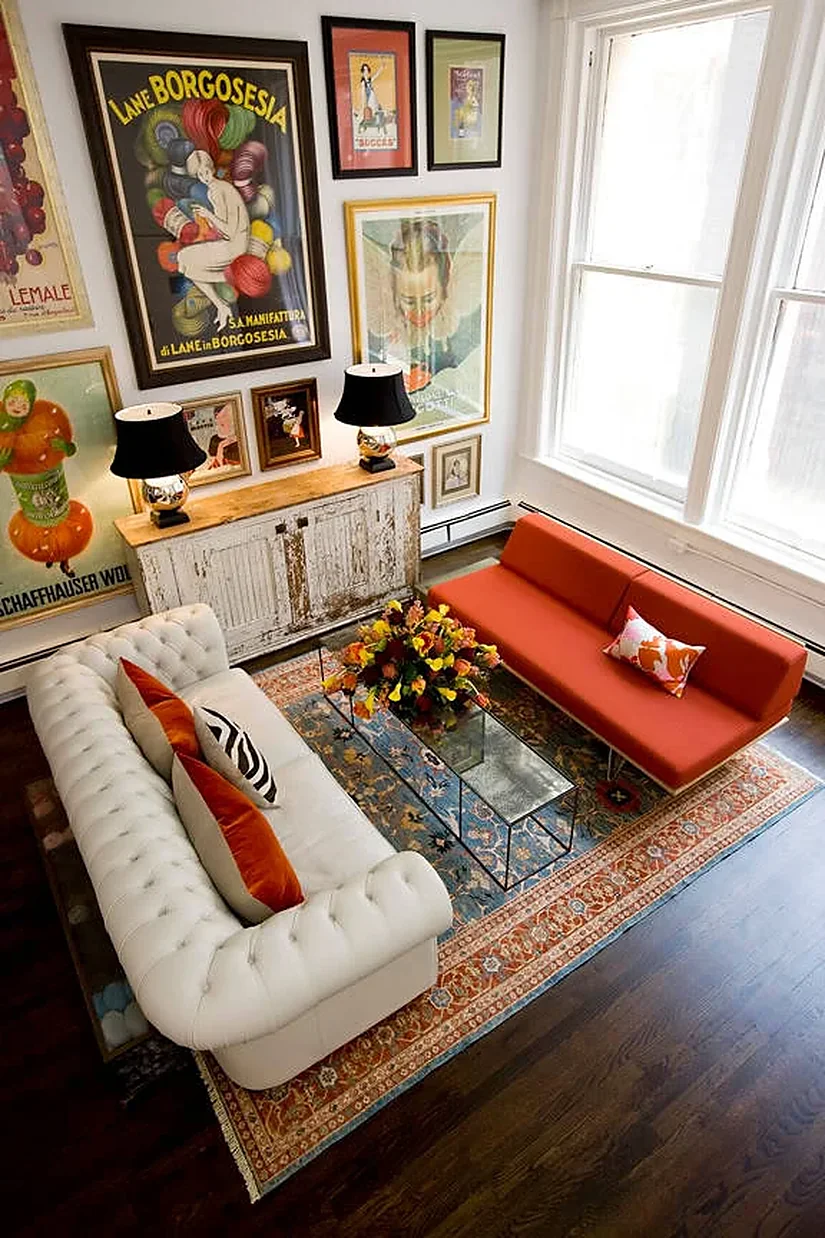
A simple sofa is one of the most useful things you can have in an eclectic living room because it gives the space somewhere to rest. When the rug is patterned, the art is expressive, the side table has a story, and the lighting is sculptural, a clean-lined sofa acts as ballast. It gives the eye a pause, and that pause is what makes the other pieces readable rather than competing.
This is what makes so many modern eclectic living rooms work in practice. The sofa stays quiet. The accent chair, side table, rug, and art get to carry the personality. The room feels layered without feeling loud.
- Visual impact: A neutral sofa gives expressive pieces space to register clearly.
- Character pieces to pair: Vintage side table, sculptural accent chair, handmade cushions, antique lamp, or a patterned rug.
- Design rule: Let large furniture stay quieter when smaller pieces carry more personality.
10. Bring In Global Textiles Without Overcrowding
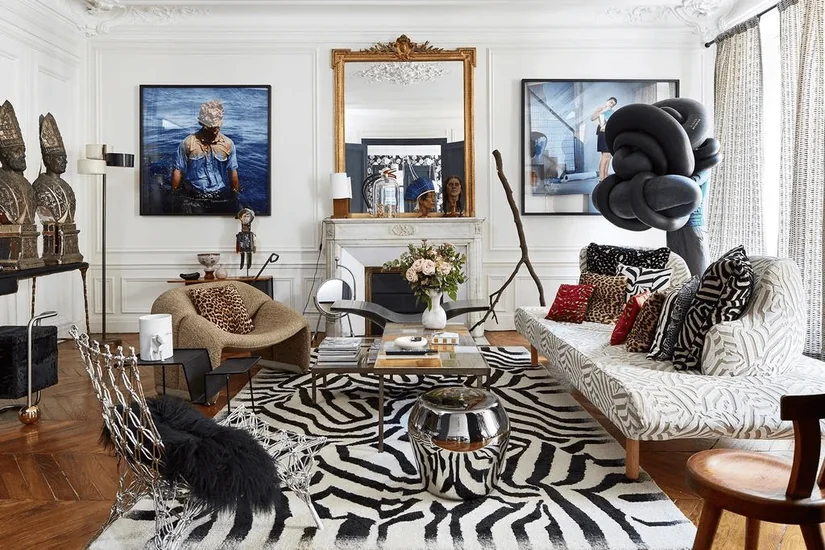
Cushions, rugs, wall hangings, throws, and handmade textiles can add global character to an eclectic home without turning the room into a themed space. The key is using them as meaningful accents rather than as a decorating concept. One hand-woven rug, one embroidered cushion, and a rattan pendant light can suggest a worldly sensibility without the room feeling overcrowded.
Designer Justina Blakeney often connects nature, culture, color, and personal identity through layered textiles in a way that feels organic rather than assembled. Her rooms show that a textile does not need to explain itself. It just needs to belong. Use global textiles to add story, but let the rest of the room breathe around them.
- Visual impact: Global textiles add warmth, craft, and the sense of a life lived beyond the home.
- Best placement: Rug, cushion cluster, throw draped over a chair, or a wall hanging as a focal piece.
- Design rule: Use one or two global textiles as accents, not as a theme.
These Chettinad home design ideas are a good source for textiles and craft detail.
11. Use Books And Art For Personal Storytelling
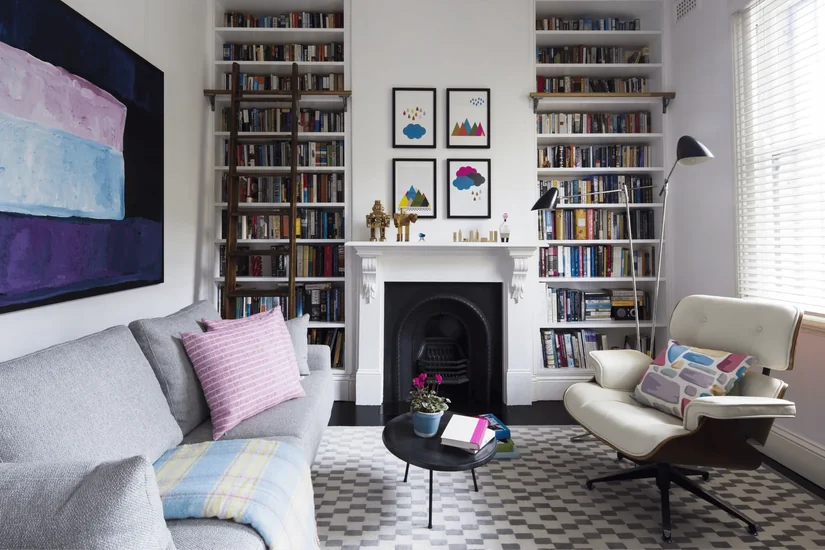
Eclectic interior design works best when it shows something real about the people who live with it. Books stacked on a side table, a ceramics collection on open shelving, a piece of art bought on a trip, an heirloom clock on the wall, a photograph propped against a lamp: these things give a room its identity and give guests something to discover.
Designer Abigail Ahern often encourages homes filled with things people genuinely love rather than things selected to look good together. That idea fits eclectic home decor exactly, with one caveat: edit what you display. An edited selection of meaningful objects reads as a collection. Everything at once reads as clutter.
- Visual impact: Personal objects make a room feel inhabited and specific rather than styled for an audience.
- Best objects: Art bought on travel, inherited ceramics, stacked books, sculptural pieces, and framed family photographs.
- Design rule: Display fewer things with more intention. Rotate what is on show rather than adding continuously.
12. Mix Wood, Metal, Stone, And Fabric Carefully
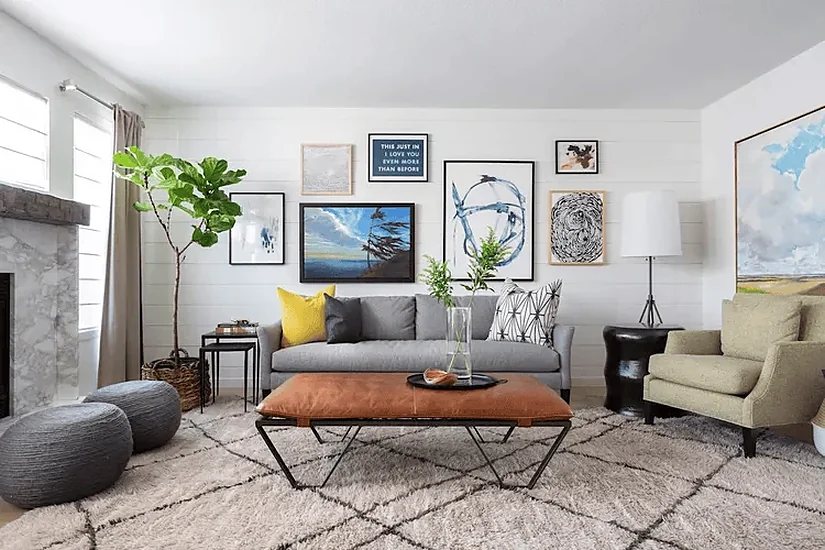
Material layering is what makes eclectic interior design feel rich rather than random. A marble-topped table, a velvet sofa, a brass floor lamp, a wooden cabinet, and linen curtains can all share the same room if the color palette stays controlled. Each material adds a different texture and visual weight, and together they create the tactile depth that makes a room feel genuinely designed rather than assembled from a single source.
The current direction in interiors is toward rooms that feel personal and multi-sensory, and layered materials are central to that. Rattan, velvet, marble, brass, and linen together produce a room that reads differently depending on where you stand and how the light falls.
- Visual impact: Mixed materials create tactile depth that a single-material room cannot replicate.
- Dominant vs accent: Use two dominant materials (wood and linen, for example) and one accent (brass) to keep the mix from going in too many directions.
- Design rule: Two dominant materials, one accent material.
13. Use One Clear Layout In Eclectic Living Room Design
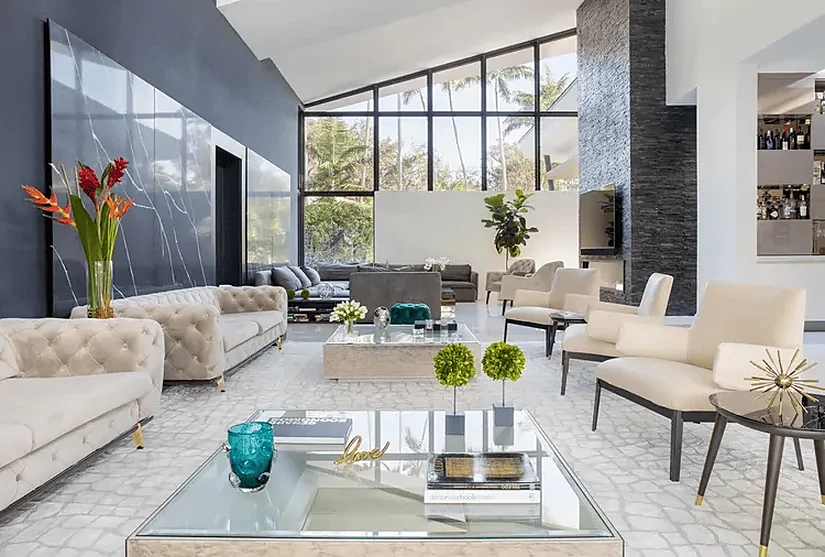
In eclectic interior design, a living room with mixed furniture works best when the layout itself is simple. The sofa can be contemporary and neutral, the rug brings in pattern and warmth, an accent chair in a different style or material adds contrast, and the coffee table carries an unusual shape or a material like travertine or rattan. Wall art fills the vertical plane, and sculptural lighting ties the composition together.
In our Beachfront Views project, the living room shows exactly how a modern base allows layered decor, textures, and collected pieces to read clearly without the room feeling crowded. That restraint at the foundation level is what separates refined eclectic living room ideas from ones that just look busy. For more on this kind of layout, see our modern living room design ideas.
- Visual impact: A simple layout gives eclectic furniture the clarity it needs to read as intentional.
- Layout order: Sofa and rug first to anchor the zone, then accent chair, coffee table, art, and lighting.
- Design rule: Keep the sofa and layout simple, then add character through art, rug, lighting, and accent furniture.
14. Design An Eclectic Bedroom That Still Feels Restful
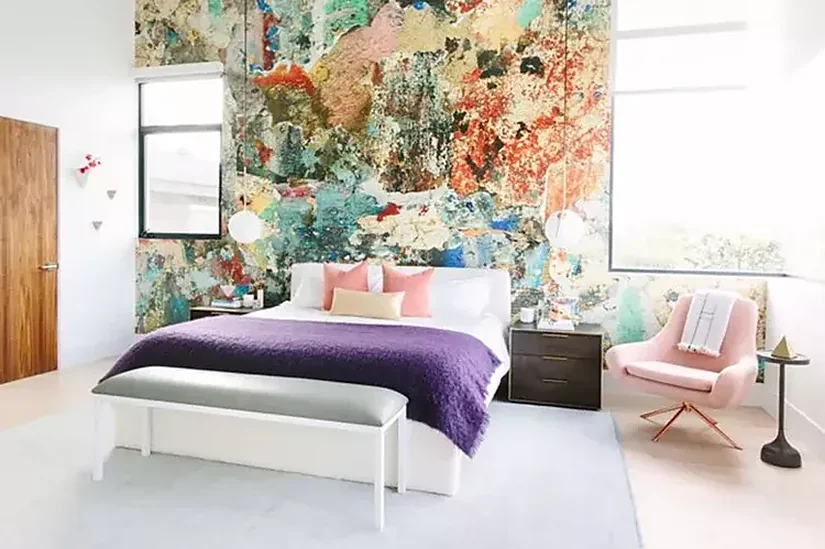
An eclectic bedroom works when the layering is concentrated in a few areas rather than spread across every surface. A statement headboard can be bold. Layered bedding in coordinating textures adds depth without noise. A piece of art above the bed or on a side wall adds personality. But the palette should stay controlled, and the lighting should feel soft rather than theatrical.
Our bedroom projects show why eclectic bedroom design needs restraint above all other rooms. A bedroom can have art, texture, and character, but the palette, bedding, and bedside details should still feel like somewhere a person can actually sleep. See modern luxury bedroom design ideas for a closer look at how this balance is achieved.
- Visual impact: A statement headboard gives the room its personality without requiring everything else to compete.
- Layering order: Headboard first, then bedding textures, bedside lighting, art, and a rug if the floor needs grounding.
- Design rule: Use one bold element and keep the rest softer.
15. Make Eclectic Dining Room Design Feel Sophisticated
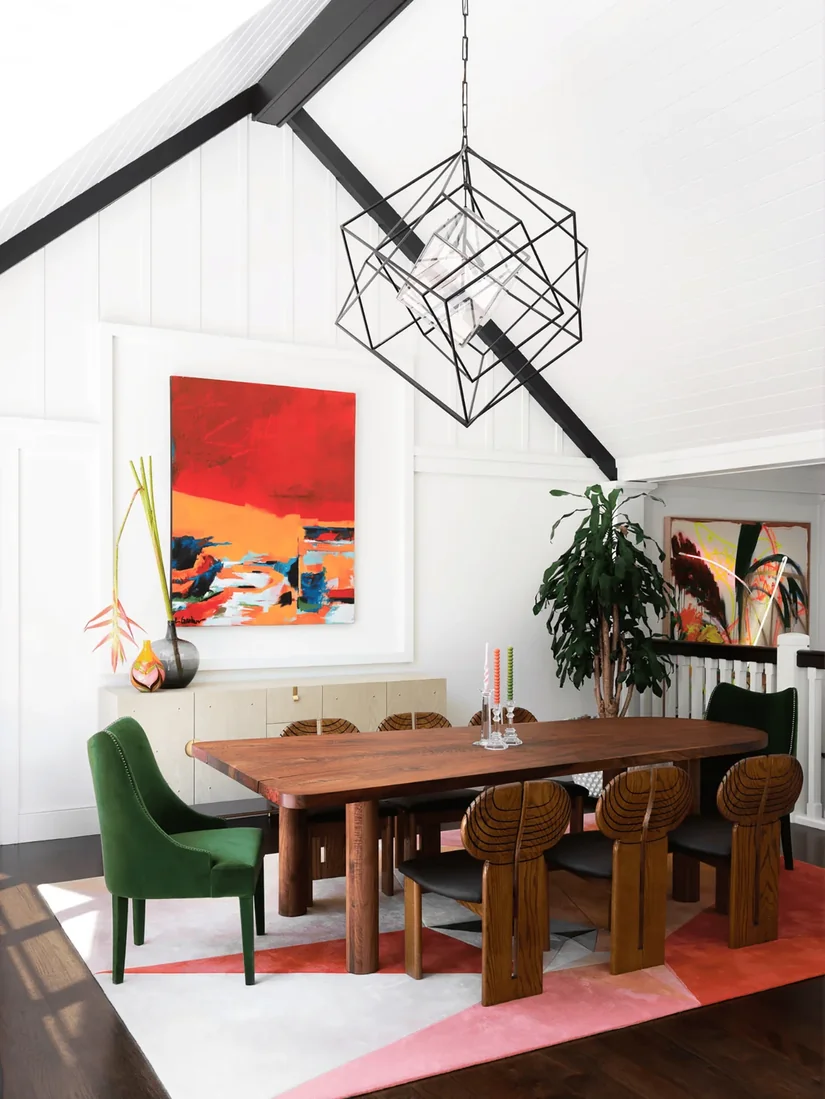
Dining rooms are one of the best places to experiment with mixed furniture because the rules are looser. A rattan chair, a velvet upholstered chair, and a classic wooden chair can all sit around the same table if the dining table and overhead lighting anchor them. A statement pendant does a lot of the work. Add a mirror to reflect light, a piece of art on the main wall, and some texture through a runner or textured wall treatment, and the room feels considered rather than assembled.
In our studio, clients frequently request mixed seating arrangements specifically to avoid a stiff showroom appearance, preferring a layered look that feels organic and inviting. For more ideas on the full room, see dining room design ideas.
- Visual impact: Mixed chairs add personality and energy to the dining table without requiring a full room redesign.
- Anchor piece: The pendant light above the table does the most work in a mixed-chair dining room.
- Design rule: If chairs are mixed, keep the table or lighting more controlled.
16. Use Plants To Soften Bold Contrasts
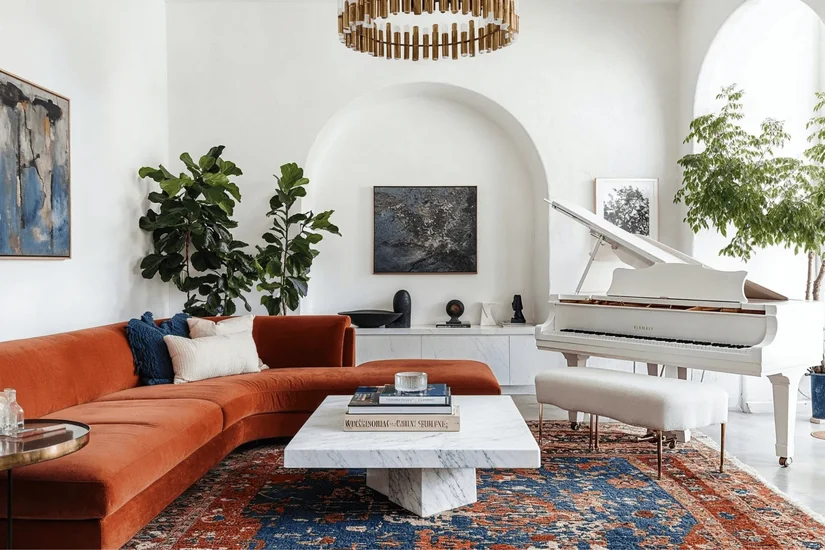
Plants do something in eclectic interior design that no purchased decor can quite replicate. They soften hard edges, bridge strong colors, and bring a quality of life to spaces that can sometimes feel overly composed. A large indoor fig beside a dark cabinet, trailing pothos on a bookshelf, a ceramic planter holding a structured sansevieria against a bold wall: these combinations work because the organic quality of the plant contrasts gently with whatever is around it.
The ceramic pots matter too. A well-chosen planter can connect directly to the room’s color or material palette and do double duty as decor. A terracotta pot ties into warm tones. A matte black ceramic anchors a darker room. A woven rattan planter adds texture alongside the plant itself.
- Visual impact: Plants soften strong contrasts and bring warmth to rooms that can feel overly composed.
- Design rule: Use plants to bridge colors and textures, not just to fill empty corners.
17. Choose Statement Furniture, but Give It Space
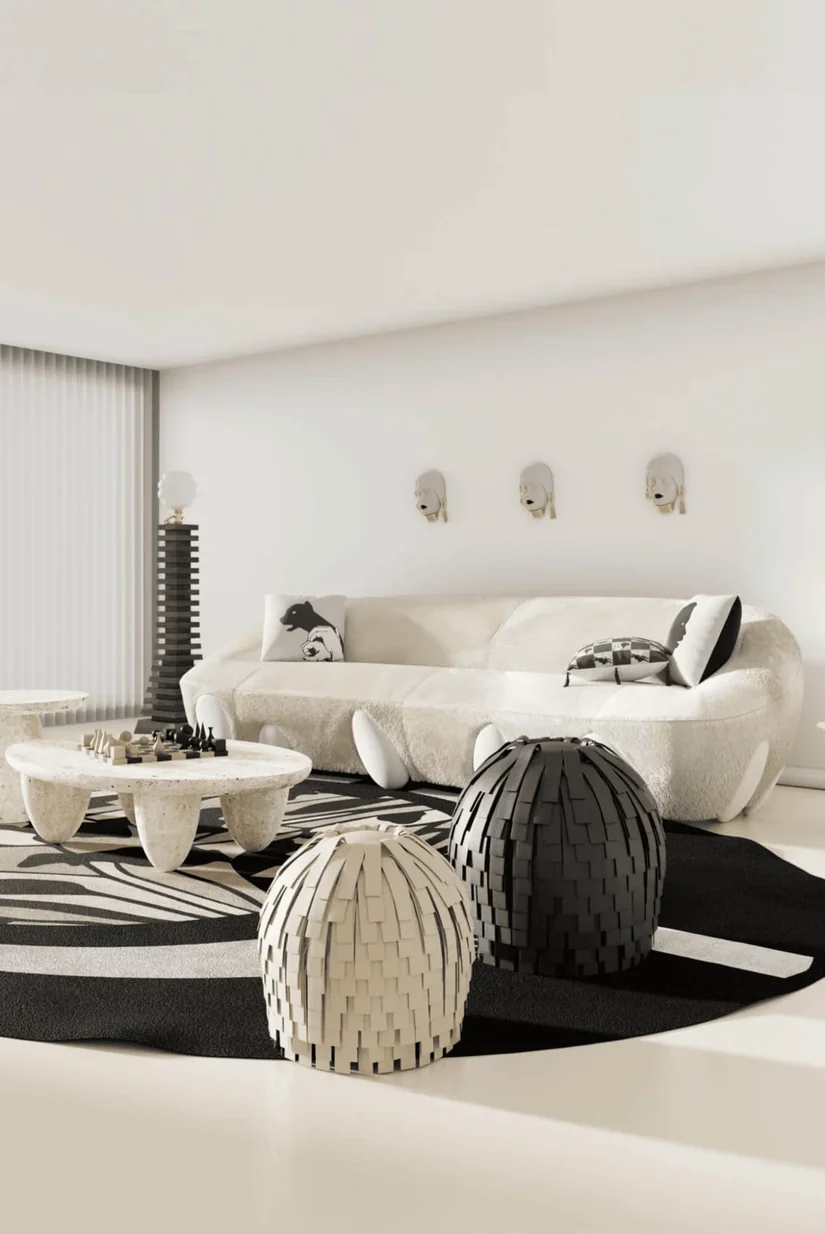
A sculptural chair loses its impact when surrounded by four other things equally trying to be noticed. Statement furniture in an eclectic room needs breathing room, clear space around it, so the eye can actually take it in. A bold cabinet needs a quieter wall. An unusual coffee table needs a simpler sofa behind it. One strong piece per zone is enough, and that restraint is what gives the piece its presence rather than diluting it.
The principle applies at every scale. A statement piece surrounded by quieter pieces becomes a focal point. The same piece surrounded by five other statement pieces becomes background noise.
- Visual impact: Breathing space is what turns a bold piece into a focal point rather than just another object.
- Best statement pieces: Sculptural accent chair, carved wooden cabinet, unusual coffee table, or an oversized artwork.
18. Add One Unexpected Color Moment
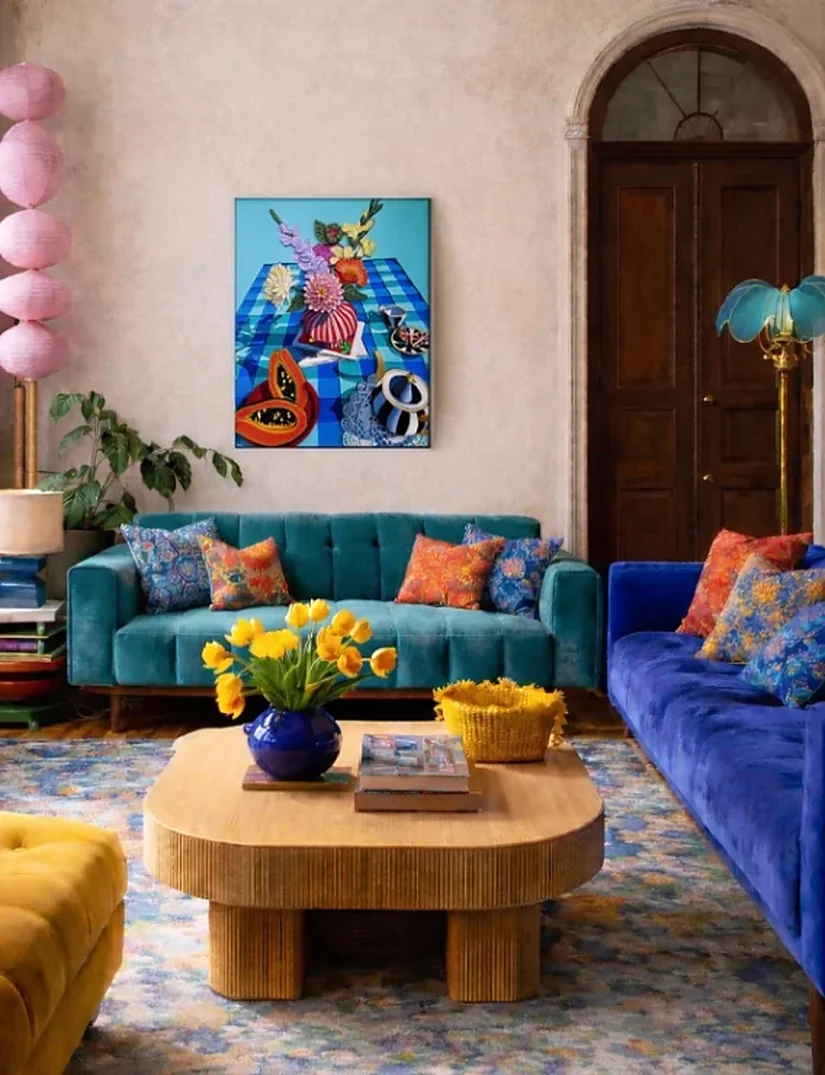
Every eclectic room benefits from at least one color decision that slightly surprises the eye. A cobalt blue armchair in a room of warm neutrals. An oxblood cabinet in a pale, light-filled living room. A mustard sofa where you might expect beige. An emerald lamp on a simple side table. These moments create personality and give the room something memorable to come back to.
The unexpected color should echo somewhere else in the room, even softly. If the cobalt chair is the star, a cobalt thread in the rug or a small blue ceramic on the shelf is enough to make it feel chosen rather than accidental. One bold color moment becomes a design decision. Without the echo, it reads as a mistake.
- Visual impact: An unexpected color gives the room a personality and a point of difference.
- Echo placement: Repeat the bold color softly in the rug, a cushion, a small ceramic, or a piece of art nearby.
- Design rule: Use one bold color moment, then repeat it softly somewhere else.
19. Use Repetition To Make Odd Pieces Belong
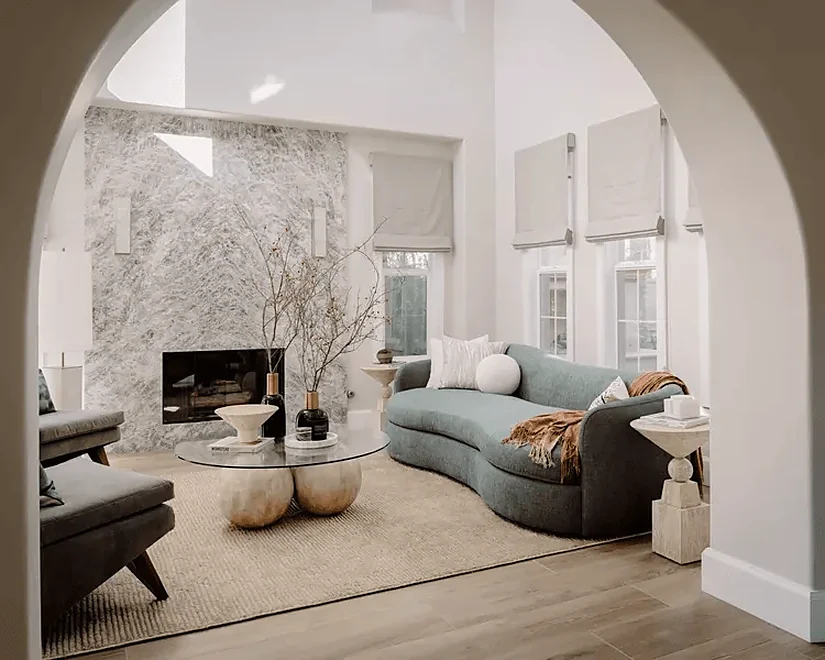
Two pieces that have nothing obvious in common can still feel related if they share a shape language. Curved furniture connects with round mirrors, arched doorways, and circular side tables. Straight-edged pieces connect with rectangular art, square coffee tables, and linear shelving. Running a shape motif through the room is one of the quieter techniques in eclectic interior design, but it is surprisingly effective at making very different objects feel like they belong in the same space.
In eclectic interior design, contrast creates interest, but repetition creates harmony. Shape repetition is the version of this principle that works even when color and material are completely different across pieces.
- Visual impact: Repeated shapes create a visual rhythm that connects unrelated pieces without needing a matching color or material.
- Shape families: Curved and round forms; straight-edged and geometric forms. Pick a primary family and let the room echo it.
- Design rule: Repeat at least one shape motif across furniture, mirrors, art, and architectural details.
20. Combine Classic Architecture With Contemporary Decor
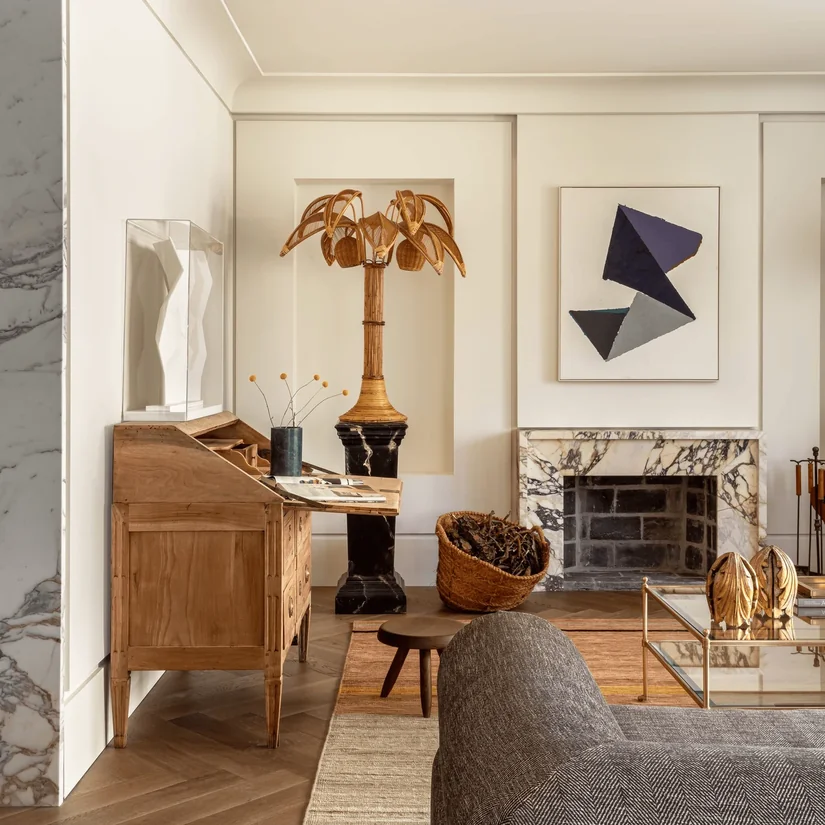
Ornate cornicing, stone floors, arched doorways, wall panelling, and classic architectural detailing do not need classic furniture to match. Placing contemporary furniture, modern art, and clean-lined lighting inside a classically proportioned room is a combination that produces excellent results precisely because neither element gives ground entirely. The architecture provides the bones; the contemporary decor provides the freshness.
Beata Heuman has consistently shown through her own projects how past and present can coexist in a room without either period feeling out of place. The key is treating the architecture as a fixed backdrop rather than a directive, letting it inform the scale and proportion of what you bring in without dictating the style.
- Visual impact: Classic architecture paired with contemporary furniture creates productive tension that makes both feel more interesting.
- Connection point: Match the scale of furniture to the room’s proportions. High ceilings can hold larger, bolder pieces.
- Design rule: Treat the architecture as the backdrop, not the brief.
That balance runs through Dravidian architecture with modern interiors too.
Why Some Eclectic Interior Designs Work And Others Do Not
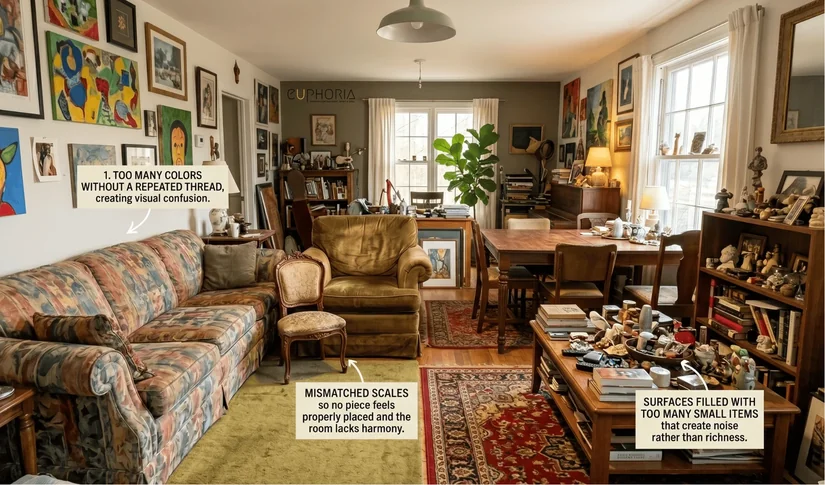
Most eclectic rooms that feel cluttered share the same root problem: there is no visual system holding the mix together. Every individual piece might be well chosen, but without a repeated color story, consistent scale logic, layered lighting, and enough breathing space between objects, the room reads as accumulated rather than chosen.
The most common failure points are mixing too many colors without a repeated thread, using furniture at mismatched scales so no piece feels properly placed, filling surfaces with too many small items that create noise rather than richness, and ignoring lighting entirely so the room flattens and loses warmth. Alongside these, the single conceptual mistake that underlies all of them is treating eclectic interior design as an excuse for random purchasing. Every piece should have a reason to be there, even if that reason is purely personal. Without that discipline, the room fills up rather than comes together.
For a harder edged version of bold choices, see brutalist interior design.
How Eclectic Interior Design Differs From Bohemian, Maximalist, And Modern Styles
These styles get grouped often, but they are not the same thing. Knowing the difference helps you choose a clear direction before you start decorating, which saves money and prevents the kind of drift that makes a room feel undefined.
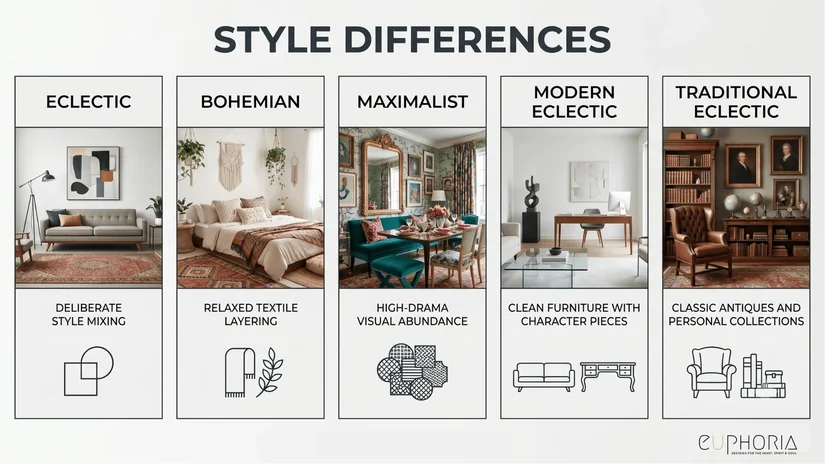
Eclectic interior design can include bohemian, maximalist, modern, or traditional elements, but the main goal is always balance. The room should feel layered and personal, not overloaded. See our villa interior design trends for a broader view of where each of these directions is heading.
The table below helps map the right approach to your home and lifestyle:
| Eclectic Style Direction | Best For | Design Approach |
|---|---|---|
| Modern Eclectic | Clean homes that need personality | Modern base with art, rugs, and accent pieces |
| Bohemian Eclectic | Relaxed, casual homes | Earthy colors, textiles, plants, and handmade decor |
| Luxury Eclectic | Villas and high-end apartments | Rich materials, statement lighting, collected art |
| Vintage Eclectic | Homes with antiques or heirlooms | Old furniture mixed with fresh upholstery and modern lighting |
| Minimal Eclectic | Small homes or quiet interiors | Few bold pieces, restrained color, strong editing |
| Maximalist Eclectic | Expressive homeowners | Bold color, pattern, art, and layered decor |
For luxury homes, the principle shifts. Eclectic interior design in a high-end villa or apartment needs more editing, not more decoration. High-quality materials, custom furniture, and artisan pieces carry more weight per item, so fewer of them are needed to fill the room with presence.
The Room That Keeps Getting Better
Eclectic interior design is not about filling a home with everything you love. It is about choosing contrast carefully and using repetition, scale, texture, lighting, and editing to make a space feel like it has always been exactly that way. The most personal rooms are rarely the most decorated. They are the ones where every piece has earned its place.
If you want your home to feel personal without losing balance, we can help you create an eclectic interior design that feels collected, refined, and designed around the way you actually live.
Reach out to Euphoria Interiors and start the conversation.
A Quick Eclectic Interior Design Checklist Before You Start
- What is the anchor piece that everything else will respond to?
- Which color will repeat across the room to connect the different pieces?
- Which material will create a consistent thread through the furniture?
- Is there one clear focal point, or are there too many competing for attention?
- Are the patterns different in scale so they do not compete at the same volume?
- Is there enough breathing space between objects?
- Does the lighting support the mood and connect the materials?
- What can be removed before anything new is added?
The pared back end of that spectrum is covered in our boho minimalist interior design pieces.