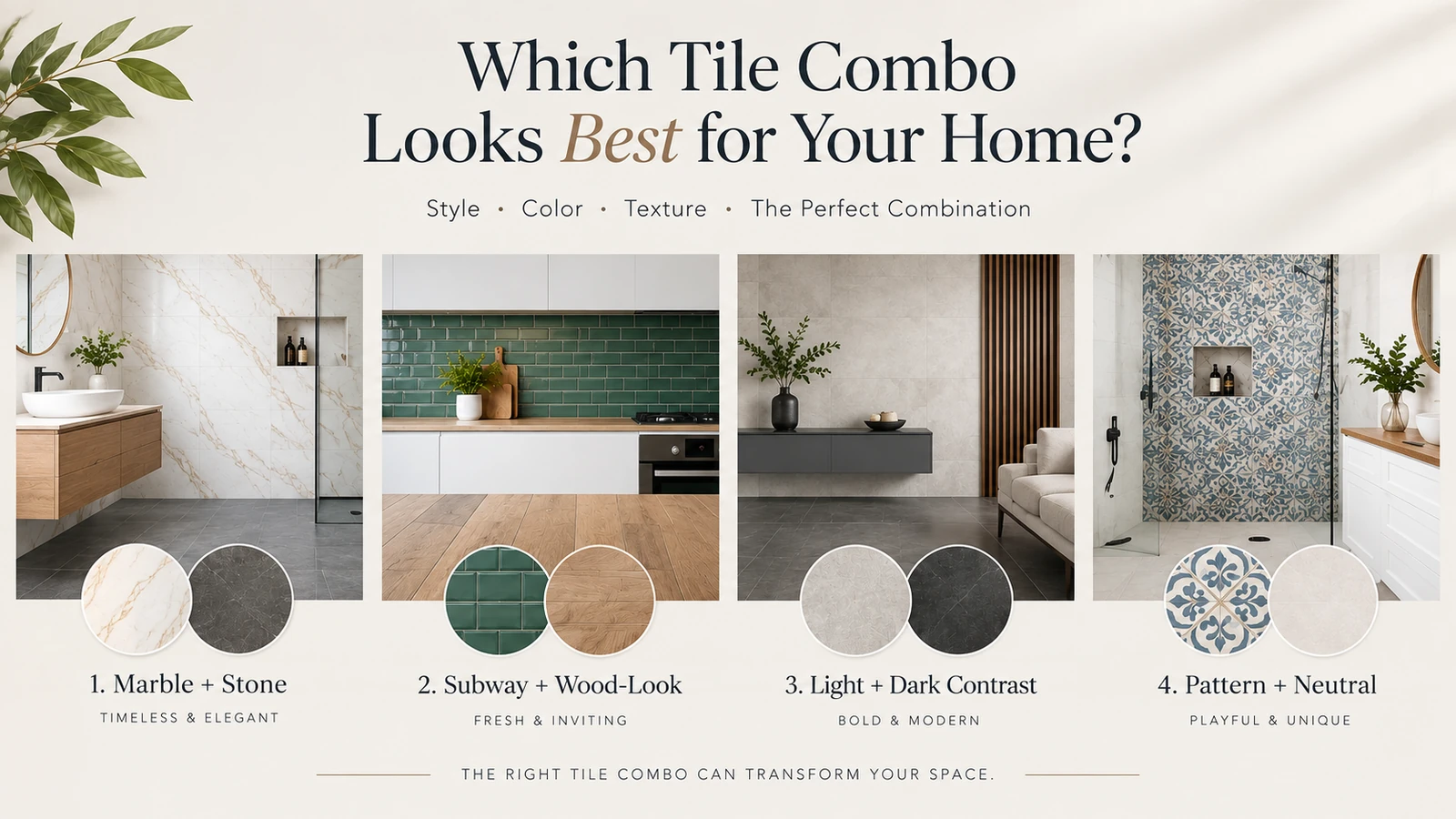
Whether you are upgrading an apartment in Dubai Marina or a villa in Arabian Ranches, tile choice changes everything. The right pairing makes a space look brighter and cleaner immediately. It is one of the first decisions the team at Euphoria Interiors settles on any renovation, because everything else is chosen around it.
A good tile combo does not happen by accident. Six practical factors decide it:
- Room size: compact rooms look larger with 60×120 cm tiles, because there are fewer grout lines.
- Natural light: high-floor apartments get intense sun, which causes glare on highly polished surfaces.
- Wall colour: tile shades have to work with your paint, warm off-white or cool grey.
- Furniture style: minimalist furniture pairs best with plain, large-format tiles.
- Cleaning needs: high-traffic rooms need durable, stain-resistant surfaces.
- Wet or dry: a bathroom needs different moisture protection to a kitchen.
The short answer: pair a simple matte floor tile with a distinct wall tile. In Dubai homes, large 60×120 cm neutral porcelain floors with textured or glossy 30×60 cm ceramic wall tiles reflect light well and keep maintenance low.
What Makes a Tile Combo Work

A successful pairing balances visual weight. If the floor is patterned, the walls stay plain. If the wall is textured, the floor stays simple. That single rule prevents most bad outcomes.
- Complementary tones: floor and wall tiles should share an undertone, warm sand or cool charcoal.
- The rule of balance: one surface simple, one surface stylish. Never both.
- Space stretching: soft cream and off-white make a 3×3 metre room feel considerably wider.
- Careful contrast: dark floors add drama but need large rooms and wide windows to avoid gloom.
- Smart sizing: large 80×80 cm plain slabs for big floors, detailed patterns saved for small feature areas.
- Bright walls: glossy wall tiles reflect light and lift dark corners.
- Soft flooring: matte finishes look modern and give better grip underfoot.
These are the same balance principles that run through the seven elements of interior design, applied to hard surfaces.
Best Tile Combo for Bathrooms
Bathrooms need style and daily safety together. Look for an R10 anti-slip rating on floor tiles, and choose porcelain, which absorbs less than 0.5% water.

Current trends pair 60×120 cm polished marble-effect porcelain on walls with 60×60 cm matte, slip-resistant floors. Soft earthy palettes such as greige and sage green lead the colour direction.
Marble-look walls with matte floors

Why it works: marble-effect patterns reflect overhead light, while matte porcelain underfoot keeps the wet area safe.
What to do: install 60×120 cm marble-print panels on the main walls, paired with solid matte grey or white 60×60 cm floor tiles.
Beige floors with white walls

Why it works: white wall tiles bounce light into dark corners, and beige floors hide dust and water marks.
What to do: 30×60 cm beige on the floor, classic white on the walls, black or brushed-gold taps to finish.
Textured shower tiles with plain floors

Why it works: geometric or wave-textured shower tiles add depth, and a plain floor stops a small room looking busy.
What to do: 3D texture on the main shower wall only. Keep everything else smooth and neutral.
Soft coloured walls with neutral floors

Tiling a whole room in bright green or pink is overwhelming. A single feature wall against neutral tones keeps it balanced.
What to do: sage green or sky blue behind the mirror, paired with cream floors, or mosaic accents inside shower niches.
Kitchen Backsplash Tile Combos
The backsplash protects drywall from oil, water and food stains, and it is the visual centrepiece of the cooking zone. It lets you add character without retiling the whole kitchen.

The reliable pairings are 10×20 cm glossy subway tiles with smooth grey floors, or seamless 60×120 cm marble-look glazed porcelain against plain countertops.
Subway tiles with plain floors

Why it works: simple geometric lines look timeless and organised, and white keeps a busy kitchen from reading as cluttered.
What to do: lay them in a classic brick pattern behind the prep counter, paired with a smooth solid-colour floor.
Glossy walls with matte floors

Why it works: high-gloss wall tiles catch light from under-cabinet LEDs and brighten the workspace. Matte floors balance that shine and stay slip-resistant.
What to do: keep one uniform palette such as warm greige. Polished on the backsplash, flat matte on the ground.
Lighting changes how both finishes read, so it is worth planning them together using our guide to artisanal elements in Dubai interiors, where surface and craft decisions get treated as one.
Floor Tile Combos for Dubai Homes
Flooring covers the largest surface in the house, so it sets the character. Local preference leans towards durable tiles that stay cool underfoot and sweep clean of fine dust.
- Beige floors with white walls: sandy tones hide footprints and reflect daylight deep into open-plan villas. Use 80×80 cm with crisp off-white walls.
- Grey floors with wooden furniture: slate or charcoal gives a clean base, and oak or walnut furniture stops it feeling cold. Matte 60×60 cm works best.
- Marble-look floors with simple walls: soft grey or gold veining adds movement. Large 60×120 cm slabs reduce grout lines and let the floor lead.
- Wood-look floors with neutral walls: real timber fades or warps in humidity, but wood-effect porcelain gives the texture and stays waterproof. Long 20×120 cm planks suit bedrooms.
- Terrazzo with plain walls: chips of marble, quartz and glass add a retro feel to kitchens and utility rooms. Choose subtle speckles and keep cabinetry flat-front.
On price: budget ceramic runs under AED 30 per square metre, while Grade-A porcelain for main living areas averages AED 65 to 150. Balance cost against scratch resistance and ease of cleaning rather than buying on price alone. If the budget is the binding constraint, our affordable rental home design tips cover where to spend and where not to.
Wall Tile Combos for Modern Interiors
Wall tiles are no longer confined to kitchens and bathrooms. Used on a dining wall, an entrance or a media wall, they create a permanent feature that never needs repainting.
The principle is texture and scale. Pair bold 30×90 cm textured ceramic on a single accent wall with plain 60×60 cm floor porcelain.
- Textured walls with plain flooring: fluted or wave-textured tiles cast soft shadows and act as a focal point. One wall only.
- Marble-effect walls with neutral floors: large-format panels look seamless, with the realistic veining of stone and none of the sealing.
- Colourful walls with soft floors: small 10×10 cm glossy tiles in sage or terracotta make an alcove stand out, balanced by a matte cream floor.
A tiled accent wall is one route to character. Our guide to turning cold minimalism into a cosy space covers the softer alternatives if a full tiled wall feels too hard.
Wall and Floor Colour Combinations for Living Rooms
Living rooms already hold sofas, media units, curtains and rugs, so the tiles need to recede rather than compete. The safest approach pairs a light-reflecting floor with plain walls: 80×80 cm cream or off-white porcelain against warm white paint.
- Cream floors with warm white walls: reflects sunlight softly without glare, and works with beige fabric sofas and light oak.
- Grey floors with off-white walls: matte grey hides dust and pet hair. Add coloured cushions, plants or dark metal fittings to lift it.
- Marble-look floors with plain walls: 120×120 cm polished slabs reduce grout lines and make the floor the feature.
- Stone-look floors with earthy walls: textured 30×60 cm slate prints against clay, sand or greige walls create a desert-resort calm.
Tiles for Front Walls and Entrances
Exterior tiles have to survive summer heat above 45°C, dust storms and direct sun without cracking or fading. The durable pairing is 30×60 cm rough stone-effect porcelain cladding with thick 2 cm matte outdoor pavers.
- Stone-look walls with neutral flooring: split-face panels on entry pillars against a smooth beige floor tile.
- Textured walls with simple outdoor flooring: grooved panels around the front door catch morning sun and cast shadow. Keep the walkway smooth.
- Dark accents with light flooring: a single charcoal feature pillar in 60×120 cm exterior porcelain against sandy-grey pavers.
- Beige or sand for the whole facade: matches the landscape and hides fine dust, which matters on windy days.
If you want to see how a facade will read before committing, our guide to 3D virtual home staging covers testing the scheme first.
Common Tile Combo Mistakes
The biggest mistake is using too many colours, patterns and finishes in one room. A good design needs one main tile and one supporting tile.
Choosing too many patterns
Busy walls against busy floors create clutter. When the eye does not know where to land, the room feels crowded. Pick one patterned surface and keep the rest plain.
Glossy floor tiles in wet areas
Polished tiles look superb in a showroom and become dangerous the moment water hits them. Check the slip rating, keep matte or textured underfoot, and save the gloss for walls.
Ignoring room size
Dark surfaces absorb a great deal of light. In a 2×2 metre guest bathroom they turn the room into a box. Save dark tones for wide, well-glazed spaces.
Matching everything too closely
Using the identical tile on floor and walls looks flat and cold rather than coordinated. Walls should complement the floor, not copy it.
Buying on price alone
Cheap tiles crack under heavy furniture and absorb stains permanently. Equally, expensive tile is wasted in a laundry room. Use budget tiles in low-traffic areas and spend on dense porcelain where the family actually lives.
These are variations on the same errors covered in our rundown of common interior design mistakes and how to fix them.
Quick Guide by Room
| Room or area | Best tile combo | Why it works |
|---|---|---|
| Bathroom | Marble-look walls with matte floors | Hotel-grade look, safer underfoot when wet |
| Shower area | Textured shower tiles with plain floors | Adds character without making a small room busy |
| Modern kitchen | Neutral floors with glossy backsplash | Durable and easy to wipe clean |
| Kitchen backsplash | Subway or marble-look with plain floors | Protects the wall and keeps the room bright |
| Living room | Cream floors with warm white walls | Makes the main room feel wide and open |
| Front wall | Stone-look walls with simple flooring | Durable exterior with a strong first impression |
| Bedroom | Wood-look floors with plain walls | Rustic warmth with no warping risk |
| Small rooms | Light floors with soft wall colours | Reflected light makes compact spaces read larger |
Which Tile Combo Should You Choose?
The best pairing is rarely the rarest or most expensive. It is the one that fits your room size, your daily life and the architecture you already have. Always test physical samples in the actual room lighting before ordering.
- Bathrooms: water-resistant and slip-resistant first.
- Kitchens: heat resistant, and oil should wipe off easily.
- Living rooms: neutral shades that work with the furniture you own.
- Main flooring: scratch-resistant materials built for daily traffic.
- Exterior walls: weather-proof cladding rated for direct sun.
Getting this wrong is expensive to undo, which is why it appears in our top ten interior design mistakes to avoid.
Planning a renovation? Talk to our design team about your tile selection.