

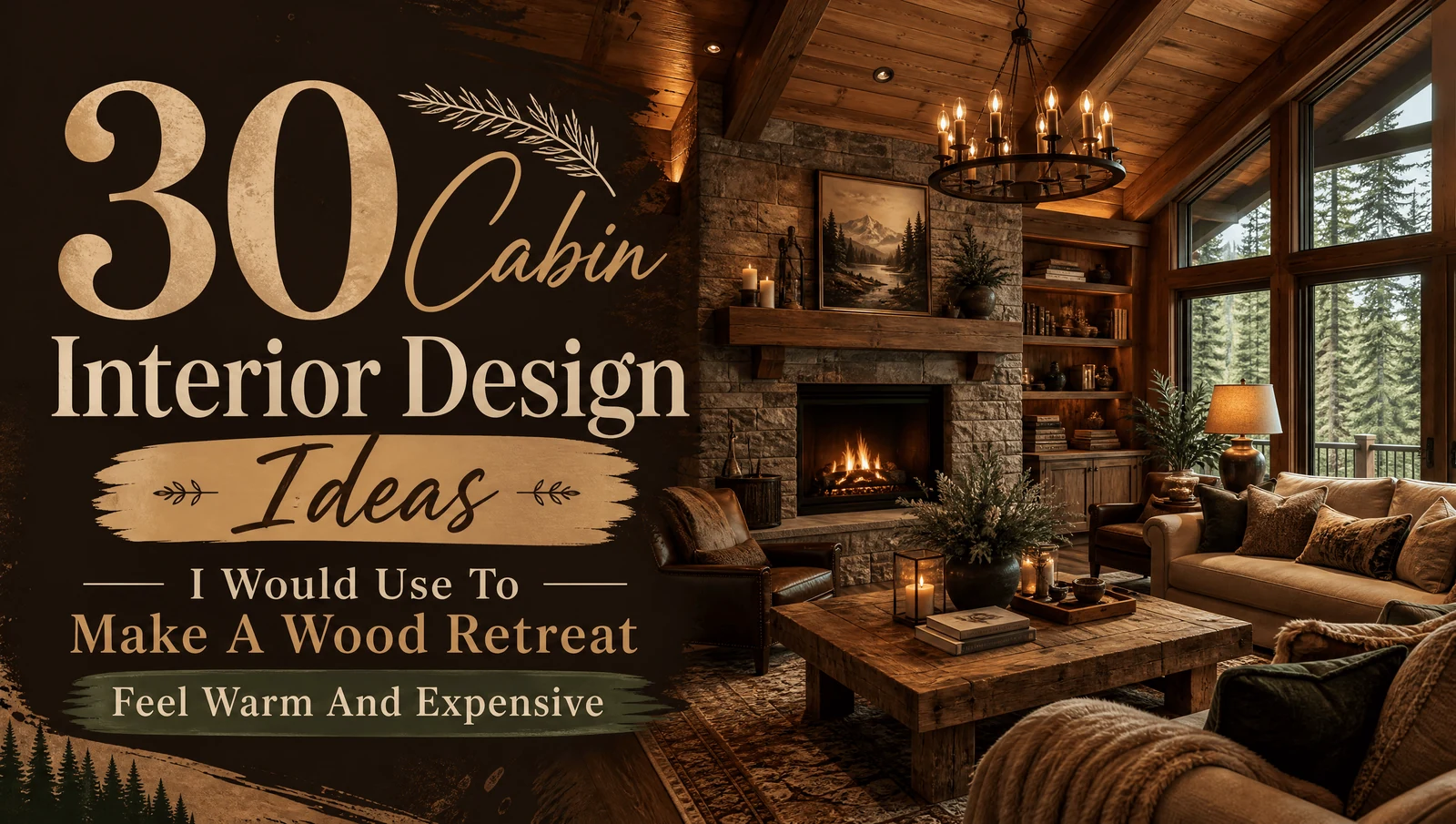
A cabin should feel warm the moment you walk in, but many cabin interiors miss that feeling because they go too far in one direction. Some become too dark, with heavy timber on every wall, ceiling, floor, and furniture piece. Others become so polished that the raw charm of the wood disappears. Research has shown that exposure to wooden settings can improve emotional state and reduce physiological stress responses. That makes wood powerful, but only when it is balanced well.
Good log cabin interiors are not built on wood alone. Light, furniture scale, storage, texture, layout, and edited rustic cabin decor all decide how the space feels in real life. A modern cabin interior can still feel cozy and grounded without looking dated, cramped, or over-themed.
Read on for ideas that will help you choose the right moves first, so your cabin feels warmer, lighter, and more complete without losing its natural character.
Cabin Interior Design Ideas For A Cozy Retreat That Still Feels Fresh
Start with the ideas that fix the biggest cabin problems first: darkness, heaviness, clutter, weak storage, and a room that feels rustic but not refined.
1. Balance Heavy Wood With Softer Modern Furniture
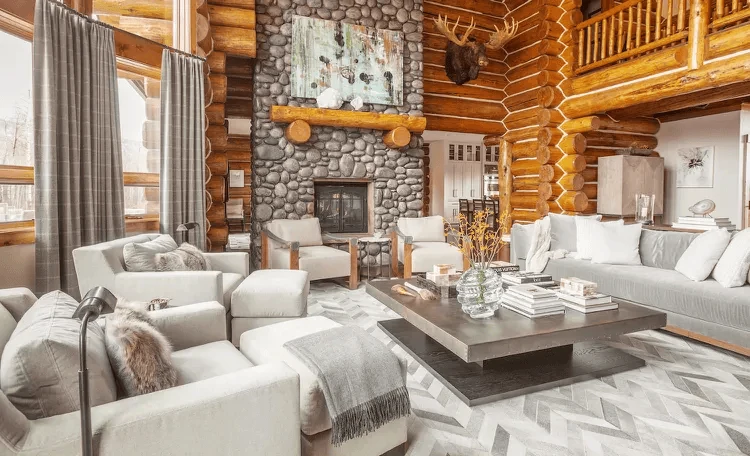
Log cabin interiors can feel suffocating when timber walls, floors, ceilings, and furniture all carry the same visual weight. From a design perspective, material and atmosphere are inseparable in a cabin. Swap bulky rustic furniture for softer sofas, curved chairs, linen upholstery, and cleaner dining silhouettes. This works especially well in timber-heavy living rooms, where one bold wood piece can stay while the surrounding furniture softens the space.
Design Control: Keep one timber piece bold, such as the dining table or bed frame, and let everything around it stay visually softer.
The same balance problem shows up in bare rooms, which our guide on how to turn cold minimalism into a cosy space works through.
2. Make The Fireplace The Main Anchor
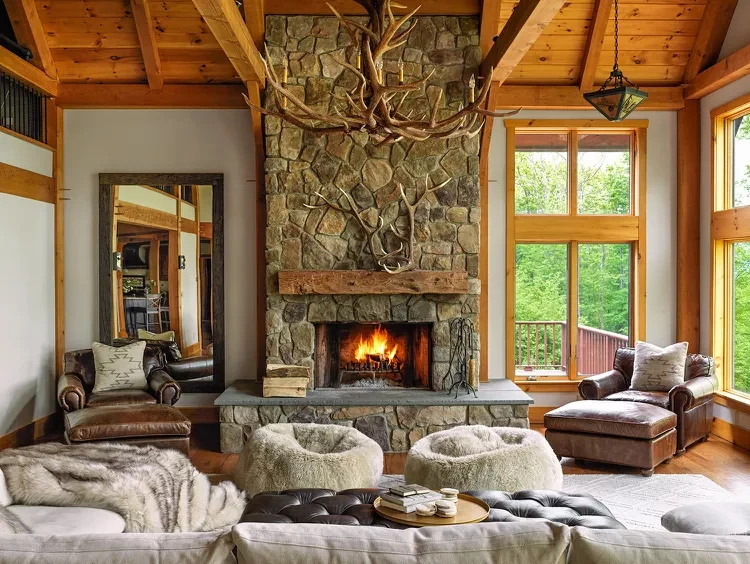
A fireplace naturally becomes the emotional center of a rustic log cabin interior. The seat should face or angle toward the fire so the room feels gathered, not scattered. Two armchairs, a wool rug, and a low coffee table near a stone hearth will feel more intentional than a sofa pushed flat against the opposite wall. The fireplace should guide the layout, not sit like a decorative afterthought.
Pro Constraint: Avoid placing the television directly above the fireplace. The two focal points compete, and the viewing angle usually feels uncomfortable.
3. Use Whitewashed Wood To Brighten A Dark Cabin
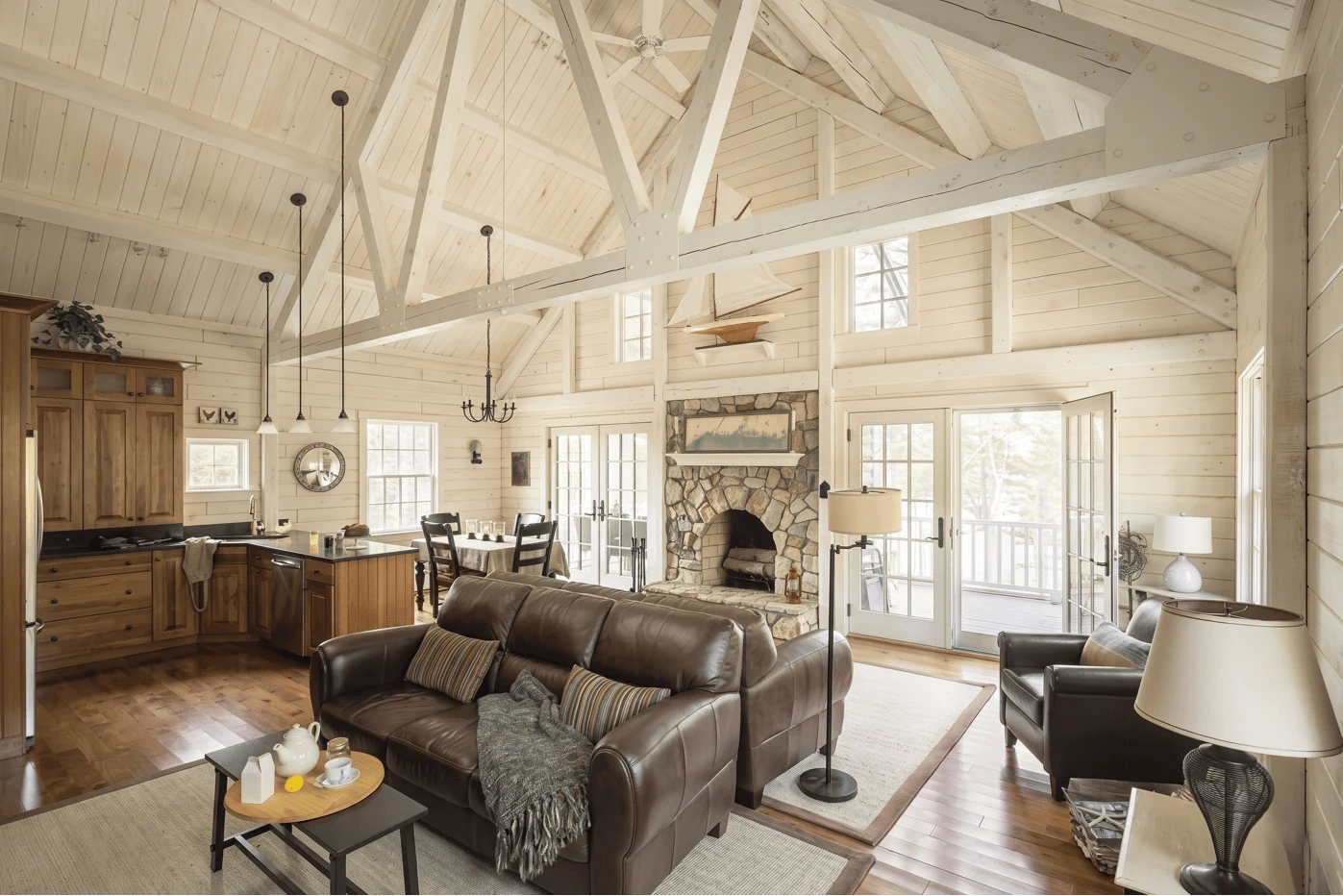
Dark timber absorbs light, and in a small cabin that absorption makes rooms feel half their actual size. Tadao Ando’s work is widely associated with the careful use of light and shadow, and in a cabin that same principle means reading what your wood tone is doing at different hours of the day. Whitewashed, limewashed, or pale-stained timber keeps the cabin grain and texture alive but lets the room breathe. It works well in log cabin interior modern settings and in small cabin interior design ideas where the room needs to feel taller and wider.
Keep In Mind: Whitewashing works best when applied to walls and ceilings rather than floors, keeping visual weight low.
If you want a cooler neutral instead of white, read our take on the millennial grey trend before committing.
4. Frame The View With Light Window Treatments
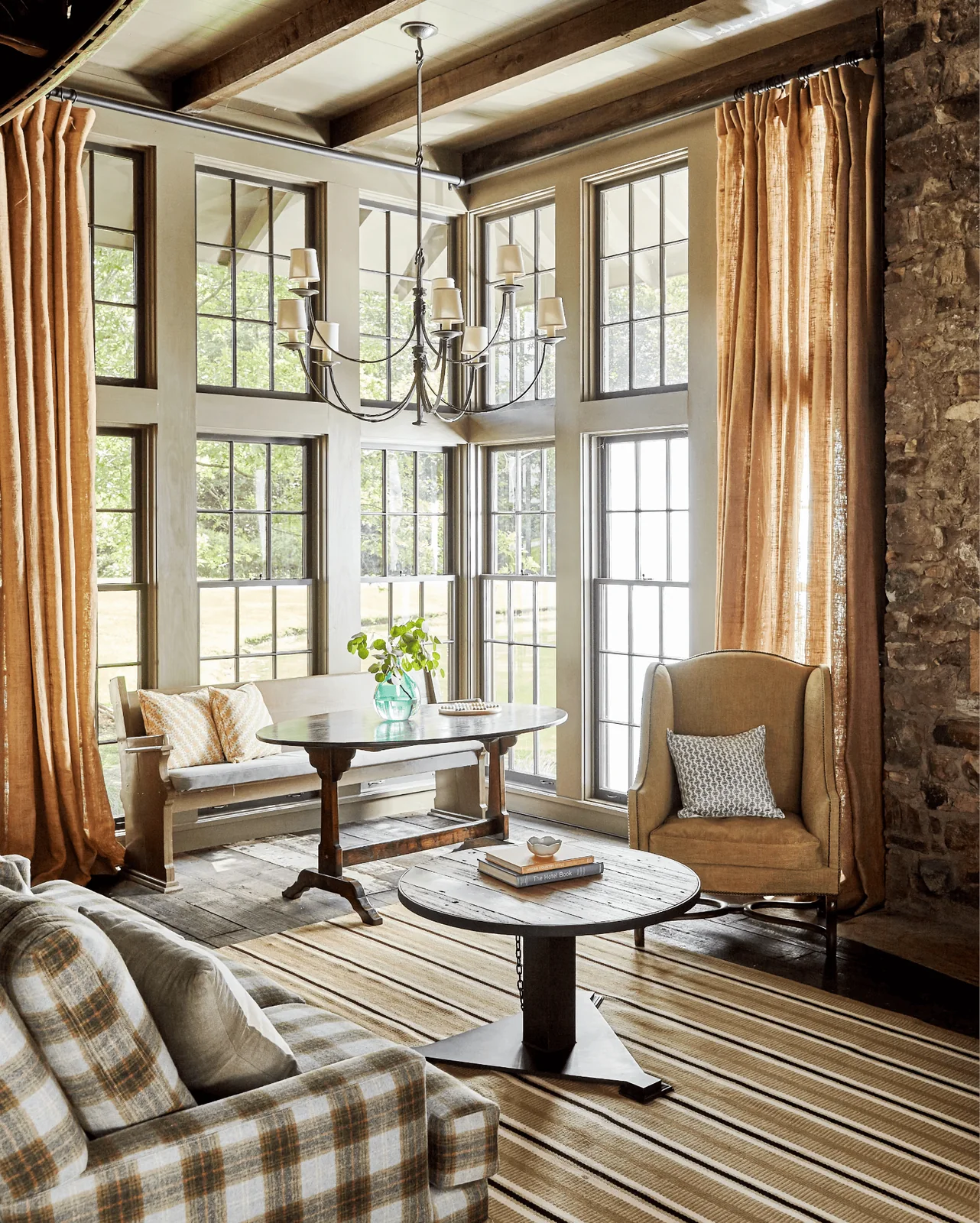
Frank Lloyd Wright’s organic architecture philosophy was built around the idea that architecture should feel connected to its land and setting. In a cabin, that means the outdoors should always feel present. Use linen curtains, woven blinds, or no treatment at all where privacy allows. Letting the trees, water, or hillside become part of the room is one of the most effective things you can do for a small cozy cabin interior.
View Rule: Avoid heavy blackout curtains in main living areas. Save those for bedrooms where sleep matters more than the morning light.
5. Layer The Lighting Before Adding More Decor
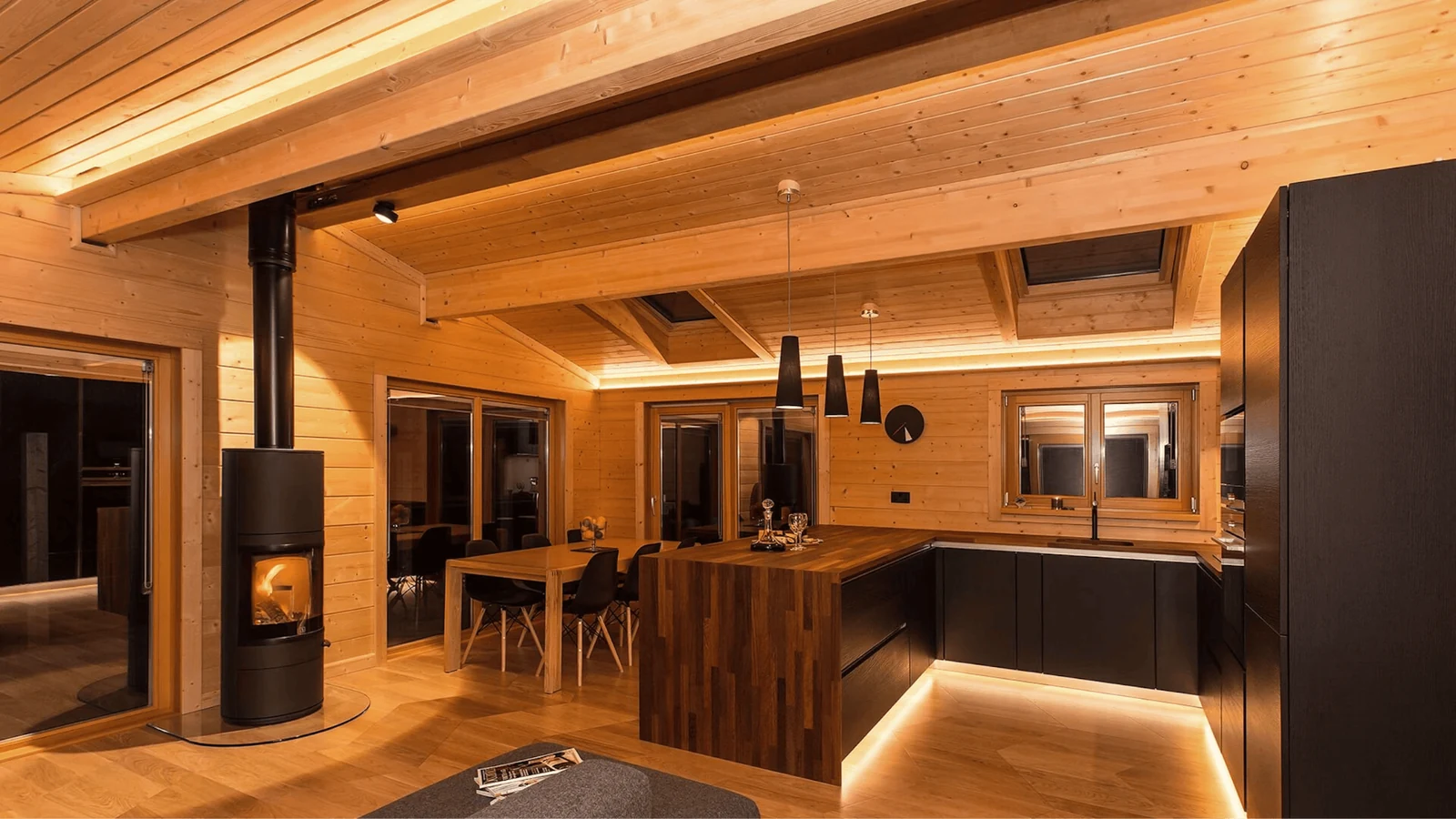
Dark timber and stone absorb light in ways painted walls never do, so one overhead fixture can make modern cabin decor look flat. Use sconces, table lamps, pendants, floor lamps, and warm bulbs before adding more accessories. Warm, amber-toned light around 2700K or lower usually feels more comfortable in timber-heavy rooms and helps rustic cabin decor feel intentional after sunset.
Lighting Check: Plan at least three light sources per room. A cabin with only one ceiling light will always feel unfinished at night.
6. Add Reclaimed Wood Without Making It Look Old
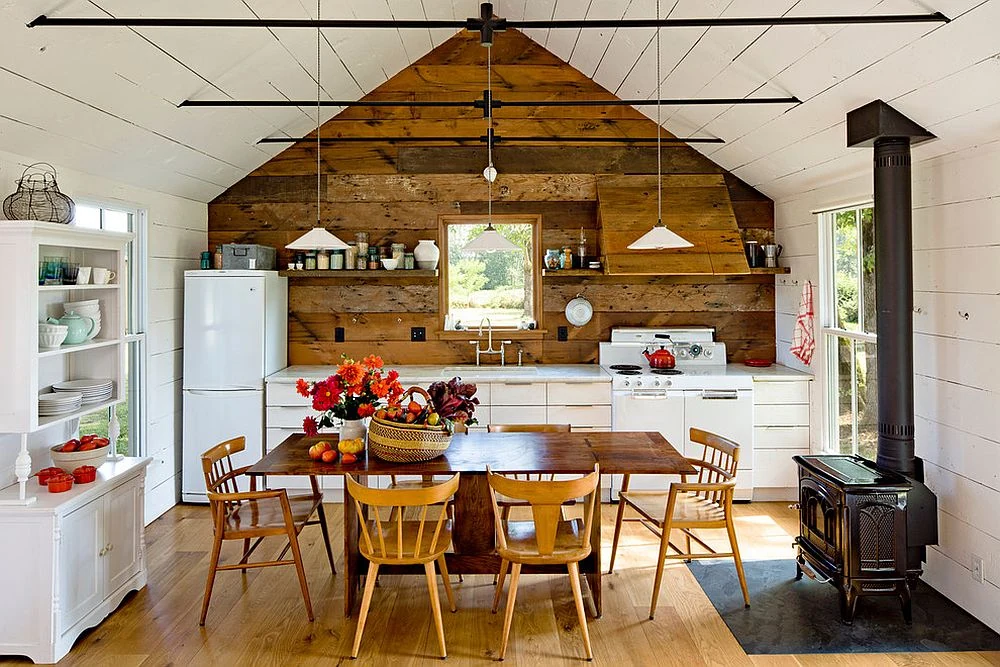
Reclaimed timber carries history in its grain, but it should be used with restraint. The National Park Service’s historic log-building guidance shows how much character original timber can hold over time. Use reclaimed wood in log cabin decor through a dining table, ceiling beams, a shelf, or one accent wall. One aged surface feels characterful; aged timber everywhere can make the cabin feel tired.
Avoid This Do not apply reclaimed wood to every wall, ceiling, and furniture piece. The room needs contrast for the old timber to feel special.
7. Pull The Color Palette From The Terrain Around You
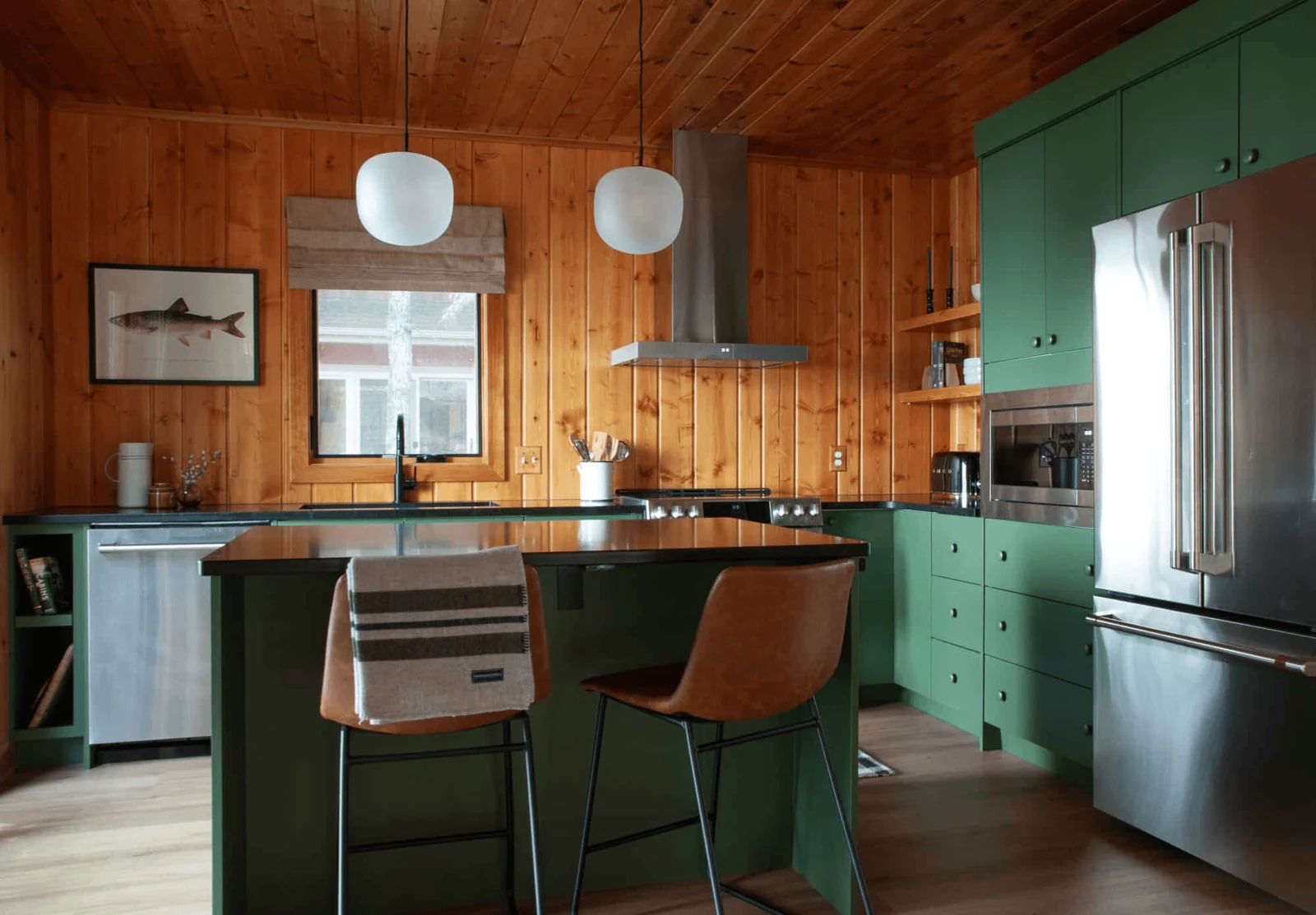
The best cabin color palettes often come from the land outside the window. A forest cabin can handle olive, moss, bark brown, and cream. A mountain retreat may suit stone grey, charcoal, taupe, and warm white. In a farmhouse cabin interior, muted rust and soft beige can feel natural without looking forced. The palette should feel like it belongs to the place, not like it was chosen from a showroom card.
Color Cue: Pick three colors from the surrounding terrain and let timber, stone, and leather carry the rest of the palette.
8. Use Leather Seating For A Warm Lodge Feel
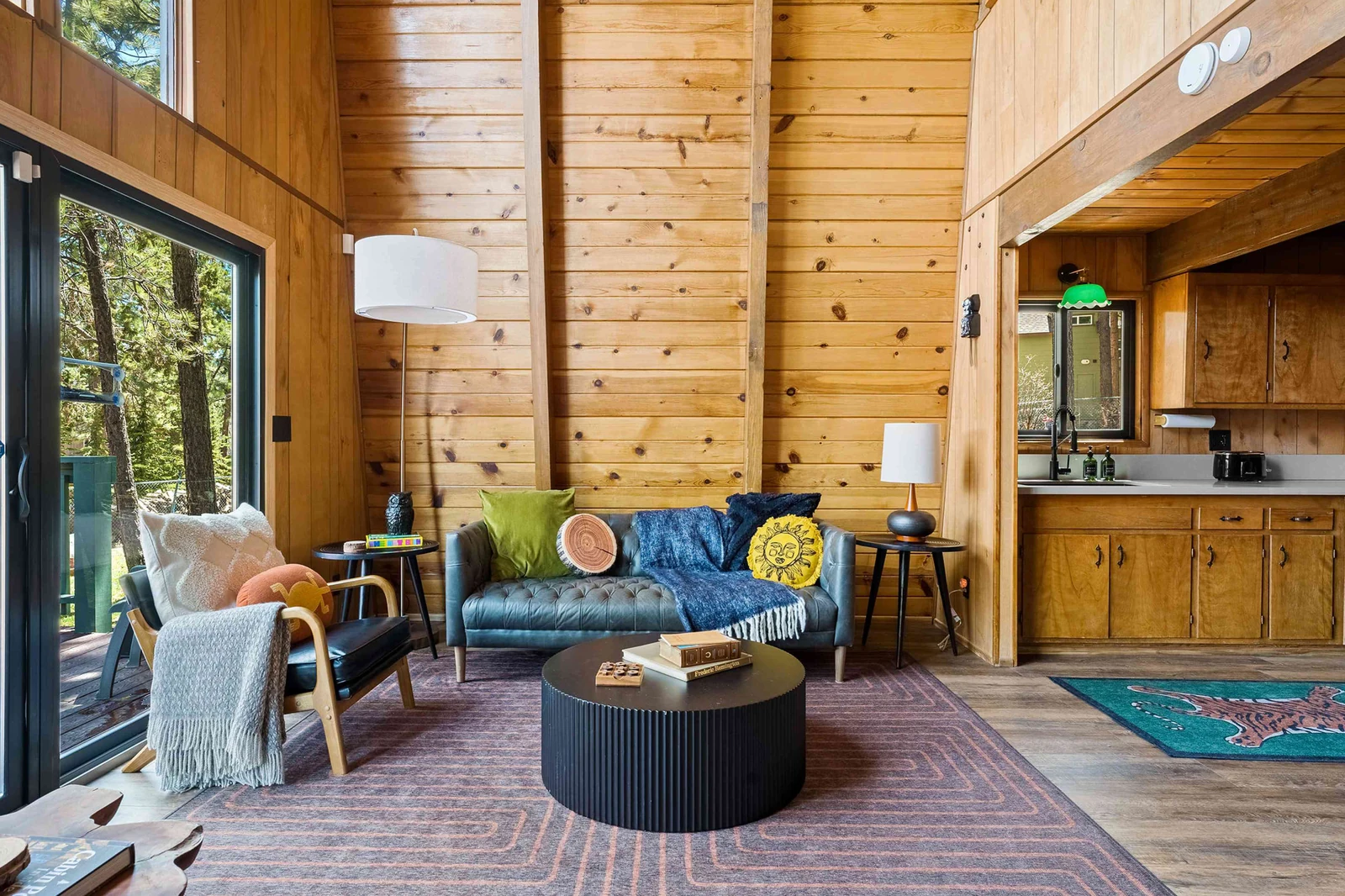
Leather adds warmth, durability, and permanence that fabric cannot always match in a working cabin. In rustic cabin decor and log cabin interiors that see regular use, leather armchairs, sofas, and ottomans age well and develop character over time. It also balances soft textiles beautifully when the room has wool rugs, linen curtains, and timber surfaces.
Material Note: Tan or cognac leather usually feels softer than dark brown, especially in a modern rustic cabin interior with heavy wood.
9. Soften Timber And Stone With Wool, Linen, And Bouclé
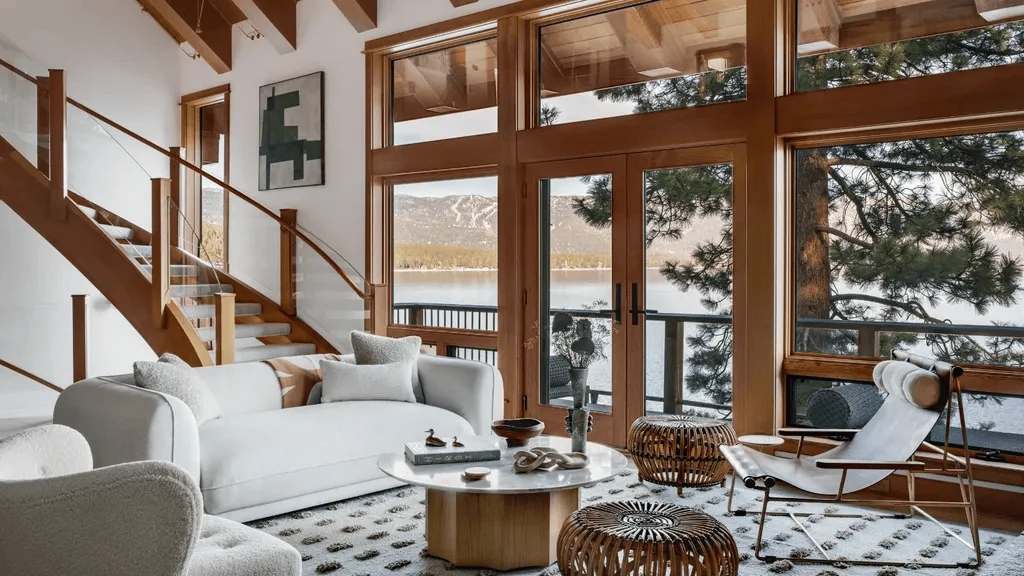
Hard surfaces are the default in most cabins, and they can make a room feel visually rigid. Wool rugs, bouclé chairs, linen curtains, soft bedding, and textured cushions add comfort without taking away from the wood. In small cozy cabin interiors, this soft layer often matters more than extra decor because it changes how the room feels, not just how it looks.
Texture Rule: Keep textures tonal rather than high-contrast. A calm wool rug will soften the room more elegantly than a loud pattern.
10. Create An Open Layout For A Small Cabin
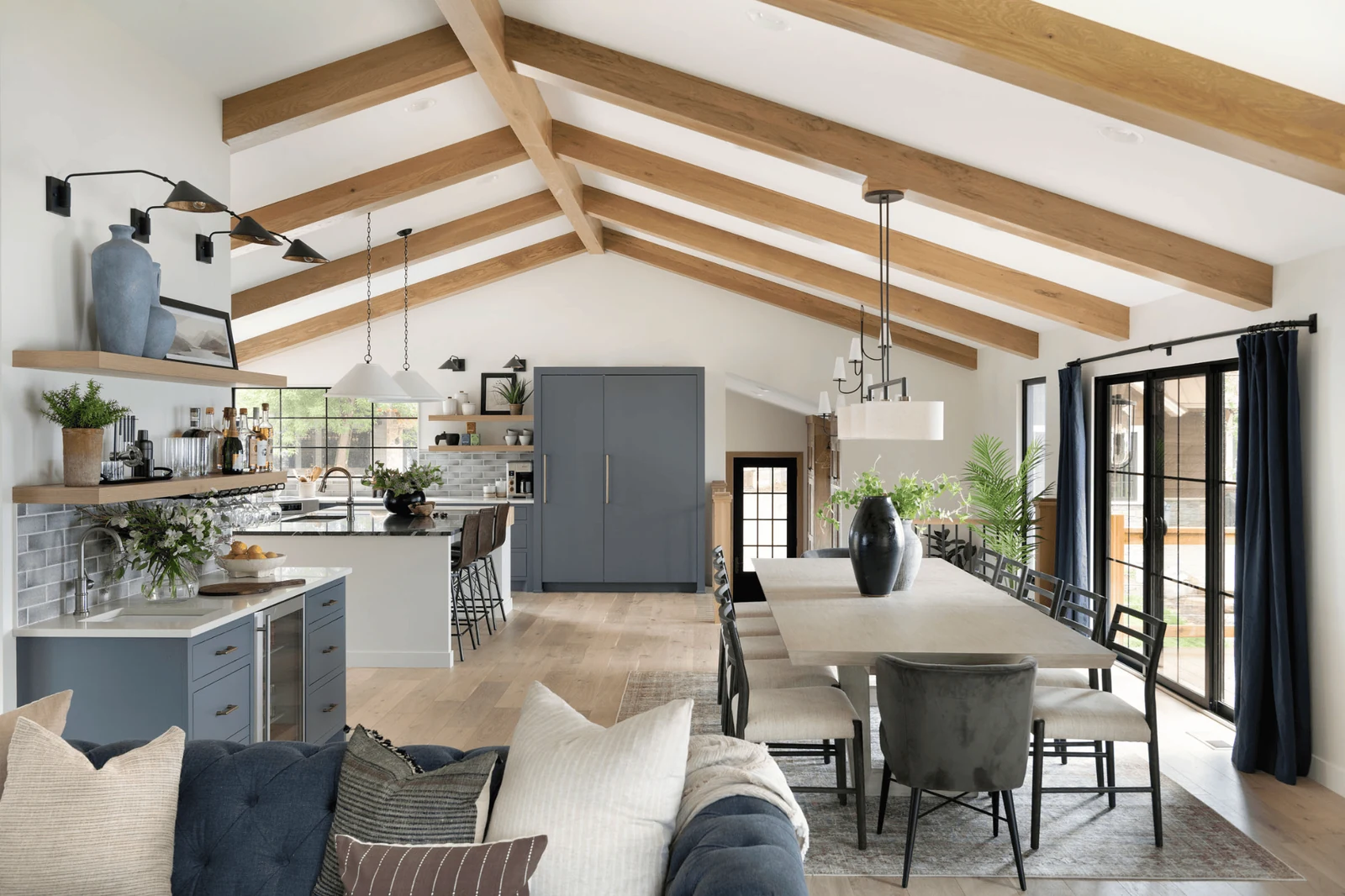
Small cabins need fewer visual breaks between functions. Combine living, dining, and kitchen into one flowing area, then define each zone with rugs, pendants, and furniture placement. This makes small cabin interior design ideas feel larger, calmer, and easier to use without adding unnecessary partitions. The timber walls and ceiling can then become one continuous design language.
Space Planning Cue: Each zone still needs one clear anchor, such as a rug for seating, a pendant for dining, or task lighting for the kitchen.
11. Build Storage Into Benches, Beds, And Window Seats
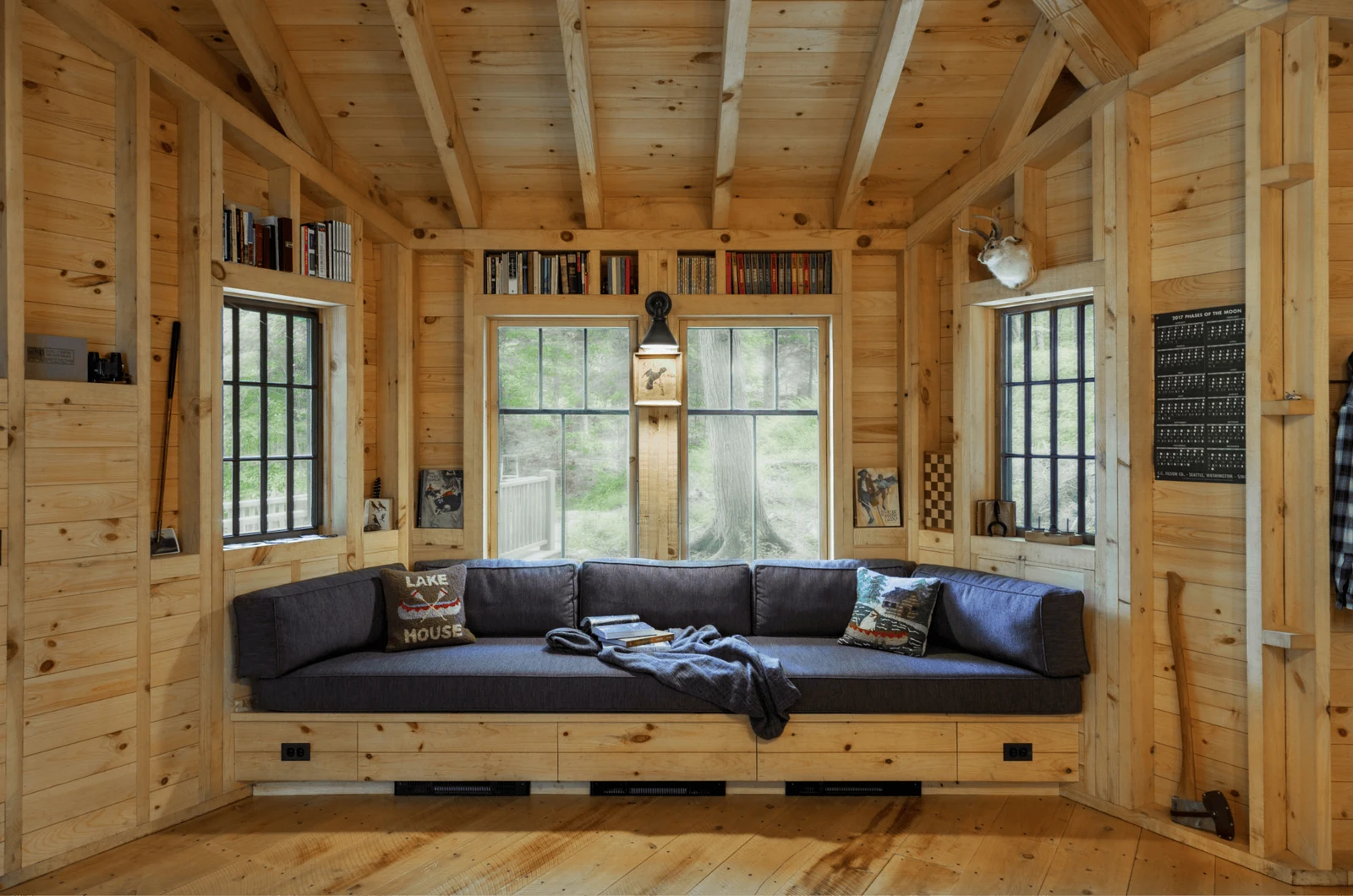
In small log cabin interior design ideas, storage should feel absorbed into the architecture. Storage benches, under-bed drawers, wall niches, and window seats with lift-up lids reduce the need for loose cabinets. For compact rooms, these smart storage ideas can help keep useful items close without adding visual bulk. Built-in storage works best when it feels planned from the start.
Function Check Every built-in should open easily. If storage is awkward to access, it becomes a surface for clutter instead of a solution.
12. Design Cabin Bedrooms Like Quiet Hideaways
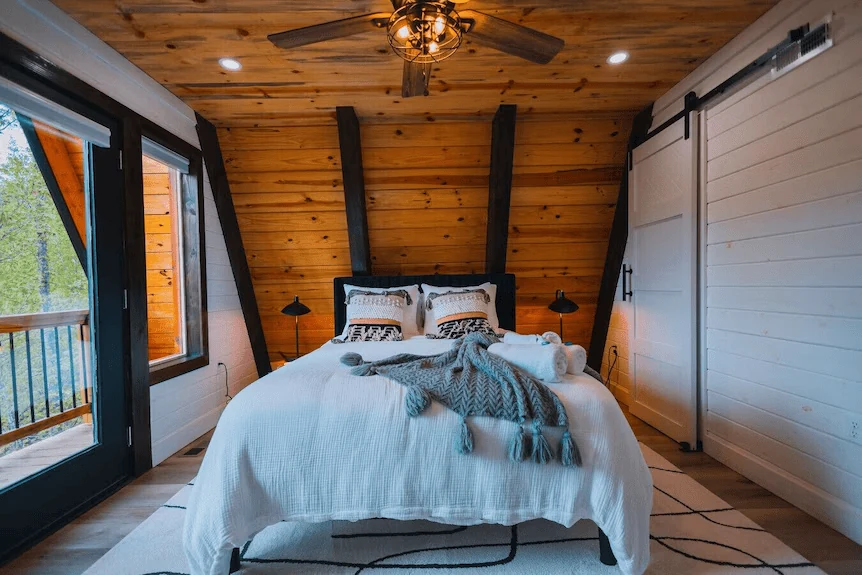
A cabin bedroom should feel restful, not over-decorated. Low platform beds, warm bedside lamps, wool or linen bedding, a soft rug, and one simple artwork are enough. The same balance used in modern bedroom design ideas also works here, but with warmer wood, softer lighting, and fewer sharp finishes. In small cozy cabin interiors, the bedroom only needs to do one thing well: help the body slow down.
Calm Filter: Avoid strong color, too many cushions, and multiple prints. The bedroom should feel quieter than the living room.
13. Use Built-In Bunk Beds For Guest Cabins
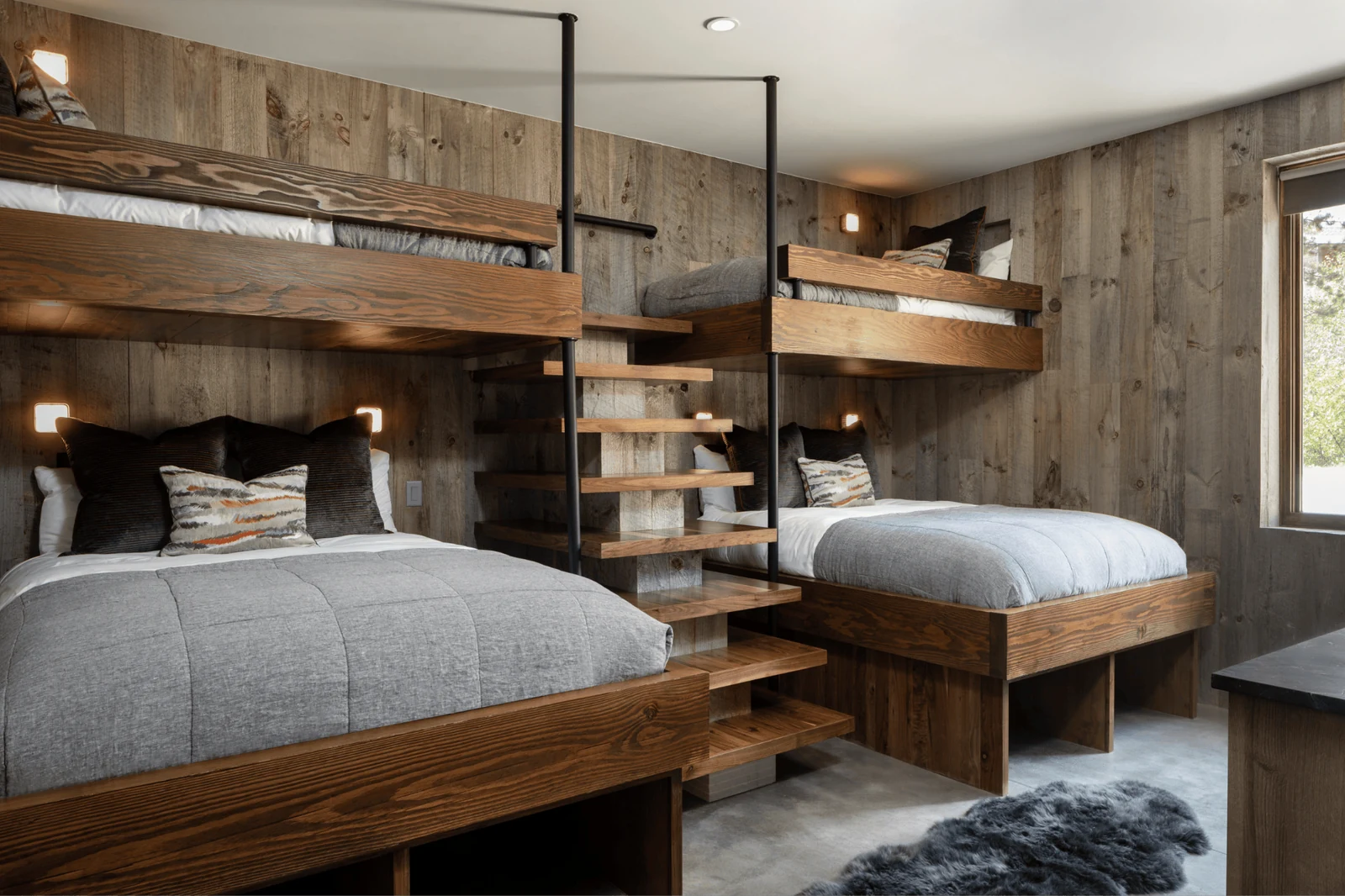
Pinnacle Mountain Homes
Built-in bunks are one of the smartest small log cabin interior design ideas for family cabins and guest rooms. Add individual reading lights, a small shelf, privacy curtains, drawers below, and high-quality bedding so the setup feels thoughtful rather than temporary. With the right joinery, a bunk room can feel charming instead of cramped.
Joinery Detail: The ladder, drawers, shelves, and guard rails should look like one planned system, not separate pieces added later.
14. Keep The Cabin Kitchen Rustic But Clean
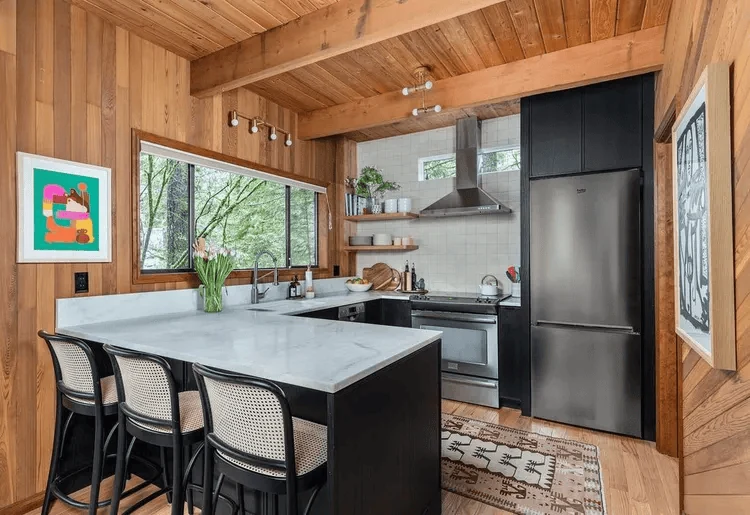
A cabin kitchen usually fails from layout clutter, not from poor materials. Wood cabinets, stone counters, open shelving, and aged metal hardware work beautifully in a modern rustic cabin interior or farmhouse cabin interior when surfaces stay controlled. For a cleaner direction, kitchen designs can be softened with timber, stone, and warm lighting.
Shelf Rule: Use open shelving only for objects you use daily. Everything else should sit behind closed cabinet doors.
15. Add Black Metal Accents For Modern Contrast
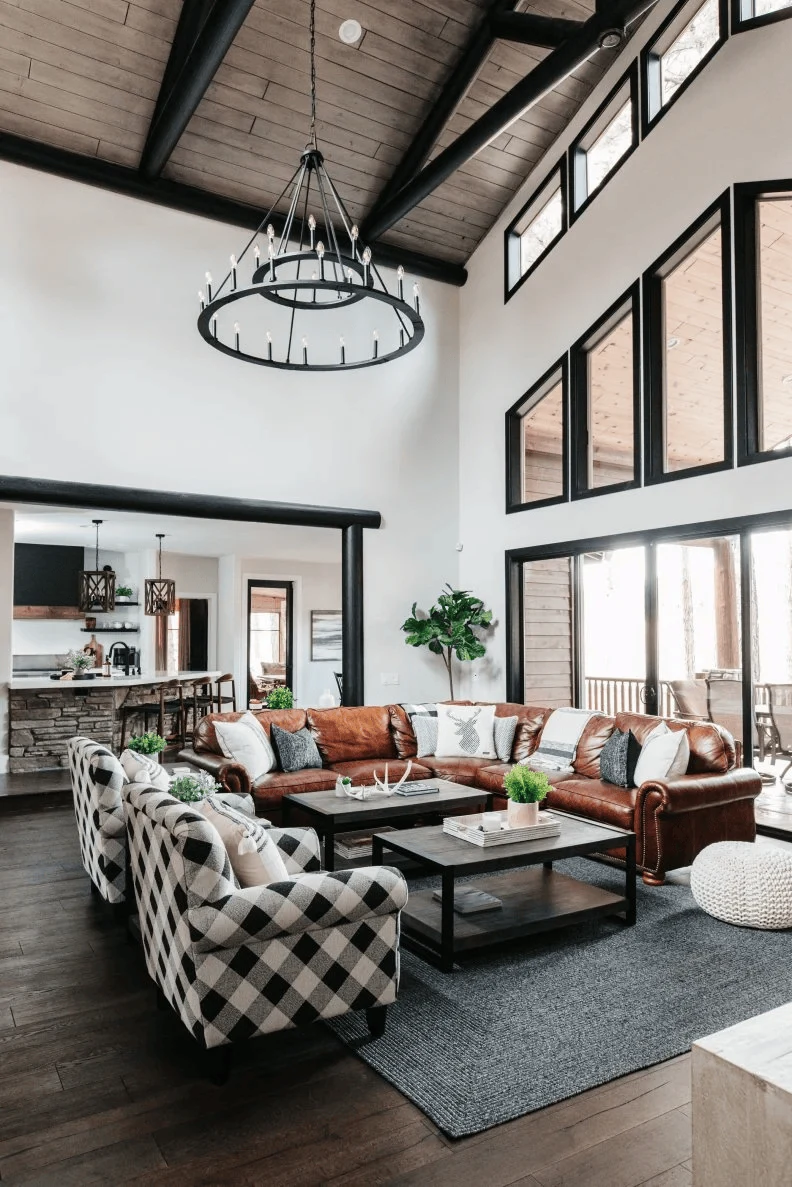
Black metal sharpens timber-heavy rooms in a way few materials can. In a modern cabin interior, it works through pendant lights, cabinet handles, stair rails, fireplace surrounds, and window frames. The contrast creates order and makes the space feel deliberate. It is especially useful when the cabin has many warm brown surfaces and needs definition.
Contrast Limit: Use black metal as punctuation, not as the main material. Too much can push the cabin toward an industrial mood.
16. Use One Cabin Accent Wall Instead Of Wood Everywhere
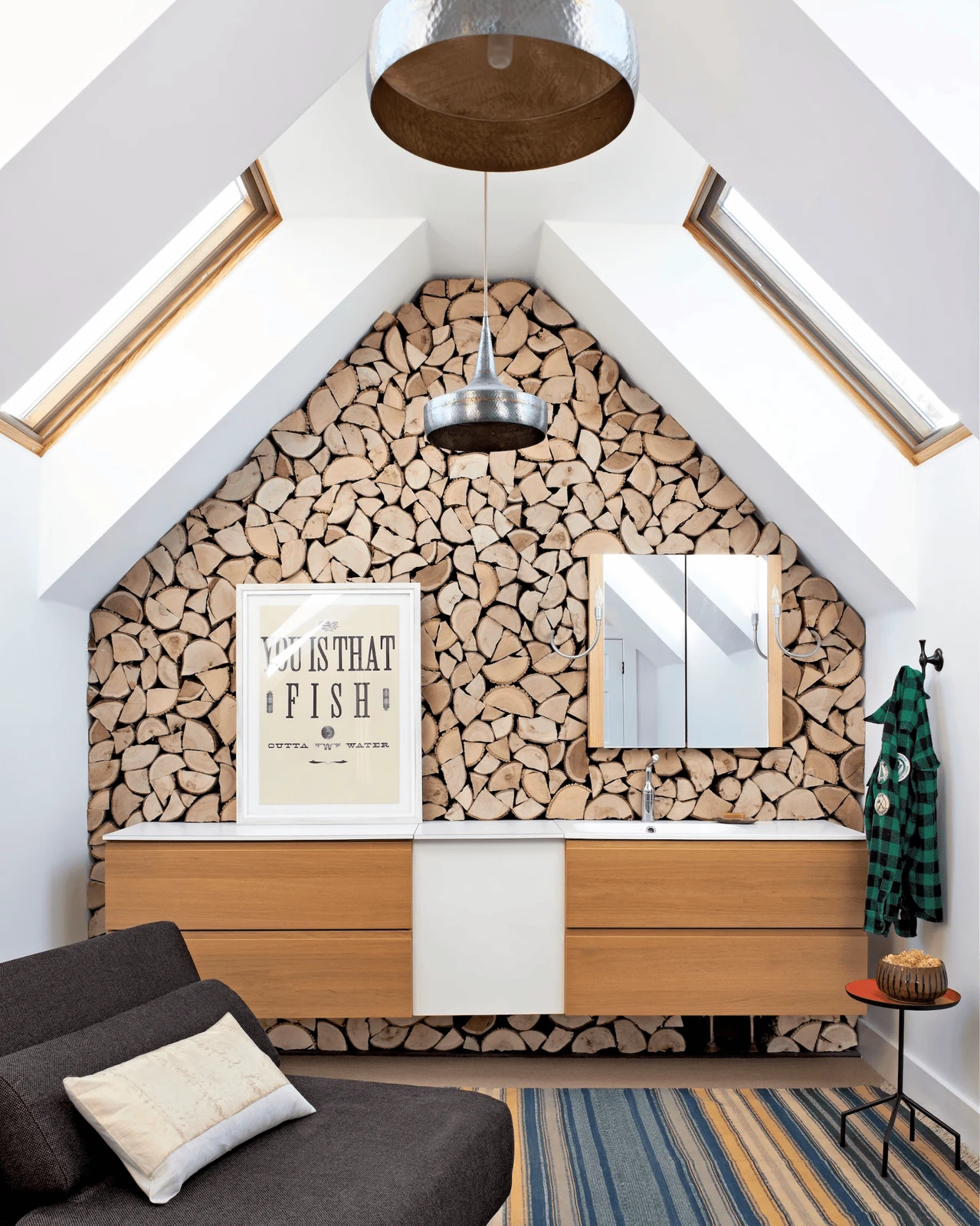
One timber, stone, limewash, or feature wall creates warmth without shrinking the room. In dining nooks, cabin bedrooms, and small living areas, a single strong wall does more atmospheric work than covering every side. If the cabin has a small eating corner, using wallpaper can help you choose a softer feature wall that still works with wood.
Surface Control: Keep the ceiling and floor different from the accent wall so the room does not start feeling like a tunnel.
17. Keep Rustic Decor Collected, Not Themed
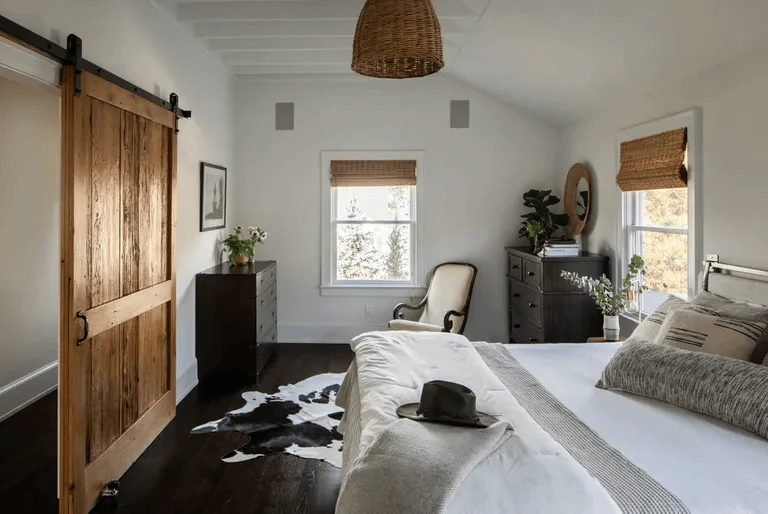
Rustic cabin decor should feel slowly gathered, not bought as a matching set. Keep what is useful, beautiful, personal, or material-rich, and remove anything that looks like filler. A ceramic bowl, vintage lantern, framed landscape, or handmade object will always feel stronger than a shelf of cabin-branded decor. Decor in log cabins works best when it feels personal, not packaged.
Editing Rule: One meaningful piece usually does more than ten small themed accessories.
Handmade pieces do this better than anything bought as a set, as these artisanal elements in interior design show.
18. Add A Reading Nook Near The Fire Or Window
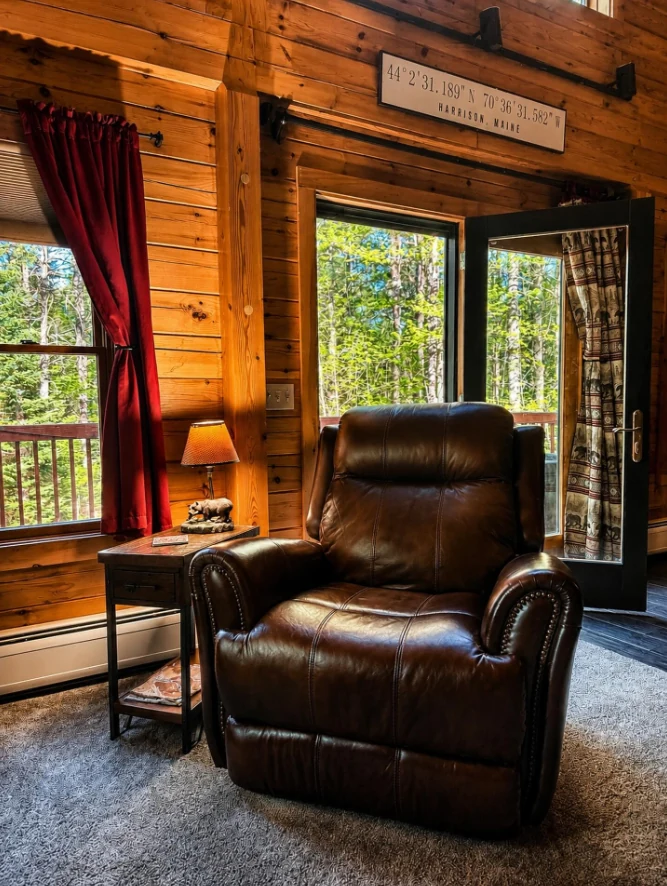
A chair, reading lamp, side table, folded blanket, and view can create the most memorable moment in a small cozy cabin interior. The reading nook works because it gives the room a clear pause point. It also uses little floor space while making the cabin feel more personal and inviting. This is the kind of corner that gives the retreat its emotional pull.
Placement Cue: Place the chair where both light and view feel natural, so the nook invites use instead of becoming decorative.
19. Use Rugs To Warm Wood Or Stone Floors
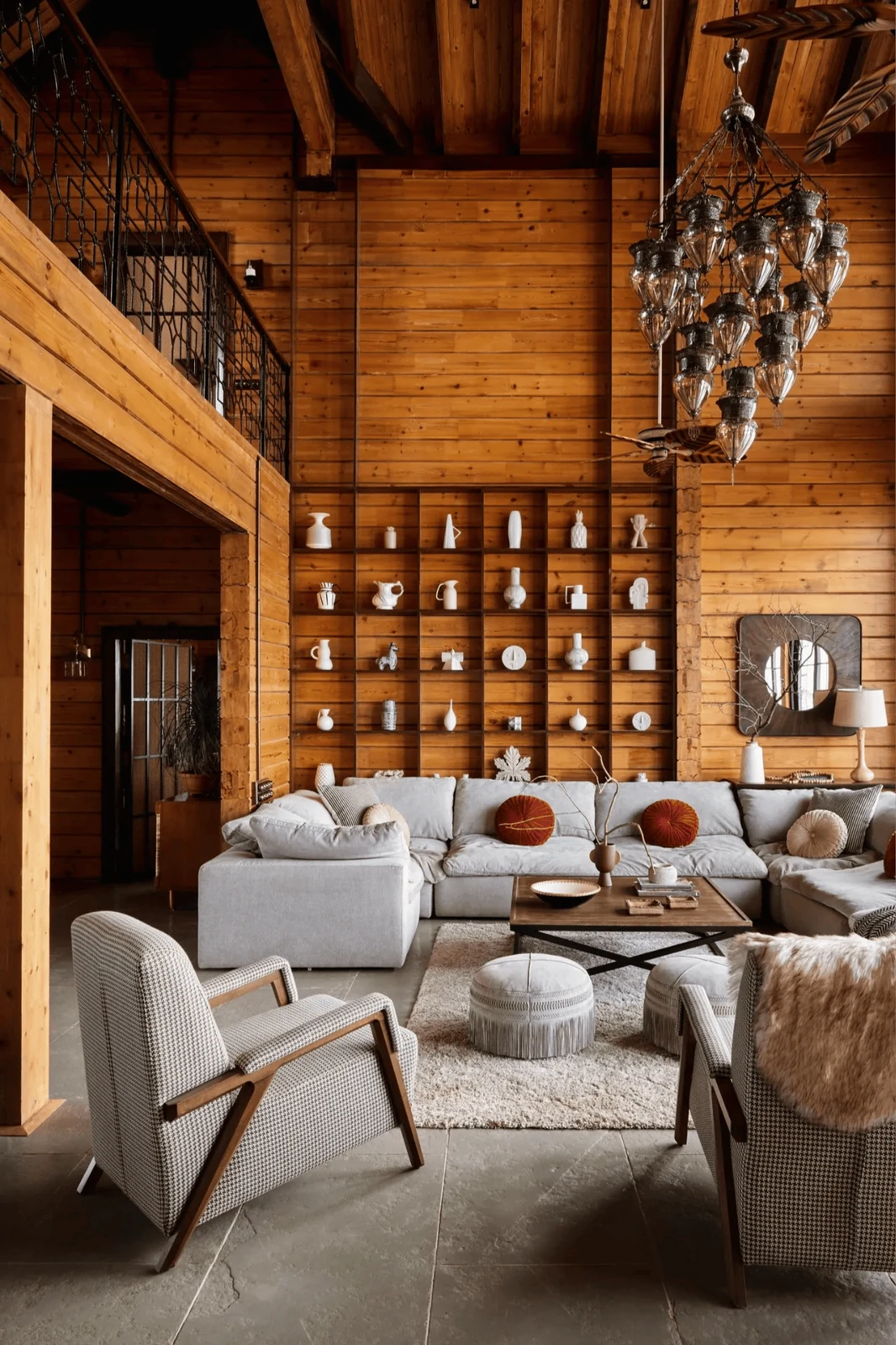
Rugs add acoustic softness, thermal comfort, and visual zoning in cabins with hard floors. Wool rugs, jute, flatweaves, and vintage-inspired patterns all work depending on the mood. The rug should be large enough for at least the front legs of the furniture to sit on it. In open-plan cabins, one large rug can organize the whole seating area.
Floor Rule: Avoid several tiny rugs in one room. They break the floor visually and make the layout feel unsettled.
20. Choose Eclectic Art That Does Not Feel Generic
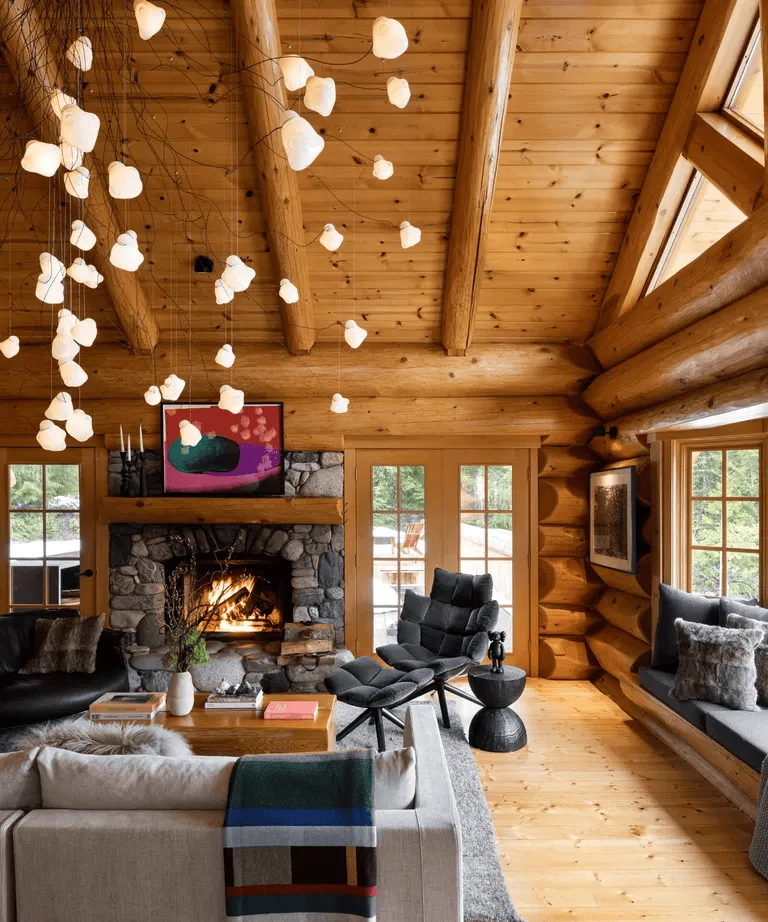
Eclectic art can make a cabin feel collected, personal, and less predictable, but it still needs a connection to the space. A terrain painting, handmade textile, vintage sketch, local woodwork, or framed botanical print will feel stronger than a wall full of generic forest posters. Modern cabin decor can handle eclectic pieces when the colors, materials, or subject still speak to the surrounding landscape.
Wall Cue: Let one eclectic piece lead the wall instead of crowding the room with unrelated art.
21. Use Glass And Mirrors To Blend The Cabin With The View
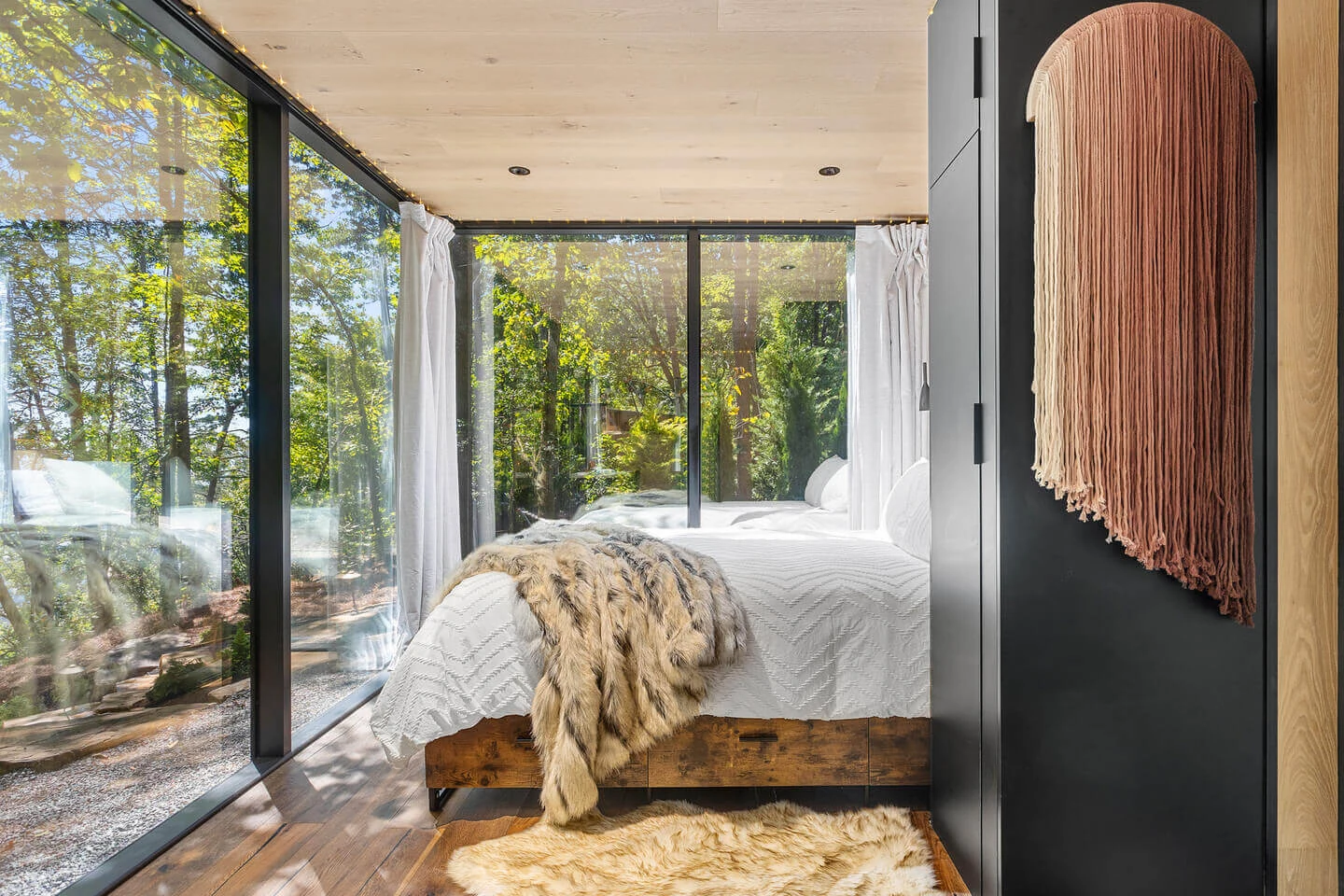
Glass and mirrors can make a cabin feel more connected to its surroundings when they are placed with intention. Large windows, glazed doors, glass partitions, or a mirror facing the landscape can pull trees, water, snow, or mountain views deeper into the room. In small cabin interior design ideas, this works especially well because reflected light and outdoor scenery make compact rooms feel wider, calmer, and less enclosed.
Reflection Check: Before placing a mirror or glass feature, check what it reflects. It should capture light, greenery, fire glow, or a view, not clutter or a dark corner.
22. Mix Farmhouse Cabin Details With Cleaner Lines
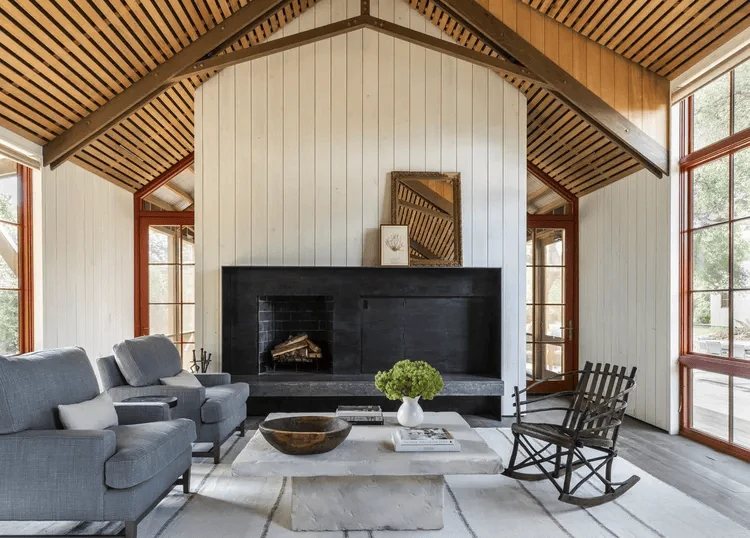
An apron sink, shaker cabinets, woven baskets, vintage pendants, and a heavy wood table can shape a farmhouse cabin interior. They work best when balanced with open counter space, simple flooring, and furniture that does not compete for attention. The farmhouse feeling should come from materials, not clutter. Cleaner lines keep the cabin from feeling overly nostalgic.
Style Boundary: Avoid pulling the same room too strongly toward industrial at the same time. Let farmhouse be the main language.
23. Choose Hardware That Feels Durable And Quietly Detailed
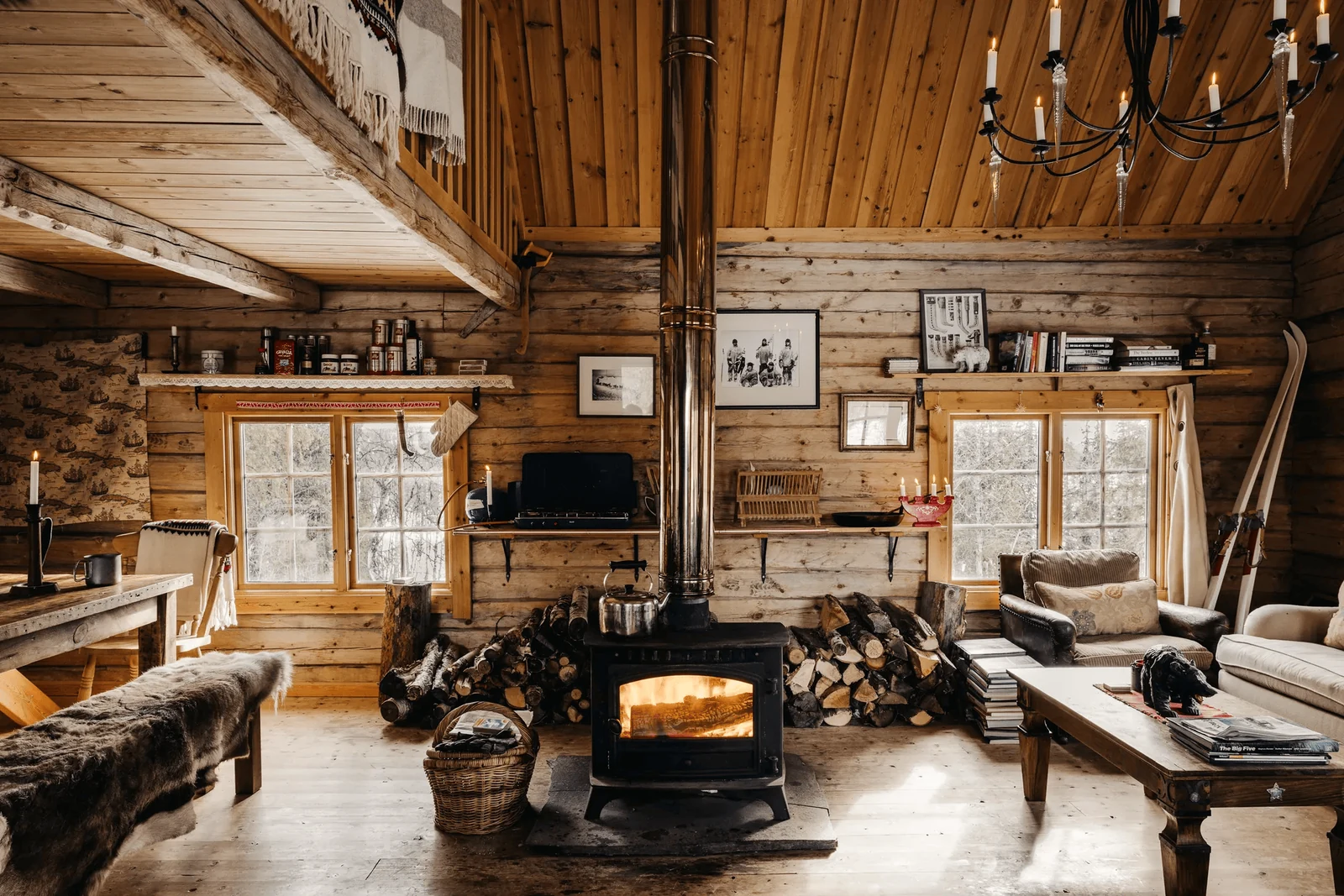
Hardware ties the material story together. Aged brass, bronze, blackened steel, and matte black all work in log cabin decor and modern rustic cabin interior settings. Handles, hooks, hinges, and latches should feel like they belong to the building, not like generic replacements. Small details decide if the room feels finished or simply furnished.
Finish Rule: In smaller cabins, one metal finish usually creates a cleaner result than several competing finishes.
24. Use Plants As A Support, Not The Whole Theme
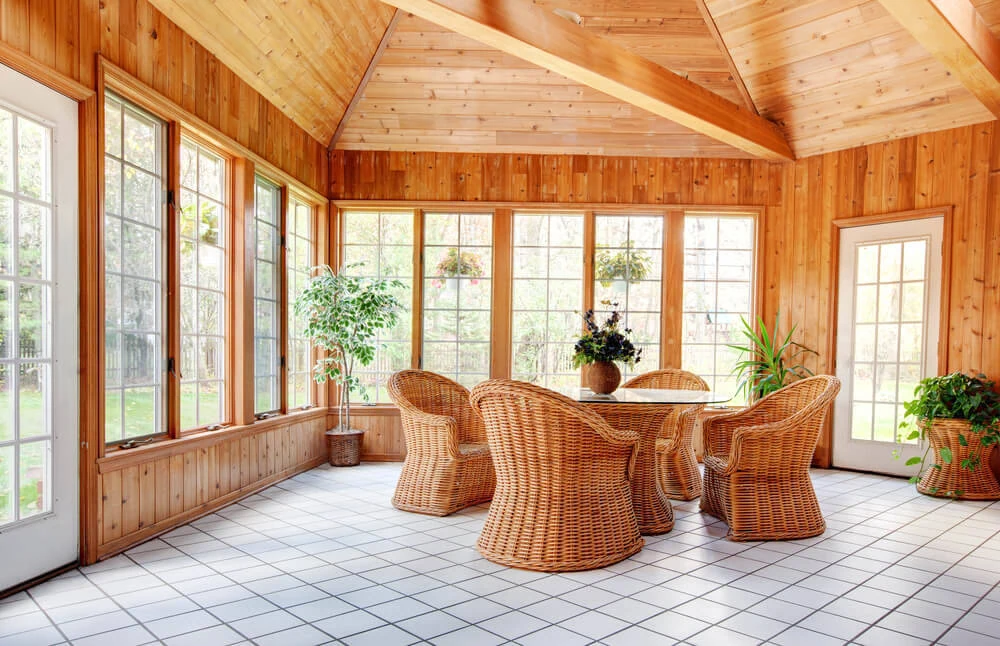
Plants soften cabin interiors in the right dose. One large plant near natural light, a trailing vine in the bathroom, or dried stems in a ceramic vase can support the natural mood without turning the space boho. Fewer, larger plants usually work better than many small pots. The greenery should support the cabin’s connection to nature, not become the whole theme.
Plant Check: A dark corner is not the right place for a real plant unless the plant can actually survive there.
25. Finish With A Calm Styling Layer
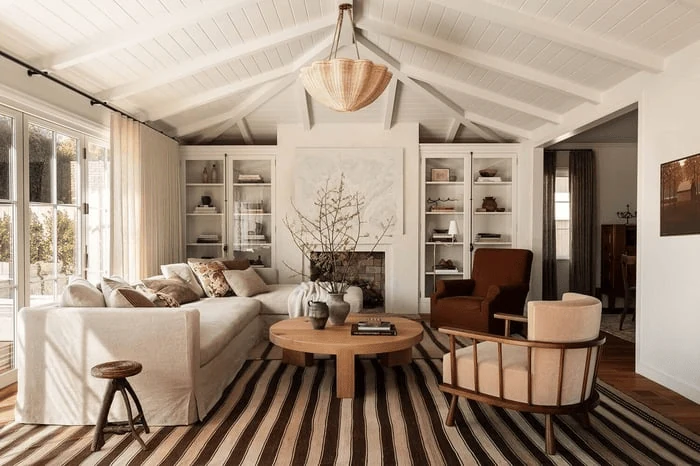
Books, ceramics, baskets, candles, trays, and folded blankets should finish the room without crowding every surface. The final styling layer is an editing exercise as much as a decorating one. A clear shelf or empty tabletop can make the styled areas feel more intentional. The room should feel complete, not filled.
Final Edit: Leave at least one surface in each room clear so the eye has somewhere to rest.
26. Use Exposed Beams To Add Structure Without Extra Decor
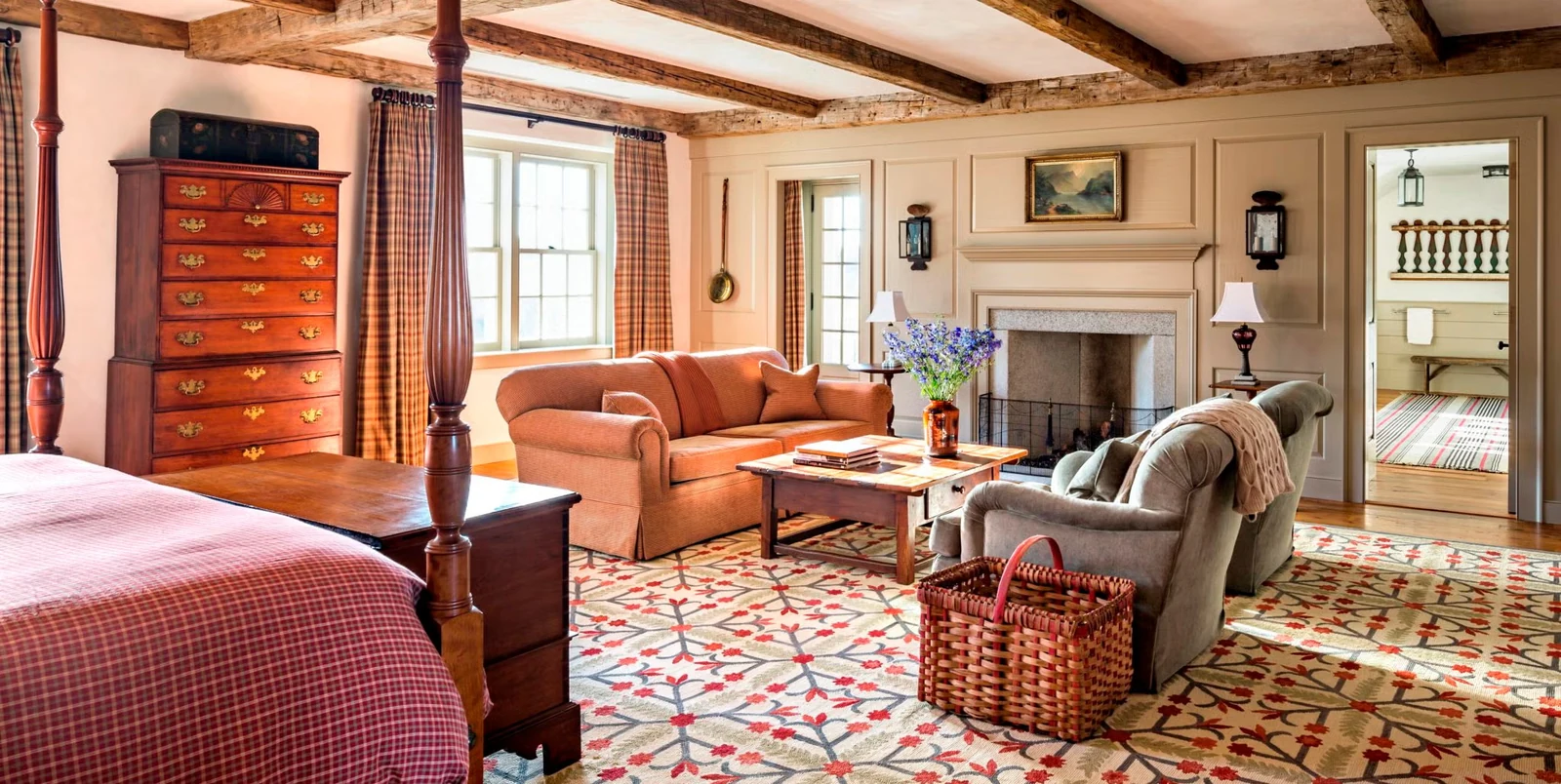
Exposed beams give a ceiling rhythm and architectural scale that accessories cannot replicate. In open-plan cabins, they add visual interest overhead while supporting log cabin interior design ideas that need character without clutter. Natural, stained, or softly washed beams can all work depending on the room’s light. The goal is to add structure without making the ceiling feel heavier than the room can handle.
Beam Pointer: On low ceilings, keep beams close to the ceiling color so they add structure without visually pressing the room down.
27. Add A Mudroom Corner For Boots, Coats, And Outdoor Gear
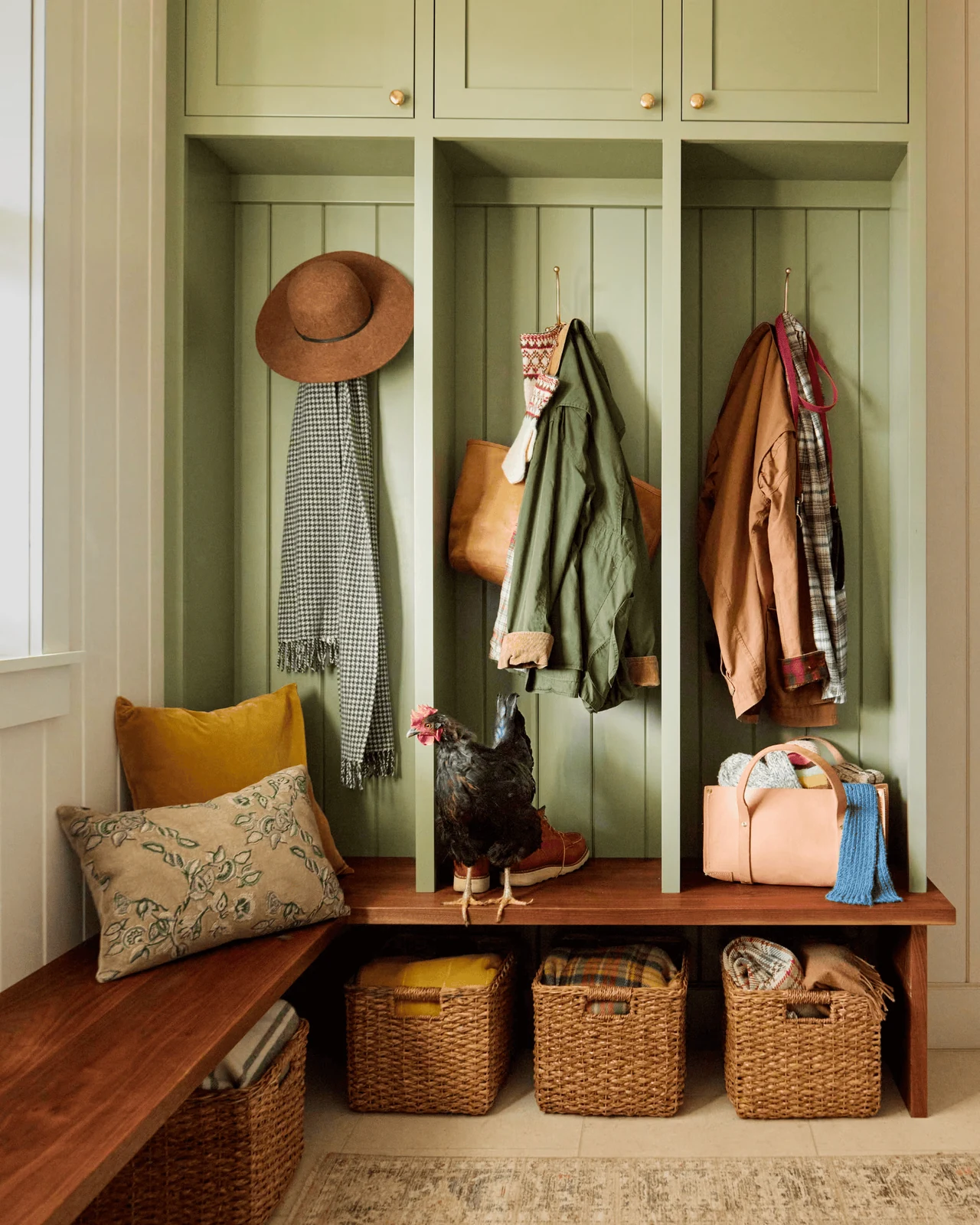
Cabins live close to the outdoors, so wet boots, damp coats, and hiking gear need a proper landing point. Add coat hooks, a bench, shoe storage, baskets, and easy-clean flooring near the entry. This keeps the main living area cleaner and makes daily use feel easier. In a farmhouse cabin interior, the mudroom corner can be both practical and visually warm.
Entry Rule: Keep it contained to one wall so it feels planned, not like overflow storage.
28. Use Stone Beyond The Fireplace
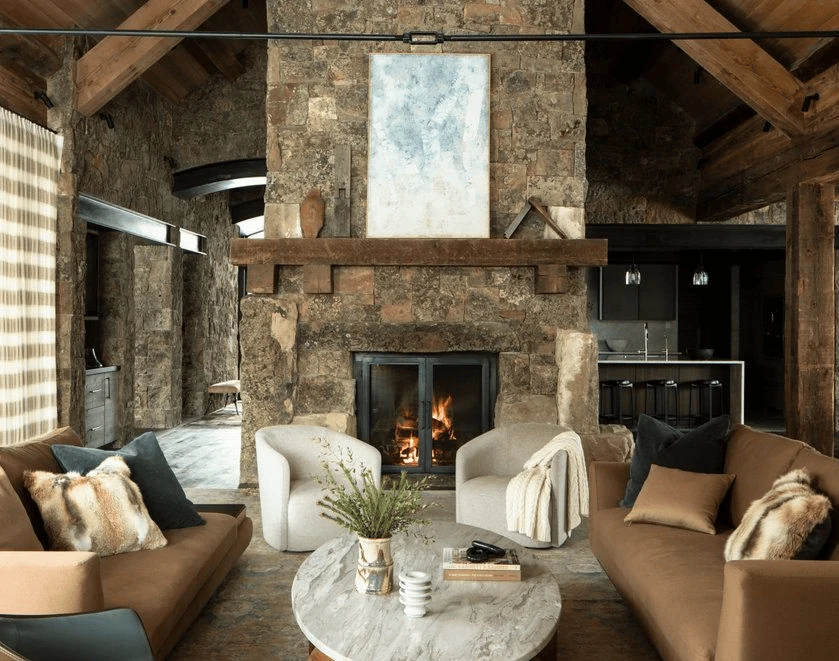
A stone in a rustic log cabin interior does not need to stay at the hearth. Use it as a kitchen backsplash, entry floor, bathroom basin, or low living-room ledge. It grounds a modern rustic cabin interior without relying only on wood. Stone gives the cabin a third natural material, which keeps timber from carrying the whole design alone.
Material Limit: Two strong stone moments can add depth, while too much stone can make the cabin feel cold.
29. Create A Dining Spot That Feels Like A Gathering Table
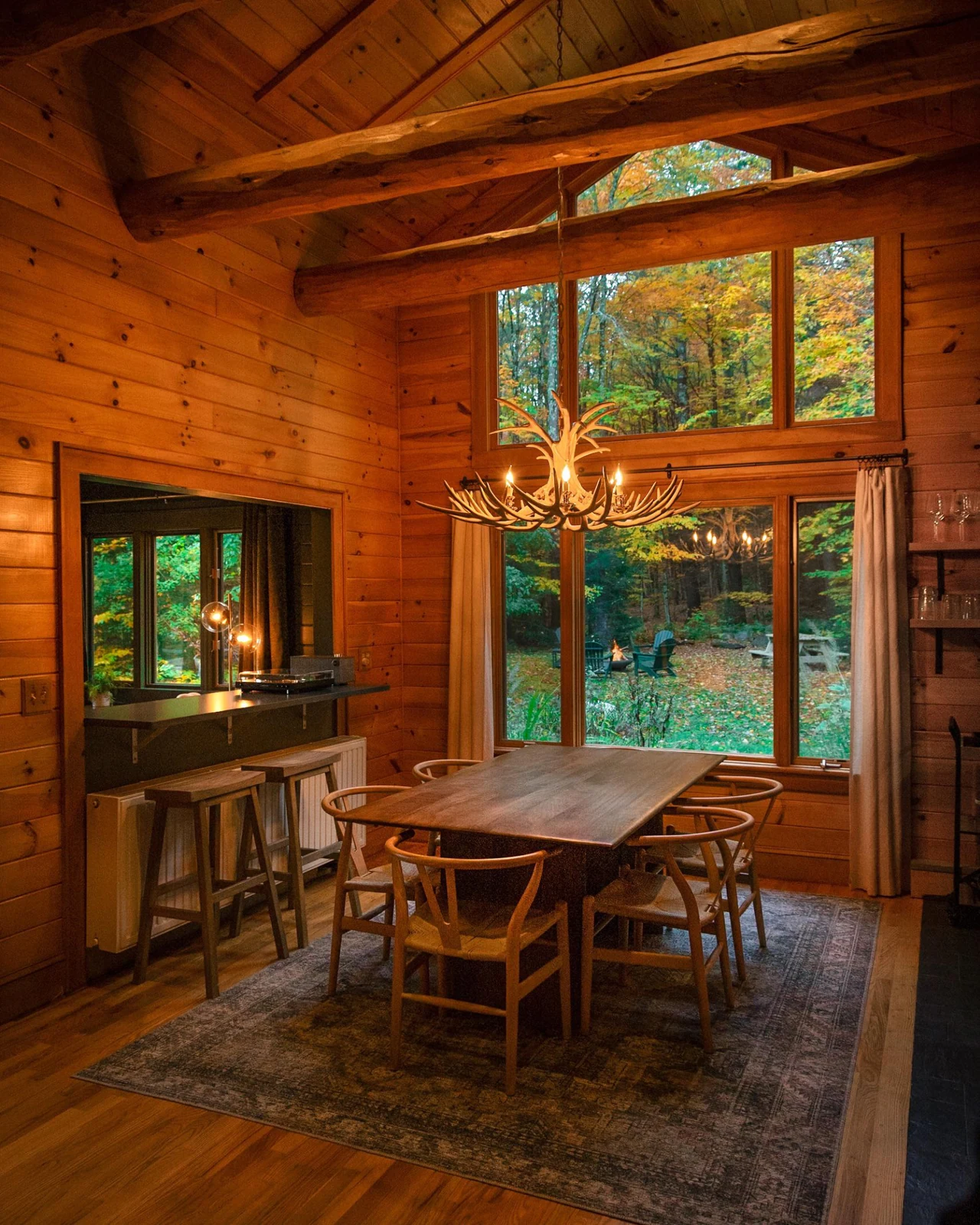
A cabin dining area should feel relaxed, generous, and ready for long conversations. A solid wood table, comfortable chairs, one bench, simple candles, and a low pendant can give a farmhouse cabin interior its social heart. Even in small cozy cabin interiors, this can work against a wall or window if the table shape and lighting are chosen carefully.
Pendant Pointer: Hang the pendant low enough to create intimacy, but high enough to keep faces, food, and conversation unobstructed.
30. Use Scent, Sound, And Texture To Complete The Cabin Mood
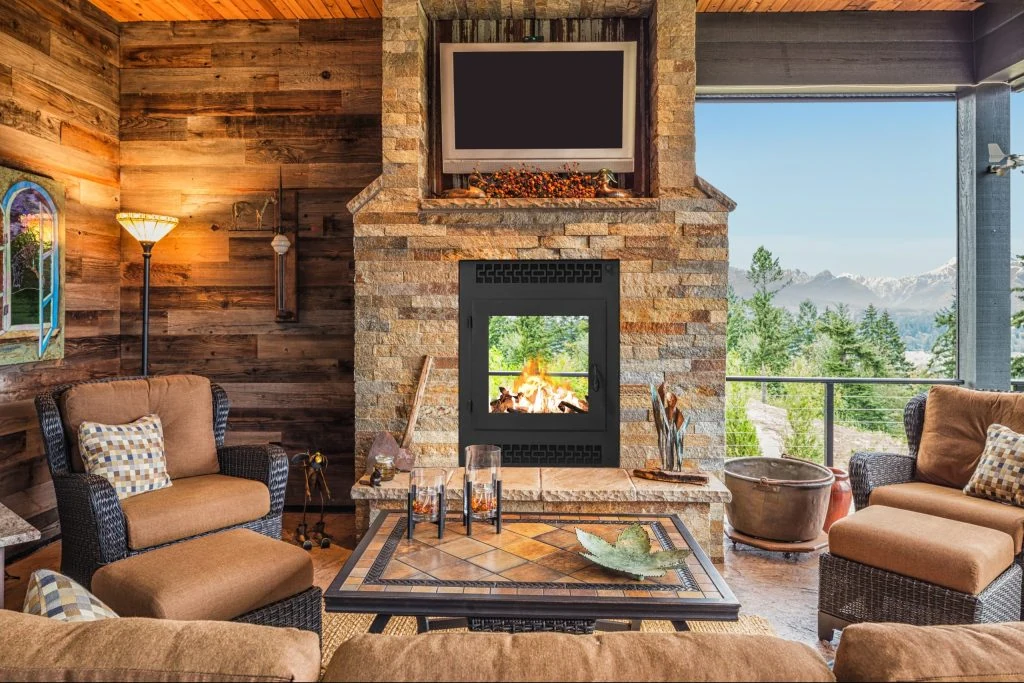
Cabin interiors are not only visual. Soft wool rugs, linen curtains, natural candles, quiet corners, and materials that feel good underfoot make the space feel slower and more restorative than a regular home. These sensory details finish the mood without adding visual clutter. A cabin should feel warm in the body, not just in the photos.
Sensory Limit: Natural scents usually work better than synthetic fragrance because they do not fight the smell of timber.
Before choosing everything, pause and identify the real issue your cabin needs to solve first. If the room feels dark, start with wood tone and lighting. If it feels cluttered, start with storage and decor editing. If it feels cold, start with rugs, textiles, and warmer materials. The right ideas become much easier to choose once the main problem is clear.
Rustic Cabin Interior Vs Modern Cabin Interior
The clearest way to understand what separates a rustic log cabin interior from a modern cabin interior is to look at the design choices that define each. Neither is better. In practice, the most successful cabin interiors draw from both directions depending on the space, light levels, architecture, and daily use.
| Design Element | Rustic Cabin Interior | Modern Cabin Interior |
|---|---|---|
| Wood tone | Dark, raw, aged | Light, whitewashed, refined |
| Furniture | Chunky and traditional | Cleaner, softer, lower-profile |
| Lighting | Lanterns and chandeliers | Sconces, lamps, pendants, hidden LEDs |
| Decor | Antiques and handmade objects | Fewer curated pieces |
| Color palette | Brown, rust, deep green | Taupe, cream, sage, charcoal |
| Layout | Cozy and enclosed | Open and view-focused |
| Best for | Classic log cabins | Updated retreats and modern cabins |
Design direction: If your cabin already has heavy timber, lean modern with cleaner furniture and lighter textiles. If the room feels too plain, add rustic warmth through stone, leather, and aged wood.
Both versions rest on the same fundamentals, which we cover in the 7 elements of interior design and the golden rules.
Small Cabin Interior Design Ideas That Make Compact Rooms Feel Bigger
Small cabin interior design ideas live or die on one principle: every decision either adds or removes visual weight from the room. Most small log cabin interior design problems come from furniture that is too large, storage added too late, and lighting that makes the room feel smaller at night. These practical moves fix the most common compact cabin problems.
- Use pale wood where the cabin already feels dark. Whitewashed or limewashed walls reflect light into the room instead of absorbing it.
- Choose low-profile furniture so the ceiling reads higher and the walls feel farther apart.
- Add built-in storage instead of loose cabinets, so bulk gets absorbed into the architecture.
- Use wall-mounted lights where floor lamps take up space.
- Keep window treatments light and simple because heavy curtains shrink the room visually.
- Use one large rug instead of multiple smaller rugs to unify the floor plan.
- Choose sliding or pocket doors wherever possible to reclaim swing space.
- Keep decor larger but fewer, so the room feels edited rather than cluttered.
Small-space move: Remove one bulky item first, then replace it with built-in storage, wall lighting, or dual-purpose furniture.
Cabin Interior Design Ideas By Room
Each room needs the same cabin warmth, but the way you use wood, lighting, storage, and texture should change with the function of the space.
Cabin Living Room
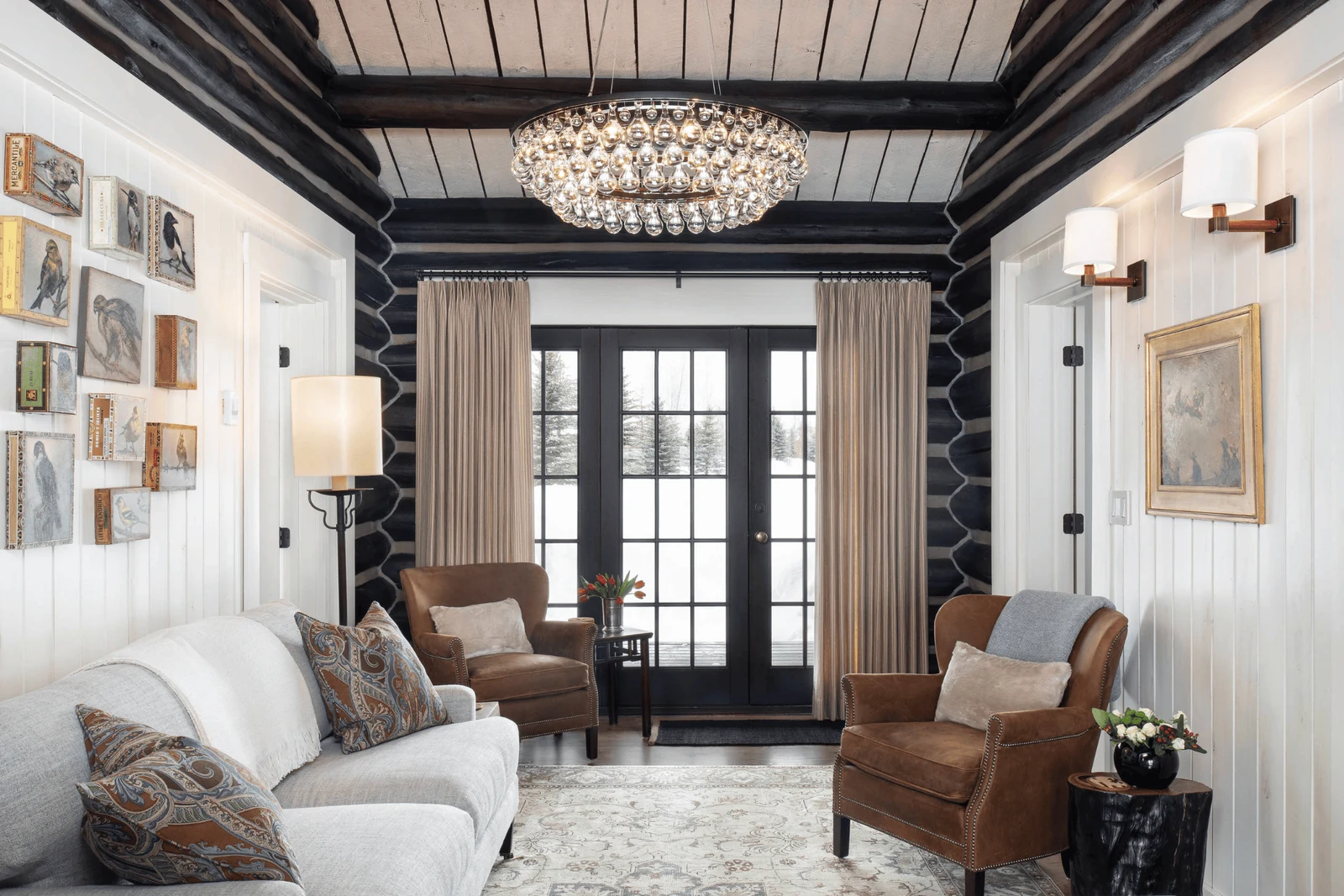
The living room is where a modern cabin interior either convinces you or loses you. The fireplace should function as the focal point, with seating arranged to face it rather than the television. Leather armchairs or a deep linen sofa anchored by a large wool rug define the seating zone, while sconces and floor lamps keep rustic cabin decor from looking flat after sundown.
Cabin Bedroom
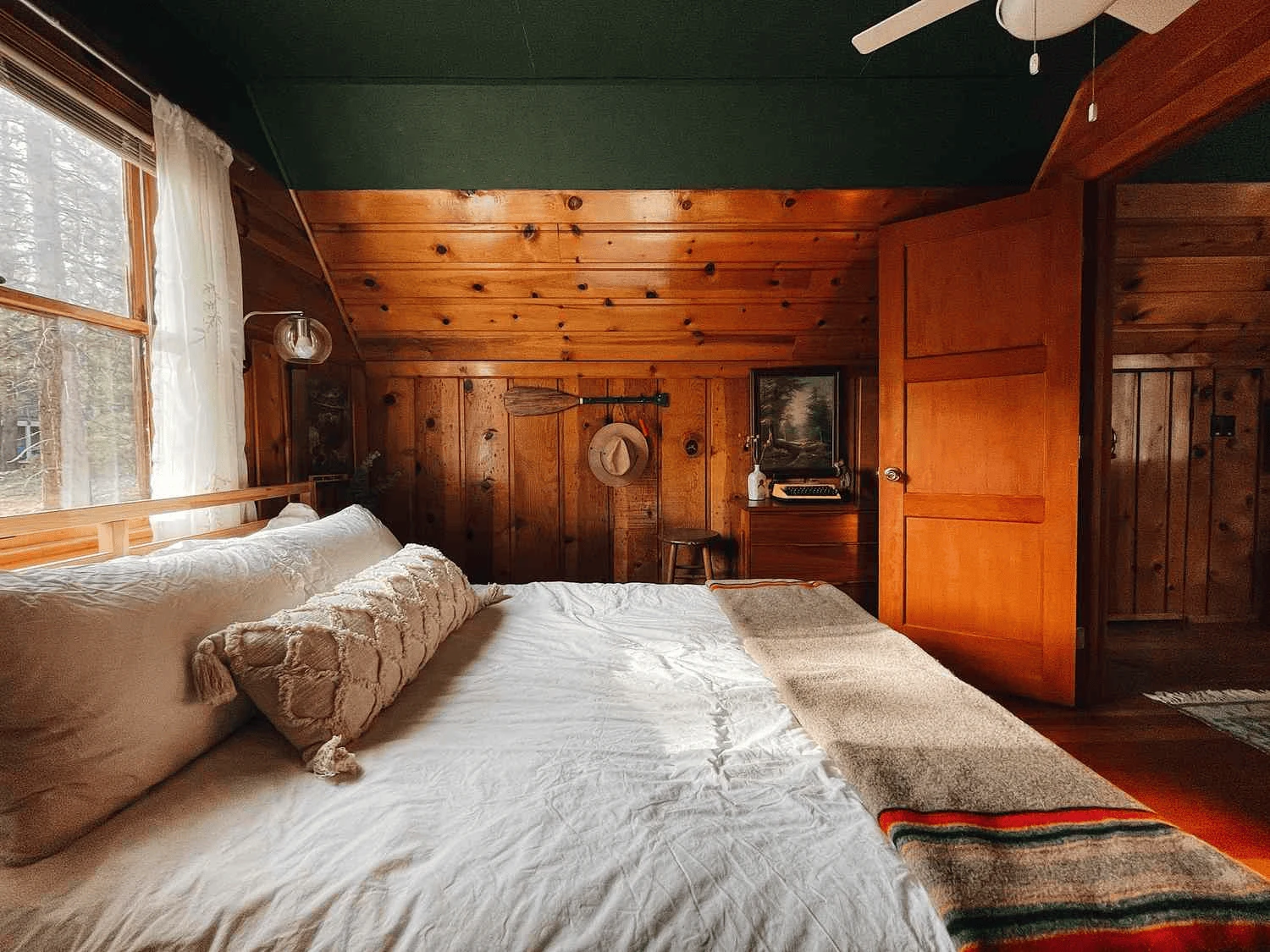
A cabin bedroom with a low timber bed frame, warm bedside lamps, wool or linen bedding, and one panel of wood behind the headboard does everything a restful sleep environment needs. Minimal decor in a small, cozy cabin interior bedroom means using one ceramic lamp, a folded throw, and one framed piece rather than filling every surface.
Cabin Kitchen
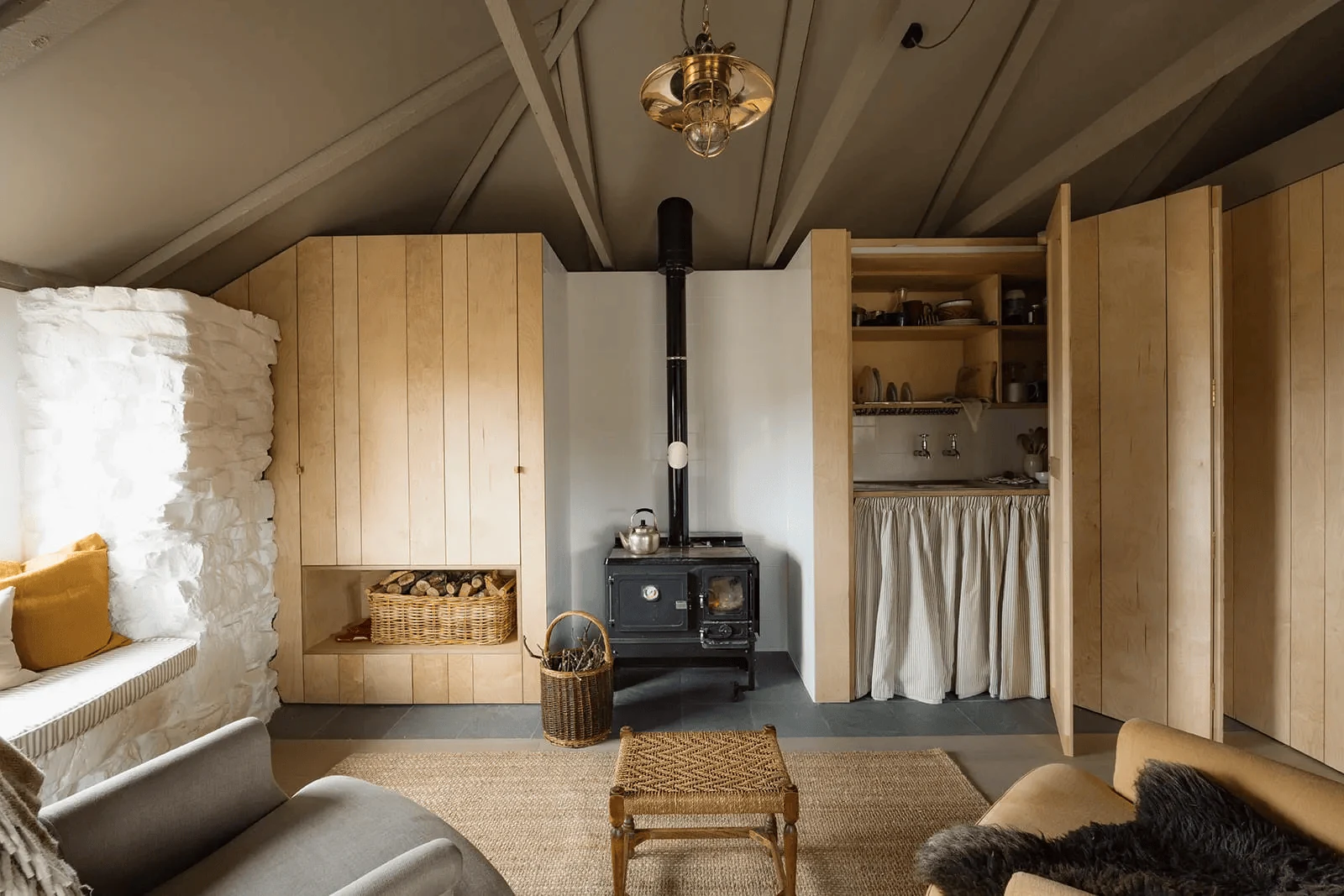
Wood cabinets, stone countertops, open shelving for everyday ceramics, and black or aged brass hardware define a farmhouse cabin interior kitchen without requiring too much decoration. In a modern rustic cabin interior kitchen, the key is restraint on open shelves and clarity in the layout. A simple L-shape or galley format with good task lighting keeps function clean and character warm.
Cabin Bathroom
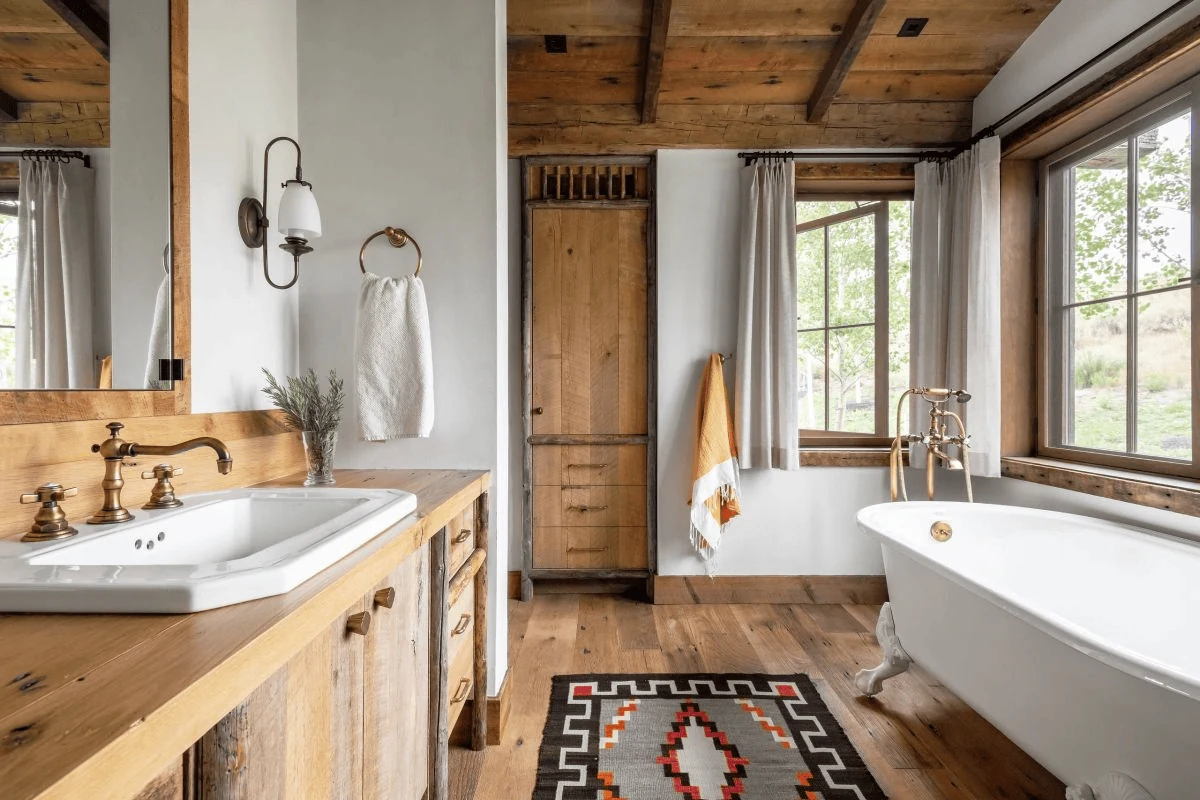
The cabin bathroom works best when it borrows the material language of the rest of the house: a wood vanity, stone basin, matte black fixtures, soft lighting above the mirror, and compact wall-mounted storage. Small bathroom design ideas can help with scale and storage in tight spaces, especially when a wood cabin interior design bathroom needs to feel warm without becoming crowded.
Room planning cue: Give each room one main purpose and one strong material story so the cabin feels connected, not crowded.
Cabin Interior Design Checklist Before You Finalize The Look
After reviewing cabin-style spaces, I have noticed the same mistakes appear again: too much dark wood, furniture that is too large, weak lighting, blocked views, and rustic decor that tries too hard. Before finalizing the design, use this checklist to catch anything that may make the cabin feel heavy, dated, or overdone.
- Check the wood balance. If the walls, ceiling, floor, and furniture are all dark timber, the room may start feeling like a visual tunnel.
- Measure the furniture scale. Oversized lodge-style sofas and chairs can make a compact cabin feel cramped instead of cozy.
- Edit the rustic decor. Too many signs, antlers, faux-fur pieces, and woodland cushions can make the room feel staged rather than personal.
- Look at the window treatment. Heavy curtains may block the outdoor view, which is already one of the strongest features a cabin has.
- Review the lighting plan at night. In timber and stone interiors, lighting should be planned like architecture, not added as styling at the end.
- Test the layout logic. A cabin should not be treated like a regular apartment because it has a different relationship with scale, light, storage, and outdoor connection.
- Choose one clear style direction. Farmhouse, industrial, boho, and luxury decor should not all compete in the same small cabin without one dominant design language.
Stand in the cabin at night before calling the design complete. If the room feels gloomy, flat, or visually heavy, fix lighting and furniture scale before adding more decor.
Seeing the room before you commit helps, and that is what 3D virtual home staging is for.
Make The Cabin Feel Warm Without Making It Feel Heavy
The best cabin interior design does not announce itself. It simply makes the room feel right: warm but not suffocating, natural but not rough, personal but not cluttered. Wood, stone, lighting, furniture scale, storage, and restrained rustic cabin decor are the tools that decide if the cabin feels like a genuine retreat or a themed room that grows old quickly.
If you want a cabin-inspired home that feels warm, modern, and carefully planned, Euphoria Interiors can shape the layout, materials, lighting, and finishing touches into one complete design language. Reach out to our team to start the conversation.