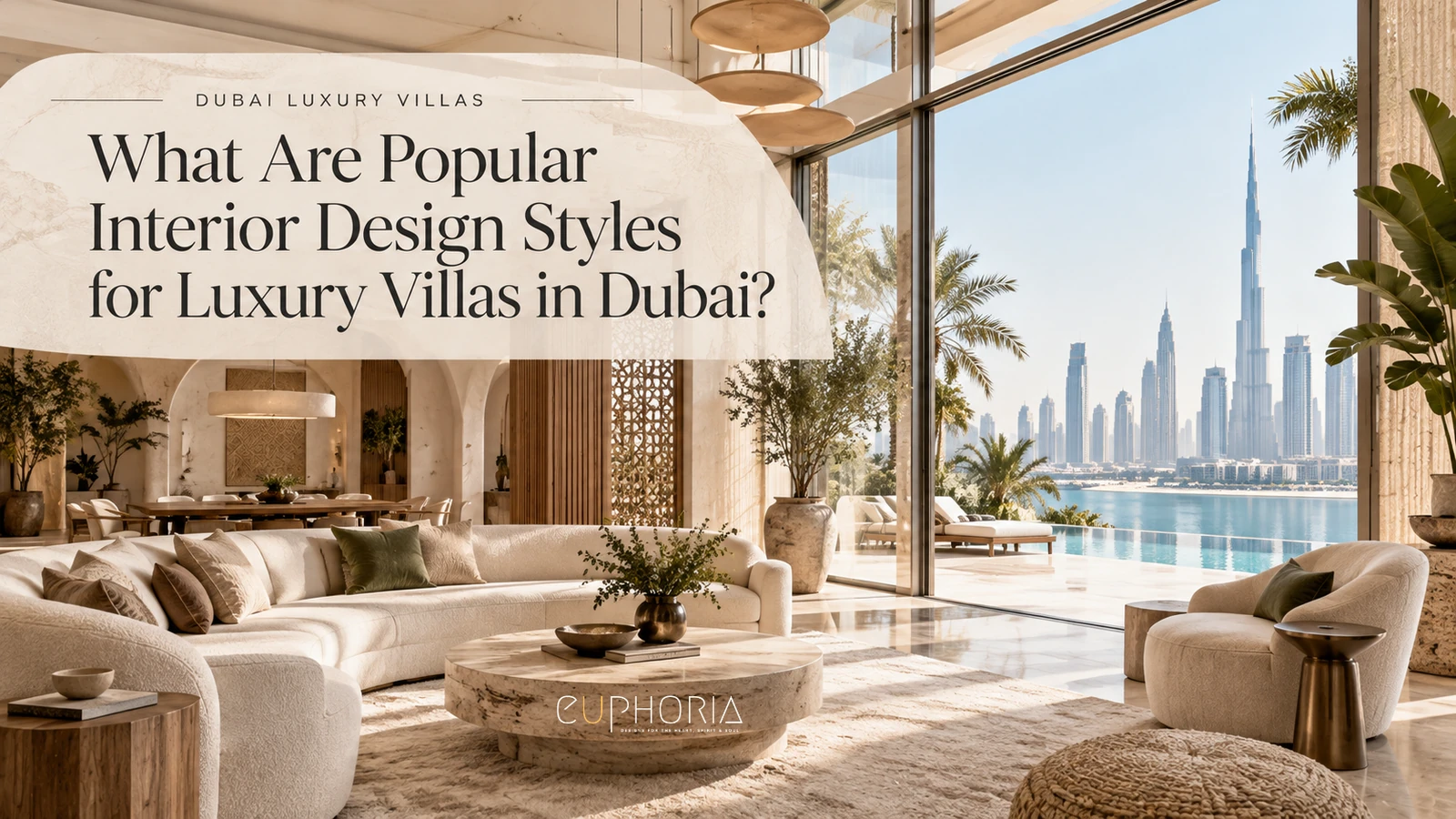
Popular interior design styles for luxury villas in Dubai include quiet luxury, contemporary Arabic, Mediterranean resort, warm minimalism, modern neoclassical, Japandi luxe and hotel-inspired interiors. All of them prioritise tailored comfort, climate-conscious layouts and material choices that survive the local summer.
Walk into a high-end coastal estate or a desert sanctuary and the shift is obvious. Owners are moving away from displays of wealth towards understated elegance, wellness-focused spaces and high-performance materials that handle regional heat while maximising natural light.
The honest worry most villa owners raise first is whether a pared-back look survives contact with Dubai. Will warm minimalism hold up against dusty summers? Will pale travertine stain within a year? Fair questions, and the answer usually sits in specification rather than style. Each section below names the maintenance trap and how to design around it, because that is where these schemes succeed or fail.
Across the villa projects the team at Euphoria Interiors has delivered in Nad Al Sheba, Jumeirah Bay Island and Emirates Hills, the pattern repeats: the finish choice decides whether the look lasts, not the mood board.
Here are the ten directions defining Dubai’s most exclusive addresses.
#1 Embody Understated Elegance with Quiet Luxury
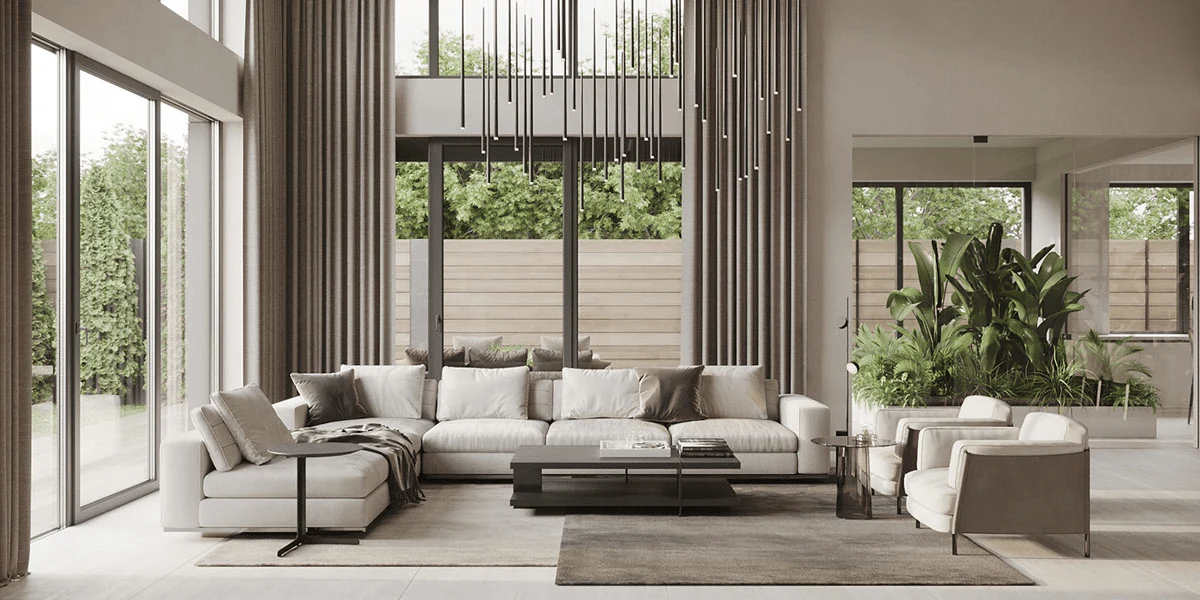
Best fit for: Emirates Hills mansions, Dubai Hills Estate properties and golf course residences.
What it looks like: soft neutral palettes, seamless cream travertine flooring, matte walnut joinery and textured plaster walls. Low-profile custom furniture in bouclé or linen, curtains that pool slightly on the floor, brushed brass fixtures.
Why it works here: it gives an immediate visual cooling effect when you come in from the heat, and creates uncluttered reception zones that suit large gatherings while staying calm.
The maintenance trap: light fabrics and matte stone stain. Specify performance upholstery with a stain-resistant finish and have the travertine sealed on installation, then resealed annually. Without that, this scheme looks tired inside two years.
Quiet luxury interior design works best when electronics and AC vents are fully concealed within the architecture.
#2 Honour Heritage through Contemporary Arabic Style
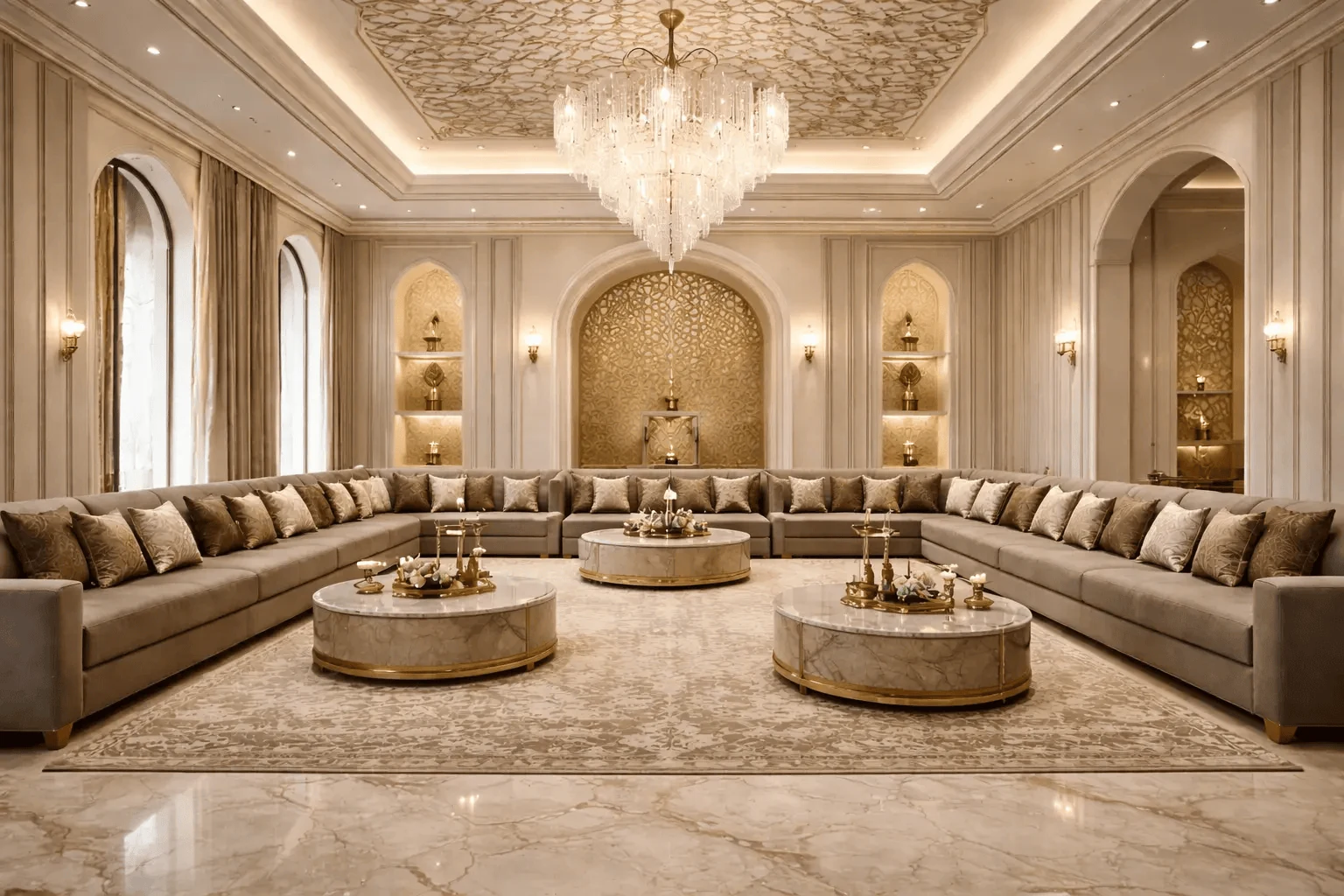
Best fit for: family compounds in District One, estates in Al Barari, properties in The Villa, Dubailand.
What it looks like: modernised geometric plasterwork against large-format limestone. Archways simplified into clean lines, mashrabiya screens updated in laser-cut brushed brass or blackened steel. Deep, low-slung majlis seating in textured linen and velvet rather than heavy brocade.
Why it works here: it supports formal hosting traditions while staying modern, and the structural screens diffuse Gulf sunlight into patterned shadow while preserving privacy.
The maintenance trap: over-decoration. Keeping the lines clean is what stops this reading as heavy or dated. Restraint is the whole discipline, and it is the same instinct behind our guide to artisanal elements in Dubai interiors.
#3 Blend Coastal Calm with Mediterranean Resort Style
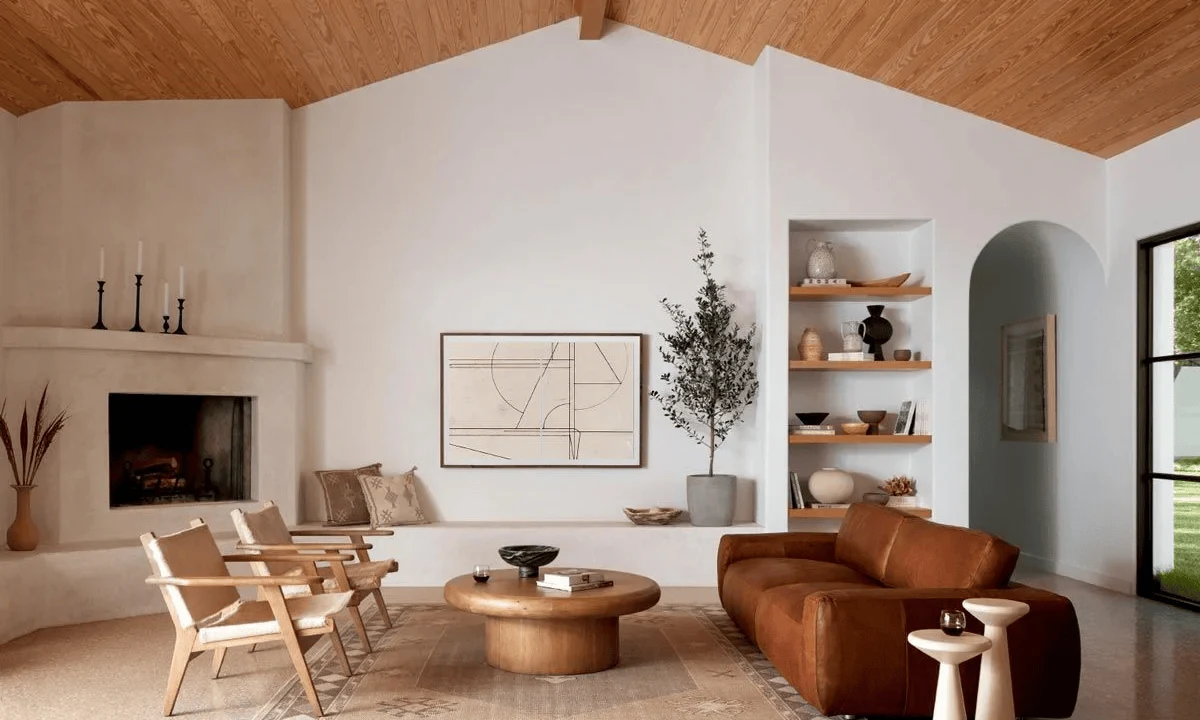
Best fit for: Palm Jumeirah waterfront, Jumeirah Islands, villas with large pool decks.
What it looks like: textured white plaster against terracotta tile or light oak. Reclaimed timber ceiling beams, soft arched openings, linen slip-covered sofas, jute rugs and rattan accent chairs.
Why it works here: it blurs the line between indoor living and terrace, which suits poolside entertaining.
The maintenance trap: salt and humidity near the glazing. Specify marine-grade finishes on anything within a few metres of the windows, or you will be refinishing timber within a couple of seasons.
#4 Cultivate Serenity with Warm Minimalism
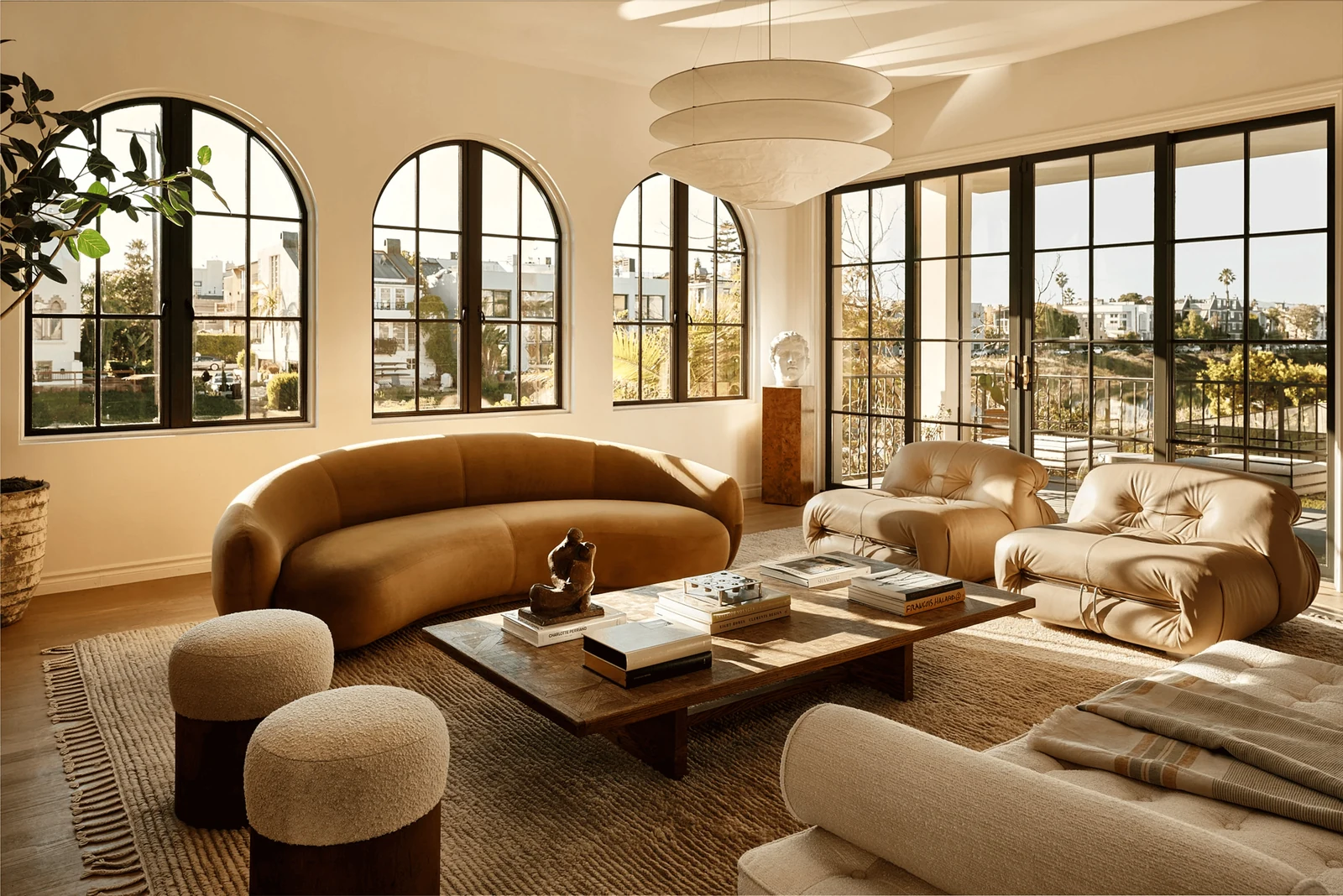
Best fit for: architectural properties in Dubai Hills Estate, custom builds in Jumeirah Golf Estates, open-plan family homes.
What it looks like: oatmeal, biscuit and soft greige in micro-cement or tactile clay paint. Floor-to-ceiling hidden storage removing visual clutter. Curved silhouettes, bouclé fabrics, travertine coffee tables with rounded edges.
Why it works here: expansive local floor plans gain intimacy without feeling cold, and natural light picks up the surface texture through the day.
The maintenance trap: lighting, not cleaning. Without layered warm architectural illumination a minimalist space flattens out after dark and loses its depth. Our guide to turning cold minimalism into a cosy space covers exactly this failure.
#5 Embrace Sustainability with Raw Craft and Artisanal Expression
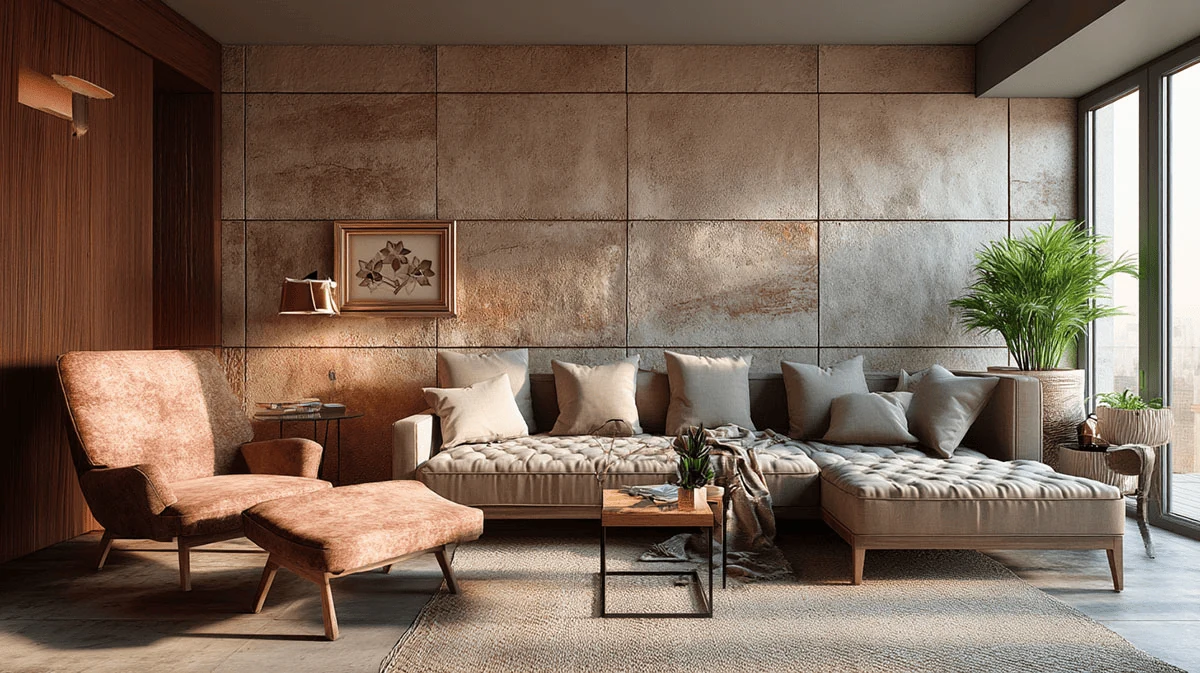
Best fit for: eco-conscious estates in Al Barari, bespoke sanctuaries, premium Dubai Hills properties.
What it looks like: micro-cement, tadelakt or raw clay plaster softening architectural edges. Limited-edition handmade sculptural furniture, earthy palettes, unpolished stone slabs, distressed timber and exposed metalwork.
Why it works here: tactile wall surfaces absorb the glare of the sun, and durable sustainable materials hold up to the climate.
The maintenance trap: the application, not the upkeep. Poor plasterwork looks unfinished rather than intentionally crafted, so this only works with specialist artisans. Budget for the trade, not just the material.
#6 Connect with Nature via Biomorphic Style
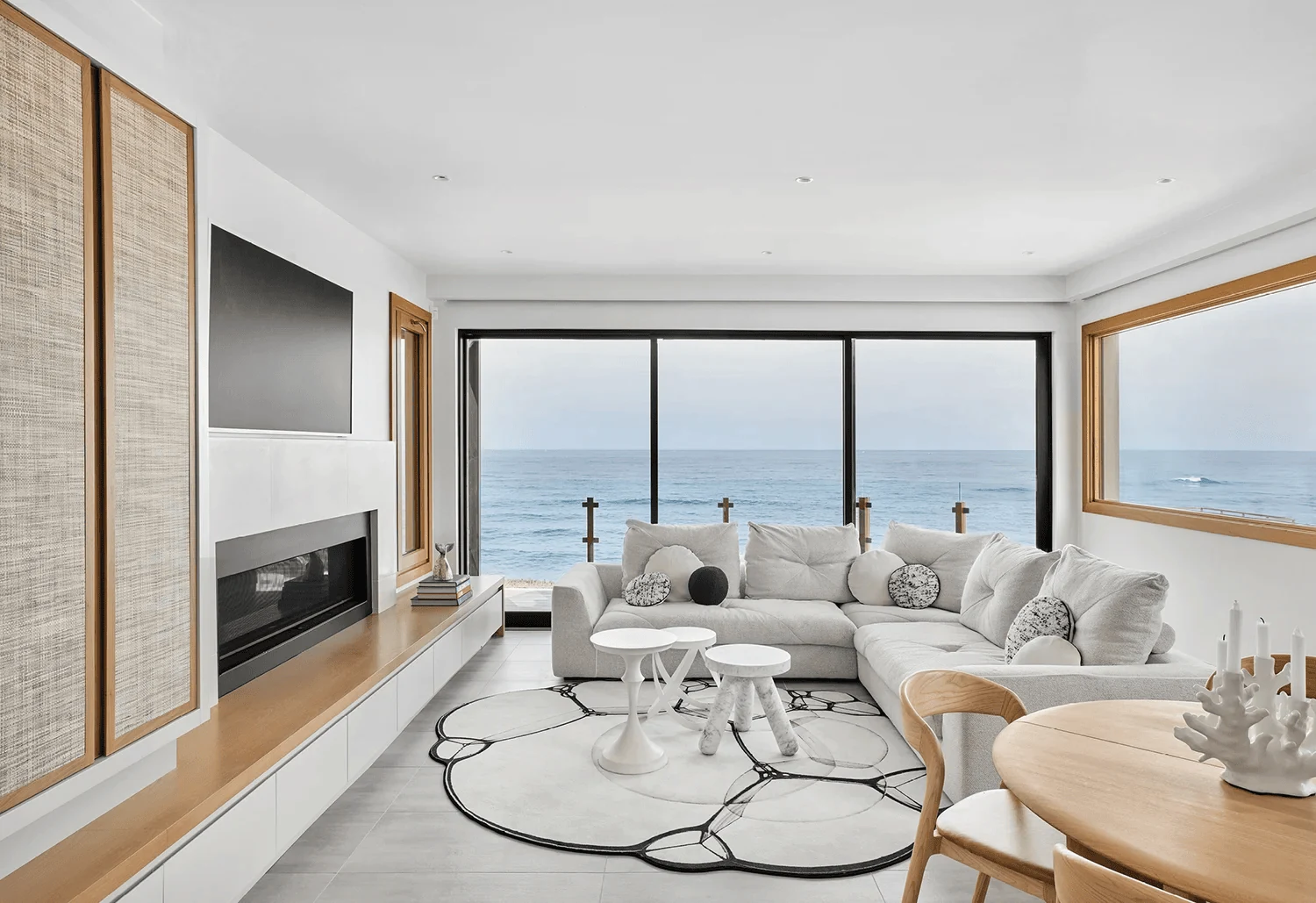
Best fit for: Jumeirah Bay Island, Palm Jumeirah villas, Emaar Beachfront penthouses.
What it looks like: automated glass walls that slide away entirely, curved silhouettes echoing dunes or waves, water-reflective light fixtures, a palette of cobalt, indigo and powder blue.
Why it works here: it leverages the concentration of prime waterfront property and keeps the home connected to the marine landscape.
The maintenance trap: temperature, visually. Cool blues need warm wood or brass to stop large rooms feeling chilly under night-time lighting.
#7 Balance Tradition and Sleekness through Modern Neoclassical Style
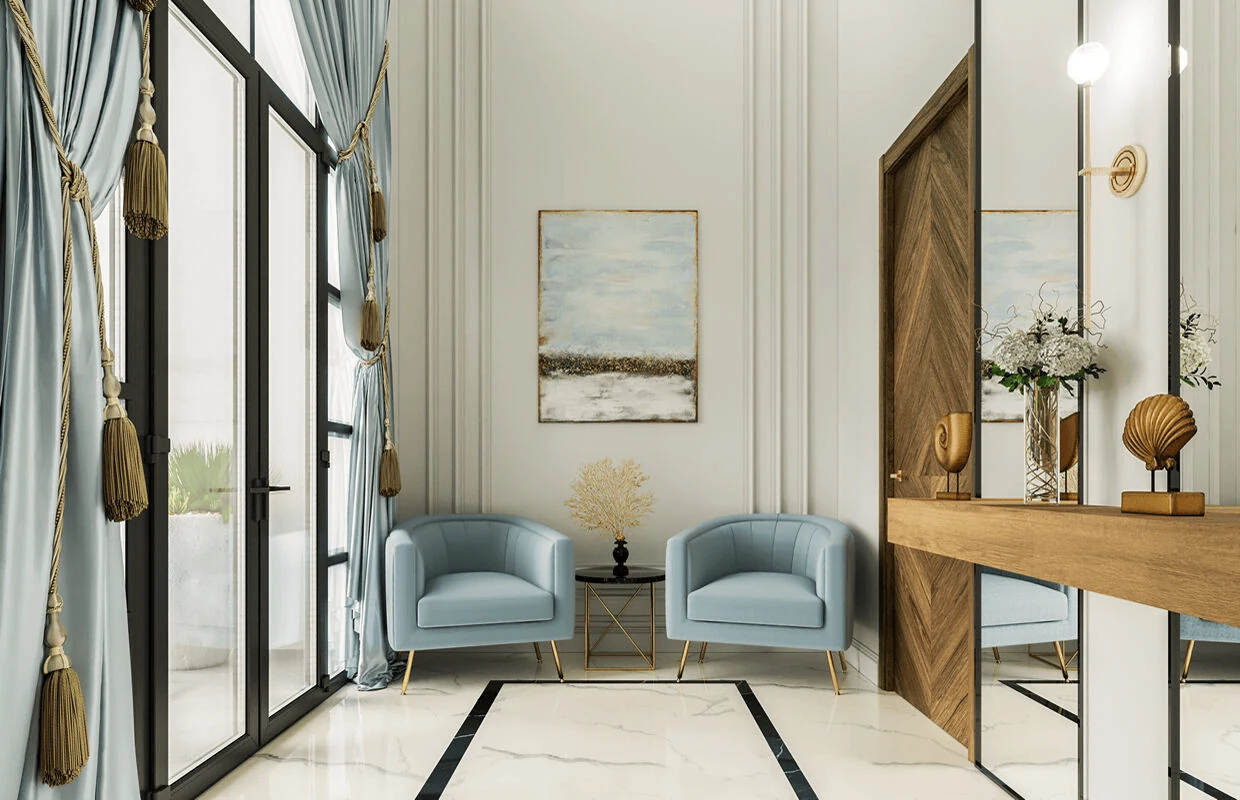
Best fit for: grand villas in Emirates Hills, District One, Jumeirah Golf Estates.
What it looks like: structured wall panelling and ceiling mouldings framing otherwise sleek rooms. Polished Nero Marquina against crisp white, geometric metal inlay, statement chandeliers over symmetrical velvet furniture with tapered legs.
Why it works here: the formal bones suit double-height foyers and grand majlis reception rooms.
The maintenance trap: scale. Bulky furniture clashes with the slender lines of the panelling, so the proportions have to be drawn rather than bought off a floor.
#8 Merge Eastern and Western Principles with Japandi Luxe
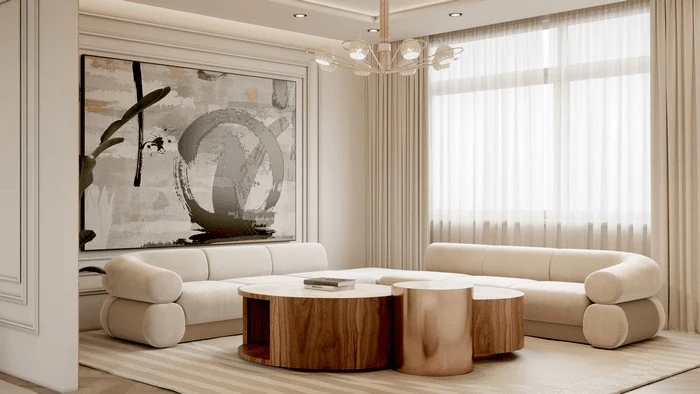
Best fit for: Al Barari, Jumeirah Islands, family villas in Arabian Ranches.
What it looks like: low-slung pale white oak or stained black ash on hand-woven wool rugs. Shoji-inspired screens or fluted timber panels partitioning space without blocking light. Matte ceramics, branch arrangements, textured linen.
Why it works here: it brings quietude to wide-open villa layouts and offers a thermal contrast to the heat outside.
The maintenance trap: storage. Without ample hidden storage, everyday clutter breaks the visual balance immediately.
#9 Replicate Five-Star Comfort with Hotel-Inspired Interiors
Best fit for: holiday homes on Palm Jumeirah, premium rental villas in Dubai Marina, Dubai Hills estates.
What it looks like: integrated mini-bars, window benches, boutique walk-in dressing rooms. Backlit onyx, marble vanities, silk-blend carpeting in private zones. Oversized padded headboards, heavy linens, automated blackout drapery.
Why it works here: it delivers a resort experience in a private residence and optimises every corner for convenience.
The maintenance trap: personality. Without personal artwork or family pieces the result reads sterile, which is the most common complaint we hear about this style.
#10 Ground the Scheme in Desert Contemporary
Best fit for: inland estates in Nad Al Sheba, Al Barari and Dubailand.
What it looks like: sand, clay and ochre tones with heavily veined local stone, deep window reveals and shaded courtyards.
Why it works here: it takes cues from the landscape the villa actually sits in rather than importing a European reference, and the deep reveals cut solar gain.
The maintenance trap: dust. Matte and textured surfaces hold fine sand, so specify wipeable finishes at hand height and keep heavy texture above the touch line.
How to Choose
It comes down to aligning your architecture with how you actually live. Before settling on a direction, weigh the structural framework of the villa, how much natural light the rooms get, and how much maintenance you are willing to sustain.
Avoid replicating a social media image exactly. Choose a framework that grows with the family instead. The underlying principles are the same across all ten, and our guide to the seven elements of interior design sets them out.
If you want to see a direction in your own rooms before committing, our guide to 3D virtual home staging covers how to test it first. If you are furnishing a rental rather than an owned villa, our affordable rental home design tips keep the changes reversible.
Key Takeaways
- Understated movements such as quiet luxury, warm minimalism and Japandi luxe dominate heading into 2026 and 2027.
- Location matters: coastal homes suit marine or Mediterranean schemes, inland estates lean contemporary Arabic or neoclassical.
- Materials are shifting towards tactile, sustainable choices such as micro-cement, travertine and raw clay plaster.
- Climate-conscious layouts bridging indoor and outdoor zones maximise usability during cooler months.
- Space planning balancing family privacy with entertaining areas remains the foundation of every successful villa layout.
Most of the ways these schemes go wrong are the familiar ones, covered in our rundown of common interior design mistakes and the top ten mistakes to avoid. If the house feels off and you cannot name why, why does my home look weird works through the usual causes, and ten things people regret paying for is worth reading before you sign anything.
For the wider case, see the importance of interior design in your home.
Planning a luxury villa interior? Talk to our design team about a direction that suits your villa architecture, family lifestyle and long-term comfort.