
Designer Katharine Pooley describes the aesthetic as one that reflects the rustic charm of Italian farmhouses and villas, where the right decisions transport you straight to that part of the world. It is a look Euphoria Interiors is asked for regularly in Dubai villas.
Dubai homes are often architectural marvels of steel and stone, and that warmth is exactly what tends to go missing. Homeowners frequently assume rustic Italian and high-end Dubai aesthetics are incompatible. They are not. Layered thoughtfully, they work together.
A contemporary Tuscan kitchen is the antidote to sterile minimalism. You can have a kitchen that functions with German-engineered precision and still feels like a Tuscan summer.
Here is how to build one in a Dubai villa: materials that survive the climate, a palette that holds up under harsh light, appliances that do not clash, and seven practical tips.
What Is a Tuscan Kitchen?
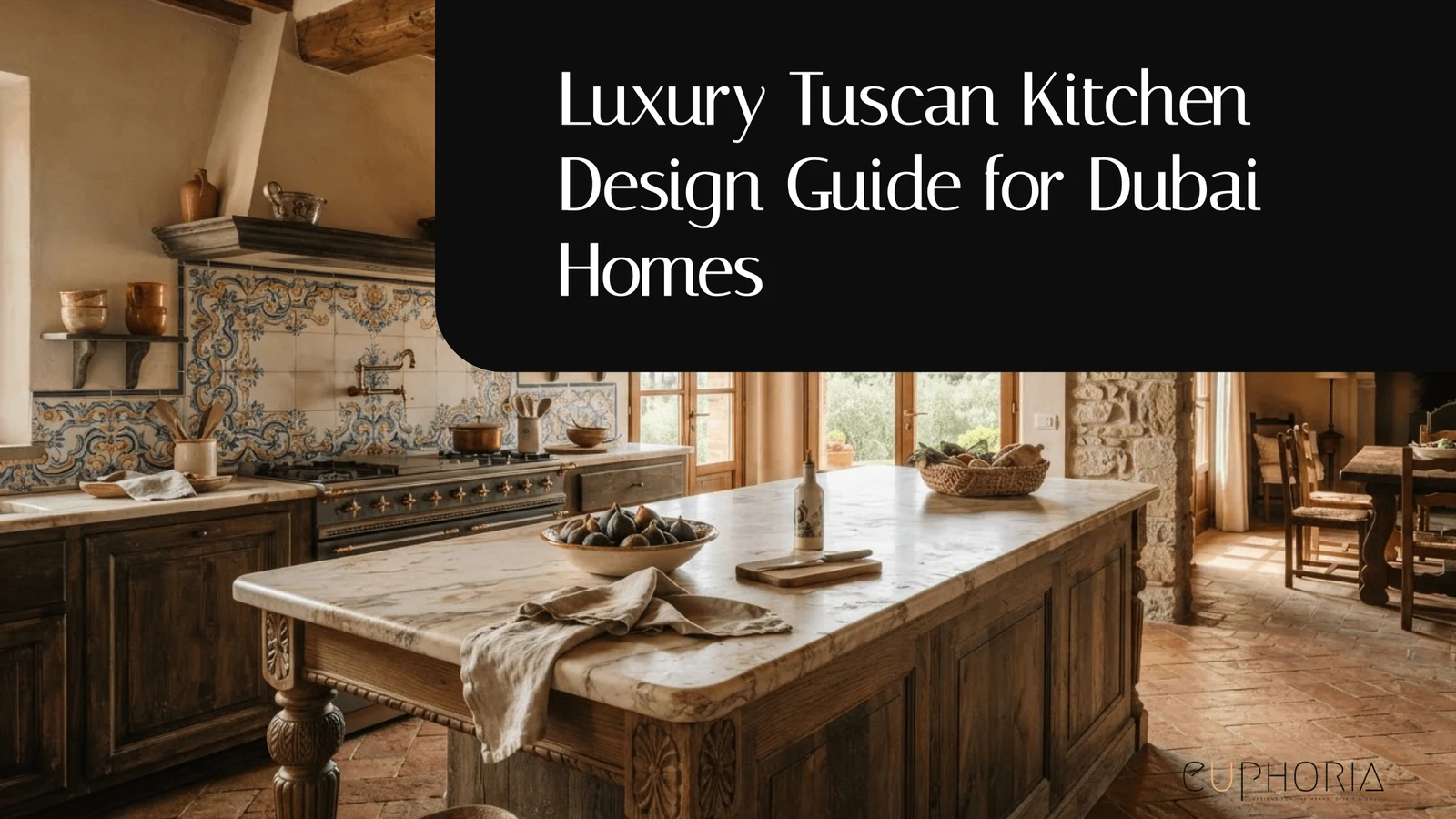
It is an architectural tribute to the Italian landscape, valuing the patina of aged wood and the cool touch of natural stone over the perfection of modern synthetics. Unlike generic rustic styles, Tuscan kitchen design balances farmhouse ruggedness, the contadino, against the refined elegance of a Renaissance villa.
The hallmark is tactile luxury. A hand-plastered wall catching late afternoon sun. A chunky butcher-block island that invites people to sit while you cook. A space that feels like it has been there for generations, even if the villa was handed over last month.
The structural DNA
The hearth. The range hood is oversized and finished in lime-wash or plaster, anchoring the room.

The palette. Sunset tones: burnt sienna, sage, deep crema.

The hardware. Away from hidden push-to-open latches, towards heavy unlacquered brass or oil-rubbed bronze that feels substantial in the hand.

Where it fits in Dubai
This is not a one-size-fits-all style.
- Al Barari: the green surroundings suit the earth-to-home connection.
- Jumeirah Islands and Emirates Hills: large high-ceilinged footprints carry heavy timber beams and oversized stone islands.
- Dubai Hills Estate villas: good for the contemporary version with sleeker cabinetry.
Space: minimum 350 sq ft, since the aesthetic needs breathing room for heavy textures. Ideal is 500 to 800+ sq ft, enough for a large island and a walk-in scullery.
Budget, 2026 estimates: mid-range luxury runs AED 120,000 to 250,000, covering quality travertine, custom cabinetry and premium appliances. Ultra-high-end starts around AED 350,000, with reclaimed Italian timber, hand-carved stone sinks and professional-grade appliance suites.
Choosing the Right Materials
Material selection here means balancing authentic Italian character against modern durability, because the local environment brings high humidity and hard water. The prettiest choice is rarely the smartest one.
Start with the floor and work upward. Authentic rustic Italian design relies on materials with natural heft. Polished surfaces reflect too much of the harsh sun and read clinical rather than cosy, so tumbled or honed finishes work better. They absorb light and feel softer underfoot. Terracotta is one option among many; compare flooring tiles for every room first.
| Material | Best use | Durability in Dubai |
|---|---|---|
| Tumbled travertine | Flooring and backsplashes | High. Ages into a natural patina |
| Honed limestone | Countertops and island facades | Medium. Needs professional sealing against citrus and oils |
| Reclaimed timber | Ceiling beams and open shelving | High. Must be kiln-dried to prevent warping |
| Quartzite (Taj Mahal) | High-traffic prep surfaces | Excellent. Marble look with granite strength |
| Hand-fired terracotta | Accent walls and flooring | Medium. Best in low-moisture zones |
Colour Palettes That Work Under Dubai Light
Wall colour is the canvas holding the room together, and the goal is the soft filtered glow of an Italian sunset. Dubai light is whiter and more intense than European light, so colours look washed out unless they carry enough depth.
Move away from builder-grade white. Look for pigments with a hint of yellow, red or green.
- Ochre and mustard: mimic the weathered plaster of Siena. Use on a focal wall.
- Sage and olive: good for cabinetry or an accent island, and they bring the outside in.
- Terracotta and rust: use sparingly on backsplashes or floor details.
- Warm crema: the ideal base for main walls. Softer than white, still bright.
Designer tip: use Venetian plaster or limewash rather than flat paint. Both create movement across the wall, so light diffuses softly instead of bouncing, which also hides minor imperfections.
What to do: view every swatch at 8am, 2pm and 8pm. A colour that reads warm sand in the morning can read bright orange under LEDs.
Appliances That Suit the Aesthetic
Integrating modern technology is a balancing act. You want professional performance without the spaceship look of high-tech stainless steel. Look for heritage or classic lines, with analogue dials, brass knobs and porcelain finishes.
- Bertazzoni: authentic Italian from Emilia-Romagna. The Heritage Series is the benchmark here.
- Lacanche: heavy, colourful French ranges that read as furniture rather than appliance.
- Wolf (Sub-Zero): for an American pro look. The red knobs pair well with dark beams.
- Smeg Victoria Series: good for smaller kitchens or sculleries needing a vintage Italian feel.
7 Tips for a Tuscan Kitchen in a Dubai Home
- Scale lighting to the ceiling. Dubai villas have cavernous heights and small modern pendants get lost. Oversized wrought iron chandeliers or heavy copper lanterns ground the room and fill the vertical space.
- Choose living floors. Avoid polished marble that shows every footprint. Tumbled travertine or limestone with slightly uneven edges hides dust and develops patina.
- Build a statement plaster hood. Encase the extractor in a custom plaster or lime-washed box rather than using a steel chimney. It adds architectural weight and reads as a traditional hearth. The broader old-world toolkit sits in these vintage kitchen decor ideas, usable in any kitchen.
- Mix your hardware finishes. Do not match everything. Pair a polished nickel tap with unlacquered brass pulls, so the kitchen feels like it evolved rather than arrived as a showroom set.
- Bring greenery in. An indoor olive tree, or a countertop herb station with rosemary and basil, balances the earthy browns and ochres.
- Use open reclaimed shelving. Replace some upper cabinets with thick reclaimed planks for ceramics and glass jars. It breaks up the wall of cabinetry.
- Design a hybrid island. Two levels or two materials: quartzite for prep, thick dark butcher block at the seating end. It defines the island as both workspace and social space.
If the island is the piece you are still deciding on, our floating kitchen island ideas cover the alternatives, and our L-shaped kitchen design guide covers the layouts that suit heavier cabinetry.
Conclusion
A luxury kitchen in Dubai does not have to mean choosing between cold minimalism and dated traditionalism. The appeal of this style is emotional rather than technical: a room that feels warm, welcoming and personal.
Focus on tactile materials, sun-baked palettes and heritage appliances and you get a culinary space with genuine character rather than a showroom finish.
For the groundwork underneath the styling, our kitchen design guide works through the sequence, our modular kitchen design ideas cover how the cabinetry gets built, and the wider set of kitchen design ideas covers other directions. For something more pared back, see our simple kitchen design ideas.
Planning a renovation in Al Barari, Jumeirah or beyond? Euphoria Interiors brings European aesthetics into the Dubai landscape, so talk to our team about your kitchen.