

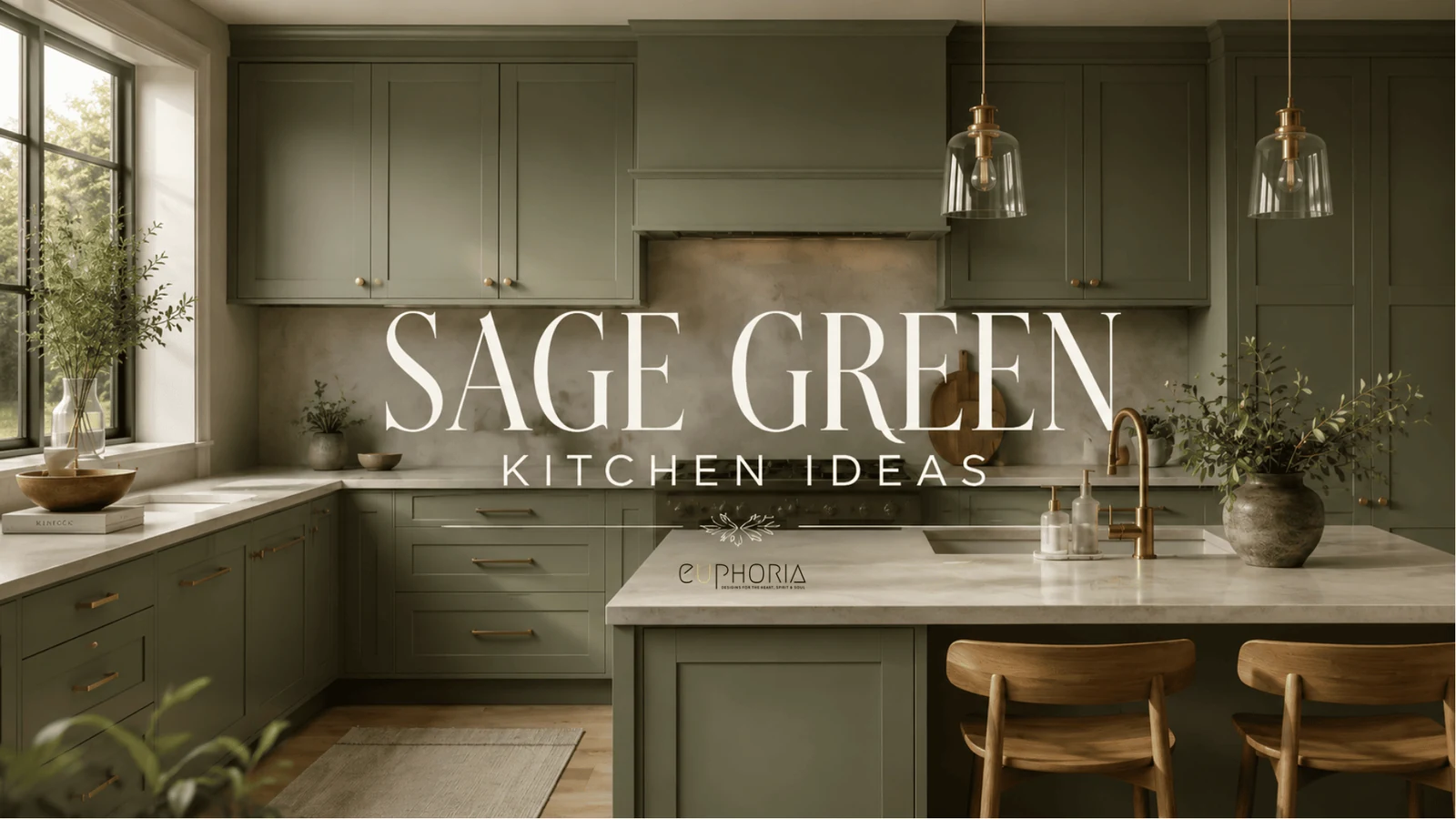
I kept saving sage green kitchen photos until my gallery started feeling familiar. Shaker cabinets, pale stone, brass handles, softly uneven white tiles. I still liked the colour, but after a point, I could not tell what I was saving. Was it the sage, or had I found the same kitchen twenty times?
The more kitchen projects and material combinations I compared, the more my attention moved away from the green. A broad plaster wall changed one kitchen completely. In another, the terrazzo worktop was the detail I remembered. Then I found sage beside maple instead of oak and a modern kitchen where the handles had almost disappeared. Across broader kitchen design ideas, the same pattern kept appearing: one surrounding detail usually decided what I remembered.
Keep reading because these 28 sage green kitchen ideas look past the formula I kept seeing. You will find cabinets, wood, tiles, walls, laminate, modern, and farmhouse directions, but the goal is simple: save a composition you can explain, not another sage paint name.
1. Break Sage Shaker Cabinets With A Plain Plaster Range Wall
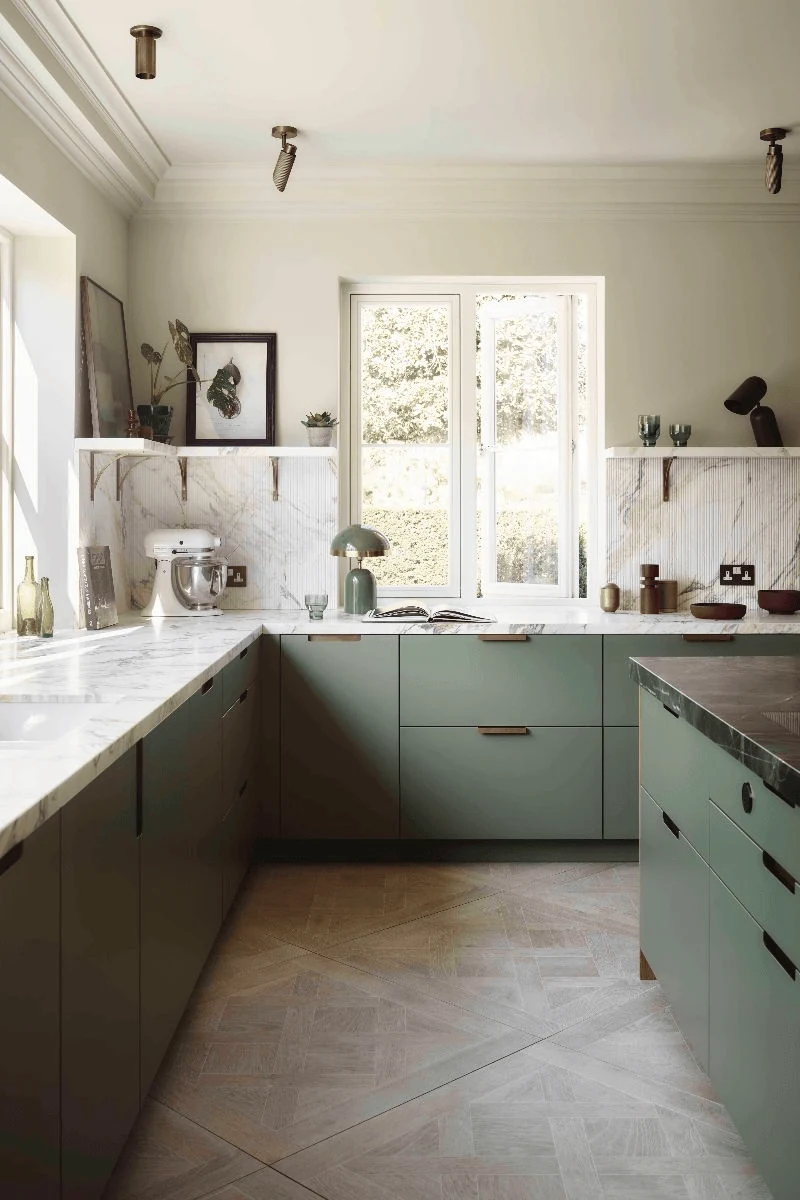
Sage Shaker doors, drawers, handles, and tile lines can spread visual detail across an entire cabinet wall. Framed doors already bring plenty of lines, so break the run with one broad plaster or mineral-look range wall.
Look at your cabinet wall. How many areas are divided by doors, tiles, shelves, or pattern? Count them before deciding where a plain surface gives the eye a pause. The finish still needs to suit heat, splashes, and cleaning around the cooking zone.
Our kitchen design ideas cover the wider room, and our guide to green kitchen ideas compares sage against every other shade.
2. Reverse The Two-Tone Kitchen With Sage Cabinets On Top
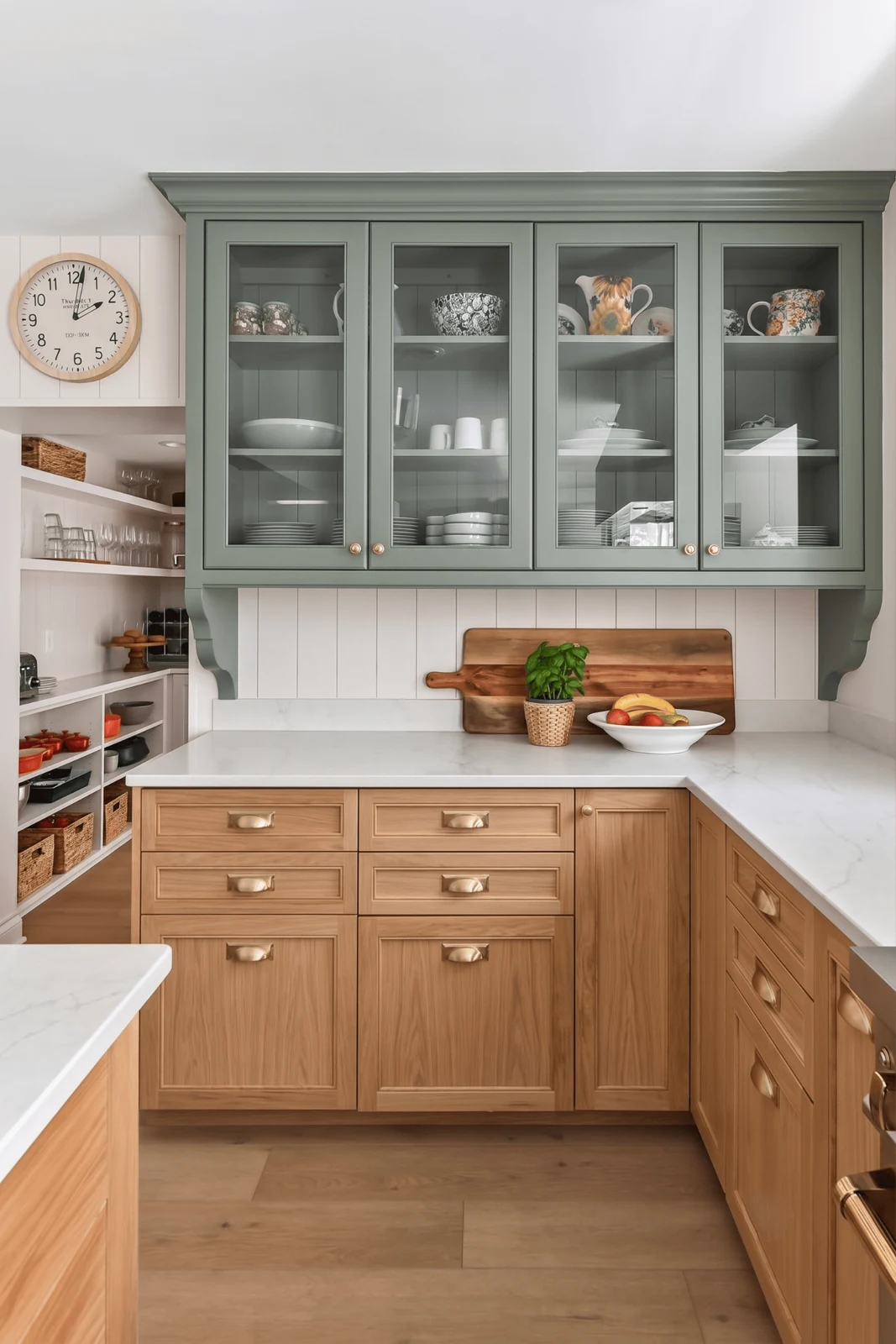
Wood base cabinets already bring warmth, but white uppers can leave the top half feeling disconnected from the warmer base. Put pale sage on the upper cabinets instead and keep natural timber below.
Most two-tone kitchens place colour on the lower cabinetry, so reversing the order feels noticeably different. Sage softens the upper half, while timber keeps the base visually grounded. Treat the uppers as one clear sage zone rather than alternating sage and wood door by door.
3. Hide A Busy Breakfast Zone Behind Sage Pocket Doors
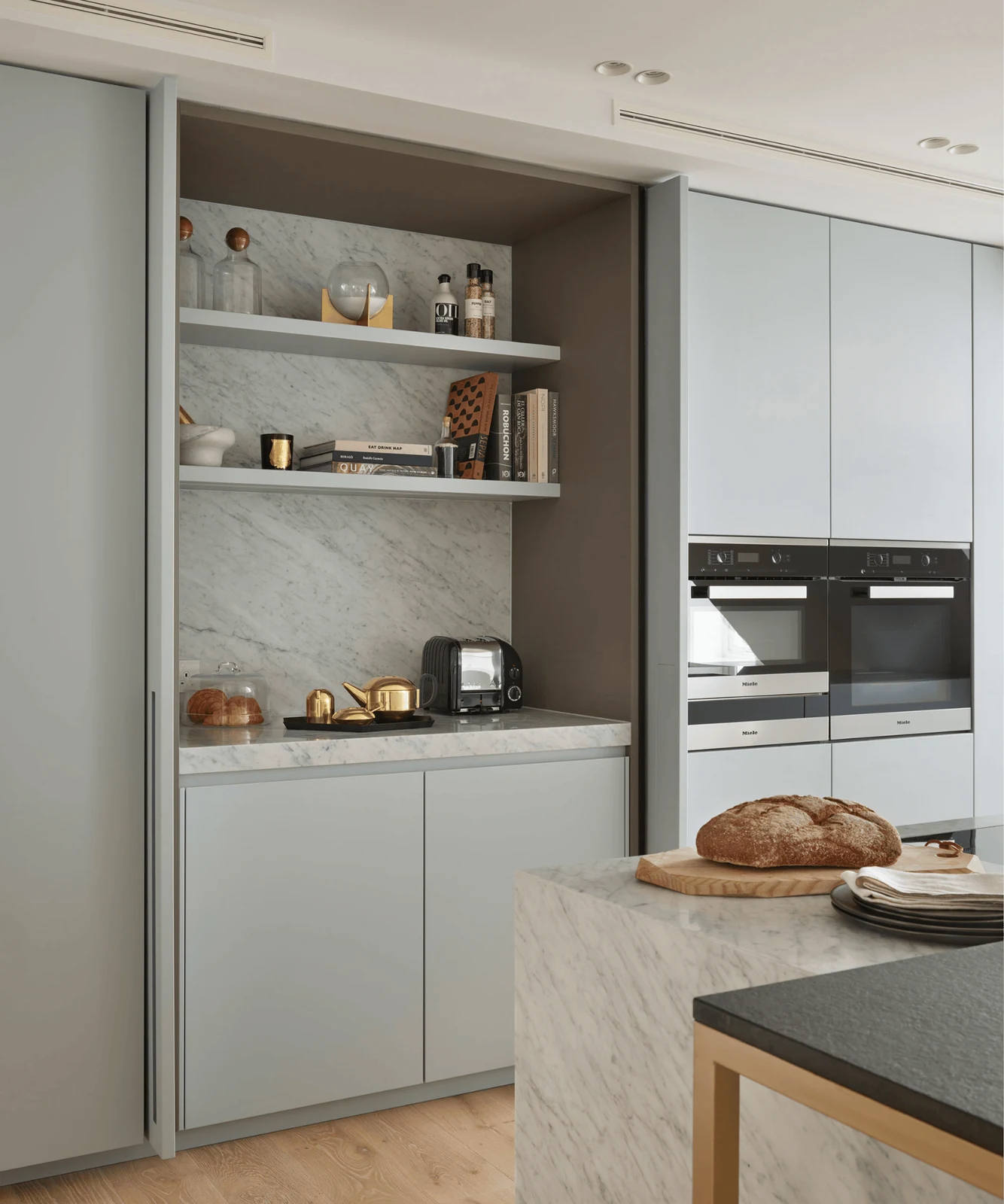
Coffee machines, toasters, and cereal boxes can break up an otherwise calm sage-coloured cabinet wall. Put the breakfast zone behind sage pocket or bi-fold doors, then let the interior switch to oak, cream stone, or warm off-white.
One thing I have picked up from design conversations around these features is how quickly the internal layout becomes more important than the door colour. What actually needs to live inside that cabinet? Decide that first, then choose the niche material.
4. Interrupt A Long Sage Cabinet Run With Reeded Glass
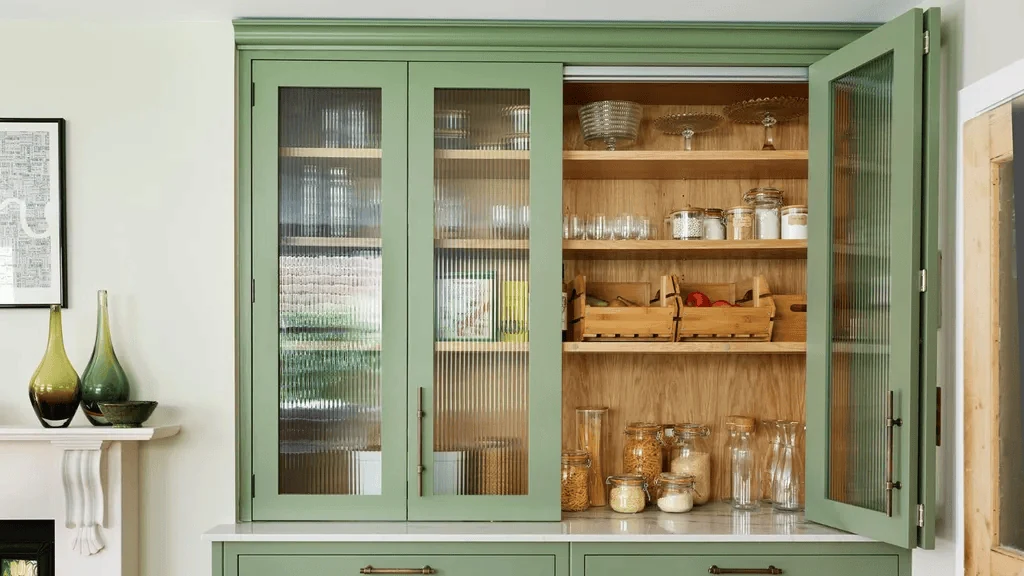
A continuous row of solid sage doors can start to feel repetitive even when the colour still works. Replace one or two fronts with reeded or fluted glass and let the vertical texture break the rhythm of the cabinet wall.
Door treatments matter as much as colour when you compare kitchen cabinet designs. Use the reeded glass only where the contents deserve to be seen; covering every upper cabinet with it simply replaces one repeated surface with another.
5. Replace Several Wall Units With One Thin Stone Shelf
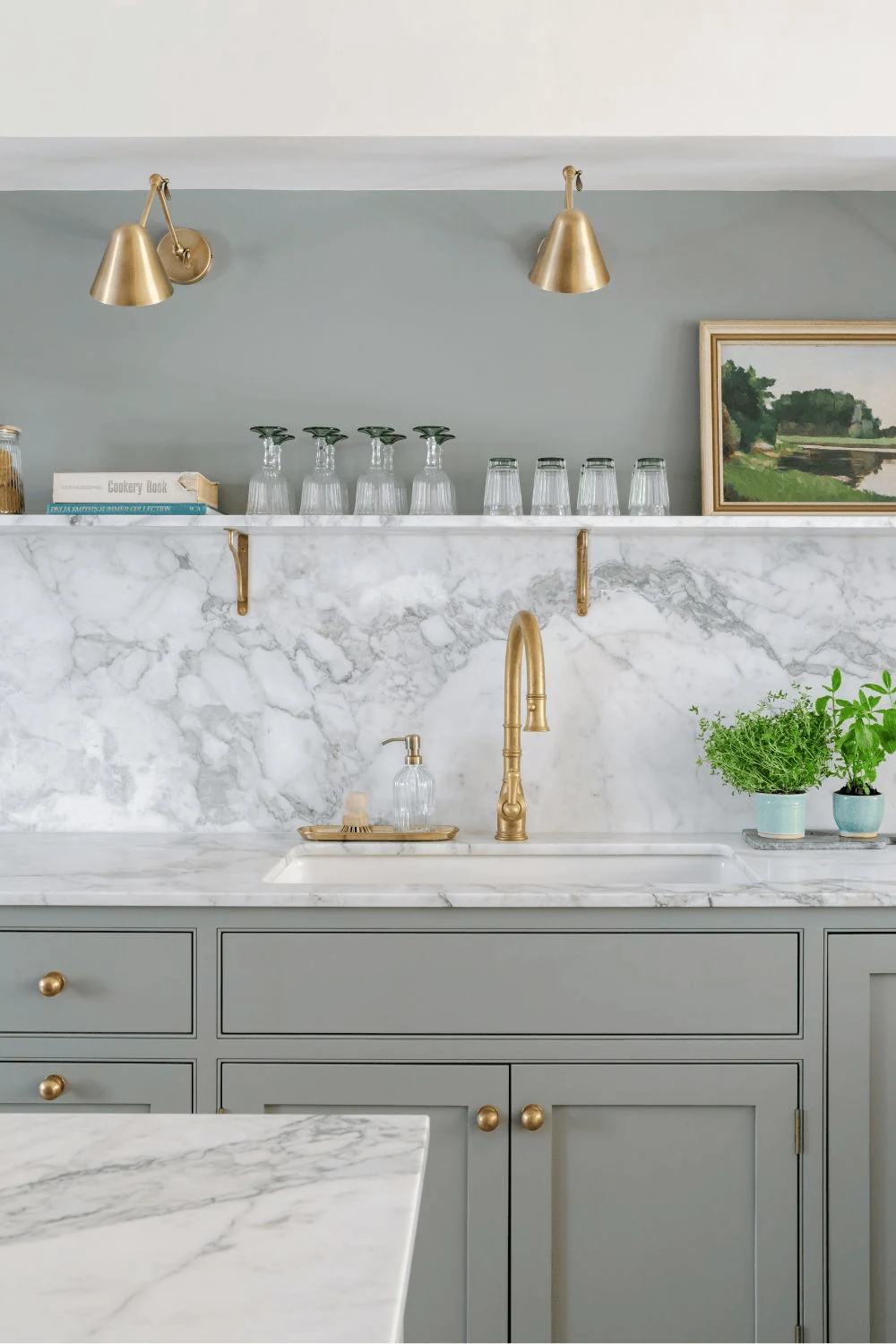
Upper cabinets and multiple timber shelves can repeat the same grid of doors, joins, and brackets. Use one thin stone shelf above sage base cabinets, repeating the worktop rather than adding another finish.
The shelf was often the detail I noticed before I realised it repeated the worktop below. One long stone line reads calmer than several small timber shelves. When you compare kitchen backsplash ideas, keep the wall behind it quiet enough to let that single line remain clear.
6. Outline Flat Sage Laminate Doors With A Timber Edge
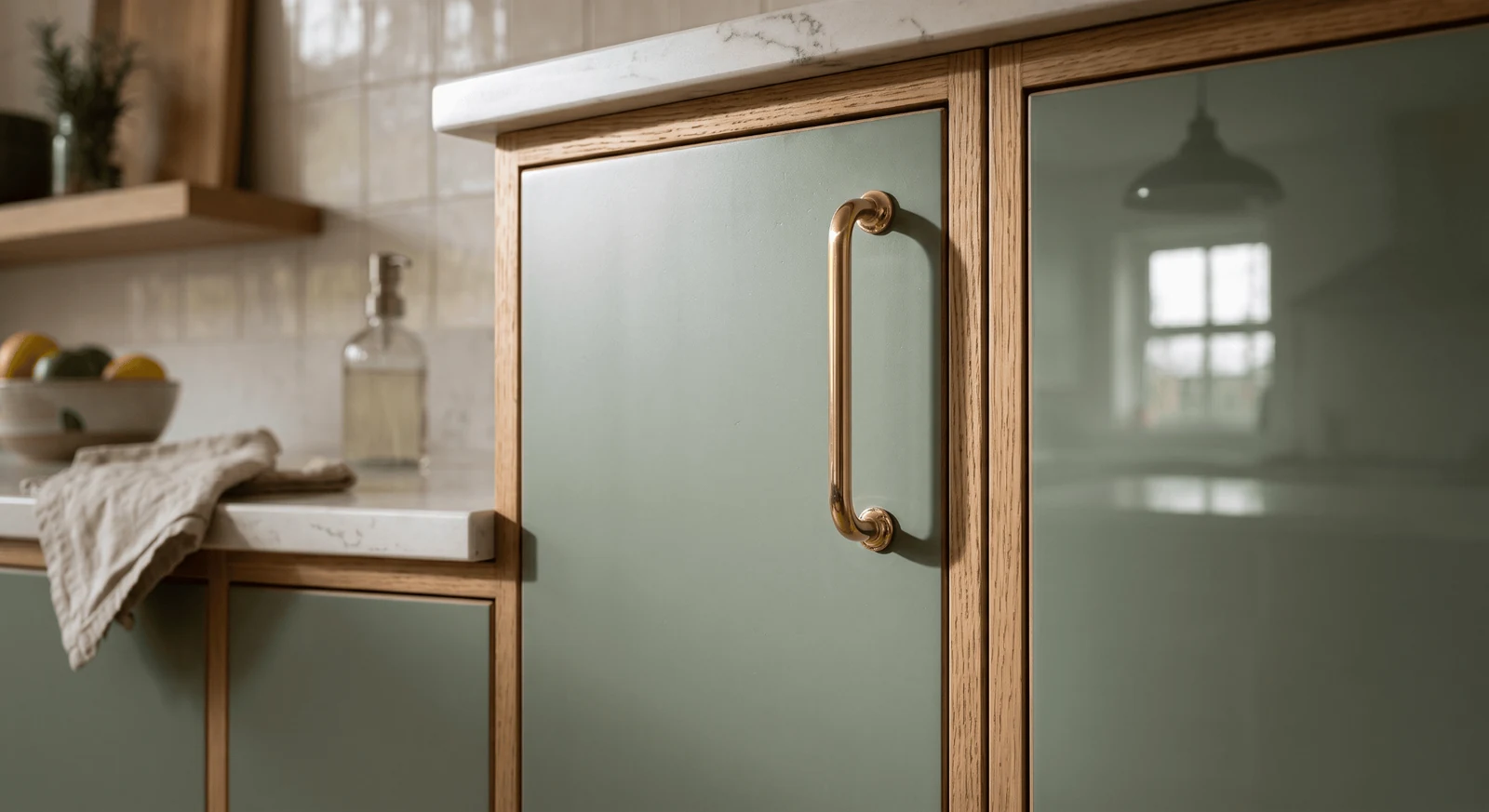
Flat sage laminate doors can merge into one block of colour. Most laminate pages focused on swatches, but the kitchens I saved made me notice the edge.
A timber edge gives each front a clearer outline. NC State University’s Wood Products Technical Services lists NEMA LD-3 tests for finish, stain, heat, scratch, and wear, and says its lab has run them since 1982. Laminate is more than colour, so compare the board, finish, and edge together when planning a modular kitchen design.
7. Continue Sage Joinery Into A Window Seat
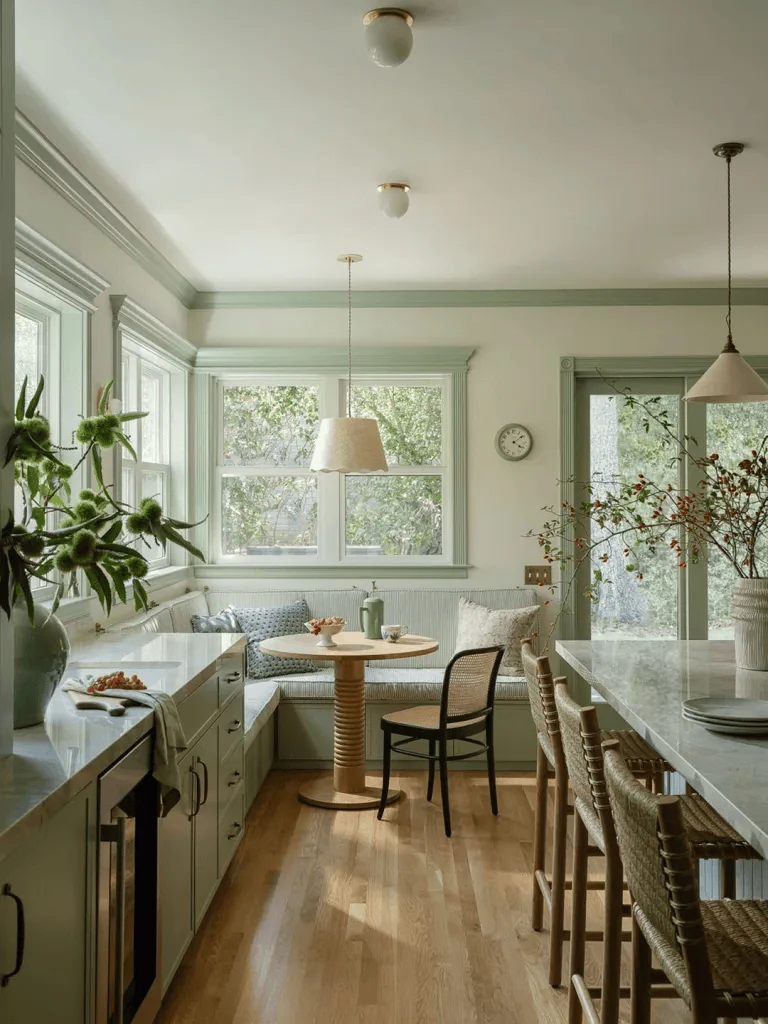
A cabinet run can end abruptly when a window or small seating corner sits right beside it. Continue the sage joinery into a built-in window seat, repeating the drawer profile or panelling detail beneath the bench.
The seating then feels connected to the kitchen rather than like furniture placed beside it as an afterthought. There is no need to match every cushion to the sage; let the upholstery introduce another neutral tone or contrasting texture.
8. Make A Range Cooker Feel Part Of The Sage Cabinet Wall
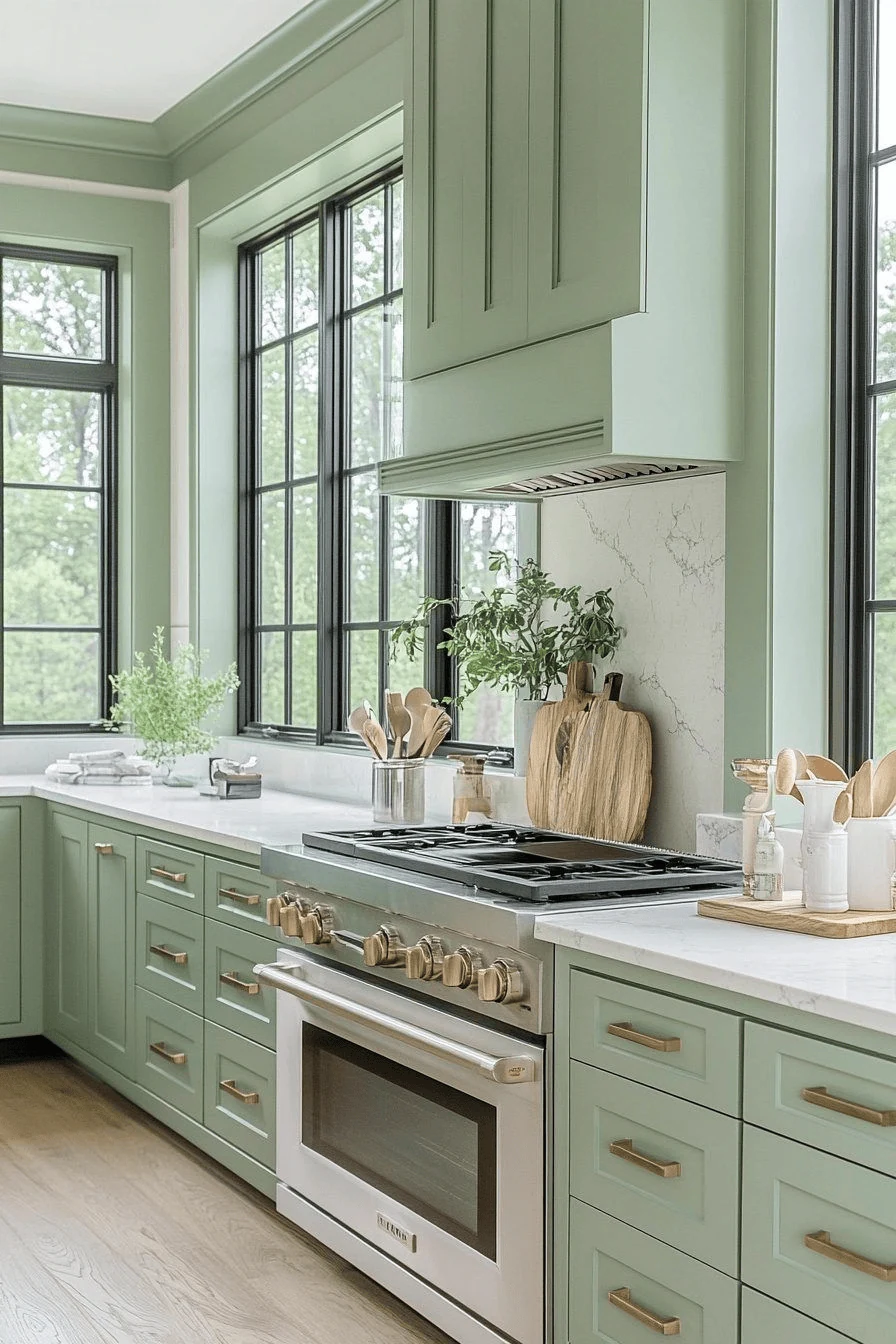
A range can look isolated when it is the only pale, warm object inside a long sage run. Let the cabinets frame it, then repeat that warmth once in the worktop, wall finish, or a stone detail.
The range starts to feel part of the sage green kitchen colour scheme rather than an appliance dropped into the room. Avoid trying to match the cabinet colour closely to the appliance. Near matches can make small colour differences more obvious, not less.
9. Swap Another Pale Marble Worktop For Speckled Terrazzo
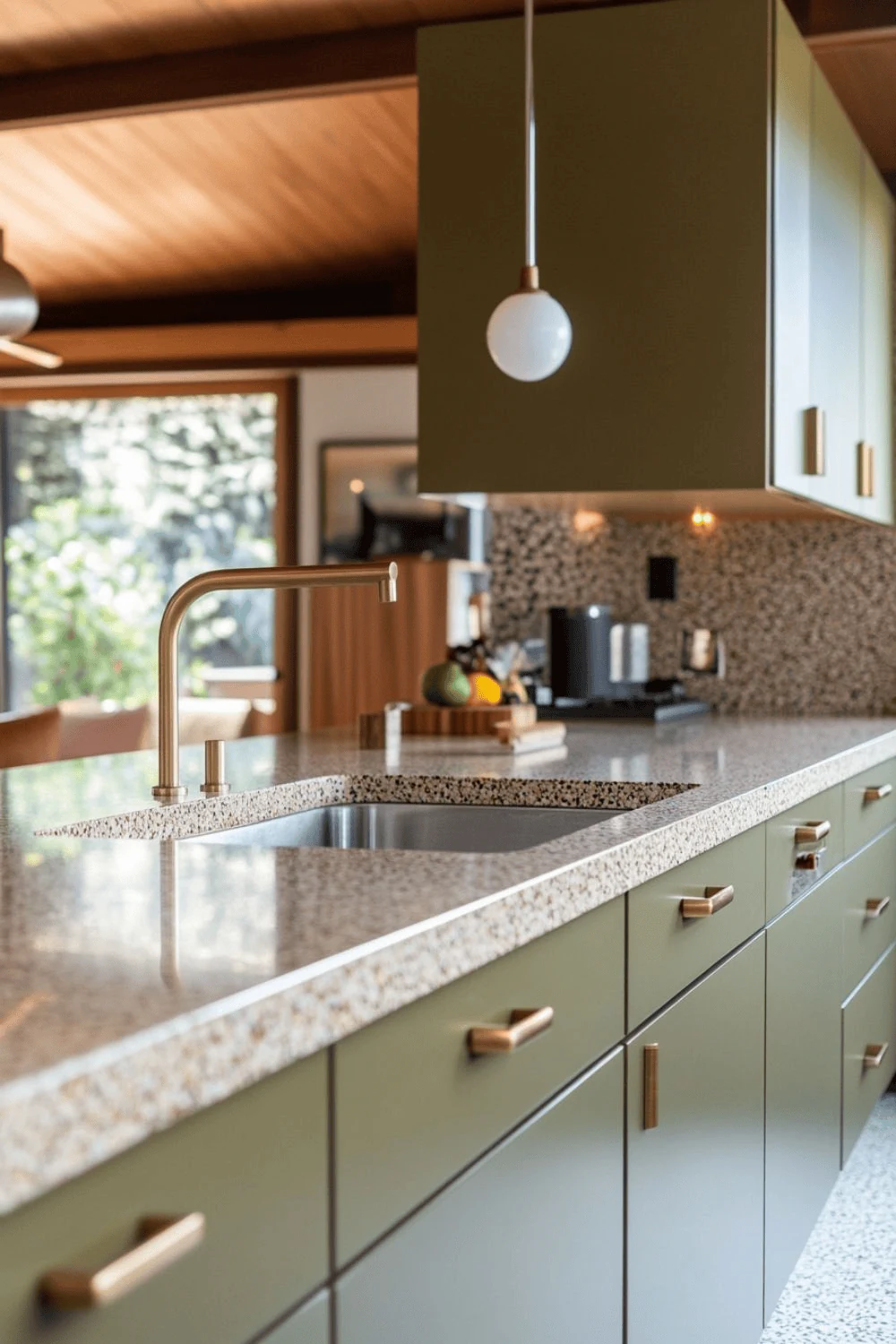
Sage Shaker cabinets with pale marble or veined stone can start to look like the same formula. Try a quieter terrazzo with cream, grey, ochre, or muted green fragments.
I kept expecting pale stone to be the obvious partner for sage. Terrazzo changed my mind because several small colours already sat inside one surface. When comparing kitchen countertop materials, look at pattern scale as well as colour. Large aggregate can compete with detailed cabinetry, so keep the aggregate scale restrained.
Our kitchen design guide covers how worktop choices sit with everything else.
10. Use Charcoal Soapstone When Pale Sage Looks Washed Out
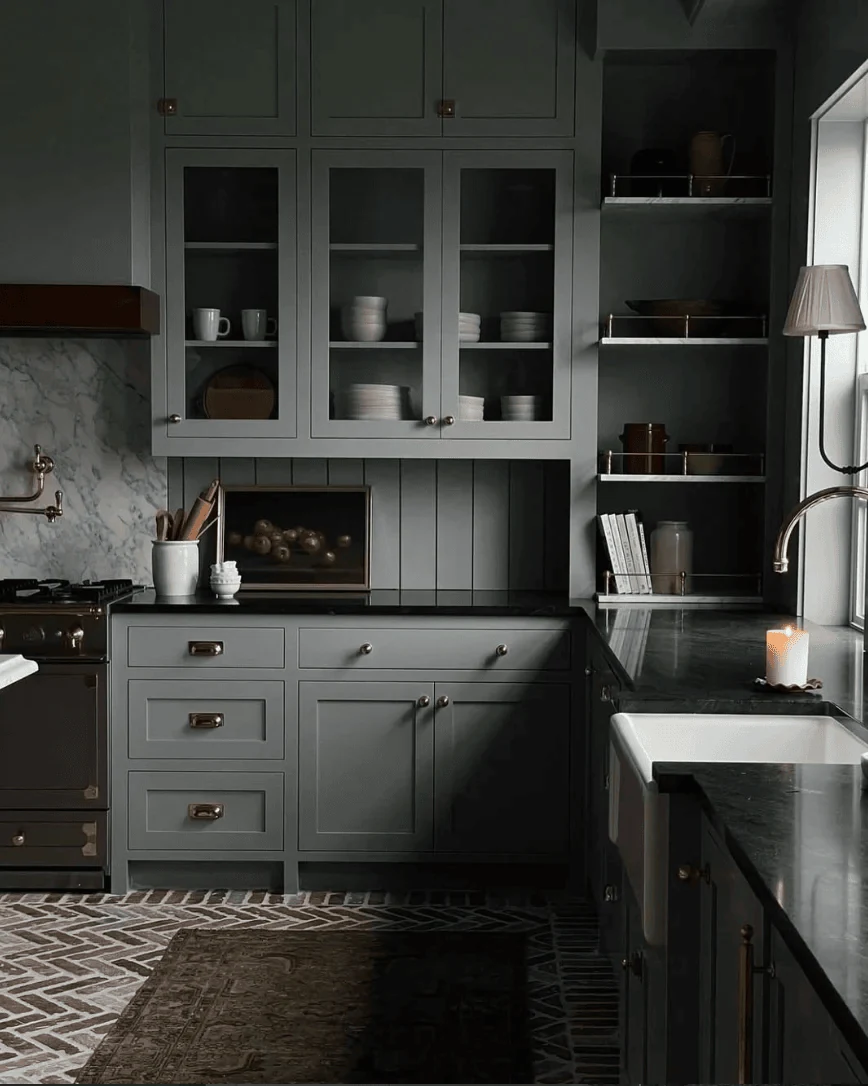
Pale sage beside another very light worktop can leave the kitchen softer than you intended. Pair the cabinetry with charcoal or blue-black soapstone instead.
I expected pale worktops to be my favourite beside sage. A few charcoal stone kitchens changed my mind because the muted green looked clearer against the dark surface. Check the exact supplier’s care guidance before choosing the stone rather than relying on a general assumption about soapstone.
11. Calm A Busy Floor Pattern With Broad Limestone Tiles
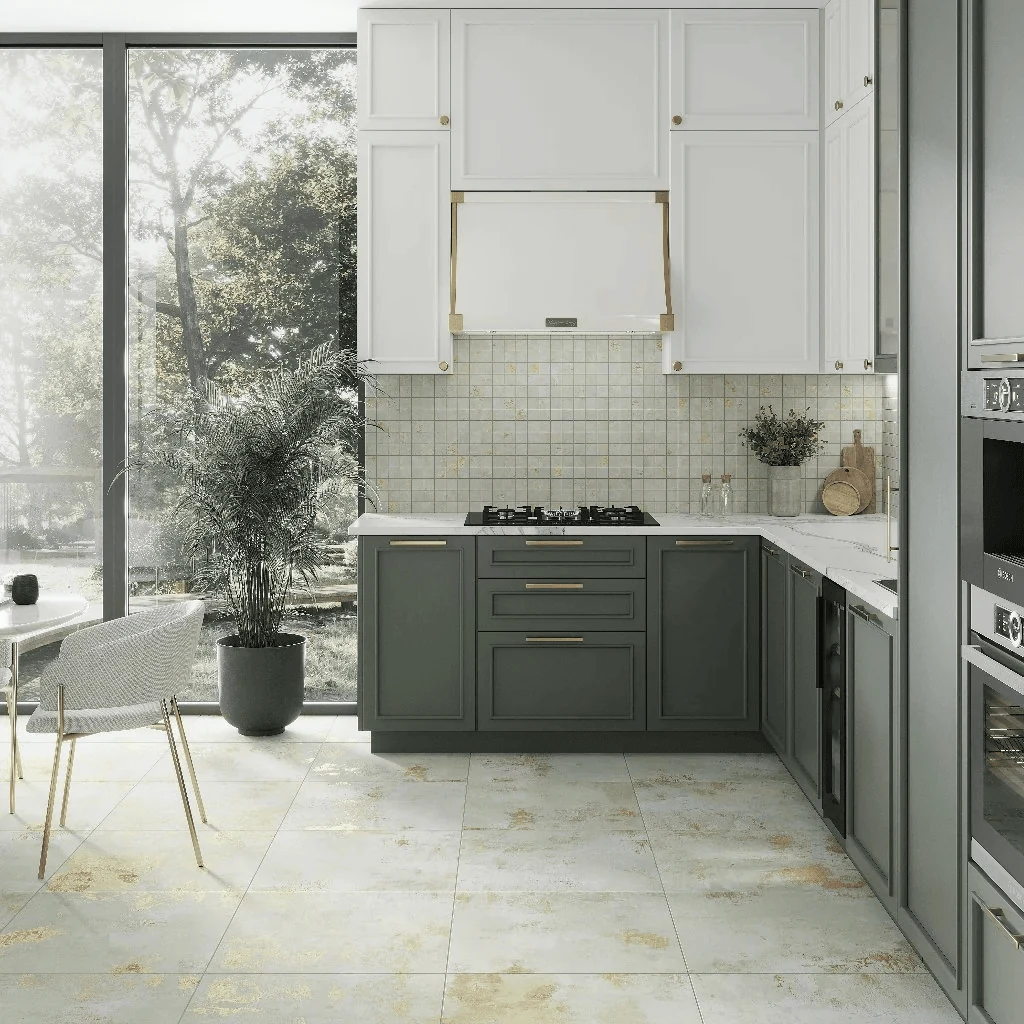
Sage cabinets can feel busier than expected when the floor already brings strong timber grain or a small repeated pattern. Use broad limestone or a limestone-look tile instead; the larger format creates fewer repeated joints across the floor.
If the floor and cabinetry both create lots of small lines, the room may need one calmer plane. Limestone is not the best floor for every sage kitchen; it is one way to reduce busyness. Suitability depends on the exact product.
12. Try Maple When Pale Oak Starts Feeling Too Familiar
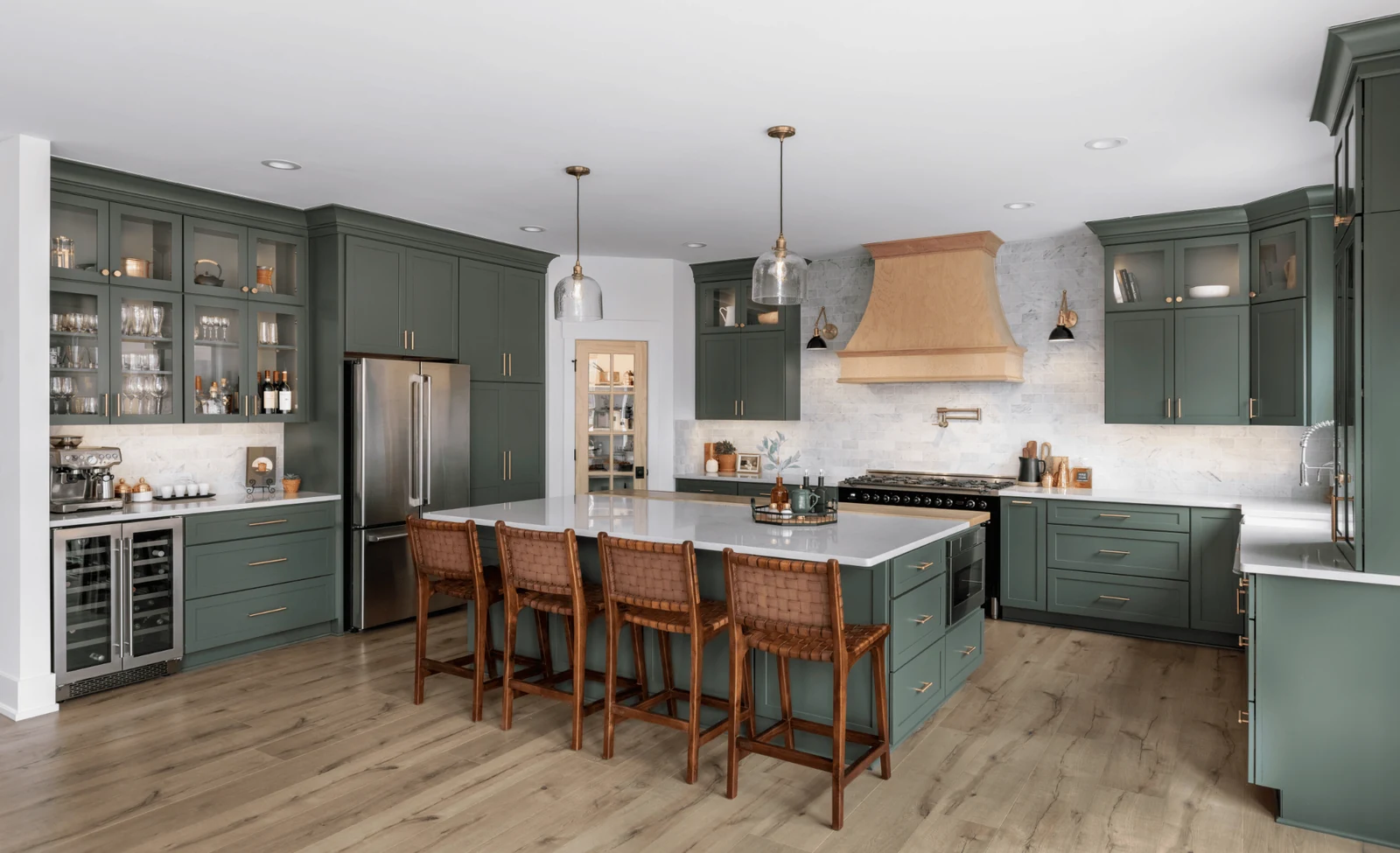
You like a sage green kitchen with wood but keep landing on the same pale-oak combination. Compare sage with maple or another fine-grained pale timber instead.
Oak appeared in almost every sage-and-wood combination I came across. Maple caught my attention because its grain read more quietly beside sage in the examples I liked. The difference is grain presence, not a claim that maple is better. Compare the actual finish because stains and coatings can change how the timber reads.
13. Put The Warm Metal In One Copper Sink
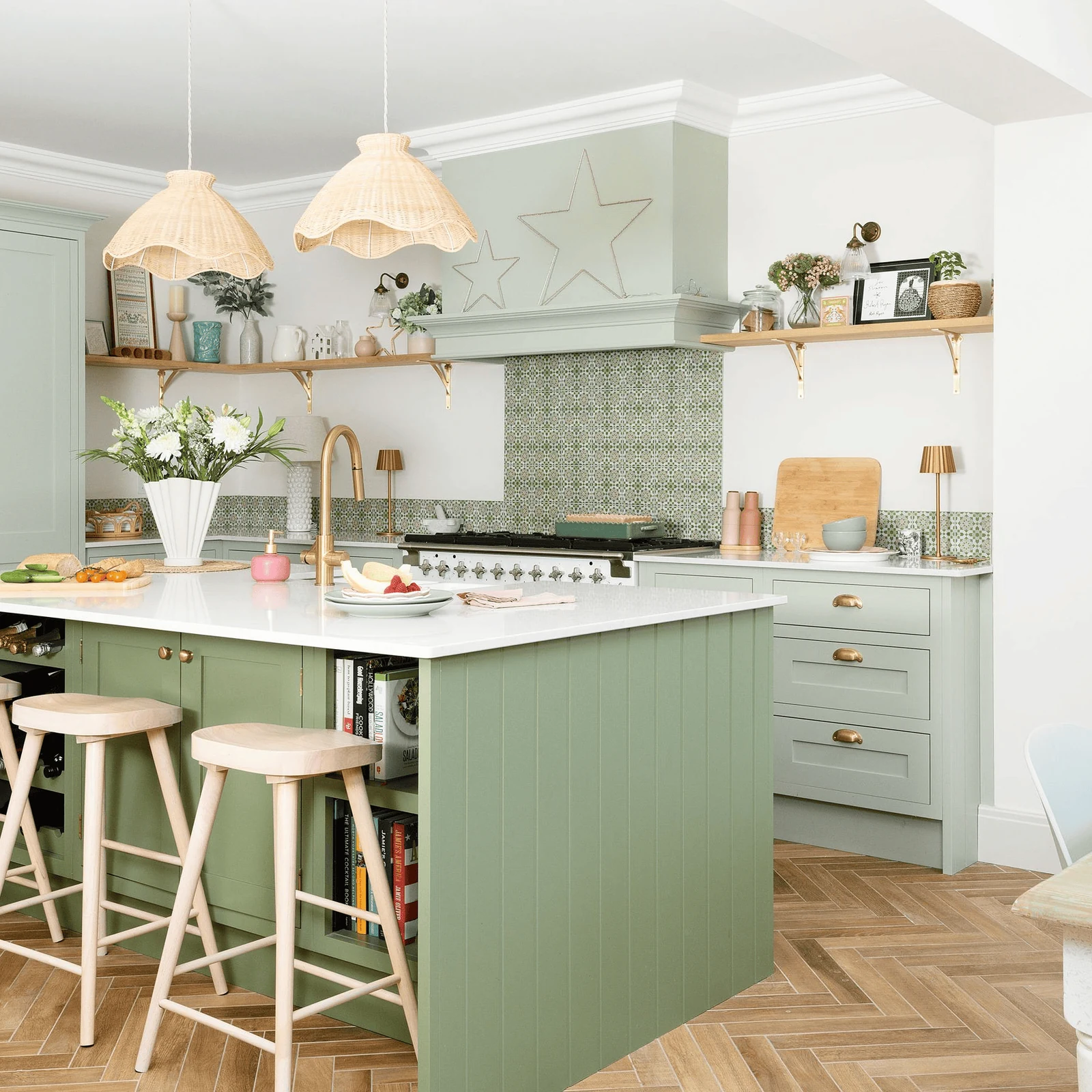
Warm metal on the handles, tap, pendants, and brackets can make every fitting compete for the same accent. Make a copper or copper-toned sink the one noticeable warm-metal feature and keep the surrounding fittings quieter.
After seeing warm metal repeated across every small fitting, I preferred kitchens that concentrated it in one place. The sink becomes the focal warm-metal detail. Check the exact product’s patina and care guidance before choosing it.
14. Use Stainless Steel When Sage Keeps Feeling Too Cottage-Like
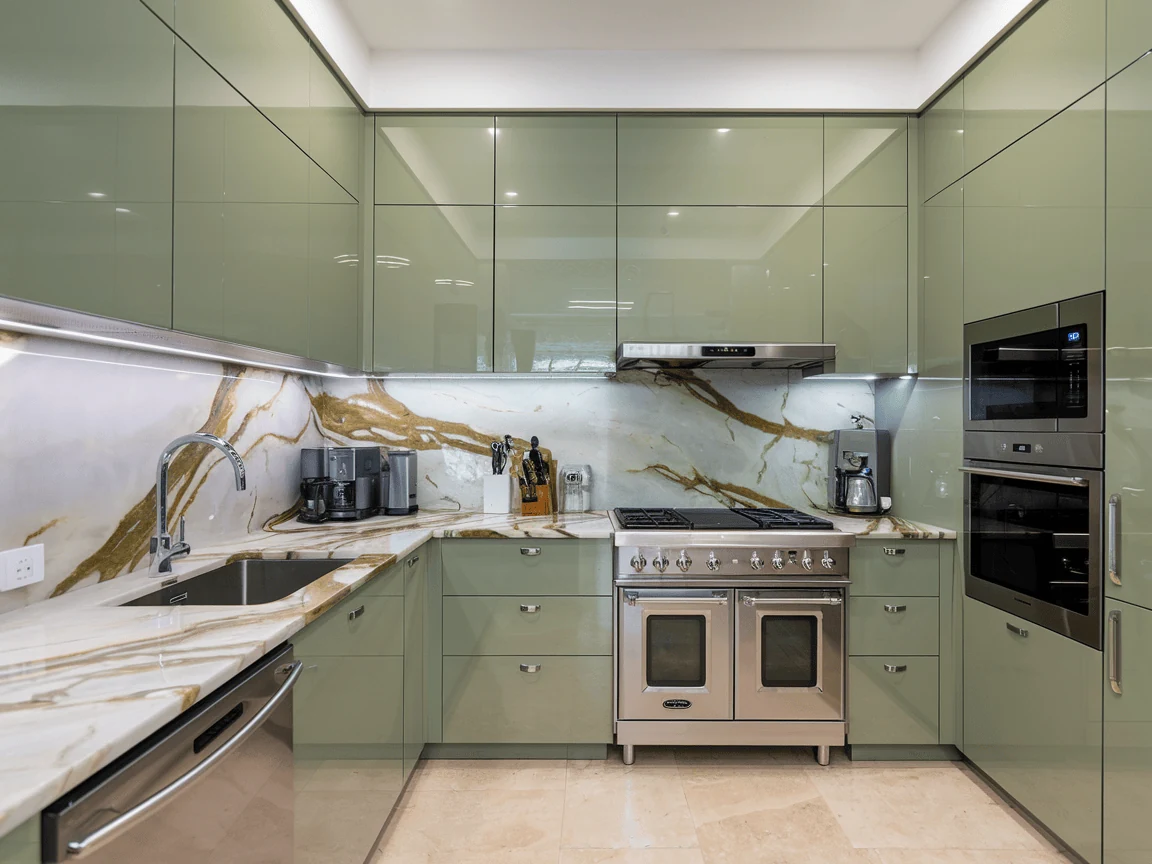
You like sage but do not want the kitchen drifting towards a cottage look. Put a stainless-steel work surface on one preparation run beside flat sage cabinets, then repeat the finish through a sink or visible appliance.
The sage stays soft, but stainless gives it a sharper working context. Keep the metal to one functional run rather than spreading it across every surface. Stainless will show fingerprints in daily use, so do not choose it expecting a pristine finish.
15. Replace Five Small Wood Accents With Timber Pendants
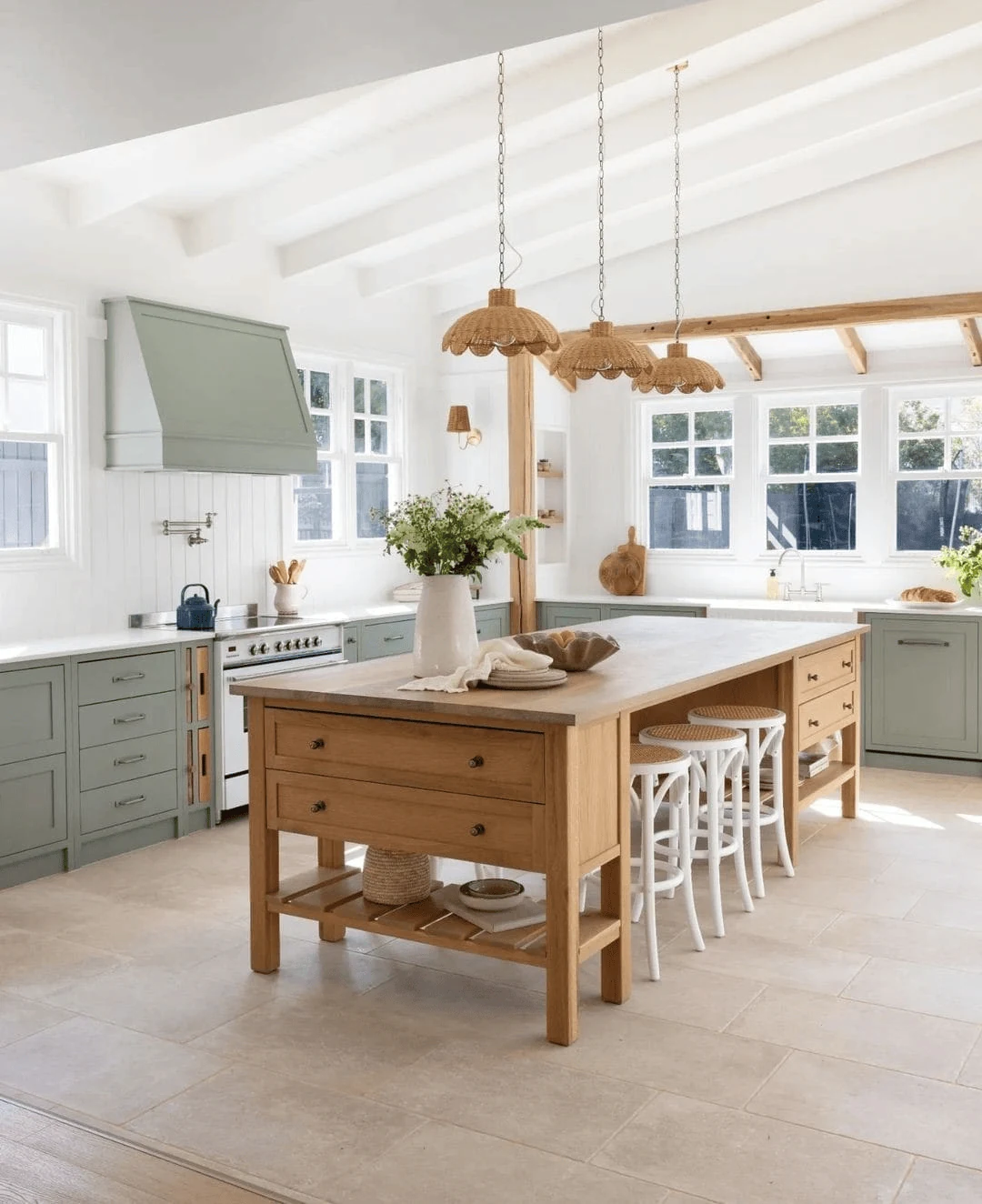
Wood often gets repeated through stools, trays, chopping boards, and handles simply to make it feel connected to the sage. Use one large timber or timber-detailed pendant instead, placed above an island, breakfast table, or dining end.
One larger timber fitting can carry more visual weight than five small wood accents trying to prove the material belongs. Size the pendant to the ceiling height and the island or table below it.
That restraint runs through our Japandi kitchen design guide too.
16. Use Butter Yellow When Sage And Cream Feel Too Predictable
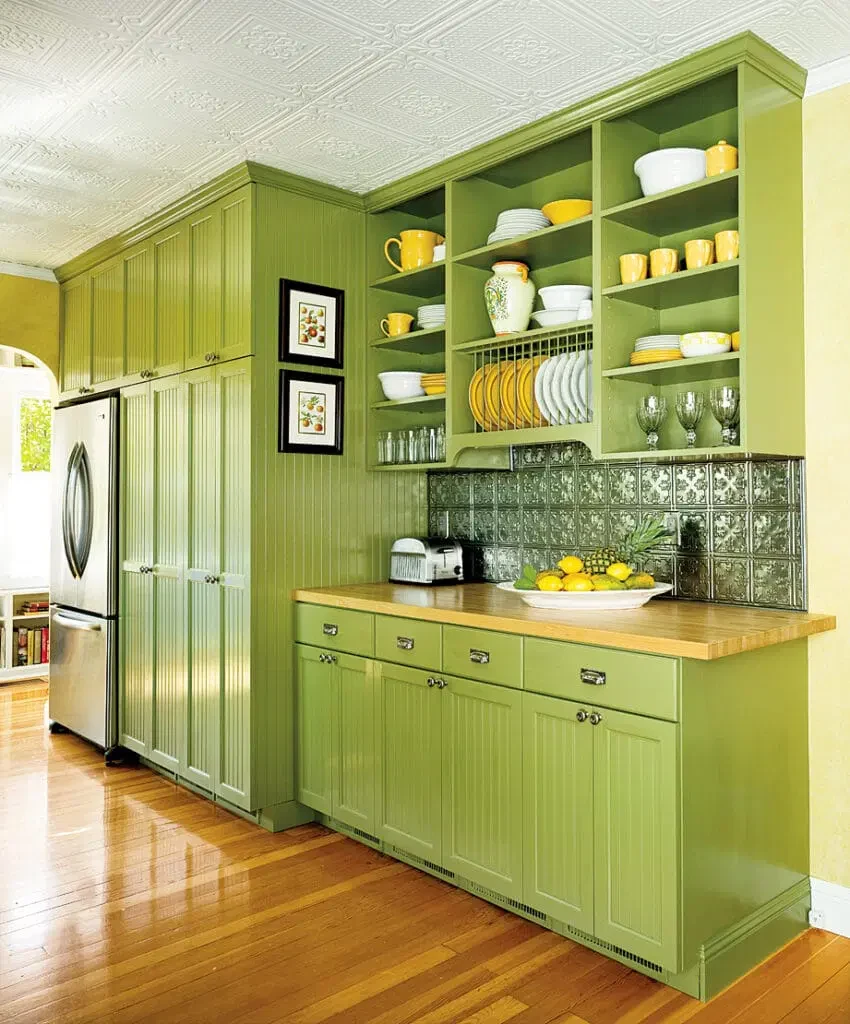
You keep saving sage-and-cream colour schemes but no longer notice much difference between them. Put soft butter yellow in one clear location, such as a pantry door, pendant, or stool upholstery.
Sage and cream appeared so often in the kitchens I looked through that a few soft yellow details stood out immediately. Several other pastel shades can push the kitchen towards a deliberately retro palette, so let the yellow keep one clear role.
17. Let A Timber Ceiling Beam Carry The Wood
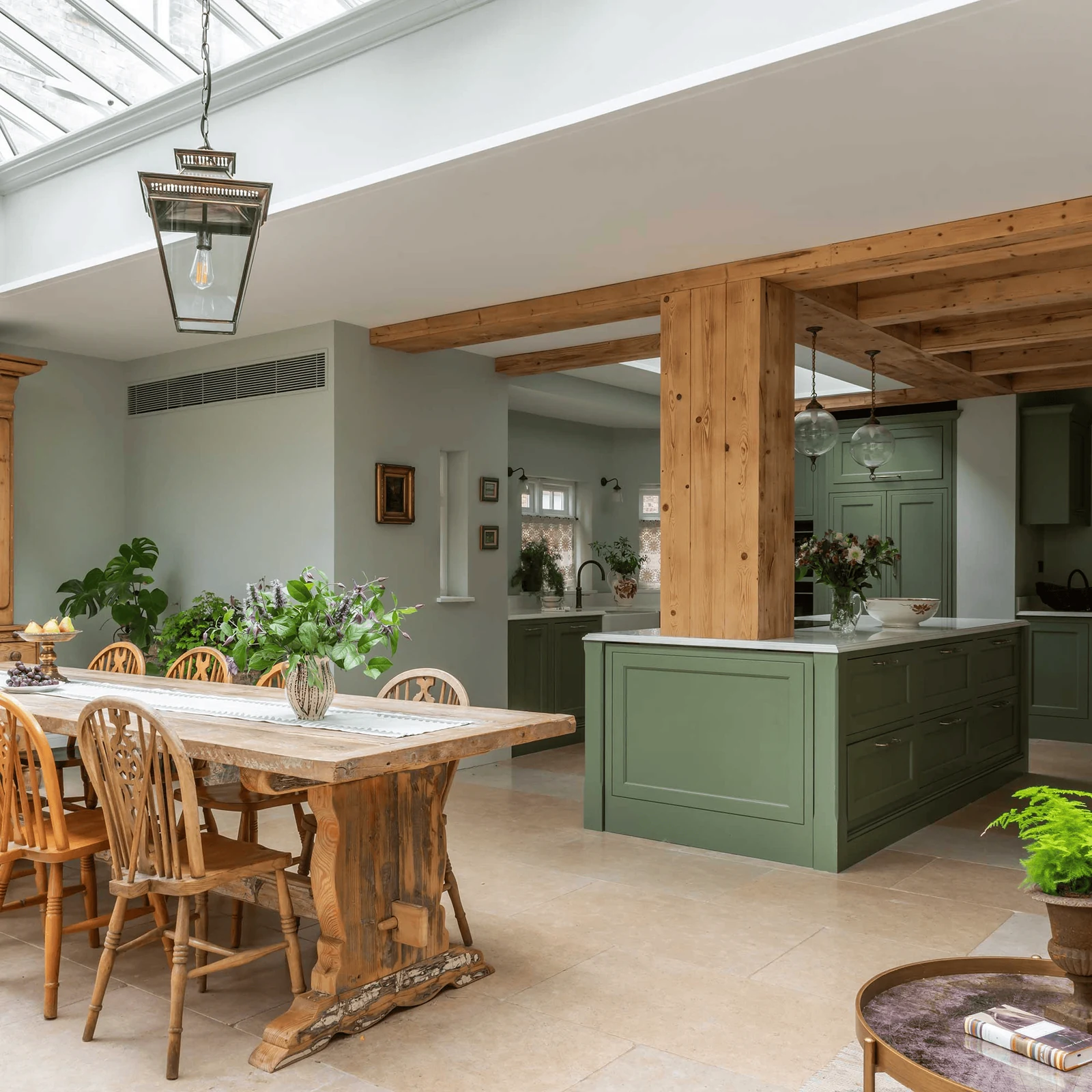
Some sage-and-wood kitchens repeat timber through shelves, stools, and boards because no single wood feature is strong enough to lead. Use an existing or planned timber ceiling beam as the main wood feature and run the sage cabinetry beneath it.
I preferred sage-and-wood kitchens once the timber had one clear architectural role. A ceiling beam can do that, allowing smaller wood accents to be edited back. Avoid bringing several unrelated timber tones into the same composition.
18. Use Cane When Another Oak Shelf Feels Repetitive
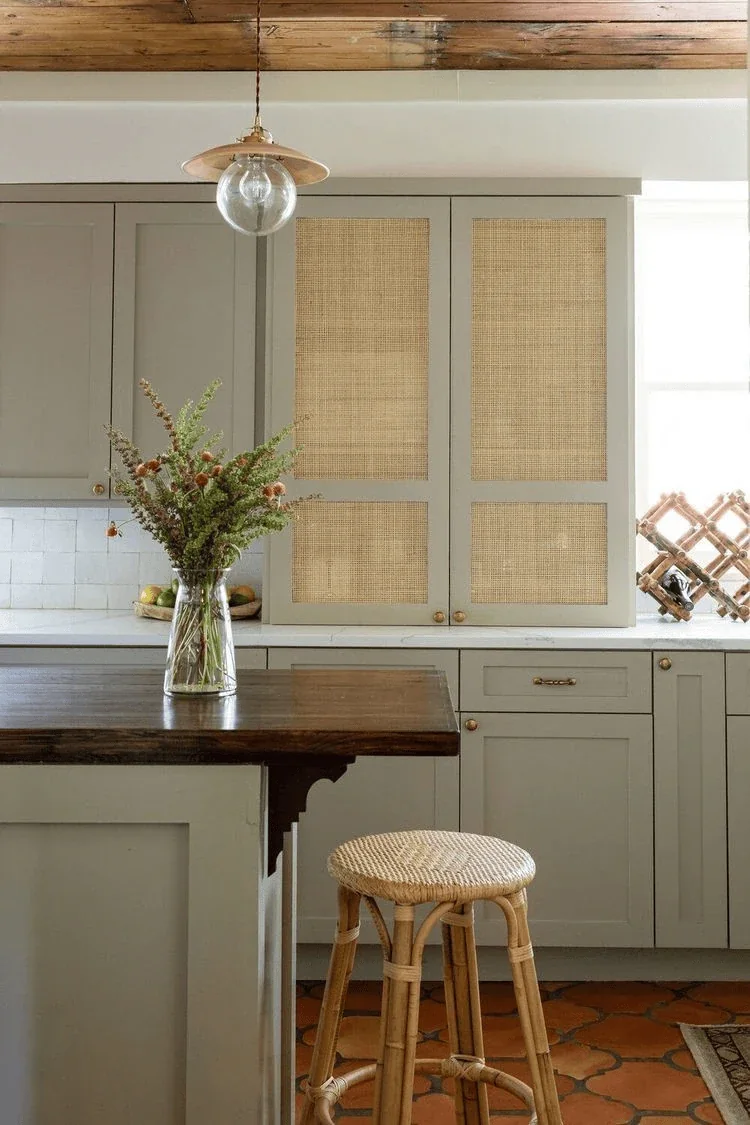
Do you actually need more wood, or are you looking for natural texture beside the sage? Add cane or another woven panel to one pantry or dresser section instead.
Cane answers the texture question without turning another cabinet zone into timber. Keep woven panels away from heavy splash or grease zones unless the exact material is specified for that use.
19. Remove Statement Handles When Modern Sage Feels Overdesigned
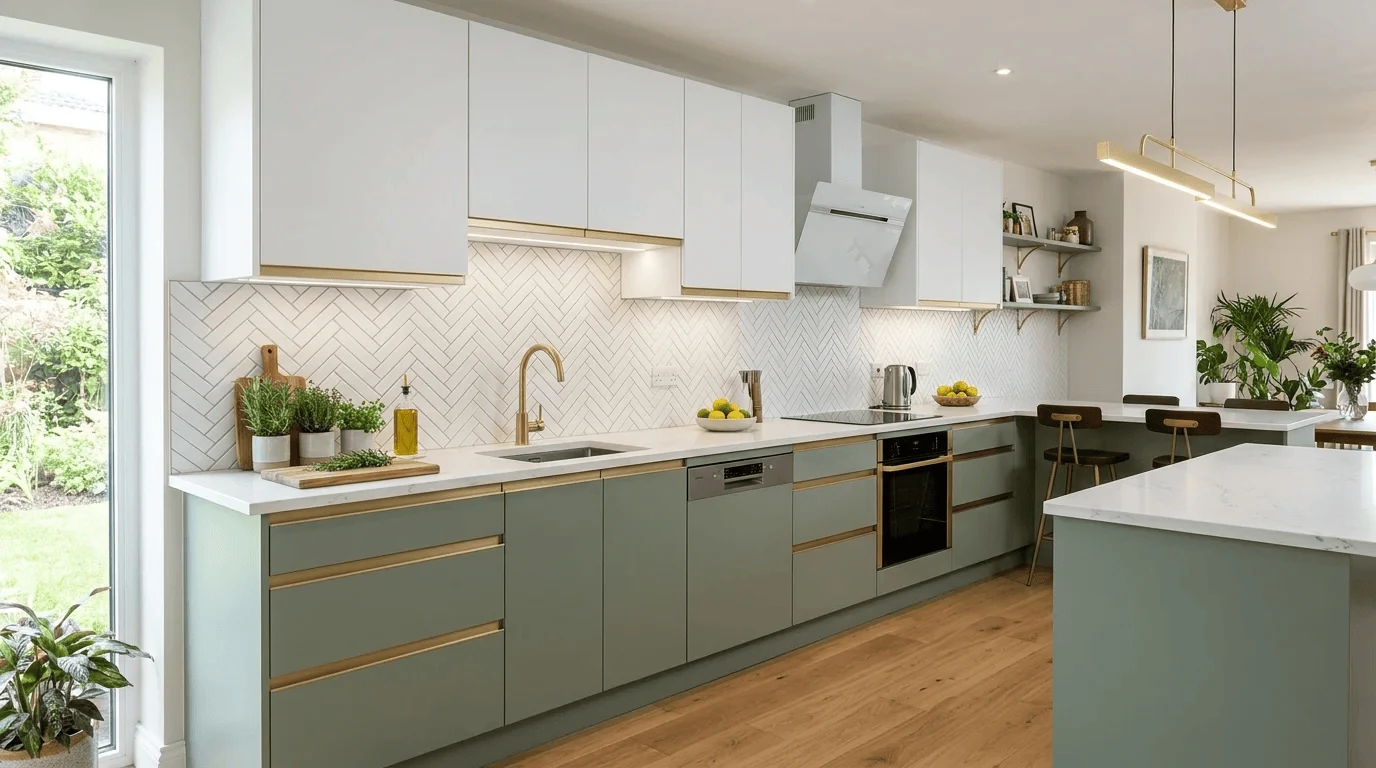
If the sage colour, worktop, and door profile already create enough detail, decorative handles can make a modern kitchen feel overworked. Use a recessed grip or finger-pull instead.
The more modern sage kitchens I looked at, the less visible the handles became. In modern kitchen design, the resulting shadow line can become the detail. Check that the grip still feels comfortable in daily use.
20. Use Sage Beadboard When Farmhouse Decor Is Doing Too Much
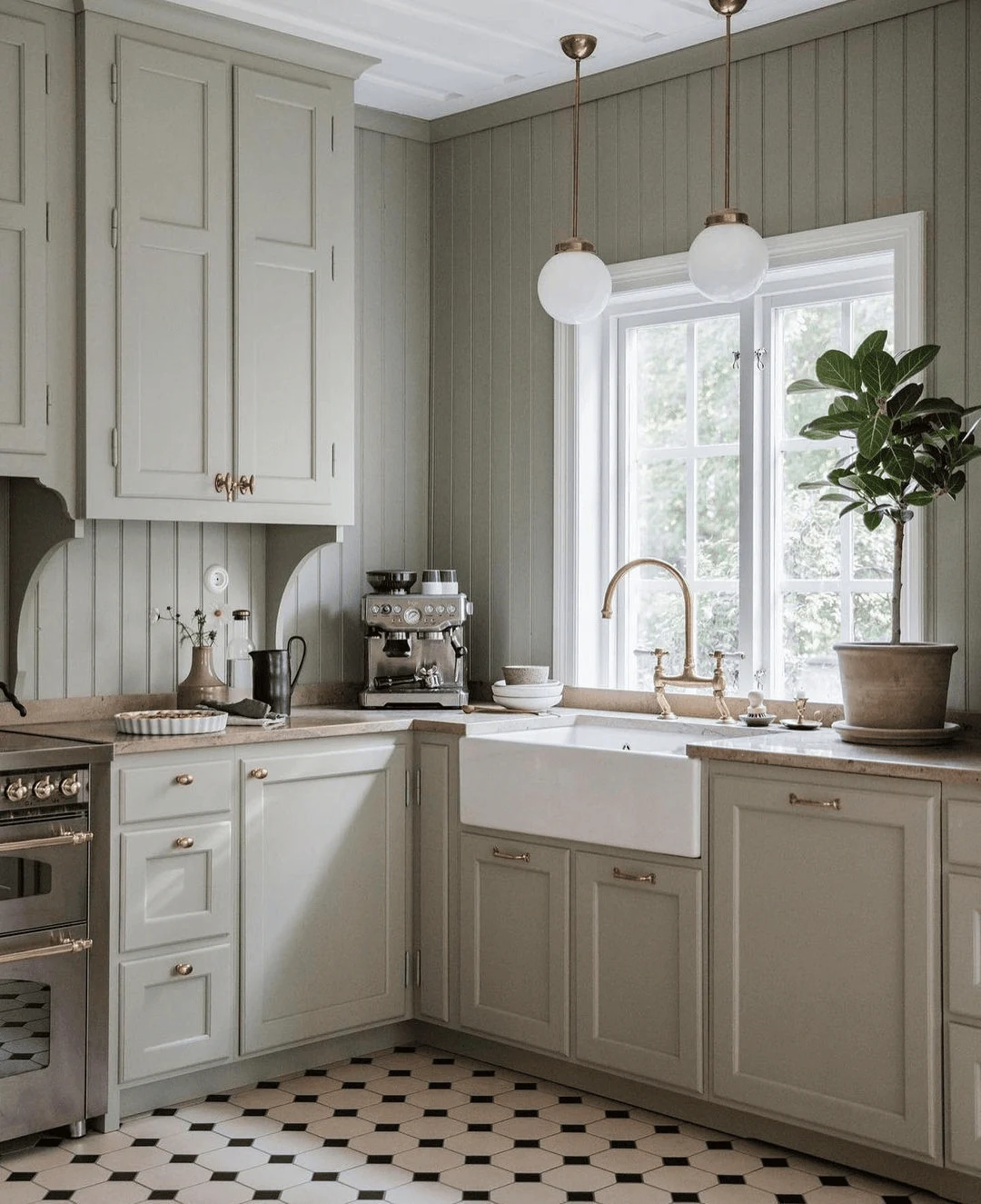
Are baskets, pitchers, and vintage-style accessories doing all the work of building your farmhouse look? Let the wall material establish some of the style instead, using sage-painted beadboard or tongue-and-groove panelling in a suitable spot.
The farmhouse kitchens I kept returning to let the wall material set the direction before decor was added. That gives the room character without filling every surface with objects. Check the location carefully before using panelling close to a hob or sink.
21. Use Wallpaper When Matching Green Decor Feels Too Themed
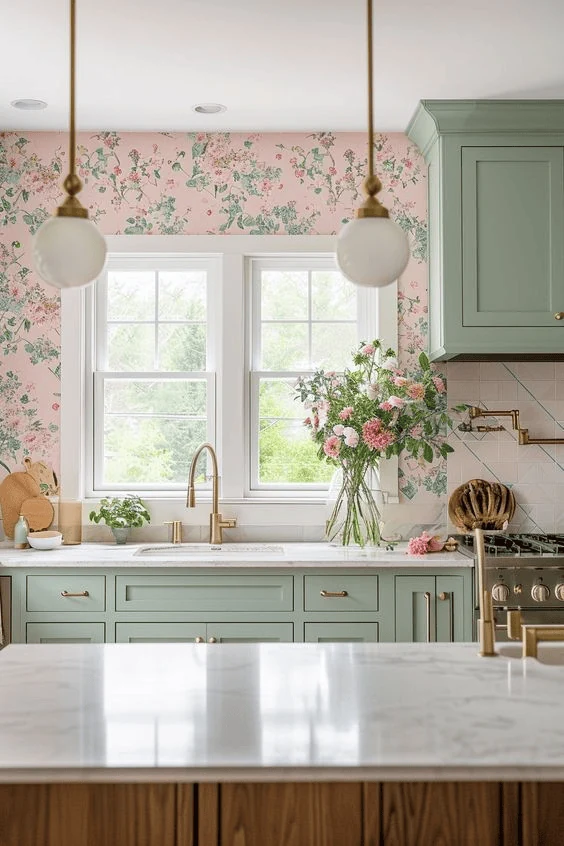
Matching sage jars, ceramics, and towels can make the kitchen feel built around one colour theme. Use patterned wallpaper with sage and one secondary colour instead, placed above a dresser or near a breakfast table.
Pull one secondary colour from the wallpaper into a nearby feature. The wallpaper connects to the cabinetry without forcing every object to match it. Choose a wallcovering suited to the heat and moisture of that location.
22. Give A Farmhouse Sage Kitchen A Real Plate Rack
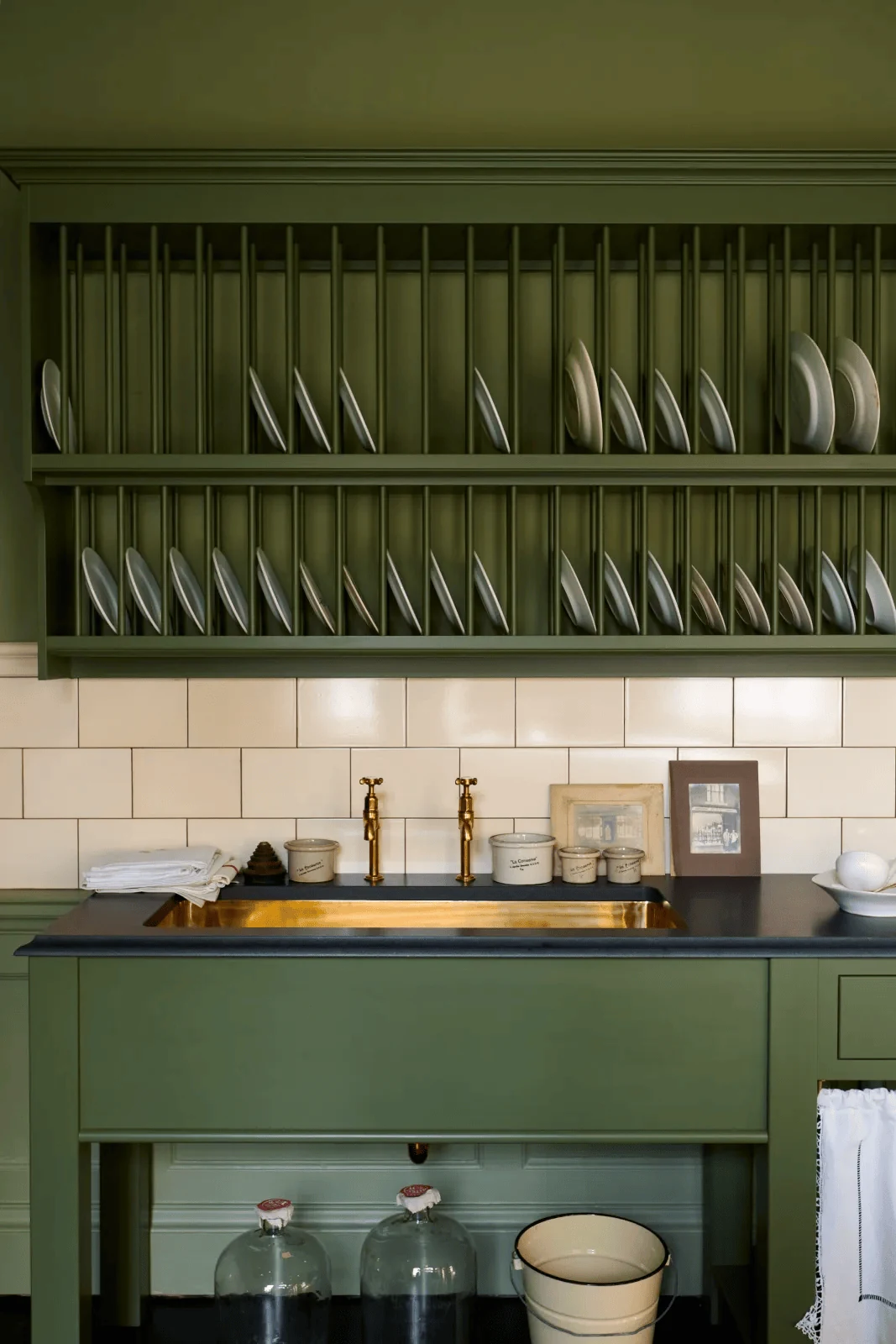
Is your farmhouse kitchen leaning on more decorative objects than it actually needs? Use a built-in or freestanding sage dresser with vertical plate storage instead.
The style comes from a functional storage detail rather than scattered decor. Use the rack for plates or serving pieces you genuinely reach for. It is only worth adding if the visible storage will be used.
23. Use One Black-Framed Interior Window Instead Of Black Everywhere
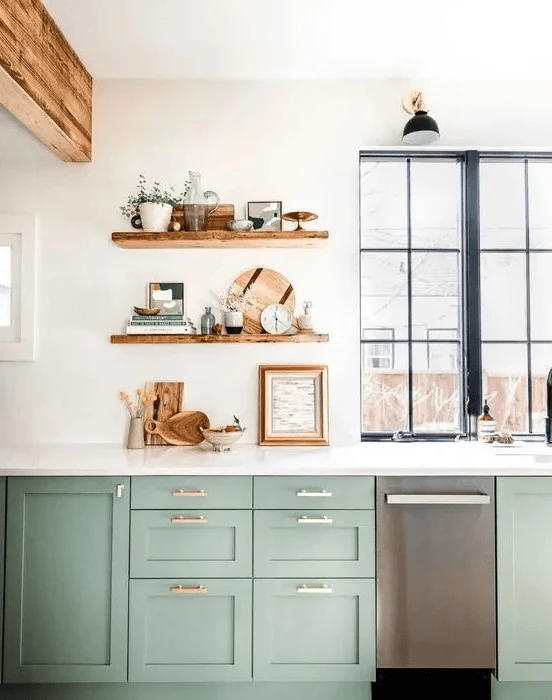
Black handles, taps, pendant lights, and stool frames can quickly turn into another repeated accent formula. Concentrate the dark definition in one black-framed internal window or glazed partition where the architecture supports it.
One thin black frame can give sage more definition than repeating black across every small fitting. Look at the room on the other side of the glazing first; the sightline, adjoining space, and glazing requirements all need to make sense.
24. Curve The Island When You Keep Trying To Add More Decor
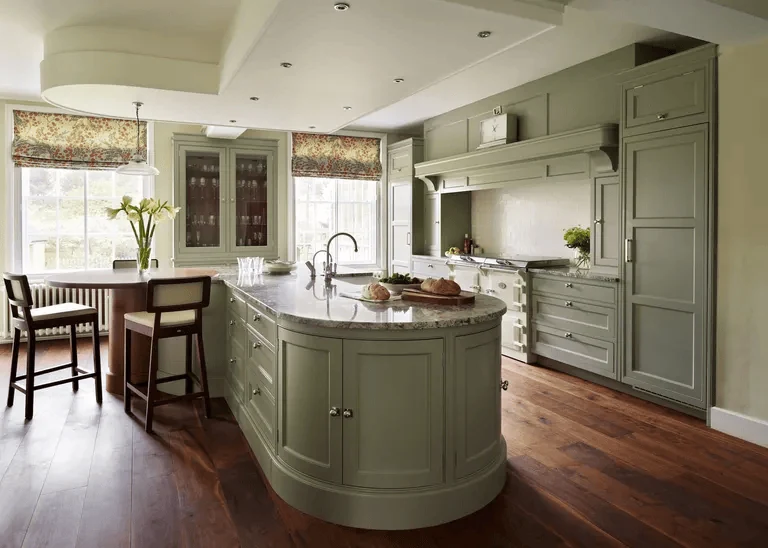
A sage kitchen with very simple cabinetry can start to feel as though it needs another pendant or pattern to be memorable. Change the island geometry instead, using a rounded or softly curved end.
This was one of those ideas where I initially credited the sage for making the kitchen memorable. Imagine the cabinetry in white, though, and I would probably still save the curved island. Not every kitchen has the circulation for one, so check the available space early.
25. Change The Tile Direction When Sage And White Feel Too Familiar
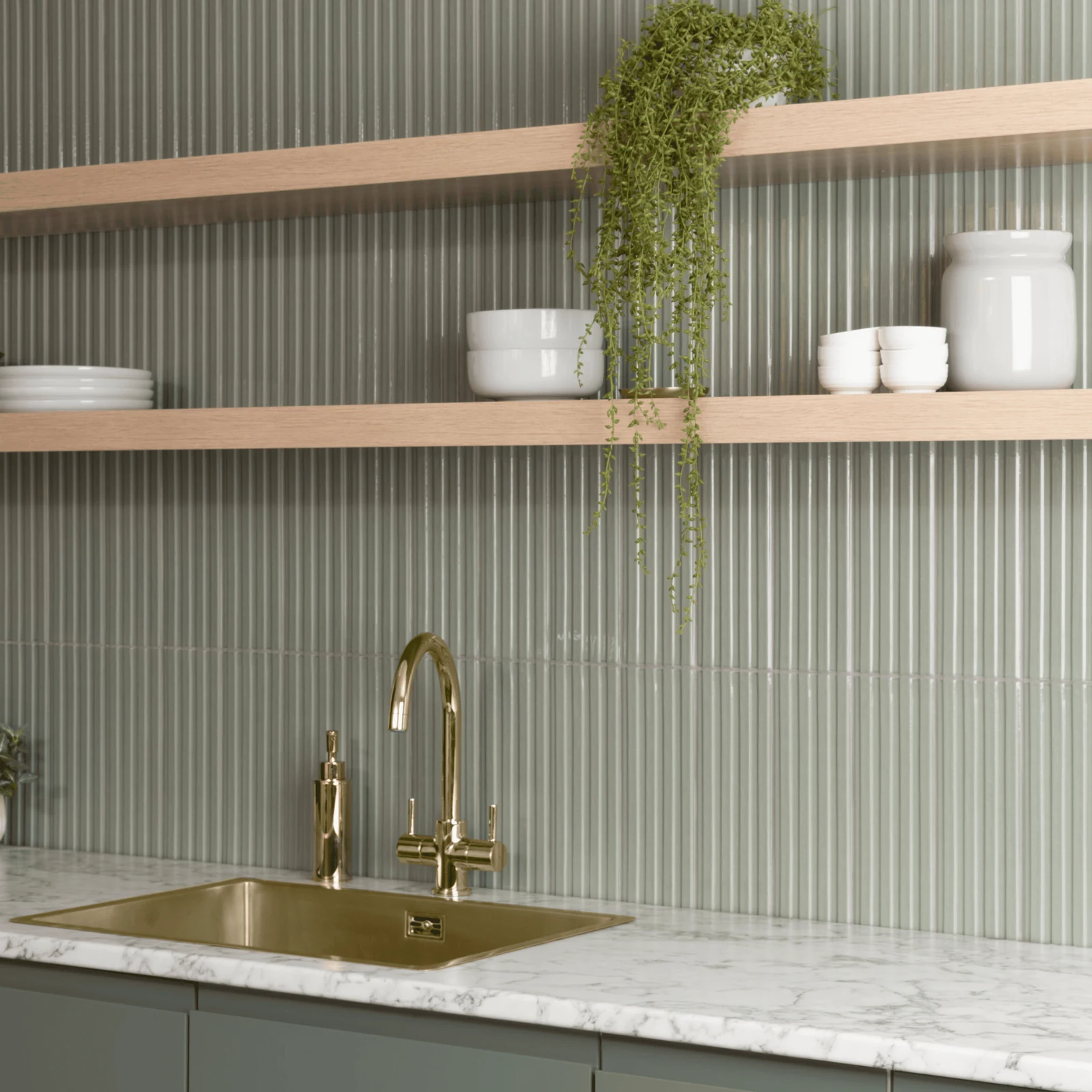
Light tiles beside sage can lead you back to a white backsplash. Turn narrow tiles vertically in warm white, ivory, limestone-grey, or pale green; the orientation changes the wall before the colour does.
NIST researchers Yoshi Ohno and Jane Li study how lighting affects colour perception. Their experiment used a board of 20 similar colours under different lighting, with 20 adults scheduled to participate. Judge tile and sage together under your kitchen lights. Narrow tiles also make grout more visible.
26. Use Large-Format Porcelain When The Grout Grid Feels Busy
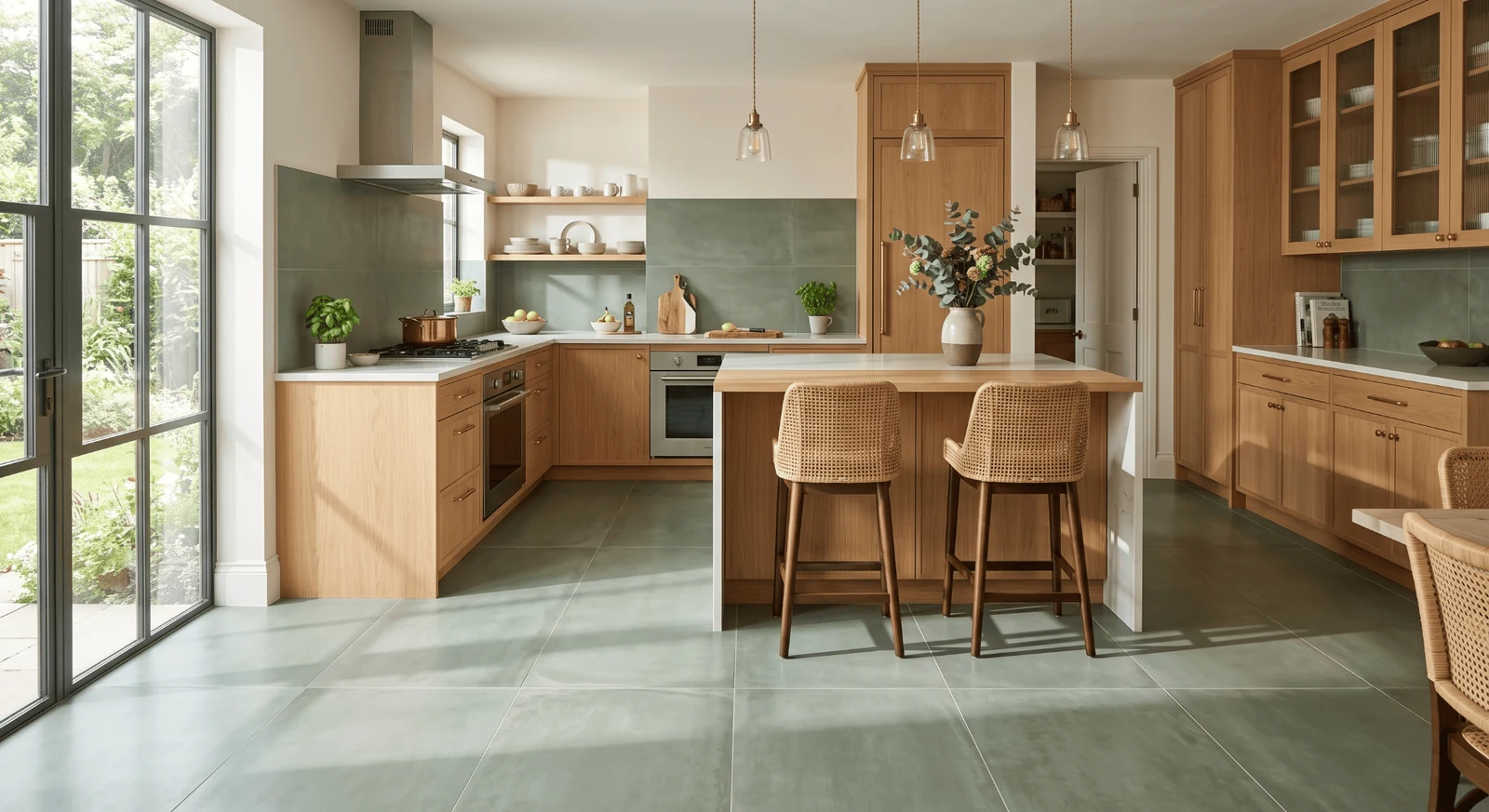
Small handmade-look tiles and visible grout lines can add another strong pattern beside detailed sage cabinetry. Use large-format porcelain or a slab backsplash instead. Fewer visible grout lines change the composition without changing the cabinet colour.
Compare a full wall of small tile with one large-format surface side by side. The larger format may look calmer, but do not assume it will be seamless; joins can still be required depending on the wall size.
27. Move Sage Onto The Wall When Good Wood Cabinets Do Not Need Paint
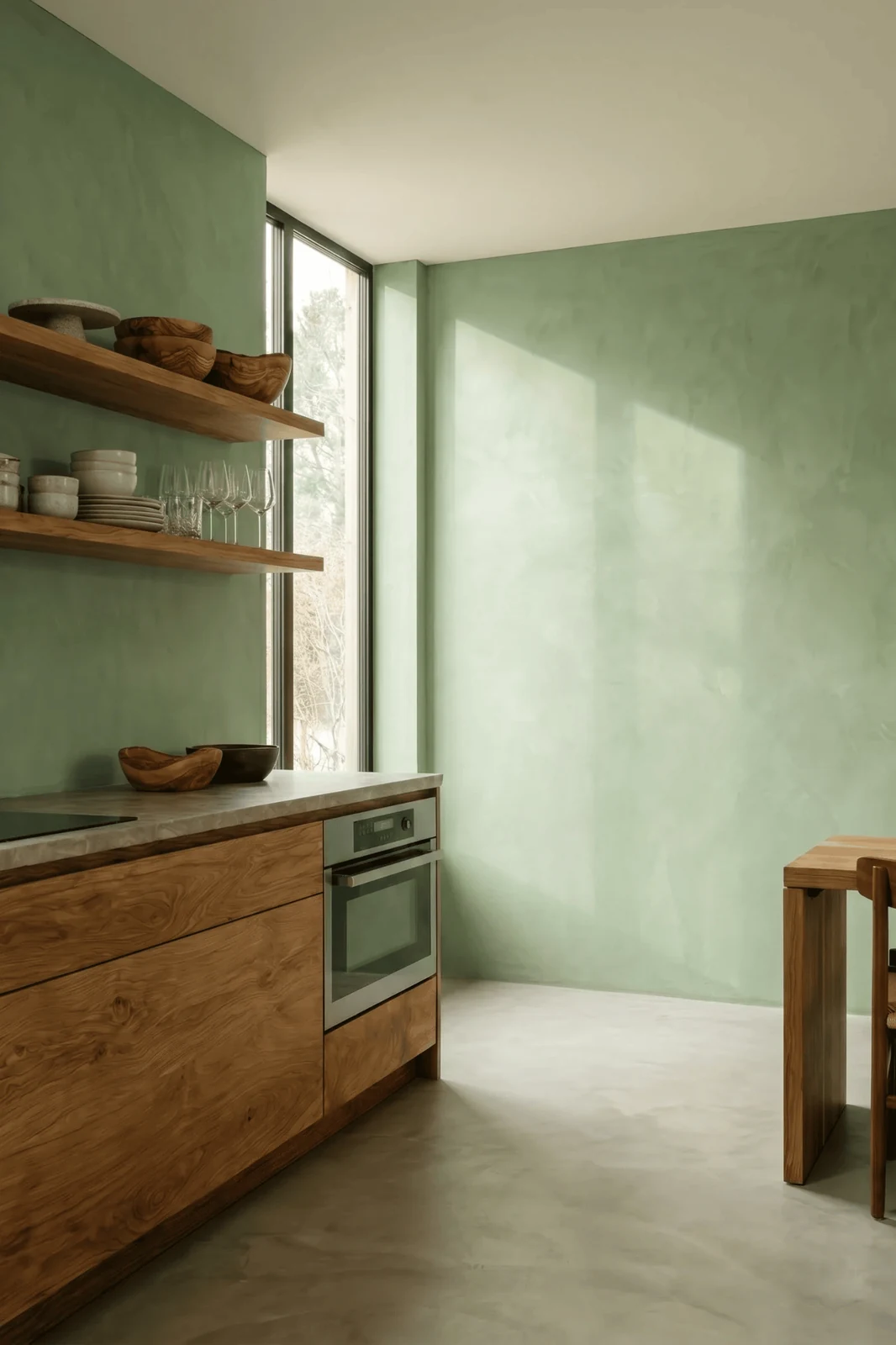
Straight wood cabinets and an equally smooth wall can make the kitchen feel very linear. Use a soft sage limewash-look finish behind the timber to add gentle surface variation without covering the cabinetry.
The wall carries the colour and movement, while the timber remains the steadier surface. Keep heavy-splash areas practical for their location, and call the finish genuine limewash only when the exact product system confirms it.
28. Paint An Interrupting Kitchen Door The Same Sage As The Cabinets
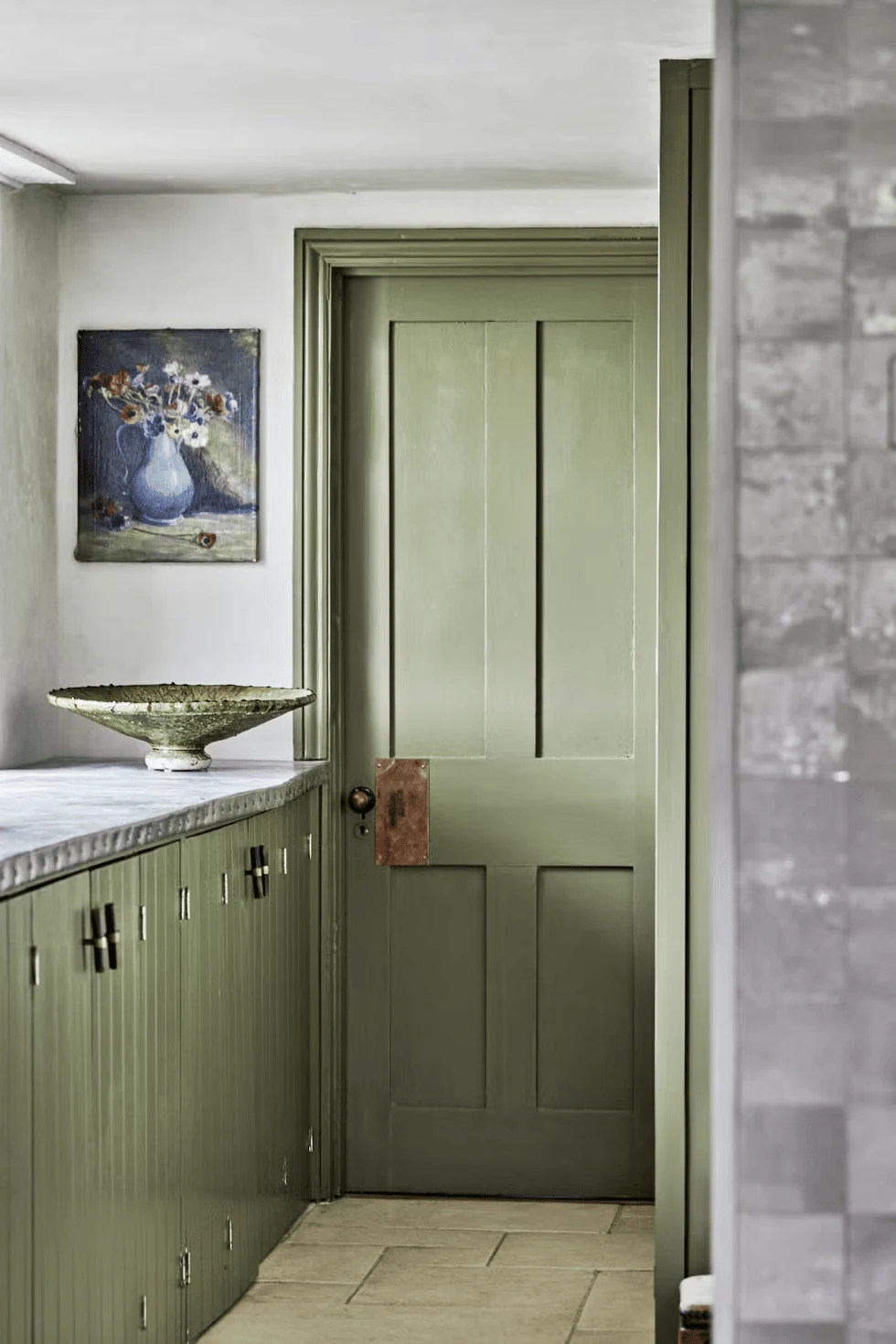
An ordinary internal door can interrupt a long run of sage cabinetry. Paint the door and architrave in the same sage colour so the break feels less obvious.
At first, a few of these kitchens looked as though the door had been hidden entirely. Look closer and the ordinary door had simply settled into the colour around it. Keep the treatment to doors that interrupt the cabinet run rather than carrying sage onto every internal door in an open-plan home.
The Sage Details I Would Compare Before Saving Another Kitchen
When I look back at the sage green kitchen inspiration I save repeatedly, changing the green is often the least interesting solution available. The material or cabinet detail sitting beside it usually gives me more to compare.
| If You Keep Saving | Compare This Next |
|---|---|
| Sage Shaker + white tile | Plaster walls or vertical tile |
| Sage + pale oak | Maple, ceiling timber, or cane |
| Sage + warm metal everywhere | One copper feature or recessed grips |
| Sage + pale stone | Terrazzo or charcoal soapstone |
| Farmhouse sage | Plate racks, wallpaper, or beadboard |
| Modern sage | Curved cabinetry, grip lines, or large porcelain |
Keep your favorite sage image open and describe it without using sage, green, beautiful, or timeless. The details left in your description are the ones worth carrying into your own shortlist.
If the layout is still open, our modular kitchen design ideas are the place to start.
Maybe The Sage Was Never The Only Detail I Was Saving
After looking through so many sage green kitchens, I started remembering them for strangely specific things. One had a terrazzo worktop, another a cream range, and I kept thinking about the maple, the stone shelf, and one curved island long after I had forgotten the exact green on the doors.
Look at the sage kitchen you return to most and ask what you would still save if the cabinets were white. That answer can give you a clearer direction for your own kitchen. When cabinetry, materials, storage, and layout all need to work together, our kitchen interior design services in Dubai can help plan those decisions as one design rather than a collection of separate finishes.
For the pared back version of a kitchen, see simple kitchen design.
These floating kitchen island ideas show other ways to treat the island.